

-
Policy -
Project Finance -
Transmission & Power Markets -
Press Releases
New ACORE Investor Survey Report Kicks Off 2026 Finance Forum
New York City, NY – A new report from ACORE shows that clean energy investors and developers largely plan to increase their investments in 2026 but cite policy, regulatory, and interconnection uncertainty as the biggest risks to their investment strategy after this year.
In its Navigating Uncertainty: Clean Energy Investment Trends (2026-2029) report, ACORE shares market sentiment analysis gathered from surveys of 36 leaders at U.S. and multinational companies that invested billions in the U.S. clean energy market in 2025.
Topline takeaways from the report include:
- Respondents identified federal regulatory and policy risks and interconnection uncertainty and costs as the top risks facing clean energy investments.
- Capital providers continue to view utility-scale solar and energy storage as the two most attractive clean energy technologies for investment.
- Despite declining attractiveness of the U.S. as a venue for clean energy investment compared to previous years, respondents said they plan to develop and finance more American clean energy projects in 2026 than they did in 2025.
- Policy and investment uncertainty clouds the trajectory post-2026, with the potential for additional roadblocks to financing and developing clean energy infrastructure.
This report complements the Clean Energy Investment Trends report released last month that S&P Global prepared for ACORE.
“ACORE’s recent reports highlight a common thread: the U.S. clean energy sector remains capitalized and ready to help deliver electricity reliability and affordability for American consumers,” said ACORE President and CEO Ray Long. “Our sector is thriving and poised to meet this moment of significant electricity demand growth, but investors and developers need policy certainty to deliver on this critical infrastructure for American energy security.”
ACORE released the report at its annual Finance Forum in New York City today and discussed the takeaways during the opening panel with ACORE Senior Vice President for Policy Lesley Hunter, Avangrid CEO Jose Antonio Miranda, and S&P Global CERA Consulting Director Christopher Wilfong.
Please email communications@acore.org if you’d like to view the recording of the first panel or set up an interview with ACORE about the report. Register here to tune in to the other panels.
ACORE will host a member-only webinar to discuss both reports on May 21, 2026. Learn more about becoming an ACORE member here.
###
About ACORE:
ACORE is a nonpartisan nonprofit organization that operates at the intersection of affordability, reliability, and clean energy deployment. Our work is focused on stabilizing energy prices, strengthening the electric grid, and driving investment in cost-effective technologies to ensure that clean energy delivers for people, businesses, and the U.S. economy.
ACORE’s membership includes clean energy investors, developers, energy buyers, power generators, manufacturers, and energy providers. In 2024, nearly 80% of the booming utility-scale domestic clean energy growth was financed, developed, owned, equipped, or contracted by ACORE members.
Media Contacts:
Chris Higginbotham
higginbotham@acore.org
Sophie Stover
communications@acore.org
The post New ACORE Investor Survey Report Kicks Off 2026 Finance Forum appeared first on ACORE.
https://acore.org/news/new-acore-investor-survey-report-kicks-off-2026-finance-forum/

Weather Guard Lightning Tech
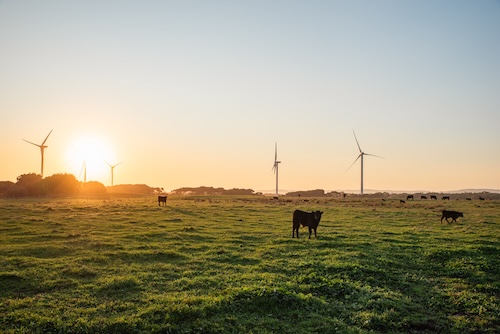
As Europe Shuns Chinese Turbines and Components, Who Will Fill the Gap?
While most of Europe has spent most of this year itemizing reasons it cannot, should not, and will not use Chinese wind turbines or components, accusations and arm-twisting tactics have garnered most of the attention.
But we invite you to consider a future – maybe just five, or ten years from now?- in which those same countries and companies are eagerly awaiting orders from wind turbine manufacturing facilities in… India.
What?!
You know that the country has a lot of installed wind.
You may think – and many in the industry would agree – that India’s blade manufacturers are a few revs behind blade-makers elsewhere in the world. But the country is newly committed to manufacturing and it’s busy installing more – provided that it’s made in India, with Indian technology, by Indian workers.
Of course, similar domestic-focused policy currents are running through European countries – where wind OEMs are almost inarguably a decade ahead of Indian manufacturers. But there’s an important reason why we say, “watch India” in wind turbine manufacturing.
It’s because you might learn something.
If you follow The Uptime Wind Energy Podcast, you probably heard this discussion a few weeks ago. It wasn’t the headline story – we try to highlight as many major news items and trends that we can, and follow up as credible information becomes available. India’s quiet moves to strengthen its own renewable energy industries didn’t grab the headlines. But it comprised a good bit of our panelists’ discussion.
With India’s expanding manufacturing capacity, and Suzlon’s strategic offerings for the European market (Blue Sky), there are reasons for European developers to take a closer look at Indian manufacturers.
If Europe continues to squelch deals with Chinese manufacturers due to data security issues, India is a relatively obvious candidate to fill the void, for several reasons:
- The country has depth and breadth in R&D: India (Suzlon, specifically) has a track record of involvement and relationships across the continent, as it operates research and development centers in Germany, the Netherlands, and Denmark.
- Indian service providers have reach: Inox and Adoni Wind operate multiple wind turbine manufacturing plants and wind farms throughout several Indian states, and Apraava Energy has been commissioning wind projects, working with multiple OEMs, for more than 16 years.
- The country’s energy sector has size: Tata Power is estimated to be worth about US$16 billion and employs 22,000 people.
And major manufacturers from other countries have had a strong presence in the country for years:
- GE Vernova has turbine blade and nacelle manufacturing operations and multiple tech/R&D centers in India;
- Vestas has a R&D technology center in Chennai; and
- China’s SANY Wind has had assembly facilities in India since 2017, and in 2024, it signed a licensing agreement with JSW allowing SANY to manufacture blades and generators for JSW – enabling JSW Neo Energy to produce wind turbine generators and major components in-country.
So while there is hard data suggesting that India is already a global hub for wind turbines, sometimes the real strength comes from soft skills. Like sharing information.
We’ve noticed that Indian manufactures aren’t stingy with information. They share what they learn in the field and on the shop floor, so that the whole industry can move faster to solve problems. That bodes well for the industry overall, and particularly well for companies who figure out how to solve problems that some manufacturers aren’t even ready to admit to having.
We’ll be watching India with a great deal of interest in the coming months. Subscribe to The Uptime Wind Energy Podcast and follow along with us.
We’re not financial analysts. We’re engineers who watch the wind industry very closely. This is what we’ve noticed, and we thought it was worth sharing.
Where do you think you’ll be looking for solutions, components, and service providers in the next few years or the next decade? Tell us what you think. We’d love to hear from you.
As Europe Shuns Chinese Turbines and Components, Who Will Fill the Gap?
 To the author of the meme here:
“Either” refers to two choices; “any” refers to three or more.
More importantly, it’s amazing how shamelessly the ultra-right wing exaggerates. The left side of the Democratic party would like to see the United States look like social democracies in places like Scandinavia. Having government programs that benefit the common person, e.g., Social Security, public schools, emergency relief, libraries, environmental responsibility, etc., does not equate to Stalinism.
 Some of my old prep school chums from the Class of 1973 convene via Zoom approximately every six weeks for a 90-minute discussion of current events, science, and anything else that sounds interesting.
Our professions range from medicine, law, finance, and business management. All from highly ranked colleges. Over 50% hold doctorate degrees.
Here’s something I find fascinating about the group: it includes one right-wing conservative. I don’t mean a Reaganite; I mean a Trump supporter. This guy is incapable of any thought that doesn’t come directly from Nexsmax.
It’s almost eerie how closely he toes the line of the far-right. Yesterday he echoed the Newsmax talking point and told the group that all Muslims holding public office are “very dangerous” and should be removed.
Now, the rest of us are sitting there, dumbfounded at this idea, unwilling waste our breath on this racist and utterly preposterous concept.
All this raises the question: How are our political viewpoints formed? How much of this is genetics? Epigenetics? Early childhood experiences? How do take a boy from among the best environments and turn him into someone who struggles to understand the most basic principles on which our country was founded?
https://www.2greenenergy.com/2026/11/09/principles-country-was-founded/



-
Climate Change1 year ago
Guest post: Why China is still building new coal – and when it might stop
-
Greenhouse Gases1 year ago
Guest post: Why China is still building new coal – and when it might stop
-

 Greenhouse Gases2 years ago
嘉宾来稿:满足中国增长的用电需求 光伏加储能“比新建煤电更实惠”
-

 Climate Change2 years ago
嘉宾来稿:满足中国增长的用电需求 光伏加储能“比新建煤电更实惠”
-

 Renewable Energy1 year ago
Sending Progressive Philanthropist George Soros to Prison?
-
Greenhouse Gases1 year ago
嘉宾来稿:探究火山喷发如何影响气候预测
-

 Climate Change2 years ago
Analysis: China’s CO2 falls 1% in Q2 2024 in first quarterly drop since Covid-19
-

 Climate Change1 year ago
嘉宾来稿:探究火山喷发如何影响气候预测