

The economics of clean energy “just get better and better”, leaving opponents of the transition looking like “King Canute”, says Chris Stark.
Stark is head of the UK government’s “mission” to deliver clean power by 2030, having previously been chief executive of the advisory Climate Change Committee (CCC).
In a wide-ranging interview with Carbon Brief, Stark makes the case for the “radical” clean-power mission, which he says will act as “huge insurance” against future gas-price spikes.
He pushes back on “super daft” calls to abandon the 2030 target, saying he has a “huge disagreement” on this with critics, such as the Tony Blair Institute.
Stark also takes issue with “completely…crazy” attacks on the UK’s Climate Change Act, warns of the “great risk” of Conservative proposals to scrap carbon pricing and stresses – in the face of threats from the climate-sceptic Reform party – the importance of being a country that respects legal contracts.
He says: “The problems and woes of this country, in terms of the cost of energy, are due to fossil fuels, not due to the Climate Change Act.”
The UK should become an “electrostate” built on clean-energy technologies, says Stark, but it needs a “cute” strategy on domestic supply chains and will have to interact with China.
Beyond the UK, despite media misinformation and the US turn against climate action, Stark concludes that the global energy transition is “heading in one direction”:
“You’ve got to see the movie, not the scene. The movie is that things are heading in one direction, towards something cleaner. Good luck if you think you can avoid that.”
- On the rationale for clean power 2030: “We’re trying to do something radical in a short space of time…It has all the characteristics of something that you can do quickly, but which has long-term benefit.”
- On grid investment: “[T]he programme of investment in infrastructure and in networks is genuinely once in a generation and we haven’t really done investment at this scale since the coal-fired generation was first planned.”
- On 88 “critical” grid upgrades: “We really need them to be on time, because the consumer will see the benefit of each one of those upgrades.”
- On electricity demand: “I think we are in the point now where we are starting to see the signal of that demand increase – and it is largely being driven by electric vehicle uptake.”
- On high electricity prices: “[I]t’s largely the product of decades of [decisions] before us. We do have high electricity prices and we absolutely need to bring them down.”
- On industrial power prices: “[W]e’ve got a whole package of things that…[will] take those energy prices down very significantly, probably below the sort of prices that you’ll see on the continent.”
- On cutting bills further: “The investments that we think we need for 2030…will add to some of those fixed costs, but…facilitate a lower wholesale price for electricity, [which] we think will at least match and probably outweigh those extra costs.”
- On insuring against the next gas price spike: “The amount of gas we’re displacing when that [new renewable capacity] comes online is a huge insurance [policy] against the next price spike that [there] will be, inevitably, [at] some point in the future for gas prices.”
- On Centrica boss Chris O’Shea’s comments on electricity bills in 2030: “I don’t think he’s right on this…I’m much more optimistic than Chris is about how quickly we can bring bills down.”
- On the need for investment: “I think there’s a hard truth to this, that any government – of any colour – would face the same challenge. You cannot have a system without that investment, unless you are dicing with a future where you’re not able to meet that future demand.”
- On the high price of gas power: “If you don’t think that offshore wind is the answer for [rising electricity demand], then you need to look to gas – and new gas is far more expensive.”
- On calls to scrap the 2030 mission: “I have a huge disagreement with the Tony Blair Institute on this…I think it’s daft – like, super daft – to step back from something that’s so clearly working.”
- On Conservative calls to scrap carbon pricing: “We absolutely have to have carbon pricing…if you want to make progress on our climate objectives. It also has been a very successful tool…I think it’s a great risk to start playing around with that system.”
- On gas prices being volatile: “[A]t the time that Russia invaded Ukraine…the global gas price spiked to an extraordinary degree…I’m afraid that is a pattern that is repeated consistently.”
- On insulating against gas price spikes: “[Y]ou cannot steer geopolitics from here in the UK. What you can do is insulate yourself from it…Clean power is largely about ensuring that.”
- On Reform threats to renewable contracts: “[A]ll this sort of threatening stuff, that is about ripping up existing contracts, has a much bigger impact than just the energy transition. This has always been a country that respects those legacy contracts.”
- On the wider benefits of the clean-power mission: “In the end, we’re bringing all sorts of benefits to the country that go beyond the climate here. The jobs that go with that transition, investment that comes with that and, of course, the energy security that we’re buying ourselves by having all of this domestic supply. It’s hard to argue that that is bad for the country.”
- On the UK’s plans for a renewable-led energy system: “[The] idea of a renewables-led system, with nuclear on the horizon, is just so clearly the obvious thing to do. I don’t really know what the alternative would be for us if we weren’t pursuing it.”
- On the UK becoming an “electrostate”: “Yes, that’s quite good for the climate…It’s also extraordinarily good for productivity, because you’re not wasting energy. Fossil fuels bring a huge amount of waste…You don’t get that with electrotech. I want us to be an electrostate.”
- On bringing supply chains and Chinese technology: “I want to see us adopt electrotech. I also want us to own a large part of the supply chain…I don’t think it’s ever going to be the case that we can…avoid the Chinese interaction…[B]ut I think it’s really important that our industrial strategy is cute about which bits of that supply chain it wants to see here.”
- On attacks on UK climate policy: “A lot of the criticism of the Climate Change Act I find completely…crazy. It has not acted as a straitjacket. It has not restricted economic growth. The problems and woes of this country, in terms of the cost of energy, are due to fossil fuels, not due to the Climate Change Act.”
- On media misinformation: “[C]limate change and probably net-zero have taken on a role in the ‘culture wars’ that they didn’t previously have.”
- On winning the argument for clean power: “Actually, it’s not to shoot down every assertion that you know to be false. It’s just to get on with trying to do this thing, to demonstrate to people that there’s a better way to go about this.”
- On net-zero: “I think we are getting beyond a period where net-zero has a slogan value. I think it’s probably moved back to being what it always should have been, really, which is a scientific target – and in this country, a statutory target that guides activity.”
- On the geopolitics of climate action: “[I]t’s striking how much it’s shifted, not least because of the US…It is slightly weird…that has happened at a time when every day, almost, the evidence is there that the cleaner alternative is the way that the world is heading.”
- On US withdrawal from the Paris Agreement: “I wish that hadn’t happened, but the economics of the cleaner alternative that we’re building just get better and better over time.”
- On watching “the movie, not the scene”: “The movie is that things are heading in one direction, towards something cleaner. Good luck if you think you can avoid that – [like] King Canute.”
Carbon Brief: Thanks very much for joining us today. Chris, you’re in charge of the government’s mission for clean power by 2030. Can you just explain what the point of that mission is?
Chris Stark: Well, we’re trying to do something radical in a short space of time. And maybe if I start with the backstory to that, Ed Miliband, as secretary of state, was looking for a project where he could make a difference quickly. And the reason that we are focused on clean power 2030 is because it is that project. It has all the characteristics of something that you can do quickly, but which has long-term benefits.
What we’re trying to do is to accelerate a process that was already underway of decarbonising the power system, but to do so in a time when we feel it’s essential that we start that journey and move it more quickly, because in the 2030s we’re expecting the demand for electricity to grow. So this is a bit of a sprint to get ourselves prepped for where we think we need to be from 2030 onwards. And it’s also, coming to my role, it’s the job I want to do, because I spent many years advising that you should decarbonise the economy by electrifying – and stage one of that is to finish the job on cleaning up the supply.
So it’s kind of the perfect project, really. And if you want to do clean power by 2030, [the] first thing is to say we’re not going to take an overly purist approach to that. So we admit and are conscious – in fact, find it useful – to have gas in the mix between now and 2030. The challenge is to run it down to, if we can, 5% of the total mix in 2030 and to grow the clean stuff alongside it. So, using gas as a flexible source, and that, we think is a great platform to grow the demand for electricity on the journey, but especially after 2030 – and that’s when the decarbonisation really kicks in.
So it’s a sort of exciting thing to try and do. And if you want to do it, here comes the interesting thing. You need the whole system, all the policies, all the institutions, all the interactions with the private sector, interactions with the consumer, to be lined up in the right way.
So clean power by 2030 is also the best expression of how quickly we want the planning system to work, how much harder we want the energy institutions like NESO [the National Energy System Operator] and energy regulator Ofgem to support it – and how we want to send a message to investors that they should come here to do their investment. Turns out, it’s a great way of advertising all of that and making it happen. And so far, it’s working great.
CB: Thanks. So do you still think it’s achievable? We’re sitting in “mission control”. You’ve got some big screens on the wall. Is there anything on those screens that’s flashing red at the moment?
CS: So, right behind you are the big screens. And it’s tremendously useful to have a room, a physical space, where we can plan this stuff and coordinate this stuff. There’s lots of things that flash red. There’s no question. And it’s an expression of it being a genuine mission. This is not business as usual. So you wouldn’t move as quickly as this, unless you’ve set your North Star around it. And it does frame all the things that, especially this department is doing, but also the rest of government, in terms of the story of where we are.
We’re approaching two years into this mission and – really important to say – if the mission is about constructing infrastructure, it’s in that timeframe that you’ll do most of the work, setting it up so that we get the things that we think we need for 2030 constructed.
We’re already reaching the end of that phase one, and we did that by first of all, going as hard and as fast as we could to establish a plan for 2030, which involved us going first to the energy system operator, NESO, to give us their independent advice. We then turned that into a plan, and the expression of that plan is largely that we need to see construction of new networks, new generation, new storage and a new set of retail models to make all of that stick together well for the consumer.
Phase one was about using that plan to try and go hard at a set of super-ambitious technology ranges for all the clean technologies, so onshore wind, offshore wind, solar [and] also the energy storage technologies. We’ve set a range that we’re trying to hit by 2030 that is right at the top end of what we think is possible. Then we went about constructing the policies to make that happen.
Behind you on the big screens, what we’re often doing is looking at the project pipeline that would deliver that [ambition]. At the heart of it is the idea that if you want to do something quickly by 2030, there is a project pipeline already in development that will deliver that for you, if you can curate it and reorder it to deliver. And therefore, the most important and radical thing that we did – alongside all the reforms to things like contracts for difference and the kind of classic policy support – is this very radical reordering of the connection queue, which allows us to put to the front of the queue the projects that we think will deliver what we need for 2030 – and into the 2030s.
Then, alongside that, the other big thing, and I think this is going to be more of a priority in the second phase of work for us, is the networks themselves. We are trying to essentially build the plane while it flies by contracting the generation whilst also building the networks, and of course, doing this connection queue reform at the same time. That is, again, radical, but the programme of investment in infrastructure and in networks is genuinely once in a generation and we haven’t really done investment at this scale since the coal-fired generation was first planned. We think a lot about 88 – we think – really critical transmission upgrades. We really need them to be on time, because the consumer will see the benefit of each one of those upgrades.
CB: You already talked about electricity demand growing as the economy electrifies. Do you think that there’s a risk that we could hit the clean power 2030 target, but at the same time, perhaps meeting it accidentally, by not electrifying as quickly as we think – and therefore demand not growing as quickly?
CS: So, an unspoken – we need to clearly make this more of a factor – an unspoken factor in the shape of the energy system we have today has been an assumption, for well over 20 years, really, that demand for electricity was always going to pick up. In fact, what we’ve seen is the opposite. So for about a quarter of a century, demand has fallen. Interestingly, the system – the energy system, the electricity system – generally plans for an increase in demand that never arrives. We could have a much longer conversation about why that happened and the institutional framework that led to that. But it is nonetheless the case.
I think we are at the point now where we are starting to see the signal of that demand increase – and it is largely being driven by electric vehicle uptake. The story of net-zero and decarbonisation does rest on electrification at a much bigger scale than just electric cars. So part of what we’re trying to do is prepare for that moment.
But you’re absolutely right, if demand doesn’t increase, the biggest single challenge will be that we’ve got a lot of new fixed costs and a bigger system – on the generation side and the network side – that are being spread over a demand base that’s too small. So, slightly counter-intuitively, because there’s a lot of coverage around the world about the concern about the increase in electricity demand, I want that increase in electricity demand, but I also want it to be of a particular type. So if we can, we want to grow the demand for electricity with flexible demand, as much as possible, that is matching – as best we can – the availability of the supply when the wind blows or the sun shines. That makes the system itself cheaper.
The more electricity demand we see, the more those fixed costs that are in the system – for networks and increasingly for the large renewable projects – the more they are spread over a bigger demand base and the lower the unit costs of electricity, which will be good, in turn, for the uptake of more and more electrification in the future. So there’s this virtuous circle that comes from getting this right. In terms of where we go next with clean power 2030, a big part of that story needs to be electrification. We want to see more electricity demand, again, of the right sort, if we can. More flexible demand and, again, [the] more that that is on the system, the better the system will operate – and the cheaper it will be for the consumer.
CB: So, the UK has among the highest electricity prices of any major economy. Can you just talk through why you think that is – and what we should be doing about it?
CS: Yeah, there’s a story that the Financial Times runs every three months about the cost of electricity – and particularly industrial electricity prices. Every time that happens, we slightly wince here, because it’s largely the product of decades of [decisions] before us.
We do have high electricity prices and we absolutely need to bring them down. For those industrial users, we’ve got a whole package of things that will come on, over the next few months, into next year, that will make a big difference, I think. For those industrial users, [it will] take those energy prices down very significantly, probably below the sort of prices that you’ll see on the continent, and that, I hope, will help.
But we have a bigger plan to try and do something about electricity prices for all consumers. I think it’s worth just dwelling on this: two-thirds of electricity consumption is not households, it’s commercial. So the biggest part of this is the commercial electricity story – and then the rest, the final third, is for households. The politics of this, obviously, is around households.
You’ve seen in the last six months, this government has focused really hard on the cost of living and one of the best tools – if you want to go hard at it, to improve the cost of living – is energy bills. So the budget last year was a really big thing for us. It involved months of work – actually in this room. We commandeered this room to look solely at packages of policy that would reduce household bills quickly and landed on a package that was announced in the budget last year, that will take £150 off household bills from April. That’s tremendous – and it’s the sort of thing that we were advising when I was in the Climate Change Committee – because the core of that is to take policy costs off electricity bills, particularly, and to put them into general taxation, where [you have] slightly more progressive recovery of those costs.
But there’s not another one of those enormous packages still to come. What we’re dealing with, to answer your question, is a set of system costs, as we think of them, that are out there and must be recovered. Now we’ve chosen, in the first instance, to move some of those costs into general taxation. The next phase of this involves us doing the investments that we think we need for 2030, which will add to some of those fixed costs, but doing so because we are going to facilitate a lower wholesale price for electricity, that we think will at least match and probably outweigh those extra costs.
That opens up a further thing, which I think is where we’ll go next with this story, on the consumer side, which is that we want to give the opportunity to more consumers – be they commercial or household – to flexibly use that power when it’s available, and to do so in a way that makes that power cheaper for them.
You most obviously see that in something we published just a few weeks ago, the “warm homes plan”, which, in its DNA, is about giving packages of these technologies to those households that most need them. So solar panels, batteries and eventually heat pumps in the homes that are most requiring of that kind of support, to allow them to access the cheaper energy that’s been available for a while, actually, if you’re rich enough to have those technologies already. That notion of a more flexible tech-enabled future, which gives you access to cheaper electricity, is where I think you will see the further savings that come beyond that £150. So the £150 is a bit like a down payment on all of that, but there’s still a lot more to come on that. And in a sense, it’s enabled by the clean power mission.
You know, we are moving so quickly on this now and maybe the final thing to say is that as we bring more and more renewables under long-term contracts – hopefully at really good value, discovered through an auction – we will be displacing more and more gas. If you look back over the last two auctions, it’s quite staggering, 24 gigawatts [GW] – I think it is maybe more than that – we’ve contracted through two auction rounds. The amount of gas we’re displacing when that stuff comes online is a huge insurance [policy] against the next price spike that [there] will be, inevitably, [at] some point in the future for gas prices. There’s usually one or two of these price spikes every decade. So, when that moment comes, we’re going to be much better insulated from it, because of these – I think – really good-value contracts that we’re signing for renewables.
CB: We’ve seen quite a few public interventions by energy bosses recently – just this week, Chris O’Shea at Centrica, saying that electricity prices by 2030 could be as high as they were in the wake of Russia invading Ukraine. Just as a reminder, at that point, we were paying more than twice as much per unit of electricity as we’re paying now – or we would have been if the government hadn’t stepped in with tens of billions in subsidies. Can I just get your response to those comments from Chris O’Shea?
CS: Well, listen, Chris and I know each other well. In fact, he’s a Celtic fan, he lives around the corner from me in Glasgow and he comes up for Celtic games regularly. So I do occasionally speak to him about these things. I don’t think he’s right on this. To put it as simply as I can, our view is very definitely that as we bring on the projects that we’re contracting in AR6 [auction round six], AR7 and into AR8 and 9, as those projects are connected and start generating, we are going to see lower prices. That doesn’t mean that we’re complacent about this, but we’ve got, I would say, a really well-grounded view of how that would play out over the next few years. And you know, £150 off bills next year is only part one of that story. So I’m much more optimistic than Chris is about how quickly we can bring bills down.
CB: This government was obviously elected on a pledge to cut bills by £300 from 2024 to 2030. Do you think that’s achievable? You talked about £150 pounds. That’s half…
CS: Well if Ed [Miliband, energy secretary] were here, he would remind you it was up to £300. And of course, that matters. But yes, I do think – of course – I think that’s well in scope. I don’t want to gloss over this, though; there are real challenges here. We are entering a period where there’s a lot of investment needed in our energy system and our power system.
I think there’s a hard truth to this, that any government – of any colour – would face the same challenge. You cannot have a system without that investment, unless you are dicing with a future where you’re not able to meet that future demand that we keep referring to. So I think we’re doing a really prudent thing, which is approaching that investment challenge in the right way, to spread the costs in the right way for the consumer – so they don’t see those impacts immediately – and to get us to the to the situation where we’re able to sustain and meet the future demands that this country will have, in common with any other country in the world as it starts to electrify at scale. That’s what we should be talking about.
We have really tried to push that argument, particularly with the offshore wind results, where we were making the counter case, that if you don’t think that offshore wind is the answer for this, then you need to look to gas – and new gas is far more expensive. In a world where you’re having to grow the size of the overall power system, I think it’s very prudent to do what we’re doing. So the network costs, the renewables costs that are coming, these are all part of the story of us getting prepared for the system that we need in the future, at the best possible price for the consumer. But of course, we would like to see a quicker impact here. We’d like to see those bills fall more quickly and I think we still have a few more tools in the box to play.
CB: There’s an argument around that the clean power mission is, in fact, part of the problem, or even the biggest problem, in driving high bills. Do you think that getting rid of the mission would help to cut bills, as the Tony Blair Institute’s been suggesting?
CS: I have a huge disagreement with the Tony Blair Institute on this. I mean, step back from this. The word mission gets bandied around a lot and I am very pleased that this mission continues. Mission government is quite a difficult thing to do and we’re definitely delivering against the objectives that we set ourselves. But it’s interesting just to step back and understand why that’s happening. We deliberately aimed high with this mission because if you are mission-driven, that’s what you should do. You should pitch your ambitions to…the top of where you think you can reach, in the knowledge that you shouldn’t do that at any price. We’ve made that super clear, consistently. This is not clean power at any price. But also in the knowledge that if you aim your ambitions high, in a world where actually most of the work is done by the private sector, they need to see that you mean it – and we mean it.
There’s a feedback loop here that, the more that the industry that does the investment and puts these projects in the ground, the more that they see we mean it, the more confident they are to do the projects, the more we can push them to go even faster. And Ed, in particular, has really stuck to his guns on this, because his view is, the minute you soften that message, the more likely it is [that] the whole thing fails.
So occasionally, you know – our expression of clean power is 95% clean in the year 2030 – occasionally you get people, particularly in the energy industry itself, say, “wow, you know, maybe it’d be better if you said 85%”. The reality is, if you said 85%, you wouldn’t get 85%, you would get 80%, so there’s a need to keep pushing the envelope here, because if we all stick to our guns, we’ll get to where we need to get to.
And that message on price, I have to say that was one of the best things last year, is that Ed Miliband made a really important speech at the Energy UK conference, to say to the industry, we will support offshore wind, but only if it shows the value that we think it needs to show for the consumer. And the industry stepped up and delivered on that. So that’s part of the mission. So that’s a very long way of saying I think it’s daft – like, super daft – to step back from something that’s so clearly working now.
CB: The Conservatives, in opposition, are claiming that we could cut bills by getting rid of carbon pricing and not contracting for any more renewables. They say getting rid of carbon pricing would make gas power cheap. What’s your view on their proposals and what impact would it have if they were followed through?
CS: Well, look, carbon pricing has a much bigger role to play. We absolutely have to have carbon pricing in the system and in this economy, if you want to make progress on our climate objectives. It also has been a very successful tool, actually sending the right message to the industry to invest in the alternatives – the low-carbon alternatives – and that is one of the reasons why this country is doing very well, actually, cleaning up the supply of electricity – quite remarkably so actually, we really stand out. I think it’s a great risk to start playing around with that system.
My main concern, though, is that the interaction with our friends on the continent [in the EU] does depend on us having carbon pricing in place. A lot of the stuff that I read – and not particularly talking about the Conservative proposals here at all, actually – but some of the commentary on this imagines a world where we are acting in isolation. Actually, we need to remember that Europe is erecting – and has erected now – a carbon border around it. Anything that we try to export to that territory, if it doesn’t have appropriate carbon pricing around it, will simply be taxed.
I think we need to remember that we’re in an interconnected world and that carbon pricing is part of that story. In the end, we won’t have a problem if we remove the fossil [fuel] from the system in the first place, that’s causing those costs. I think we’re following the right track on this. In a sense, my strategy isn’t to worry so much about the carbon pricing bit of it. It’s to displace the dirty stuff with clean stuff. That strategy, in the end, is the most effective one of all. It doesn’t matter what the ETS [emissions trading system] is telling you in terms of carbon pricing or what the carbon price floor is, we won’t have to worry at all about that if we have more and more of this clean stuff on the system.
CB: Just in terms of that idea that gas is actually really cheap, if only we could ignore carbon pricing. What do you think about that?
CS: Well, gas prices fluctuate enormously. The stat I always return to, or the fact that was returned to, is that we had single-digits percentage of Russian gas in the British system at the time that Russia invaded Ukraine, but we faced 100% of the impact that that had on the global gas price – and the global gas price spiked to an extraordinary degree after that. I’m afraid that is a pattern that is repeated consistently.
We’ve had oil crises in the past and we’ve had gas crises – and every time we are burned by it. The best possible insulation and insurance from that is to not have that problem in the first place. What we are about is ensuring that when that situation – I say when – that situation arises again, who knows what will drive it in the future? But you cannot steer geopolitics from here in the UK. What you can do is insulate yourself from it the next time it happens.
Clean power is largely about ensuring that in the future, the power price is not going to be so impacted by that spike in prices. Sure, there’s lots of things you could do to make it [electricity] cheaper, but these are pretty marginal things, in terms of the overall mission of getting gas out of the system in the first place.
CB: Another opposition party, Reform, thinks that net-zero is the whole problem with high electricity prices. They’re pledging to, if they get into government, to rip up existing contracts with renewables. To what extent do you think the work that you’re doing now in mission control is locking in progress that will be very difficult to unpick?
CS: Well, it’s important to say that we do not start from the position that we’re trying to lock in something that a future government would find difficult to unwind. I mean, this is just straightforwardly an infrastructure challenge, in terms of what…we would like to see built and need to see built. And yes, I think it will be difficult to unwind that, because these are projects we want to actually have in construction.
We don’t want to find ourselves – ever – in the future, in the kind of circumstance that you might see in the US, where projects are being cancelled so late that actually they end up in the courts. So look, it’s not my job to advise the Reform Party and what their policy is on this. But all I would say is that all this sort of threatening stuff, that is about ripping up existing contracts, has a much bigger impact than just the energy transition. This has always been a country that respects those legacy contracts. I’m happy that it would be very difficult to change those contracts, because we [the government] are not a counterparty to those contracts. The Low Carbon Contracts Company was set up for this purpose. These are private-law contracts between developers and the LCCC. It would be extraordinarily difficult to step into that – you probably would need to take extraordinary measures to do so – and to what end?
I suppose my objective is simply to get stuff built and, in so doing, to demonstrate the value of those things, even if you don’t care about climate change. In the end, we’re bringing all sorts of benefits to the country that go beyond the climate here. The jobs that go with that transition, [the] investment that comes with that and, of course, the energy security that we’re buying ourselves by having all of this domestic supply. It’s hard to argue that that is bad for the country. It seems to me that that, inevitably, will mean that we will lock in those benefits into the future, with the clean power mission.
CB: One of the things that’s been happening in the last few years is that solar continues this kind of onward march of getting cheaper and cheaper over time, but things like offshore wind, in particular – but arguably also gas power [and] other forms of generation – have been getting more expensive, due to supply chain challenges and so on. Do you think that means the UK has taken the wrong bet by putting offshore wind at the heart of its plans?
CS: I mean, latitude matters. It is definitely true that, were we in the sun-belt latitude of the world, solar would be the thing that we’d be pursuing. But we are blessed in having high wind speeds, relatively shallow waters and a pretty important requirement for extra energy when it’s cold over the winter. And all that stuff coincides quite nicely with wind – and in particular, offshore wind. So I think our competitive advantage is to develop that. There are plenty of places, particularly in the northern hemisphere, [but] also potentially places like Japan down in Asia, where wind will be competitive.
The long future of this is, I tend to think, in terms of where we’re heading, we are going to head eventually – ultimately – to a world where the wholesale price of this stuff is going to be negligible, whether it’s solar or wind. Actually, the competitive challenge of it being slightly more expensive to have wind rather than solar is not going to be a major factor for us. But we can’t move the position of this country – and therefore we should exploit the resources that we have. I think it’s also true that there’s room in the mix for more nuclear – and yes, we have solar capacity, particularly in the south of the country, that we want to see exploited as well.
Bring it all together, that idea of a renewables-led system, with nuclear on the horizon, is just so clearly the obvious thing to do. I don’t really know what the alternative would be for us if we weren’t pursuing it. It’s a very obvious thing to do. Solar has this astonishing collapse in price over time. We’re in a period, actually, where [solar’s] going slightly more expensive at the moment because some of the components, like silver, for example, are becoming more expensive. So, a few blips on the way, but the long-term journey is still that it will continue to fall in price.
We want to get wind back on that track. The only way that happens and the only way that we get back on the cost-saving trajectory is by continuing to deploy and seeing deployment in other territories as well. We are a big part of that story. The big auction that we had recently for offshore wind [was a] huge success for us, that’s been noticed in other parts of the world. We had the North Sea summit, for example, in Hamburg.
Just a few weeks ago, we were the talk of the town, because we have, I think, righted the ship on the story of offshore wind. That’s going to give investors confidence. Hopefully, we can get those technologies back on a downward cost curve again and allow into the mix some of the more nascent technologies there, particularly floating offshore wind. We’ve got a big role to do some of that, but it’s all good for this country and any other country that finds itself in a similar latitude.
CB: The UK strategy is – you mentioned this already – it’s increasingly all about electrification. Electrotech, as it’s being called, solar, batteries, EVs, renewables. Do you think that that is genuinely a recipe for energy security, or are we simply trading reliance on imported fossil fuels for reliance on imports that are linked to China?
CS: So there’s a lot in that question. I mean, the first thing to say, I’ve been one of the people that’s been talking about electrostates. Colleagues use the term electrotech interchangeably, essentially, but the electrostates idea is basically about two things. These are the countries of the world that are deploying renewables, because they are cheap, and then deploying electrified technologies that use the renewable power, especially using it flexibly when it’s available. The combination of those two things is what makes an electrostate.
Yes, that’s quite good for the climate – and that’s obviously where I’ve been most interested in it. It’s also extraordinarily good for productivity, because you’re not wasting energy. Fossil fuels bring a huge amount of waste – almost two-thirds, perhaps, of fossil-fuel energy is wasted through the lost heat that comes from burning it. You don’t get that with electrotech. So there’s lots of good, solid productivity and efficiency reasons to want to have an electrostate and a system that is based – an economy that’s based – more on electrotech.
You’ve come now to the most interesting thing, which is inherent in your question, which is, are we trading a dependency on increasingly imported fossil fuels for a dependency on imported tech? And I do think that is something that we should think about. I think underneath that, there are other issues playing out, like, for example, the mineral supply chains that sit in those technologies.
I think we in this country need to accept that some of that will be imported, but we should think very carefully about which bits of that supply chain we want to host and really go at that, as part of this story. So I want us to be an electrostate. I want to see us adopt electrotech. I also want us to own a large part of the supply chain.
Now, offshore wind is an obvious example of that. So we would like to see the blade manufacturing happening here, but also the nacelles and the towers. It’s perfectly legitimate for us to go for that. That’s the story of our ports and our manufacturing facilities. I think it is also true that we should try and bring battery manufacturing to the UK. It’s a sensible thing to have production of batteries in this territory. Yes, we wouldn’t sew up the entire supply chain, but that is something we should be going for.
Then there are other bits to this, including things like control systems and the components that are needed in the power system, where we have real assets and strength, and we want to have those bits of the supply chain here too. So, you know, we’re in a globalised world. I don’t think it’s ever going to be the case that we can, for example, avoid the Chinese interaction. I don’t think that should be our objective at all, but I think it’s really important that our industrial strategy is cute about which bits of that supply chain it wants to see here and that is what you see in our industrial strategy.
So as we get into the next phase of the clean power mission, electrification and the industrial strategy that sits alongside that, I think, probably takes on more and more importance.
CB: I want to pan out a little bit now and you obviously were very focused, in your previous role, on the Climate Change Act. There’s been quite a lot of suggestions – particularly from some opposition politicians – that the Climate Change Act has become a bit of a straitjacket for policymaking. Do you think that there’s any truth in that and is it time for a different approach?
CS: We should always remember what the Climate Change Act is for. It was passed in 2008. It was not, I think, intended to be this sort of originator of the government’s economic plans. It is there to act as a sort of guardrail, within which governments of any colour should make their plans for the economy and for broader society and for industry and for the energy sector and every other sector within it. I think to date, it’s done an extraordinarily good job of that. It points you towards a future. A lot of the criticism of the Climate Change Act, I find completely…crazy. It has not acted as a straitjacket. It has not restricted economic growth. The problems and woes of this country, in terms of the cost of energy, are due to fossil fuels, not due to the Climate Change Act.
But I think it is also true to say that as we get further along the emissions trajectory that we need to follow in the Climate Change Act, it clearly gets harder. And you know, the Act was designed to guide that too. So what it’s saying to us now is that you have to make the preparations for the tougher emissions targets that are coming, and that is largely about getting the infrastructure in place that will guide us to that. If you do that now, it’s actually quite an easy glide path into carbon budgets five and six and seven. If you don’t, it gets harder, and you then need to look to some more exotic stuff to believe that you’re going to hit those targets.
I think we’ve got plenty of scope for the Climate Change Act still to play the role of providing the guardrails, but it doesn’t need to define this government’s industrial policy or economic policy – and neither does it. It should shape it – and I think the other thing to say about the Climate Change Act is it has definitely shown its worth on the international stage. It brings us – obviously – influence in the climate debate. But it has also kept us on the straight and narrow in a host of other areas too, not least the energy sector.
We have shown how it is possible to direct decarbonisation of energy, while seeing the benefits of all that and jobs that go with it, and investment that comes with it, probably more so than any other country, actually. So a Western democracy that’s really going to follow the rules has seen the benefits from it. I want to see that kind of strategy, of course, in the power sector, but I want to see us direct that towards transport, towards buildings and especially towards the industries that we have here. Reshoring industries, because we are a place that’s got this cheap, clean energy, is absolutely the endpoint for all of this.
So I’m not worried about the Climate Change Act, as long as we follow the implications of what it’s there for. You know, we’ve got to get our house in order now and get those infrastructure investments in place and in the spending review just last year, you could see the provision that was made for that – Ed Miliband [was] extraordinarily successful in securing the deal that he needed. This year, of course, we will have to see the next carbon budget legislated. That’s a lot easier when you’ve got plans that point us in the right direction towards those budgets.
CB: I wanted to ask about misinformation, which seems to be an increasingly big feature of the media and social-media environment. Do you think that’s a particular problem for climate change? Any reflections on what’s been happening?
CS: I suppose I don’t know if it’s a particular problem for climate change, but I know that it is a problem for climate change. There may well be similar campaigns and misinformation on other topics. I’m not so familiar with them. But it’s a huge frustration that it’s become as prevalent and as obvious as it is now. I mean, I used to love Twitter. You and I would interact on Twitter. I would interact with other commentators on Twitter and interact with real people on Twitter…But that’s one of the great shames, is that platform has been lost to me now – and one of the reasons for that is it’s been engulfed by this misinformation. It is very difficult to see a way back from that.
Actually, I don’t know quite what leads it to be such a big issue, but I think you have to acknowledge that climate change and probably net-zero have taken on a role in the “culture wars” that they didn’t previously have, or if they did, it wasn’t as prevalent as it is now. That is what feeds a lot of this stuff. It’s quite interesting doing a job like this now [within government], because when we were at the Climate Change Committee, I felt this stuff more acutely. It was quite raw. If someone made a real, you know, crazy assertion about something. Here – maybe it’s the size of the machine around government – it causes you to be slightly more insulated from it.
It’s been good for me, actually, to do that, because it means you just get your head down and get on with it, because you know, at the end of it, you’re doing the right thing. I think in the end, that’s how you win the arguments. Actually, it’s not to shoot down every assertion that you know to be false. It’s just to get on with trying to do this thing, to demonstrate to people that there’s a better way to go about this. That is largely what we’ve been trying to do with the clean-power mission, is try not to be too buffeted by that stuff, but actually spend, especially the last two years – it’s hard graft right – putting in place the right conditions. Hopefully now, we’re in a period where you’re going to start to see the benefits of that.
CB: Final question before you go. Just stepping back to the big picture, how optimistic do you feel – in this world of geopolitical uncertainty – about the UK’s net-zero target and global efforts to avoid dangerous climate change?
CS: I’m going to be very honest with you, it’s been tough, right? There was a different period in the discussion of climate when I was very fortunate to be at the Climate Change Committee and there was huge interest globally – and especially in the UK – on more ambition. It did feel that we were really motoring over that period. Some of the things that have happened in the last few years have been hard to swallow.
[It’s] quite interesting doing what I do now, though, in a government that has stayed committed to what needs to be done in the face of a lot of things – and in particular the Clean Power mission, which has acted as sort of North Star for a lot of this. It’s great – you see the benefit of not overreacting to some of that shift in opinion around you, [which] is that you can really get on with something.
We talked earlier about the industry reaction to what we’re trying to do on clean power. You do see this virtuous circle of government staying close to its commitments and the private sector responding and a good consumer impact, if you collectively do that well. I think the net-zero target implies doing more of that. Yes, in the energy system, but also in the transport system and in the agriculture system and in the built environment. There’s so much more of this still to come.
The net-zero target itself, I think, we are getting beyond a period where net-zero has a slogan value. I think it’s probably moved back to being what it always should have been, really, which is a scientific target – and in this country, a statutory target that guides activity.
But I don’t want to gloss over the geopolitical stuff, because it’s striking how much it’s shifted, not least because of the US and its attitudes towards climate. It is slightly weird then to say that, well, that has happened at a time when every day, almost, the evidence is there that the cleaner alternative is the way that the world is heading.
As we talk today, there’s the emission stats from China, which do seem to indicate that we’re getting close to two years of falls in carbon dioxide emissions from China. That’s happening at a time when their energy demand is increasing and their economy is growing. That points to a change, that we are seeing now the impact of these cleaner technologies [being] rolled out. So I suppose, in that world, that’s what I go back to, in a world where the discussion of climate change is definitely harder right now – no doubt – and the multilateral approach to that has frayed at the edges, with the US departing from the Paris Agreement. I wish that hadn’t happened, but the economics of the cleaner alternative that we’re building just get better and better over time – and it’s obvious that that’s the way you should head.
Pete Betts, who I knew very well, was for a long time, the head of the whole climate effort – when it came to the multilateral discussion on climate. I always remember he said to me – and this was before he was diagnosed and sadly died – he said look, it’s all heading in one direction, this stuff, you’ve just got to keep remembering that. The COP, which is often the kind of touch point for this – I know you go every year, Simon – you know, he said, I always remember Pete said this, “you’ve got to see the movie, not the scene”. The movie is that things are heading in one direction, towards something cleaner. Good luck if you think you can avoid that – King Canute standing, trying to make the waves stop, the waves lapping over him. But the scene is often the thing that we talk about, if it’s the COP or the latest pronouncement from the US on the Paris Agreement. These are disappointing scenes in that movie, but the movie still ends in the right place, it seems to me, so we’ve got to stay focused on that ending.
CB: Brilliant, thanks very much, Chris.



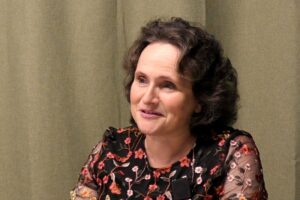
The post Chris Stark: The economics of clean energy ‘just get better and better’ appeared first on Carbon Brief.
Chris Stark: The economics of clean energy ‘just get better and better’

Climate Change
Commencement of NSW Forestry assessment a ‘chance to fix a broken system’ and deliver urgent forest protection
SYDNEY, Friday 18 September 2026 — In response to the Federal and NSW government’s announcement to commence an assessment of NSW forestry under the new national nature laws, Adele Chasson, Nature Policy Lead at Greenpeace Australia Pacific said:
“This is the Federal Government’s chance to fix a broken system that has enabled the destruction of NSW’s precious forests for far too long.
“Native forest logging continues to smash threatened species habitat. In NSW, it is pushing unique wildlife like koalas, greater gliders and glossy black cockatoos towards extinction. The state-owned logging agency has a disastrous record of environmental damage and breaches.
“The Regional Forest Agreement (RFA) system has failed, allowing the industrial logging of special forests for decades across Australia with no oversight. Thankfully, the Federal Government has started the process to finally remove the logging industry’s exemption from national nature laws.
“It’s time for the Federal Government to deliver the protection that forests urgently need, and that Australians overwhelmingly want. The Government must ensure a thorough assessment of the devastating impacts of native forest logging in NSW, and establish strong environmental rules that states must follow.
“These forests have been cared for by First Nations people for tens of thousands of years. They are some of the most biodiverse on the planet, store carbon, clean our air and water. It’s critical we protect them.”
ENDS
Media contact:
Kate O’Callaghan on 0406 231 892 or kate.ocallaghan@greenpeace.org
What happens when a love of marine life meets a playful imagination?
Sydney artist, illustrator and children’s author Sha’an d’Anthes, better known as Furry Little Peach, has teamed up with Greenpeace to create Happy Ocean Happy Planet: a joyful celebration of the extraordinary creatures that call our oceans home.
Sha’an felt inspired to create an illustration celebrating the beauty and resilience of marine life. Its hopeful message, A Happy Ocean is a Happy Planet, sparked a special collaboration with Greenpeace and a limited-edition t-shirt designed to help protect the oceans that inspired it.
The exclusive Furry Little Peach tee is available as a gift to new regular Greenpeace donors who give $30 or more and make at least three donations. By becoming a regular giver, you’ll help Greenpeace campaign for ocean protection.

ARTIST INTERVIEW: Sha’an d’Anthes (Furry Little Peach)
Sha’an shares the story behind the artwork, the local marine creatures featured in the design and why hope can be such a powerful force for action.
Hi Sha’an! Can you tell us a little about yourself and what you do?
My name is Sha’an d’Anthes, I also go by the pseudonym Furry Little Peach and I’m an illustrator, artist and children’s author based in Sydney, Australia. I love creating joyful, vibrant and nostalgic art that looks at the world through the lens of childlike wonder.

What do you love about drawing animals and nature?
I love all of the different shapes, colour and narrative you get to explore when drawing animals and nature. I’m also a city-slicker these days, and so I think that my work is a sort of escapism (for myself and hopefully for my audience).
How did the Greenpeace collaboration come about?
I went to the premiere of David Attenborough’s documentary Ocean, and felt compelled to create something to share the message of the film. This t-shirt is actually based off of that illustration including the tagline in I included when I shared it “A Happy Ocean is a Happy Planet”. I’m so grateful Greenpeace approached me for the project – it was a blast.
Where did you start when creating the Happy Ocean Happy Planet design?
The Happy Ocean tee starts the same as all of my work – with a brainstorm/braindump and really loose concept sketches.
How did you choose the animals for the illustration?
I actually asked Greenpeace to help me with the research of local marine life and they were so accommodating. They very quickly delivered me a huge list of local species of fish, mammals and coral and I just went through and looked up each creature and curated a little group of sea life that I thought would look sweet together – a mix of sizes, types, colours, textures and shapes.
What did you use to create the artwork?
So much of my work is traditional, but when it comes to things like t-shirts I always use digital drawing programs because I like to draw each colour in a separate layer which requires me to jump in and out of layers because it allows me to control colour and printing. When working digitally I always sketch in Procreate (an Australian digital art app), and then with this project I created final art in Adobe Fresco because it called for a vector graphic (an image that can be blown up to any size).
Do you have a favourite creature in the design?
I love painting Humpback Whales and always have, but I also have a soft spot for the sweet little Jelly Blubber jellyfish.
What did you want people to feel when they saw the artwork?
I specifically wanted to focus on the outcome that all of us want to see – a happy, thriving ocean where creatures are given the time and space to balance themselves. I feel that even when tackling tough subjects, leaning into hope is my natural inclination. As long as we have hope that things can be better, we will continue to take action.
What was the most fun part of creating it?
I actually documented the entire process of this project in a studio vlog on YouTube – and you can see how much fun I’m having doing final art jumping between layers and building the image. I had just come off completing final art for two books which are multi-year long projects, so being able to do a project that from start to finish in just a few days was really freeing at the time.
What does a “happy ocean” mean to you?
An ocean that given the time and space to repair and balance itself. Something I really took away from David Attenborough’s Ocean is that ocean ecosystems are actually really good at repairing themselves if we just let them do their thing.
How can people get their hands on the t-shirt?
The shirt is a reward for regular givers to Greenpeace – those who commit to at least 3 months of donations will receive the tee as a gift. Read about how at http://act.gp/flp-tee
How is Greenpeace helping to make our oceans happier places?
They have a deep focus on the health and happiness of our oceans through advocating for the set up of marine sanctuaries, holding big ocean polluters to account and calling for a ban on deep sea mining.
What are you working on next?
I will be jumping headfirst into Peachtober – an annual daily art challenge I run each year in October, if there are any artists reading this it’s a great time so please come join! In terms of publications my next picture book The Late Bird will be out in February 2027 (published by Harper Collins US) and then I have an creative activity book for adults coming out next August with Chronicle US and Penguin Australia. Otherwise you can always check out what I’m tinkering away with in my studio on Instagram and YouTube.

Climate Change
AI giant Anthropic’s first Australian data centre deal an “egregious” example of Big Tech double talk
SYDNEY, Thursday 17 September 2026 — Greenpeace Australia Pacific has slammed AI giant Anthropic’s deal for its first Australian site in Queensland’s Western Downs, the heart of coal seam gas country, saying the project will entrench gas and turbocharge climate pollution.
The expected electricity demand from the data centre site, situated in the middle of the Western Downs coal seam gas fields, is comparable to 1.5 million Australian households. Greenpeace’s report Energy Vampires: The AI data centres draining Australia called for a moratorium on frenzied data centre development until appropriate guardrails are in place.
Joe Rafalowicz, Head of Climate and Energy at Greenpeace Australia Pacific, said: “This is an egregious example of Big Tech giants being given carte blanche to drain energy and water, and use polluting gas to fuel their hyperscale data centres.
“AI and Big Tech corporations claim to bring new renewable energy to the grid, while blatantly planning to power their operations with polluting fossil fuels.
“Planning documents show the first stage of this behemoth project could be powered by ‘behind the metre’ gas — the same playbook AI companies have used in the US, leading to a 20% increase in climate pollution from electricity. Now these companies want to bring their cowboy plans to Australia and the Federal Government is allowing it.
“If they plugged into the local grid, the power required would increase Queensland’s electricity grid emissions by around 6.6 million tonnes — an 18% rise. If they build their own gas-fired power plants, this will drive up Queensland’s emissions even more.
“Billions of dollars are now pouring into a massive pipeline of proposed new data centres, of unprecedented size, being built at incredible speed across the country. Australians should be worried about the extreme lack of scrutiny being applied to these projects, and the corporations leading the data centre charge.
“The data centre build-out is happening without the endorsement of the Australian people, yet we are the ones who will pay the price. We can not allow unchecked data centre expansion to derail our renewable energy transition, entrench gas and turbocharge climate pollution — that’s why Greenpeace has called for an urgent moratorium until appropriate guardrails are in place.”
ENDS
Media contact: Kate O’Callaghan on 0406 231 892 or kate.ocallaghan@greenpeace.org



-

 Greenhouse Gases2 years ago
嘉宾来稿:满足中国增长的用电需求 光伏加储能“比新建煤电更实惠”
-
Climate Change1 year ago
Guest post: Why China is still building new coal – and when it might stop
-
Greenhouse Gases1 year ago
Guest post: Why China is still building new coal – and when it might stop
-

 Climate Change2 years ago
嘉宾来稿:满足中国增长的用电需求 光伏加储能“比新建煤电更实惠”
-

 Renewable Energy11 months ago
Sending Progressive Philanthropist George Soros to Prison?
-
Climate Change2 years ago
Bill Discounting Climate Change in Florida’s Energy Policy Awaits DeSantis’ Approval
-
Greenhouse Gases1 year ago
嘉宾来稿:探究火山喷发如何影响气候预测
-

 Carbon Footprint2 years ago
US SEC’s Climate Disclosure Rules Spur Renewed Interest in Carbon Credits