

Unwind and sleep easy with one of these non-toxic and eco-friendly bed frames that you know was sourced consciously, both in respect to your own health and the health of our common home: Planet Earth.
What is a Non-Toxic and Eco-Friendly Bed Frame?
Just as with other eco-friendly furniture, the key elements to consider when it comes to bed frames are the material, finishes, general production practices, and durability.
How Can You Tell If A Bed Frame Is Sustainable or Non-Toxic?
Materials
If you’re looking for a natural bed frame and want it to be non-toxic, it’s typically best to go the solid wood route if you can.
Most plywood, particleboard, or engineered wood is made with glue that contains formaldehyde. As a Volatile Organic Compound (VOC) and probable carcinogen, formaldehyde is an environmental and health risk for yourself and the workers producing that product.
That said, are some plywood/engineered woods that do not contain formaldehyde. But if the product page doesn’t specifically state that the product is formaldehyde-free, then you’ll want to inquire with the company.
Another material to consider if you’re looking for non-toxic furniture is solid metal, due to its durability, easy maintenance, and recyclability. However, this option isn’t so eco-friendly if that metal was newly mined, so look for recycled metal if you want to go this route!
Sourcing
Of course, although wood is renewable, it’s not always sustainably sourced. Look at a company’s About or Sustainability pages to see what information they can provide about how the wood they use is harvested and where it is sourced from. Look for things like:
- Local sourcing. This minimizes the product’s carbon footprint and typically means that a company has more transparency into their supply chain.
- FSC-certified. While not perfect, the Forest Stewardship Council seal is the most widely used third-party verification for sustainably-sourced wood.
- Reclaimed wood. Finding a bed frame made from repurposed materials is a fantastic option if you can find it. Not only does using reclaimed wood reduce waste, but it minimizes the need to cut down additional trees.
Finishes
Most conventional finishes used on furniture contain VOCs, which can cause a myriad of short-term and long-term health impacts. Look for non-toxic bed frames with low-VOC or even better, zero-VOC finishes.
Other Production Practices:
- Renewable energy use. Does the company use wind or solar power for its operations? Do they purchase Renewable Energy Credits?
- Waste reduction. How does the company handle material waste such as leftover wood? Do they work to minimize water use and energy use?
- Donations. Does the company give back to an environmental organization through a group like 1% for the Planet? Do they plant more trees than the number of trees cut down to produce their products?
Durability
One of the all-too-often left out elements of sustainability is durability and longevity! The longer the bed frame lasts, the longer it stays out of the landfill, and the fewer new bed frames you’ll have to consume.
How can you determine durability? Look for sturdy materials, good construction, check out the reviews for the brand’s products, and see what sort of warranty the brand offers. Some brands offer 1-year or 5-year warranties, and some even include a lifetime guarantee! The longer a brand commits to standing behind its products, the better.
If you’re planning to move around often, you may also want to consider how well the bed frame can be deconstructed and reconstructed. Fast furniture brands with poor construction — and that may use plastic in places that should be supported with metal — may not hold up after a few moves.
Ways Can You Find Sustainable and Natural Bed Frames?
As always, shopping secondhand is a great way to source furniture sustainably and more affordably! Sites like Facebook Marketplace, local Buy Nothing groups, and Craigslist can be resources for finding cheap eco-friendly furniture — sometimes, you can even get a piece for free if you’re willing to take care of the pick-up.
I also recommend checking out EstateSales.net to find local estate sales happening near you! I have found some of my absolute favorite pieces of high-quality, preloved furniture at estate sales.
For a more curated selection of secondhand bed frames, check out:
If vintage furniture (usually defined by being more than 40 years old) is more your style, browse these options for sustainable bed frames::
If you can’t find anything preloved, or you’d prefer to purchase a verified non-toxic bed frame, check out these brands below for sustainable bedroom furniture!
By the way, if you’re in need of some bedding as well, check out our guides to non-toxic mattresses, eco-friendly pillows, and organic bedding.
Note that this sustainable bed frame guide contains affiliate links, meaning we’ll earn a small commission if you choose to purchase through one of these links, which helps us continue to run this site. As always, all brands meet rigorous criteria for sustainability and are brands we love — and that we think you’ll love too!
Brands with Sustainable and Non-Toxic Bed Frames:
Our Top Overall Pick: Savvy Rest

Savvy Rest has everything you need to sleep more restfully, from organic mattresses to non-toxic bedroom furniture. The brand’s timeless all-natural platform beds — The Afton is their flagship platform bed and The Esmont is a platform bed with a customizable headboard — are made in their own Virginia workshop. Each bed is crafted out of sustainably-sourced maple and poplar wood and is available unfinished or with a zero-VOC finish.
The non-toxic furniture company also has a sustainable adjustable bed frame crafted from responsibly-sourced solid red oak, featuring a mid-century modern headboard.
Conscious Qualities: Sustainably-Sourced Wood, Zero-VOC Finishes, Local Production
Price: Starts at $945 for a Twin.
*Use code CONSCIOUSSTYLE20 for 20% off all products on Savvy Rest
Best Sustainable Bed Frames: Avocado

Made in their own GOTS-certified (and soon to be Zero Waste certified!) Los Angeles factory, Avocado Mattress makes eco-friendly bed frames with high environmental, health, and social standards. Each bed frame is made out of reclaimed wood or solid FSC-certified timber and zero-VOC finishes.
For the bed frames made from new wood, Avocado Mattress uses non-toxic Titebond wood glues. The Certified B-Corporation also pays living wages and offers benefits, including family healthcare, to their production factory team members.
Conscious Qualities: Reclaimed or FSC-Certified Wood, Zero-VOC Finishes, Local Production in a GOTS-Certified Factory, Greenguard-Certified (Gold), Carbon Neutral Certified
Price: Starts at $695 for Twin
Best Luxury Sustainable Bed Frames: Maiden Home

Maiden Home is a woman-founded luxury furniture company handcrafting all of their furniture made-to-order in North Carolina. As a direct-to-consumer brand, Maiden Home is able to offer the highest quality at a fraction of the price as it would be sold at furniture boutiques.
The furniture brand has high-quality beds made from solid hardwood sourced responsibly in line with the standards of the Sustainable Forestry Initiative. And they offer a variety of fabric options for the upholstery, including several shades of linen.
All furniture is produced without flame retardants, formaldehyde, or other harmful chemicals. And the brand’s performance fabrics are free of PFOS and PFOA and include non-toxic, GREENGUARD Gold certified treatments for stain resistance.
Conscious Qualities: Made to Order, Locally Made, Woman-Founded, Responsibly Sourced Hardwood, Lower Impact Fabric Choices
Price: Starts at $2,225 for Queen
Best Variety of Eco-Friendly Beds: Medley

Using only the highest quality non-toxic materials for their sustainable furniture, Medley has natural bed frames are made from domestically-sourced FSC-certified solid wood. Each wooden bed frame is made-to-order in Los Angeles using zero-VOC glue and zero-VOC all-natural furniture polish. (Note: Medley’s bamboo furniture uses low-VOC finishes.)
If you prefer an upholstered sustainable bed, check out Medley’s Nein bed which has the option to use organic natural latex.
Conscious Qualities: Local In-House Production, FSC-Certified Wood, Natural Finishes, Made-to-Order
Price: Starts at $2,550 for Twin
Best for Sustainable Upholstered Beds: Saatva

Saatva is a sustainable mattress company that has expanded into eco-friendly bed frames too. The company uses responsibly sourced hardwood that has been kiln-dried for maximum durability for the bed frame as well as plywood slats for additional support. (Note: I asked Saatva’s customer support team about potential toxins in the plywood, and they have told me that their beds are free of formaldehyde.)
For upholstery, Saatva offers natural linen as an option, which would be the non-toxic fabric choice!
Probably the most impressive feature of Saatva’s beds is their attention to quality and proper support. They even offer a 180-day trial to make sure you love the bed, plus a lifetime warranty — a feature you definitely won’t find at most big box furniture stores.
Conscious Qualities: Sustainably-Sourced Hardwood, Natural Upholstery Option, Lifetime Warranty
Price: Starts at $895 for a Queen
Best Responsible Forestry Practices: Masaya & Co

Beginning as a reforestation project, Masaya & Co. is dedicated to beyond sustainable sourcing. Not only does the furniture brand harvest their wood responsibly from their own forest (talk about transparency!), but the brand plants 100 trees for every product sold. All of Masaya & Co.’s eco-friendly bed frames are handmade by craftspeople in Nicaragua and finished with low-VOC natural oils.
Conscious Qualities: Invests in Reforestation, Made-to-Order, Ethical Production
Price: Starts at $1,405 for Twin
Best Simple Sustainable Wood Bed Frame: Birch

Organic and eco-friendly mattress company Birch also has a natural wood bed frame made from responsibly-sourced hardwood. In fact, all of the wood in the Birch Wood Frame are from FSC-certified and LEED compliant sources, to verify their commitment to responsible wood harvesting and energy use.
Specifically, this sustainable bed frame is made up of Appalachian hardwood bed rails, solid Southern Yellow Pin wood slats, and Appalachian Maple legs. This minimal solid wood bed frame is finished with all-natural water-based VOC-free finishes.
And in case you needed more reasons to love this non-toxic bed frame: it’s handmade in the USA, ships free, and comes with a 5-year warranty.
Conscious Qualities: Solid Wood, Responsibly Sourced, Zero VOC Finishes
Price: $499 for Twin
Best Affordable Eco-Friendly Bed Frame: Thuma

Minimal yet functional, Thuma’s eco-friendly beds are designed with intention — they are supportive and sturdy yet simple and easy to assemble.
Each minimalist bed is made from upcycled and repurposed rubberwood trees and is shipped out efficiently in recycled cardboard. (No styrofoam here!) With an average 4.9 star rating from nearly 10,000 reviews, there’s clearly a lot to love about Thuma’s sustainable bed frames!
Conscious Qualities: Greenguard Certified, Repurposed Wood, Eco Packaging
Price: Starts at $795 for Twin
Best Untreated Non-Toxic Bed Frame: My Green Mattress

MyGreenMattress.com has a simple sustainable bed frame made in the US from untreated domestically-sourced Poplar wood. The non-toxic bed frame does not have any wood stains, adhesives, or toxic chemicals. This slatted platform bed also eliminates the need for a box spring.
Conscious Qualities: Domestically-Sourced Wood, Non-Toxic & Untreated, Made in the US
Price: Starts at $419
Best for Reassembly and Apartment Living: Floyd

Designed with simplicity and longevity in mind, The Floyd eco-friendly bed frame is made with as few parts as possible (forget the headache of sorting through hundreds of pieces to set up your furniture!) so that it can be constructed, deconstructed, and reconstructed with ease.
Floyd’s wooden bed frame is made with sustainably-sourced real wood veneer. Veneer is a composite wood product, though Floyd reports that the panels have extremely low adhesive emissions. Since composite wood makes the bed lighter weight, this choice might it preferable if you’re planning on moving the bed a few times.
You can also customize your Floyd Bed Frame with add-ons like a bedside table, upholstered headboard, or (what would be my personal pick) underbed storage.
Floyd has also recently added a Bed Frame in Color, which is made with 50% recycled wood and comes in at a lower price point.
Conscious Qualities: Long-Lasting, Made With Natural Materials
Price: Starts at $540
Best for Heirloom Quality Sustainable Beds: Vermont Wood Studios

Handmade using premium solid American hardwood that was sustainably sourced by Vermont craftsmen, the sustainable wooden beds from Vermont Wood Studios are truly crafted to last a lifetime — and perhaps several more generations.
Each piece of eco-friendly furniture from the company is made-to-order and larger orders are delivered with white glove service. Vermont Wood Studios also uses eco-friendly, non-toxic coatings to finish their wood and protect against wear, such as natural linseed oils, tung oil, or GREENGUARD certified formaldehyde-free lacquer.
Conscious Qualities: Sustainably Sourced Solid Wood, Made-to-Order, Lifetime Guarantee, Made In The US, Non-Toxic Finishes
Price: Starts at $1,870
Final Thoughts on Sustainable and Non-Toxic Bed Frames;
There is quite a bit to look out for when shopping for eco-friendly bed frames, but I hope that this explanation and the roundup of brands above will help you out on your search!
Shopping For More Furniture? Browse These Guides:
21 Best Sustainable Furniture Brands
Non-Toxic Furniture Brands For A Healthy Home
The Best Non-Toxic Sofas for Truly Restful Relaxation
Your Ultimate Guide to Eco & Organic Bedding (30+ Brands!)
The post 11 Best Eco-Friendly and Non-Toxic Bed Frames for a Sustainable Slumber (2024) appeared first on Conscious Life & Style.
11 Best Eco-Friendly and Non-Toxic Bed Frames for a Sustainable Slumber (2024)

Last winter, we kept our house at 60 degrees and our electric bill was STILL $280. I’ve been interested in solar for a long time, but on the long list of house projects (especially when you’re restoring a 200 year old house on the historic registry) some are more pressing than others.
But with a few of those major projects wrapping up, and a daunting bill before me, I figured now was the time for a quick google search on solar panels, and let me tell you….. It can be very overwhelming.
Figuring out the rules (cough, cough, historic society), incentives or rebates if applicable, how much it would cost, how much we could save, etc. felt a little like a part-time job. But, one website made it really easy to compare things, and I am happy to be partnering with Aurora Solar to share that site with you.
Because I think you should be able to easily run the numbers on your house without a lot of hassle!
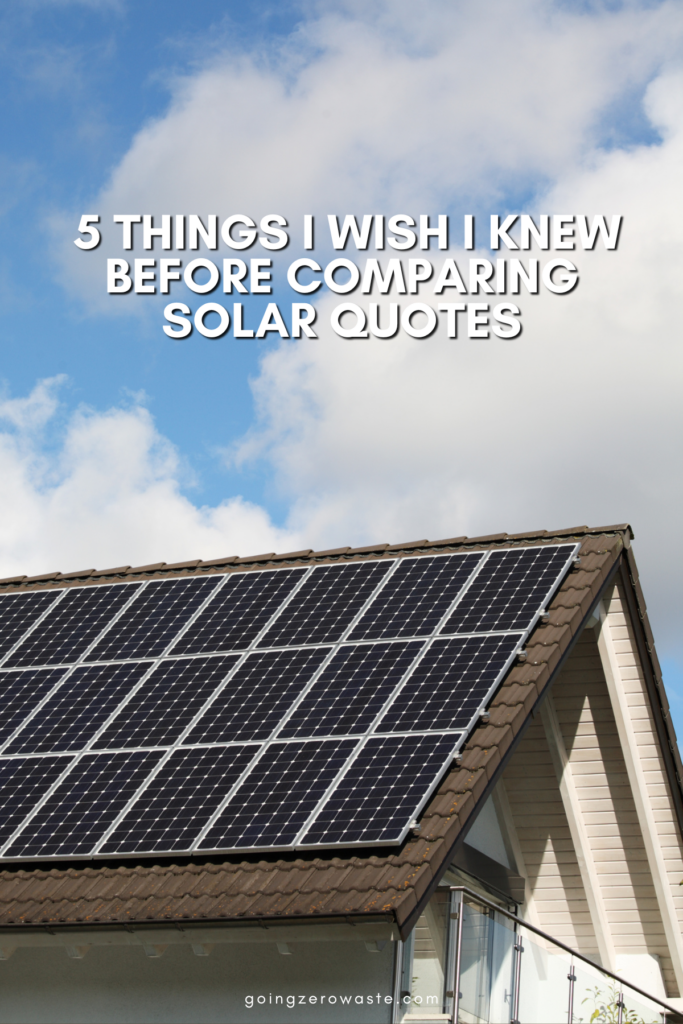
This post is sponsored by Aurora Solar, but all thoughts and opinions are my own.
If you’ve ever gotten a solar quote, there’s a good chance that Aurora Solar was involved. Aurora was founded in 2013 after its co-founders spent seven months trying to design a solar energy system using a patchwork of different tools.
Afterall, designing a solar system shouldn’t be harder than actually installing one. So they built software specifically for solar professionals. Today, more than 7,000 solar organizations use Aurora, and more than 20 million solar projects have been designed using the platform. They are also the largest solar software provider in the world. Their software is used by roughly 80% of the top 75 residential solar companies in the U.S.
All of this tech has been primarily used by professional installers to map your roof and then create a proposal, but now Aurora is offering this tech to us to help compare quotes.
So instead of having to call a bunch of different installers, I could use the Aurora Solar Marketplace to understand my solar potential, compare estimates, understand my possible savings, look into battery storage and other home electrification incentives, and map out different financing options.
1. know how much electricity the system will actually produce
Before you even get into the price, make sure you understand what you’re actually being quoted.
Two solar systems can have very different prices because they may not be the same size or produce the same amount of electricity. A cheaper system might simply have fewer panels and offset less of your electric bill.
With Aurora, you can compare solar estimates and see the system size, energy production, and how much electricity the system should offset.
You can also upload your utility bill to get a solar estimate based more closely on your actual energy usage, to make the quote accurate for you instead of a ‘generic household’.
2. understand the solar payback period
Aurora calculates things like payback period and lifetime savings, which makes it much easier to understand the long-term finances.
The solar payback period is basically how long it takes for your estimated savings to make up for what you spent on the system, and this is the number that surprised me most!
One estimate had a payback period of around 7 years, and another was closer to 11 years! Over 25 years, two of the estimates I looked at had almost a $13,000 difference in projected savings.
Of course, these are still projections as electricity rates can change (HELLO 2026) but when you’re trying to compare two options for the same house, knowing that one is projected to pay for itself four years sooner is pretty useful information.
3. look beyond the monthly payment
Depending on the installer, you may be looking at a cash purchase, solar loan, lease, or power purchase agreement.
But thankfully with Aurora you can compare the different financing options side-by-side which makes it a lot easier to see the trade-offs. One option may have a lower upfront cost, another may have a lower monthly payment, and another may give you better long-term savings.
4. find out which solar incentives actually apply to you
The minute you start Googling solar, you can find federal incentives, state incentives, utility programs, rebates, net metering, and a whole bunch of information that may or may not even apply to where you live.
And some of the articles ranking at the top of Google are several years old! (RIP to the federal incentives canceled at the end of 2025.) But, Aurora can account for solar incentives when calculating the cost and savings of a system, including state, local, and utility-specific programs.
I would still double check any incentive or tax benefit you’re planning to use before signing a contract, especially because programs and eligibility can change, but having all the relevant information in the same place makes the research process much less overwhelming.
5. research the installer, equipment, and warranties
Aurora lets you compare solar installers based on things like reviews, reputation, pricing, and financing options, which I think is just as important as the actual quote.
I’d also look closely at what equipment is included. What panels are they using? What kind of inverter? How long are the equipment warranties? Is there also a workmanship warranty from the installer? Who handles repairs if something goes wrong five or ten years from now?
And, I know I’ve said it a million times, but it’s nice to see it side-by-side without having to fill out a bunch of forms and be hounded on the phone just to get an idea of what solar may look like.
The post How to Compare Solar Quotes: What to Look For Before You Choose appeared first on Going Zero Waste.
How to Compare Solar Quotes: What to Look For Before You Choose