


As artificial intelligence (AI) is taking over industries, its impact on global copper demand is becoming increasingly evident. BHP, the world’s largest mining company, has warned that AI’s growth and clean energy transition could aggravate an already looming copper shortage. With copper’s critical role in powering data centers, EVs, and renewable energy systems, the metal’s future availability is a growing global concern.
BHP Predicts Soaring Copper Demand in The Future
BHP’s chief financial officer Vandita Pant has reported to Financial Times that the company predicts the global demand for copper to soar by 72% by 2050. This clearly shows a rising trend from 30.4 million tons in 2021 to 52.5 million tons annually. She further explained the surge to be driven by the increasing need for copper in electric vehicles (EVs), solar farms, and particularly, data centers powered by AI technologies.
Pant added,
“Today, data centers are less than 1 percent of copper demand, but that is expected to be 6 to 7 percent by 2050.”
Notably, AI applications, which require energy-intensive computing, are expected to increase copper demand by an additional 3.4 million tons each year by 2050. The copper dominates the power transmission and cooling systems that keep these facilities operational. As AI continues to drive the expansion of data centers, its infrastructure will rely heavily on copper, intensifying competition for the red metal.
To sum up, BHP right now sees a temporary weak copper demand but predicts strong long-term potential.
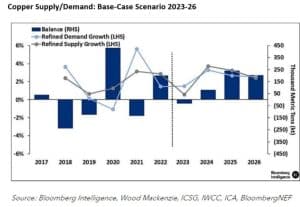
Global Copper Shortage an Imminent Challenge, Reports Financial Times
BHP’s concerns come amidst a broader conversation about the future of copper supply. A copper shortfall is expected in the medium to long term, triggering a race among mining companies to secure access to copper deposits.
Financial Times reported, that earlier this year, BHP failed to acquire Anglo American, a major copper producer, in a bid to strengthen its position in the copper market. Though the $49 billion offer was rejected, BHP continues to invest heavily in copper assets. In July 2024, the company teamed up with Canada’s Lundin Mining to acquire South America-focused Filo Corp. for $3 billion, securing copper-rich assets in Chile and Argentina.
Colin Hamilton, commodities analyst at BMO Capital Markets said,
“Data centers themselves are becoming incrementally less copper intensive, but getting the electricity to them, that is copper intensive”
Despite these efforts, global copper inventories have been declining. In CME warehouses, copper stock fell by 71% between March and July, reaching their lowest levels since 2008. Furthermore, new copper mines aren’t being developed quickly enough to meet rising demand, as it takes nearly more than a decade to actively set up a project. This lag in supply could lead to a significant shortage of copper in the coming decades.
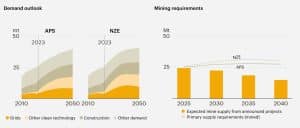 Source: IEA
Is China’s Slowdown Holding Copper Prices Steady?
While the long-term outlook for copper remains robust, the short-term market is facing challenges. This year weak demand from China, the world’s largest consumer of copper, has weighed on prices. Copper is currently trading at around $9,207 per tonne, down 15% from its peak earlier this year. Media reports say that concerns about China’s property sector and slower-than-expected economic growth have contributed to this decline.
Most recently Bloomberg reported,
- The latest 3-month closing price for LME copper is $9,515.00, reflecting a 1.22% increase.
Even The Wall Street Bank has projected copper prices to average $10,100 per metric ton in 2025 which is significantly lower than its earlier forecast of $15,000.
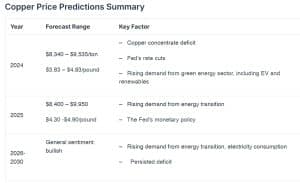
Source: Technopedia
However, analysts and mining executives agree that copper’s demand remains solid. The energy transition, driven by renewable energy projects and electrification, will be a key growth driver for copper demand. BHP expects that as the world advances towards its net-zero goals, the demand for copper will certainly spike, especially in developing countries.
A Race for Copper in the Age of AI: Who Are the Top Players?
As copper prices hit a two-month high, major mining firms like Anglo American, Southern Copper, Vale, Ero Copper, Rio Tinto (RIO), Antofagasta, Freeport-McMoRan, and Glencore gained the spotlight on the London Stock Exchange. Furthermore, the recent half-point rate cut by the U.S. Federal Reserve has contributed to broader gains in the metals market, making it an exciting time for copper investors.
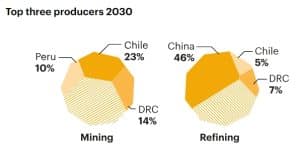
Source: IEA
The growing influence of AI and the energy transition is reshaping the global copper market. BHP’s warnings about a potential shortage underscore the importance of securing copper resources for the future. As the demand for AI-driven data centers and clean energy solutions rises, industries are bracing up for the coming copper crunch.
We can see how significant sustainable mining and innovation in resource management have become more critical than ever. Copper, once only made for traditional industries, is now at the forefront of the global energy transition.
Well, the race to secure copper mines is on, with mining giants like BHP positioning themselves to meet the future needs of the tech world. Nonetheless, the question remains: Will the supply of copper keep up with the rapid advancements in AI and the shift toward renewable energy? Let’s wait and watch!
The post Will AI Drive A Global Copper Shortage? BHP Rings the Alarm appeared first on Carbon Credits.

The post Promoting Improved Cooking Practices in Nigeria appeared first on Terrapass.
For most companies, the largest figure in the carbon inventory is not the office, the vehicle fleet, or the electricity bill. It sits upstream, in the goods and materials a business buys to make and sell its products. These purchased inputs form the bulk of a company’s Scope 3 emissions, which routinely exceeds everything the business controls directly, and can add up to 90% of their global footprint.




-
Climate Change1 year ago
Guest post: Why China is still building new coal – and when it might stop
-

 Greenhouse Gases2 years ago
嘉宾来稿:满足中国增长的用电需求 光伏加储能“比新建煤电更实惠”
-
Greenhouse Gases1 year ago
Guest post: Why China is still building new coal – and when it might stop
-

 Climate Change2 years ago
嘉宾来稿:满足中国增长的用电需求 光伏加储能“比新建煤电更实惠”
-

 Renewable Energy12 months ago
Sending Progressive Philanthropist George Soros to Prison?
-
Climate Change2 years ago
Bill Discounting Climate Change in Florida’s Energy Policy Awaits DeSantis’ Approval
-
Greenhouse Gases1 year ago
嘉宾来稿:探究火山喷发如何影响气候预测
-

 Climate Change2 years ago
Analysis: China’s CO2 falls 1% in Q2 2024 in first quarterly drop since Covid-19