

Whether you just did a closet clean-out or you’ve just noticed a few pieces are looking a bit too tired for repair, you might be wondering what do I do with these old clothes?
The Clothing Waste Problem
In the United States, the EPA reported that nearly 67% of discarded textiles are landfilled and 19% were incinerated with less than 15% being recycled. Those stats mean that 14,520,000 tons of textiles were landfilled or burned in the year 2018 alone (which was the last year that textile waste numbers were reported by the EPA).
Plus, there isn’t actually much if any textile-to-textile recycling infrastructure that exists at scale yet, so most textile recycling is technically downcycling. This is where textiles are shredded and turned into things like carpeting or insulation. While it’s better than the landfill, it’s not always the best scenario for textiles (especially when they’re still in decent condition).
Given the state of textile recycling, you might be thinking ok, let’s donate it!?
Unfortunately only a small percentage (estimates range from 10-20%) of the clothes you donate are sold in the charity shops themselves.
A significant amount of the donated clothes end up getting exported to countries in the Global South like Chile, Kenya, and Ghana where they do not have the demand to sell all of that clothing nor the infrastructure to process the volume of clothing.
And these countries certainly do not have the textile recycling infrastructure to handle the amount of old, worn-out low-quality clothing that the Global North is dumping.
What Do We Do With These Old Clothes Then?
While the typical suggestions for what to do with old clothes fall flat, that doesn’t mean we should give up — this guide exists to help you find sustainable ways to manage these unwanted garments and other pieces.
Step one: determine if it’s really a no or actually a “maybe”.
Sometimes when we’re in the midst of a closet declutter or just feeling overwhelmed by our wardrobe, it can be tempting to get rid of all of our “maybe” pieces. I’ve certainly done this from time to time.
While I love a streamlined wardrobe, I have regretted getting rid of particular pieces in the past. I felt like I gave up on some gems too soon! So now I like to implement a pause before decluttering my “maybe” pieces.
What’s a “maybe” piece? This is a personal decision, but for me this category involves:
- Pieces that I’ve worn in the past that I got tired of
- Pieces that I do love alone, but don’t know how to style yet
- Pieces that have just 1 or 2 things off about them
Essentially, “maybe” pieces are items that still have potential.
So to try to determine if it’s really time to say goodbye to that item, I first follow these practices:
If it’s an item I’m tired of wearing…
I’ll put it away for a season or two. It’s surprising how many items I’ve ended up loving again by just taking a break from seeing it in my closet every single day.
If it’s an item I don’t know how to style quite right…
I turn to Pinterest!

I like to search for that item on Pinterest + the term “outfit ideas”.
For example, if I have a sweater vest in my maybe pile that I want to wear more, I might search “sweater vest outfit ideas”.
I’ll save a few of the Pins that stand out to me and see how I might be able to emulate some of those looks.
You don’t have to own the exact pieces that are shown in the images but think about if you have something that could be similar and do a little try-on session.
If there is just one or two things off about a piece…
I consider if these things are fixable. Can I take my trousers to a tailor to get hemmed? If a v-neck is too low for my liking, can I add a snap closure?
Or I consider if I can wear those items in a different way. For example, does that fitted turtleneck work better as an under-layer? Will the button-down feel less stuffy if I cuff the sleeves and unbutton the top buttons?
I’m not suggesting you keep things that you genuinely dislike or that make you feel uncomfortable! But if a piece still has potential, I find that a bit of experimentation can go a long way.
If a piece is just not feeling totally “you”…
Try pairing it with a tried-and-true item in your closet. This is a suggestion that two podcast guests — personal stylist Sophie Strauss and Stylebook co-founder Jess Atkins — have shared and it has worked wonders for me.
Another approach is to bring in a piece that has the opposite feel. For example, if a dress is feeling too soft for your style, what would the outfit look like if you brought it a moto jacket? What if you wore it with a pair of leather boots or sneakers?
This is also where your style words can come in handy! My current style words are feminine, structured, and grounded. So if a blouse is feeling too frilly, I add in a structured blazer. Or if a structured outfit is feeling too stuffy, I’ll add in something like a raffia bag to ground it down or a feminine shoe to make it feel a bit lighter.
A piece can be totally transformed when paired with the right complementary — or juxtaposed — pieces.
Step two: separate out clothes in good condition
Now for the “no’s” or the “maybe’s” that just are not working, let’s talk about how to responsibly declutter these items!
The best approach is going to depend on the item (i.e. how desirable it is), the amount of time you have to rehome it, and if you want to get a financial return or not.
Here are your options from highest to lowest effort. Note that there are some links below that are affiliate links — as always, I only share organizations and brands I love that I think you’d love too.
Resell it yourself
- Effort: high — you’ll need to photograph and upload the item to a marketplace, handle customer communications, and ship it out
- Financial potential: high relative to the resale value of the piece
- Best for: items with resale value that’d be worth the shipping cost
- Where? Online marketplaces like Poshmark, Depop, Vinted, Mercari, Vestiaire Collective, or Ebay.
Consign it locally
- Effort: moderate
- Financial potential: moderate to low, depending on the percentage your local consigner keeps
- Best for: seasonal items with resale value; check which brands and styles your local consignment shop takes
- Where? Search for “consignment shops near me” or peruse the ratings to read the experiences sellers have had
Swap or share with a friend
- Effort: moderate
- Financial potential: none, but you might get a new-to-you piece
- Best for: items your friend would love (I’d suggest sending pictures beforehand to a friend or in a friend group to see if anyone would be interested OR next time you see them in person you can show the pieces to them)
- Where? In person with a friend
Go to a clothing swap
- Effort: moderate
- Financial potential: none, but you’ll get new-to-you pieces (and it can be fun!)
- Best for: it depends on the swap, but any item in good condition
- Where? Search for “clothing swaps near me” or search on event platforms like Eventbrite; I also suggest following any local sustainable fashion organizations to stay updated on events near you!
Direct donations
- Effort: moderate
- Financial potential: none, but you’ll feel confident your donations are actually getting used by those in most need of them
- Best for: specific items (e.g., gently used coat to a homeless shelter or workwear to a women’s center; this will be specified by the organization)
- Where? Search for local organizations that might be in need of clothing, like a women’s center, homeless shelter, or refugee agency. They should be listing out the items that the organization is currently in need of. If you’re uncertain, contact them first! Sending in unwanted items may lead to that piece getting tossed.
Consign it with an online consignment store
- Effort: low
- Financial potential: moderate to none (some stores give $0 for fast fashion items)
- Best for: items you don’t have time to resell individually
- Where? Online stores like ThredUp take all types of items; The RealReal consigns luxury and designer items
General donations
- Effort: low
- Financial potential: none (plus, these places often have more than enough clothing so the pieces may not actually be resold)
- Best for: desirable pieces that have a high chance to get resold (though again, sell-through rates do tend to be quite low at charity shops so I try to avoid this approach)
- Where? A charity shop that resells clothing in order to raise money for their cause, like a Goodwill, Salvation Army, or British Red Cross shop
Tips for donating and selling clothing:
No matter which approach you use, keep these tips in mind to maximize the life of your old clothing!
- The piece is going to have the best chance at a new life when you’re reselling it in-season. (Donating or selling a parka in summer doesn’t have great odds!) If an item I want to rehome is out of season, I’ll store it away in a bin for later.
- Wash the piece before selling, swapping or donating. This sounds basic, but it was clear at the clothing swap I just co-hosted that not everyone is doing this!!
- If the piece is damaged beyond repair, stained, or worn-out, take it to step 3 instead!
Step 3: recycle or upcycle old clothes in poor condition
Some garments are simply unwearable. This is the toughest category to handle, given the lack of real textile recycling options. But there are still ways to make the most of these textiles!
If you want to try a creative project, old garments can become upcycling supplies. For a variety of upcycling classes, check out Skillshare or Domestika.
If you don’t want to upcycle these pieces yourself, SUAY LA has “Suay it Forward” Textile Recycling Bags.
They don’t export these textiles, but actually upcycle them in-house, which allows for full transparency.
A bag is $20, but in exchange you get a $20 credit to put towards one of their upcycled pieces. (I have my eye on one of their throw pillows!)

Another option for recycling your old clothes is Trashie. Their take-back bag works similarly — you purchase a bag for $20, fill it up with old clothing in any condition and they’ll sort through the textiles to find the next best use for that piece.
Trashie doesn’t have as much transparency into their process as SUAY LA does because they work with 40 external partners (rather than handling everything in-house), but they’ve been posting more behind-the-scenes videos on their Instagram page.
The benefit of Trashie is that you unlock dozens of rewards when you purchase one of their Take-Back Bags, rather than just getting credit at one store.
I do hope that in the future, all textile recycling options with full transparency will be free or at least that textiles can be accepted with the rest of our household recycling! I understand that paying for textile recycling is not accessible to everyone, even if you get a store credit in exchange.
In that case, you could contact your local thrift store to see how they handle unwearable garments. Textile-to-textile recycling is extremely rare so ask if they downcycle them domestically (preferable) or if they export them, making them a problem for communities in the Global South to deal with (avoid).
Step 3b: what to do with old underwear
Even tougher than repurposed unwearable clothing? Rehoming worn underwear! Almost nowhere excepts these items, and for very understandable reasons!
That said, here are two options to check out:
The Bra Recyclers is a social enterprise that donates new bras and repurposes used bras.
Subset has an underwear recycling program. The underwear brand works with a partner that downcycles these textiles into things like insulation and carpet bedding. Similar to SUAY LA and Trashie, you pay upfront but get a store credit in exchange. I’ve used Subset’s underwear recycling program in the past when I made the switch from synthetic underwear to their organic cotton pieces for health reasons.
My Final Thoughts on Managing Old Clothes Responsibly
When the reality of what it really takes to responsibly manage my old clothes sank in for me, it really made me way more intentional about my purchases. (There is no real “away”, because away is a real place, inhabited by real humans.)
That said, of course there will always be times where our clothing just doesn’t work for us anymore. That’s part of life — lifestyles change, identities change, needs change, sizes change, and even the climate we live in changes — and keeping 100% of our clothes forever is simply not realistic.
So when the time does come to declutter a few pieces, I turn to the three steps above to maximize their use and ensure they are getting a second (or third!) life that I can feel good about.
The post What to Do With Old Clothes, Sustainably appeared first on .

There’s something undeniably special about wearing uniquely handcrafted, fair trade jewelry that you can know was made slowly and thoughtfully with care. Equally special is wearing an elevated set of jewelry crafted with recycled materials and sustainable processes.
Whether you’re looking for an investment piece or more affordable pieces, there are options for any budget on this list. The aesthetics of these fair trade and sustainable jewelry brands also vary, so you’ll also be able to discover an ethical brand that matches your unique style.
What is Fair Trade Jewelry?
Fair trade can both be a general term used to describe a brand’s sourcing practices — like direct relationships with artisan cooperatives, wages above local standard rates, and safe working conditions — or a third-party “Fair Trade” verification through an organization like Fair Trade Federation, Fair Trade USA, or World Fair Trade Organization. When a brand doesn’t have a certification, we verify a brand’s practices by their own published information.
In the cases where brands do go the extra mile and get a third-party verification for their fair trade practices, we’ve noted it directly in their entries.
Note that this guide includes affiliate links and partners. As always, we only feature brands that meet high standards for responsibility we love, and that we think you’ll love too!
2. Ana Luisa
Best for: affordable everyday jewelry
Conscious Qualities: Recycled Gold, Lab-Grown Diamonds, Small-Batch Production, Direct-to-Consumer
Ana Luisa creates stunning, elegant jewelry from responsibly-sourced materials including 100% recycled gold and lab-grown diamonds. The sustainable jewelry brand also produces in small batches to minimize waste.
By using a direct-to-consumer model, Ana Luisa is able to provide luxury, high-quality jewelry at accessible prices.

3. Monica Vinader
Best for: recycled demi-fine jewelry
Conscious Qualities: Woman-Founded, Recycled Silver & Gold Vermeil, Traceable Gemstones, Lab-Grown & Conflict-Free Diamonds, Supply Chain Transparency
Price Range: $85 (studs) – $2,495 (diamond ring)
British jewelry brand Monica Vinader was one of the first brands to meet the gap between fashion jewelry and fine jewelry with their “demi fine” jewelry. The women-founded brand has necklaces, earrings, bracelets, and rings crafted from 100% recycled sterling silver and gold vermeil, fully traceable gemstones, and lab-grown or conflict-free diamonds. Monica Vinader also launched Product Passports, taking an active effort towards full supply chain transparency.

4. WorldFinds
Best for: unique statement jewelry with a story
Conscious Qualities: Fair Trade Verified, Upcycled Materials, Artisan-Made
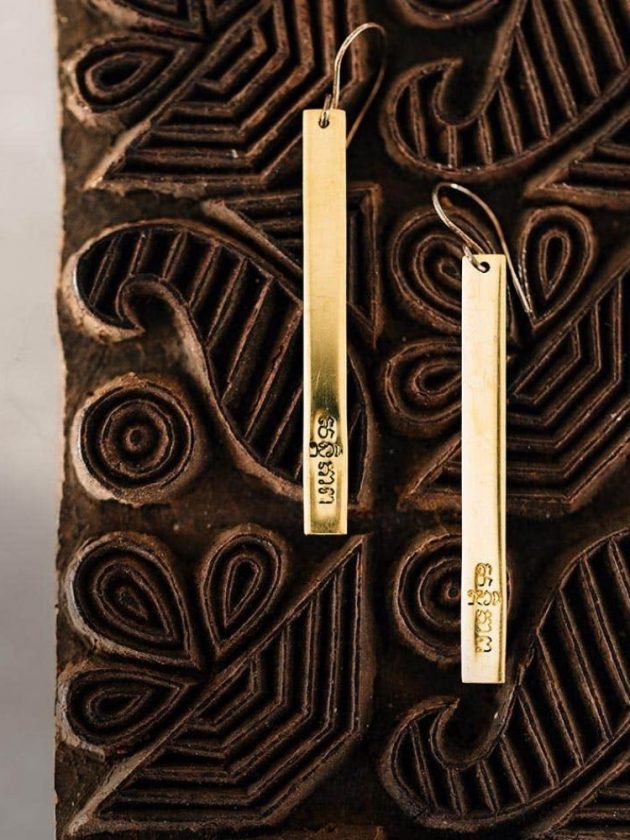
WorldFinds provides sustainable employment and just wages for hundreds of women artisans in India and Bali. These artisans handcraft both sleek metal fair trade jewelry and unique recycled Kantha pieces. WorldFinds is Verified by the Fair Trade Federation, which assesses members against fair trade principles including fair wages, safe conditions, and transparent supply chains.
Plus WorldFinds’ signature Kantha jewelry is made from upcycling materials: wood scraps from a furniture factory and locally sourced Kantha fabric remnants.

5. Astor + Orion
Best for: drop earrings and charm necklaces with symbolism
Conscious Qualities: Certified Ethical Factory, Recycled Materials, Designed for Recyclability, Repair Program
Ethical jewelry brand Astor + Orion sources their jewelry from a factory with multiple certifications ensuring worker safety, fair production practices, and responsible environmental management. Astor + Orion’s stunning jewelry is made from recycled materials and designed in a way to make it easily recyclable! Their pieces also come with a quality assurance — the brand will repair any piece within 6 months of purchase.

6. Laura Elizabeth
Best for: non-toxic jewelry in organic shapes
Conscious Qualities: Locally Sourced Recycled Metals, Woman-Owned, Fair Wages, Safe Working Conditions
Price Range: $45 – $330
Crafted from recycled metals sourced locally in LA, Laura Elizabeth creates stand-out sustainable jewelry. All of the brand’s jewelry is sourced ethically from a small, woman-owned studio in Los Angeles that ensures reasonable working hours (35 hr/week), fair wages, and safe working conditions (such as proper ventilation). Check out more on Laura Elizabeth in this post!
The jewelry is also non-toxic, free of cadmium or lead.

7. Ten Thousand Villages
Best for: giftable fair trade jewelry
Conscious Qualities: Fair Trade Production, Artisan-Made
Price Range: $6 – $175
Founded in 1946, Ten Thousand Villages is one of the fair trade pioneers and a founding member of the World Fair Trade Organization (WFTO), the global network that verifies fair trade practices across its member organizations.
They’ve developed relationships with artisans around the world, providing valuable economic opportunities for thousands of makers in 30 countries around the world. Their marketplace has handmade necklaces, earrings, bracelets, and rings, along with a variety of other fair trade goods.
8. Edge of Ember
Best for: gemstone jewelry
Conscious Qualities: Recycled Gold & Silver, Artisan-Made, Ethical Production
Price Range: $49 (ear cuff) – $2,730 (diamond tennis bracelet)
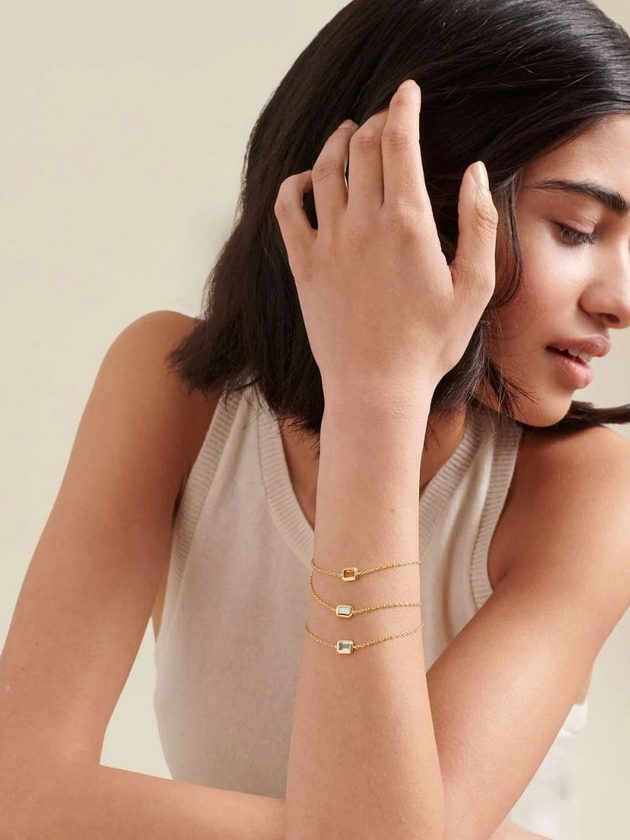
Edge of Ember’s timeless jewelry is responsibly crafted by makers working in artisan groups and small-scale factories. Their delicate necklaces, bracelets, rings, and other pieces are crafted by skilled artisans in India, Hong Kong, Germany, and Thailand. The brand carries out independent social audits to ensure ethical working conditions and environmental responsibility.
Edge of Ember has a wide selection of recycled gold and silver rings, bracelets, and necklaces adorned with stunning gemstones, including many birthstone jewelry options perfect for gifting.
9. Aurate
Best for: ethical diamond fine jewelry
Conscious Qualities: 100% Recycled Gold, Lab-Grown & Conflict-Free Diamonds, Vintage Collection
Price Range: $18 (stainless steel chain) – $19,000 (diamond tennis necklace)
Responsibly-sourced quality jewelry — that’s Aurate’s promise. The jewelry brand’s sleek, timeless pieces are thoughtfully made by seventh-generation craftspeople using 100% recycled gold and lab-grown or conflict-free diamonds.
Aurate also has a curated collection of vintage fine jewelry from cocktail watches to signet rings up to 50% off.

10. SOKO
Best for: modern, minimalist artisan-made jewelry
Conscious Qualities: Above-Market Artisan Wages, Black-Owned
Price Range: $78 – $298
SOKO is an innovative Black-owned ethical jewelry brand using mobile tools to bridge the barriers for artisan entrepreneurs in Kenya. In partnership with SOKO, independent artisans can operate a “virtual factory”, earning 5x more than an average artisan workshop in their local areas.
The jewelry is made with 24K gold or silver-plated brass — an affordable metal that also happens to consist of 90% recycled content on average. Other materials include reclaimed horn and bone, locally-sourced teak wood offcuts, and ceramic beads made by a fair trade women’s collective in Kenya.

10. Raven + Lily
Best for: affordable artisan jewelry
Conscious Qualities: Fair Trade Verified, Artisan-Made, Women-Led
Price Range: $40 – $240
Raven + Lily is an ethical fashion and jewelry brand verified Fair Trade by the Fair Trade Federation. The women-led brand partners with artisan women around the world who use natural materials to craft both classic, elegant pieces and statement jewelry.

11. NAKIIT
Best for: one-of-a-kind, solo-handcrafted pieces
Conscious Qualities: Made-to-Order, Recycled Silver & Gold, Zero-Waste Scrap Recycling
Price Range: $21 – $485
As a small, slow-minded jewelry brand, NAKIIT’s founder + owner handcrafts each piece with intention. In fact, every piece of jewelry the brand sells is made by the founder herself!
Nearly all of NAKIIT’s ethically-made jewelry is either made-to-order or one-of-a-kind, ensuring a minimal ecological impact and the highest attention to quality.
As if we could love this brand even more, NAKIIT also sources recycled sterling silver and gold, plus recycles any remaining metal scraps or dust after production.