Connect with us

Published

on

Australia is one of the sunniest countries on Earth, blessed with over 2,500 hours of sunshine annually across most regions.  

It’s no surprise that Aussies have embraced rooftop solar like no other nation—nearly 3.7 million homes now have solar systems installed as of 2025. 

But what if we fully realised the potential of the solar revolution? What if every house in Australia has solar panels from 2025 onward? 

From climate impact and economic transformation to energy resilience and beyond, this vision has the potential to reshape the nation’s future. 

Every day, the sun emits far more energy to run the planet. Solar panels convert sunlight into electricity. It is essential to decarbonise our society.  

Solar power, a renewable energy source that doesn’t create any CO2 emissions, is not just a green choice, but also a financially savvy one.  

With every passing day, solar panels for household use are becoming increasingly affordable, making it an empowering choice for homeowners.

How Can Solar Benefit Every Household In Australia?

Almost 40% of the roof space is already eligible for a solar system. According to data, solar power station conversion is possible on most rooftops.  

And approximately 134% of the country’s residential electricity needs should meet this number.   

These massive levels of solar installation not only benefit the environment but also the economy. The growth of the solar industry is creating jobs, making it a promising sector for the future.  

With solar becoming more affordable, new financing plans, such as “Energy Matters and Save as You Go Solar,” make owning a PV system very feasible.    

One of these new offers is a no-deposit payment plan. Paying off your solar loan can help reduce your electricity bill.  

On a sunny day, the power generated by rooftop solar panels could render base-load power stations redundant.  

This immediate impact enables Australia to shut down most of its coal-fired power plants within a matter of hours, a significant step toward meeting its emissions targets and combating climate change.  

The overarching concept is for eligible homes to generate more electricity than required. The excess supply is fed back into the grid to meet Australia’s residential and non-residential power needs. With feed-in tariffs, solar panel users can recoup their investment.   

Above all, Solar is a viable solution to Australia’s energy challenges. It would also permanently reduce the country’s dependence on expensive fossil fuels for electricity generation.

But How Is the Progress in 2025?

renewable energy

Australia’s rooftop solar boom continues to surge ahead, setting new records and reinforcing the nation’s global leadership in residential solar adoption.  

According to the Clean Energy Regulator (CER), Australia added more than 3,200 MW of small-scale solar to the grid by the end of 2024, surpassing previous records and highlighting steady growth in household solar uptake. 

Queensland now leads the nation in rooftop solar potential, with around 84% of suitable rooftops equipped with solar PV systems.  

South Australia follows closely with 80%, maintaining its position as a long-time solar stronghold. New South Wales and Victoria have also shown substantial progress, with adoption rates climbing to approximately 54% and 47%, respectively. 

Australia’s overall solar capacity has expanded significantly, growing by nearly 22% in 2024 alone.  

While the residential PV sector encountered some logistical and policy-related hurdles, the large-scale solar market broke installation records, surpassing the levels seen in both 2023 and 2024. 

Looking ahead, projections indicate that an additional 12 GW of solar capacity will be added nationwide by the end of 2027.  

Rooftop solar alone is on track to outpace the capacity of Australia’s entire coal-fired power fleet, accelerating the timeline for coal plant retirements and reinforcing Australia’s transition to a cleaner energy future.

Can Solar Alone Help You With Consumption & Distribution?

Your PV system consists of various components. Depending on your chosen system, several panels will be mounted on your roof. Your expert installer should also install the mounting equipment and an inverter.   

More advanced systems include performance monitoring equipment and a rechargeable battery, which is particularly beneficial for solar-plus-storage systems.  

Solar-plus-storage systems include a solar battery to store any excess energy. And later, it can provide you with stored energy.  

Would you like to learn more about solar energy and batteries? And a solar system for house usage? Then contact us or request a free solar quote. We’d be delighted to discuss the best solar power and battery options tailored to your needs.   

Most of the work is done by your solar panels. It absorbs photons from the sun’s rays and converts them to DC, or Direct Current energy. An inverter converts the direct current (DC) energy from your panels into alternating current (AC) that household appliances can use.  

Performance monitoring equipment can help you track the amount of energy your system produces. Identify any faults to ensure your system operates at peak efficiency. This advanced system can even feed data to a program accessible via the Internet or a mobile app.  

Solar panels generate the majority of their energy during the day when we are away from home, allowing us to use it. When your system generates more energy than it consumes, the excess energy is returned to the grid. And to charge your battery.  

Any excess energy generated will be fed back into the grid when your battery is fully charged. The majority of solar-powered homes are net-metered.  

Any energy you send back to the grid will earn you a ‘feed-in tariff’, a payment for the electricity you generate and send back to the grid. This payment can be applied to the cost of any grid energy you use, effectively reducing your electricity bill. 

What Should You Do Before Getting Solar?

solar batteries

Consider your current electricity consumption. You can use a recent energy bill to check your energy usage. It can estimate your electricity usage based on your area and household size.  

Select the system size that best suits your needs. Consider every future requirement. Your energy retailer can assist you with this information. Understand the numbers. Determine whether you are eligible for any incentives or rebates.  

Calculate the payback period, and discuss the tariff and small-scale technology certificates (STCs) with your retailer. And most importantly, consider how solar energy will affect your current electricity rate.  

Verify if your solar company is an Approved Solar Retailer. Choose Retailers approved by the Clean Energy Council’s Solar Retailer Code of Conduct. This code requires them to provide you with clear and accurate information and service.  

Check that your solar retailer can provide evidence that your new solar panels are genuine. Meet Australian Standards, and have a warranty you can rely on.  

The Clean Energy Council’s Solar Guide is a comprehensive resource that provides technical information to help you decide on the best solar system for your home.  

It covers topics such as system types, sizing, installation, and maintenance, making it a valuable tool in your solar energy journey.   

Many countries were reluctant to the concept of a green future. But we are already here. Independence from the grid allows people to go entirely off-grid. 

Understanding the Cost of Installing Solar in Australia (2025 Update)

What Determines the Cost of a Rooftop Solar System?

The total cost of installing solar panels on your roof can vary widely based on several key factors.  

Here’s what influences the price you might pay: 

  • System Size: Larger systems, measured in kilowatts (kW), produce more electricity but also incur a higher upfront cost. The ideal system size depends on your household’s energy needs and roof space. 
  • Quality of Equipment: Higher-end brands of solar panels, inverters, and batteries may initially cost more, but tend to be more efficient and durable, offering better long-term value. 
  • Installer Expertise and After-Sales Support: A quality installation from a reputable company often costs more but includes professional service, warranties, and ongoing support, which can ultimately save you money and stress in the long run. 
  • Installation Complexity: If your roof is steep, hard to access, multi-level, or shaded, expect additional labour costs and potentially specialised equipment. These complexities can affect both time and price. 
  • Extra Requirements: You may need to upgrade your home’s switchboard, install custom mounting racks, or run extended cabling—all of which can increase the overall cost. 
  • Adding Battery Storage: While solar batteries offer greater energy independence and night-time usage, they are a significant extra expense. Battery systems can cost as much as, or more than, the panels themselves.  

Choosing the Right Solar System Size for Your Home

There’s no one-size-fits-all approach when it comes to solar. The ideal system for your home depends on: 

  • Your daily energy consumption 
  • What time of day do you use the most electricity 
  • Your budget and financial goals 
  • The amount of unshaded, north-facing roof space 
  • Local council or network regulations that may restrict system size 

For example, a home with high daytime energy use may benefit from a larger system, while smaller households may only need a modest setup. In some locations, grid constraints may also limit the amount of solar energy that can be installed or exported. 

Cyanergy’s mission is to strengthen your path toward renewable energy. And our exclusive solar packages will surely excite you to go solar.  

Solar power in Australia has become increasingly common, so being part of this revolution will only benefit you. Get a free solar quote today!

Your Solution Is Just a Click Away

The post What If Every House In Australia Has Solar Panels from 2025? appeared first on Cyanergy.

What If Every House In Australia Has Solar Panels from 2025?

Continue Reading

Renewable Energy

As Europe Shuns Chinese Turbines and Components, Who Will Fill the Gap?

Published

on

Weather Guard Lightning Tech
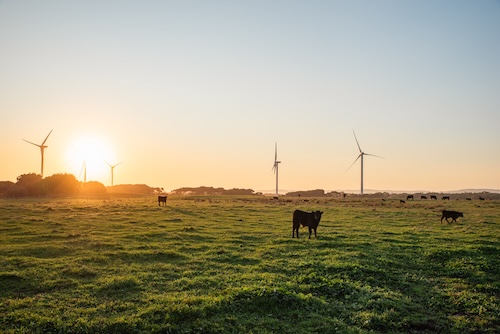
As Europe Shuns Chinese Turbines and Components, Who Will Fill the Gap?

While most of Europe has spent most of this year itemizing reasons it cannot, should not, and will not use Chinese wind turbines or components, accusations and arm-twisting tactics have garnered most of the attention.

But we invite you to consider a future – maybe just five, or ten years from now?- in which those same countries and companies are eagerly awaiting orders from wind turbine manufacturing facilities in… India.
What?!
You know that the country has a lot of installed wind.

You may think – and many in the industry would agree – that India’s blade manufacturers are a few revs behind blade-makers elsewhere in the world. But the country is newly committed to manufacturing and it’s busy installing more – provided that it’s made in India, with Indian technology, by Indian workers.
Of course, similar domestic-focused policy currents are running through European countries – where wind OEMs are almost inarguably a decade ahead of Indian manufacturers. But there’s an important reason why we say, “watch India” in wind turbine manufacturing.

It’s because you might learn something.

If you follow The Uptime Wind Energy Podcast, you probably heard this discussion a few weeks ago. It wasn’t the headline story – we try to highlight as many major news items and trends that we can, and follow up as credible information becomes available. India’s quiet moves to strengthen its own renewable energy industries didn’t grab the headlines. But it comprised a good bit of our panelists’ discussion.

With India’s expanding manufacturing capacity, and Suzlon’s strategic offerings for the European market (Blue Sky), there are reasons for European developers to take a closer look at Indian manufacturers.

If Europe continues to squelch deals with Chinese manufacturers due to data security issues, India is a relatively obvious candidate to fill the void, for several reasons:

  • The country has depth and breadth in R&D: India (Suzlon, specifically) has a track record of involvement and relationships across the continent, as it operates research and development centers in Germany, the Netherlands, and Denmark.
  • Indian service providers have reach: Inox and Adoni Wind operate multiple wind turbine manufacturing plants and wind farms throughout several Indian states, and Apraava Energy has been commissioning wind projects, working with multiple OEMs, for more than 16 years.
  • The country’s energy sector has size: Tata Power is estimated to be worth about US$16 billion and employs 22,000 people.

And major manufacturers from other countries have had a strong presence in the country for years:

  • GE Vernova has turbine blade and nacelle manufacturing operations and multiple tech/R&D centers in India;
  • Vestas has a R&D technology center in Chennai; and
  • China’s SANY Wind has had assembly facilities in India since 2017, and in 2024, it signed a licensing agreement with JSW allowing SANY to manufacture blades and generators for JSW – enabling JSW Neo Energy to produce wind turbine generators and major components in-country.

So while there is hard data suggesting that India is already a global hub for wind turbines, sometimes the real strength comes from soft skills. Like sharing information.

We’ve noticed that Indian manufactures aren’t stingy with information. They share what they learn in the field and on the shop floor, so that the whole industry can move faster to solve problems. That bodes well for the industry overall, and particularly well for companies who figure out how to solve problems that some manufacturers aren’t even ready to admit to having.

We’ll be watching India with a great deal of interest in the coming months. Subscribe to The Uptime Wind Energy Podcast and follow along with us.

We’re not financial analysts. We’re engineers who watch the wind industry very closely. This is what we’ve noticed, and we thought it was worth sharing.

Where do you think you’ll be looking for solutions, components, and service providers in the next few years or the next decade? Tell us what you think. We’d love to hear from you.
Uptime Wind Energy Podcast Logo

As Europe Shuns Chinese Turbines and Components, Who Will Fill the Gap?

Continue Reading

Renewable Energy

When You Write for Idiots, You Can Get Away with Anything

Published

on

To the author of the meme here:

“Either” refers to two choices; “any” refers to three or more.

More importantly, it’s amazing how shamelessly the ultra-right wing exaggerates.  The left side of the Democratic party would like to see the United States look like social democracies in places like Scandinavia.  Having government programs that benefit the common person, e.g., Social Security, public schools, emergency relief, libraries, environmental responsibility, etc., does not equate to Stalinism.

When You Write for Idiots, You Can Get Away with Anything

Continue Reading

Renewable Energy

Are Muslims “Dangerous?”

Published

on