Eines der Ziele der Expedition MSM126 ist es, die Vielfalt des gelatinösen Zooplanktons in den Gewässern um Madeira zu erforschen. Ein besonderer Schwerpunkt liegt dabei auf der rätselhaften Gruppe der Thaliaceen (auf Englisch open-water tunicates, auf Deutsch Manteltiere, genauer: Salpen), die als die geheimnisvollen Drifter des Ozeans gelten. Entgegen der landläufigen Meinung sind diese Weichtiere nicht näher mit den Quallen verwandt, sondern stehen evolutionär in einer Reihe mit den Fischen. Trotz dieser biologischen Abgrenzung werden sie aufgrund ihres halbtransparenten Aussehens oft mit Nesseltieren und Kammquallen in Verbindung gebracht. Thaliaceen bewohnen die Weiten des Ozeans und werden nur vereinzelt in Küstennähe beobachtet. Interessanterweise sind sie kaum in Gewässern mit hoher Produktivität zu finden.
Zu der taxonomischen Klasse der Thaliaceen gehören kleine tonnenförmige Dolioliden, majestätische, bis zu 30 Meter lange Ketten bildende Salpidae oder auch die faszinierenden Pyrosomen, die aufgrund ihrer Biolumineszenz auch unter dem Begriff Feuerwalzen bekannt sind. Alle Thaliaceen haben ein bemerkenswertes Merkmal gemeinsam: ein zelluloseähnliches Makromolekül namens Tunicin, das den schwer verdaulichen „Mantel“ oder auch der Manteltiere aufbaut. Im Gegensatz zu ihren küstennahen Quallen-Kollegen, die bodenlebende Polypen haben, verbringen die Thaliaceen ihr gesamtes Leben in der Wassersäule, sie zählen also zum Holoplankton – den Arten, deren Individuen ihren gesamten Lebenszyklus als Plankton treibend verbringen. Aufgrund der Biolumineszenz vieler Arten dieser Gruppe sind sie bei Meeresforschern und Fischern seit Jahrhunderten bekannt.


Thaliaceen sind als „Staubsauger des Meeres“ bekannt. Sie ernähren sich von winzigen Partikeln, von Bakterien bis hin zu Mikrozooplankton. Einzeln sind sie winzig, doch können sie Kolonien aus Dutzenden oder auch Tausenden Tieren bilden, womit sie vor allem bei neugierigen Tauchern für Aufmerksamkeit sorgen.
Während Pyrosomen vor allem in tropischen und gemäßigten Breiten vorkommen, sind Dolioliden und Salpen auch in Polarregionen zu finden, was die bemerkenswerte Anpassungsfähigkeit dieser gallertartigen Wunderwerke zeigt. Ihre Fähigkeit, sich schnell ungeschlechtlich zu vermehren, ermöglicht es ihnen, schnell auf veränderte Umweltbedingungen zu reagieren, z. B. auf das Auftreten einer Phytoplanktonblüte. Thaliaceen sind bekanntermaßen schwierig zu erforschen und in Gefangenschaft am Leben zu erhalten, weshalb sie im Vergleich zu Quallen und Rippenquallen weniger gut erforscht sind. Nichtsdestotrotz unterstreicht ihr Beitrag zum Kohlenstoffexport von der Meeresoberfläche in die Tiefsee über schnell sinkende Fäkalpellets ihre entscheidende Rolle in den marinen Ökosystemen.
Während der Expedition MSM126 haben wir mithilfe verschiedener Planktonnetze und neuartiger Mittelwassersammlungen mit dem ferngesteuerten Fahrzeug ROV PHOCA allein in den ersten zehn Tagen ein halbes Dutzend Arten gesammelt, und unsere Zählungen nehmen stetig zu – ein Beweis für die reiche Artenvielfalt. Wir freuen uns nun auf neue Sammlungen und hoffentlich viele neue Entdeckungen in den verbleibenden Tagen.
Grüße von Bord der RV MARIA S. MERIAN,
Florian, Sonia und Jamileh


If you’ve ever joined a beach cleanup, you’ve almost certainly picked up a plastic bottle. During Ocean Conservancy’s 2025 International Coastal Cleanup® (ICC), plastic beverage bottles were the top item collected by volunteers around the world. Plastic bottles have been among the top 10 items collected throughout the ICC’s entire 41-year history.
But where do those bottles really come from? We know rivers carry plastics of all shapes and sizes from inland communities to coasts and the ocean. What we know far less about is what makes plastic bottles move within rivers, what speeds them up or slows them down and how likely they are to reach the coast and become ocean pollution. Research on river plastics is growing worldwide, but studies in North America lag behind other regions.
Ocean Conservancy scientists, alongside a team of collaborators from 10 research institutions around the United States and Canada, set out to help close some of these pressing knowledge gaps.
How do you track a plastic bottle?
… with a little help from GPS! We modeled our research after a 2021 project in the Toronto Harbor conducted by our University of Toronto colleagues. Like the Toronto project, our research team outfitted floating plastic bottles with GPS tags that reported each bottle’s location at regular intervals. That let us calculate how far and how fast every bottle traveled. Over a two-year period, we released about 300 GPS-tagged bottles into 30 stretches of river in Los Angeles, California; California’s San Francisco Bay Area; Chicago, Illinois; Washington, D.C.; Miami, Florida; Boston, Massachusetts; and Toronto, Canada.
We chose each of these places on purpose.
The locations were selected to represent varied watershed types (ranging from temperate to subtropical climates and mountainous to flat terrain) and development intensity (suburban to densely urban). We followed the bottles for about three months each, through changing seasons, storms and rainfall before locating and retrieving them. And while the plan was always to recover the bottles at the end of the experiment, we also conducted cleanups in each watershed beforehand to make sure we were leaving things a little cleaner than we started.
What did we find?
Our bottles went on quite a journey! On average, each bottle traveled 3.8 miles, but distance traveled actually spanned a huge range depending on the bottle and location. For example, one of our bottles barely budged, moving just 240 feet over the deployment period. Another made it further than the length of a marathon, clocking in at 33 miles traveled.
We found river flow was a major driver of how far bottles went, but it wasn’t the only factor—the landscape around each river mattered too. Patterns in bottle movement revealed:
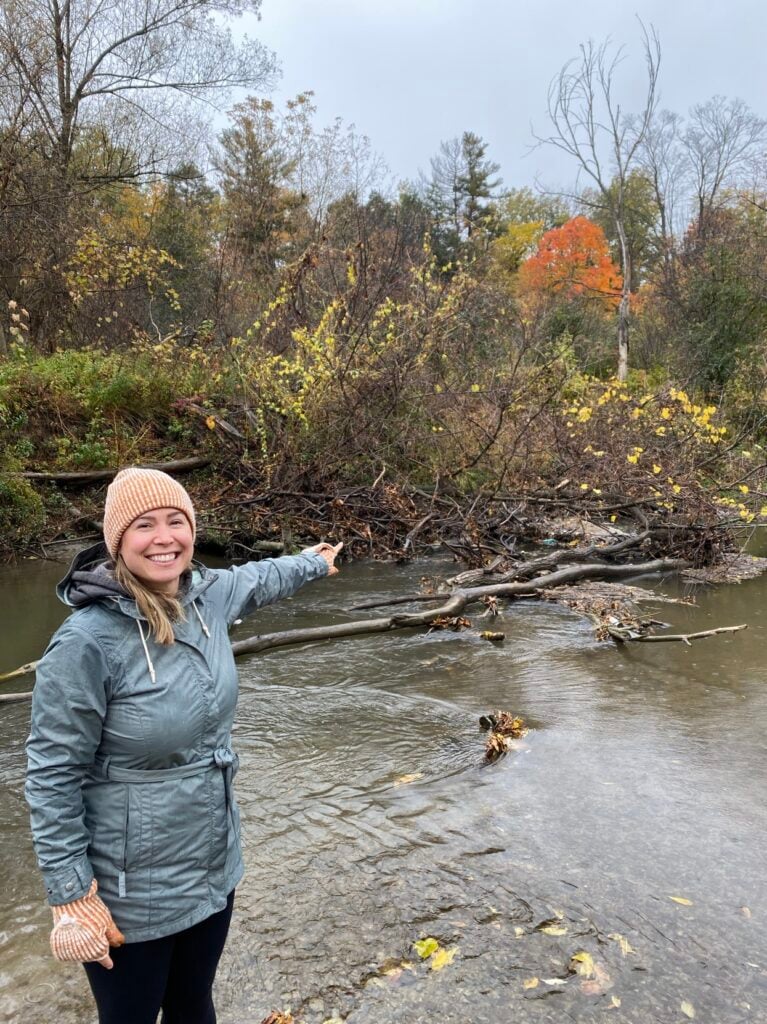
- Forest and vegetation in rivers slowed bottles down. The more forest cover upstream, the less likely a bottle was to reach the coast, because it got snagged in brush, branches and other natural obstructions.
- More urbanized stretches sped them up. Bottles moved farther and faster in more urbanized stretches of river, where there was typically less vegetation to catch them.
Using thousands of GPS points, as well as data about the river systems and watersheds we studied, we built a model to estimate where bottles reaching the coast or the Great Lakes may be coming from. It showed that within a one-year period, about half originate quite close to shore (within seven miles). The other half come from much farther inland, up to 120 miles away!
Why does this matter for our ocean?
Plastic bottles aren’t just unsightly. Ocean Conservancy’s recent, award-winning research found they can be deadly to marine life—either as whole items or after they break up into sharp fragments. There have been documented instances of seabirds like albatross dying after swallowing a plastic bottle whole.
Plastic bottles are among the most prolific plastic pollutants we see out there, and now we understand that many of those we find on beaches or in the ocean may be coming from far upstream.
That has big implications for how we tackle the problem. If half of the bottles reaching the ocean around North America or Great Lakes can start their trip more than 100 miles inland, prevention must happen upstream. Pollution-prevention models, like laws that incentivize the collection and recycling of plastic bottles before they end up in the environment, should be implemented more broadly to prevent plastic from becoming pollution in the first place. Cleanups and other efforts in coastal communities also remain critical. If we want to capture floating plastics like bottles before they reach the coast and eventually our ocean, communities within 120 miles from the ocean or Great Lakes should plan to do those cleanups on an annual basis, or even more frequently.
How can I help keep plastic bottles out of rivers and the ocean?
No matter where you live, the choices you make can help keep plastic out of the ocean:
- Support policies, like those Ocean Conservancy advocates, to stop plastic pollution at the source.
- Join a cleanup along your local river, creek or lakeshore. Every bottle picked up inland is one less that can wash out to sea.
- Choose reusables instead of single-use plastic bottles whenever you can.
We want to extend a huge thank-you to our amazing collaborators on this project at the University of New Hampshire, University of Toronto, Loyola University of Chicago, Smithsonian Environmental Research Center, Florida International University, Moore Institute for Plastic Pollution Research, San Francisco Estuary Institute, University of Waterloo, University of Southern California and University of New Mexico.
Our study, “GPS-Tracked Bottles in North American Rivers Show Marine Plastic Pollution Can Originate from Far Upstream,” was published in the November 13 issue of the scientific journal Environmental Science & Technology-Water. Read the full paper here.
This blog was co-written with Hannah De Frond. Hannah works with Ocean Conservancy and the University of Toronto Trash Team to manage the International Trash Trap Network (ITTN), a global network of local groups using trash traps to increase cleanup efforts, engage communities and inform upstream solutions.
Get Ocean Updates in Your Inbox
Sign up with your email and never miss an update.
The post How Far Does a Plastic Bottle Really Travel in a Year? appeared first on Ocean Conservancy.
If you’ve ever joined a beach cleanup, you’ve almost certainly picked up a plastic bottle. During Ocean Conservancy’s 2025 International Coastal Cleanup® (ICC), plastic beverage bottles were the top item collected by volunteers around the world. Plastic bottles have been among the top 10 items collected throughout the ICC’s entire 41-year history.
But where do those bottles really come from? We know rivers carry plastics of all shapes and sizes from inland communities to coasts and the ocean. What we know far less about is what makes plastic bottles move within rivers, what speeds them up or slows them down and how likely they are to reach the coast and become ocean pollution. Research on river plastics is growing worldwide, but studies in North America lag behind other regions.
Ocean Conservancy scientists, alongside a team of collaborators from 10 research institutions around the United States and Canada, set out to help close some of these pressing knowledge gaps.
How do you track a plastic bottle?
… with a little help from GPS! We modeled our research after a 2021 project in the Toronto Harbor conducted by our University of Toronto colleagues. Like the Toronto project, our research team outfitted floating plastic bottles with GPS tags that reported each bottle’s location at regular intervals. That let us calculate how far and how fast every bottle traveled. Over a two-year period, we released about 300 GPS-tagged bottles into 30 stretches of river in Los Angeles, California; California’s San Francisco Bay Area; Chicago, Illinois; Washington, D.C.; Miami, Florida; Boston, Massachusetts; and Toronto, Canada.
We chose each of these places on purpose.
The locations were selected to represent varied watershed types (ranging from temperate to subtropical climates and mountainous to flat terrain) and development intensity (suburban to densely urban). We followed the bottles for about three months each, through changing seasons, storms and rainfall before locating and retrieving them. And while the plan was always to recover the bottles at the end of the experiment, we also conducted cleanups in each watershed beforehand to make sure we were leaving things a little cleaner than we started.
What did we find?
Our bottles went on quite a journey! On average, each bottle traveled 3.8 miles, but distance traveled actually spanned a huge range depending on the bottle and location. For example, one of our bottles barely budged, moving just 240 feet over the deployment period. Another made it further than the length of a marathon, clocking in at 33 miles traveled.
We found river flow was a major driver of how far bottles went, but it wasn’t the only factor—the landscape around each river mattered too. Patterns in bottle movement revealed:
- Forest and vegetation in rivers slowed bottles down. The more forest cover upstream, the less likely a bottle was to reach the coast, because it got snagged in brush, branches and other natural obstructions.
- More urbanized stretches sped them up. Bottles moved farther and faster in more urbanized stretches of river, where there was typically less vegetation to catch them.
Using thousands of GPS points, as well as data about the river systems and watersheds we studied, we built a model to estimate where bottles reaching the coast or the Great Lakes may be coming from. It showed that within a one-year period, about half originate quite close to shore (within seven miles). The other half come from much farther inland, up to 120 miles away!