

Weather Guard Lightning Tech

Vestas Stops Turkey Production, Avangrid Sells Kitty Hawk North, LS Greenlink Virginia Facility
Vestas in Turkey has suspended their generator factory project and blade production in the country after loosened locality requirements for wind. Avangrid has sold its Kitty Hawk North offshore lease to Dominion Energy for $160 million. LS Greenlink invests $681 million in a Virginia factory, creating 330 full time jobs.
Sign up now for Uptime Tech News, our weekly email update on all things wind technology. This episode is sponsored by Weather Guard Lightning Tech. Learn more about Weather Guard’s StrikeTape Wind Turbine LPS retrofit. Follow the show on Facebook, YouTube, Twitter, Linkedin and visit Weather Guard on the web. And subscribe to Rosemary Barnes’ YouTube channel here. Have a question we can answer on the show? Email us!
Pardalote Consulting – https://www.pardaloteconsulting.com
Weather Guard Lightning Tech – www.weatherguardwind.com
Intelstor – https://www.intelstor.com
Allen Hall: I’m Allen Hall, president of Weather Guard Lightning Tech. And I’m here with the founder and CEO of IntelStor, Phil Totaro, and the chief commercial officer of Weather Guard, Joel Saxum, and this is your NewsFlash. News Flash is brought to you by our friends at IntelStor. If you want market intelligence that generates revenue, then book a demonstration of IntelStor at intelstor.Com.
Avangrid, a subsidiary of Iberdrola, has announced the sale of its Kitty Hawk North offshore wind lease area to Dominion Energy for approximately 160 million. The deal includes a nearly 40, 000 acre lease and associated assets with Dominion Energy paying 117 million for the lease acquisition and reimbursing Avangrid for development costs.
Avangrid is retaining ownership of Kitty Hawk South Lease, which it plans to continue developing. All right, Phil. There seems to be a lot of swapping of of repurchased ocean land. Off the coast of the United States here, what is going on? Why is Avangrid selling one site and keeping another? What’s happening?
Philip Totaro: Well, I simply put, this sounds like they, have a bigger slice of cake than they can maybe eat by themselves so to speak. So they just want to be able to, this is one way that they can kind of divide up the site. a chunk of it without having to bring in an equity partner on the full project site, which is actually pretty clever, right?
So I have to give them credit for that. Keep in mind as well that, of the projects in the US that have now been officially consented, Avangrid’s got something like 20 something percent of them. So, this is, uh, it’s getting expensive. And Iberdrola wants to be able to, control their costs.
This is also one way of doing that, too.
Joel Saxum: Another thing to think about here with Dominion Energy, if you’ve been following the offshore wind plays along the east coast here for the last year, two, three, four years, as we have here on the podcast, Dominion Energy is one of the groups that has actually been able to go through with their leases.
Development costs, getting vessels ready, getting some turbines getting ready for development, getting ready for offshore without really too many hiccups. So the money’s there, the PPAs are right, everything is moving forward for Dominion. So they’re doing things without too many issues and that may point to this as well.
Allen Hall: South Korea based LS Greenlink is investing 681 million to build a state of the art facility in Chesapeake, Virginia. This facility will manufacture high voltage subsea cables for offshore wind farms and is set to create more than 330 full time jobs. It’s a significant step for the U. S. offshore wind industry as it’ll be the first offshore wind cable manufacturer in the country.
Now, Phil, this obviously has tax implications. What is driving LS Greenlink to really build a facility in Virginia?
Philip Totaro: Well, besides market demand of which, this factory and fabrication facilities has a total price tag of something like 681 million which is an awful lot of money. But they’re actually getting a 99 million 48C manufacturing tax credit.
So for those who aren’t familiar, the 48C tax credits. We’re included as part of a production, a U. S. based production and investment tax credit package that was passed. I forget exactly what year, but many years ago, where there were, I think it was actually 2008 or 9 in the financial crisis recovery package where we wanted to basically incentivize domestic production of components for both onshore offshore wind, solar batteries, et cetera, et cetera.
So this is actually Alice cable and system, which I believe is the biggest cable manufacturer in the Asia Pacific region outside of China. I think Ningbo orient is probably the biggest within a pack. But they’re, L. S. Cable and system wants to have a big presence.
They obviously with this level of investment, they expect to be able to take advantage of a significant amount of transmission build out in the U. S. And they’re going to have both, I think, inter array and export cable manufacturing capability with this with this factory. So they are really well positioned and, taking advantage of the tax credits that were designed to bring.
Foreign direct investment to the United States.
Joel Saxum: One of the important things here, guys, 330 full time jobs being brought to the U S that’s fantastic. That’s what we want to see. That’s what a lot of these tax credits and everything are built upon is creating jobs in the U S of bringing manufacturing back here.
Another thing to think about here as well as yeah, everybody’s focused on what’s going on the East coast, right? We’ve got all kinds of wind farm developments with what Phil was saying. Exactly. Massive. Export cables, but also the inter array cables, which they’ll be building both of. However, where the big cable play is offshore west coast.
When we get into floating wind, there’s much more cables to be put out in the water than there is in the fixed bottom. So, and they’re a little bit different design. Everything’s a little bit, custom made for the application. But there’s a ton of cables to be built here for offshore wind in the States.
Allen Hall: Vestas Turkey CEO has revealed that they’ve suspended their generator factory project and blade production in the country. This decision comes as a result of loosening locality requirements for wind investments. The situation in Turkey highlights a broader issue in the wind industry, the delicate balance between promoting local manufacturing and maintaining market competitiveness.
Okay, Phil. So, Turkey has been at a real impasse the last couple of months with GE Vernova, LM Wind Power, and now Vestas. It would seem like, where winds are strong in Turkey, they should be having some manufacturing in the country, but they’re loosening their requirements. What’s driving that? And is that a play to bring more Chinese manufacturers in?
Philip Totaro: Potentially, yes. So there’s a couple of things at play in the Turkish market at the moment. One is for years they had a very generous subsidy if you did actually have local manufacturing and local content. They’d give you I wanna say it’s up to the equivalent of about 80 euros per megawatt hour if you had your nacelle, your tower.
And your blades all assembled within Turkey, which, by the way, Enercon is still doing although Enercon’s market share is a little bit a little bit down, but there’s still, so there’s still plenty of domestic production and fabrication in Turkey, even from Vestas, who is still sourcing towers.
In Turkey but with the reduction of those local content requirements and the associated tax credits for domestic content, it creates that scenario, like you just mentioned, Allen, where it, you can have other companies and Goldwin’s already got some turbines in Turkey, they’re going to be installing more throughout the course of this year and next year.
At a few different project sites. They don’t have a very big market share there yet. This would encourage production from lower cost markets like China or even India, where you could bring turbine technology into the Turkish market. So the wind market there is still strong, still growing.
Albeit at a bit of a moderate pace compared to what we would hope for they still haven’t unlocked their offshore wind market yet, which actually would probably encourage companies to redomesticate some of that that production capacity. In the country, but for now this is the current scenario.
It’s unfortunate for the job losses but they want cheaply made goods and they’re going to get them.
Joel Saxum: Yeah, what Phil is saying about the possibility of things happening and opening back up there. In the future for offshore wind. The other thing to think about here is there’s another empty factory with the LM blade plant closing down.
So Turkey’s been hit by kind of a one two punch in the wind sector here. Just hope that there’s no more of this fallout in the future form.
Allen Hall: In South Korea, GS Intec is making waves with a 217 million investment over the next two years. to upgrade its plants and manufacture offshore wind turbine substructures.
They’re focusing on enhancing their production capabilities for monopiles, which are becoming increasingly popular among global offshore wind operators due to their cost effectiveness and shorter production times. All right, South Korea, which has plenty of manufacturing capability. All the ships pretty much in the world are manufactured in South Korea at the moment.
Plenty of steel. Plenty of knowledge there. South Korea is really set up to be an offshore wind giant and GS Intech is definitely making investments to do that, right, Phil?
Philip Totaro: Yeah, this is interesting because aside from their obvious domestic market opportunity where they’ve got something like 58 gigawatts in their pipeline I think in total they also have some commercial relationships with project developers in Vietnam and other, kind of, again, ex China other Asia Pacific countries where they want to be able to go partner and supply them with monopiles or they also, I believe fabricate some jackets for substations as well.
So, this puts them in a great position to be able to capitalize on that that opportunity.
Joel Saxum: Yeah. When you think about South Korea, heavy steel industry, that’s been around for a while. They’re good at it. Like Allen said, they’re good at it. They’ve got the expertise. They have the raw materials.
Everything works out well when they produce things. But you have to also listen to the global offshore wind market is booming, but We’re really booming in the APAC region as well. A lot of countries exploring offshore wind over there and then also the onshore wind stuff. So the jet Japan’s installing turbines.
Vietnam’s installing turbines, a lot of other APAC region countries making wind a priority. So well positioned and should do good things for them.
Philip Totaro: By the way, this could also give them an opportunity to dive into the Australian market as well and get some partnerships going there where Australia obviously has a burgeoning pipeline that they want to be able to get get going.
monopile or floating. So it looks like they’ll be well positioned either way.
https://weatherguardwind.com/vestas-turkey-avangrid-kitty-hawk-greenlink/

 Someone commented on the meme here: “Don’t forget your jihadi prayer group meeting.”
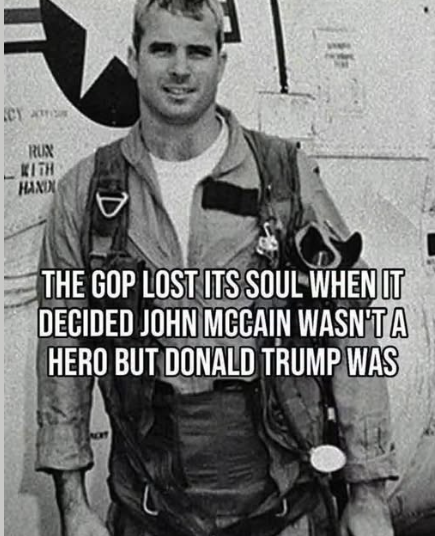 One would think that Republicans could see the stark contrast between John McCain (honest, sane, decent American hero) and Donald Trump (criminal sociopath and traitor to his country).
But alas.
Tightline and Avient Remove Peel Ply From Carbon Planks
This week we’re revisiting our discussion with Andrew Davis of Tightline Composites and Brad Schmidt of Avient, who discuss a resin additive that eliminates peel ply on carbon planks.
The Uptime Wind Energy Podcast is brought to you by Weather Guard Lightning Tech, creators of the StrikeTape Ultra LPS retrofit. Subscribe to Uptime’s Substack newsletter. And check out Rosemary’s “Engineering with Rosie” Youtube channel. Have a question we can answer on the show? Email us!



-
Climate Change1 year ago
Guest post: Why China is still building new coal – and when it might stop
-

 Greenhouse Gases2 years ago
嘉宾来稿:满足中国增长的用电需求 光伏加储能“比新建煤电更实惠”
-
Greenhouse Gases1 year ago
Guest post: Why China is still building new coal – and when it might stop
-

 Climate Change2 years ago
嘉宾来稿:满足中国增长的用电需求 光伏加储能“比新建煤电更实惠”
-

 Renewable Energy12 months ago
Sending Progressive Philanthropist George Soros to Prison?
-
Climate Change2 years ago
Bill Discounting Climate Change in Florida’s Energy Policy Awaits DeSantis’ Approval
-
Greenhouse Gases1 year ago
嘉宾来稿:探究火山喷发如何影响气候预测
-

 Climate Change2 years ago
Analysis: China’s CO2 falls 1% in Q2 2024 in first quarterly drop since Covid-19