Connect with us

Published

on

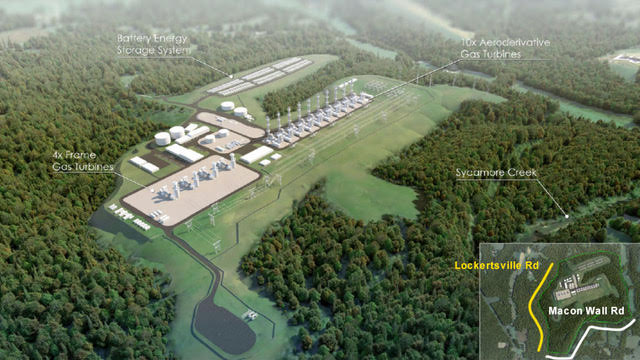
A rendering of the Cheatham Methane Gas Plant from the Town Hall meeting on February 13, 2024.

The Tennessee Valley Authority (TVA) was established to serve the people of the Tennessee Valley and uplift communities with affordable, reliable power, a mission that has fostered community trust for decades. However, recent developments surrounding a proposed methane gas plant in Cheatham County have exposed TVA’s troubling pattern of secrecy, backroom deals, and an ongoing disregard for public accountability. This story shows how TVA’s actions are eroding trust in Cheatham County and beyond—and why residents are rightfully demanding better.

TVA’s Authority Shift: Unchecked Power in CEO Hands

Unlike private companies, TVA is a unique public utility that isn’t subject to state utility commission oversight. The TVA Board of Directors acts as its only regulatory authority. However, in a move that has alarmed many, the Board delegated its powers to approve or deny large capital projects to TVA CEO Jeff Lyash. This shift means that Lyash alone has the authority to approve certain large-scale projects, like the Cheatham County methane gas plant, without formal Board input or approval. For a public utility, such unchecked authority in a single executive’s hands is a troubling departure from TVA’s democratic mandate to serve the interests of the Valley’s residents.

Adding to these concerns, the November 7 TVA Board meeting agenda contained several items that raised hopes for increased oversight and community protection. These agenda points included discussions of a “Natural Gas Transportation Capacity Contract,” “Incentive Metrics,” and a potential revision to the Board’s role in “Capital Project Approvals” — topics which sparked speculation that the Board might rein in CEO powers over capital projects and reintroduce checks on new development decisions. Yet, to the surprise of many, the Board skipped this agenda section without explanation, leaving these critical issues unaddressed.

The recent shift in TVA’s approval process, granting unchecked power to the CEO, raises serious questions about the organization’s commitment to public accountability. For residents in Cheatham County and every community in the Tennessee Valley, this situation is a reminder of the importance of demanding transparency from those in power. Ultimately, every community deserves honesty from TVA — not just empty promises and secret deals.

Early Assurances and Broken Promises

In September 2020, TVA spokesperson Scott Fiedler was quoted in the Cheatham County Exchange stating there were “no specific plans” for a property TVA had quietly acquired. Just weeks later, TVA reiterated this message to The Tennessean, claiming no clear vision for the property and suggesting it could be years before any plans materialized. But documents obtained through a Freedom of Information Act (FOIA) request revealed that TVA had commissioned an archaeological survey of the land as early as July 2020. The survey specifically referenced an “anticipated power plant,” exposing that TVA had plans for the property long before their public denials. Despite telling the community that no plans existed, TVA had already begun laying the groundwork. This revelation left Cheatham County residents questioning TVA’s integrity and wondering what else might be hidden.

More Than A Coincidence: Convenient Connections and Insider Bias

One of the murkiest parts of the Cheatham County project is how TVA acquired the land. Officially, the property wasn’t on the market. Yet TVA managed to secure it with remarkable speed and precision. At the time, while TVA was not in communication with the community or local elected officials, TVA was coordinating directly with the Cheatham County Economic and Community Development (ECD) Director, who recently retired from TVA himself, where he worked in an economic development role. His TVA connections raise significant questions. As a former insider, he would have had unique knowledge of TVA’s needs and operations, and his proximity to both TVA and Cheatham County’s development planning seems more than coincidental. Interestingly, the ECD Director was quoted in articles early in the project’s timeline stating that TVA would likely use the property for solar power to support Middle Tennessee’s tech industry—an idea that resonated with residents and would have aligned with TVA’s stated commitment to clean energy. Yet, instead of the solar farm, residents were blindsided with plans for a massive 75-acre methane gas plant, with far-reaching environmental and health implications.

This arrangement raises concerns over whether or not local communities have their interests ignored in favor of the interests of TVA by former TVA insiders with deep institutional biases.

Secret Deals with Tennessee Gas Pipeline Company

The mystery deepened when another FOIA request revealed that TVA signed an agreement with Tennessee Gas Pipeline (TGP) for TGP to perform “discreet due diligence” in preliminary work for the gas pipeline to supply the proposed power plant. The contract spelled out in multiple ways that local residents should be kept in the dark. For example, “TGP shall not discuss the project with public stakeholders and shall take reasonable care to maintain confidentiality during its due diligence efforts” and “The Parties agree to keep the Cheatham County Project, including the Work and the fact that TGP may be, or has been, participating in discussions with TVA regarding the Cheatham County Project confidential…”

The timing of the contract reveals another way that TVA has kept us in the dark. As I’ve written about before, TVA failed to let essentially anyone in the local community know that they were proposing to build a methane gas plant. Not one person from TVA reached out to the County Mayor, members of the County Commission, or even adjoining and adjacent landowners to inform them of their plans to build the plant. It wasn’t until a representative of an environmental group who was monitoring arcane documents on the Federal Register contacted me that any of us were aware that TVA was going to be hosting an informational open house just a few days later. That open house, hosted June 21, 2023, was the first that any of our county leaders heard from TVA about the gas plant.  

That same day, June 21, 2023, TVA signed the agreement with TGP, which raises serious concerns. Why did TVA wait until the last possible moment to inform the community about the plant while privately advancing deals with TGP? It appears TVA was moving forward with its plans behind closed doors while keeping the community in the dark.

Ignoring Infrastructure and Environmental Concerns

Cheatham County residents have repeatedly expressed concern over the strain a project of this scale would place on local infrastructure, particularly the narrow roads and aging bridges that won’t support the heavy machinery TVA will need to build the plant. TVA largely ignored these warnings and a roads survey — obtained not through TVA, but independently — confirmed that extensive road and bridge widening would be required to build the gas plant. This would mean additional land seizures from residents, even beyond those already contemplated for gas pipelines and power transmission lines, and potential environmental damage to the rural landscape. Yet, TVA’s decision-makers are disregarding these realities in their bull-headed pursuit of building this plant, further showing a lack of respect for local residents’ concerns about our infrastructure and environment.

Additionally, Cheatham County’s dense woodlands and rich wildlife habitats are rare assets in Middle Tennessee, but TVA would clear thousands of acres for 45 miles of new high-voltage transmission lines to support a gas plant that doesn’t move TVA closer to a cleaner grid. The environmental toll of clear-cutting these woodlands and eliminating managed timberlands is enormous, permanently altering the area’s hills, hollows, and habitats. Recently, TVA has been pressuring landowners to allow survey access for these transmission lines. Some landowners, concerned about TVA’s overreach, filed formal objections in court to protect their properties. Yet, TVA’s surveyors nonetheless entered these properties without consent—a blatant disregard for both property rights and constitutional protections.

Purchasing Equipment Before Due Diligence

In a move that stunned many, TVA Chief Operating Officer Don Moul revealed during a recent Board meeting in Florence, AL, that TVA is already purchasing turbines and other equipment for the proposed Cheatham County plant. This announcement comes despite incomplete key reviews and approvals required under the National Environmental Policy Act (NEPA). As a federal agency, TVA is required to adhere to NEPA’s mandate to “assess the environmental effects of proposed major Federal actions prior to making decisions” such as the construction of a new power plant, especially in a location that appears ill-suited for such a project. However, TVA appears to have bypassed critical steps in this process, signaling a premature decision to proceed with the plant. For many local residents, Moul’s statement confirmed their fears: TVA has effectively predetermined its course of action, sidelining any economic analysis, environmental considerations, or public input that might emerge through the NEPA review. This pre-commitment raises serious questions about TVA’s commitment to public engagement, environmental stewardship, and transparency, as the agency is purchasing equipment for a project that is still officially “under review.” 

“Community Engagement” in Name Only

TVA repeatedly insists it values community engagement and won’t impose projects where they’re not wanted. But Cheatham County residents have experienced the opposite. When residents and elected officials, who have passed resolutions opposed to the plant, have stood before TVA representatives, detailing concerns about infrastructure, environmental degradation, and transparency, they have been met with vague responses or outright dismissals. Every warning voiced by the community has been disregarded, and every promise of transparency has been broken. 

TVA’s Erosion of Public Trust

The situation in Cheatham County is more than just a dispute over a power plant. It’s a case study of how a public institution can lose the trust of the people it serves. TVA’s disregard for local voices, their lack of transparency and secret agreements, and aggressive project advancement are clear indicators of a utility failing the people it serves.

TVA’s recent shift in oversight—granting CEO Jeff Lyash unchecked authority over project approvals—further highlights the need for public vigilance. TVA has failed in its responsibility to serve the community openly and honestly. Cheatham County deserves more than an agency that talks about transparency but acts in secrecy.

The Way Forward

If TVA wants to restore any sense of trust, it must halt the Cheatham County project, engage openly with the residents, and genuinely consider sustainable alternatives. Public trust is earned, not assumed, and TVA has squandered it with each backroom deal and unapproved trespass. The people of Cheatham County, and the entire Tennessee Valley, deserve a TVA that is transparent, accountable, and respectful of the communities it serves. Only by changing its approach to projects like this can TVA begin to mend its damaged relationship with the public.

The post TVA’s Secret Deals and Lack of Transparency: What Valley Residents Deserve to Know appeared first on SACE | Southern Alliance for Clean Energy.

TVA’s Secret Deals and Lack of Transparency: What Valley Residents Deserve to Know

Continue Reading

Renewable Energy

IWTG Consulting on Pitch Bearing Cracks, Loose Root Inserts

Published

on

Weather Guard Lightning Tech

IWTG Consulting on Pitch Bearing Cracks, Loose Root Inserts

Jon Zalar, founder of IWTG Consulting, joins to discuss broken blade bolts, cracked pitch bearings, loose root inserts, and early detection.

Sign up now for Uptime Tech News, our weekly newsletter on all things wind technology. This episode is sponsored by Weather Guard Lightning Tech. Learn more about Weather Guard’s StrikeTape Wind Turbine LPS retrofit. Follow the show on YouTube, Linkedin and visit Weather Guard on the web. And subscribe to Rosemary’s “Engineering with Rosie” YouTube channel here. Have a question we can answer on the show? Email us!

Welcome to Uptime Spotlight, shining light on wind energy’s brightest innovators. This is the progress powering tomorrow

Allen Hall: Jon, welcome back to the program.

Jon Zalar: Thanks for having me.

Allen Hall: Uh, last time I saw you, we were in Melbourne- Yep … at WOMA 2026, and that was a huge event. We know we’re gonna do it again next year in March three, the 3rd through the 5th, so you’re invited back, of course- I can’t wait … if you can make it. Yeah. Yeah.

It’s gonna be, it’s gonna be a good time. A lot is happening in the blade world and in the wind turbine world more broadly. A lot of things we’re hearing right now are related to blade bolt connection, pitch bearing inserts still. A lot of that still happening in the United States. What is the current status of, uh, the blade connection issues in the US?

I,

Jon Zalar: I feel like it’s a growing [00:01:00] issue, not super, super fast, but it seems to be getting a little worse. There’s, you know, more bolts breaking at that joint. Um, pitch bearing cracks are, seem to be pretty common. There’s different solutions for it, and then, you know, the root inserts are another thing that we’ve talked about before that seem to be happening more and more, or maybe more and more people are finding them ’cause they’re looking.

Allen Hall: What are the first indications that you have a blade bolt or some sort of joint issue at the root of a blade? What can you see?

Jon Zalar: A bolt laying in the hub bouncing around. Um, you know, from like a– looking at it from, like, the sensors on the turbine, it’s really hard to tell unless it gets really bad. Uh, some of the OEMs have some analytics developed to kinda start to indicate if there is a aero change because there’s missing bolts or root inserts are coming out, and they’re using that as a way to go figure out which ones to go inspect first.

Allen Hall: Really? Yeah. You think [00:02:00] the SCADA data will give you some indication that you have a, basically a little bit of a loose blade?

Jon Zalar: Yeah. I, I, I think because the number of turbines and the number of data points you have, I think there is a pretty good analytic out there right now.

Allen Hall: Wow. All right. I think a lot of our operators have not taken advantage of that.

Is, is that just b- based on the high-speed data, SCADA data, or is it low-speed data you could see that same effect?

Jon Zalar: I believe it’s on the low-speed data as well, but I bet the high-speed data was used to kinda develop it.

Allen Hall: Wow. All right. So that’s a huge help to operators. Yeah. So what are you looking for if you’re looking through SCADA data, what would be the couple of markers there that say, “Hey, maybe we ought to go look up at the– in the hub”?

Jon Zalar: I don’t know exactly what they’re using, but they would basically look for maybe an imbalance or looking for certain components that are being overworked.

Allen Hall: Oh, sure. Okay.

Jon Zalar: Yeah.

Allen Hall: So your pitch actuator may be getting a little bit overworked. It would seem like one of the places- I think that, yeah … that would get loaded, right?

Jon Zalar: Mm-hmm.

Allen Hall: Okay. [00:03:00] And any vibration monitoring going on? Because it, it, uh, in some cases you’re– I’m hearing, like, millimeter gaps-

Jon Zalar: Correct. Yeah …

Allen Hall: between the blade and the pitch bearing.

Jon Zalar: So probably a combination of the ALC sensors, at least on a GE turbine, looking at that. But the PCH box also is looking at the tower vibration, so it could be a combination of all three.

I don’t know the exact- Okay … details, but between all of that, I think there are some analytics that kinda say, “Hey, go take a look.” And then I think there’s some other companies that have- tools that go monitor it.

Allen Hall: Mm-hmm.

Jon Zalar: Dial indicators remotely or even, you know, people going up there with dial indicators to go kind of rotate the rotor and kind of see if there is gapping between the blade and the pitch bearing.

Allen Hall: Is that a safe situation in your– from the gapping? I’ve heard this where they’ve basically took shims and they’re trying to measure this gap or some sort of dial indication. Is that a smart thing to do? Is it even reliable to do it that way? [00:04:00]

Jon Zalar: I, I, I think there’s some reliability there. And like, you know, these are really big parts, right?

So like a little bit of gap, it, it’s probably expected to a point, but growing gaps is where you should be a little more scared.

Allen Hall: So you’re– you would have to go do that quarterly, monthly, weekly? How, how often would you have to do it to see the progression? Because I’ve heard stories of, uh, a couple of weeks from nothing to hub crack to, “Oh, it took a year or more.”

Jon Zalar: I think it depends on the issue. I think for– if you’re looking at that, the bolted joint itself between the root inserts and the, uh, bolts breaking itself, I, I think they’re doing about quarterly. Now, the pitch bearings inspections are also quarterly. They’re al- they’re, they’re leveraging the drone inspections for the blades, and they’re looking at the pitch bearings to see if they’re cracked, right?

Uh, you guys are doing that too.

Allen Hall: Okay.

Jon Zalar: I think Coraly is doing a good job mitigating the risk, feels like.

Allen Hall: Wow. All right. [00:05:00] Yolanda, looking at pitch bearings, you’ve looked at a lot of drone images in your lifetime. Mm-hmm. How much can you see on drone images on pitch bearings? Can you see cracks and, or y- or do you see grease, which is a really indication that something is wrong in the bearing?

Yolanda Padron: You can see grease. You can see the cracks pretty, pretty well. Yeah. The drone images are, are really high quality. Uh, but you did mention that it’s something that you’re seeing a lot more. Is it because there’s a lot more aging fleets, or is it a problem with a lot of the new turbines that are coming online?

Jon Zalar: I, I think it’s an, I think it’s a more of a fatigue problem, so the aging of the fleet. And also, I think more people are looking at it, right? ‘Cause, like, initially the drones that were looking for blade cracks weren’t looking at pitch bearings, but then pitch bearings started cracking, so now they added that to whatever they buy off the drone companies, right?

Go look at my pitch bearings, for example.

Allen Hall: Hmm.

Jon Zalar: So I, I think it’s a problem of the more you look sometimes, the more you find.

Yolanda Padron: Hmm.

Jon Zalar: Yeah.

Allen Hall: So we [00:06:00] have root insert issues, which are being addressed by a couple of different companies- Yes … uh, uh, with somewhat similar solutions. OEM is offering one right now also.

Jon Zalar: I, I think there’s three solutions. There’s two uptower that are basically looking at ways to go fill the void between the root insert itself and the blade root. Um, and I– there’s another company that’s also more of a downtower solution where they’re actually, like, r- drilling out the root inserts and putting new ones in that are gonna last better, longer.

Allen Hall: Okay. So the drilling out is, would be CNC onsite. Correct.

Jon Zalar: Yeah.

Allen Hall: And they’re based over in Europe. But th- the drilling out is a take the blade down, set it on the ground sort of- Yeah. Right … doing really fine machining on the, on the blade itself. So that, that’s a different, completely different insert that’s going into that-

Jon Zalar: Correct

Allen Hall: new hole or- Yep … clean hole, right? So it’s a, just a, uh, totally different kind of product versus trying to inject [00:07:00] some s- sort of epoxy or resin into the, the void.

Jon Zalar: Right. Yeah. Uh, I mean, you would prefer to do it uptower. It’s gonna cost you less money.

Allen Hall: Sure.

Jon Zalar: But you wanna make sure you do it right, so I think, uh, I do foresee it being a combination of both solutions kinda going forward.

Allen Hall: Is it dependent upon, like, how much damage has been already done, or what the fatigue w- uh, an estimate on what the fatigue life is?

Jon Zalar: I think it’s strictly on measurement perspective right now. So how much gapping you have, um, kinda determines what potential solutions you have.

Allen Hall: So the gaps aren’t big, right?

So the, the gaps I hear are one millimeter is k- kind of sort of start a problem.

Jon Zalar: Mm-hmm.

Allen Hall: Three millimeters is, “I need to be making decisions.”

Jon Zalar: Yeah. So- That, that’s what I’ve heard, too. Yes.

Allen Hall: Three millimeters is about a eighth of an inch.

Jon Zalar: Mm-hmm.

Allen Hall: So it’s not a lot of m-

Jon Zalar: But you can see sunlight through it if you’re s- down there.

Allen Hall: Okay. That’s not… Well, you should see. That’s not

Jon Zalar: good either. Yeah.

Allen Hall: Right. Okay. So in a, in a three millimeter situation then, you’re doing what? [00:08:00]

Jon Zalar: You’re trying to decide if the uptower solutions are something you wanna go try, ’cause they’re still in the trial mode from my understanding or-

Allen Hall: Okay …

Jon Zalar: people are learning a lot.

So I think when you get to that point, you’re calling some of those companies to say, “Hey, I have this issue. I got a couple blades with, you know, .3. Can you guy- you guys wanna come take a look at it, see if your solutions, if you guys wanna go use it or not?” And then I think the ones that get too bad, from my understanding right now, is they’re, they’re replacing the blades.

Allen Hall: So they’re taking the whole blade down.

Jon Zalar: Yes.

Allen Hall: And what’s the thought process in that? Uh, versus drilling out the inserts and putting new inserts in. Is there just a composite degradation that’s happened around those joints that it just puts it at risk or, or you have actually aged the blade much faster than you would otherwise have done?

Jon Zalar: I, I think they aged that particular connection too much. So I, I- Wow … either between the [00:09:00] fatigue or lack of epoxy resin, w- whatever the actual root cause is for that root insert coming out, when it gets that bad, it’s like you’re not gonna be able to inject enough To make it adhere

Allen Hall: You can’t de-age it.

Jon Zalar: Correct.

Allen Hall: Right?

Jon Zalar: Yeah.

Allen Hall: Bring back the youthfulness of the blade. Wow. All right. And we have seen this worldwide. I know in the, in the States you hear about it all the time, but it, this seems to be not a US- Correct … problem.

Jon Zalar: It’s a worldwide problem, yes.

Allen Hall: Okay. So if, if it’s a worldwide problem, are there more solutions on the way?

I know you talked about three of them already.

Jon Zalar: I have not heard of any other ones except those three as of today.

Allen Hall: Wow.

Jon Zalar: There could be other people working on it. I think there should be.

Allen Hall: So, yeah. You would think so, yeah. So we’ll, I guess we’ll eventually hear about it on the podcast. Usually people with technology will contact us.

They might call,

Jon Zalar: yeah. They might call you, they might call you tomorrow.

Allen Hall: Sure, they may. So that leads to sort of a subsequent issue, which I think is getting grouped together. So the [00:10:00] hub crack, pitch bearing crack, root insert pullout issue is also discussed with blade bolts being broken.

Jon Zalar: Correct.

Allen Hall: Are they related or are they separate engineering problems?

Jon Zalar: If you look at them individually, you’d probably come up with some separate answers, but if you combine them all together, you kind of start looking at is there too much loading happening in the leading and trailing edge of the blade? ‘Cause the hub cracks, the root inserts, and the blade bolts, from my understanding, are happening at those two highly loaded areas of the, the blade or that whole rotor connection.

So I mean, I do feel the root cause is probably a little higher loads than anticipated.

Allen Hall: I think everybody’s talked about when they’ve done the injection method and the drilling method, all they’re discussing is leading edge, trailing edge.

Jon Zalar: Yes.

Allen Hall: And how– It’s a question of how many- Correct … are you gonna replace.

So th- [00:11:00] that’s, those are the two highly loaded spots on the bolted connection.

Jon Zalar: Correct.

Allen Hall: And that’s where blade bolts are also breaking or, or the bolts breaking elsewhere around the periphery?

Jon Zalar: I don’t have all the data, but what I had seen, it’s very similar areas.

Allen Hall: So if you don’t pull the insert out, you’re then loading the bolt.

Cr- Right It’s one or the other, right? Right. Yeah. So the, the, the load path is the load path, so it’s coming through the insert into the bolt. Bolt’s carrying it into the pitch bearing. Pitch bearing’s carrying it into the hub.

Jon Zalar: Correct.

Allen Hall: Hub carrying it downtower. So eventually, one of those, uh, links in the chain is- The weakest.

Yeah … is, is the le- is the weakest. What is it about blade bolts that is so dangerous? We hear– we walk onsite to an O&M building, there are signs saying, you know, “Pay attention for loose bolts. Look around on the ground for loose bolts.” We’re gonna– and as electrical engineer, like, “Whoa.” Bolts should not be falling out of this tower.

What i- what is that sort of sequence where a [00:12:00] bolt would escape from the nacelle?

Jon Zalar: So let’s just use one bolt. One bolt breaks, falls in the hub, bouncing around, doing some– potentially doing some damage inside the hub. And ’cause these turbines, you don’t need to go out there every day ’cause they do run pretty good, right?

Right. You just do your regular maintenance. And if you don’t really know about that, ’cause, like, it bounces around for a while, then it usually gets, like, lodged behind a, uh, either center box or pitch cabinet or actually in the front sometimes. Kinda don’t know it happened. But, you know, frees itself up, keeps bouncing around, it, it could escape through the hatch covers ’cause, you know, people have to get into the hub anyway.

And I’m sure a lot of people listening here that have sites, like, you know, probably found some bolts laying on the ground, which is a little scary.

Allen Hall: Right. So is, is the busting the hatch opening levers? I know there, there’s a couple different ways to get into that hatch. Yeah. But, uh, is it just completely busting the hatch?

Yeah. So it’s– [00:13:00] okay. So you see a– so if you see a loose hatch panel, you have an issue. You probably gotta be careful about coming up on that turbine?

Jon Zalar: Potentially. A lot, a lot of hatches are, you know, not always maintained well.

Allen Hall: Right. I’ve seen them, I’ve seen loose ones, yeah.

Jon Zalar: Yeah.

Allen Hall: Okay. So that, that would be a sign that– but though if, if you’re approaching a turbine, one look on the ground.

And Yolando, you, you’ve seen a lot of turbines. So are you, are we looking on the ground and seeing what’s around the turbine before we approach the turbine now? Yeah. Just, just a sanity check?

Yolanda Padron: Yeah. Be aware also of what’s happening on site, right? Because if it’s some- if it’s a problem on site, you need to be extra careful when you’re approaching any turbine there.

Uh, is it something that people maybe should start thinking about implementing, like, a sensors earlier on than when they’re seeing the issue actually happen?

Jon Zalar: Yeah. I, I, I think that’s a potential, ’cause it, the quicker you catch it, the less damage you’re gonna do, and it also reduce the risk of [00:14:00] it, um, falling out of the hub And I’ve worked with a couple of my, uh, customers for some, like, potential ways to detect it.

Still kind of trialing it right now. But I, I do think there’s gonna be some benefit from a safety reduction, but also from a strictly a damage. ‘Cause, like, you get a couple bolts bouncing around there, and you bang up some cabinets or some pitch motors, that’s expensive and hard to go fix.

Yolanda Padron: Yeah, we were talking about it earlier too.

Like, it goes down, it can hit a transformer, it can hit, like, a truck or someone.

Jon Zalar: Chance of it hitting someone. Yeah. I mean, I don’t care what hard hat you have on, it’s not gonna do anything.

Yolanda Padron: Yeah.

Allen Hall: So what kind of sensor should you be putting onto the turbine if you don’t have access to the SCADA data or you don’t know what the correct algorithm is to suss out there’s something wrong up there?

But a, a bolt breaking is not gonna be something that a SCADA would even pick up, I don’t think. One bolt out of the whole- Yeah. No.

Jon Zalar: No way. Okay. I mean, there’s a– I think there’s, like, [00:15:00]one company looking at more of a, like, mechanical way to, like, prevent the bolt from coming out. I forgot the name of it.

Allen Hall: Okay.

Jon Zalar: Um, and then what I was looking at was more of a, like, you know, microphone type detection to kind of listen for that.

Allen Hall: It would make a lot of noise.

Jon Zalar: Yeah. It seems like it works. It, um, yeah, still more development needed on my end.

Allen Hall: So- The engineer in me was, is saying, “Why are we not putting strain gauges on bolts?”

I picked on the leading and the trailing. It’s like right dead center there to look at, even if it’s just two strain gauge bolts to see what the loads are.

Jon Zalar: So like there are s- there are bolts that are, or that are made with the strain gauges built in that you can use to go, you know, monitor that. But you also need to understand like what was the design intent.

So unless you’re working with the OEM, you don’t really know what you’re seeing is good or bad. You just say, “Oh-

Allen Hall: You just see a number.

Jon Zalar: Yeah. Right. I mean like, and if you install, I don’t know, four, you’d be like, “All right. Leading and trailing edge are higher [00:16:00] than the other two.” Well, yeah, it’s supposed to be, but like is a 10% difference expected or not expected?

Allen Hall: Is that something where if you’re, especially if you’re in a full service agreement, and a lot of these turbines are- Yeah … for the first couple of years, if you were to do that, it’s something you would just say to the OEM, “Hey, this is, these are the loads we’re seeing from the strain gauges on these bolts.

Does this make sense to you?” Or, or would an OEM just not even respond to that kind of inquiry?

Jon Zalar: I mean, I think it’s all about relationship with the OEM. I, I, I think

Allen Hall: it- I think they would wanna know.

Jon Zalar: I have a feeling they probably are looking.

Allen Hall: Okay.

Jon Zalar: I mean, ’cause I mean they have the test turbines too that they probab- that, that I know they have instrumented heavily.

Allen Hall: Yeah. So they, they’re probably getting at least some feedback. Th- that’s the problem. Yeah. And you worked on the other side, right? I have. So you worked for an OEM doing the RTAs. The first problem is you don’t have data, so now you gotta go get the data.

Jon Zalar: Correct.

Allen Hall: And that data is not available tomorrow. No.

‘Cause you’re gonna have to go run some sort of design of experiment to go figure out if [00:17:00] there is even a true problem or even what the root causes could be.

Jon Zalar: And it, and it’s expensive to go instrument a blade and get the data back at the right speed and connected to the turbine data. I mean, I rem- I, I used to say it’s about like 300 to 500,000 to go put a couple gauges on a blade just with all the equipment you need to get the data correct.

Allen Hall: To get the right data.

Jon Zalar: Get the right data at the right frequency connected to the controller. It’s, it’s very expensive.

Allen Hall: Wow. Okay. Yeah. I, I don’t, I don’t see a lot of operators doing that.

Jon Zalar: And especially connecting it to the operating data, right? So like if you go put a strain gauge and I don’t know, you’re curtailed, you’re only making, I don’t know, a megawatt- Doesn’t matter.

And if you don’t know what the turbine’s doing and you’re looking at this, like, strain gauge data, it’s really hard to correlate anything.

Allen Hall: So you need a full suite of data. Yeah. That includes weather data- Yeah … at some level, right? Gust winds and- Oh,

Jon Zalar: yeah …

Allen Hall: average wind speed. You need the anemometer. You need which, which way [00:18:00] the n- cell’s pointing.

Y- uh, you would need a lot of information- And what the controller’s- … to even suss it out …

Jon Zalar: and what the controller’s doing, right? Right. ‘Cause, like, every turbine, the controller’s trying to, like, you know, balance the rotor the whole time. It’s trying to, you know, micro pitch depending on what the winds are doing.

And if you don’t know what all that stuff’s doing, like, it’s really hard to correlate a strain gauge measurement to is that bad or not.

Allen Hall: It’s a complicated problem.

Jon Zalar: Yes. That’s why RCAs take, you know, a long time, and they’re not done in two weeks.

Allen Hall: No, they’re done in a year.

Jon Zalar: Yeah.

Allen Hall: Typically, or longer. So what should an operator be thinking about now?

If, if we s- get our drone images back, we’re scanning through them like, “Oh, there’s a crack” What am I doing next besides calling you and connecting to your LinkedIn page?

Jon Zalar: So right now with the pitch bearing crack, um, some of the OEMs are providing stiffener plates to put over the crack and try to run it.

Allen Hall: So that’s a doubler plate, basically. A double plate. Doubler

Jon Zalar: plate, yes. [00:19:00]

Allen Hall: Yeah. Okay. So even in a, in a crack scenario, that pitch bearing, if given mechanical support, can run like that?

Jon Zalar: That’s my understanding, yes. That, that potentially could run for some period of time. I don’t know if it’ll make it 20 years or not, but it’ll buy you time for sure.

Allen Hall: Does that involve a crane to do that work or is that just… My recollection, that was in pieces, like there, it’s not a ring, it’s a, a couple of pieces that you’d be able to bolt on without taking the-

Jon Zalar: No, it’s a- … blade down … it’s a, it’s a single piece that-

Allen Hall: It’s like a single casting kind of thing.

Jon Zalar: Right. And I, I think you need some like small crane, like a jig crane or one of those-

Allen Hall: Just to support the blade while you do it?

Jon Zalar: And to go put it in, right. Okay. Yeah, I don’t think, you’re not taking the blade off. You’re not taking the

Allen Hall: blade down.

Jon Zalar: Correct. Yeah. It’s, it’s done with the blade up there.

Allen Hall: Okay.

Jon Zalar: You’re putting new, putting longer studs in and putting the plate on.

Allen Hall: So first step is let’s get the joint reinforced. Right.

That’s the easy first step.

Jon Zalar: Right. Although there has been some cases where since [00:20:00]you’ve put that stiffener plate on, the loads get spread out to the end of the plate, and then you- Sure … you could see cracks there.

Allen Hall: Okay. All right. So the loads- It, that- … have to go somewhere …

Jon Zalar: loads have to go somewhere. That’s, that is a bottom line.

Allen Hall: All right. So you’re just changing where the load path is, so you have to be cognizant of that. Okay. Sure. Fine. But if you have, uh, especially in the United States, you don’t have 10 of these turbines, you have 50, 100- 100 … 200, 300 of these things, or thousands as it, as it turns out. Are there simple solutions that can be applied to, just to give me a sense, like that turbine’s having a problem, but the one next to it’s not, and, and just, just from a maintenance spin standpoint where I’m not just blanketing everything and trying to do everything to all these turbines at once, how do I, how do I manage this?

Jon Zalar: I, I think it’s like being very observant. So like, you know, making sure you’re looking at the pitch bearings from the drone images, right? Um, also talking [00:21:00] to your maintenance people like, “Hey, are, are you finding a bunch of broken bolts? Like, what positions?” Like, you know, if I was back at the OEM, I would like to have as much data as possible on this issue.

Like how many bolts are, when did you find them, what positions? A lot of times we, when I was there, like we would not get all that information, so it’s like really hard to run an RCA without that information.

Allen Hall: Sure. Yeah, where did this bolt break in the ring?

Jon Zalar: Right.

Allen Hall: Could tell you a lot. Is it just a b- bad lot of bolts, or is it something more load related?

Jon Zalar: Correct.

Allen Hall: Wow. Okay.

Yolanda Padron: Yeah, I think that’s a really good point, too, to make sure that you’re connected with like every stage of the operations. ‘Cause I know that everybody’s obviously really, really busy on a wind farm, but it’s really common for like an engineer to have certain data and the site team to just be running around and having a lot of data, but maybe they don’t realize that, oh, it’s important to know how many bolts per tower are coming down.

Jon Zalar: Correct. Yeah

Allen Hall: That’s a lot of work

Jon Zalar: It definitely-

Allen Hall: It’s a tremendous effort if you’re gonna [00:22:00] go after this problem and, and solve it RCS

Jon Zalar: are hard. They

Allen Hall: are. Yeah. All of it. Yeah. Machines are complicated today. There’s a lot of computer-driven s- things about them, and then you have these loading issues, and you have composite materials.

Th- there’s just, y-

Jon Zalar: you got to get- It’s a very complex

Allen Hall: It’s a machine, right? Yeah. It’s a complex machine. So how do people reach out to… You’re, you’re the head of IWTG, which is based in South Carolina, but you do consulting worldwide. Yes. And, and you are a huge resource because you understand the complexities of these problems.

How do people get ahold of you and, and get something started if they have a, a, a blade bolt issue or an insert issue or a cracked pitch bearing? Where do they start?

Jon Zalar: They can send me an email, jzalar@iwtgconsulting.com.

Allen Hall: Okay. And you have a great LinkedIn page, so you can connect with you on LinkedIn.

Jon Zalar: Yes.

Yeah, I have one

Allen Hall: of those. Yes. Or you could just come to WOMA in [00:23:00]2027. Yeah. You can. You can meet John there and, and arrange everything there. So John, it’s great to see you, and thank you for coming up. We, uh, we’re recording this at the world headquarters of Weather Guard Lightning Tech, and, uh, John just lives down the street in, in, in US terms.

Yeah. So it’s, it’s great to have John come and visit us up here in North Carolina. So John, thank you so much for joining us.

Jon Zalar: Thanks for having me. Appreciate it.

IWTG Consulting on Pitch Bearing Cracks, Loose Root Inserts

Continue Reading

Renewable Energy

The Divided States of America

Published

on

Trump’s (fairly successful) attempts to divide America are just a means to the end of staying in power so as to be able to continue to loot the U.S. treasury.

At this point, there are three essential factions in the United States:

  • A small number of extremely powerful billionaires
  • The MAGA base of white nationalist / hateful morons who believe that only Trump can save us from communism, racial impurity, and godlessness
  • Decent, educated people

The Divided States of America

Continue Reading

Renewable Energy

Faith and Reason

Published

on

People have been dancing around the faith/reason duality for more than 2000 years.  Aristotle worked out the rules of logic around 350 BCE, and Thomas Aquinas assumed the task of using them to prove the existence of God in the 13th Century CE. Descartes came along a couple of hundred years later, and made some improvements on all this, but we’re still left with very little.

As I told my nephew once when he was assigned a college paper on this, “You can’t have your metaphysical cake and eat it too. You either believe in things for which there is evidence, or you don’t.”

Moreover, as shown at left, faith runs headlong into logical inconsistencies.

Faith and Reason

Continue Reading

Trending

Copyright © 2022 BreakingClimateChange.com