Connect with us

Published

on

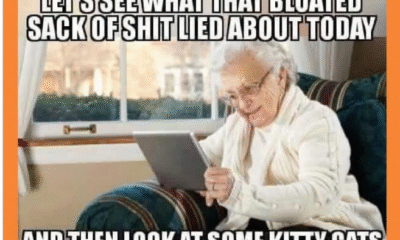
I normally don’t use ad hominem attacks in my posts, but I thought this was too funny to pass up.

As a nonreligious person, I don’t believe in the Antichrist, but those who do may wish to check out the meme below.

Trump Antichrist

Renewable Energy

SkySpecs Turns Blade Data Into Smarter Repairs

Published

on

Weather Guard Lightning Tech
SkySpecs Turns Blade Data Into Smarter Repairs

Matt Sigala, Director of Asset Management at SkySpecs, joins to discuss blade inspection data, repair vendor management, and carbon fiber repairs.

Sign up now for Uptime Tech News, our weekly newsletter on all things wind technology. This episode is sponsored by Weather Guard Lightning Tech. Learn more about Weather Guard’s StrikeTape Wind Turbine LPS retrofit. Follow the show on YouTubeLinkedin and visit Weather Guard on the web. And subscribe to Rosemary’s “Engineering with Rosie” YouTube channel here. Have a question we can answer on the show? Email us!

Allen Hall 2025: Matt, welcome to the program. Greatly appreciate it. So Matt Sagala has not been on the Uptime Wind Energy podcast. Although he’s been asked for the last five or six years to be on, he has had other commitments. So now that he’s available to be on the podcast, we love having him here.

Uh, if you don’t know Matt Sagala, Matt Sagala is a, a real special talent in wind. Very knowledgeable about repairs. He’s a composites person, but he, you know, it’s one thing to know composites and understand what that looks like, but also to run organizations that repair blades and manage blades and take care of large quantities of blades and do it very efficiently, where the assets are actually working and operating efficiently is hard to do.

So, uh, [00:01:00] Matt is now with SkySpecs in a recent change from a, a large global wind operator, and he’s come over to SkySpecs as Director of Asset Management. So Matt, congratulations first. Appreciate

Matt Sigala: it. Appreciate it.

Allen Hall 2025: So that’s a, that’s a big title there. What does that all mean, Director of Asset Management at SkySpecs?

Matt Sigala: basically, it’s just the overview of your entire asset from the start of the inspections to the reviewing of, of the inspections, to creating the RFP, going out to blade budgets and repairs, uh, and then having the actual repair teams on site and us being able to help execute those repairs in a systematic way, um, without having to overload or, or burden your, your internal, uh, systems in-house.

Allen Hall 2025: Because as an operator, there’s a lot on your plate.

Matt Sigala: Yes.

Allen Hall 2025: And a lot of operators don’t necessarily have blade teams internally. You came from an organization- Yeah … that did have a really good, still does have a really good blade organization.

Matt Sigala: Oh, amazing, yeah.

Allen Hall 2025: Yeah. Uh, that was unique, but a lot of operators in the United States or globally just don’t have [00:02:00] that resource.

SkySpecs has developed that resource over the last couple of years of we’re blade experts, we have all the data coming in, but we can also help you downstream when it comes to maintaining and repairing blades, which is, is sort of a new feature for- Yeah … SkySpecs. Now that you’re there and you’re seeing all the data, all the, the,

the-

the,

data center, so to speak, of w- and you have access to blades globally, and you can put your fingers on it.

What are you seeing out there in terms of blade health and, and going forward?

Matt Sigala: There’s a lot of work. There’s definitely a lot of work upcoming and into the future. Um, and you know, I think a lot of it could be risk-based with, with inspections, annual inspections, semi-an-annual inspections. I think that’s always the first line of defense on any blade management c- campaign.

Um, and then, you know, coming behind that, I think that’s where our preferred vendor lists and, uh, you know, being comfortable with working with certain suppliers on certain type of repairs. Um, we feel that, you know, we have an edge on the industry, [00:03:00] uh, with the data set that we have in hand, plus being able to build a relationship with ISPs.

And not only build a relationship with them, but be able to continuously give them mindful insight to their repairs from a year now to two years now. Because we’re the only ones really seeing those inspections and the repairs after they’ve been in operation for more than a year. It’s very rare that a, an ISP, uh, even on my side of the house when I was working with EDF, of being able to see a repair from year to year.

Um, I think that’s, that’s, that’s pretty massive and- Yeah … a lot of value within that, so.

Allen Hall 2025: Oh, sure. Uh, you were one of the first ones when I met you years ago now, uh, that was a big proponent of more inspection. Yeah. That there are some blades in which you must inspect more.

Matt Sigala: Yes.

Allen Hall 2025: And here’s the reason why.

Matt Sigala: Yeah.

Allen Hall 2025: Because you had thought through it a little bit and you’d come up with a plan. So you always had a plan. That’s one thing about Sagales, he always has a plan. You can ask him any question, he’s got a plan in relationship to blades. And you were the, you were the one that has said, “Hey, uh, there are certain blade types out there that we have seen that, well, you need to do a [00:04:00] little more inspection, and there are some others that it’s totally fine.”

Yeah. A, a yearly inspection is, is, is fine. Well enough. And that SkySpecs data, now that you have access to it, is that also f- feeding back into your- Definitely … logic of that?

Matt Sigala: Yeah, yeah. How do you, how do you think about it? No, it’s, it’s, it’s opened my mind a lot kinda getting me out of just being in, like, the trenches of certain decisions and being able to see this whole data set as a whole now.

Uh, and holistically, it’s like, all right, m- there’s just certain things that I kinda need to adjust on my end. Um, definitely letting a lot of things just play out for, uh, this repair season and, and how things are running, and then kinda looking to make some changes into, into ’27. Um, but the data set, it’s, it’s amazing.

It’s, it’s almost over- overwhelming. Um, so just kinda going after- the low-hanging fruit as far as, like, the 62 twos, the 145s, and really understanding what those look like, uh, how we can help our customers

Allen Hall 2025: that’s a large part of the fleet in the States, but globally too. SkySpecs has made a lot of, uh, recent advancements into, uh, certain marketplaces outside the US.

Mm-hmm. I won’t go into the specifics there, [00:05:00] but e- essentially, like, SkySpecs is becoming definitely more of a global company than a US-based company. Uh, and seeing turbines from outside the US, so you see a, a GE or a Vestas turbine operating in Germany or in the UK, and you see the same turbine in the States.

They’re not- No … performing the same, are they? No. It’s a completely different- Same turbine.

Matt Sigala: Yeah, different wind regimes, erosion characteristics, crack propagation rates, everything. Even we were seeing major, you know, differences from the West Coast to, to central Iowa with the same type of platform. So you can only imagine, you know, start going from a, a larger scale on, on the globe,

Allen Hall 2025: So you’re ac- because you have access to the data now, does that change the way you think about Blade management.

Matt Sigala: Yes. I-

Allen Hall 2025: in terms of when to, when to inspect, when to repair, or just leave it. Are you able to have clear definition of the variables that go into that equation?

Matt Sigala: Definitely so. and I think that’s the key to it. It’s, it’s, we- we’re really stepping away from that blanket approach of inspections where you [00:06:00] do have your baseline inspection, but after that you start getting into the granulars of, okay, you know, this site has X amount of the 622Ps or whatever they are, uh, we need to inspect more on, on a biannual or semi-annual inspection.

Um, and then we have, you know, certain turbines, like you said, that we, we touch once a year and it’s kind of just, just let it go. But, um, no, it’s, it’s very site specific, um, on-

Allen Hall 2025: That’s what I’m wondering … on- Is it how, how site specific is it? Very, very,

Matt Sigala: very site specific.

Allen Hall 2025: Really? Yeah. It’s- So like, uh, is Central Iowa is different than Central Kansas-

Matt Sigala: Eh

Allen Hall 2025: in a sense, or is it more broader spread than that? It can

Matt Sigala: get a little bit broader spread, but then we start looking into s- serial numbers for manufacturers, issues. Okay, are we seeing a certain batch that was released out and it’s in, you know, the northern part of Iowa or half the park? And so that’s what we’re really getting down to now is like serial batch issues and, and trying to track that across the region.

Allen Hall 2025: SkySpecs has been trying to use more AI over the last- Yes … six months to a year. Is that helping to sort through some of that data?

Matt Sigala: Yeah, it’s accelerating it. Uh, definitely it’s not like the, uh, [00:07:00] all end answer, but it’s definitely, it’s, it’s-

Allen Hall 2025: So you’re not just thumbing through Excel spreadsheets- Yeah, no

and looking at them one by one, you can actually use some, a little bit of

Matt Sigala: AI to- A little bit … to sort it. Yeah, Yeah, sort it out, get a high, high res summary, and then being able to kind of like pinpoint where we wanna go from there on it and, and dive in. But still, you know, AI hallucinates and, and does its thing.

Oh, sure. And so we, we just, we wanna tread carefully with it, but making sure it’s clean,

Allen Hall 2025: a sanity check, right? Yeah, exactly. While you’re there, a sanity check, like does that make sense? Exactly. Oh, okay. Exactly. Let’s, let’s scrape it again. Okay. So that’s a huge advantage, and I, I know on the repair vendor management side- Yeah

which has been a, an effort over the last year or two from SkySpecs, is to, uh, work with the ISPs and make sure that they’re doing the repairs properly and they’re vetted and they’re trained. Yes. That’s been a big effort in- internally in SkySpecs for a little while. Bringing you on really ramps that up in terms of the, the horsepower that SkySpecs can apply to that.

Yeah. Where are you going on that, uh, repair vendor management and the ISPs and the data that comes from, from [00:08:00] all of that side of the business, you know, opposite of the inspection side?

Matt Sigala: Yeah, so with RVM, you know, my end goal is, is to have a preferred vendor list of contractors within SkySpecs. And I’m more thinking of them as like a toolbox of not just it being a crescent wrench, it’s more of, okay, this ISP is good for bulk LEP installation.

This ISP is good for Vestas wrinkles, you know, within the max cord. And, and so I think that’s where what I’m trying to, to map out now is, is kind of put everyone within their right socket place of, uh, where they belong in the toolbox- Sh- sh- sh- … and how I can be able to utilize them. And then actually from there, um, seeing what the bandwidth is.

And I think that’s like the real catch is being able to get- The right teams on site quickly, you know, when, when you run into those situations, and safely.

Allen Hall 2025: Yeah, because it’s hard. If you call up an ISP and say, “Can you come fix my leading edge problem?” No. Pretty much the answer’s always yes. Yeah, yeah.

Right? But you need a little bit of a sanity check there. Can they really do it when they got twel- 12 crews out right now? They only have 13, [00:09:00] so probably can’t do it right now. Yeah,

Matt Sigala: exactly.

Allen Hall 2025: That’s where SkySpecs can help sort that out a bit.

Matt Sigala: Yeah, you know, on the QAQC side of things with, like, LEP where you- do

your 10 meters or 12 meters of, uh, LEP installation, and you’re trying to take a picture of 12 meters or, or 10 meters of, of LEP installation both, on both sides.

And so the reports are subpar. I think that they’re good enough, but what I’d like to start implementing is being able to have a, a post-installation inspection after the turbines have been running for three days to a week. Let’s refly, you know, the leading edges and get an idea of how the actual installation quality was.

Uh, ’cause I- in my opinion, you know, anything within the LEP that there’s a defect, it’s gonna pop up within that first two weeks of operation. Yeah. I think that’s something where we can capitalize on making the ISPs get back on that blade, fix it before they get offsite, and have prevent remob and, and such.

Allen Hall 2025: Ooh, that’s a good idea. Yeah. Because a lot of times they’re demobed, they’re down at the next wind farm- Yep … or maybe in another state, and it’s, like, too late to get them back there to, to touch up. To touch

Matt Sigala: up.

Allen Hall 2025: Exactly. To do [00:10:00] minor work usually. Yeah. Uh, it’s usually m- not major stuff. It tends to be minor stuff, but to catch it- Yeah

is really important. So the Horizon system that, uh, an existing SkySpecs,

uh,

customer uses is, there’s a lot to it, right? Yeah, yeah. So there’s, there’s many branches to this tree. One of them is repair vendor management. Uh, obviously another one’s inspection and the, and one of those growth branches is solar.

Matt Sigala: Yes.

Allen Hall 2025: Uh, what is the movement on solar within SkySpecs and repair vendor management? Is that something you guys are working on? Uh, and what, what is the plan for solar? Yes.

Matt Sigala: It’s the, the same approach as RVM, um, where, you know, solar-wise, we, we still wanna be able to, you know, step in and then be that middleman of being able to inspect, be able to get your asset back up and running with, our preferred vendors, you know, and, uh, just have a more smoother, systematic approach to, to the, the maintenance side of the solar s- side of things.

I think [00:11:00] we’re, the blades, we got an early start on it from 2016, 2017 timeframe, so we’re, you know, well 10 years into this. Uh, and I think we’re at the point where, like, solar starts n- need to catch up, and I think SkySpecs has a, a big headstart on that.

Allen Hall 2025: Yeah. Just even on the inspection side, although, uh, solar inspections have been happening for quite a while- Yeah

the, the quality has varied quite a bit.

Matt Sigala: Yeah. The, the amount of data, uh, that I’ve, I’ve been learning is it’s, it’s- … 2, 3X compared to, to, you know, what we’re pulling off off blades. Um, and so- Oh,

Allen Hall 2025: sure …

Matt Sigala: there’s t- tons more, you know, solar data that needs to be captured and, uh, processed.

Allen Hall 2025: Thermal imaging.

Matt Sigala: Thermal imaging.

A bunch of

Allen Hall 2025: that, right,

Matt Sigala: inverters. Top of the panel, bottom of the panel. Right. Yeah. Um, so that’s where I’m seeing a lot more, uh, data management is needed on that side too. And, and

Allen Hall 2025: the, the vendor management of, of that tends to be a little more of l- the Wild West, in my opinion. Yes. ‘Cause the ISPs and wind, there’s a competency to it, and there’s a lot of training- Yeah

to do those things. To be a composite repair technician, you generally have to take- Some training, be out in, in the real world working for a couple of years- Yep … before you become competent at it. Solar doesn’t tend to be that way.

Matt Sigala: No, [00:12:00] no. They’re very, they’re very John Wayne, I guess, like you said, the Wild West- Yeah

of, of, of, of it. But, um- Yeah, it has to

Allen Hall 2025: move fast.

Matt Sigala: It does, and I think that’s where, you know, SkySpecs can really help step in, uh, and be that technical bridge between the financials and the technical, and being able to safely execute, you know, uh, replacements, repairs, et cetera on, uh, on the, the solar side of things.

Allen Hall 2025: Let me ask you a couple questions- Okay … about carbon fiber. Okay. Because I would be remiss to, to let you go without talking- … about carbon fiber, because it comes up a lot in discussions we have at Weather Guard- Yeah, definitely … with operators, be like, “I’ve got these carbon fiber blades. I don’t really have a good track record of repairing them.”

Matt Sigala: Yes.

Allen Hall 2025: Or, the repair is complex and I really can’t find an ISP that knows what to do there. What are some of those repair inspection issues with carbon blades that may differ from your standard fiberglass blades that we’re all used to?

Matt Sigala: Uh, it really depends on where the carbon’s at. So if, you know, we’re talking about a spar cap, um, you know, with unidirectional fibers being- A pultrusion Pultrusion.

[00:13:00] Um, you know, the, the repairs are, are becoming more and more trickier, uh, mostly when you start in- introducing oil ingestion to a lot of these turbines that have carbon. you know, we’re, we’re having to take a lot more steps in, in the repair process, in making sure that we’re executing the repair properly.

And then another thing that w- you know, with the carbon that will– seems to be an issue, uh, on the procurement side is being able to order, uh, you know, the right GSM UD directional prepreg carbon and, and being able to get that in the, into the field, um, just because it requires freezers and, and everything else.

There’s, there’s a couple more steps to, to the prepregs. But, Carbon loves lightning.

Allen Hall 2025: It does.

Matt Sigala: It’s, it’s unfortunate. Yeah. But, you know, it’s, it’s, it’s, uh, a, a whole different repair process, to be honest.

Allen Hall 2025: Well, that’s what I’m hearing- Yeah … is that a lot of operators don’t want to touch it, especially if it’s in a pultrusion form.

Yes. If it is a hand layup carbon fiber structure, uh, from the OEM, that’s a little different than if I had this preformed,

uh, all unidirectional-[00:14:00]

Plank … y- Yeah,

this

kind of brick- Yeah … uh, of, of carbon. That’s hard to kinda grind into and get the layers back like you want to. Is it really repairable? I- and, and it’s in a sense, like is it repairable uptower or is it a downtower thing?

Matt Sigala: Um, no. The majority of the repairs… So I like to think of it if you got your… You break your blade into three sections. You got your max chord, your midspan, and your tip. Yeah. Uh, midspan tip, we, we can get away with uptower carbon fiber repairs.

Allen Hall 2025: Okay.

Matt Sigala: they do require aviation skillset as far as- Yeah … um, hot bonders being able- Okay

to pull your vacuums. And, and it’s… The big thing with the carbon prepreg is that you have to get above 80 C, and you’re more into the 140 C, 160 C, and you’re letting it heat soak for, for quite some time. Yeah. And that’s where you need those aviation style hot bonders and being able to get up there because alternately, it’s, it’s you’re having to soak the carbon at 80 C for six hours or eight hours, a little bit longer to, to get that full, full cook.

Um, and so that’s why right now I think there’s only a [00:15:00] very few qualified vendors out there, um, to do the carbon fiber repairs. it’s, it’s something that’s trainable. It’s not black magic. Um- No … it’s, it just takes time. It’s a different technician skillset. You go from reading layers and seeing your biaxials and UDs when you’re, when you’re grinding, to the carbon fiber, it’s all one layer.

It’s all black. Uh, so you, you’re, you’re more using y- uh, micrometer, and you’re, you’re taking your GSM of what your glass you’re gonna replace it with. You’re micing it. Okay, this is four thousandths or whatever, and then you ki- okay, now I’m like at 16 thousandths, X amount of layers, and now let’s go back.

And so it’s, it’s, it just takes time. It’s a process. It takes

Allen Hall 2025: a lot more time-

Matt Sigala: Yeah …

Allen Hall 2025: for sure. A lot. It- does that then lend itself to more training and qualification verification on, on the skillsets that’s out on site? Which is one of the things that repair vendor management at SkySpecs does, right?

Definitely. You, you’re, you’re- clocking each technician of what their skill set is. So if you see a guy out there that only has fiberglass repair, but they’re [00:16:00] working on a pultrusion repair, that’s sort of a red flag- Red flag,

Matt Sigala: yeah …

Allen Hall 2025: in SkySpecs,

Matt Sigala: right? Definitely. Yeah, definitely. Or not try- Well, understand the process, where they’re coming from.

Did it, was it an approved re- repair plan? Um, and a lot of these sites too, like I said, where, you know, they can’t get prepregded carbon, so we’re, they’re using, you know, GSM 600 UD fiberglass on- Right … some of these repairs.

Allen Hall 2025: Yeah.

Matt Sigala: Um, which is not ideal. Not perfect. Yeah.

Um, but, uh, if, if you gotta get the turbine up in operation, it’s understandable.

Allen Hall 2025: Oh, sure. Yeah. So what are the other big things that you’re seeing out there today? ‘Cause there’s a lot of work going on. There’s a lot of repower work going. A

Matt Sigala: lot of repower work. the whole 80/20, uh, right now, that’s kinda what I’m trying to understand is, uh-

which companies are out there actually, uh, replacing blades, or is it just a gearbox generator, uh, repower, you know, where, where is the money need to be spent. Um, and then trying to understand, too, like the, uh, LEP, um, installations, VD- VG installations, uh, being able to get those on top of, uh, the repowers I think is, is a massive win.

Allen Hall 2025: [00:17:00] Yeah. I, I, we have seen a lot more, uh, leading edge repair over the last two years, uh, mostly c- because of the, the changes in the law. Also, VG’s going on. Mm-hmm. Which you didn’t necessarily see, especially like three or four years ago. Yeah. You would occasionally see it because operators know they get some more power.

Matt Sigala: Yeah.

Allen Hall 2025: Are, you’re seeing more of that just to get to that 80 percentile threshold- Threshold … on, on, on the starting the tax credits over again Are you guys involved in, on some of the advice, uh- Yes … how to go do that? Because I know a lot of operators, like VGs make sense to me, but I don’t know anything about them.

I’m not an aerodynamicist. Yeah. Just, Matt, does this make sense to go do? Is, is that some of the conversations you’ve been involved with?

Matt Sigala: Yeah, we’re getting there. Like I said, I’ve only been here for a month now, but, but- Oh, come

Allen Hall 2025: on …

Matt Sigala: yeah, the con- 30

Allen Hall 2025: days is plenty.

Matt Sigala: The, uh, the conversations are definitely there.

and that’s something that we’re actually looking at in- in house and how we can partner up with, you know, s- certain assets out there that, that can, you know, feed a little bit more data into us. It’s creating like a, an aero packet of being able to- Mm … [00:18:00] install leading edge protection and then apply a VG, and then get yourself out of that neutral area and get you actually making the additional 1.4% energy or, you know- It’s a lot of money.

Yeah, it is. In

the- end, it’s, you know, times these massive fleets, it can add up pretty quickly.

Allen Hall 2025: What’s your feeling on instrumentation of blades today? Are, are there blades that you, yes, you must be putting some sort of instrumentation on it. I’m thinking about, uh, root inserts is a big problem. Yeah. There’s some cracks on certain blades that seem to be almost ubiquitous.

And then, uh, there’s, there’s some blades that, you know, just seem to keep turning. Are, are you thinking about how SkySpecs gets data into the system? Are you starting to recommend, like, “Hey, uh, we definitely need to put some sensors out there to monitor this crack and just to watch it grow instead of yearly may not be enough”?

Or, or is the drone inspection enough? Or you’re, are, are you thinking about vibration sensors? How, what are you thinking about in terms of blades? Yeah, there’s

Matt Sigala: definitely, definitely a need for, for sensors on certain [00:19:00]turbines. Um, I think at some point the visual inspections aren’t, aren’t enough, even on, uh, you know, quarterly.

Um, I’d still feel that a, a visual inspection, uh, you know, 30, 40% of the story. Uh, and then after that, you know, you’re kinda having to either internal inspections or getting hands-on inspection type situation. But, um, it’s more the financials of going out and having to reinspect the blade. If you’re continuously inspecting the blade, it’s, it’s almost easier to have the sensors on.

Uh, but it’s- The lack of data to put those sensors on to actually have, you know, good feedback is, it’s-

Allen Hall 2025: Well, that- that’s one of the things I was thinking about SkySpecs not long ago is because you touch so many blades- Yeah … it, it may make sense that SkySpecs maybe runs a couple of test sites. Like, we’re gonna put sensors on some of these blades to see how this crack progresses, because I’ve seen it in Illinois, in Kansas, in Oklahoma.

If I, me, SkySpecs, have a data set that says, “This is how it progresses,” that could make sense. Yeah. Because you, what you would hate to see is, like, every [00:20:00] operator be doing the same thing over and over and over again. Exactly. Trying to learn the same lesson, where SkySpecs can be a focal point in that. Yeah.

Matt Sigala: No, I think that’s, that’s, uh, something that we, we could be working towards. Um, it’s definitely, you know, not in, in the making right now, but, um, some of this, you know, data keeps coming towards us. It’s, it’s something that we wanna, you know, stay sticky with, so.

Allen Hall 2025: Yeah. And, uh, let’s, let’s go back to the, the repair vendor management side.

Mm-hmm. Uh, I know talking to you before the move to SkySpecs that you had tracked Every technician in terms of their efficiency, the quality of the work, how they… And beyond that, like- Yeah … how they work with others. Do they show up on time?

Matt Sigala: Yeah.

Allen Hall 2025: Is that part of the thought process coming into the larger scale Horizon SkySpecs system is we need to be measuring things than just did they finish the turbine and move on?

Matt Sigala: Exactly.

Allen Hall 2025: Is, is, is that gonna be, you see more of that, you think-

Sigala: Yeah …

Allen Hall 2025: over the next couple of

Matt Sigala: years? I think it’s, it’s gonna be very, you know, ad hoc with each individual customer on, on what type of, you know, data they wanna track, but it’s literally [00:21:00] just a switch within Horizon to turn that on if, if, uh-

Allen Hall 2025: Wow, I, I, if I’m an operator, I’m 100% turning that on.

Matt Sigala: Yeah. No, and I think it’s more of, uh, it helps the ISPs because the technicians know that their names are actually tied to it rather than them just going in there and doing a report, and we kinda get to see who they are at the end of it, so.

Allen Hall 2025: Yeah.

Matt Sigala: Um- ‘

Allen Hall 2025: Cause there’s a big boon to technicians. Oh, massive. If you’re a good technician, man, you can get a lot of street credibility because you’ve demonstrated it time and time again, and you have a- Yeah

a, a whole data set that says, “Hey, I know what I’m doing.” Mm-hmm. “You should be hiring me.”

Matt Sigala: Yeah.

Allen Hall 2025: That’s extremely valuable.

Matt Sigala: That’s something I, I push to the technicians even when I was on the other side of the house where, you know, doing interviews for hiring technicians. W- we’d ask, like, “Do you have a, a, a portfolio?

Like, you’re asking for X amount of money, like, you should have something to show for.” Some pictures. Pictures, previous repairs, you know. Start, s- definitely recommending to the technicians to-

Allen Hall 2025: Yeah …

Matt Sigala: you know, build a portfolio for yourself ’cause it’s, it speaks more than a resume at times. It’s a

Allen Hall 2025: profession.

Matt Sigala: It is, yeah. You

Allen Hall 2025: need to treat it as a profession. Yeah. It’s a

Matt Sigala: skill- It’s not

Allen Hall 2025: just a job …

Matt Sigala: yeah, a skilled trade, so.

Allen Hall 2025: It, [00:22:00] it, it really is, especially now as- Yeah … as we get into more carbon and complex blade designs, and everything’s just getting more advanced than ever. Yeah. You’d have to have that skill set.

Matt Sigala: Yeah. And I think it takes at least a minimum of three years to become a, a good blade repair technician or any type of technician in general. Like, you know, first year you’re learning. Second year is imposter syndrome, and third year you’re finally kinda getting into the groove of things and, and making some decisions.

So, um, and mostly, you know, hanging on a 5/16 cable, you know, 180 feet off the ground. Um, it, it takes a lotta, lotta training and development with those technicians, and just finding the right mindset right off the bat. It’s, like, the first thing that we look for.

Allen Hall 2025: So what are the things that operators should know going into this repair season and in towards, you know, inspection season, which will start in a couple of months?

What should they be thinking about going forward here based on what you know now, now you’ve been on the data side of it?

Matt Sigala: There’s a lot of work coming. There’s a lot of work to be distributed out there, uh, across all of our, our customers. Um, [00:23:00] but there’s a, a massive lack of quality, uh, within the ISPs. Um, and like, like I said, I think it’s not due to the It’s like, I think majority of it’s due to the rapid expansion of, you know, the volume needed for, for repair teams, and it’s constantly growing each year.

And, um, you know, these owners are being pushed a little bit harder to, to spin up these teams to, to get out there. Um, biggest thing is just, you know, taking care of the little steps, you know, making sure all your lines are drawn out on the blade. Like, that’s the stuff that I really see- … our engineers, you know, on, on the q- uh, quality side two or three.

Um, marking is just, you know, minimal stuff to where it doesn’t paint the full picture of the repair on the blade report, and so that’s why we’re raising the flags. Um, it’s not that they’re just going out generally and doing bad repairs. It’s just, like, the little steps in between. I think that’s what we’re kinda, like, focusing on.

other than that, just being safe. You know, these, these guys are, are, are, uh, like I said, hanging up on the, on those ropes or cables and, um, you know, making sure that, you know, they get home safe is, is w- our [00:24:00] biggest thing at the end of the day, too. It’s not only just getting the repairs done, but having the ROI, but it’s making sure that those technicians can, can have a, a safe job to come and go to and, uh, you know, be there, so.

Allen Hall 2025: Well, it’s, I’m sure SkySpecs is thrilled to have you. At least everybody I’ve talked to at SkySpecs is thrilled to have you there, and it’s like y- you’re plugging in this really knowledgeable person into this massive data set. And when you combine those two, you know, it’s, it’s squared. It’s not double, you know?

Yeah. It, it’s, it’s gonna really help SkySpecs out a lot, and I’m super happy for you. I think this is the right s- position for you to be, and eventually, like, you just gain so much knowledge. You-

Matt Sigala: Definitely.

Allen Hall 2025: You’re just one of those guys that you, you just think, “Man, Matt knows so much.” And if you haven’t talked to Matt Sagala, or you haven’t talked to SkySpecs, or maybe you are in SkySpecs, you’re in the Horizon system, and you just haven’t turned on the repair vendor management, now is the time to do that.

Matt Sigala: Definitely.

Allen Hall 2025: Matt is a powerhouse here. He can help you, and the, and the whole team at SkySpecs. There’s a lot of people behind the scenes- Oh, [00:25:00] tons … that are- Yeah … are making this thing go. How do they get ahold of you, Matt? Do they go to LinkedIn or-

Matt Sigala: LinkedIn, yeah. Um, or I can, you know, drop my, my email address with you, and you can put it up there.

But, uh, yeah, don’t hesitate. Reach out, or if you see me around- … um, you know, give me a call. Grab

Allen Hall 2025: him.

Matt Sigala: Yeah. Grab

Allen Hall 2025: me. If you see Matt, grab him. Yes, Matt, it’s so great to have you on the podcast. We’ve been trying so long to do this, so it’s, it’s great to have you here.

Matt Sigala: Likewise. No, this was fun. Greatly appreciate it.

SkySpecs Turns Blade Data Into Smarter Repairs

Continue Reading

Renewable Energy

A Message to All

Published

on

If the question at left were posed to me, I would respond: love one another.

Below is the seal of the school I attended as a boy. The motto in ancient Greek, close to the bottom, is pronounced “fuh-LAY-ta uh-LAY-loose,” and translates into English as exactly that–love one another.

This concept sits at the basis of Quakerism, the principle upon which the Willliam Penn Charter School (“PC”) in Philadelphia was founded in 1689.  We are all equal.  We all share “personhood.”

To most PC graduates, it’s weird when we hear, for instance, that the Christians and the Muslims or that the Sunnis and the Shiites “don’t get along.”  Can’t we just knock off this mean and childish behavior? Our common humanity sits right in front of our noses.

The cave drawings at Lascaux that were made 40,000 years ago reveal something very important.  We today are no different from the people living at that time in any way that is fundamental or basic.  We all love our children, and we all gaze at the sky, contemplating the wonders of the universe.

Harming each other is the repellant to our minds.

A Message to All

Continue Reading

Renewable Energy

Huge Corporations Are Slapping Their Customers in the Face

Published

on

What do you notice about the shopping bag in the photo?

It has no handles.

That’s right, Albertson’s, with annual revenues of more than $83 billion, has decided to inconvenience its customers, forcing them to wrap both of their arms around their grocery bags to get them into and out of their shopping carts, into and out of their cars, and finally into their homes.

The savings?  From what I can learn from AI, the answer is somewhere around $0.12 each. If you’re interested, you can Google: “cost per 1000000 paper grocery bags.”

I understand that grocery stores operate on low margins, but if it were my decision to make, I wouldn’t be deliberately pissing off my customers, many of them elderly, who are spending $100 for a bag of my groceries in order to save 12 cents.

Yet the Albertson’s example isn’t unique; in fact, it’s everywhere you go.  Look at your cell phone bill and your streaming services.  Corporate greed is grinding you into the pavement while it relished in your misery.

Huge Corporations Are Slapping Their Customers in the Face

Continue Reading

Trending

Copyright © 2022 BreakingClimateChange.com