

-
Supply Chain & Trade -
Tax Incentives & Appropriations -
Press Releases
Treasury Department, IRS Release Additional Guidance on Domestic Content Bonus Credit
WASHINGTON, D.C. – The U.S. Department of the Treasury and the Internal Revenue Service (IRS) released additional guidance today on the domestic content bonus tax credit. Following is a statement from Ray Long, President and CEO of the American Council on Renewable Energy (ACORE), on the guidance:
“We commend the Department of Treasury and IRS for issuing the domestic content guidance. Having clear rules of the road is critical for companies seeking to invest in America’s clean energy future, and today’s additional guidance on domestic content provides helpful clarity. Once successfully implemented, this bonus credit will help catalyze billions in private sector investment and thousands of good-paying jobs by boosting clean energy deployment and increasing the competitiveness of American-made products.
“ACORE appreciates the improvements that were made to the initial guidance, which our analysis over the last year has shown should help facilitate a swift and sustained transition to domestic manufacturing. Of particular note is the amended safe harbor approach, which intends to remove unnecessary burdens on taxpayers by allowing them to reference default cost percentages. We also commend Treasury and the IRS for expanding the safe harbor classifications announced last year to include additional clean technologies, like hydropower, and for their plans to issue proposed guidance on projects that use elective pay. We look forward to further analyzing the impacts of the guidance on clean energy investment and deployment.”
Background:
ACORE submitted comments in response to the initial guidance concerning the domestic content bonus provision issued by Treasury and the IRS last May, which built from prior individual and joint comments on a range of pertinent issues.
##
About ACORE:
For over 20 years, the American Council on Renewable Energy (ACORE) has been the nation’s leading voice on the issues most essential to renewable energy expansion. ACORE unites finance, policy, and technology to accelerate the transition to a renewable energy economy. For more information, please visit www.acore.org.
Media Contacts:
Alex Hobson
Sr. Vice President, Communications
American Council on Renewable Energy
hobson@acore.org | 202.830.3592 (o) | 202.594.0706 (c)
Dylan Helms
Manager, Communications
American Council on Renewable Energy
helms@acore.org | 202.935.6491 (o) | 727.290.8804 (c)
The post Treasury Department, IRS Release Additional Guidance on Domestic Content Bonus Credit appeared first on ACORE.
https://acore.org/news/treasury-department-irs-release-additional-guidance-on-domestic-content-bonus-credit/

How DTU’s Rain Test Facility Predicts Erosion
Rosemary visits DTU Wind & Energy Systems in Denmark, where Nicolai Frost-Jensen Johansen explains rain erosion testing, tip speed, and LEP defects.
The Uptime Wind Energy Podcast is brought to you by Weather Guard Lightning Tech, creators of the StrikeTape Ultra LPS retrofit. Subscribe to Uptime’s Substack newsletter. And check out Rosemary’s “Engineering with Rosie” Youtube channel. Have a question we can answer on the show? Email us!
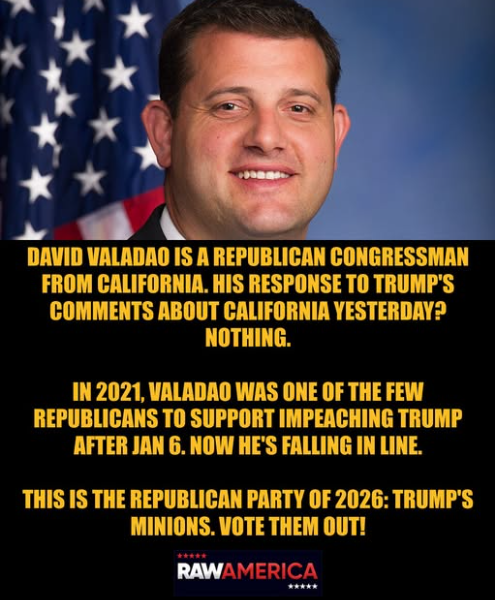 If it’s true that David Valadao is moving back in line with Trump (which seems exceptionally unlikely in California), this jackass is in the slim minority. Most congressional Republicans are trying to pretend they’ve never heard of Trump.
The representative’s district is in the rural farming region in Central California, but still, aligning oneself with Trump makes no more sense than cozying up to skin cancer.
 73%? Why not 95%? 125%?


-
Climate Change1 year ago
Guest post: Why China is still building new coal – and when it might stop
-

 Greenhouse Gases2 years ago
嘉宾来稿:满足中国增长的用电需求 光伏加储能“比新建煤电更实惠”
-
Greenhouse Gases1 year ago
Guest post: Why China is still building new coal – and when it might stop
-

 Climate Change2 years ago
嘉宾来稿:满足中国增长的用电需求 光伏加储能“比新建煤电更实惠”
-

 Renewable Energy12 months ago
Sending Progressive Philanthropist George Soros to Prison?
-
Climate Change2 years ago
Bill Discounting Climate Change in Florida’s Energy Policy Awaits DeSantis’ Approval
-
Greenhouse Gases1 year ago
嘉宾来稿:探究火山喷发如何影响气候预测
-

 Climate Change2 years ago
Analysis: China’s CO2 falls 1% in Q2 2024 in first quarterly drop since Covid-19