

We discuss a rope management tool for wind turbine maintenance, TotalEnergies’ floating offshore wind anchor idea, and a stress relief device.
Fill out our Uptime listener survey and enter to win an Uptime mug! Register for Wind Energy O&M Australia! https://www.windaustralia.com
Sign up now for Uptime Tech News, our weekly email update on all things wind technology. This episode is sponsored by Weather Guard Lightning Tech. Learn more about Weather Guard’s StrikeTape Wind Turbine LPS retrofit. Follow the show on Facebook, YouTube, Twitter, Linkedin and visit Weather Guard on the web. And subscribe to Rosemary Barnes’ YouTube channel here. Have a question we can answer on the show? Email us!
Pardalote Consulting – https://www.pardaloteconsulting.com
Weather Guard Lightning Tech – www.weatherguardwind.com
Intelstor – https://www.intelstor.com
This is Power Up, where groundbreaking wind energy ideas become your clean energy future. Here’s your hosts, Allen Hall and Phil Totaro.
Allen Hall: Well, Phil, our first patent of the week is a clever, portable device for managing industrial ropes used in wind turbine maintenance. Now, the key to this innovation is a rope driver system that combines mechanical and electrical components to safely control wind energy.
Heavy duty ropes, and we know those can be kind of a pain to deal with. This device features a rope storage container with a hardened lower portion and a flexible top portion, along with a motorized driver mechanism that can both lift and lower ropes. And I’ll think of it as a sophisticated wind system that not only moves the rope, but stores it properly, too.
Seems like a lot of good uses for this idea, Phil.
Phil Totaro: And when you consider that regardless of remote inspection technology, we still do end up dangling a lot of service techs off ropes in, in this industry. So, this is actually something that comes from seemingly independent inventors with no corporate affiliation.
And it’s, there’s a lot of patents like that that are usually just kind of crackpot things that, Is something that’s never going to be adopted by the industry. This is something I hope they can find a way to commercialize or, find somebody that is interested in licensing this or acquiring the, the patent because this is actually Besides being kind of a clever and unique idea, I think this would actually come in handy in a lot of sites, because if you have multiple techs working on a blade repair up tower you can get techs.
Crossed ropes, and it creates a safety issue. So having proper storage really does come in handy and, and enhances safety of, of uptower workers.
Allen Hall: Our next idea comes from TotalEnergies, One Tech. And it is a patent that tackles one of the biggest challenges in offshore wind, how to securely Anchor wind turbines to the seabed.
Now, the invention introduces an innovative monopile foundation design that’s specifically engineered for offshore wind turbines. And the key feature is a specialized lower end structure with inner and outer tubes connected by Wing plates, they create compartments, think of it as a hybrid between a traditional monopile and a suction bucket foundation.
Now, what makes this design special is how it handles both the vertical and horizontal forces from the turbine. And Phil, we all know trying to attach the C4 is really complicated and Totaro Energies has been out in the forefront of this for a number of years. This patent is just one of those ideas from Totaro.
Phil Totaro: Yeah, and, and, like we’ve been talking about on PowerUp over the past few weeks, the reason I wanted to, to key in on this one today was, besides being this clever combination of kind of a, as you said, either a suction bucket or a jacket type approach and a monopile which, again, you would, you would not necessarily use this everywhere, but this is something that would come in for potentially sites in France where they’re looking to deploy and other project sites around the world where Totaro is involved where you might have specific, site specific soil conditions that necessitate some kind of structural reinforcement like this. Total’s never going to go have, somebody build this for them specifically, they might contract manufacture these types of things, but in doing so they’re leveraging IP that they’ve captured and that they own and control to the benefit of being able to, potentially get a discount on these, these foundations.
Because the offset, the royalty that they receive. For licensing, the design IP offsets some of the costs that they would otherwise pay for, purchasing these, these fabricated units. So this is a really clever strategy on the part of Totaro to capture IP on this, and it’s going to be a theme.
We talk about. Over the coming weeks as well on, on PowerUp, because they’re, Total’s not the only, kind of, development company or owner operator that, that’s getting into this area.
Allen Hall: Our fun patent of the week comes from a couple, looks like maybe a married couple, and it is a patent that describes a personal sound muffler device that let users Vent their frustrations without disturbing others, and the device is essentially a foam lined muffler that fits over the mouth and includes integrated electronics to measure just how loud you are yelling.
And the first thing I think about here, Phil, is Seinfeld in the Serenity Now episode. Where they say, you’re not supposed to scream that, and this is a device which is supposed to limit the amount of noise coming out if you’re really upset, I guess,
Phil Totaro: and just scream into this tube. I mean, I, we’ve had some really goofy things on PowerUp since we started doing this, and this, this has to be on the, the end of the spectrum that I find rather absurd.
The, the sides, just the, the practical application of it. It’s just, I mean, I’m sure it’s one of these things, like if they, if they ever like really designed this and put it into like the, sharper image or a hammock or Schlemmer catalog, somebody might buy that sort of thing. But this is never really gonna.
I don’t know. I think if people need to yell, then maybe just go outside or something. I mean, save yourself the 180 that I’m sure they would try to charge you for a device like this.
Allen Hall: Yeah, as your favorite NFL team loses in the playoffs, I could see a lot of these devices being used, actually.
Phil Totaro: Well, maybe, yeah.
I mean, maybe that’s, that’s what it is. Or, it, it could also be like if you’re, if you’re at work in your office or something and, you, you get a little upset, maybe you just go shout into this thing and nobody, nobody is, is any the wiser.
Allen Hall: Well, Phil, you have seen those little quiet cubes at work centers.
Some of them have been turned into screen rooms. Or they actually can go in and scream and yell. So this device, although this device is a much simpler device, it’s been expanded now into room size instead of just mouth size.
https://weatherguardwind.com/totalenegies-anchor-rope-tool/

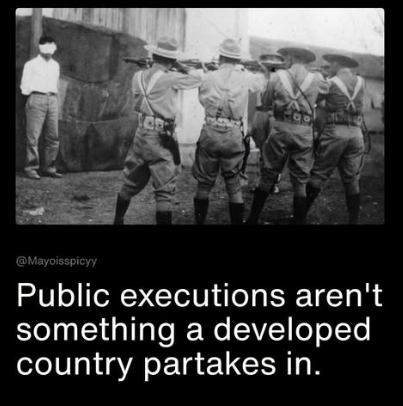 The United States seems set on propelling itself backwards.
 Maybe, as they say, “Hell has a special place reserved in it” for people like Thom Tillis, Republican Senator from North Carolina, who enabled Trump to rape and destroy the United States.
That was until it became clear to Tillis that he could jump ship, write a scathing book about the president, get all over mainstream news promoting it, and go on to enjoy another chapter of political success.
That we Americans are so stupid that we accept this blatant hypocrisy and criminality is sad proof that we’re not the people we were 20 years ago. Maybe what many people are saying are correct: we deserved what we got.
Here’s a short video from Elle Cordova that reminds us that science is something of a rarity in human history.
The great tyrants of history have done their best to cause the people they ruled to reject science, simply to ensure the masses are ignorant, terrified, superstitious, and thus easily controlled.
The current political administration is particularly engrossed in the rejection of science. I wonder why.



-
Climate Change1 year ago
Guest post: Why China is still building new coal – and when it might stop
-

 Greenhouse Gases2 years ago
嘉宾来稿:满足中国增长的用电需求 光伏加储能“比新建煤电更实惠”
-
Greenhouse Gases1 year ago
Guest post: Why China is still building new coal – and when it might stop
-

 Climate Change2 years ago
嘉宾来稿:满足中国增长的用电需求 光伏加储能“比新建煤电更实惠”
-

 Renewable Energy12 months ago
Sending Progressive Philanthropist George Soros to Prison?
-
Climate Change2 years ago
Bill Discounting Climate Change in Florida’s Energy Policy Awaits DeSantis’ Approval
-
Greenhouse Gases1 year ago
嘉宾来稿:探究火山喷发如何影响气候预测
-

 Climate Change2 years ago
Analysis: China’s CO2 falls 1% in Q2 2024 in first quarterly drop since Covid-19