


- Formal negotiations
- Finance
- Global review
- Global report
- Digital sequence information
- Harmful subsidies
- Marine biodiversity
- Planning, monitoring, reporting and review
- Article 8(j) implementation
- Biodiversity and climate change
- Links with other bodies
- Around the COP
- Armenian presidency
- Protests
- Lobbying and influence
- Carbon and biodiversity markets

Trixy Elle, a fishmonger from Batasan Island, lost her home and her business when Typhoon Odette tore through the Philippines in 2021. She is among a group of survivors who filed a lawsuit this week in a UK court seeking damages from Shell over the oil giant’s role in climate change.
In today’s world, it sometimes feels like we’re all slightly more connected: that smartphones and social media have helped us to understand what people on the other side of the world are going through.
But after living through the horrors of Super Typhoon Odette, which tore through my home in the Philippines in December 2021, killing or injuring more than 1,800 people, I know this isn’t true. Unless you’ve lived through it yourself, you’ll never know the feeling of having to swim away from your own collapsing home, or the sound of 175 mph (281 km/h) winds devastating your entire community. No amount of photo or video footage can ever bridge that gap.
Fossil fuel companies in the Global North, which bear huge responsibility for the climate crisis, are largely protected from the impacts of their polluting activities. But those of us living on small islands, at the sharp edge of climate change, don’t have that luxury.
-
Philippines storm victims to seek damages from Shell in “unprecedented” climate claim
The case is the first civil claim to directly link an oil firm’s climate impact to deaths and personal injury in the Global South, its backers say -
Top UN court paves way to lawsuits over inadequate climate finance
The International Court of Justice has advised that the level of climate finance given to developing countries must be compatible with limiting global warming to 1.5C -
PR firm working for Shell wins COP30 media contract
As calls grow to keep fossil fuel influence out of UN climate talks, campaigners say Edelman’s partnership with the oil and gas major raises an alarming conflict of interest
My family lost everything. We lost our business and had to sell our precious belongings just to rebuild our house. We now live in non-stop fear. Even moments meant for joy are now tinged with anxiety and stress. After all, Odette – also named Rai – tore through our islands right before Christmas. We didn’t, and still don’t, know when the next disaster will hit, only that thanks to the fossil fuel industry, the threat is always growing.
Profit before people
We’ve done nothing to cause the climate crisis, but because fossil fuel companies have chosen profit over people, our lives have been destroyed. Scientists have said the likelihood of a disaster like Odette in the Philippines has roughly doubled due to global warming.
None of this is fair. That’s why we’ve chosen to turn our fear into action and take the fossil fuel giant Shell to court.
Since at least 1965, Shell has known that fossil fuels are the primary cause of climate change. The corporation was warned that if it failed to curb its emissions, the world could suffer major economic consequences by 2038. But still, it chose not to change course. Shell is one of the world’s largest emitters, accounting for 2.04% of historical global emissions. Contrast that to the Philippines, which has the highest risk of climate hazards but has contributed just 0.2%.

We’re not naive about the scale of the challenge. Shell is a huge company with endless resources. But we’re living in an age of scientific discovery. Attribution science can now directly link individual extreme weather events to climate change, and emissions to specific fossil fuel companies.
The law is also changing. We’re seeing courts recognise the role and responsibilities of major emitters in the harm climate change causes our planet. In May, a German court ruled that major emitters can be held liable for climate damages abroad.
Peruvian farmer loses climate case against RWE – but paves way for future action
In July, the International Court of Justice advised that governments have a binding duty to protect people and the planet from the climate crisis, and so the potential liabilities for fossil fuel companies are substantial. Some estimates say the climate damages attributable to the 25 largest oil and gas companies could be more than $20 trillion.
Polluters must pay
By filing this case, we are seeking financial compensation for losses and damages. We’re still living with the consequences of Odette, even today.
The “polluter pays” principle is clear: those most responsible for environmental harms, including fossil fuel giants like Shell, should cover the costs of managing them. That’s the basis of our claim. We are also asking for concrete steps to be taken, from replanting mangroves to rebuilding sea walls, in line with our right to a balanced and healthy environment, something set out in the Filipino constitution.
Just as importantly, we are asking for justice. We want to send a powerful message to companies like Shell. For too long they have been able to burn fossil fuels while chasing endless profit, despite knowing how dangerous it is. But in 2025 the science and the law are both on our side. Sooner or later they will have to clean up their act.
===========================================================
Shell says claim is “baseless”
When asked to comment on the pending case by Climate Home News in October, Shell acknowledged that more global action was needed on climate change but rejected the suggestion that the company had unique knowledge about the problem.
A company spokesperson has responded to media reports about this week’s court filing saying: “This is a baseless claim, and it will not help tackle climate change or reduce emissions.”
The post The risk of another “super typhoon” is growing – that’s why we’re suing Shell appeared first on Climate Home News.
The risk of another “super typhoon” is growing – that’s why we’re suing Shell
Continue Reading
Prepared by a coalition of nine Western Australian union, industry, conservation, and community organisations—including UnionsWA, the Conservation Council WA, and the Smart Energy Council—the WA Clean Energy, Jobs & Industry Plan provides a practical roadmap to transform Western Australia into a clean energy powerhouse while creating thousands of secure local jobs.
Western Australia stands at a pivotal crossroads: lead the global clean energy economy or watch investment, future industries, and secure jobs go elsewhere. The WA Clean Energy, Jobs & Industry Plan outlines a transformative blueprint to harness the state’s world-class solar and wind resources. Discover how legislated renewable targets, green iron manufacturing, and a dedicated regional training strategy can generate tens of thousands of local jobs, lower household bills, and build a resilient, net-zero future for all Western Australians.

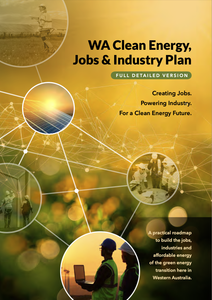
WA needs a clear and forward-thinking plan if it is going to become a competitive renewable energy powerhouse and maintain its economic strength through the energy transition.
“Western Australians know a faster renewable energy transition will lower their household expenses and prevent harmful climate pollution. But the community also needs clear direction to ensure this transition will create jobs, lower costs and not cause undue environmental harm.
“Here, sectors representing a broad range of interests have laid the groundwork for those outcomes, clearly outlining what is needed to create a future for WA that is good for the environment, for the climate, for workers and for the economy.
Summary
The WA Clean Energy, Jobs & Industry Plan sets out a strategic roadmap to position Western Australia as a global clean energy superpower while creating thousands of secure local jobs.
The report establishes three overarching goals:
- Creating local employment.
- Maintaining industrial competitiveness.
- Lowering household energy costs
To realize this vision, the framework details actionable measures to follow on from the recent WA Government announcement of a 75% Renewable Energy Target by 2031 for the South West Interconnected System. This includes developing a statewide Renewable Energy Target, coordinating statewide workforce and training pipelines, strategically planning regional infrastructure to safeguard high-value biodiversity and cultural heritage, and ensuring equitable benefit-sharing through household electrification incentives and First Nations equity partnerships. Ultimately, the plan highlights that establishing clear policy and regulatory certainty will unlock lower energy bills, boost power reliability, and secure the state’s global competitiveness in emerging green commodity export markets.

Key Findings
- Statewide Renewable Energy Target and Emissions Reduction Targets: The report calls for a statewide RET and 1.5°C aligned emission reduction targets to remove policy risk, lower capital costs, and attract clean energy investment.
- Transformative Job Creation: Accelerating the transition offers massive employment prospects, including up to 8,800 solar and battery jobs by 2050, as well as 24,000 ongoing and 11,000 construction jobs in a commercial green iron industry.
- Industrial Electrification & Competitiveness: Requiring large gas users to adopt binding electrification timetables and providing concessional financing will protect existing energy-intensive manufacturers from rising energy costs and impending domestic gas shortfalls.
- Green Commodity Export Leadership: Western Australia can build new export markets in green iron, green ammonia, and offshore oil/gas decommissioning by constructing shared common-user infrastructure and setting dedicated Green Commodity Export Targets.
- Coordinated Workforce & Training Pipeline: To address critical skill shortages the plan recommends establishing a WA Clean Energy Jobs Plan 2050, three regional training hubs, and dedicated pathways for female and under-represented apprentices.
- Environmental Safeguards & Community Benefits: Fast-tracked development must be paired with State Planning Policies that avoid high-biodiversity and cultural heritage lands, mandate new data centres to run on additional renewable power, and deliver household electrification rebates and First Nations equity partnerships.
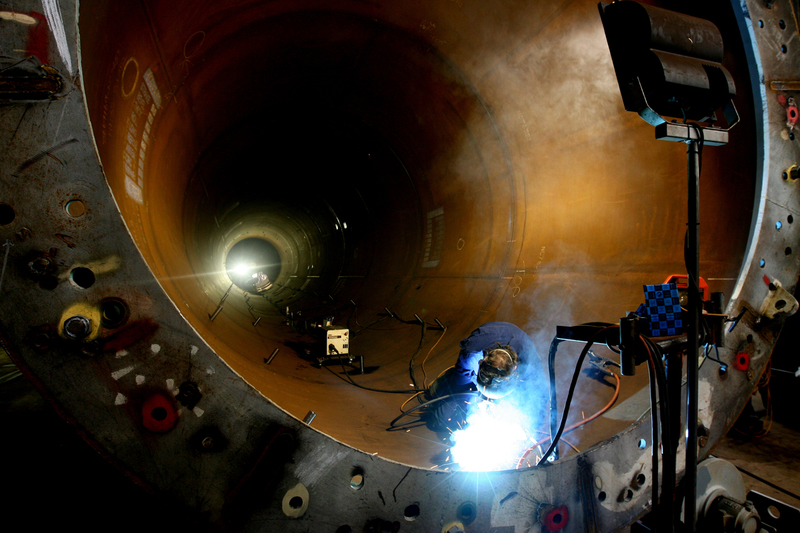
What you can do
WA has an opportunity to lead on sustainable, clean energy and associated industries. You can help by:
- Sending an email to Environment Minister Murray Watt and Prime Minister Anthony Albanese, calling on them to reject Browse.
- Sharing this story to help more Australians understand what’s at stake.
- Encouraging your friends and family to take action.
Countries have completed the first “global review” of their progress towards reversing nature loss by 2030 at the COP17 biodiversity talks in Yerevan, Armenia.
The review “notes with deep concern” that, unless action is “rapidly accelerated”, the goal to reverse nature loss and meet a set of 23 targets by 2030 “will not be achieved”.
It “urges” countries to accelerate action, including by “increased ambition in addressing the gaps”.
Much of the discussions in Yerevan focused on how to raise the necessary funds to help developing countries protect nature.
Some major economies pushed to expand the range of nations that are expected to provide finance, with countries agreeing at the end of the two weeks of talks that non-donors that want to contribute can “signal interest” before COP18.
This came after developed countries failed to meet a target to significantly ramp up nature finance over the last few years.