

The recent discovery of Grimpoteuthis feitiana, a new species of Dumbo octopus found deep in the Pacific, is a reminder of something both humbling and urgent: we still know so little about the ocean that shapes our lives. This fragile, finned creature, gliding silently more than a kilometer beneath the waves, has lived in these waters long before we mapped them, and its story is only now coming to light.

What moves me most about this discovery is not just the Dumbo octopus itself, but how it bridges science and culture. Its name draws inspiration from the flying apsaras of China’s Dunhuang murals, those graceful, winged figures that seem to dance through air and imagination. It reminds me that the deep sea has always held a place in our collective human story, — not only in myths and art, but in the ways we relate to nature, learn from it, and find meaning within it.
Pasifika connection to the ocean
For us in the Pacific, the ocean is more than a body of water. It is our identity, our culture, our history. Our ancestors read the seas to navigate, to survive, to connect communities scattered across islands. Discoveries like this Dumbo octopus awaken something deeper in me, — a sense that the ocean is alive with stories and wisdom we are only beginning to rediscover. And with that understanding comes a responsibility to protect it.
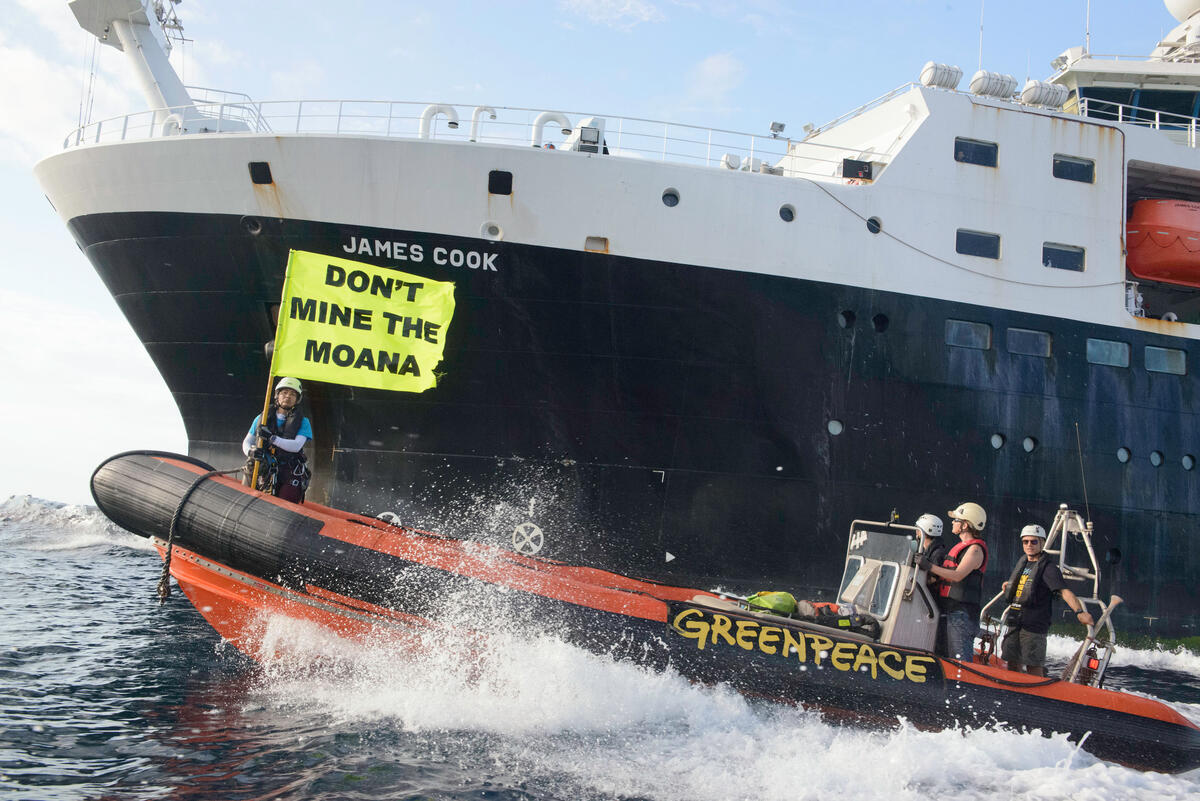
Each new species like the Dumbo octopus, each glimpse into the deep, is a warning as much as it is a wonder. The creatures of the abyss live slow, deliberate lives in fragile ecosystems, shaped by balance and patience. Deep-sea mining, pollution, and climate change threaten to erase them before we even learn their names. Protecting the Pacific’s oceans is not an abstract act of conservation; it is an act of cultural preservation, of love for our home, and for the unseen life that sustains us all.
Grimpoteuthis feitiana is more than a scientific discovery. It is a reminder that the ocean is still full of life, mystery, and wisdom — and that we have a duty to ensure these depths remain wild, healthy, and alive, for us and for the generations yet to come.
Reflection by Raeed Ali
Pacific Community Mobiliser

The new head of the Global Center on Adaptation (GCA) faces a formidable task: raise urgent funding to get the organisation back on track following damaging revelations about its former management, just as tight budgets prompt many donors to rethink their climate spending.
Rindra Rabarinirinarison, who served as Madagascar’s economy and finance minister from 2021-2025, said the change of leadership at the Rotterdam-based GCA was “an opportunity to reset things”, pledging to repair the centre’s reputation after its founding CEO left under a cloud.
“I plan to strengthen partnerships and rebuild this trust. Why? Because people only give you money if they trust you – and they only trust you if they know you well,” she told Climate Home News in her first interview since taking over at the GCA’s floating office in the Netherlands this month.
During her first weeks in the job, she plans “to meet with all our partners to correct the communication challenges that have emerged” – a reference to the revelations about the centre’s workplace culture that emerged in a series of investigative articles published by Dutch broadcaster NOS last year.
-
COP30 fails to land deal on fossil fuel transition but triples finance for climate adaptation
Instead of a global agreement to create roadmaps to shift away from fossil fuels and end deforestation, Brazil announces voluntary initiatives -
Business-as-usual: Donors pour climate adaptation finance into big infrastructure, neglecting local needs
A deep-sea port project in Bangladesh highlights how some major donor nations are labelling funds for industry-friendly transport and energy projects as adaptation finance, reporting by Climate Home News shows -
Tripling adaptation finance is just the start – delivery is what matters
The COP30 decision on adaptation finance was a rare moment of hope. We must build on it by prioritising grants, streamlining access and ensuring funding meets country needs


When the GCA was launched to considerable fanfare in 2018, climate adaptation was largely neglected by politicians, development banks and investors, who were more focused on efforts to cut planet-heating emissions than on helping people cope with their effects. The GCA’s plan, together with the high-powered Global Commission on Adaptation which it co-hosted, was to correct that imbalance.
Former UN Secretary-General Ban Ki-moon, who served as founding chair of the GCA and is now its emeritus chair, said back then that the commission, of which he was a member, would “play a vital role in elevating the political importance of adaptation, and also in making the case that greater resilience is achievable”.
Today, most experts agree that adaptation – and the increasingly urgent need to invest in it – have won far more prominence on the international agenda, even if dollars have yet to flow on the scale required.
Richard Klein, director of science and innovation at the GCA between September 2018 and December 2019, said the centre had helped propel that progress, alongside other organisations like the United Nations Development Programme and the World Bank.
But Klein, now an independent adaptation expert, told Climate Home News the GCA had squandered the opportunity to generate innovative research and had become “a mid-sized consultancy … that lives way beyond its means”.
“High-pressure” environment
The reporting by NOS portrayed a toxic workplace culture in which staff were expected to put furthering the high-profile advocacy of the GCA’s dynamic ex-boss Patrick Verkooijen ahead of their research to help vulnerable communities adapt to worsening extreme weather and rising seas.
Verkooijen recently stepped down from the GCA after two four-year terms during which he was appointed as chancellor of the University of Nairobi, where the centre planned to set up a dual headquarters.
Asked about the criticism of his leadership, Verkooijen said the GCA had been created as a startup organisation at a time when there was “a very great sense of urgency that adaptation needed to be scaled up – all leading to a huge amount of pressure for delivery”.
“I believe managers and staff did their best, though certainly not every system was perfect – there could be tense and high-pressure moments,” he told Climate Home News in emailed responses.
Conversations with ex-GCA employees, as well as an unpublished editorial authored by several former staffers and shared with Climate Home News, supported the NOS reports about an atmosphere of conflict in which operations were focused on advancing Verkooijen’s efforts to promote adaptation and the centre’s work to leaders, especially in Africa.
“It was painful, how, in the end, just everything was about visibility around him,” Klein said.
Verkooijen said that while he would not discount employees’ personal experiences, the GCA had not received official complaints about its leadership and “did not recognise the environment as it was characterised in media”. The GCA has invested in building up staff systems and safeguards, especially in the last three years, he added.
“Significant” downsizing underway
Rabarinirinarison takes over as the organisation faces tough decisions about its size and capacity going forward. It is being forced to downsize from 60-plus employees because of financial uncertainty following an end to funding from the British government and a question-mark over whether other countries – including the Netherlands, Denmark and Norway – will renew their support.
Other key funders, including France and the Gates Foundation, have agreed to provide continued backing, the GCA said. It denied a report by NOS that it is facing imminent bankruptcy, which Climate Home News understands was based on a confidential internal document outlining a range of scenarios in line with different funding outcomes.
Rabarinirinarison said she could not comment on potential layoffs, which are being discussed as part of a “significant resizing to adjust the head count with the contracted resources available to us”.
But she conceded that the centre’s current financial situation is “very serious right now”. Funding from the Dutch government – which was instrumental in setting up the GCA – is due to run out in May, and earlier efforts to win a new commitment must now be revived after a minority centrist government took office in February. Prime Minister Rob Jetten is a former climate minister and supports the clean energy transition.
“We are hopeful the new government’s approaches to our work will be favourable – and this is the advantages to have a new management, new face, new hope and new explanations,” said Rabarinirinarison, adding that the Netherlands will be her first port of call, followed by other key partners that have backed the GCA up to now.
She is also planning to seek potential new sources of funding in the Middle East and Asia, where the GCA has offices in Bangladesh and China.
The centre’s work so far has been heavily focused on supporting large adaptation projects carried out by the African Development Bank (AfDB) and the World Bank across Africa, to which it has provided consulting services and technical advice.
Flagship Africa investment programme
The GCA threw its weight behind the Africa Adaptation Acceleration Program (AAAP), which launched its second phase last September at the Africa Climate Summit in Ethiopia and the United Nations General Assembly.
The AAAP investment initiative for climate adaptation on the continent began in 2021 and was implemented through a partnership involving the African Union Commission, the AfDB and the GCA.
According to the GCA’s website, its first phase embedded “climate adaptation solutions” into more than $20 billion of development investments across some 40 African nations.
Global South’s climate adaptation bill to top $300 billion a year by 2035: UN
An article by NOS, published last October, accused the centre of misleading donors by overstating its role in the AAAP and other projects, saying documentation examined by NOS did not back up the extent of GCA’s claimed contributions to the work.
The GCA, for its part, put out a statement rejecting the NOS findings, which it said “provide an inaccurate representation of the Center’s work and achievements, as well as our relationships with partners”.
A GCA spokesperson told Climate Home News that, after sharing information with NOS and requesting corrections from the outlet which were not made, it recently filed a complaint about the coverage with the Dutch ombudsman.
In emailed comments, Verkooijen defended the achievements of the centre under his stewardship, saying it had made a “substantial contribution” to developing knowledge including through its co-management of the Global Commission on Adaptation and its “State and Trends on Adaptation series” of reports. He said that, at the advocacy level, GCA had made “clear-cut contributions to elevating the level of political priority for adaptation” and had participated in embedding climate considerations into around 100 large development projects delivered by international financial institutions.
In most cases, he wrote, “these projects … would not have factored in climate risks and adaptation without the GCA’s contribution – or not to the same degree”.
Pitching adaptation as a “driver for growth”
In the future, Rabarinirinarison thinks the GCA can continue to act as a “solutions broker” on adaptation, while facilitating access to international climate finance for Global South governments and communities which have limited capacity to develop bankable adaptation projects and navigate complex processes.
The GCA can use its expertise to help countries understand the significant risks of failing to protect their economies from extreme weather and serve as a strong proponent of adaptation as a “driver for growth”, she said.
The centre still has “room to grow”, she added, by delivering more “technical expertise reports” and “technical advocacy”, ensuring that adaptation is “effectively included in large-scale financial institutional lending” and bridging the gap between discussions and implementation at scale.
Climate adaptation can’t be just for the rich, COP30 president says
Some in the sector question the need for a Global North-based organisation to be doing such work for the benefit of Global South countries, despite its shift to African leadership. The GCA board also has a new chair, with Mauritius President Ameenah Gurib-Fakim this month taking over the role from Senegal’s former leader, Macky Sall, who is bidding to become the next UN chief.
Finding a USP in a maturing sector
Sander Chan, who was a senior researcher at the GCA from 2020 to 2022, criticised the organisation for focusing too heavily on building the business case for adaptation, mobilising money and seeking private-sector involvement, while doing too little to include or strengthen the perspectives and voices of local and Indigenous communities.
The centre has, however, developed a training and advocacy network for some 35,000 youth supporters of adaptation across the Global South, as well as hosting an online platform for locally led adaptation intended to showcase and connect community groups and practitioners.
Klein and Chan, now an associate professor at Radboud University in the Netherlands, also questioned the value added by the centre beyond its awareness-raising and brokering roles, which they argue are now less important and can be fulfilled by other better-established institutions.
Klein said it will be tough for the GCA’s new leadership to develop a unique selling point unless it goes beyond its current activities, given that more organisations today are offering similar services and looking for a larger share of the pie.
“I think it’s more than just a matter of rebuilding trust in how [the centre] used to operate,” he said. “It’s also: is there still a need for what they’re doing?”
Rabarinirinarison’s strategy, if the GCA can procure funding to get itself back on course, is to expand its work and knowledge base to pitch adaptation as key to economic growth and “selling this product as our main asset”.
“I do believe that GCA is able to perform essential services, and its partners are able to notice its value and continue to support us if we communicate well,” she said.
The post Can new CEO steer Global Center on Adaptation back on course? appeared first on Climate Home News.
https://www.climatechangenews.com/2026/03/25/can-new-ceo-steer-global-center-on-adaptation-back-on-course/
Climate Change
As Storms Pummel Hawaii, the Western U.S. Continues to Bake Amid Record-Breaking Heat Wave
Unusually high March temperatures are shattering records out West—and the heat wave isn’t over yet.
Communities across the Western United States are in for another week of unusually high temperatures amid an ongoing and historic early-season heat wave. It has broken March temperature records in nearly 180 cities, including Phoenix, which hit 105 degrees Fahrenheit last Thursday.
As Storms Pummel Hawaii, the Western U.S. Continues to Bake Amid Record-Breaking Heat Wave
At CERAWeek, Energy Secretary Chris Wright urges a patriotic surge in oil production, but industry titans warn that the U.S.-Iran war has fractured the global energy map beyond the reach of a quick fix.
Energy Secretary Chris Wright, a long-time apostle of fossil fuel expansion, issued a blunt directive to the world’s largest oil and gas producers on Monday: Produce more, and do it now.
White House’s ‘Drill Baby Drill’ Wartime Mandate Meets Volatile Market Reality



-
Climate Change8 months ago
Guest post: Why China is still building new coal – and when it might stop
-
Greenhouse Gases8 months ago
Guest post: Why China is still building new coal – and when it might stop
-

 Greenhouse Gases2 years ago
嘉宾来稿:满足中国增长的用电需求 光伏加储能“比新建煤电更实惠”
-
Climate Change2 years ago
Bill Discounting Climate Change in Florida’s Energy Policy Awaits DeSantis’ Approval
-

 Climate Change2 years ago
嘉宾来稿:满足中国增长的用电需求 光伏加储能“比新建煤电更实惠”
-
Climate Change Videos2 years ago
The toxic gas flares fuelling Nigeria’s climate change – BBC News
-

 Carbon Footprint2 years ago
US SEC’s Climate Disclosure Rules Spur Renewed Interest in Carbon Credits
-

 Renewable Energy5 months ago
Sending Progressive Philanthropist George Soros to Prison?