

Indigenous languages are more than tools of communication—they are living repositories of ecological knowledge, shaped by millennia of close relationship with the land, waters, skies, and all living beings. Each word, verb, and inflection embed understandings of place, seasonality, climate cycles, and human responsibility to the natural world.
As climate change accelerates, there is a growing recognition that language revitalization is climate action. Restoring Indigenous languages is about preserving culture and restoring knowledge systems that contain detailed and relational understandings of ecological processes. These languages offer insights urgently needed to adapt to and mitigate today’s environmental crises.
How Language Encodes Ecological Knowledge
Indigenous languages often describe the world relationally, not just descriptively. Many Indigenous terms describe relationships, behaviours, and responsibilities rather than naming things in isolation.
For example:
- In the Nuu-chah-nulth language on the west coast of Vancouver Island, there are multiple verbs for water movement—words that distinguish between rippling, trickling, flooding, or rushing. Each verb carries specific environmental cues: changes in rainfall patterns, seasonal flow, or flooding risk.
- In Anishinaabemowin, “Aki” refers to Earth as an animate being, reflecting a worldview where the land is not a passive backdrop but a living relative. This linguistic structure affirms that humans are in relationship with land, not dominion over it.
- In Gwich’in, different words for caribou describe their life stages, movements, and ecological roles. These linguistic distinctions hold knowledge about migration routes, mating cycles, and the health of the land.
Such examples reveal how Indigenous languages encode local environmental indicators, climate memory, and survival strategies within everyday speech.
Language and Climate Resilience: A New Frontier
As climate change disrupts familiar patterns, Indigenous languages offer tools to interpret these changes through a culturally grounded lens. Revitalizing these languages strengthens identity and cultural continuity and equips communities with local and regional knowledge systems that can assess and respond to ecological disruption.
In many communities, land-based language camps teach youth the names of medicines, constellations, and animals, alongside the protocols and stories accompanying them. This strengthens climate resilience through:
- Intergenerational knowledge
- Cultural pride and ecological responsibility
- Reinforced relationships with land, language, and community
Colonialism, Language Loss, and Environmental Consequences
Colonial policies and practices—including residential schools, forced relocation, and assimilation—aimed to sever the ties between Indigenous Peoples and their languages. Today, many Indigenous languages in Canada are critically endangered, and with their loss comes the erosion of place-based ecological knowledge that is not documented in Western science.
As communities work to reclaim their languages, they are also reclaiming their role as land stewards, drawing on ancestral teachings that define how to live in balance with all of creation.
Revitalizing Indigenous languages is thus not only cultural preservation but also environmental justice. It challenges extractive paradigms and reasserts worldviews that prioritize reciprocity, care, and interdependence with Mother Earth.
Recommendations for Readers
- Support Language Revitalization Programs
- Contribute to immersion schools, land-based learning camps, and Indigenous language organizations. These initiatives are vital for climate and cultural resilience.
- Incorporate Indigenous Languages into Environmental Education
- If you’re an educator, integrate local Indigenous terms into your climate, geography, and ecology lessons—always with appropriate consultation and permission.
- Attend Workshops and Learn Locally
- Participate in language classes or workshops offered by nearby Indigenous Nations. Learning a few words for local species, landforms, or weather phenomena can deepen your ecological awareness.
- Explore the Language–Climate Connection
Blog by Rye Karonhiowanen Barberstock
(Image Credit: Getty images, Unsplash)
The post The Language of the Land: Revitalizing Indigenous Languages for Ecological Understanding appeared first on Indigenous Climate Hub.
The Language of the Land: Revitalizing Indigenous Languages for Ecological Understanding

China’s rapidly-expanding clean energy generation and deepening electrification has made the country more resilient to energy shocks, bolstering its position ahead of the COP31 climate talks in Türkiye, where speeding up the world’s electrification is set to dominate.
The growth of China’s renewable energy capacity protected it from the economic fallout from the energy crisis triggered by the closure of the Strait of Hormuz, according to analysis by the Centre for Research on Energy and Clean Air (CREA) published on Thursday.
As oil and gas stopped flowing through the key fossil fuel trade route, leading prices to soar, China’s crude oil imports – the largest in the world – fell sharply, leading the country to start drawing down on its reserves and curbing its exports of petroleum products.
“Yet, the import reduction did not produce the economic and social disruption in China one might normally expect from a shock of this scale,” the report found.
As temporary adjustment cushioned the oil-import shock, clean power and the electrification of the transport sector buffered the economic costs.
The rise of renewable energy and nuclear power have reduced China’s fossil fuel imports bill by more than $9 billion since 2020, more than any other country, according to CREA.
“China remains exposed to imported fuels, particularly where oil is used as a chemical feedstock, but reducing fossil-fuel demand already contributes to energy security,” said Qi Qin, the report’s author.
The view from Beijing: vindicated
CREA’s analysis found the roll-out of electric vehicles (EVs) displaced 38 million tonnes of oil equivalent between March and August, equivalent to around 13% of China’s crude oil imports in the same period the previous year.
China’s ongoing reliance on coal-fired power plants also protected the country against oil and gas supply disruptions, although coal power generation remained broadly flat in the six months since the start of the Iran war, according to the report.
-
Canada, EU agree deeper cooperation on energy and cleantech supply chains
Both sides have pledged to strengthen investment and trade cooperation to make cleantech supply chains more resilient to shocks -
Africa launches long-delayed energy bank to finance fossil fuel projects
The Africa Energy Bank’s main aim is financing oil and gas projects, underscoring support among many African governments for continued fossil fuel development

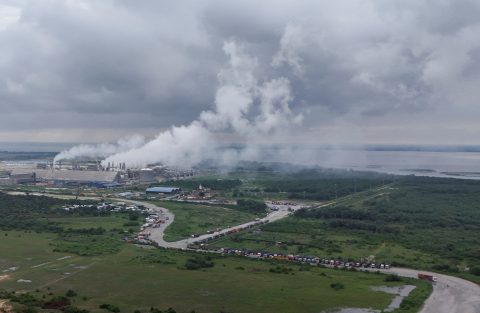
Li Shuo, director of China Climate Hub at the Asia Society Policy Institute, told Climate home News that China’s all-of-the-above approach to energy development has provided the country with the strategic flexibility to face the oil shock.
“While China has often been criticised in previous years for moving too slowly away from coal, this year’s global energy market volatility has given Chinese policymakers a renewed sense of confidence. There is a growing sentiment in Beijing that recent events have vindicated China’s energy strategy as both prudent and pragmatic,” he said.
Can China support the electrification pledge?
Despite its vast cleantech build-out and rapid electrification boosting its energy resilience, China has stopped short of endorsing an initiative by COP31 host Türkiye to increase the global share of electricity to 35% in final energy use by 2035.
Li Gao, vice minister at the Ministry of Ecology and Environment, who will lead the Chinese delegation at COP31, told a press conference the electrification target was in line with Chinese policy. “We believe that increasing electrification levels will help promote a green and low-carbon energy transition and address climate change,” he said.
China’s position on the electrification initiative is one of the major questions hanging over the COP31 talks beginning in Antalya next week.
“What is clear is that China has the most to gain from accelerated electrification because of their manufacturing capabilities,” said Bruce Douglas, CEO of the Global Renewables Alliance.
In 2026 alone, China’s exports of solar panels, batteries, EV and other cleantech are on track to avoid emissions equivalent to Brazil’s annual emissions.
-
China’s industrial engine starts to break its fossil fuel habit
Despite a rebound in coal generation this year, clean energy from wind and solar is gaining ground on the fossil fuels that have powered decades of industry growth -
COP31 electrification pledge leaves out clean power commitment
Campaigners and experts say the goal’s effectiveness in reducing emissions may be limited unless countries agree to meet it using only clean energy

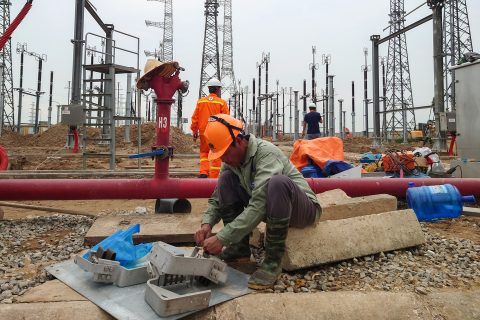
Türkiye’s proposal doesn’t include a commitment to produce the power from clean energy, nor does it explicitly link electrification to the transition away from fossil fuels – issues on which the EU has signalled it is ready to push back.
But Chinese analysts say Beijing is unlikely to support linking a global electrification goal to commitments on phasing out fossil fuels.
Former French climate envoy Laurence Tubiana, the outgoing CEO of the European Climate Foundation, told Climate Home News that the EU and developed countries such as Brazil – which is influential within the BRICS group of large emerging economies – have a responsibility to push China to show leadership in the talks.
Driving the world’s electrification
The electrification of the Chinese economy has outpaced that of any other major economy.
In the US and the EU, the share of electrification has stagnated just above 20%. In China, it has doubled since 2005, reaching close to 30% in 2025.
The International Energy Agency (IEA) expects China will remain the single largest driver of global electricity demand growth through to 2030, as it electrifies its manufacturing sector as well as growing demand for cooling and EV charging.
Over the next five years, the IEA forecasts that China will increase its electricity consumption by as much as the total electricity consumption of the EU today.
In August, the Chinese government set a target to boost the share of electricity in its final energy consumption to 35% by 2030 – five years ahead of Türkiye’s proposed goal.
From laggard to frontrunner
Clean-power growth and electrification could meet all of China’s rising power demand, according to CREA. By 2030, this would mean renewable and nuclear energy could reach 54% of power generation – exceeding China’s target to generate half its electricity from non-fossil sources by the end of the decade.
Clean electricity already met all of China’s demand growth in 2025. “The challenge lies in sustaining such growth over several years,” said Qin.
From Beijing’s perspective, the global targets such as the electrification pledge “no longer appear particularly ambitious or threatening”, said Li, of the Asia Society Policy Institute.
“China, long perceived as a climate laggard, is increasingly moving ahead of countries in the Global North. A global ceiling target is increasingly only a floor for China,” he emphasised.
The post Clean power shields China from oil shock more than any other country appeared first on Climate Home News.
Clean power shields China from oil shock more than any other country
On 3 November, the Brazilian presidency of the COP30 climate talks released its long-awaited “roadmap” on ending deforestation.
Ahead of the Belém summit, Brazilian president Luiz Inácio Lula da Silva made a call for a “roadmap” to halt and reverse deforestation.
Although this voluntary roadmap was outside the COP’s official agenda, it snowballed into a rallying point at the “Amazon” COP.
By the end of the summit, 93 countries had signed on to the deforestation roadmap, committing to develop voluntary pathways to reverse forest loss and degradation by 2030.
The Brazilian presidency called on countries to describe what a pathway away from deforestation could look like, what challenges and support they needed.
This call was answered by 18 countries and four negotiating blocs that offered their inputs on the roadmap, along with scores of NGOs, research centres and other groups.
Now that the roadmap has been published, Carbon Brief explains where it came from, what it entails, why some did not sign on – and what’s next.
What is a deforestation ‘roadmap’?
The “deforestation roadmap” was one of the signature announcements of the Brazilian presidency of the COP30 climate summit in Belém – albeit one that fell outside the official, negotiated outcomes.
Brazilian president Lula first