

On 3 November, the Brazilian presidency of the COP30 climate talks released its long-awaited “roadmap” on ending deforestation.
Ahead of the Belém summit, Brazilian president Luiz Inácio Lula da Silva made a call for a “roadmap” to halt and reverse deforestation.
Although this voluntary roadmap was outside the COP’s official agenda, it snowballed into a rallying point at the “Amazon” COP.
By the end of the summit, 93 countries had signed on to the deforestation roadmap, committing to develop voluntary pathways to reverse forest loss and degradation by 2030.
The Brazilian presidency called on countries to describe what a pathway away from deforestation could look like, what challenges and support they needed.
This call was answered by 18 countries and four negotiating blocs that offered their inputs on the roadmap, along with scores of NGOs, research centres and other groups.
Now that the roadmap has been published, Carbon Brief explains where it came from, what it entails, why some did not sign on – and what’s next.
What is a deforestation ‘roadmap’?
The “deforestation roadmap” was one of the signature announcements of the Brazilian presidency of the COP30 climate summit in Belém – albeit one that fell outside the official, negotiated outcomes.
Brazilian president Lula first proposed the deforestation and forest degradation roadmap, alongside one on the fossil fuel transition, at the leaders’ summit in Belém a few days before COP30 began.
By the end of COP30, nearly 100 countries had expressed their support for such a roadmap. This includes the EU, with its 27 member states, as well as the 56-member Coalition for Rainforest Nations.
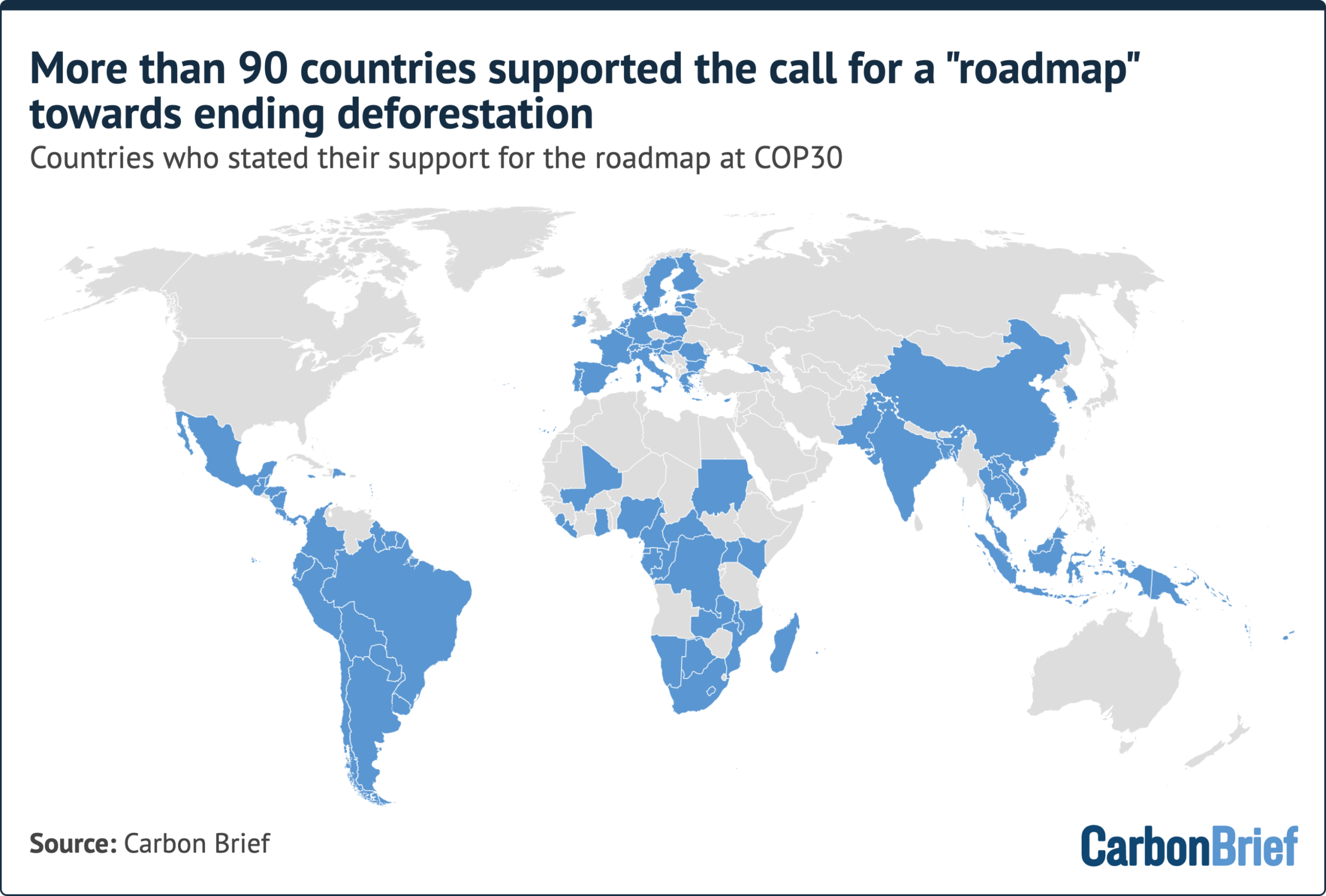
However, this was still short of the 196 parties needed for consensus at a COP, meaning that, ultimately, the roadmap was not a formal outcome.
Instead, COP30 president André Corrêa do Lago announced during the closing plenary session that the presidency would work towards creating both deforestation and fossil-fuel phaseout roadmaps outside of the COP process.
The deforestation roadmap is the latest in a series of international pledges to put an end to forest loss.
In 2014, 39 countries pledged to end natural forest loss by 2030 at UN Climate Week, as part of the New York Declaration on Forests.
Seven years later, at COP26, more than 140 countries signed the Glasgow Leaders’ Declaration on Forests and Land Use. The declaration stated that countries “commit to working collectively to halt and reverse forest loss and land degradation by 2030” – although conflict subsequently arose over what, exactly, countries had agreed to.
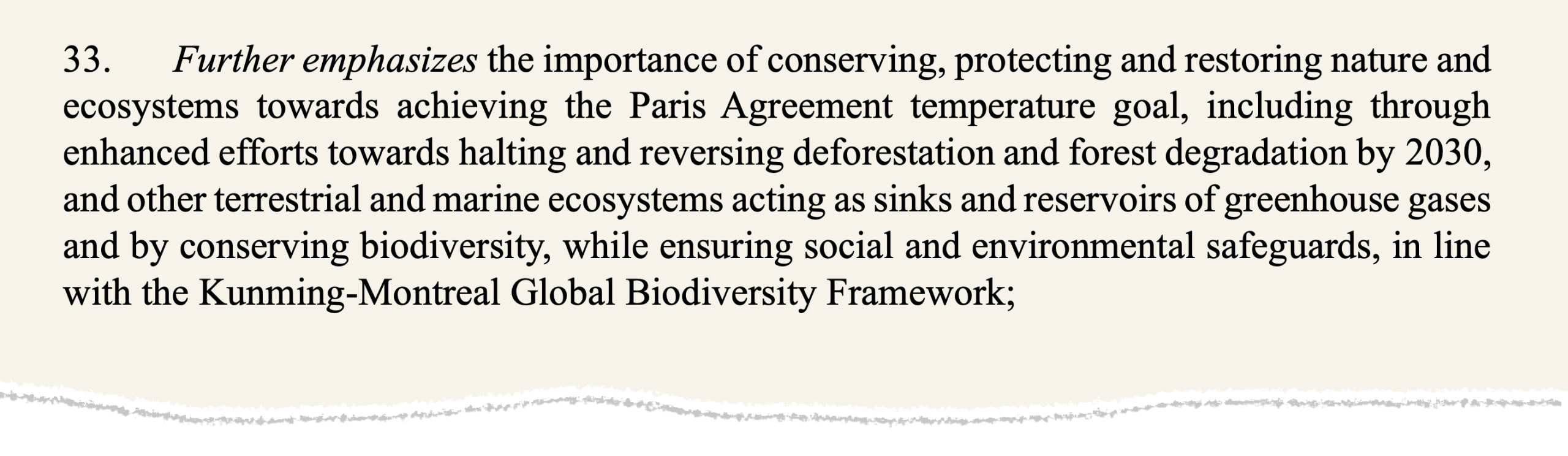
The objective of halting and reversing deforestation by 2030 was ultimately agreed in a negotiated text for the first time two years later, at COP28 in Dubai, where it was part of the global stocktake.
Unlike these previous pledges, the roadmap does not make any new commitments. It also does not “seek to reopen agreed decisions”.
Instead, the roadmap’s stated objective is to “translate forest-related outcomes into coordinated, country-led action while respecting different national circumstances, priorities and implementation challenges”.
Following the conclusion of COP30, the presidency – along with the Climate Policy Initiative thinktank – began soliciting inputs from countries, civil society organisations, Indigenous peoples, academic researchers, the private sector and other groups.
(The Climate Policy Initiative was chosen to serve as the secretariat and technical partner to the roadmap process.)
The secretariat notes that it received more than 200 contributions following this invitation. However, just 18 of these came from countries, and four from blocs – the EU, the Coalition for Rainforest Nations, the Alliance of Small Island States (AOSIS) and the Least Developed Countries (LDC) blocs – themselves.
What does the roadmap say about reducing deforestation?
The roadmap was released less than a week before the COP31 climate summit is due to begin, at an event hosted by the UN Development Programme in Brasilia.
During the launch event, Do Lago highlighted recent figures showing that Brazil’s deforestation rate had fallen to its lowest level on record – dropping by more than 70% since 2022.
“Even the optimists wouldn’t believe that we were able to decrease deforestation” by as much as the country has managed in recent years, he said.
Corrêa Do Lago said that he hoped the roadmap would be a “living document” and that it could provide countries with a “practical pathway for climate action”.
The roadmap divides forest action into three complementary parts: national action, international action and financial mechanisms.
For each of the three, the document highlights current actions or instruments and the enabling conditions required to promote action. Then, it offers “COP30 presidency proposals on the way forward” on each pillar.
Under “national efforts”, the roadmap addresses the challenge of halting and reversing deforestation across five “forest dimensions”:
- Maintaining existing forests.
- Using forests sustainably while generating value for communities.
- Combatting forest degradation.
- Combatting deforestation.
- Restoration, reforestation and afforestation.
The roadmap identifies 18 policies or “implementation approaches” that countries can use to address forest loss and degradation, although it notes that the list is not intended to serve as an “exhaustive or prescriptive classification”.
This includes a wide range of approaches, including establishing or maintaining protected areas, recognising the territorial rights of Indigenous peoples, managing the spread of pests and plant diseases and restricting permits for activities associated with forest conversion.
For each of these policies, the roadmap explains the approach and gives an overview of the evidence of its effectiveness. It also gives examples of how countries are implementing that policy.
Then, the roadmap discusses the enabling conditions that need to be ensured for action to occur at the national level, such as supporting land governance and promoting environmental education.
Finally, for national action, the roadmap proposes a five-step process for countries to follow. It provides “guiding questions” that countries may consider in their work to support each step.
On “international architecture for forest action”, the roadmap discusses how various international environmental and human-rights instruments address the problem of deforestation in different ways. It says:
“Climate change, biodiversity, land degradation, Indigenous peoples and local communities’ rights, ecosystem conservation and species protection are addressed through distinct international regimes, but their objectives and implementation intersect in important ways in relation to forests.”
The roadmap highlights some of the global forest-monitoring initiatives that can support national efforts, while noting that countries’ capacity for accessing and using such information “remains uneven”. It calls for improving technical cooperation between countries and increasing capacity-building.
Finally, the roadmap discusses two cross-border issues: crime and trade. On the latter, it notes that trade measures that reward compliance are generally more effective than those that impose “additional economic and administrative burdens on exporters”.

Membership
Support award-winning climate journalism
The roadmap’s final proposals for international action include strengthening national capacity for investigating environmental crime and prioritising trade policies that reward sustainable, deforestation-free production.
The roadmap notes that countries need an estimated $300bn per year by 2030 to halt and reverse deforestation, yet current finance reaches less than one-third of that figure.
Of this, nearly 90% comes from domestic public finance, as forest countries already dedicate “substantial effort” to protecting their domestic policies and budgets, the roadmap notes.
The roadmap offers 10 proposals for action on forest finance, including aligning domestic finance flows to support forest action, enacting effective benefits-sharing measures and strengthening the position of forests in carbon markets.
It concludes with an appeal to countries to “keep the collective dialogue going” through the conclusion of the second global stocktake in 2028.
In a statement, Kelly Stone, coordinator of the civil society network Climate Land Ambition and Rights Alliance, said:
“The forest commitments in the first global stocktake and this roadmap process are important steps, but these commitments need to translate into actual urgent action on the ground.
“This roadmap needs to be taken forward in a process where countries are working together for rapid, ambitious action on the ground to address deforestation and degradation and protect food security. We cannot afford to wait.”
Why did some countries not sign onto the roadmap at COP30?
In Belém, discussions around the deforestation roadmap were highly charged and several countries did not sign on.
Historically, India has opposed and raised concerns about top-down commitments around mitigation and land-use change. For example, the country did not sign the original Glasgow pledge on forests and land-use at COP26, objecting to “trade” being linked to forests and climate action.
In Belém, India – as part of the Like Minded Developing Countries bloc – objected to the inclusion of voluntary roadmaps outside of the COP agenda in the formal COP30 outcome.
However, in an interview after the talks concluded, the country’s minister for environment, forests and climate, Bhupender Yadav, told the Times of India that India “welcomes” the forest roadmap. He added that it additionally “endorses” Brazil’s Tropical Forest Forever Facility fund.
Russia was an early objector to the deforestation roadmap, laying out its position as early as April last year. While the country reiterated its commitment to the Glasgow forest declaration and the first global stocktake, it “does not support the development of a universal roadmap”, arguing that:
“…such initiatives are not mandated under the agreed international climate architecture and go beyond adopted decisions under the UNFCCC and the Paris Agreement.”
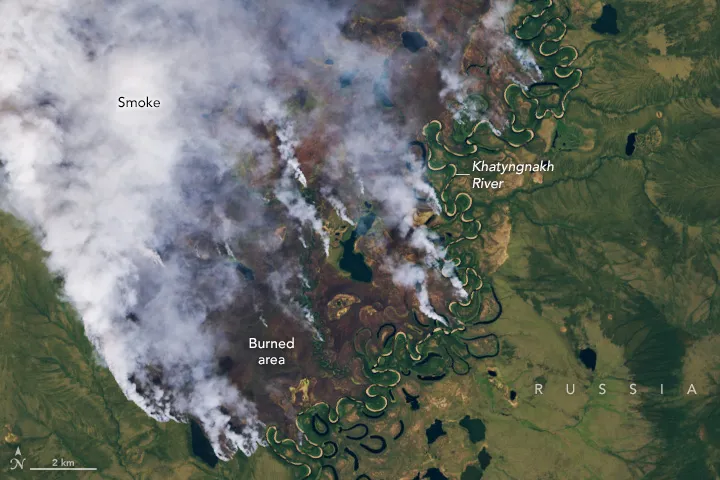
Russia hosts the world’s largest boreal forests, which are seeing more intense wildfires. In its submission on the deforestation roadmap, Russia “underscored” that there is no “universally agreed, legally binding definition” of forest degradation, although it adds subsequently that wildfires are a “key driver” of degradation.
Like India, it also opposed the roadmap on trade grounds.
Other countries were wary of signing on to new non-negotiated mitigation commitments outside of the official COP agenda, at the expense of other agenda items, such as adaptation finance.
At the recently concluded Yerevan COP17 nature talks, the deforestation roadmap’s coordinator Marco Túlio Scarpelli Cabral told Carbon Brief it does not make sense to talk about more countries signing up to the non-negotiated roadmap, when countries have agreed by consensus to tackle deforestation within the global stocktake and biodiversity COPs. He added:
“All countries have already taken this [deforestation] commitment, both in the Kunming-Montreal [Global Biodiversity Framework] with some converging targets, but also in the global stocktake…
“We have all accepted [it]. So we don’t need any country to subscribe to the roadmap.”
The first global stocktake was undertaken at COP28 in Dubai. As mentioned above, within the mitigation section of this document – which was adopted by consensus – the importance of “halting and reversing deforestation and forest degradation” is emphasised.
The newly published roadmap therefore is not designed to convince countries to agree to tackle deforestation; instead it seeks to build on this assumed consensus by drawing on previous agreements such as the global stocktake.
Speaking at a press conference attended by Carbon Brief on 3 November, COP30 president Corrêa do Lago said they took into account the agreement in Dubai and then began looking for “instruments and ways to go ahead and take next steps”. She added:
“The climate change agenda is advancing faster than the negotiations [themselves], so we restructured the agenda.”
What are the barriers to implementing a deforestation roadmap?
In February 2026, the Brazilian COP presidency asked countries to describe specific barriers to implementing a forest roadmap and the tangible support they need.
From political strife to wildfires and reliance on firewood during an energy crisis, countries listed a number of overlapping challenges to halting and reversing deforestation in their submissions.
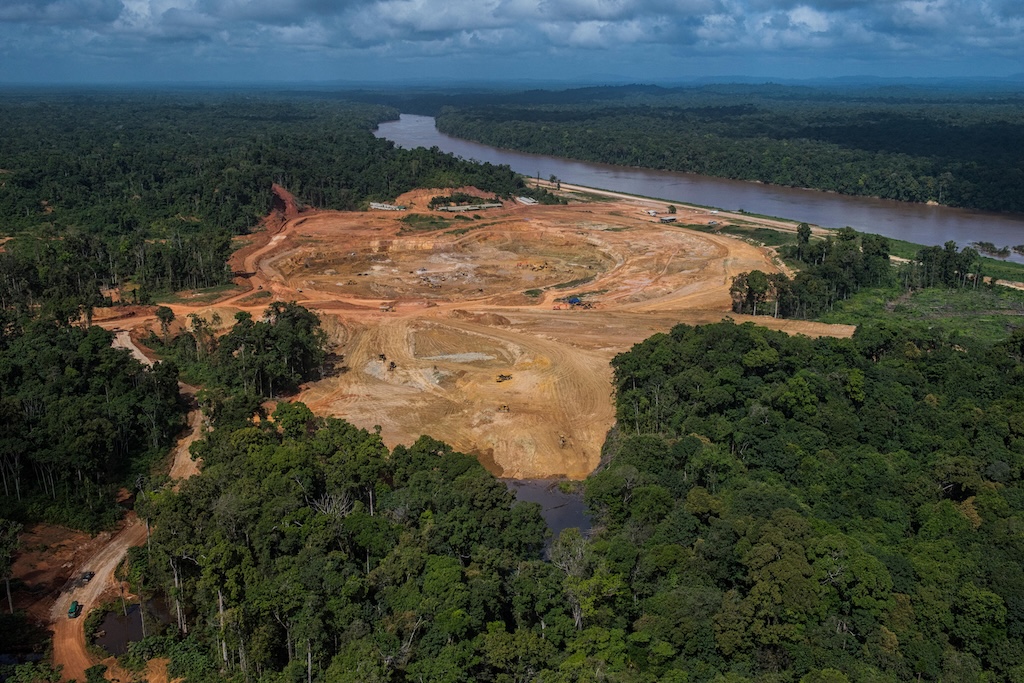
For example, Guyana and Suriname have both highlighted that keeping existing “forests intact” is undervalued compared to “pressures from extractive industries”, such as mining or agriculture.
Meanwhile, the EU, Switzerland and Mexico point to the role of agricultural expansion in the loss of forest and pasture land. Norway and Mexico highlighted illegal loggers offering higher rewards than conservation.
Both Canada and Russia pointed to an “inconsistent definition” of forest degradation.
Biodiverse countries with significant forest cover, such as Suriname and Azerbaijan, meanwhile called for more “predictable” and “affordable” access to climate finance to keep forests standing.
The Coalition of Rainforest Nations called for “a clear financial assessment of the total funding required to halt forest loss” in its submission.
However, many donor countries emphasised domestic, private and innovative finance in their solutions. The UK, for instance, called for more “blended finance to de-risk private investment at scale” for forest conservation and high-integrity carbon markets.
While Norway spoke of the need to “repurpos[e]” harmful subsidies, Australia highlighted the role of its controversial biodiversity credit and nature markets in “restor[ing] and protect[ing] land and biodiversity and reduc[ing] emissions at the same time”.
Monitoring deforestation and restoration progress was another common challenge across countries. AOSIS, Armenia and Azerbaijan all raised this challenge and called for technical support for monitoring forest restoration, including satellite monitoring.
At the same time, Canada, Indonesia, Russia, Azerbaijan and Australia all cited the increasing risk of intensifying wildfires as threats to forests, with countries calling for early detection systems and support for monitoring fires in remote areas.
AOSIS called for coastal mangroves and inland terrestrial forests to be included in the definition of forests, adding that climate-driven impacts are already degrading mangrove forests.
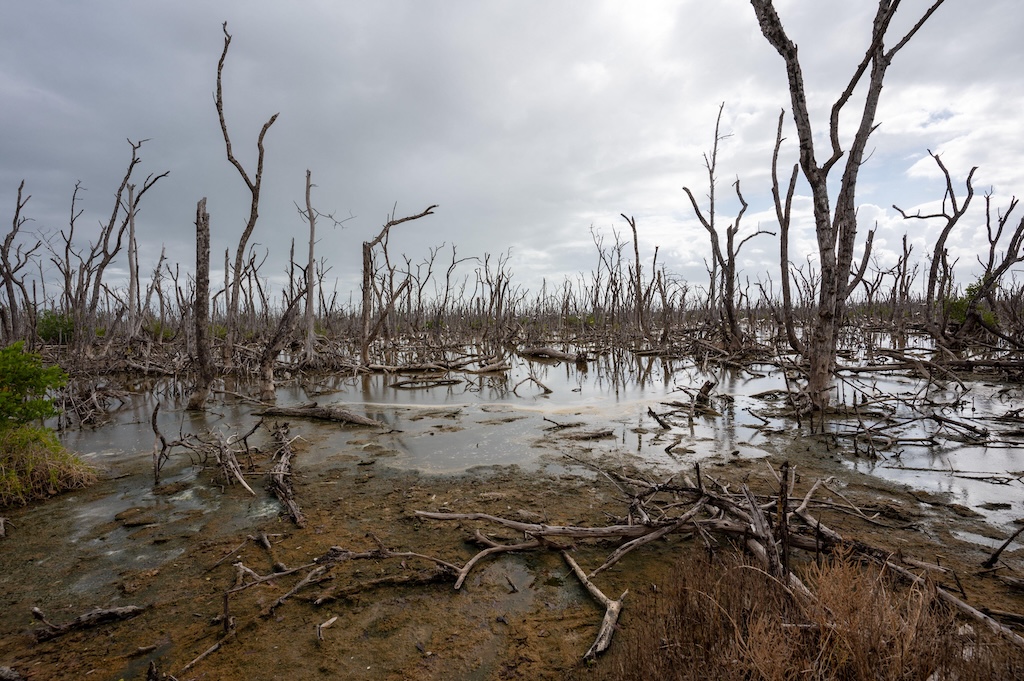
Many barriers are deeply specific to the geographical and socioeconomic contexts of individual countries. Small island states such as Mauritius, for instance, point to pressures arising from a “limited availability” of land. Sudan, meanwhile, draws attention to 70% of its population relying on firewood as an energy source amid conflict.

The post Q&A: What is the Brazil-led ‘deforestation roadmap’? appeared first on Carbon Brief.
