

Cozy sweaters are the cornerstone of any cool-weather wardrobe — make it a conscious choice with our curation of sustainable sweaters.
Most of the conventionally available sweaters are made from cheap acrylic fibers that not only give you the ghastly static cling but are actually made from non-biodegradable plastic. Since sweaters are those one-and-done investments you’ll hardly consider replacing for years to come, we suggest making them an eco-friendly natural and/or recycled fabric choice instead.
With this in mind, we’ve rounded up some fabulous—and totally snuggle-worthy—options to help you stay warm in some serious style. Ranging from turtlenecks, crewnecks, cardigans, and a lot more, all you have to do is just add a fireplace and a steaming hot cup of cocoa, and we’re good to go.
Where To Find Eco-Friendly Sweaters
Note that the guide contains affiliate links. As always, we only feature brands that meet strict criteria for sustainability we love, that we think you’ll love too!
1. Kotn
Best for: timeless sweaters with thoughtful details and polished silhouettes
Kotn has seriously stepped up its style game this season. They’ve always been on my list for sustainable basics (I have a turtleneck and sweatshirt from the brand that are great quality) but their recent sweaters and cardigans are elevated without losing their timeless, relaxed core aesthetic.
And with garments made of 100% direct trade cotton, 100% merino wool, or alpaca recycled nylon blends in colors like Cardamom, Tawny Port, and Chocolate Plum, you don’t need to sacrifice color to shop your values.
Conscious Qualities: Ethically Made, Natural Fibers (Egyptian cotton, alpaca, merino wool), B-Corp Certified
Size Range: XS–XL
Price: $$ – $$$

2. Outerknown
Best for: organic cotton sweaters for outdoor living
With warm weather essentials that look like they could be a part of a chic coastal grandma’s wardrobe, Outerknown’s ethically made sweaters will have you feeling like the main lead in a Nancy Meyers movie.
Think boyfriend cardigans, wrap-over styles, slouchy crew neck sweaters, and turtlenecks available in sumptuous cashmere, merino wool, and recycled fibers.
Why we love it: sustainable materials, fair trade, ethical production, supply chain transparency, resale program
Size Range: XS–XL
Price: $$$

3. Toad&Co
Best for: bold-pattern sweaters with a give-back mission
Shake up your sweater drawer with an eye-catching pattern and a little help from Toad&Co.
Full of bright color combinations, versatile necklines, and varied styles that’ll convince you to make their sustainable sweaters your daily winter uniform, Toad&Co uses woolen blends and recycled fibers to create its knitwear range.
Ever since its inception in 1996, the brand has partnered with a warehouse that employs and trains individuals with developmental disabilities, while facilitating outdoor adventures for them.
Why we love it: sustainable and recycled materials, community-oriented
Size Range: XS–XL
Price: $$-$$$

4. Christy Dawn
Best for: regenerative alpaca sweaters
Offering a range of ethical sweaters that’ll mentally transport you to a cozy countryside cottage, Christy Dawn’s winter essentials are made using deadstock materials, alpaca wool, and organic cotton.
Each sweater in their farm-to-closet alpaca collection is hand spun and knit by Peruvian artisans who are paid a living wage. Christy Dawn has partnered with Peruvian alpaceros (alpaca breeders) who steward and help restore parts of the high grasslands that are home to peatland, a type of wetland that stores a vast amount of carbon.
Why we love it: sustainable materials, regenerative
Size Range: XS–XL
Price: $$$

5. Cottonique
Best for: comfy sweaters safe for those with skin sensitivities
Made from 100% GOTS-certified organic cotton in the brand’s own B-Corp and GOTS-certified factory, Cottonique’s organic sweaters are free from synthetic knit fibers, latex, synthetic dyes, bleach or other harsh chemical finishes. Even the label is 100% cotton and the cuffs are elastic free, to ensure comfort even for those with severe skin sensitivities.
I tried their close neck knitted sweatshirt in Natural and it was super comfortable, even when worn alone without a layer underneath. While limited in colors, I like that the brand doesn’t use synthetic dyes, and I found the natural cotton to be a beautifully warm soft cream color.
Conscious Qualities: B-Corp & GOTS-Certified Factory, 100% Organic Cotton
Size Range: S-XL
Price: $

6. The RealReal
Best for: secondhand designer sweaters
For the fashionably forward who’d like to level up their winter dressing to include a designer label or two, The RealReal has an array of covetable secondhand sweaters to choose from. Whether you fancy a vintage tweed piece by Chanel or a classic crew neck by Ralph Lauren, these gently-used pre-owned designer pieces are sure to help you put the right sartorial foot forward for countless cold-weather seasons to come.
Making a secondhand investment not only allows you to breathe new life into an existing garment but also empowers you to ditch the throwaway culture. The fact that it’s designer is only the cherry on the icing!
Why we love it: secondhand, quality products
Size Range: XXS–4XL
Price: $$$-$$$$

7. Patagonia
Best for: cozy recycled wool sweaters for the cabin
A brand that nails the functional and utilitarian gorpcore aesthetic, Patagonia’s range of sustainable sweaters will not only keep you warm this winter but help you weather just about any storm while you’re hitting the great outdoors.
Their signature Better Sweater® is made using a plush recycled fleece with a sweater-knit look, that makes for the perfect lightweight insulating layer if you intend on hitting the slopes this winter.
Patagonia works with Fair Trade Certified factories to produce their clothing using recycled fibers.
Why we love it: recycled materials, fair trade, supply chain transparency, secondhand & repair program
Size Range: XXS–XXL
Price: $$$

8. tentree
Best for: versatile everyday knitwear
Whether you’re planning on teaming yours with jeans, wear it layered over a shirt or tucked into trousers, tentree has a range of versatile sweaters and eco-friendly cardigans to choose from. Think slouchy buttoned cardigans, turtlenecks, cable knits, and even chic sweater dresses to pair with tights and knee-high boots.
Ethically made from organic cotton and recycled fiber blends, reviewers claim their sweaters are easy to wear dressed up or dressed down for numerous occasions.
Why we love it: sustainable materials, ethically made, plants 10 trees with each order
Size Range: XS–XL
Price: $$-$$$

9. Eileen Fisher
Best for: regenerative wool and cashmere staples
Eileen Fisher’s range of sustainable sweaters is proof that warmth and style aren’t mutually exclusive. Offering a range of sustainable turtlenecks, V-neck jumpers, crew neck knitted tops, hooded cardigans, and more such versatile styles in an array of fun hues, these warm-weather essentials were created to be dressed up or down.
Crafted using materials like organic cotton, cashmere, and wool that supports Argentinian ranchers who regenerate depleted grasslands through holistic farming methods.
Why we love it: sustainable materials, regenerative, ethical production, circular fashion practices
Size Range: XXS–3XL
Price: $$-$$$

10. Bare Knitwear
Best for: elegant natural alpaca sweaters
It’s rare to come across sweaters so cool that you can’t wait to build an outfit around them. But with Bare Knitwear, it’s possible.
Featuring a range of standout sustainable sweaters that span turtleneck pullovers, zip-through cardigans, and slouchy crewnecks, their sweaters are crafted from the most sumptuous alpaca wool blends in a surprisingly natural, un-dyed styles.
Why we love it: sustainable materials, ethically made, slow fashion
Size Range: XS–L
Price: $$$

11. Reformation
Best for: recycled cashmere sweaters in fashion-forward styles
Fancy a sweater you can wear with everything and will keep you feeling cozy-chic for years to come? Whether you like them boxy or snug, Reformation has a wide range of sweaters to suit every style preference. Along with some slick sweater dresses that’ll help you channel some French girl aesthetic.
Most of the sweaters offered by Reformation are crafted from recycled cashmere, with some options made using regenerative merino wool, alpaca wool, and organic cotton.
Why we love it: Recycled cashmere, Supply chain transparency, Circular practices
Size Range: XS–XL
Price: $$-$$$
 For More Slow Fashion Content:
More Cool-Weather Guides Like This:
Responsibly-Made Coats to Keep You Toasty
Sustainable Slippers to Get Cozy In
Bundle Up With These Cozy Conscious Winter Accessories
The post The Best Sustainable Sweaters To Keep You Cozy and Comfy appeared first on Conscious Life & Style.
https://www.consciouslifeandstyle.com/11-ethical-sustainable-sweaters/?utm_source=rss&utm_medium=rss&utm_campaign=11-ethical-sustainable-sweaters

When it comes to establishing a “natural” skincare routine there are a few relatively simple swaps you can make: shampoo, skincare, deodorant, makeup and makeup remover — but, there’s one category that most people tend to struggle with and that’s non-toxic and eco-friendly perfume.
In this post, Madeleine of The Wise Consumer dives into what fragrance really is, if we should avoid all perfumed products, and how one goes about selecting an eco-conscious and natural perfume!
What is Fragrance Anyway?
For years I avoided any kind of perfume, eau de toilet, or spray — not because I didn’t love these kinds of products but because I was intentionally trying to avoid anything fragranced. And perfume is, in a word, just that — fragrance.
But what is “fragrance” actually?
As you’re most likely aware, fragrance is used to make things smell better, to mask unwanted odors, or to give something a more pleasant smell. According to the International Fragrance Association (IFRA), “fragrance is a chemical mixture that has a smell or odor…The mixtures that make a fragrance may include natural aromatic raw materials, obtained from plants using distillation, expression, and extraction, or synthetic materials.”
And, fragrance is everywhere!
It’s in our shampoo, our deodorant, candles, cleaning products, laundry detergents, and even in certain menstrual hygiene products. Sometimes, even “unscented” products can contain fragrance. As the FDA explains, this is because the manufacturer may add just enough fragrance to mask the unpleasant smell of other ingredients, without giving the product a noticeable scent. Like, I said, it’s everywhere.
As a whole, the concept of fragrance isn’t bad. In fact, could you imagine how dull life would be without scents? I am the first to admit that I love soaking in a warm eucalyptus or lavender-scented bubble bath. But, as a conscious consumer, I also like to know what ingredients are in my lavender-scented bubble bath, or any cosmetic product I use for that matter.
Unfortunately, when it comes to fragranced products it’s not always clear what chemical mixtures and ingredients go into making these scented products, even “naturally” fragranced products don’t always disclose their ingredients.
Why is the Ingredient “Fragrance” So Opaque?
Generally speaking, any cosmetic product sold to a consumer must display a list of ingredients. But according to the FDA, “under U.S. regulations, fragrance and flavor ingredients can be listed simply as “Fragrance” or “Flavor.”
This is because “fragrance and flavor formulas are complex mixtures of many different natural and synthetic chemical ingredients, and they are the kinds of cosmetic components that are most likely to be ‘trade secrets’”.
In a way, this makes sense. If a company spends hours of research, time, and money formulating the perfect fragrance for their product, they’re not going to want to disclose the list of ingredients that went into making that product.
But, this can be especially problematic for people with skin sensitivities and/or allergies.
If you’re allergic to a certain ingredient being used in the fragranced product but that ingredient isn’t disclosed, then it’s going to be much harder to know which products to avoid.
In these cases, the FDA recommends that you choose products that are fragrance-free, and check the ingredient list carefully.
Easier said than done seeing that, as I mentioned above, even unscented products can contain small amounts of fragrance to mask unpleasant odors!
As Made Safe shares, “without information about what ingredients actually make up a fragrance, it is difficult to understand the true extent to which our health is compromised by fragrance ingredients.”
This can get even more challenging if you’re extremely sensitive to certain fragranced products and their scents. Products such as laundry detergents, shampoos, cleaners, and body splashes make me nauseated and give me headaches. As it turns out I am not alone.
A 2016 study found that approximately 35% of the population studied reported health problems — such as migraine headaches and respiratory difficulties — when exposed to fragranced products.
According to their research, “fragranced consumer products, such as cleaning supplies, air fresheners, and personal care products, are a primary source of indoor air pollutants and personal exposure….even those called green and organic emitted hazardous air pollutants.”
Not to mention that over the years certain fragranced products have been found to contain ingredients such as phthalates, synthetic musks, formaldehyde, and allergens, just to name a few, that have been shown to have negative health impacts, especially on pregnant women.
Are “Natural” Fragrance and Essential Oils Non-Toxic?
Even “natural” extracts, such as essential oils, can trigger allergic reactions and skin sensitivities. In fact, according to the Environmental Working Group, certain essential oils, such as several citrus oil extracts or rose flower oil, which the European Commission has categorized as established allergens, “may trigger an allergic reaction after a few contacts or can cause someone to develop an allergy over a longer period of time”, EWG reports.
Additionally, a 2018 study found that essential oils, similar to certain synthetic fragrances, have also been found to emit numerous volatile organic compounds (VOCs).
According to the report, “some of these VOCs are considered as potentially hazardous under federal regulations. However, essential oils are exempt from disclosure of their ingredients on their label. Thus, the public may lack information on emissions and potential hazards from essential oils.”
What I’ve learned over the course of my research is that sometimes a synthetic ingredient may actually contain fewer allergens than a “natural” ingredient. As discussed in a previous post about non-toxic skincare, the word natural doesn’t always mean better.
And, when it comes to fragrance, the Breast Cancer Prevention Partners shares, “It is important that companies look for safer alternatives where available and report all ingredients in their fragrances, both natural and synthetic, so that consumers are able to avoid potential allergic reactions and other health consequences.” We can all agree on that!
The good news is today more perfume brands are creating products that are not only free of potentially harmful ingredients but that are also eco-friendly, ethically manufactured, and, best of all, provide complete ingredient transparency so consumers can know what they’re buying!
How to Choose a Non-Toxic and Eco-Friendly Perfume
Check the brand’s website for a list of ingredients. What ingredients are being used? Are the ingredients safe? Are they phthalate-free?
If you have any concerns or doubts about a specific ingredient you can always get more information on the EWG Skin Deep Database.
If the brand doesn’t list the ingredients on their website, feel free to contact them directly and ask them to share their list of ingredients with you. If they don’t, it may be time to find an alternative brand.
Ideally, an eco-friendly perfume brand will not only be transparent about its ingredients as well as conform to IFRA guidelines but will also focus on low or zero waste packaging and ethical manufacturing.
To help save you time on your hunt for a sustainably-made non-toxic perfume, check out the brands below!
Editor’s note: this guide includes affiliate links, which means we may earn a small commission if you choose to make a purchase through these particular links. As always, all product and brand selections meet rigorous standards for sustainability and are brands we genuinely love — and that we think you’ll love too!
The Best Eco-Friendly Perfume Brands
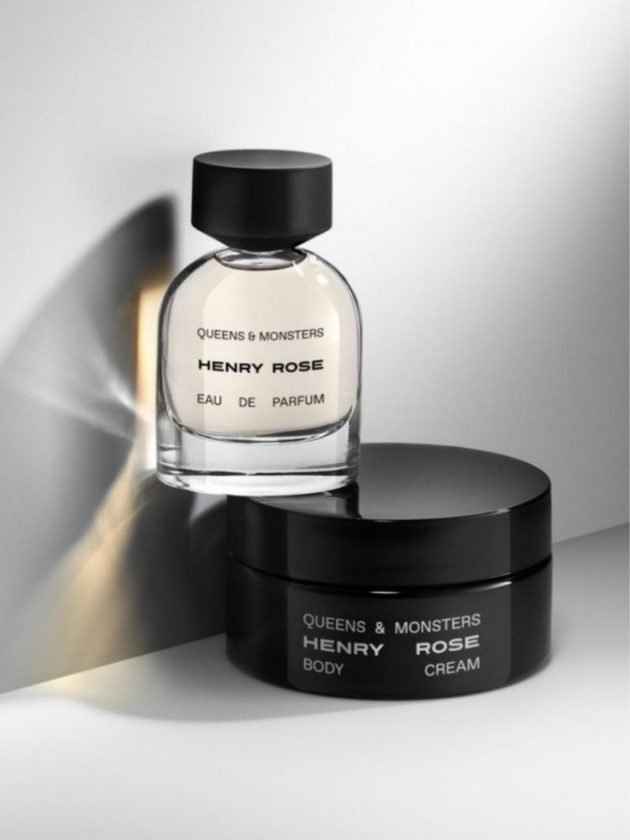
1. Henry Rose
This sustainable perfume brand provides an array of fragrances that are EWG and Cradle to Cradle Certified. Henry Rose perfumes are made of a combination of both safe synthetics and natural ingredients and are free of harmful ingredients such as phthalates, formaldehyde, and styrene. This nearly zero waste perfume brand also uses 90% recycled and 100% recyclable packaging.
Conscious Qualities: 100% Ingredient Transparency, EWG-Verified, Cradle to Cradle Certified (Gold), Eco Packaging, Gives Back
Scent types: Clean, Smooth, Spicy, Earthy
Price: $$
2. PHLUR
This certified B-Corp and eco-friendly perfume brand crafts their fragrances using only clean and safe ingredients. In fact, they vow to never use materials listed on the International Union for the Conservation of Nature’s Red List of threatened plants so as to ensure that their ingredients are always responsibly sourced. PHLUR is fully transparent about the ingredients used within their fragrances, both botanical and synthetics.
Conscious Qualities: 100% Ingredient Transparency, Gives Back, Recycled Packaging, Made Safe Supporter
Scent Types: Floral, Crisp and Fresh, Spicy
Price: $$
Check it Out: PHLUR |