

It’s time to stop before you shop. We’re taking a step back to shed light on the issues with Black Friday and Cyber Monday.
The biggest shopping event of the year
It’s that time of the year again: with Halloween behind us and the holidays ahead, businesses are bombarding our mailboxes with promotional emails, and our social media feeds are filled with one thing—Black Friday.
The biggest shopping event of the year is happening on Friday 29th November, closely followed by Cyber Monday. As usual, we’ve been prompted for a good few weeks already to get the early deals and prepare for the hefty discounts. And this year, thanks to the cost of living crisis, many more shoppers than in years past are expected to seek out discounts, according to data from Deloitte.
But this shopping frenzy cannot be good for the planet, people, and animals, and consumers are increasingly questioning the ethics of shopping events like Black Friday and Cyber Monday.
Even when big brands and organisations put a “sustainable” spin on Black Friday, pushing “eco-friendly” deals, something feels off. There’s an air of greenwashing around these sales, and the overconsumption encouraged during this time can’t truly be sustainable.
So this year, we’re taking a step back to shed light on the environmental and social damage of Black Friday. It’s time to stop before you shop and ask: what is Black Friday? Where did it come from? What’s wrong with it? And most importantly, how can we, as conscious consumers, fight against the tide?
What is Black Friday?
Before we look into the issues with Black Friday, let’s rewind a little.
While many believe the term Black Friday is linked to the accounting description of being in the black, which connotes profit, the term is suggested to have been coined in 1960s Philadelphia, when traffic police officers used it to describe the large crowds rushing to stores on the Friday following Thanksgiving to start their Christmas shopping, creating traffic jams and overcrowded sidewalks.
Retailers have since taken advantage of Black Friday, putting a positive spin on it and doing their best to attract larger crowds thanks to exclusive deals and discounts. Black Friday is originally an (unofficial) American holiday, but in recent decades, the US phenomenon has spread its tendrils across the globe, in-store and online.
During Black Friday and its online cousin, Cyber Monday, retailers have one big goal: attract consumers to their store and website with one unmissable deal, hoping that you’ll fill your cart with more things you don’t need once you’re there.
What started as one day of shopping has become a whole season, with offers and discounts beginning as early as October.
What’s wrong with Black Friday?
Overconsumption may be one of the most discussed impacts of Black Friday, but its effect reaches further than that. Here are some of the main issues caused by the shopping event.
Black Friday’s environmental impact
The fashion industry, and especially fast fashion, is already polluting and exploitative as it is. Black Friday makes it even worse, as more and more people are prompted to spend their hard-earned dollars on those juicy deals.
More global consumer spending means more products being manufactured and shipped worldwide, so it’s no surprise that Black Friday’s carbon footprint has grown accordingly. According to data collected by Waste Managed, 2023’s Black Friday was expected to emit 429,000 tonnes of greenhouse gas emissions just from product deliveries.
Because so many transactions are made, more emissions are created, more waste is generated, and more trucks are dispatched to meet the demand. The Guardian revealed that in 2017, a diesel truck left an Amazon fulfilment centre every 93 seconds at peak Black Friday delivery times.
But Black Friday’s environmental impact doesn’t stop the moment the products land on our doorsteps. No—Black Friday promotes overconsumption, pushing consumerism to its extremes by telling us we need more unnecessary, unwanted, cheap goods made from poor-quality, unsustainable materials. And what happens when we realise that juicy deal is falling apart? Most of us throw it away. In fact, one study has suggested that up to 80% of our Black Friday purchases are thrown away after just one or even zero uses.
Black Friday’s social impact
Black Friday doesn’t just impact the planet we live on. It also affects all of us, starting with the workers who produce the goods we’re buying.
Production at a large scale often comes with outsourcing labour to nations where brands get away with paying pennies, depriving workers of access to a living wage and safe working conditions, and trapping them in an inhumane cycle of poverty. And as you might have guessed, the extra profit generated by the sale of even cheaper goods during Black Friday doesn’t end up in the workers’ wallets.
Then comes the workers that package, ship, and deliver the products. They are often under a lot of stress during this time of year, working long hours—from 12-16 each day at Amazon—to meet deadlines. In 2023, Amazon workers in 30 countries threatened to go on strike during Black Friday, demanding better pay and working conditions.
Black Friday also impacts us as consumers, playing on the idea that in this capitalist world, our value is based on the commodities we own and that by buying more things, we’ll feel better—more appreciated, loved, respected, and so on.
As Our Changing Climate highlights in its video, Black Friday’s deals and discounts aren’t created with shoppers in mind—they’re designed to plump up the companies’ balance sheets and the CEOs’ wallets. Black Friday is one of the many ways big brands are exploiting the working class for a profit.
A note on calling out people who shop during Black Friday
We’ve all seen the videos of the enormous crowds in shopping malls during Black Friday, and it’s easy to criticise those people for participating in the shopping event. But for some, Black Friday is one of their only chances to buy things they need. Calling out Black Friday shoppers doesn’t help, and some even argue that it’s classist, racist, and sexist. Part of the solution lies in all of us individually taking a step back, looking at what we consume, and asking ourselves if we really need to participate in Black Friday—not judging what’s in our neighbour’s cart. The other and most important part of the solution lies in addressing the systemic issues that lead to this yearly hysteria.
So what can you do instead?
Say no to the culture of overconsumption perpetuated by #BlackFriday sales, and remember we have power as consumers to push for positive change with more than just our spending
Find out more and get involved: https://t.co/EkvukYmfZC pic.twitter.com/nMqVI1NBh6
— Fashion Revolution (@Fash_Rev) November 11, 2021

So you’ve decided not to engage in Black Friday this year and to mindfully encourage those around you to do the same if they can—congrats! But, what can you do instead? And where do you start?
At Good On You, we want to help you avoid the hype and embrace conscious consumerism. And to do that, we recommend you stop before you shop. Give yourself the gift of taking a moment to shift from unconscious to conscious consumer. Before you reach for your wallet, start by asking yourself these three questions. After doing this short exercise, you might find that you don’t need to buy stuff after all.
Take a look at what’s already in your wardrobe and apply the 5 Rs of sustainable fashion: Reduce (what you own and consume), Rewear, Recycle, Repair, and Resell.
If, after all that, you still need to buy things, be curious and empower yourself to make better choices.
Here are a few other things you can do instead of chasing deals this Black Friday:
- Shop from local fashion brands and support your communities at home.
- At Good On You, we love to recommend some of the best more sustainable brands, rated “Good” or “Great”, but we also encourage shopping pre-owned (we love Vestiaire Collective and eBay) or having a clothes swap with friends, as other great ways to reduce the impact of your fashion choices.
- Participate in Giving Tuesday instead of Black Friday. Giving Tuesday helps promote charitable acts of giving to foster a society that is “more gracious” and inspires people to work together and help each other.
- Behind every discount, we should not forget that workers are being paid poverty wages for the clothes they make and that we wear.
- Make sure to choose something from a fashion brand that positively impacts the planet and its inhabitants. You can use the free Good On You app or directory to check the labour, environment, and animal ratings for thousands of fashion and beauty brands.
To help you out, here is a selection of brands that recognise the damage of events like Black Friday on conscious consumerism and go out of their way to fight against the tide:
- Flamingos’ Life (“Good”): Spanish plant-based shoemaker Flamingos’ Life will face Black Friday overconsumption by closing its online store on Black Friday.
- PANGAIA (“Good): During the Black Friday shopping season, PANGAIA is encouraging shoppers to make a donation of £10, €10, or $10 to charity through its website, and in exchange, they’ll get 30% off their purchase.
- Kotn (“Good”): From 29th November until 3rd December, 100% of Kotn’s sales will go towards building schools in rural Egypt, where the cotton in the brand’s collections is grown.
- Cariuma (“Good”): For every sale made over the Black Friday weekend, sneaker brand Cariuma will plant 10 trees.
- Dedicated (“Great”): Similarly, Swedish clothes brand Dedicated has partnered with One Tree Planted to assure that for every purchase made, a tree will be planted.
- Tripulse (“Great”): This year, the activewear brand is sharing a guide full of “practical advice and tips on how to build a conscious wardrobe for everyday wear and activewear… We want to make it easy for people to consume and wear more responsibly,” says the brand.
- Kuyichi (“Good”): The Dutch denim brand is donating 20% of its turnover from Black Friday to the Dutch Sustainable Fashion Circle, which works to fight greenwashing.
These different actions are changes we can all make to help push the fashion and beauty industries to become more sustainable. But if we want real change to happen, we need to pressure governments to implement regulation and hold brands accountable that are doing the most harm to our planet, people, and animals. In addition to buying less and buying better, you can also participate in social movements, ask for systemic change and justice, and challenge our capitalistic system and cultural habits.
The post Stop Before You Shop: The Issues With Black Friday and Cyber Monday appeared first on Good On You.
Stop Before You Shop: The Issues With Black Friday and Cyber Monday

When the temperatures go up, all I want to reach for is natural fibers — specifically, my linen clothing. There’s nothing quite as breathable or breezy as linen. So in this guide I break down what to know about this quintessential summer fiber, and share my top selections for linen clothing brands. They’re all small to mid-sized brands, mostly women-led!
Some Background on Linen
Where does linen come from?
Linen fiber is extracted from the stalks of flax plants. This plant is also known for providing us with nutritious flaxseeds and linseed oil — talk about an overachiever!
In fact, linen is one of the oldest fibers known to man, dating back to the prehistoric era. Archaeologists and paleobiologists have discovered flax fibers during excavations that were twisted, indicating they were used to make ropes or strings among many proposed applications that must have been a great advantage to the hunter-gatherer society. In fact, linen wrappings were even used for mummification in ancient Egypt.
Linen fabric is then created by obtaining its fibers from the inner bark (or stalks) of the flax plant.
How is the linen cloth made?
Before the fibers are spun into the breezy linen you know and love, its fibers are loosened and separated from the rest of the stalk through a process known as “retting”. At that point, the fibers are still straw-like and coarse in texture.
To soften it, the fibers are broken up into small, short bits, while the actual fiber is left unharmed, and then “scutched”, where the straw is scraped off the fiber. After which they are then pulled through “hackles”, that comb the straw out of the fiber to finally prepare flax for spinning into linen fabric.
And linen clothing is, of course, garments comprised of linen fiber in its entirety or blended with other fibers. For this guide, I tried to select brands that only used 100% linen or at the minimum blended linen with other natural fibers like cotton.
The Benefits of Linen Clothing
Why wear linen? Known for being ideal during the summers, clothing made from linen will allow heat to escape from the body while absorbing moisture and drying relatively quickly. While linen may have a notorious reputation for wrinkling rather quickly, when blended with other fibers, the creases aren’t as discernible as they would be with pure linens.
While linen may be notorious for its high energy consumption owing to its need to be ironed more, linen clothing’s pros easily outweigh its cons.
Flax plants can be grown in the harshest of climate conditions that require minimum water. What’s more impressive is the plant’s ability to absorb carbon. The European Confederation of Flax and Hemp (CELC) states that one hectare of flax absorbs 3.7 tons of CO2 every year.
Is Linen More Sustainable Than Cotton?
While there are benefits and drawbacks to every fiber when it comes to environmental sustainability, there are a few points where linen stands out when compared to cotton.
First, we know that durability is a key aspect of sustainability, because it means our clothes will last, enabling us to keep our clothes longer and buy new clothing less frequently.
So how long does linen clothing last in comparison to cotton? Linen clothing is up to 12 times stronger than cotton, helping increase its longevity and taking away the need to be replaced so often.
Another question might be about flax’s water usage. While the irrigation needs of the crop are dependent on the region’s climate (just as with cotton), 450–750 mm of water per season is sufficient for flaxseed. In fact, some studies even indicate that flax could be regarded as a drought-tolerant crop.
How to Care for Linen Clothing
When it comes to caring for linen clothing, linen can be washed on a gentle machine cycle with a mild detergent. (Check out these low waste low-impact detergent options.)
In case you’re curious whether linen stretches or shrinks, then there isn’t much to worry about. Linen is mostly pre-shrunk during the manufacturing stages but pure linens may show about 4% shrinkage.
And when it comes to stretch, linens aren’t known to stretch out over time but can show some level of elasticity when blended with other fibers.
Finally, it’s no secret that linen clothing tends to wrinkle easily! You may choose to embrace the natural characteristics of linen and wear your linen clothing as is, or if you want a crisper look, you may either want to look for a linen blended fabric, or be prepared to steam and/or iron your garments relatively frequently.
Note: This guide includes partners and/or affiliates. As always, brands must meet high standards for sustainability and ethics — and I only share brands that I believe in.
How to Find Sustainable Linen Clothing
So of course, I’m a big advocate for “secondhand first” when it comes to all fashion, including linen clothing. While your local thrift store might not be filled with 100% linen clothes, online secondhand shops can be a great resource. For luxury and premium brands, Vestiaire Collective and The RealReal. For more affordable options, my favorite pick is ThredUp because you can filter by natural fibers only. To be clear: the listings aren’t always accurate, so I still double check the descriptions of any product that shows up with that filter, but it does save some time to start there.
When looking for new linen clothing, I always prioritize small to mid-size women-led businesses. And I check the product details to see if they use 100% linen or if they’re deceptively saying “linen blend” and then it’s actually 50% polyester!
And while not perfect you can also look for certifications. These are the ones most relevant to linen clothing and linen fashion brands.
OEKO-TEX Standard 100 certifies that the finished textile product has been tested for harmful substances (heavy metals, formaldehyde, pesticide residue). This is a chemical-safety certification, not a guarantee of fair labor or environmental practices. So it tells you the linen has been tested for potentially toxic chemicals, but it doesn’t tell you who made it or how. Note that some brands just say “OEKO-TEX certified” — that virtually always refers to OEKO-TEX Standard 100, the most common certification from OEKO-TEX.
GOTS (Global Organic Textile Standard) certifies that a textile contains a minimum percentage of certified organic fiber and meets environmental and social criteria through processing. It’s the standard for verifying a fabric is genuinely “organic,” not just marketed that way.
B Corp certifies the company as a whole against social and environmental performance standards (labor, governance, environmental impact). This is a business-level cert, not a product-level one, so it doesn’t speak to any single garment’s materials.
Fair Trade Certified verifies that the specific factory/facility producing the item meets standards for labor conditions, wages, and worker safety, and that a Community Development Premium is paid to workers. It’s a labor and production-facility certification. It doesn’t certify the fabric’s environmental footprint or chemical content (that’s what OEKO-TEX covers), so a garment can carry both certifications and they’re speaking to different things.
Where to Find Eco-Friendly Linen Clothing
I scoured through dozens of brands to find my top picks for brands with sustainably-crafted linen clothing for women (some have men’s clothing too). I’ve included their conscious qualities, what they’re best for, and any caveats so you can make the best decision for yourself. Keep in mind while shopping that 100% linen garments won’t have any stretch — so if you run between sizes, I’d default to sizing up. But of course, check the size chart and reviews for each brand!
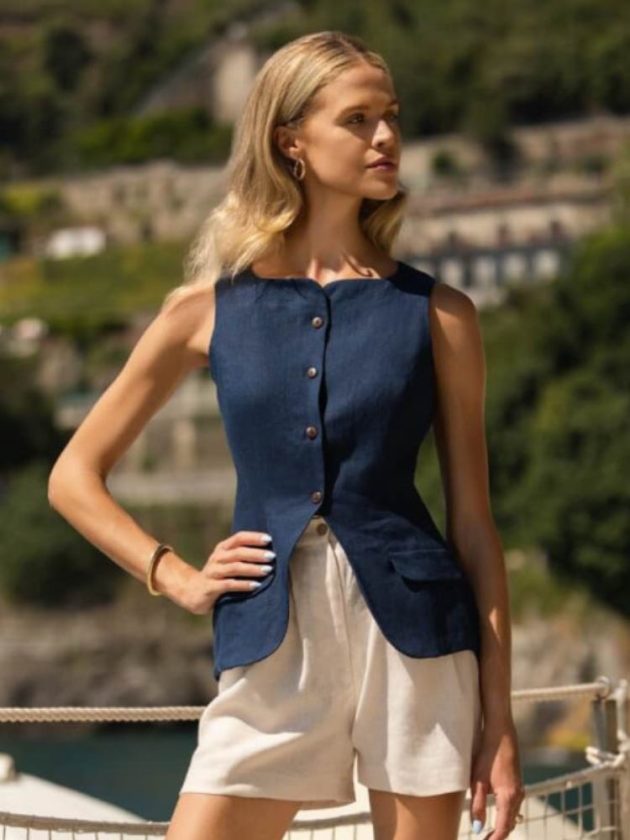
1. Linen Handmade Studio
Best for: tailored, elevated linen clothing
A lot of linen clothing can feel quite casual. And while Linen Handmade studio does have relaxed-fit options, what differentiates the brand in my opinion is their tailored options. I often hear from conscious readers that they want to wear natural fibers to work, but they can’t find something nice enough. Enter in: Linen Handmade Studio’s tailored pieces.
The brand has linen blazers and jackets, linen vests, and linen pants elevated enough for work or an evening out. (They even have bridesmaid dresses.) I’ve been wearing their Evelyn Longline Linen Vest in red clay on repeat and gotten so many compliments on it.
Price Range: $68 – $305
Size Range: US 2-18 (runs slightly small, I’d size up!)
Based in: Lithuania | Ships: Internationally; free U.S. shipping on orders $300+
2. MATE
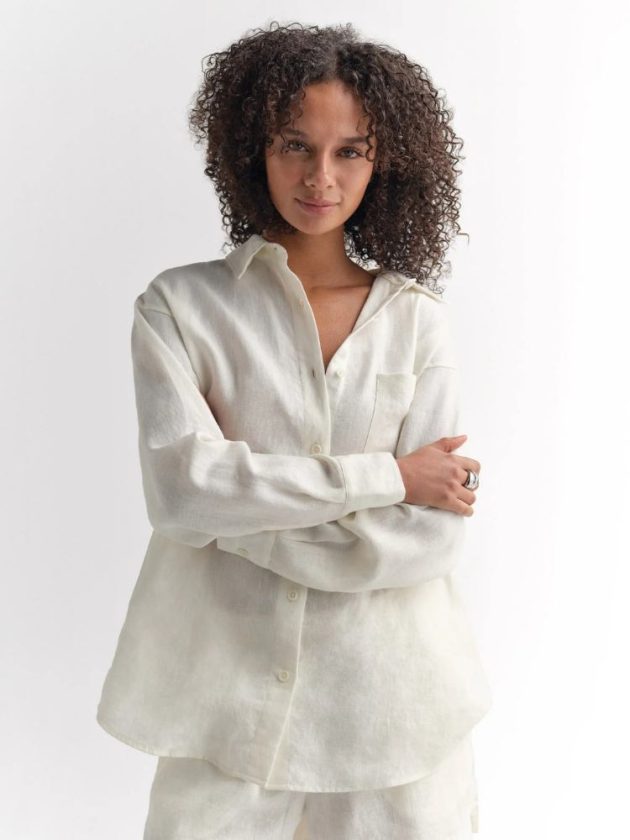
Best for: casual GOTS-certified organic linen clothing
Prioritizing natural non-toxic materials, MATE has a collection of effortless linen shorts, button-downs, and pants made from GOTS-certified organic linen and colored with low-impact dyes.
That means that the color options at MATE are a bit more limited than you might see at other brands. They carry white, black, and “dune” — a soft beige.
I have their organic linen button-down in white and it’s been a reliable staple for me the past two years that’s held up beautifully.
Price Range: $88 – $178
Size Range: XS – XL
Based in: U.S. | Ships: Internationally
3. Linen Fox
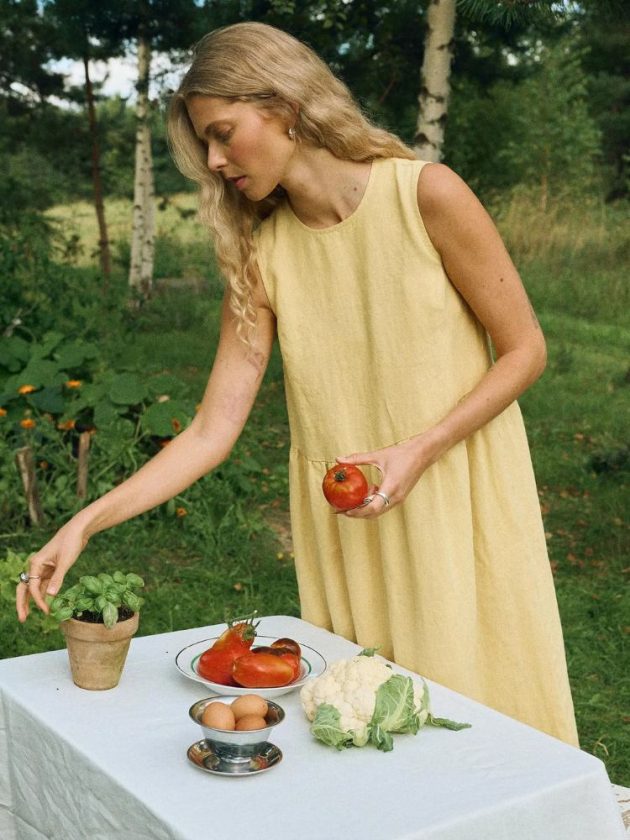
Best for: romantic pastoral clothing in trend-forward colors and prints
Linen Fox is a Lithuanian small independent fashion brand — their team of 16 people make all of their linen clothing — including womenswear, menswear, and kids clothes.
The brand’s garments are made from OEKO-TEX Standard 100 certified linen fabric. The label follows fair trade principles to production and reduces fabric waste by selling their fabric scraps as samples, and crafting accessories like scrunchies. They also ship in 98% plastic-free packaging.
Price Range: $74 – $187
Size Range: XS – XL (several products fit oversized; check each description!)
Based in: Lithuania | Ships: Internationally
4. Magic Linen
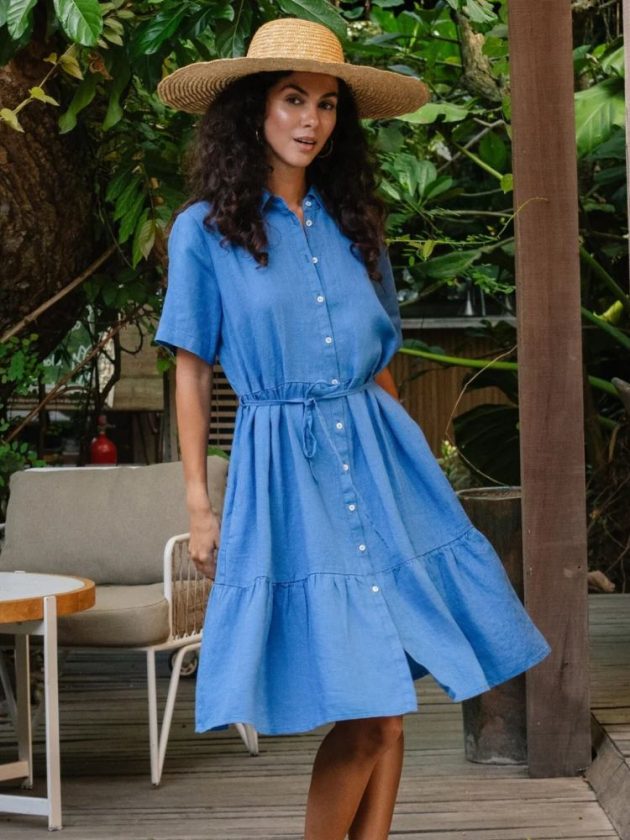
Best for: linen separates plus matching home linens
From classic linen shirts to linen aprons and linen pajamas, Magic Linen is your destination for finding summer-ready sustainable linen clothing for men or women.
The small business’ linen clothing is made with European flax linen certified by OEKO-TEX Standard 100.
The Etsy shop also has plenty of linen home goods — I have linen curtains and bedsheets from Magic Linen and the quality of the fabric has been fantastic, with the sheets holding up well even after years of washing.
Price Range: $93 – $298
Size Range: XS – XXL
Based in: Lithuania | Ships: Internationally
5. Beaumont Organic
Best for: European-made linen clothing with full factory transparency
Looking for breathable garments perfect for your summer getaway to the English countryside or sea? Look no further than Beaumont Organic.
Beaumont Organic is a UK slow fashion brand with garments made from natural fabrics, like flax linen clothing! The brand publishes a directory of the factories they source from — 97% of production takes place in Northern Portugal.
They also have a repair program and are launching a resale program (currently available within the UK only).
Price Range: $211 – $300
Size Range: XS – L
Based in: UK | Ships: Internationally
6. LoveAndConfuse
Best for: feminine style linen clothing
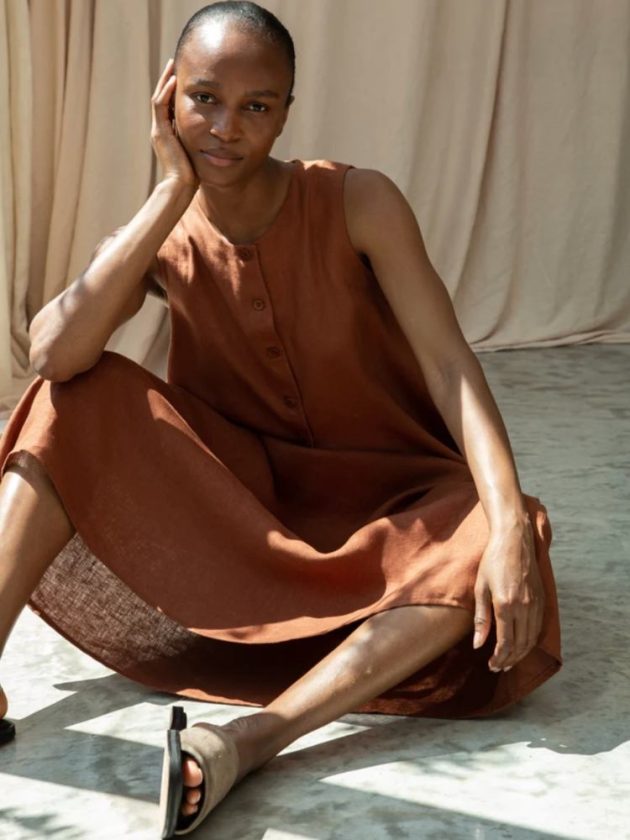
The linen clothing from this lovely small Lithuanian brand on Etsy are truly swoon-worthy!
From wrap dresses to ruffled midi’s to high-waisted linen shorts and linen crop tops, their collection of linen fashion will have you dreaming of a slow travel escape to somewhere warm and sunny.
Price Range: $116 – $225
Size Range: XS – XL
Based in: Lithuania | Ships: Internationally
7. Neu Nomads
Best for: classic linen garments and resortwear
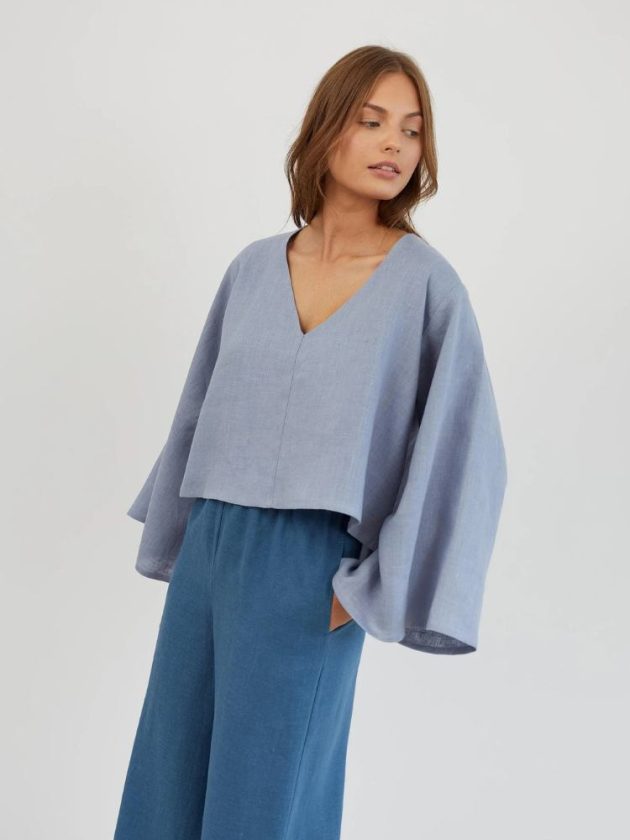
With a mission to create simple, sustainable luxury, Neu Nomads offers quality classics made from earth-minded materials, including 100% OEKO-TEX Standard 100-certified linen.
You’ll find linen trousers, effortless shirts, resort-ready kaftans, and tailored linen blazers in classic colors like white, black, olive, and bright coral.
Price Range: $159 – $359
Size Range: XXS – XXL
Based in: U.S. | Ships: Internationally
8. EILEEN FISHER
Best for: classic linen clothing with circularity programs
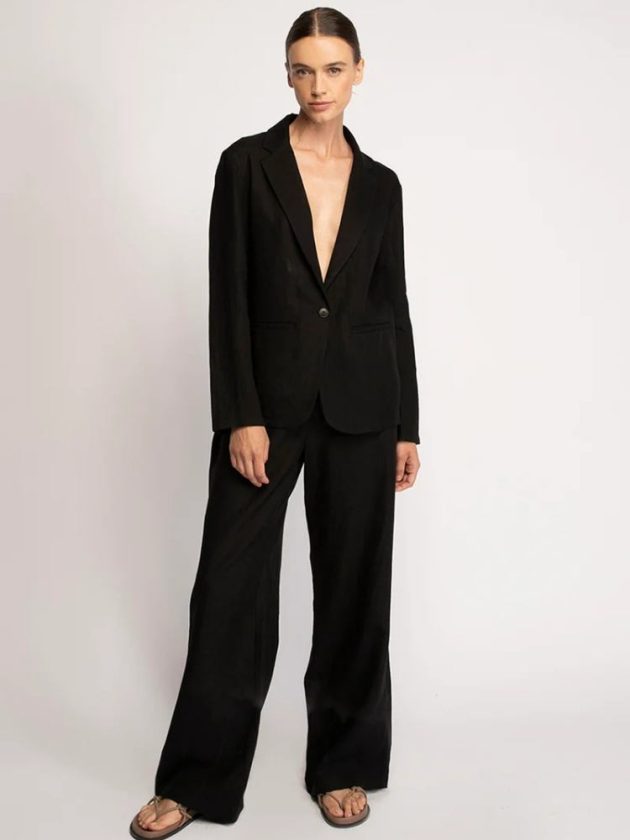
Slow fashion brand EILEEN FISHER has elegant, minimalistic garments made from eco-minded fabrics including organic linen. Several of the pieces are made in Fair Trade Certified factories.
This is the largest company on the list, but still considered a medium-sized enterprise — and, of course, this namesake label is woman-founded.
EILEEN FISHER’s organic linen clothing is timeless and made with quality, as part of their circularity efforts. In addition to ensuring their pieces last, the brand also has a resale program called Renew and a “third life” program that repurposes unwearable garments into unique artwork and other goods.
Price Range: $98 – $268
Size Range: XXS – XL
Based in: U.S. | Ships: Within U.S.
Your Questions, Answered:
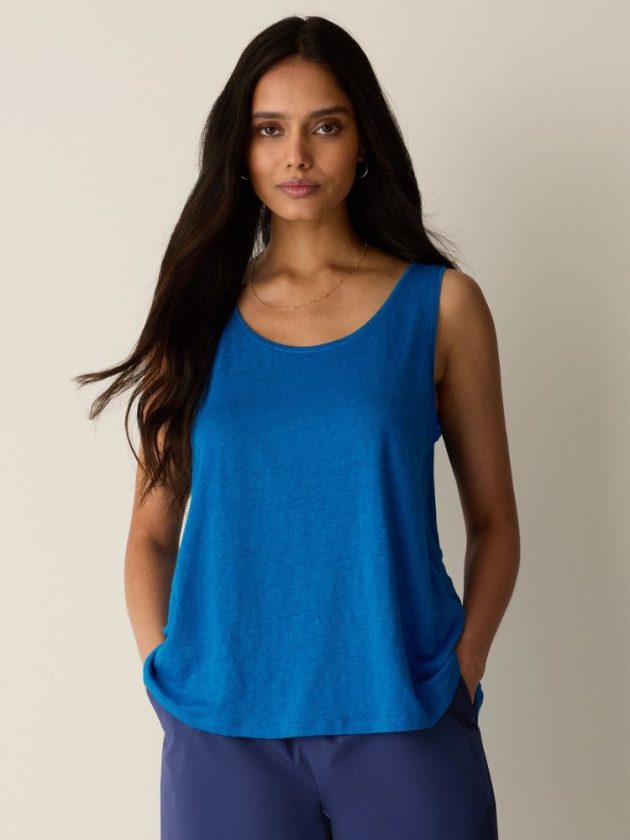
What about Quince’s linen clothing?
While Quince offers more affordable linen clothing, in my experience their linen clothing is ok quality, but does not compare with the quality of some of the other brands on this list. Also, I personally want to prioritize women-led small businesses for my guides, not venture-backed billion-dollar companies.
Should I look for organic linen clothing?
While organic linen is wonderful, it is quite rare. Only two brands on this list use certified organic linen. Note that OEKO-TEX Standard 100 linen is not “organic” linen, but rather linen clothing that has been tested against common harmful substances. The most common certification for organic fiber clothing is Global Organic Textile Standard, or GOTS.
Is there any linen clothing that’s work-appropriate?
This one depends on your work place’s dress code, but there are a few options on this list with linen blazers, trousers, and other more tailored pieces like Linen Handmade Studio and Neu Nomads.
More Sustainable Clothing Guides:
The Best Organic Cotton Fashion Brands
Actually Fashionable Hemp Clothing Brands
The post 8 Best Linen Clothing Brands With Easy Breezy, Beautiful Pieces appeared first on Conscious Life & Style.
9 Best Linen Clothing Brands With Easy Breezy, Beautiful Pieces
Breezy, light, and breathable, we take a deep dive into how one of the best summer fabrics fares when it comes to sustainability while discovering these brands that are doing right by linen.
Some Background on Linen
Where does linen come from?
Linen fiber is extracted from the stalks of flax plants. This plant is also known for providing us with nutritious flaxseeds and linseed oil — talk about an overachiever!
In fact, linen is one of the oldest fibers known to man, dating back to the prehistoric era. Archaeologists and paleobiologists have discovered flax fibers during excavations that were twisted, indicating they were used to make ropes or strings among many proposed applications that must have been a great advantage to the hunter-gatherer society. In fact, linen wrappings were even used for mummification in ancient Egypt.
Linen fabric is then created by obtaining its fibers from the inner bark (or stalks) of the flax plant.
How is the linen cloth made?
Before the fibers are spun into the breezy linen you know and love, its fibers are loosened and separated from the rest of the stalk through a process known as “retting”. At that point, the fibers are still straw-like and coarse in texture.
To soften it, the fibers are broken up into small, short bits, while the actual fiber is left unharmed, and then “scutched”, where the straw is scraped off the fiber. After which they are then pulled through “hackles”, that comb the straw out of the fiber to finally prepare flax for spinning into linen fabric.
And linen clothing is, of course, garments comprised of linen fiber in its entirety or blended with other fibers. For this guide, I tried to select brands that only used 100% linen or at the minimum blended linen with other natural fibers like cotton.
The Benefits of Linen Clothing
Why wear linen? Known for being ideal during the summers, clothing made from linen will allow heat to escape from the body while absorbing moisture and drying relatively quickly. While linen may have a notorious reputation for wrinkling rather quickly, when blended with other fibers, the creases aren’t as discernible as they would be with pure linens.
While linen may be notorious for its high energy consumption owing to its need to be ironed more, linen clothing’s pros easily outweigh its cons.
Flax plants can be grown in the harshest of climate conditions that require minimum water. What’s more impressive is the plant’s ability to absorb carbon. The European Confederation of Flax and Hemp (CELC) states that one hectare of flax absorbs 3.7 tons of CO2 every year.
Is Linen More Sustainable Than Cotton?
While there are benefits and drawbacks to every fiber when it comes to environmental sustainability, there are a few points where linen stands out when compared to cotton.
First, we know that durability is a key aspect of sustainability, because it means our clothes will last, enabling us to keep our clothes longer and buy new clothing less frequently.
So how long does linen clothing last in comparison to cotton? Linen clothing is up to 12 times stronger than cotton, helping increase its longevity and taking away the need to be replaced so often.
Another question might be about flax’s water usage. While the irrigation needs of the crop are dependent on the region’s climate (just as with cotton), 450–750 mm of water per season is sufficient for flaxseed. In fact, some studies even indicate that flax could be regarded as a drought-tolerant crop.
How to Care for Linen Clothing
When it comes to caring for linen clothing, linen can be washed on a gentle machine cycle with a mild detergent. (Check out these low waste low-impact detergent options.)
In case you’re curious whether linen stretches or shrinks, then there isn’t much to worry about. Linen is mostly pre-shrunk during the manufacturing stages but pure linens may show about 4% shrinkage.
And when it comes to stretch, linens aren’t known to stretch out over time but can show some level of elasticity when blended with other fibers.
Finally, it’s no secret that linen clothing tends to wrinkle easily! You may choose to embrace the natural characteristics of linen and wear your linen clothing as is, or if you want a crisper look, you may either want to look for a linen blended fabric, or be prepared to steam and/or iron your garments relatively frequently.
Note: This guide includes partners and/or affiliates. As always, brands must meet high standards for sustainability and ethics — and I only share brands that I believe in.
How to Find Sustainable Linen Clothing
So of course, I’m a big advocate for “secondhand first” when it comes to all fashion, including linen clothing. While your local thrift store might not be filled with 100% linen clothes, online secondhand shops can be a great resource. For luxury and premium brands, Vestiaire Collective and The RealReal. For more affordable options, my favorite pick is ThredUp because you can filter by natural fibers only. To be clear: the listings aren’t always accurate, so I still double check the descriptions of any product that shows up with that filter, but it does save some time to start there.
When looking for new linen clothing, I always prioritize small to mid-size women-led businesses. And I check the product details to see if they use 100% linen or if they’re deceptively saying “linen blend” and then it’s actually 50% polyester!
And while not perfect you can also look for certifications. These are the ones most relevant to linen clothing and linen fashion brands.
OEKO-TEX Standard 100 certifies that the finished textile product has been tested for harmful substances (heavy metals, formaldehyde, pesticide residue). This is a chemical-safety certification, not a guarantee of fair labor or environmental practices. So it tells you the linen has been tested for potentially toxic chemicals, but it doesn’t tell you who made it or how. Note that some brands just say “OEKO-TEX certified” — that virtually always refers to OEKO-TEX Standard 100, the most common certification from OEKO-TEX.
B Corp certifies the company as a whole against social and environmental performance standards (labor, governance, environmental impact). This is a business-level cert, not a product-level one, so it doesn’t speak to any single garment’s materials.
Fair Trade Certified verifies that the specific factory/facility producing the item meets standards for labor conditions, wages, and worker safety, and that a Community Development Premium is paid to workers. It’s a labor and production-facility certification. It doesn’t certify the fabric’s environmental footprint or chemical content (that’s what OEKO-TEX covers), so a garment can carry both certifications and they’re speaking to different things.
Where to Find Eco-Friendly Linen Clothing
I scoured through dozens of brands to find my top picks for brands with sustainably-crafted linen clothing for women (some have men’s clothing too). I’ve included their conscious qualities, what they’re best for, and any caveats so you can make the best decision for yourself. Keep in mind while shopping that 100% linen garments won’t have any stretch — so if you run between sizes, I’d default to sizing up. But of course, check the size chart and reviews for each brand!
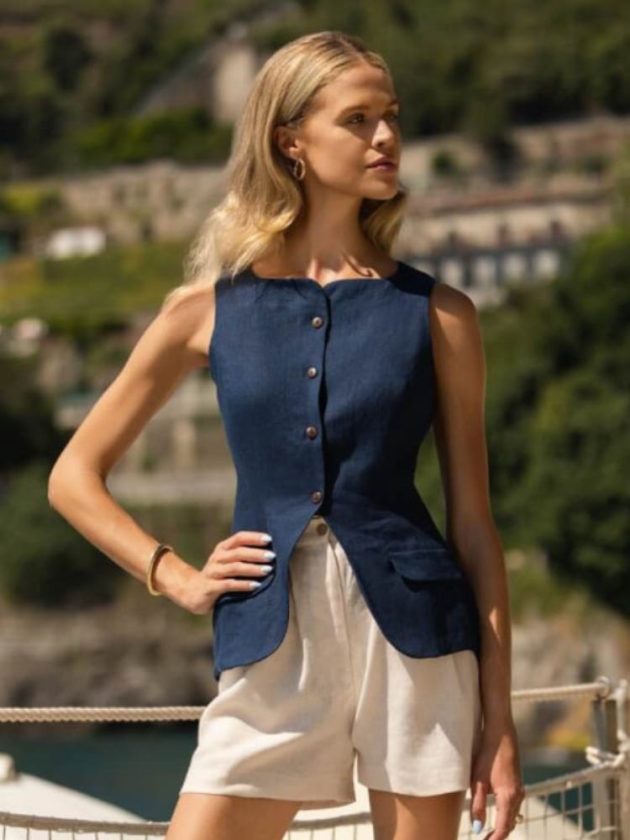
1. Linen Handmade Studio
Best for: tailored, elevated linen clothing
A lot of linen clothing can feel quite casual. And while Linen Handmade studio does have relaxed-fit options, what differentiates the brand in my opinion is their tailored options. I often hear from conscious readers that they want to wear natural fibers to work, but they can’t find something nice enough. Enter in: Linen Handmade Studio’s tailored pieces.
The brand has linen blazers and jackets, linen vests, and linen pants elevated enough for work or an evening out. (They even have bridesmaid dresses.) I’ve been wearing their Evelyn Longline Linen Vest in red clay on repeat and gotten so many compliments on it.
Price Range: $68 – $305
Size Range: US 2-18 (runs slightly small, I’d size up!)
Based in: Lithuania | Ships: Internationally; free U.S. shipping on orders $300+
2. MATE
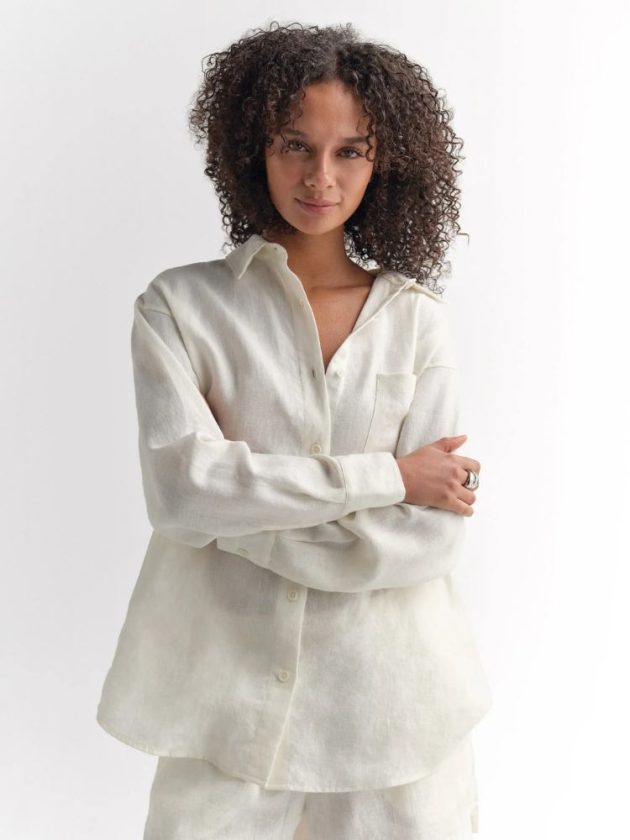
Best for: casual GOTS-certified organic linen clothing
Prioritizing natural non-toxic materials, MATE has a collection of effortless linen shorts, button-downs, and pants made from GOTS-certified organic linen and colored with low-impact dyes.
That means that the color options at MATE are a bit more limited than you might see at other brands. They carry white, black, and “dune” — a soft beige.
I have their organic linen button-down in white and it’s been a reliable staple for me the past two years that’s held up beautifully.
Price Range: $88 – $178
Size Range: XS – XL
Based in: U.S. | Ships: Internationally
3. Linen Fox
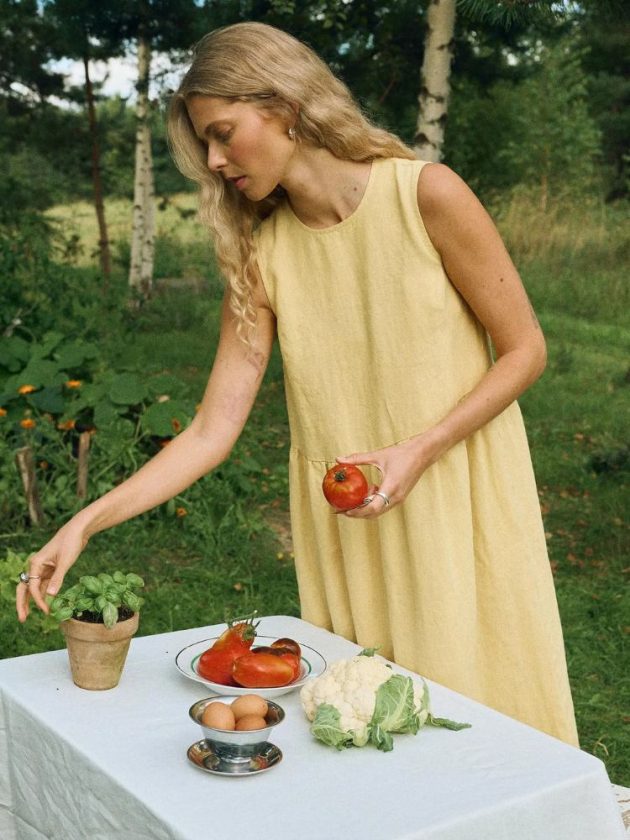
Best for: romantic pastoral clothing in trend-forward colors and prints
Linen Fox is a Lithuanian small independent fashion brand — their team of 16 people make all of their linen clothing — including womenswear, menswear, and kids clothes.
The brand’s garments are made from OEKO-TEX Standard 100 certified linen fabric. The label follows fair trade principles to production and reduces fabric waste by selling their fabric scraps as samples, and crafting accessories like scrunchies. They also ship in 98% plastic-free packaging.
Price Range: $74 – $187
Size Range: XS – XL (several products fit oversized; check each description!)
Based in: Lithuania | Ships: Internationally
4. OhSevenDays
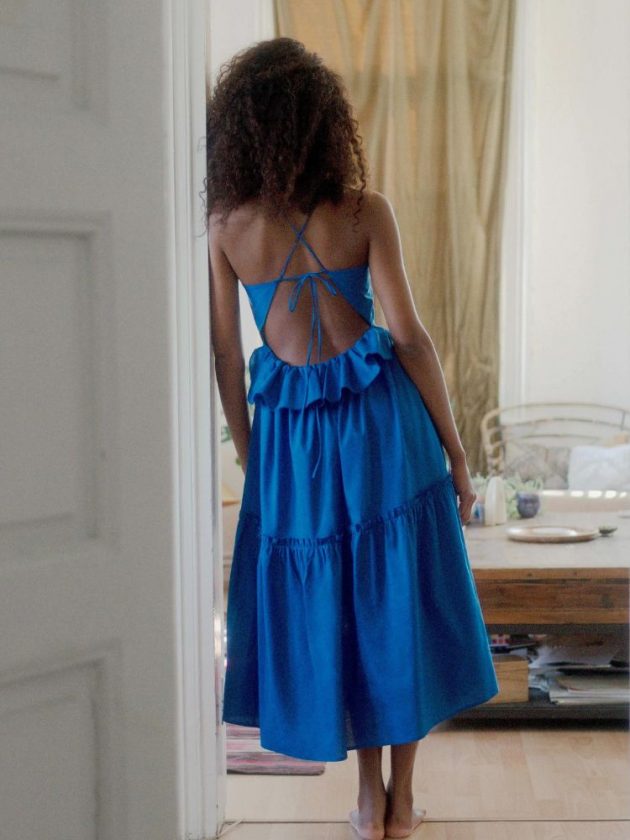
Best for: deadstock linen with custom sizing available
OhSevenDays was founded by Megan Mummery after seeing the vast supply of surplus fabrics (i.e. deadstock) in Istanbul, Turkey.
While originally sourcing their deadstock fabric from middleman sellers, OhSevenDays now sources their surplus fabrics (including linen) directly from OEKO-TEX fabric mills for better transparency.
Price Range: $$
Size Range: XS-XL + custom sizing options
Based in: Turkey | Ships: Internationally
5. Magic Linen
Best for: linen separates plus matching home linens
From classic linen shirts to linen aprons and linen pajamas, Magic Linen is your destination for finding summer-ready sustainable linen clothing for men or women.
The small business’ linen clothing is made with European flax that means the pre-certification guidelines of OEKO-TEX Standard 100.
The Etsy shop also has plenty of linen home goods — I have linen curtains and bedsheets from Magic Linen and the quality of the fabric has been fantastic, with the sheets holding up well even after years of washing.
Price Range: $-$$
Size Range: XS – XXL
Based in: Lithuania | Ships: Internationally

6. Beaumont Organic
Best for: UK-made linen with full factory transparency
Looking for breathable garments perfect for your summer getaway to the English countryside or sea? Look no further than Beaumont Organic.
Beaumont Organic is a UK slow fashion brand with garments made from natural fabrics, like flax linen clothing! The brand publishes a directory of the factories they source from — 97% of production takes place in Northern Portugal.
They also have a repair program and are launching a resale program (currently available within the UK only).
Price Range: ££ – £££
Size Range: XS – L
Based in: UK | Ships: Internationally; covers EU customs & fees
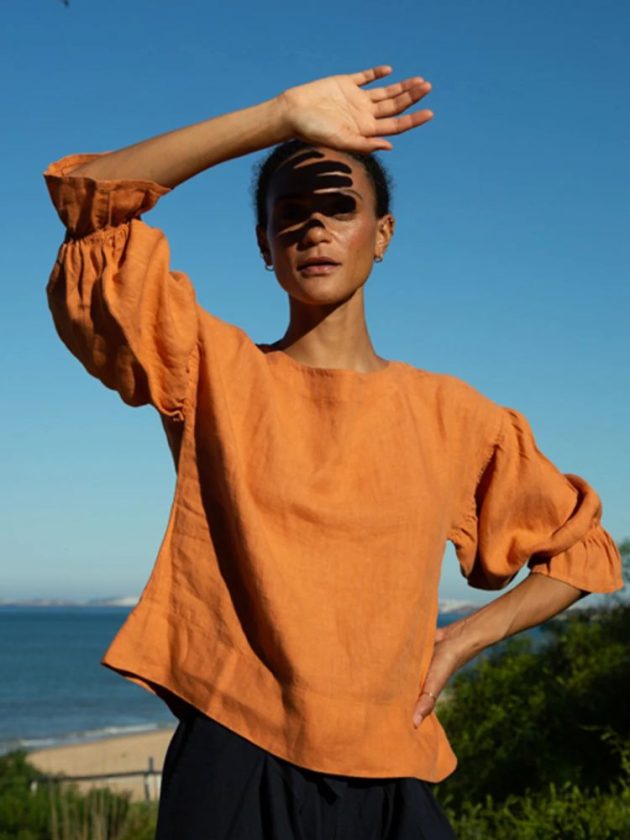
7. LoveAndConfuse
Best for: ultra feminine style linen clothing
The linen clothing from this lovely small Lithuanian brand on Etsy are truly swoon-worthy!
From wrap dresses to ruffled midi’s to high-waisted linen shorts and linen crop tops, their collection of linen fashion will have you dreaming of a slow travel escape to somewhere warm and sunny.
Price Range: $ – $$
Size Range: XS – XL
Based in: Lithuania | Ships: Internationally
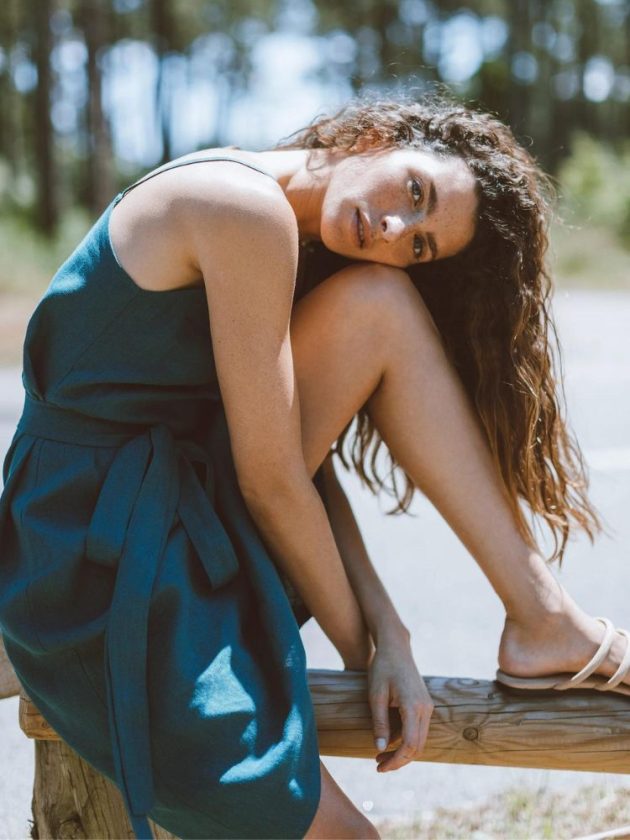
8. Neu Nomads
Best for: affordable linen garments
With a mission to create simple, sustainable luxury at affordable prices, Neu Nomads offers quality classics made from earth-minded materials, including organic linen.
You’ll find linen trousers, effortless shirts, chic blouses, summer dresses, and even linen blazers in a range of colors among Neu Nomad’s consciously crafted selection.
Price Range: $ – $$
Size Range: XS – XL
Based in: U.S. | Ships: Internationally
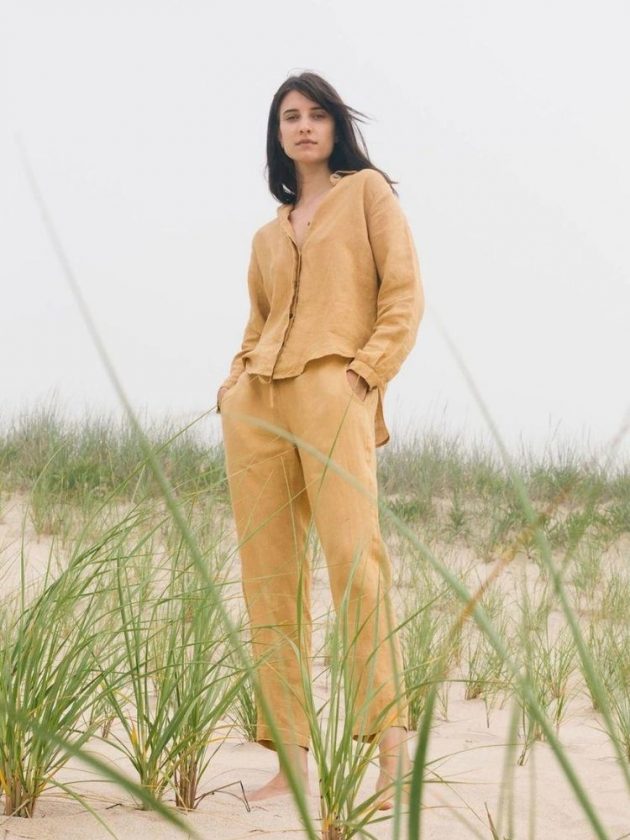
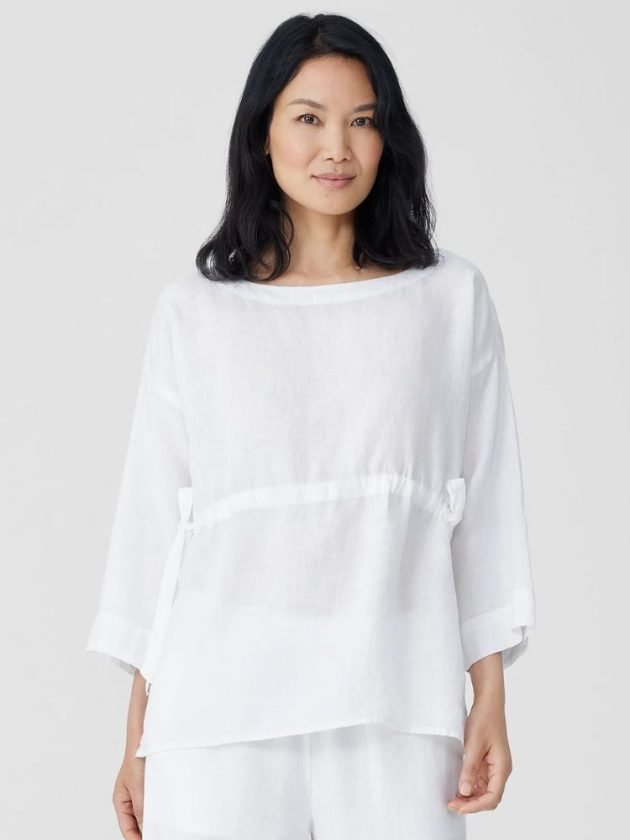
9. EILEEN FISHER
Best for: investment-piece linen with a circularity program
Slow fashion label EILEEN FISHER has elegant, minimalistic garments made from eco-minded fabrics including organic linen.
EILEEN FISHER’s organic linen clothing is timeless and made with quality, as part of their circularity efforts. In addition to ensuring their pieces last, the brand also has a resale program called Renew and a “third life” program called Waste No More that repurposes unwearable garments into unique items.
Price Range: $$$
Size Range: XXS – XL
Based in: U.S. | Ships: Within U.S.
Your Questions, Answered:
What about Quince’s linen clothing?
While Quince offers more affordable linen clothing, in my experience their linen clothing is ok quality, but does not compare with the quality of some of the other brands on this list. Also, I personally want to prioritize women-led small businesses for my guides, not venture-backed billion-dollar companies.
Should I look for organic linen clothing?
While organic linen is wonderful, it is quite rare. Only two brands on this list use certified organic linen. Note that OEKO-TEX Standard 100 linen is not “organic” linen, but rather linen clothing that has been tested against common harmful substances. The most common certification for organic fiber clothing is Global Organic Textile Standard, or GOTS.
More Sustainable Clothing Guides:
The Best Organic Cotton Fashion Brands
Actually Fashionable Hemp Clothing Brands
The post 9 Best Linen Clothing Brands With Easy Breezy, Beautiful Pieces appeared first on Conscious Life & Style.
9 Best Linen Clothing Brands With Easy Breezy, Beautiful Pieces
Today’s Earth911 inspiration is from Pulitzer-prize-winning journalist and science writer, Natalie Angier: “The beauty of the natural world lies in the details.”
Earth911 inspirations. Post them and share your desire to help people think of the planet first, every day. Click the poster to get a larger image.

The post Earth911 Inspiration: The Beauty of the Natural World appeared first on Earth911.
https://earth911.com/inspire/earth911-inspiration-the-beauty-of-the-natural-world/



-
Climate Change1 year ago
Guest post: Why China is still building new coal – and when it might stop
-
Greenhouse Gases1 year ago
Guest post: Why China is still building new coal – and when it might stop
-

 Greenhouse Gases2 years ago
嘉宾来稿:满足中国增长的用电需求 光伏加储能“比新建煤电更实惠”
-

 Climate Change2 years ago
嘉宾来稿:满足中国增长的用电需求 光伏加储能“比新建煤电更实惠”
-
Climate Change2 years ago
Bill Discounting Climate Change in Florida’s Energy Policy Awaits DeSantis’ Approval
-

 Renewable Energy10 months ago
Sending Progressive Philanthropist George Soros to Prison?
-
Greenhouse Gases1 year ago
嘉宾来稿:探究火山喷发如何影响气候预测
-

 Carbon Footprint2 years ago
US SEC’s Climate Disclosure Rules Spur Renewed Interest in Carbon Credits