

Weather Guard Lightning Tech

Siemens Gamesa Struggles, RWE & Nordex Thrive, DOE Invests in Floating Wind
In this episode, Allen, Joel, and Philip discuss Siemens Gamesa’s leadership changes and quality issues, the strong financial performance of Nordex and RWE, and upgrades to UK wind turbine testing facilities. They also cover the christening of the first American-built offshore wind service operation vessel, the EcoEdison, and the DOE’s selection of five floating wind technologies for the Flow Wind Prize readiness competition.
Sign up now for Uptime Tech News, our weekly email update on all things wind technology. This episode is sponsored by Weather Guard Lightning Tech. Learn more about Weather Guard’s StrikeTape Wind Turbine LPS retrofit. Follow the show on Facebook, YouTube, Twitter, Linkedin and visit Weather Guard on the web. And subscribe to Rosemary Barnes’ YouTube channel here. Have a question we can answer on the show? Email us!
Pardalote Consulting – https://www.pardaloteconsulting.com
Weather Guard Lightning Tech – www.weatherguardwind.com
Intelstor – https://www.intelstor.com
Allen Hall: All right, Lego lovers a Canadian man has combined his love of Lego and Star Wars, shocker, to build the 75, 000 piece Millennium Falcon in a record breaking time of, Joel, take a guess.
Joel Saxum: How much coffee did he have first?
Allen Hall: Red Bull.
Joel Saxum: I’m gonna say
Allen Hall: That’s not too far off. Phil, what’s your guess?
Philip Totaro: Six? I don’t know.
Allen Hall: Seven hours, 36 minutes and 37 seconds. Ivan Wu of Markham, Ontario earned the Guinness World Record for the fastest time to build a Lego Star Wars 75, 000 piece Millennium Falcon. It’s 10, 000 pieces an hour. That’s insane. How did that, Phil, can your fingers move that fast?
Philip Totaro: 10, 000 pieces an hour?
Only when I’m typing Intel store research.
Allen Hall: You get the bags, right? And the bags are all just mixed parts, right? And they say, you open up the manual and it says, open up manual one out of six. And then you open bag one and six, and then you have to, that’s three pieces a second. How do you tell your spouse Hey, I’m I really need to buy the 75, 000 piece Millennium Falcon to set a Guinness
Philip Totaro: World Record.
Sorry to stereotype, but this guy does not have a spouse.
Joel Saxum: But it only took seven hours of his life, so Seven hours of peace and quiet. Yeah, but how much training did it get to that point?
Allen Hall: See that, Joel, that’s the ultimate question. I was thinking the same thing. That guy worked on that for weeks.
Joel Saxum: How many times has he built that thing? He’s trained like an Olympic athlete. Seven hours was the record winning attempt, right? He’s probably done it a hundred times or more. Canadian winters are long. They are, and now they’re the world champions. There you go.
Allen Hall: Vinod’s Philip, who will take over as CEO of Ascension. Seaman’s Kamesa on August 1st, which happens to be my birthday, by the way, plans to conduct a thorough review of the company’s onshore and wind turbine development process. I hope so, because that’s desperately needed at this point. Philip believes that the current two year development cycle may be insufficient for onshore turbines leading to inadequate testing and quality control issues that have played.
Siggins Gamesa’s newest onshore turbines, and in that he means the 4x and 5x machines. By comparison, offshore wind turbine platforms have usually a five to seven year development cycle. Philip is suggesting that the onshore industry needs to slow down a little bit and work on a supply chain. to get rid of some quality concerns.
Now that all sounds great, right? But everybody’s waiting for Siemens Gamesa to get back into action again. And they’re thinking, or at least they’re still saying by 2026, they’re going to break even. And they’re going to get rid of these quality concerns. And now, Phil, something has to happen within Siemens Gamesa, right?
We haven’t seen many changes internally. There haven’t. Announced any changes besides having the review team look at the design. What are the next steps? What’s likely to happen here over the next six
Philip Totaro: months? Let’s also maybe deconstruct a couple things that he’s talked about too, which is development cycles need to speed up, not slow down.
So I’m not sure where he’s getting his information from. We’re trying to make things go faster. And if the supply chain is not capable of maintaining quality whilst also being able to deliver at the same rate, An increased scale, then we’re going to have a problem. And then it brings the Chinese into the conversation.
Cause where else are you going to get turbans from? So if they want to maintain their, customer relationships and they want to have any semblance of an order book, once they can start selling turbans again, presumably by, August, September, when they said it was going to be, after the end of this fiscal year was there their previous announcement they’ve got a, they’ve got a Get on the horse here.
So that’s the first thought that comes to mind with this. The next thing is you’re right that they haven’t really, I’m obviously they’ve done a lot internally. And there were, unfortunately some people let go, engineers obviously they got this new CEO.
So the CEO was also like, Oh, but there It’s a little odd with how vocal they were last year about we’ve got a problem, and then nothing about what the problem actually is, what we’re doing to fix it, how long it’s going to take, and then, it’s just, that stuff has come out in dribs and drabs, and that’s why in the past, nine months that this has been going on at least publicly it’s been going on for probably about a year with what they were doing internally, um, they’re just now getting to the point where they’re providing a modicum of transparency to everybody and their stock price is starting to, climb back up because they’re not necessarily going to go close to that 5 billion euro target that they said they’re going to have to set aside.
So that’s good, but not selling turbines is still a problem. They’ve been selling. Some three megawatt turbines in Eastern Europe, they’re also continuing to offer, the three megawatt platform for sale where they can, and they’re still selling, the six megawatt, with 170 meter rotor, that wasn’t the platform that had the problem.
But there, the bulk of what they need to be selling, the bigger you go with turbines, we’ve talked about this on the show before the bigger you go with the turbine. The more finite amount of addressable market you’re going to have. So they’re not going to get anywhere with just being able to sell the six megawatt turbine.
They have to have something in the, four to five megawatt range that is going to compete with the Vestas V150 and, the likes of Nordics and other companies that are out there, including some of the Chinese companies that are out there selling those sized turbines.
So they’ve, I hope that this new CEO best wishes to Vinod and I hope that what he’s going to do is going to really turn this around. He’s very experienced coming from the oil and gas side of the Siemens energy business. And seems pretty adamant that they’re going to stick to these targets, as you mentioned, Alan where they’re going to turn a profit by 2026.
I think he, he understands how you need to toe the line, just like anybody, with GE, for instance, bringing Vic Abate back in, he knows how to tell the line and he knows what the parent company wants to see. So I think this is a good move in general from Siemens Energy.
Joel Saxum: I think there’s something here underlying that we should address as well.
So back it was last fall when they were like, Hey, we let all the engineers go. Or not all, of course, but we let a large part of the engineering staff go. All of us are going, Wait, you got all these problems to fix, you got this stuff to do, why are you letting these people go? But what, when you start digging deeper into things, and if much about corporate culture, especially at large companies, It’s really hard to take that ship down.
And write it in a different direction if you have all the same people on. Now, I know I’m, this may be a hard thing to talk about, right? If you’re trying to change company culture, if it’s around whatever it is, if it’s around quality or your development processes or something, there’s certain things that are controlled by processes, yes, and you follow those processes and you can adjust things.
However, there’s a company culture there within your engineering teams, within your product management teams, and everybody else that it’s easier, a lot easier to change culture a lot quicker. If you just get rid of some people and bring new people in, then they don’t have those old tendencies.
Allen Hall: Can I play Rosemary here? Are you blaming this on the individual contributor to these companies? It’s not their fault. They were just doing their job.
Joel Saxum: Part of the reason they’ve identified as culture, and that’s not an individual person.
Philip Totaro: That’s the mob. By the way, since Rosemary’s not here, that’s usually her argument as well, is there should, you should never have the means or a corporate process that allows you to get down to this point where you’ve got, everybody, look and to what the Siemens, Gamesa’s CEO is now saying, everybody in the industry has blade quality and manufacturing and reliability issues, et cetera.
But it’s the process that you have in place to be able to address something, particularly that is a fleet wide issue and be a systemic thing that you should have been able to catch before it escalated to this point. And frankly, again if we can fill in for Rosemary, who’s.
Off doing exciting things. That’s the point I think she usually likes to make with this. Is, you should never have a corporate culture that allows you to get to this point.
Joel Saxum: But if that culture is there if it’s okay, so take Weather Guard Lightning Tech, for example. The team of us, we’re pretty small.
If we need, if we identify a cultural issue that we need to change, we can change it pretty quick. But if there was a couple thousand of us in all these different locations, and there’s something that’s happening here at a large scale and there isn’t a plate yeah, you should never get to the point where that can happen.
But if it does, and it has, it’s the same thing you watched about. We talked about in aerospace is spirit, aerosystems and stuff there. That’s those issues are cultural. They’re not, those aren’t, at some level it’s systemic as well, but there’s a cultural problems within large organizations sometimes.
Allen Hall: I don’t know. I’m in between on that. I know, I think wind turbines don’t have any oversight like aerospace. It’s not even the same. Relatively speaking at all because there’s so much oversight on aerospace versus what there is on wind, but the culture is noticeable and I’ve run into many a person over the last six months who said the culture at Siemens Gamesa is not where it should have been.
And that’s going to take a while, back to Joel’s point, it’s going to take a while to try to correct that.
Joel Saxum: That’s why you purge. You purge and you can rebuild quicker. If you try to write it where it sits, it’s difficult.
Allen Hall: But the change in leadership, I think, is probably going to help, right? The new person doesn’t have any relationship with anybody on the staff.
Coming in and saying we’re going in a different direction, great, easy to say, but the hard part is if no one follows, what do you do next? And I think back to your point, Joel, that there’s going to have to be some changes likely made to, to get other people in those positions to straighten this out, likely.
Because that’s what we’ve seen historically. It’s not that it’s a Siemens Gamesa issue. Generally what happens with large organizations. So can they make it to 2026? Phil, that’s the question.
Philip Totaro: And that’s a real good question because they’re not really getting enough services revenue. I mean their services business is doing okay, but it’s not enough revenue, besides what they would normally get.
Otherwise be getting from turbine sales that is actually going to support a sustainable business. They can’t, they’re gonna, if they’re not going to spend that 5 billion euro on blade repairs, they’re going to end up spending it on, overhead and staff if they’re going to hope to, to have, a decent sized business to be able to get back to when they can’t start selling turbines again.
They’ve already talked about having to potentially downsize, including in Spain which is gonna be a big hit to a lot of people in Pamplona, Bilbao, and Madrid. And we’ll see how they end up coming out of this. The bottom line is the longer it drags on, the worse it is.
Allen Hall: That’s exactly right, Phil.
If something doesn’t happen over the next 30 to 60 days, then I think they’re in trouble.
Joel Saxum: But isn’t the new CEO, he’s not supposed to take over until August, right? So that’s not, nothing’s going to happen.
Allen Hall: Yeah, exactly, Joel, that it seems like if they’re pushing it off too far, they need to start it now.
And I know that’s got to be a hit. A handoff, right? There’s a lot of administration functions that you will have to learn.
Philip Totaro: They also have to give, the current CEO a certain amount of time. I’m sure it’s written into a contract that you can’t just, unless it’s for cause you can’t just immediately fire the guy.
So the, but the reality is this new CEO is coming in at a point in time when it’s supposed to, and I underscore supposed to coincide with them resuming onshore turbine sales of this four to five megawatt platform that’s been affected by the quality issues. So if that happens, and then the new CEO comes in, those are positive signs.
And that’s frankly why, if you look at the stock performance, since some of these announcements came out, the stock went up a little bit. And so I think it’s, it is starting to provide investors a little more confidence that, particularly equity investors more confidence. I think they still have work to do to go back to the project finance community and say, all right, we’ve got our act together now and these quality issues have been resolved.
And here’s what the problem was. Here’s what we did to fix it. And here’s why it’s never going to happen again. We promise.
Lightning is an act of God, but lightning damage is not. Yeah. actually is very predictable and very preventable. StrikeTape is a lightning protection system upgrade for wind turbines made by WeatherGuard.
It dramatically improves the effectiveness of the factory LPS, so you can stop worrying about lightning damage. Visit weatherguardwind. com to learn more, read a case study, and schedule a call today.
Allen Hall: Over at Nordex they are definitely winning at the moment they closed their first quarter of 2024 with a 29 percent sales growth to 1.
57 billion euros and a positive EBITDA of 52 million euros rebounding from a loss last year, same time last year. That environment is only driven by. More orders, like we were talking about with Siemens Gamesa. So the order intake surged to 1. 76 billion euros. And the total backlog at Nordex grew to 11 billion euros.
Now they Nordex is projecting that their full year guidance is still in line. What they gave earlier in that they’re going to have a two to 4 percent EBITDA margin. So Phil, of all the companies that are doing okay right now Nordex.
Philip Totaro: What do you think happens when, Siemens is not able to sell turbines in a market where Nordex has a competing product?
The N149, the N163 rated between, anywhere from 4. 5 up to, 6 plus megawatts. That’s filling a void that, Siemens Gamesa left so I’m not surprised number one that Nordex is doing well. Generally speaking, they’ve had to discount their turban price versus competitors because they weren’t looked at, particularly in Western markets, as quite as competitive.
Quote unquote, financeable as a Vestas or a GE turbine. But if you’re in the market for something that’s four megawatt and you don’t want a Vestas, Nordex is your next best option unless you’re going to go buy a Goldwind or an Envision maybe.
Joel Saxum: Or downgrade at 3. 4 GE.
Philip Totaro: At this point, I’m not it’s not surprising that Nordex is doing well and they were definitely picking up some some sales from, what Siemens Gamesa is not out there able to fulfill.
But they’ve still got a ways to go. They’ve got, more order book necessary and more profit margin improvement to see before they’re really, they’re
Joel Saxum: If you look at the CEO carousel, right? U S it’s Nordex USA. Just got a new CEO right before ACP last week, or, a month or so before.
And they’re looking at announcing a new, a completely new turbine model that is aimed at this North American market. You might see some changes in some things happening from them here. Not too long.
A
Joel Saxum: German utility
Allen Hall: RWE has reported better than expected. First quarter earnings with an adjusted EBITDA of, man, these numbers are big.
1. 71 billion euros beating the analyst forecasts. That sounds crazy high. That’s without CapEx. Yes. The strong performance was driven by favorable wind conditions and better than anticipated showing from the company’s trading division. RWE maintained its full year profit guidance, expecting to hit the lower end of its outlook ranges.
Earnings increased in the offshore wind and onshore wind and solar segments, but declined as expected in the flexible generation compared to an exceptionally strong period. Last year so the company is going to continue to invest heavily in renewable energy expansion and has 8. 3 gigawatts of renewable energy projects under construction.
So I always look at us, I always look at RDB as being the bellwether for the industry. They’re not making rash decisions. They’re very conservative. They know where they’re going. They have the cash to go fund those efforts and. Doing quite well. As long as the wind’s blowing, the sun is shining, RDB is doing just
Joel Saxum: fine.
But they’re not taking flyers, I think that’s part of what you’re referring to, that’s they’re like, they’re doing they know, like, when they do offshore wind, they’re doing it in German waters, like, where they’re from. They know that, they know the territory, they know the players, they know the supply chain.
Was it last year they went and signed a, a couple of agreements with OEMs to, guarantee turbines. So they knew they’re going to install them. They have the massive pipeline of renewable energy projects on the horizon. So they went and secured their value chain there, their supply chain.
So that’s wickedly intelligent. And in the U S you never hear of them like. doing something crazy either, or like something that’s not the, it’s not the largest and the new innovative. It’s just Hey, they’re just plodding along and apparently making money, making a ton of
Allen Hall: money. Our friends at ORE catapult wind turbines, testing facilities in Blythe are receiving 86 million pounds for an upgrade.
The UK government is investing that money to expand the blade testing facility, basically build a new facility to test blades up to 150 meters long with the potential to test blades up to 180 meters long. And they’re also Proving the facilities for testing generators to 23 megawatts and possibly up to 28 megawatts with a couple more additions.
And on top of that, they’re going to be able to do segmented blade testing. Now, the upgraded facilities are expected to create about 30 jobs and support about five PhDs annually on staff. Now, this is in sort of contrast to what’s happening elsewhere. I know, was it Belgium has really improved their facilities recently.
A number of countries in Europe are in, are making really significant financial investments to beat test facilities for wind turbines. I look at that in contrast to what’s happening in the States and there’s, Not a lot. A hundred and fifty meters long test facility for blades is, Phil, that’s crazy.
That’s an amazing facility, right? Is there another place, maybe there’s a place like that in China? That would be the only place to compete with it.
Philip Totaro: Yeah, there, there is some competition. Capacity for that in China. In the U. S. Obviously we have the the mass C. E. C. Facility.
We’ve got the Clemson University facility down in South Carolina as well for drive trains. But they, Having been involved in the earliest stages of all of these three facilities, including Blythe, by the way, where, when I was working at Clipper Wind Power, we were the ones who originally contracted for this facility to be built and used because that’s, we were going to be the ones to predominantly test our 10 megawatt offshore wind turbine at that facility.
So I was involved with a few people over in the UK to to actually get that the Blythe test center off the ground, so to speak. And was actually involved in the review panel for the Clemson test facility in the United States as well. Lot of these a lot of these facilities are obviously necessary and, It’s good to see, the UK government getting on board with making the necessary investments to scale this up to a point where it can handle current and future turbines.
In reality, yeah, the fact that they could theoretically go up to 23 or 28 megawatts is still a long ways off. But it does give you the opportunity to do overpower testing, which is important on the drivetrain highly, it’s called highly accelerated life testing halt, where you can, overpower the thing and really put it through a rigorous it’s rigorous paces and make sure that everything’s working correctly.
Hopefully we see some of those improvements trickle down to the United States as well. But at the pace we tend to go at over here, it’s probably going to be a few more years and with the significant instigation of a company like GE probably to to ensure that a facility like that gets built or upgraded but it’s great to see that Catapult and the UK government are gonna be able to scale what they already have.
Joel Saxum: Do you think that we don’t have a facility like that over here or multiple facilities like that, like they do in Europe, just simply because we don’t have OEMs?
Allen Hall: You have one
Joel Saxum: OEM, you have GE. We have one, right? But the, but their, the customer isn’t there.
Philip Totaro: And going back to what I was mentioning, having been involved in the review process for this Clemson University facility in South Carolina, GE was, basically Ghost wrote their application for them.
Because GE wanted to be able to use that facility at the time, and this was, 15 years ago, basically. But GE wanted to be able to use that facility to test their 2. 5 megawatt and 3 megawatt platforms. And, they still continue to test their, the new 3.
6 megawatt. Turbine with the 154 meter rotor at that facility as well. So the drive train, anyway.
Allen Hall: Phil, is this a field of dreams scenario or is this something that they have locked in designs that are going to be coming into the facility?
Philip Totaro: No, they, they know. They’re talking. For instance, in Blythe, they know, The OEMs are building or will want and that’s actually why they’re saying we could do something up to 28 megawatts because if you want to do, halt testing with the 14 megawatt turbine or something, you can definitely do that.
Over here we just haven’t, taken a lot of that into account. It’s a lot of the, you’re right, a lot of the OEMs in Europe, they test at test facilities over in Europe before they bother domesticating, commercializing a product over here. So
Joel Saxum: in the grand scheme of things, though, when these guys are talking about an 86 million pound upgrade, so in U.
S. dollars right now, it’s 105 million, 110 million, something like that. That’s not very much money to upgrade and build out new, all these new capabilities they’re talking about. Testing up to 150 meters in length blades, because I think right now they’re only able to do like 110, something like that. But that seems like it’s a small amount of money to build new, a whole new facility for testing blades and gear generators and such.
Philip Totaro: And thankfully, they’ve got the space to be able to do it and the, impetus and the willpower to, to be able to do that. Speaking of
Allen Hall: offshore projects you need some ships to put the offshore turbines into the waters and Edison Schwest has christened the EcoEdison, the first American built owned and crewed service operation vehicle, SOV for the offshore wind industry.
The 262 foot Liveaboard Vessel will serve as a floating base for 60 wind turbine technicians working on Oersted’s Northeast Wind Projects. And we think that means revolution, right? Joel?
Joel Saxum: Revolution in South Fork for sure. And possibly Sunrise. So South Fork is in the water, right? That thing is running.
And now that’s a small wind farm. I think it’s only 12 towers or something like that? Yes. South Fork’s about 12. Yeah, but and Revolution is just down the road in, in, terms. It’s not really on the road. It’s just down the water, just down a few waves over. But Revolution, they did what yesterday morning they announced first steel in the water on Revolution.
So they’re not going to be too far off by mid summer, end of summer to be needing to use that vessel for service operations vessel out there. So those, they will use that thing during the construction period. I’m sure to basically. If you don’t know what SOVs are, they’re pretty amazing high tech livable hotels that, floating hotels with helipads and tool bays and all kinds of great stuff to keep those wind farms running.
I think this vessel can hold 60 crew, if I’m correct? And I think that includes, but that includes the, the crew on the vessel, so Ship captains and cooks and the support staff engineers and whatnot. And then there’s also the wind people on it, but this thing is great, man. I started flipping through the pictures of it.
I’ve been offshore on some vessels and I’ve been on some not so awesome ones. And I’ve been on a couple of nice ones. And this one is definitely one of the nicest ones I’ve ever seen. Little living rooms and movie theater and all kinds of great live aboard things that it’s not too bad of a gig.
If you can handle bouncing around a
Philip Totaro: little bit while you’re asleep, but We finally have, a Jones Act compliant vessel in the water. So that’s good news. But we need more, we were, this is one vessel that’s going to work great for Orsted and their projects. But we’re in need of more of these, SOVs and big crane vessels as well.
So we gotta pick up the pace.
Joel Saxum: Yeah, I’d like to go back to and say, if you’ve listened to the show, you’ll, you have heard me say, if we’re going to get things done for offshore wind, we’re going to get them done on the Gulf Coast. And the Schwest team is, they’re based right out of Louisiana, those guys know how to build vessels down there.
So they’ve been building, they support all that offshore oil and gas, and they have been for years. And I think the Eco Edison, of course the first SUV, it’s been in play for about four years since they made the plans for it and started laying steel and now it’s heading up shortly going to head around Florida and head up the coast, but they’ve already started building on another one, so they’re going to deliver what I’m not sure what it’s called, but I believe it will be like a twin sister ship to this one, to the Eco Edison that should be coming online.
Hopefully in the next year or so.
Allen Hall: And Heli Surface USA is really busy offshore on the northeast coastline moving technicians back and forth via helicopter. There’s a lot of activity there on the east coast right now. You don’t hear much about it, but everybody that’s working those projects is frantic.
The pace is crazy. And Joel, you pointed out there’s a number of ships. out there planting the monopiles for revolution, but they’re also at vineyard and a little bit at South Fork,
Joel Saxum: yeah. If you want to do something cool, take a little bit, take a couple of minutes. If you’re listening to this on a computer or next time you’re in front of a computer, go to marinetraffic.
com. I used to use this website to track oil and gas vessels offshore, but now I’m using it to watch all the wind people. But if you look just, South of basically Cape Cod and, east of New York City, you can see there that the sea installer, so Deme’s vessel that’s going to be working on Vineyard Wind, is out cruising around the Boca lift, which is actually installing monopiles.
Revolution right now is out in the sea revolution. Wind is a a barge. It’s bringing units out to these vessels. And you can also see some really cool stuff. If you look on there and turn on like the historical tracks on this little GIS program, they have, you can see where they’ve been basically doing, the site characterization and where they’ve been doing geotechnical studies and the vessels that are out there working on it right now.
Which is pretty dang cool to see. So yeah, if you want to look at what’s going on off the east coast as far as Vessel traffic, go to marine traffic. com.
Allen Hall: Hey, uptime listeners. We know how difficult it is to keep track of the wind industry. That’s why we read PES wind magazine. PES wind doesn’t summarize the news.
It digs into the tough issues and PES wind is written by the experts so you can get the in depth info you need. Check out the wind industry’s leading trade publication, PES wind at PESwind. com.
And also the coast of Maine and California are going to need floating wind and the U. S. DOE has chosen five floating wind technologies as finalists in phase two of the, what they call the Flow Wind Prize, a floating offshore wind readiness prize. Each of these companies will receive 450, 000 in cash and 100, 000 in vouchers for DOE lab support.
The five winners of this prize are Principal Power’s modular wind float platform Pelostar’s lightweight tension leg platform, and they’ve been on the podcast. Technip Energy’s semi submersible INO 15 design, and Tetra Triple One’s building block platform, which I’ve looked at, and the ultra stable wheel platform with a buoyancy tank.
So there are your five winners. There will be a phase three to this. And the Phase 3 will award up to 900, 000 to help commercialize these technologies. Now, having looked into these projects and also have spoken with Pellistar the money involved to get these technologies in the water is going to be well more than 450, 000.
Right, Phil?
Philip Totaro: Yes. But it does at least put these companies on the radar. Because there are a few here that they haven’t necessarily done a whole lot of demonstration yet we’ve had, I don’t, I’ve lost count of how many floating demonstrator projects there have been going back, about 15 or 16 years now Japan and France and Spain, et cetera the UK, Portugal.
It’s good to see that we’re finally getting, our act together. In the states for this but yeah, the, these companies are going to need contracts from, the project developers and or OEMs to really be able to, to get in there with a significant amount of money that they’re going to need to be able to commercialize it.
Keep in mind that beyond these winners, there’s also some other companies pursuing technology development for deployment to the U S like BW, IDL et cetera. There’s it’s good to finally see things moving in the right direction. And hopefully this money helps get some companies started, but we definitely need to see more commitment on the interconnect for California that’s going to ultimately trigger the, those projects getting built and then the auctions that need to happen in Maine so that we can start deploying floating wind up there.
Joel Saxum: Yeah. Alan, you and I talked with Ben from Pellistar. They’ve had this, the team from Pellistar has been working now. They’re backed by Clawston, right? So they have a parent company with some cash and I don’t know all that. finance works, but they’ve been working on this thing for over 10 years. So those guys are, they’re the 450, 000 is a dandelion seeds in the wind for the, for what they’ve spent over the last 10 years.
Allen Hall: But I like the Pellistar design. I think the Pellistar design is interesting, right? And particularly off.
Philip Totaro: And not for nothing, but this, anything that’s going to leverage tension like platform technology that has been, it is similar to what’s been deployed in oil and gas is going to get the oil and gas guys excited, which is what we’ve needed in floating offshore wind forever.
Because everybody in Europe and elsewhere in the world that wants to come up with some novel new design, it’s like, God bless you, that’s very clever, but if you’re not getting the oil and gas guys excited and engaged in this, floating wind is never going to work, and it’s never going to work at scale, it’s never going to reach, commercial deployment the way it needs to, technologies like Pelostar, this is what’s going to actually make things move forward.
Joel Saxum: Yeah, that’s why I like the I actually like the Technip Energies ideas, simply because they have 40, 000 offshore engineers that have done oil and gas stuff with them for years, right? So they have, They have the, it’s it’s the same thing with Pellistar, right?
They have the Glaston guys. They’re marine architects. They’ve been doing this stuff for a long time rather than some PhDs coming up with an idea and trying to make it work. No offense to that, but this there’s real background behind a lot of these companies.
Allen Hall: So where does this go next? Does the marketplace decide the ultimate winner or winners in this case because of the speed at which we need to be moving?
This is
Joel Saxum: what I’d like to see. I’d like to see some winners of these off, offshore. leases get involved with the companies at a deeper level. I’d like to see, I don’t know, I don’t know who, I can’t pull a winner off, ocean winds or someone like that off the top of my head in these California and now the upcoming Oregon.
And I think there’s a base possibly a Washington auction. I’d like to see them get involved and then pick one and say, okay guys, we’re going with you or we’re going with you too. And we’re going to put, give you each a couple million bucks and then we’ll see which one comes out better and that’s what we’re going to use so really actually start the wheels moving.
Philip Totaro: And to be blunt too, you’ve seen that in the UK so far with, some of these projects for the Intug floating offshore tenders that they’ve had. They’ve been, able to make that happen where the project developer and, or the OEM gets involved with the foundation fabricator to be able to ensure that the commercialization path that everybody’s on is aligned.
So yeah, absolutely. We need to see that in the U S as well. And then, look, all these companies are looking to, take this technology and redeploy it. And other markets like South Korea Taiwan is still looking at exploiting their fixed bottom, but there’s a point in time at which they’re also going to move further offshore and want floating solutions as well.
Joel Saxum: Does it make sense for one of these people to, to grab onto one of these companies and just say Hey, we’re going to, whether it’s a minority stake or something so that we can utilize it in our other Geographies while we start to do this. I’m looking, I just pulled up while we’re talking here the California wind auctions and the winning tenders, there’s five of them and they average about 150 million each in the Humboldt Bay and Morrow Bay areas.
So you had Econor, RWE, Invenergy, and then there’s a couple of consortiums in there, which I’m. If I could remember the consortiums, I would tell you who they are. But those, all of those companies have funds, right? They’re not, we just talked about RW earlier with over a billion in EBITDA. They would have the capabilities of injecting some cash into these companies to get them up and going so that they could use them as a part of their supply chain.
I
Allen Hall: think the supply chain is the key though, right Joel, is that whoever is the likely winner or winners needs to build supply chain and if you select them today, you’re 18 to 24 months out, generally speaking. Just to get started, I think, not to deliver components, but just to get the infrastructure
Philip Totaro: where you can start welding.
So going back to this DOE award, most of the companies that have won, some of this money in the DOE award are also going to be deploying technology or have already in the case of principal power, for instance they’ve deployed this technology over in Europe. France which also, by the way, just awarded another floating offshore.
Project a few kind of smaller, you could say demo projects in France now and Spain is going to be, looking at this as well long before we’re going to get to a point where we need to worry about commercialization over here. So presumably, this the money from the DOE in the United States helps these companies again, put their name out there, get on the radar of these project developers in California, as well as the eventual project development And leaseholders of the main auctions the Oregon auctions, et cetera, that would be responsible for the commercialization of this,
Allen Hall: This technology.
Like France, Phil, should the U. S. be investing in demonstrator projects where, like today, Take the five and say, all right, we’re going to get some of these in the water. Now we’re going to expedite it because we can 20, 30 turbines out in the water. Five of each one. Let’s go just to get it out there.
Philip Totaro: Yeah, it’s not a bad idea, but that’s actually what BWIDL, which is not actually part of this DOE grant award, but that’s what they’re doing with Cadmo. in off the coast of Vandenberg just north of where I am here in, in Santa Barbara. So
Allen Hall: Isn’t that the only way to accelerate this growth in floating wind in the U.
S. is to do something like that? You can have award competitions and design competitions. You can throw the pretty PowerPoints up, right? Then, and that’s what’s happened. I know Glaston clearly knows what they’re doing offshore, but we need to get past the picture stage and start welding
Philip Totaro: now.
And look, again, to Joel’s point, even though it might be like 18 to 24 months to do something we are probably still a good six or seven years before anything’s going to happen in offshore wind in California anyway. We’ve got plenty of time to do demonstrator projects. It will be a good idea. And look, to the extent that the DOE could and should be involved, particularly in funding some of those demos, That’s a good idea.
You could easily siphon off a little money from what you’re throwing away on hydrogen and everything else these days. And give a little to floating offshore wind. But, the reality is, like, there, a lot of this technology is gonna be proven out. Whether it’s here in, France, Spain, Portugal, UK.
Et cetera, prior to, and even South Korea for that matter, prior to it being needed for, a scale up project over here, it would be, look for the people who have to ultimately finance these projects, it’s a good idea to have a demonstrator in the water, because I just companies that want to come and manufacture parts in the U.
S. or manufacture turbines in the U. S. You’re never going to get, project financiers to get on board with what you’re doing unless they can see it working. And it’s preferable that they don’t necessarily have to go all the way over to France to do it. If you got something in California that’s a good thing.
We need our own Highwind Scotland
Joel Saxum: here in the U.
Philip Totaro: S.
Joel Saxum: Hopefully not so expensive, but sure. Yeah. And last more than six years out on site.
Allen Hall: That’s going to do it for this week’s Uptime Wind Energy podcast. Thanks for listening and please give us a five star rating on your podcast platform and subscribe in the show notes below to Uptime Tech News, our weekly newsletter, and check out Rosemary’s YouTube channel, Engineering with Rosie, and we’ll see you here next week on the Uptime Wind Energy podcast.
https://weatherguardwind.com/siemens-gamesa-rwe-nordex-doe-floating-wind/

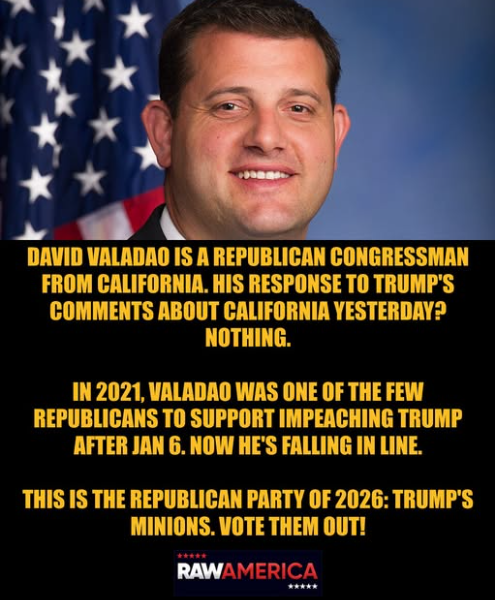 If it’s true that David Valadao is moving back in line with Trump (which seems exceptionally unlikely in California), this jackass is in the slim minority. Most congressional Republicans are trying to pretend they’ve never heard of Trump.
The representative’s district is in the rural farming region in Central California, but still, aligning oneself with Trump makes no more sense than cozying up to skin cancer.
 73%? Why not 95%? 125%?