


Out on the remote, turquoise edge of Australia’s northwest waters lies Sandy Islet—a speck of coral sand at Scott Reef, and a quiet nesting haven for one of the planet’s most ancient mariners: the green turtle.
These turtles glide gracefully through the water, following the ancient migratory pattern traced through the ocean for thousands of years. These gentle creatures come to this remote spectacular reef to feed, rest and nest returning to the very beaches they were born. The coral rich lagoons provide a sanctuary, rich with food and shelter from predators. But the sandy islet’s ancient residents are at grave risk.
These genetically distinct turtles have been returning to this tiny two-hectare island for generations, burying their eggs in warm sand under moonlit skies. Two to three months later, the newly hatched green turtles make their way to the ocean. But now, that peaceful rhythm is under threat.
And the danger is coming from none other than Woodside’s massive Browse gas project, part of the company’s climate-wrecking Burrup Hub expansion.

What We’ve Found
Scott Reef’s green turtles aren’t just a local wonder—they’re a globally important breeding stock, part of a species that’s already struggling in the face of climate change and habitat loss. Every nesting beach matters.
Looking at Woodside’s Turtle Management Plan (TMP) for the Browse project— is deeply concerning.
Let’s start with the basics: the green turtle population at Sandy Islet is listed as vulnerable under Australian law. That means it’s supposed to get the highest level of protection. But the TMP doesn’t even meet the minimum standard set by the national Marine Turtle Recovery Plan.
Instead, it underestimates the risks, delays action until damage is done, and relies on outdated data and flawed assumptions.
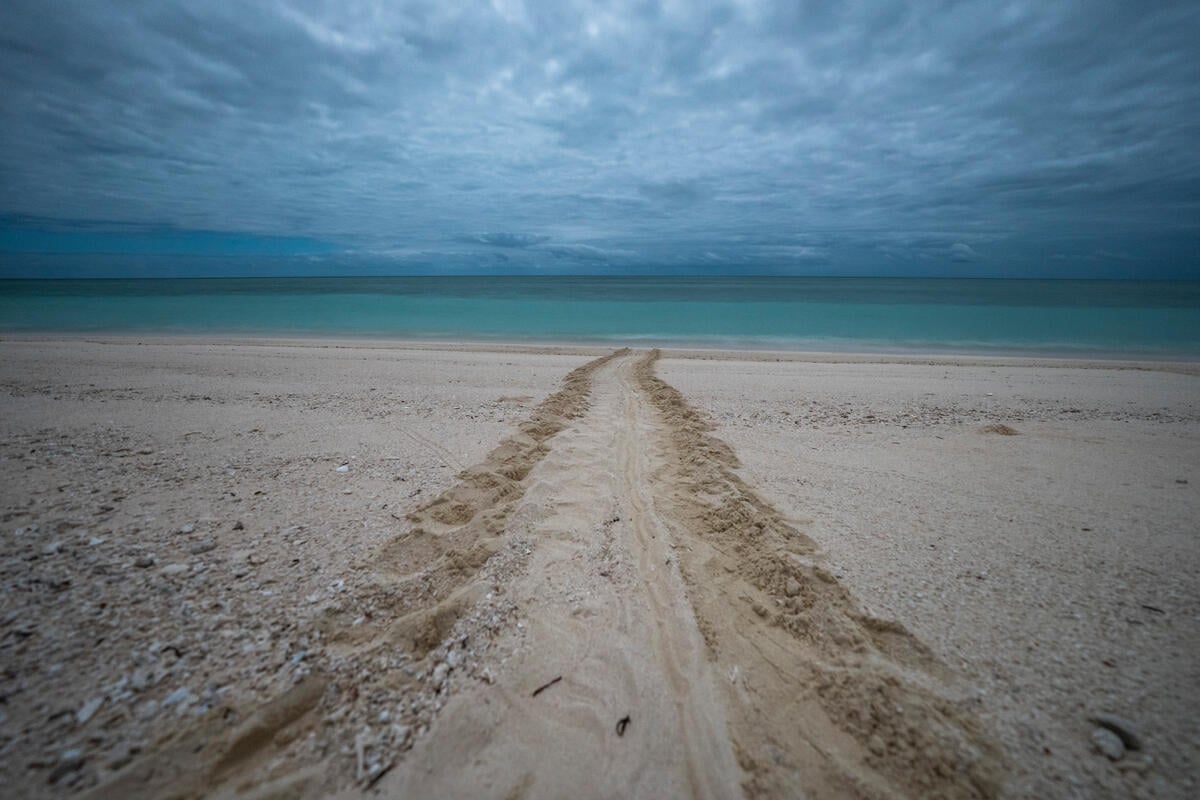
How Woodsides dirty gas plans will hurt turtles
Subsidence and Silent Extinction
When Woodside is sucking out gas from under Scott Reef the threat is that it will cause the seabed around Scott Reef to slowly sink, submerging the turtle’s Sandy islet. Woodside has their own (over 20 years old) data on this and will not make it public.
Light Pollution
Turtles are very sensitive to light pollution caused by drilling and extracting gas. While adult nesting females experience some disturbance from lighting, hatchlings are especially vulnerable as they can become disoriented or mis-oriented by artificial light sources, potentially leading them away from the ocean and increasing their vulnerability to predation. Woodside’s plan to drill for gas at Scott Reef will introduce multiple sources of artificial light including fixed lights and vessel lighting.
The Risk of an Oil spill
A blowout at one of Woodside’s wells could see Scott Reef and Sandy Islet covered in oily pollution. Woodside has conceded that the impacts to Scott Reef from a major spill like this “would likely be severe and potentially irreversible”.

What’s at Stake
If Sandy Islet vanishes, or if hatchlings can’t survive, this population could collapse. And once that happens, there’s no going back.
Because this isn’t just about turtles. It’s about how far fossil fuel companies will go to push their projects forward, even when it puts vulnerable wildlife at risk.
What we need now
On this world turtle day, we need decision-makers—and the public—to see this for what it is: a reckless gamble with one of Australia’s most iconic marine species. The solutions are clear: collect real data, plan ahead, and follow the law.
Greenpeace will keep fighting for the turtles of Sandy Islet—and the countless other communities and ecosystems threatened by the Burrup Hub.
Stay tuned. The turtles can’t speak, but we can speak for them.

Shells in the Sand: The Silent Struggle of Scott Reef’s Green Turtles

Climate Change
World Bank and IMF should lead the financial system in responding to the climate crisis
Sandra Guzmán is director at the Climate Finance Group for Latin America and the Caribbean (GFLAC), and Raju Pandit Chhetri is lead climate finance negotiator for the least-developed countries at the UNFCCC.
Recent catastrophic floods in Nepal starkly remind us that the climate crisis demands urgent action. The initial estimate that the country will need to spend $5 billion on recovery will likely remain a major concern. However, that is only one part of the story. No financial metric can capture the value of lives lost in crises like this.
And this is not a standalone event; from the mountains of Nepal to the coastlines of Latin America and the Caribbean, developing countries are increasingly facing severe climate impacts. The average annual loss from climate disasters in the Latin American and Caribbean region is estimated at $58 billion. Human suffering remains immeasurable in all these instances.
Climate finance has been a key demand from our regions and from all developing countries to meet the needs of their citizens. At the recently concluded pre-COP31 in the Pacific, several developing-country governments strongly warned leaders about the dangers of failing to act on both climate and climate finance.
Pacific leaders rail at climate finance failures after pre-COP trip to Tuvalu
Yet, two years after the Baku climate summit, where all governments agreed on the New Collective Quantified Goal (NCQG) on climate finance – with multilateral development banks (MDBs) playing a key role in delivery – that discussion risks being sidelined at this week’s annual meetings of the World Bank and International Monetary Fund in Bangkok, Thailand.
World Bank drops climate finance target
The MDBs have a critical role in mobilising a share of the $300-billion-per-year goal for public climate finance adopted at COP29 and are key to scaling broader financing to $1.3 trillion per year by 2035. They entered the NCQG dialogues promising capacity to mobilise these resources and agreeing to be part of the solution.
This June, even as the World Bank announced the renewal of its Climate Change Action Plan, it dropped its 45% climate finance target under pressure from the US administration. That commitment was key to ensuring the bank continues to deliver on its promise to mobilise enough climate finance to meet the NCQG target.
This announcement was a setback at a moment when developing countries are looking to MDBs to step up and fill gaps left by cuts in official development assistance (ODA) by donor governments.
World Bank’s climate work can endure without finance target, experts say
MDBs have long said they can convert $1 provided by donors into $2-$4 for client countries and have promised to deliver impact. Official data does paint an encouraging picture overall. The MDBs have delivered an increase in climate finance almost every year so far.
While financing needs far exceed what has been provided, MDBs mobilised an average of around $75bn per year in climate finance for low- and middle-income countries over the last five years, showing they are still on track to deliver the $120 billion per year they committed to.
Adding to the debt burden
However, climate finance cannot be measured by quantity alone. As MDBs increase their focus on private-sector mobilisation to diversify their funding, tracking the quality of the financing they mobilise becomes even more critical. Beyond scale, this is where the system currently lags most.
Between 70-90% of the financing provided by MDBs is in the form of loans, exacerbating the debt burdens that the World Bank and IMF have long warned about. This strains countries’ economies at a time when developing countries face severe climate impacts, inflationary pressures, and global economic uncertainty. Adding further debt that climate-vulnerable countries must repay with interest does not necessarily translate into effective climate finance flows.
It is also essential to address barriers to accessing finance in low- and middle-income countries, particularly by prioritising transparency around how much climate finance goes to the most climate-vulnerable countries and communities.
Additionally, there needs to be clarity on how much climate finance is being mobilised to build resilience and address increasingly frequent climate disasters, as well as for renewable energy projects that would help developing countries achieve a just transition.

Climate stresses undermine development
As climate-induced disasters become more frequent, countries are compelled to shift resources away from vital sectors such as health, education, food security and infrastructure that underpins development. For nations already grappling with limited fiscal budgets and mounting debt, climate change is becoming an even heavier burden, pushing them to borrow more.
These are also development issues at their very core – countering debt challenges, investing in resilient infrastructure, protecting schools and hospitals from climate disasters, and increasing crop yields to reduce the cost of food. So, when the World Bank talks about a smart development framework, it warrants a check on how much climate finance is provided and its quality.
Editor’s Desk: Nepal’s disaster has laid bare the world’s adaptation accountability gap
MDBs must now lead the charge by publishing a clear plan to deliver on the scaled-up climate finance goal as a first step, and make financing accessible and affordable, including grant-based instruments. The plan must also define clear accountability metrics to track delivery, access, affordability and reach and commit to at least triple adaptation finance.
MDB shareholder countries also have a role in backing the institutions to deliver on these promises. When World Bank and IMF management meets with finance ministers this week in a region battered by the worst climate impacts, they must not leave climate finance off the agenda.
They must give the World Bank and IMF the mandate, the capital and the political backing to make real scale-up possible. The true test of this financial system will not be found in conference rooms in Bangkok, but in the lives saved in Nepal.
The post World Bank and IMF should lead the financial system in responding to the climate crisis appeared first on Climate Home News.
World Bank and IMF should lead the financial system in responding to the climate crisis
When oil and gas shipments stopped flowing through the Strait of Hormuz at the start of the Iran war, Southeast Asian nations were left reeling as the supply crunch laid bare their acute reliance on fossil fuel imports.
As prices soared, governments in the region scrambled to introduce emergency energy-saving measures – from a four-day working week to curbs on air conditioning. Thailand revived decommissioned coal plants while the Philippines, which imports nearly all of its oil, declared a “national energy emergency”.
But the crisis has also prompted renewed resolve to find a long-term solution to their vulnerability at a time when electricity demand is booming to power the region’s growing industry, cooling needs and the mushrooming of energy-hungry data centres.
At the heart of Southeast Asian nations’ response is a longstanding infrastructure project to connect the region’s power grids by 2045 and enable cross-border trading of clean electricity through a network of underground and subsea interconnectors.
-
Southeast Asia’s fragile grids threaten billions in clean energy investment
Renewables developers need reliable electricity infrastructure and stable policies to help the region meet climate goals and surging demand for power -
UN backs push to upgrade grids slowing clean power uptake in Africa and SE Asia
The Global Grids Accelerator will help turn national and regional plans to expand electricity infrastructure into viable projects on the ground -
China keeps Indonesia’s battery dream afloat but future less certain
Chinese capital and technology turned Indonesia into the world’s top nickel supplier, but its dependence on China and the rise of nickel-free batteries could upset its battery ecosystem plans
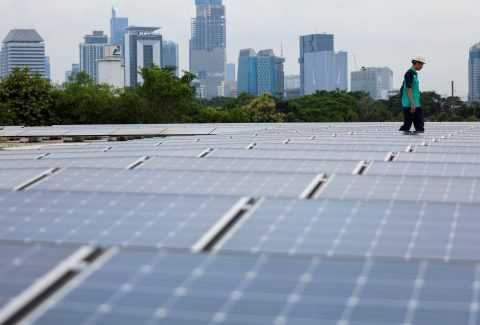
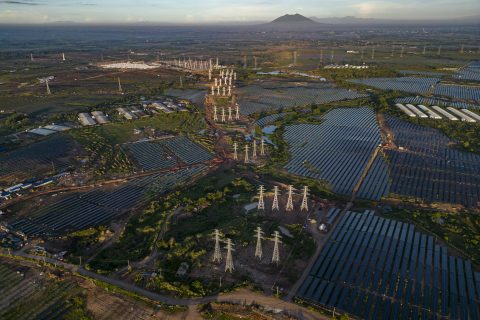
The plans will allow nations with high renewable energy generation potential to trade surplus power to their neighbours and major demand centres like Singapore, helping to integrate more renewables into the power mix and reduce reliance on fossil fuel imports.
“[It] will give us more energy security,” the Philippines’ energy secretary, Sharon Garin, told a press conference after a meeting of the Association of Southeast Asian Nations’ (ASEAN) energy ministers last week, when they discussed accelerating the delivery of the regional grid as part of measures to respond to the energy crisis.
“The Philippines is rich in solar power, Malaysia is rich in hydropower and Indonesia has geothermal: different countries have different resources. [The ASEAN Power Grid] will optimise the utilisation of renewables to the benefits of each member state,” said Garin.
But turning this decade-old political vision into a reality has been slow, held up by painstaking work to harmonise a patchwork of regulatory and legal frameworks and mobilise the private capital needed to build cross-border infrastructure.
More than $300 billion is needed to expand and modernise the region’s fragile grids to support the projected energy demand increase by 2050. This includes $27 billion required to deliver the cross-border interconnections by 2040, according to the International Energy Agency (IEA).
Every year of delay could cost the region billions of dollars in additional fuel costs and lock in new gas infrastructure for decades to come, according to analysis by global energy think-tank Ember.
The building block for energy security
With electrification high on the agenda of the COP31 climate talks in Türkiye next month, there is growing attention on the need to modernise and expand grid infrastructure to cope with growing electricity use and more renewables in the power mix.
Clean electrification and energy efficiency could deliver about a third of cumulative carbon emission reductions between 2026 and 2050, according to the International Renewable Energy Agency’s World Energy Outlook. But delivering that would require doubling annual global grid investment to $1 trillion between now and 2035.
Last month, the UN launched an initiative to accelerate investment into expanding and modernising grids in Southeast Asia and Africa.
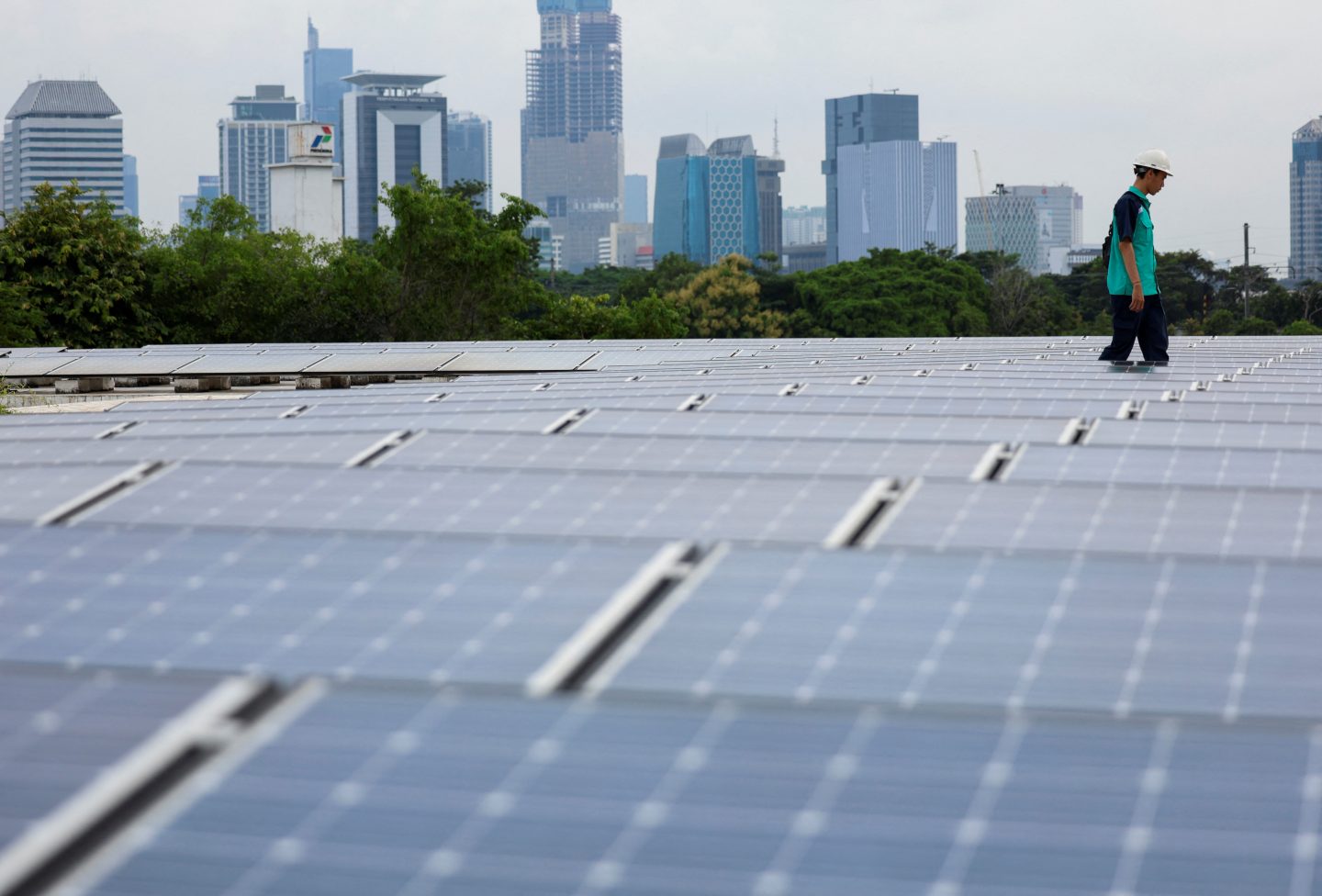
First conceptualised in 1997, the ASEAN Power Grid has gained fresh impetus in recent years as countries turn to renewables to cut their emissions and move away from volatile fossil fuel markets.
Energy supply disruption caused by wars in Ukraine and the Middle East has strengthened the case for regional grid connections. Before this year’s conflict began, the Middle East accounted for 60% of Southeast Asia’s crude oil imports. Competition for fewer, more expensive oil and gas shipments has left Southeast Asia facing a $160 billion energy import bill this year. Based on current policies, this could rise to $400 billion by mid-century.
In the Philippines last week, energy ministers agreed on an enhanced planning framework to deliver the ASEAN Power Grid and made progress on regulatory guidelines.
Garin said ministers were considering accelerating the project’s delivery. “The first study was to connect [by] 2045 – that’s too far,” she said.
A strong business case
The economic benefits of the plan have “captured the political imagination” of leaders in the region, Robert Cooke, grids advocacy lead at the Global Renewables Alliance, told Climate Home News. “The business case is stronger than ever,” he said.
“If countries were to go about building their own separate grids, of course that would be an expensive endeavour. But the discussion around the ASEAN Power Grid includes what costs could we share in building out this grid,” added Tiza Mafira, director of the Indonesia office for the Climate Policy Initiative.
Stronger grids would help the region meet collective targets to increase the share of renewable energy in total primary energy supply from 14% to 30% and in installed power capacity from 34% to 45% by 2030.
Connecting and pooling dispersed renewable resources would also help smooth local power shortages caused by daily and seasonal variations, reducing the need for backup gas plants and battery storage.
The IEA found the ASEAN Power Grid could help unlock some of the 20 terawatts of untapped solar and wind potential across Southeast Asia – an amount around 55 times the region’s current total power capacity.
From lines on a map to shovels in the ground
Rather than building a single unified network, the ASEAN Power Grid is developing cross-border links between neighbouring countries and smaller groups of nations.
As of 2025, nine of 18 priority interconnection projects are operational – accounting for around 10 GW of capacity with an additional 13.7 GW planned by 2040.
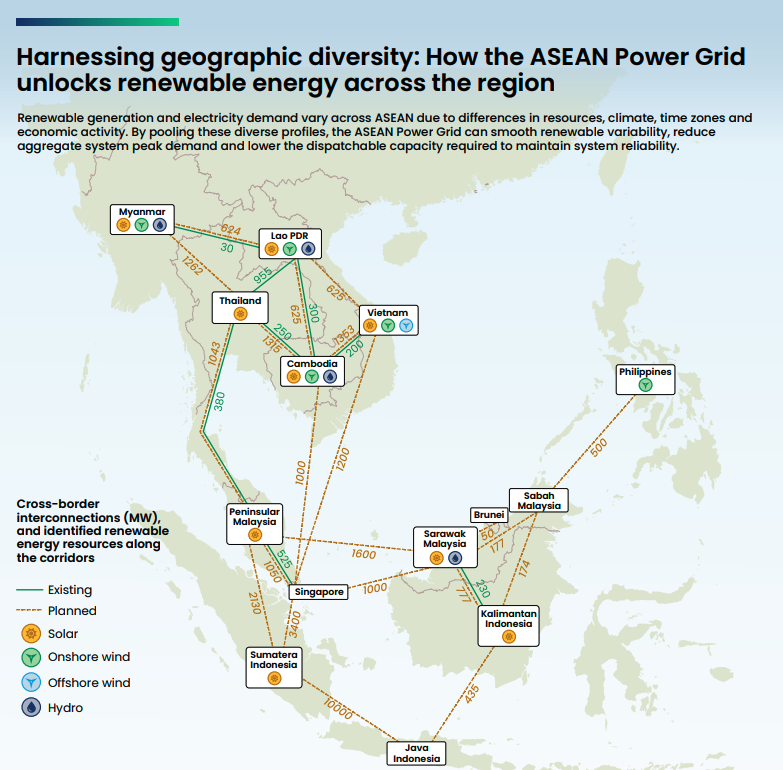
Source: Ember
A power line channelling up to 200 MW of clean electricity generated from hydropower in Laos to Singapore via Thailand and Malaysia has emerged as a key building block for grid-to-grid trading.
Progress on technical discussions will also help provide the clarity the private sector needs to invest in bankable projects, said Cooke.
In 2025, the Asian Development Bank and the World Bank announced a dedicated funding initiative to support the project.
“The enabling pieces are emerging,” said Monalisa Dimalanta, former chair of the Philippine Energy Regulatory Commission and the National Renewable Energy Board. “But the timelines remain unclear and a 2045 vision cannot answer today’s emergency,” she said.
“A power grid… that exists only on paper will not keep the lights on.”
Singapore: the delivery test
The implications of failing to deliver the ASEAN Power Grid are most acute in Singapore.
Constrained by space, with few renewable energy resources and dependent on gas for more than 90% of its electricity mix, Singapore has emerged as a leading proponent of a regional power grid as it seeks to achieve net-zero emissions by 2050.
To meet its power needs, the city-state aims to import 6 GW of low-carbon electricity by 2035, around one-third of its energy demand – a target which it is set to miss, however.
The plans heavily rely on building interconnectors to import solar power from Indonesia across the South China Sea. Around 40% of the ASEAN Power Grid’s planned interconnections are directed towards Singapore.
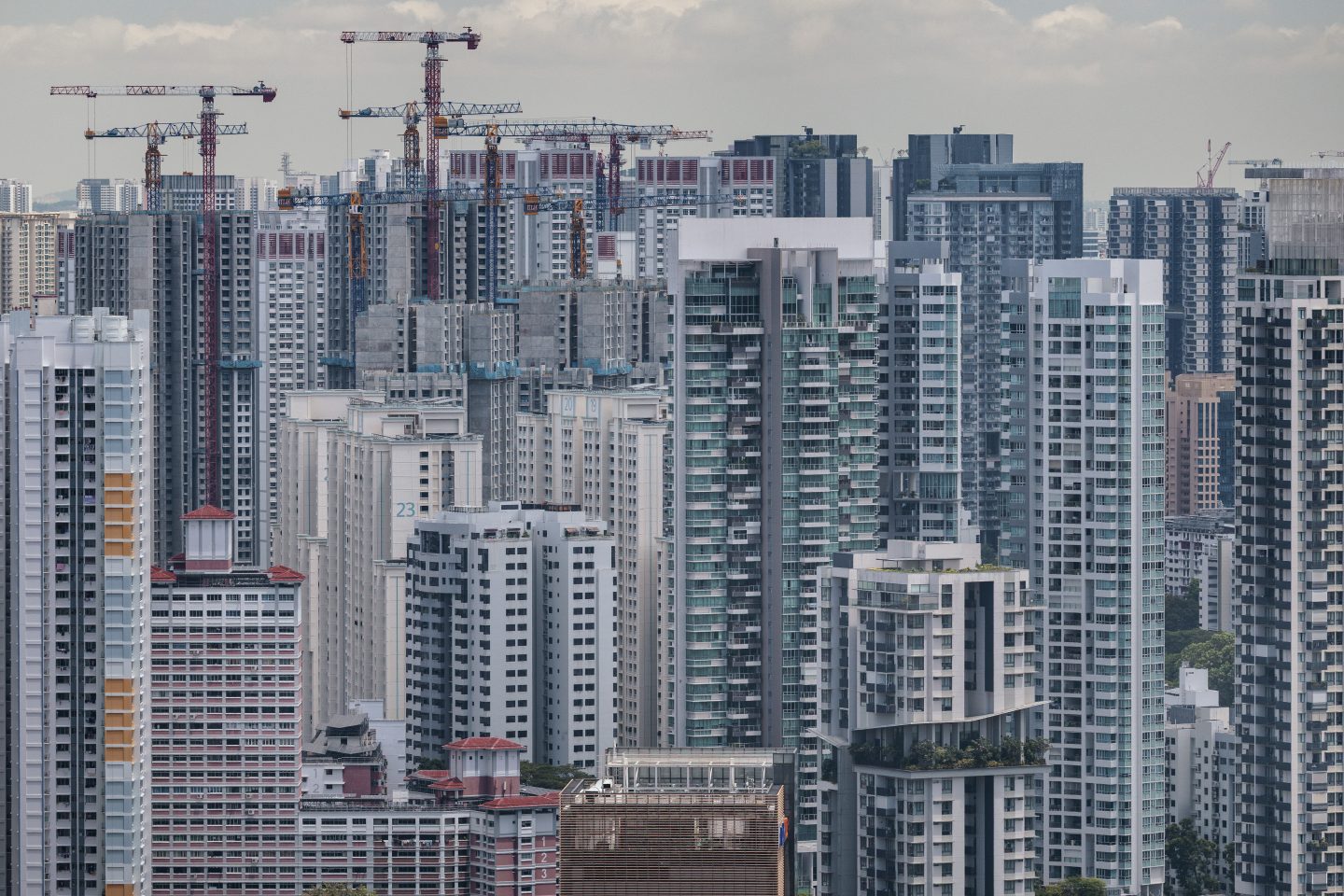
Ember’s analysis found that delivering the planned interconnectors by 2035 could enable renewables to meet nearly half of Singapore’s electricity demand. Delays could drop this to only a fraction of the country’s needs, and risk locking in new gas capacity until the 2050s. Without the ASEAN Power Grid, Singapore would need to install an additional 300 MW of gas-fired power capacity to bridge the gap by 2035.
Already home to the largest data centre capacity in Southeast Asia, Singapore’s electricity demand keeps rising, driven by the boom in AI infrastructure. “At one point, [it] either has to build a new gas plant, or it has to get the interconnection to supply that demand,” Lam Pham, an Ember energy analyst and the report’s author, told Climate Home News.
A region at a crossroads
With capital increasingly available, political will is now the biggest risk standing in the way of timely execution, said Pham.
But there are other challenges too, including the lack of frameworks on transmission tariffs and how to share the benefits of clean power trading. “It’s really hard to justify projects without that,” he said.
In addition, climate-fuelled weather events, including extreme heat and tropical storms, pose major threats to the region’s grid infrastructure. Experts say stronger grid interconnection can