

The Securities and Exchange Commission (SEC) has charged Gautam Adani and Sagar Adani, executives of Adani Green Energy, as well as Cyril Cabanes, an executive of Azure Power Global, for conduct arising out of a bribery scheme.
According to the SEC’s allegations, the scheme was orchestrated to enable the two renewable energy companies to capitalize on a multi-billion-dollar solar energy project that the companies had been awarded by the Indian government. During the alleged scheme, Adani Green raised $175 million from U.S. investors and Azure Power’s stock was traded on the New York Stock Exchange.
In one action, the SEC charged Gautam Adani, chairman of Adani Green’s board of directors, and his nephew, Sagar Adani, executive director of Adani Green’s board. According to the complaint, Gautam and Sagar Adani orchestrated a bribery scheme that involved paying or promising to pay the equivalent of hundreds of millions of dollars in bribes to Indian government officials to secure their commitment to purchase energy at above-market rates that would benefit Adani green and Azure Power.
As alleged, Gautam and Sagar Adani were engaged in the bribery scheme during a September 2021 note offering by Adani Green that raised $750 million, including approximately $175 million from U.S. investors. The Adani Green offering materials included statements about its anti-corruption and anti-bribery efforts that were materially false or misleading in light of Gautam and Sagar Adani’s conduct.
In the other action, the SEC charged Cyril Cabanes, a former member of Azure Power’s Board of Directors, with Foreign Corrupt Practices Act (FCPA) violations for his role in the alleged bribery scheme. According to the SEC’s complaint, Cabanes allegedly facilitated the authorization of bribes in furtherance of the scheme while in the United States and abroad.
“As alleged, Gautam and Sagar Adani induced U.S. investors to buy Adani Green bonds through an offering process that misrepresented not only that Adani Green had a robust anti-bribery compliance program but also that the company’s senior management had not and would not pay or promise to pay bribes, and Cyril Cabanes participated in the underlying bribery scheme while serving as director of a U.S. public company,” says Sanjay Wadhwa, acting director of the SEC’s Division of Enforcement.
“We will continue to vigorously pursue and hold individuals, including senior corporate officers and directors, accountable when they violate our securities laws.”
The SEC’s complaint against Gautam and Sagar Adani charges them with violating the antifraud provisions of the federal securities laws. The complaint seeks permanent injunctions, civil penalties and officer and director bars. The SEC’s complaint against Cabanes charges him with violating the FCPA and seeks a permanent injunction, a civil penalty and an officer and director bar. Both complaints were filed in the U.S. District Court for the Eastern District of New York.
In a parallel action, the U.S. Attorney’s Office for the Eastern District of New York have unsealed criminal charges against Gautam and Sagar Adani and Cabanes, among other individuals connected to Adani Green and Azure Power.
The SEC’s ongoing investigation regarding Adani Green is being conducted by Nicholas Karasimas, Stewart Gilson, Christopher M. Colorado and Alison Conn of the New York Regional Office. It is being supervised by Tejal D. Shah.
The litigation will be led by Colorado, Karasimas and Gilson, under the supervision of Daniel Loss. The FCPA investigation is being conducted by Eric Heining, Patrick Noone and Paul Block of the SEC’s FCPA Unit. The litigation will be led by Boston Regional Office Trial Counsel Martin Healey. The SEC appreciates the assistance of the U.S. Attorney’s Office, the Fraud Section of the U.S. Department of Justice, and the FBI.
The post SEC Charges Senior Executives Alleging Bribery Involving Adani Green, Azure Power appeared first on Solar Industry.
SEC Charges Senior Executives Alleging Bribery Involving Adani Green, Azure Power

 Whoa. Let’s take a step back. Is it really either A or B?
You could on the side of the morons, those incapable of any level of critical thinking, like the author of the meme here.
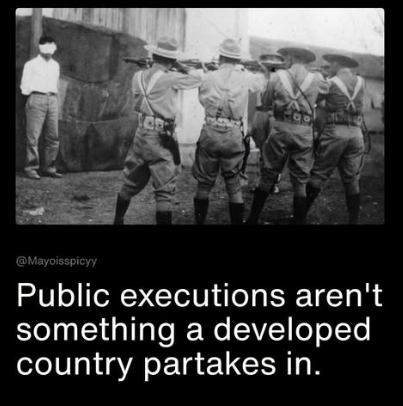 The United States seems set on propelling itself backwards.
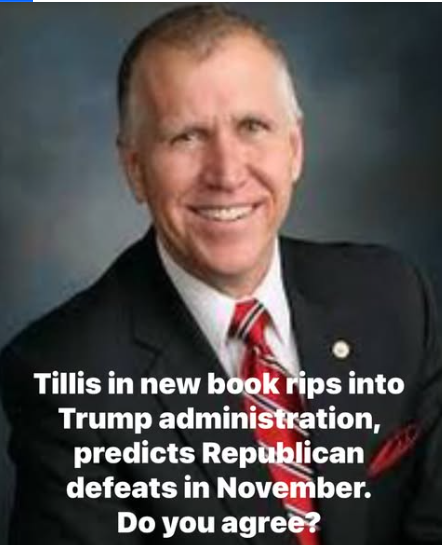 Maybe, as they say, “Hell has a special place reserved in it” for people like Thom Tillis, Republican Senator from North Carolina, who enabled Trump to rape and destroy the United States.
That was until it became clear to Tillis that he could jump ship, write a scathing book about the president, get all over mainstream news promoting it, and go on to enjoy another chapter of political success.
That we Americans are so stupid that we accept this blatant hypocrisy and criminality is sad proof that we’re not the people we were 20 years ago. Maybe what many people are saying are correct: we deserved what we got.



-
Climate Change1 year ago
Guest post: Why China is still building new coal – and when it might stop
-

 Greenhouse Gases2 years ago
嘉宾来稿:满足中国增长的用电需求 光伏加储能“比新建煤电更实惠”
-
Greenhouse Gases1 year ago
Guest post: Why China is still building new coal – and when it might stop
-

 Climate Change2 years ago
嘉宾来稿:满足中国增长的用电需求 光伏加储能“比新建煤电更实惠”
-

 Renewable Energy12 months ago
Sending Progressive Philanthropist George Soros to Prison?
-
Climate Change2 years ago
Bill Discounting Climate Change in Florida’s Energy Policy Awaits DeSantis’ Approval
-
Greenhouse Gases1 year ago
嘉宾来稿:探究火山喷发如何影响气候预测
-

 Climate Change2 years ago
Analysis: China’s CO2 falls 1% in Q2 2024 in first quarterly drop since Covid-19