

Weather Guard Lightning Tech

RWE Finances and Equinor’s Empire Wind Struggles
This week Allen discusses the European Investment Bank’s major wind farm investment in Romania, the financial performance of German energy giant RWE, and the potential cancellation of Equinor’s Empire Wind Project due to regulatory challenges.
Sign up now for Uptime Tech News, our weekly email update on all things wind technology. This episode is sponsored by Weather Guard Lightning Tech. Learn more about Weather Guard’s StrikeTape Wind Turbine LPS retrofit. Follow the show on Facebook, YouTube, Twitter, Linkedin and visit Weather Guard on the web. And subscribe to Rosemary Barnes’ YouTube channel here. Have a question we can answer on the show? Email us!
Welcome to Uptime News. Flash Industry News Lightning fast. Your host, Allen Hall, shares the renewable industry news you may have missed.
Allen Hall: Okay, starting off the week over in Romania, the European investment bank is investing 30 million euros in a major wind farm project in Romania. The poster two project located near the Black Sea, will have a capacity of up to 400 megawatts.
That’s enough to supply over 1.4 million Romanian households for an entire year. The EIB is partnering with Copenhagen Infrastructure Partners on the project with the total investment expected to be in excess of 500 million Euros.
Construction is due to start later this year and it will bolster the European Union’s push for climate neutrality by mid-century.
German energy Giant RWE, reported an adjusted EBITDA of 1.3 billion euros [00:01:00] for the first three months of 2025. Adjusted net income amounted to 0.5 billion euros as expected earnings were below the level of the same quarter last year.
This decline was primarily attributable to normalization of income in the flexible generation segment and a weaker start to the year in the trading business. The commissioning of new offshore wind farms, solar plants, and battery storage facilities had a positive impact on the company’s performance.
RWE commissioned 600 megawatts of new generation capacity in the first quarter alone. The company, currently has new plants with a combined capacity of 11.2 gigawatts under construction. Michael Mueller, chief financial officer of RWE, stated that they were reaffirming their full year earnings forecast after a solid start to the year.
He noted, that the company is making great progress in expanding its portfolio in a value accretive manner. Construction projects remain on schedule [00:02:00] and on budget.
Over in Norway, Equinor is warning it may cancel its Empire Wind Project off New York’s coast.
Following a Trump administration stop work order, the company is spending $50 million weekly to keep the project afloat while awaiting resolution. Molly Morris, president of Equinor’s US renewable energy arm, describe the situation as unsustainable. The Interior Department led by Secretary Doug Bergham ordered Equinor to halt construction
on April 17th. The order cited information suggesting the Biden administration may have approved the project without a thorough environmental analysis. The stop work order stemmed from a report by the National Oceanic and Atmospheric Administration.
However, Equinor says it has not seen the report and is not aware of the specific concerns raised. The project represents a significant investment for Equinor. The company has already invested $2.7 billion in the [00:03:00] Empire Wind Facility.
Currently, 11 vessels with 100 workers remain on board, sitting on the water, waiting for an order to resume work. That’s this week’s top. New stories. Stay tuned tomorrow for the Uptime Wind Energy Podcast.
https://weatherguardwind.com/rwe-equinor-empire-wind/

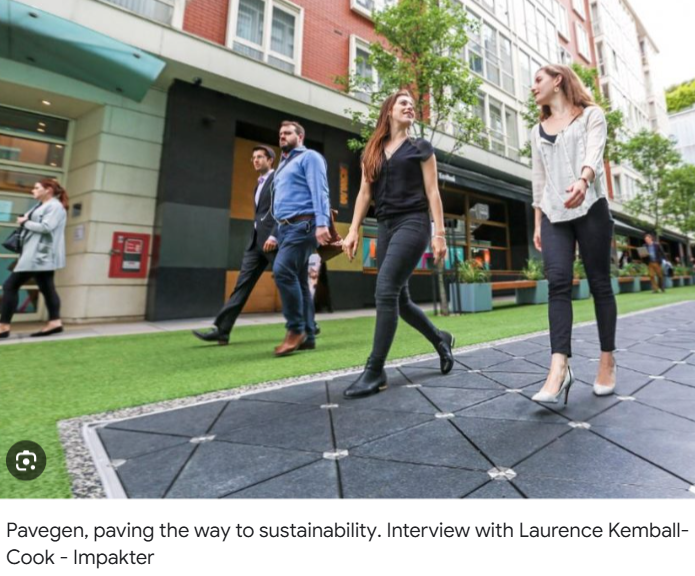 Ever heard of piezoelectricity, the generation of electric charge in solid materials—such as quartz, ceramics, and bone—in response to applied mechanical stress?
It’s real, but it is very limited in scope, and thus it has zero potential application in our world, despite what the people at Pavegen are claiming.
If you don’t care what you pay for electricity, this makes perfect sense.
Did you know that hamsters running on wheels can be used to generate electric power?
Weather Guard Lightning Tech

Britain Breaks Wind Record, Ørsted Exits Floating Project
Allen covers the UK’s all-time wind record, the Crown Estate’s new 6 GW leasing round, Port Talbot’s floating wind assembly port, and Ørsted and BlueFloat’s exit from the Stromar project.
Sign up now for Uptime Tech News, our weekly newsletter on all things wind technology. This episode is sponsored by Weather Guard Lightning Tech. Learn more about Weather Guard’s StrikeTape Wind Turbine LPS retrofit. Follow the show on YouTube, Linkedin and visit Weather Guard on the web. And subscribe to Rosemary’s “Engineering with Rosie” YouTube channel here. Have a question we can answer on the show? Email us!
Good Monday everyone!
Last Wednesday, the British Isles did something remarkable. Wind turbines across the United Kingdom generated twenty-three thousand eight hundred and eighty megawatts of electricity — an all-time national record. That is enough to power twenty-three million homes at the same moment. And while wind was hitting its record high, natural gas fell to just two-point-three percent of total British supply. A two-year low for gas. In a single day.
Britain is not stopping there. The Crown Estate has announced a new offshore wind leasing round, targeting six gigawatts of new capacity off the northeast coast of England — enough to power six million more homes. And now the United Kingdom is building the physical infrastructure to match that ambition. Ministers have committed up to sixty-four million pounds in support for Port Talbot in South Wales. The plan: the UK’s first dedicated assembly port for floating offshore wind. Associated British Ports says total investment could exceed five hundred million pounds once fully built out. The goal is the Celtic Sea, where developers are targeting four gigawatts of floating wind. Four gigawatts. Floating. In open ocean.
Floating offshore wind is the industry’s next frontier. But it is also the industry’s most expensive and complicated technology. Consider what happened quietly this last week off the coast of Caithness, Scotland. Ørsted, the world’s largest offshore wind developer, and BlueFloat Energy have both walked away from the Stromar floating wind project. Stromar is a one-point-five gigawatt floating wind farm — sixty to one hundred meters of water depth, fifty kilometers offshore, enough power for one-point-five million homes. Construction was not expected to begin until twenty twenty-eight. Now Nadara, the project’s remaining partner, holds one hundred percent of Stromar alone. For Ørsted, the exit signals tighter capital discipline. For floating wind, it signals just how difficult the economics remain.
And yet, across the North Sea, a solution is taking shape. The University of Strathclyde and Japan Marine United signed a Memorandum of Understanding last week. Their mission: standardise and mass-produce floating offshore wind turbines. Japan Marine United has been developing floating wind technology since 1999. Their Jade Wind floater is headed for large-scale government-led deployment in Japan. Standardisation — the same answer that made fixed-bottom offshore wind competitive.
So here is where we are. Britain just broke its wind generation record. The Crown Estate is opening new ocean for development. Port Talbot is becoming a floating wind assembly hub. And Strathclyde and Japan Marine United are building the engineering knowledge to make it all affordable. Two companies stepped back from Stromar. But the Celtic Sea is still waiting.
And that’s the state of the wind industry on the 30th of March 2026. Join us tomorrow for the Uptime Wind Energy Podcast.
 Prioritizing the relative importance of addressing America’s social woes is, to be sure, an inexact science.
Our war vets are living on the streets, dying of preventable diseases. We may never another free and fair election. Clean energy, which was once making significant progress in decarbonizing our energy and transportation sectors, is being shot to ribbons by the current presidential administration.
But goddamn it! We need to start solving problems that don’t exist, like drag queens in our schools.


Sustainability In Your Ear: Schneider Electric’s Steve Wilhite Maps the Renewable Energy Transition

The West Is Burning Before Summer Even Starts, and It’s No Accident
Island nations fight to save cultural heritage from climate change
-
Climate Change8 months ago
Guest post: Why China is still building new coal – and when it might stop
-
Greenhouse Gases8 months ago
Guest post: Why China is still building new coal – and when it might stop
-

 Greenhouse Gases2 years ago
嘉宾来稿:满足中国增长的用电需求 光伏加储能“比新建煤电更实惠”
-
Climate Change2 years ago
Bill Discounting Climate Change in Florida’s Energy Policy Awaits DeSantis’ Approval
-

 Climate Change2 years ago
嘉宾来稿:满足中国增长的用电需求 光伏加储能“比新建煤电更实惠”
-
Climate Change Videos2 years ago
The toxic gas flares fuelling Nigeria’s climate change – BBC News
-

 Renewable Energy5 months ago
Sending Progressive Philanthropist George Soros to Prison?
-

 Carbon Footprint2 years ago
US SEC’s Climate Disclosure Rules Spur Renewed Interest in Carbon Credits