

A “collapse” of key Atlantic ocean currents would cause winter temperatures to plunge across northern Europe, overriding the warming driven by human activity.
That is according to new research, published in Geophysical Research Letters, which looks at the combined impact of the shutdown of the Atlantic Meridional Overturning Circulation (AMOC) and global warming on temperatures in northern Europe.
Scientists have warned that human-caused climate change is likely causing AMOC to weaken and that continued warming could push it towards a “tipping point”.
The study suggests that, in an intermediate emissions scenario, greenhouse gas-driven warming would not be able to outweigh the cooling impact of an AMOC collapse.
In this modelled world, one-in-10 winters in London could see cold extremes approaching -20C.
Winter extremes in Oslo in Norway, meanwhile, could plummet to around -48C.
The cold temperatures are projected to be driven by the loss of heat transfer from the tropics via ocean currents, as well as the spread of sea ice to northern Europe in the winter months.
The research does not look at when AMOC might tip – instead, it focuses on scenarios in the far future when this has already happened, so as to explore what impact it would have.
Lead author Dr René van Westen, a researcher in oceanography at Utrecht University, says Europe might stand alone as the one region set to get “cooler in a warmer world”. He tells Carbon Brief:
“If the AMOC collapses, we need to prepare for substantially cooler winters. Winter extremes will be very substantial for some regions. Temperatures could go down to -50C in Scandinavia. At -40C and lower in Scandinavia – everything breaks down over there.”
The research is being published alongside an interactive map, featured below, which highlights how a collapsed AMOC under different warming scenarios could impact temperature averages, extremes and sea ice across Europe.
‘Will warming or cooling win?’
AMOC is a system of ocean currents which plays a crucial role in keeping Europe warm. It transports warm water northwards from the tropics to Europe and cold, deep waters back southwards.
The potential collapse of these ocean currents – caused by the influx of freshwater from melting ice as well as rising air temperatures – is seen by some scientists as a “tipping point” that, once triggered, would be irreversible on human timescales.
However, there is significant scientific debate around whether human-caused climate change is causing the AMOC to slow down – and whether and when it might “tip”.
(The “tipping” of AMOC is often referred to as a “collapse”, “breakdown” or “shutdown”.)
Some scientists have argued that ocean currents have been slowing down since the mid-20th century, whereas others say there has been no weakening since the 1960s.
On the risks of an approaching tipping point, some researchers have estimated a collapse could occur this century, but others have questioned the robustness of the early warning signals being interpreted as evidence of a forthcoming shutdown.
(Regular direct measurements of AMOC’s strength started in 2004. To estimate the ocean currents’ health prior to this, scientists turn to a number of methods, including looking at palaeoclimate records, running climate model “hindcasts” and analysing historical patterns in sea surface temperature.)
A paper published last year by van Westen and colleagues, which ranked second in Carbon Brief’s round-up of the most talked-about climate papers of 2024, found that the present-day AMOC is on a trajectory towards tipping.
That paper set out some of the climate impacts of such an event, including a 10-30C drop in average monthly winter temperatures in northern Europe within a century and a “drastic change” in rainfall patterns in the Amazon.
The scientist’s latest offering provides a more detailed look at how an AMOC tipping event might impact Europe, using simulations produced by the Community Earth System Model (CESM).
The research models the impact of an AMOC collapse in combination with the impacts of human-caused climate change, instead of looking at the collapse of the ocean currents in isolation.
Van Westen says the research was designed to answer the question of how warming from greenhouse gas emissions could offset cooling from an AMOC shutdown. He tells Carbon Brief:
“[A question we wanted to address was] what would happen in a scenario where we have climate change and an AMOC collapse. Will it get cooler over Europe, or will it get warmer? Will regional warming win or will the cooling win?”
Simulating AMOC ‘collapse’
To answer this question, the scientists run a raft of climate simulations, exploring different combinations of global temperature rise and AMOC collapse.
Specifically, the scientists explore the collapse of AMOC under three scenarios:
- An “intermediate” climate scenario (RCP4.5), which is in line with current global climate policies.
- A very high-emissions scenario (RCP8.5) where warming hits 4C above the pre-industrial average by 2100.
- A “pre-industrial” scenario, without any human-caused global warming.
Across all three scenarios, the researchers run multiple simulations 500 years into the future, stabilising global temperature rise at 2C and above 4C from 2100 onwards. The researchers explore scenarios where AMOC is stable and when it has tipped.
The paper does not discuss the level of warming at which AMOC might tip – instead, it focuses on a point in the future after it has occurred, when the ocean currents and the climate have “equilibrated to a new background state”.
To simulate an AMOC collapse in the climate model under the two warming pathways, the researchers apply high levels of freshwater forcing to the north Atlantic.
Van Westen acknowledges the level of freshwater forcing applied to the model to create an AMOC shutdown is “unrealistic”, but says the adjustment is necessary to override a “bias” in climate models. He explains:
“[Climate models] have an overly stable AMOC. So, we need to add this kind of freshwater flux to get the AMOC in a more unstable regime which corresponds to actual observations.”
The paper focuses largely on impacts under the intermediate scenario with AMOC collapse. Under this combination, AMOC shutdown causes some global cooling, resulting in a world that is around 2C warmer than pre-industrial levels.
Prof Stefan Rahmstorf, a professor of physics of the oceans at Potsdam University who was not involved in the research, tells Carbon Brief the new study is “highly welcome”. He explains that “not many” studies have investigated the combined impact of global warming with AMOC collapse since a paper he co-authored in 1999, and adds:
“[The new study] uses a sophisticated climate model with good regional resolution – far better than what was possible 26 years ago. The model confirms the long-standing concern that an AMOC collapse would have massive impacts on European climate, in this case focusing on temperature extremes.”
Dr Alejandra Sanchez-Franks, senior research scientist in the marine physics and ocean climate group at National Oceanography Centre, who was also not involved in the research, says the study’s conclusions should not be used to explain how the European climate will respond in the near-term to changes in the strength of AMOC. She tells Carbon Brief:
“The study uses an idealised experiment with unrealistic freshwater changes to force an AMOC collapse. Very importantly, the author’s conclusions refer to the European climate 200 years after an AMOC change and do not describe what will happen to European temperatures and sea ice in the years and decades following an AMOC collapse.
“Therefore, the study does not serve to tell us how an AMOC tipping point or collapse will affect us immediately.”
‘Out of the freezer and into the frying pan’
The most “striking” finding of the paper, according to van Westen, is that an AMOC collapse in a world that is 2C warmer will result in a Europe that is cooler than it is today.
The research notes that – under this scenario – north-west Europe is set to face “profound cooling”, characterised by more intense winter extremes.
Summer temperatures, on the other hand, would be expected to remain just slightly cooler than they would in a pre-industral climate – meaning that Europeans would experience dramatic swings in temperatures throughout the year.
Increased winter storms and greater day-to-day temperature fluctuations are also expected in this scenario. This is due to a greater temperature contrast between northern Europe and southern Europe, which would be less impacted by a weakened AMOC.
The research notes that cooling from the reduced heat transfer from ocean currents would be amplified by “extensive” sea ice expansion to the coasts of north-west Europe. (Sea ice reflects incoming solar sunlight, resulting in less heat uptake and cooler temperatures overall.)
The map below shows the extent of sea ice in February under the scenario where AMOC collapses and the world is 2C warmer. It shows how Arctic sea ice – when at its yearly maximum – would cover the coasts of Scandinavia and much of the island of Great Britain.

Prof Tim Lenton, chair of climate change and Earth system science at the University of Exeter, who was not involved in the study, tells Carbon Brief it is “hard to over-stress how different” the climate simulated by the model is from present-day conditions. He says:
“The extreme winters would be like living in an ice age. But at the same time summer temperature extremes are barely impacted – they are slightly cooler than they would be due to global warming, but still with hotter extremes than the preindustrial climate.
“This means the seasonality of the climate is radically increased. In extreme years it would be like coming out of the freezer into a frying pan of summer heatwaves.”
The research also looks at the impacts of a shutdown of AMOC in a world that is 4C warmer.
It suggests that, under this scenario, cooling related to the shutdown of ocean currents would not outweigh global warming. Northern Europe would not experience extensive sea-ice expansion or the strong cooling projected under the 2C scenario.
Instead, temperatures would be expected to increase throughout the year and particularly in the summer months. However, northern Europe would be expected to see warming below the global average.
Frigid cities
While the paper itself uses the Dutch town of De Bilt as a case study, the researchers have published projections for a range of European cities under the scenarios explored in the study.
For example, the data shows that, under AMOC collapse in a 2C-warmer world, London could experience an average winter temperature of 1.9C, roughly 17.6 freezing days each year and one-in-10-year cold extremes of -19.3C.
In the Norwegian capital of Oslo, average winter temperatures are projected to plunge to -16.5C, with maximum daily temperatures not surpassing 0C for almost half the year, or 169 days. The research suggests the Norwegian city could experience cold extremes of -47.9C.
The map below shows projected cold extremes under 2C of warming and AMOC collapse in cities in Belgium, France, Ireland, the Netherlands, Switzerland and the UK. It shows how temperatures could drop to -29.7 in Edinburgh, -19.3C in London and -18C in Paris.

Van Westen says the findings are “highly relevant for society and policymakers” because they “shift the narrative” about the direction of Europe’s future climate. He explains:
“Parts of the Netherlands and parts of the UK will experience spectacular cold extremes down to -20C or even lower. Our societal structure and our infrastructure is not built for these cold extremes.”
The paper is being published alongside an interactive map, shown below, that shows ice cover, temperature averages and extremes across Europe under five of the scenarios explored in the study. These are: a pre-industrial world with a stable AMOC, a pre-industrial world with a collapsed AMOC, a 2C world with a stable AMOC, a 2C world with a collapsed AMOC and a 4C world with a collapsed AMOC.
Future research
Scientists not involved in the study said the work would need to be followed up with further exploration of the interplay between global warming and potential AMOC collapse.
Dr Bablu Sinha, leader of climate and uncertainty, marine systems modelling at the National Oceanography Centre, told Carbon Brief:
“Given that observational data is limited, theoretical climate modelling approaches need to be taken to properly investigate this topic. Van Westen and Baatsen motivate the need for more detailed investigation into the combined impacts of global warming and AMOC decline on European extreme temperatures.”
Dr Yechul Chin, researcher at Seoul National University’s climate system lab, tells Carbon Brief:
“Although [this research] demonstrates the potential for more extreme weather under combined global warming and AMOC collapse scenarios, significant uncertainties remain that must be resolved before we can quantify risks or devise robust mitigation strategies.
“Projections about AMOC have a large spread and it means that alternative AMOC trajectories and different levels of warming could substantially widen the range of possible outcomes.”
His comments are echoed by Rahmstorf from Potsdam University, who points out that the “exact outcome” for Europe hinges on the development of “two opposing trends” – global warming due to greenhouse gases and regional cooling due to AMOC weakening. He says:
“The balance between those two will depend on the speed and extent of these trends and will, therefore, depend on the emission and AMOC weakening scenarios.
“Therefore, the more scenarios will be explored with different models in future, we will see a range of different outcomes for Europe as well as other parts of the world. A large uncertainty in this respect will remain.”


The post Ocean current ‘collapse’ could trigger ‘profound cooling’ in northern Europe – even with global warming appeared first on Carbon Brief.

Cleaner cooking projects in the UN carbon market will have to set aside a share of their credits to insure against the risk that the trees they save are lost to fire, drought or logging, after the market’s regulator rejected calls to exempt the sector.
The requirement is part of a new rulebook that the Paris Agreement carbon market regulator – the Article 6.4 Supervisory Body – approved last Friday for programmes that aim to cut emissions by distributing new and cleaner cookstoves in regions that still burn wood or charcoal for cooking.
These are the UN mechanism’s first rulebooks for cookstoves, one of the carbon market’s most popular credit types and also one of its most criticised for overstating climate benefits.
They consist of two methodologies: one for programmes that aim to cut greenhouse gas emissions by distributing more efficient cookstoves that burn less wood or charcoal, and a separate methodology for projects shifting households to lower-emissions cookers running on electricity or liquid petroleum gas (LPG).
Mkhuthazi Steleki, the South African chair of the Supervisory Body, said “this decision gives cleaner cooking projects a new pathway under the UN carbon market, with clear rules to ensure that each credit represents a real and credible emission reduction”.
Industry and NGOs lobby to weaken UN carbon credit rules in “coordinated” push
In copycat submissions and a private briefing to government officials, the groups have opposed a proposal to tighten safeguards for emissions offsetsLaunch of Africa Energy Bank delayed again in blow to oil and gas hopes
Repeated delays are raising questions about the bank’s momentum and whether it can mobilise investment to finance Africa’s oil and gas ambitions in an era of energy transition

Exemption push rejected
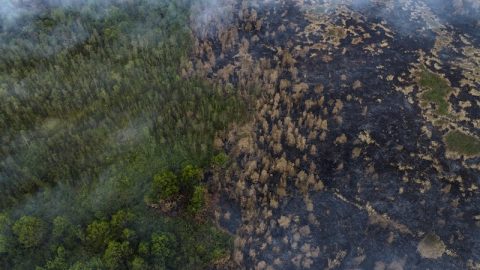
More efficient cookstove projects earn credits based on the amount of carbon they save by preserving trees that would have otherwise been cut down and burned for fuel. But if those trees later burn in a wildfire or are logged, the carbon stored would be released anyway, erasing the climate benefits of the credits.
Several carbon credit developers, conservation NGOs and the UN Environment Programme (UNEP) disputed that cookstove projects face this risk, in what critics described as a “coordinated lobbying campaign”.
They argued that, unlike forest protection schemes, this type of credit represents a “flow” of avoided emissions rather than a “stock” of stored carbon that can be released. They also warned that requiring a buffer would impose disproportionate costs and undermine the financial viability of these activities.
But the UN carbon market regulator was not persuaded by the argument. It decided that projects would have to protect against this reversal risk by handing over a percentage of credits to a so-called “buffer pool” instead of selling them.
‘New paradigm’
The amount of credits to be given up is calculated by applying different methods for natural risks, like wildfires, droughts or hurricanes, and human-caused ones, such as logging or land clearing.
For natural risks, project developers will need to apply local risk values derived from new modelling published by a group of independent scientists.
Campaigners have broadly welcomed the decision. Federica Dossi, an expert at Brussels-based advocacy group Carbon Market Watch, said it sets a new paradigm for calculating reversal risk based on empirical data. “This approach is grounded in science and we hope to see this now being adopted by other carbon crediting mechanisms in the voluntary market,” she added.
Backers claim this method is more rigorous than current practice in the voluntary carbon market, which largely relies on expert guesswork.
Pre-COP draws attention to Pacific’s climate plight and 1.5C goal
Pushback over science
As Climate Home News previously revealed, the same industry and NGO groups that sought an exemption from the “buffer pool”, along with some corporate buyers, criticised the use of a study backed by the UN carbon market’s experts that recommended the new risk assessment approach.
The groups pushed for more flexible rules that would have allowed natural risk values drawn from other sources, including national databases, or from the project developers themselves.
While the Supervisory Body rejected this approach, it gave project developers and countries the option to propose alternative values that would first need to be vetted by the mechanism’s expert panel and then approved by the regulator.
A carbon market expert told Climate Home News that, while it is too early to say how this provision will be used, they expect requests will have to be backed up with solid scientific evidence, lowering the risk of unfounded claims.

Policy discounts questioned
To guard against human-caused risks, projects will need to apply a flat 20% value set by the Supervisory Body, at the bottom of the 20-45% range recommended by its technical experts ahead of last week’s meeting.
That value can be further reduced by up to two-thirds if the host country has an emission-reduction plan covering forests, a long-term climate strategy and a framework for the UN’s REDD+ forest protection scheme.
Injy Johnstone, senior research fellow at the Munich-based Max Planck Institute, said that, while these are important governance measures, their existence does not necessarily demonstrate that the underlying risk of forest carbon loss has been reduced.
“It is important to distinguish between evidence of actual risk reduction and assumptions about the effectiveness of policy commitments,” she added.
Moving target
A UN source told Climate Home News that, under the approved formula, improved cookstove projects must set aside at least 9% of credits linked to saved wood if they operate in the lowest-risk areas and the host country can claim all available discounts. The share of credits rises significantly in regions with high natural risk values, such as Guyana, Sri Lanka and Timor Leste, or that do not have REDD+ programmes.
These factors could change in the future as the Supervisory Body asked its technical experts to recommend revisiting the risk values “should credible new evidence arise”.
Climate change is likely to make forest destruction events, such as wildfires or hurricanes, more frequent and more severe in certain regions. Meanwhile, national policies on forest protection can shift significantly depending on government changes.
Johnstone said the UN carbon market needs periodic reassessment to respond to new evidence showing that previously assumed levels of risk were too low.
“The integrity of credits is not guaranteed simply because a reversal risk tool exists,” she added. “The real test will be whether the mechanism provides equivalent atmospheric protection over time, rather than simply introducing another layer of accounting requirements”.
The post UN carbon market forces cookstove projects to protect against forest loss appeared first on Climate Home News.
UN carbon market forces cookstove projects to protect against forest loss