


The voluntary carbon market (VCM) is growing quickly as companies and project developers look for new ways to support climate action. Northern Trust recently partnered with the Ecosystem Certification Organisation (ECO). This partnership aims to simplify the management of digital carbon credits and will also make the process more transparent and secure.
A Forest-Friendly Deal Takes Root
Northern Trust, a global wealth and asset management firm, has signed a deal with ECO, a UK-based company. They will manage digital carbon credits that are certified under the Natural Forest Standard (NFS).
Under this deal, Northern Trust will provide recordation, settlement, and custodial services for carbon credit units issued through NFS-certified projects.
The Natural Forest Standard backs big natural forestry projects. These projects help stop deforestation and keep forests healthy. It credits projects for their carbon benefits. It also recognizes their positive effects on biodiversity and local communities.

ECO oversees the NFS by working with project developers from start to finish. That means from project implementation to the issuance of carbon credits.
ECO is outsourcing its recordation and settlement services to Northern Trust. This move aims to boost independence between the standard’s governance and the registry’s operations. This move helps ensure transparency and builds trust in the voluntary carbon market.
How the Natural Forest Standard Works
The NFS’s goal is to support forestry projects in the voluntary carbon market. It focuses on projects that avoid deforestation and degradation in large natural forests. These projects can earn carbon credits. They do this by showing clear benefits for carbon storage, biodiversity, and local communities.
ECO plays a key role in making sure projects using the NFS methodology follow clear and credible processes. It guides developers through every step — from setting up projects to verifying results and issuing credits.
-
The credits NFS generated are known as Natural Capital Credits.
Each NCC shows that 1 metric tonne of carbon dioxide equivalent (CO₂e) emissions has been avoided by an NFS project. These projects also help protect wildlife and support local communities in a fair and responsible way.
NCCs are special to the NFS and can only be created through the NFS Crediting Program. Once issued, the credits are recorded in the NFS Registry, where they can be held, traded, or permanently retired.

These credits are valuable in the VCM because they offer more than just carbon reductions. They provide broader environmental and social benefits. This makes them appealing to companies and investors who want to back nature-based solutions.
Northern Trust Steps In: The Digital Backbone
Northern Trust will now handle the back-end services needed to track and manage these credits, which include:
- Recording all issued credits,
- Processing transfers,
- Settling transactions, and
- Providing custodial services for the digital assets.
To do this, Northern Trust will use its Carbon Ecosystem™, a digital platform launched in 2024. The platform supports the full lifecycle of digital voluntary carbon credits — from asset creation and trading to custody and reporting. It runs on Northern Trust Matrix Zenith™, a tool for digital asset services. It handles important tasks like trading, pricing, and reporting for digital assets.
By providing these services, Northern Trust helps ECO focus on its main task: supporting project developers and maintaining the integrity of the Natural Forest Standard.
Victoria Kelly, Director at ECO, said the appointment of Northern Trust will ensure transparency and traceability for all credits issued, noting:
“Appointing The Northern Trust Carbon Ecosystem to administer the Natural Capital Credits will provide full lifecycle management of all digital carbon credits today and in the future, ensuring transparency and traceability for all Natural Capital Credits issued to projects verified under the Natural Forest Standard.”
What This Deal Means for the Voluntary Carbon Market
The VCM allows companies to buy carbon credits to offset their greenhouse gas emissions. In 2024, about 180 million credits were retired or used to offset emissions, as seen in the chart below. Nature-based projects are those in green bars, e.g., REDD+.
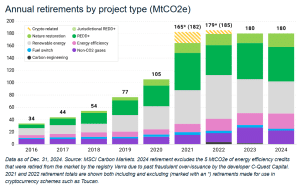
As the market grows, buyers and sellers want better safeguards. They need clear governance and trustworthy systems for managing carbon credits.
ECO and Northern Trust are addressing these concerns by separating governance from registry operations. Northern Trust ensures the accurate recording of NFS carbon credit transactions. They also make sure ownership is clearly documented. This builds confidence among market participants and helps the market mature.
Justin Chapman, Group Head of Strategic Partnerships, Digital Assets and Financial Markets at Northern Trust, shared the following insights with the CarbonCredits.com team:
Q: How does Northern Trust’s digital platform, the Carbon Ecosystem, improve transparency and efficiency compared to traditional carbon credit registries?
A: The Northern Trust Carbon Ecosystem provides convenient access for project developers and buyers to connect directly to explore, transact and retire voluntary carbon credits, allowing all actors to know who they are engaging with and for what reason.
Once transaction terms are agreed, a purchase and sale agreement is completed through The Northern Trust Carbon Ecosystem with the movement of carbon credits and cash automatically managed in accordance with the agreement. This increases efficiency while reducing transaction risk as the project developer receives funds just before the credits are delivered to the buyer, through a delivery vs. payment settlement process.
Q: In what ways do you see Northern Trust’s role supporting the growth and credibility of the voluntary carbon market over the next five years?
A: Northern Trust, as a leading global bank and asset servicing provider, applies financial rigor to the voluntary carbon market by providing independent infrastructure, registry, and settlement. As evidenced by our agreement with ECO, separating the role of the standards body from the registry helps remove potential conflicts of interest. The segregation of duties makes for a more efficient, transparent VCM with greater trust and aligns closer to solutions seen in other financial services models.
The Northern Trust Carbon Ecosystem construct has been built for the future, defining a suitable regulatory construct, asset definition and legal framework. Each digital voluntary carbon credit is deemed to be an intangible commodity, hence can be treated as a financial asset, allowing Northern Trust to act as a Designated Custodian of each credit on the ecosystem and provide the opportunity for credits to be considered for potential project financing opportunities.
Northern Trust adds credibility and strength, thanks to its long history in asset servicing. As of March 31, 2025, Northern Trust had $16.9 trillion in assets under custody and administration and $1.6 trillion in assets under management.
Clearing the Path for Future Climate Solutions
The partnership between Northern Trust and ECO is a key move to enhance the VCM’s infrastructure. By combining ECO’s expertise in forestry project standards with Northern Trust’s digital asset management capabilities, the two organizations aim to make carbon credit transactions smoother, safer, and more transparent.
Their teamwork might also inspire other standards groups and service providers in the voluntary carbon market. As companies worldwide look for ways to meet their climate goals, trust and clarity in carbon credit systems will become even more important.
The post Northern Trust and ECO Partner to Simplify Carbon Credit Management appeared first on Carbon Credits.

EU carbon credit claims changed on 27 September 2026, the day the Directive (EU) 2024/825 began to apply across the European Union. The change is narrow. It changes how a company can talk about the credits it buys. A product can no longer be called neutral on the strength of compensation alone; however, every specific, evidenced statement about what a company measured, reduced, and funded stays fully available.

The post Promoting Improved Cooking Practices in Nigeria appeared first on Terrapass.



-
Climate Change1 year ago
Guest post: Why China is still building new coal – and when it might stop
-

 Greenhouse Gases2 years ago
嘉宾来稿:满足中国增长的用电需求 光伏加储能“比新建煤电更实惠”
-
Greenhouse Gases1 year ago
Guest post: Why China is still building new coal – and when it might stop
-

 Climate Change2 years ago
嘉宾来稿:满足中国增长的用电需求 光伏加储能“比新建煤电更实惠”
-

 Renewable Energy12 months ago
Sending Progressive Philanthropist George Soros to Prison?
-
Climate Change2 years ago
Bill Discounting Climate Change in Florida’s Energy Policy Awaits DeSantis’ Approval
-
Greenhouse Gases1 year ago
嘉宾来稿:探究火山喷发如何影响气候预测
-

 Climate Change2 years ago
Analysis: China’s CO2 falls 1% in Q2 2024 in first quarterly drop since Covid-19