

Moray West Offline, Iberdrola in Australia
Allen covers a substation failure that has left Scotland’s 882 MW Moray West farm half-offline since November, GE Vernova’s new Italy contract and Milan factory investment, Iberdrola’s sixth Australian acquisition of 2026, and Flender India’s new gearbox test rig near Chennai.
Sign up now for Uptime Tech News, our weekly newsletter on all things wind technology. This episode is sponsored by Weather Guard Lightning Tech. Learn more about Weather Guard’s StrikeTape Wind Turbine LPS retrofit. Follow the show on YouTube, Linkedin and visit Weather Guard on the web. And subscribe to Rosemary’s “Engineering with Rosie” YouTube channel here. Have a question we can answer on the show? Email us!
The wind industry had quite a week.
Let us start in Scotland, off the rugged north-east coast, where something has gone quietly wrong. Ocean Winds and Ignitis built Moray West, an eight hundred and eighty-two megawatt offshore wind farm — one of the largest in Scotland. But one of its two offshore substations has been offline since November. Half the farm’s capacity … gone dark. And there is more. The project missed a contractual milestone last September under an off-take agreement. That triggered an event of default under its project lending agreements. The lenders and the sponsors have agreed to a short-term waiver. Discussions are described as constructive. Commercial operations, originally expected last year, are now targeted for sometime in 2026. Eight hundred and eighty-two megawatts … waiting.
Now, let us travel south to Italy. GE Vernova has won a contract to supply seventeen onshore turbines to IVPC Group’s Fortore wind farm in the Benevento region of southern Italy. The project tops one hundred megawatts. Turbine deliveries begin in twenty twenty-seven. GE Vernova is also investing thirty million dollars to expand its Sesto San Giovanni plant outside Milan. That investment boosts production of transformer bushings, the insulating components that keep high-voltage equipment running. About fifty new jobs are coming to that facility. And GE Vernova’s two-piece blade design for its six-point-one megawatt turbines is already drawing attention as developers scramble to crack Italy’s notoriously complex logistics and permitting hurdles. Italy is a market in motion.
Now, to the other side of the world. Iberdrola has completed the acquisition of the Ararat wind farm in Victoria, Australia. Two hundred and forty-two megawatts. Operational since twenty seventeen. This is Iberdrola’s sixth transaction of twenty twenty-six alone, and it marks the Spanish giant’s first owned generation asset in Victoria, Australia’s second most populous state. Iberdrola now operates in five Australian states with more than twenty-five hundred megawatts of installed capacity. Victoria has set a target of ninety-five percent renewable energy by twenty thirty-five. Iberdrola intends to help get it there.
And finally, from Chennai, India, comes a story about getting ready for what is coming. Flender India has just inaugurated its largest and most advanced gearbox test rig for wind turbines at its Walajabad facility near Chennai. The project began in January of twenty twenty-five at Flender’s Voerde site in Germany. From start to finish, thirteen months. Final assembly, three months. This is a collaboration between Flender’s operations in Germany, China, and India. CEO Andreas Evertz called it a testament to their global commitment to driving renewable energy solutions worldwide. India’s wind market is growing fast, and Flender is making sure it can test every gearbox that growth demands.
So, let us step back and look at the picture. A Scottish offshore wind farm sits half-dark while its owners negotiate with lenders. GE Vernova plants its flag in southern Italy and invests thirty million dollars in an Italian factory. Iberdrola expands to a sixth Australian transaction in a single year. And Flender India builds the biggest gearbox test rig on the subcontinent. And that is the state of the wind industry for the ninth of March, twenty twenty-six. Join us for the Uptime Wind Energy Podcast tomorrow

 Are you saying that the ascendency of a criminal sociopath made Western Civilization great?
Not sure how credible that is to people with the IQ of an artichoke.
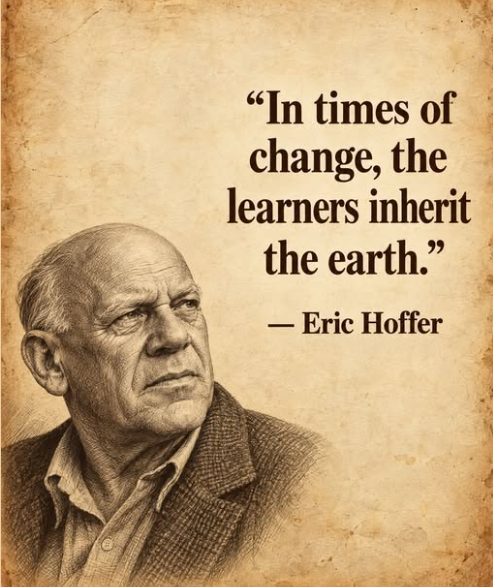 What Eric Hoffer, 20th Century American philosopher and social critic said here is interesting. But is it true? Does it have any relevance to our world today?
At this point, it doesn’t seem that the meek shall inherit the Earth. And it seems just as unlikely that the learners will have any better luck.
It looks like the world, dominated by the fairly greedy, will soon be dominated by the supremely greedy, those who really don’t care one iota about anyone but themselves–billionaires aspiring to become worth hundreds of billion dollars.
This runs counter to the norms of all societies that came before us. Never in our past have we had a civilization dominated by people who did care about their children’s future. Not even the most brutal kings and ruthless pharaohs of the past condemned future generations to dust.
https://www.2greenenergy.com/2026/10/08/whom-will-inherit-the-earth/
How DTU’s Rain Test Facility Predicts Erosion
Rosemary visits DTU Wind & Energy Systems in Denmark, where Nicolai Frost-Jensen Johansen explains rain erosion testing, tip speed, and LEP defects.
The Uptime Wind Energy Podcast is brought to you by Weather Guard Lightning Tech, creators of the StrikeTape Ultra LPS retrofit. Subscribe to Uptime’s Substack newsletter. And check out Rosemary’s “Engineering with Rosie” Youtube channel. Have a question we can answer on the show? Email us!



-
Climate Change1 year ago
Guest post: Why China is still building new coal – and when it might stop
-

 Greenhouse Gases2 years ago
嘉宾来稿:满足中国增长的用电需求 光伏加储能“比新建煤电更实惠”
-
Greenhouse Gases1 year ago
Guest post: Why China is still building new coal – and when it might stop
-

 Climate Change2 years ago
嘉宾来稿:满足中国增长的用电需求 光伏加储能“比新建煤电更实惠”
-

 Renewable Energy12 months ago
Sending Progressive Philanthropist George Soros to Prison?
-
Climate Change2 years ago
Bill Discounting Climate Change in Florida’s Energy Policy Awaits DeSantis’ Approval
-
Greenhouse Gases1 year ago
嘉宾来稿:探究火山喷发如何影响气候预测
-

 Climate Change2 years ago
Analysis: China’s CO2 falls 1% in Q2 2024 in first quarterly drop since Covid-19