A recent exclusive from Reuters revealed that the Trump administration is aiming to secure a 10% stake in Lithium Americas (NYSE: LAC). This move is part of ongoing negotiations to revise a $2.3 billion Department of Energy loan, which backs the Thacker Pass lithium project in Nevada—developed in partnership with General Motors.
The move shows Washington’s increasing readiness to take charge of key mineral projects. This aims to protect national security and lessen dependence on China.
Trump Targets Lithium Americas Equity
This proposed deal reflects a larger trend. Trump officials have pursued stakes in Intel, MP Materials, and other key tech firms. Washington’s push for direct equity in Lithium Americas shows that taxpayer-backed financing needs real returns. This is vital for sectors important to the clean energy transition.
The same Reuters report revealed what a White House official told the news agency. He said, “President Trump supports this project. He wants it to succeed and also be fair to taxpayers. But there’s no such thing as free money.”
Loan Backdrop: A $2.26 Billion Bet
In October 2024, the U.S. Department of Energy’s Loan Programs Office (LPO) approved a $2.26 billion loan for Lithium Nevada Corp., part of Lithium Americas. This loan includes $1.97 billion in principal and $289.7 million in capitalized interest. It’s one of the largest federal investments in U.S. lithium production.
The loan lasts for 24 years and has an interest rate tied to the U.S. Treasury rate. It will fund facilities to produce lithium carbonate for lithium-ion batteries.
Thacker Pass: America’s Lithium Powerhouse
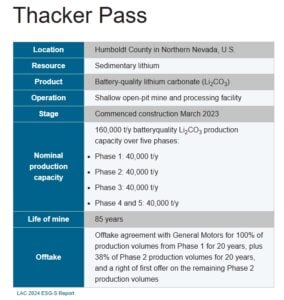
Thacker Pass is in Humboldt County, Nevada, about 25 miles south of the Oregon border. It aims to be the largest lithium source in the Western Hemisphere. Construction has been underway for nearly a year, with over 600 contractors currently active on-site.
The project is massive in scale:
- Phase 1 output: 40,000 tonnes of battery-grade lithium carbonate annually.
- Enough material to power up to 800,000 electric vehicles (EVs) each year.
- Backed by the world’s largest measured lithium resource, enabling the development of a full lithium district in northern Nevada.
Slated to open in 2028, Thacker Pass is seen as a cornerstone of America’s clean energy strategy, promising to cut foreign dependence while fueling the EV boom.
Economic Impact for Nevada Communities
The Thacker Pass project also carries major local economic benefits. During construction, it is expected to create 1,800 jobs, with 360 permanent positions once operational. These jobs range from chemical processing specialists to management roles, providing new opportunities for rural Nevada.
The Biden administration earlier emphasized that the project aligns with its pledge to ensure the energy transition generates prosperity in communities that have historically been left out of economic growth.
- SEE ALSO: Live Lithium Prices Today
Why Trump Wants a Bigger Piece
Despite bipartisan support, the Trump administration has raised concerns about loan repayment amid a slump in lithium prices caused by Chinese overproduction. The fear: Lithium Americas might struggle to repay the DOE loan, potentially putting taxpayer dollars at risk.
Trump officials are demanding stronger safeguards, including:
- Equity Warrants: No-cost warrants that could give Washington 5%–10% ownership of Lithium Americas.
- GM Guarantees: A binding commitment that General Motors (GM) will purchase lithium from Thacker Pass for decades.
- Project Oversight: Pressure on GM to relinquish parts of its project control to the federal government.
GM’s $625 Million Bet on Lithium
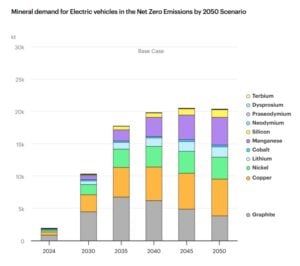
GM invested $625 million in Thacker Pass in 2024, securing a 38% stake and long-term supply rights. The automaker locked in access to all lithium from the mine’s first phase and part of the second phase for 20 years, making the project essential to GM’s EV strategy.
A GM spokesperson stressed: “We’re confident in the project, which supports the administration’s goals. The loan is a necessary part of financing to commercialize this important national resource.”
For GM, Thacker Pass is a supply lifeline as it ramps up EV production under its electrification roadmap.
- SEE DETAILS: General Motors Invests $625M in Lithium Americas to Boost Nevada’s Thacker Pass Lithium Project
A Tightrope Over Loan Restructuring
Lithium Americas had sought a modification in the loan’s amortization schedule—shifting when certain payments are due, though not altering the overall repayment timeline or interest owed.
But as we understand, Trump officials want more. They see the deal as a chance to ensure taxpayers capture upside from any future rise in lithium prices and to cement federal influence over a strategic resource.
Even under the existing loan agreement, Washington holds protections. Reuter explained that clauses in the contract allow the government to seize control of the project if it faces significant delays or cost overruns. That safeguard reflects how seriously the U.S. views critical mineral projects in its broader economic and defense strategy.
Lithium Supply: America’s Weak Spot
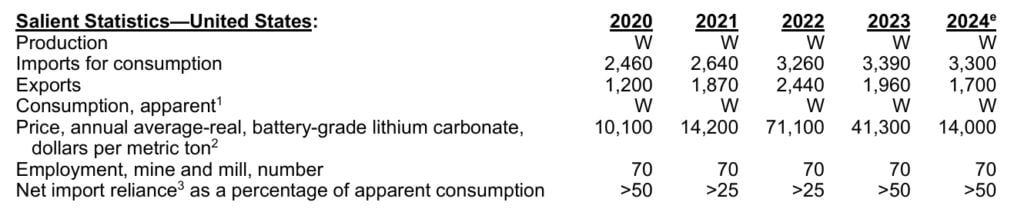
Currently, the U.S. produces less than 5000 tonnes of lithium per year, less than 1% of global supply. By contrast, Australia, Chile, and China dominate mining, while China refines over 75% of the world’s battery-grade lithium.
Latest lithium data from USGS shows:
- U.S. reserves: ~1.8 million tonnes.
- Geological resources: ~19 million tonnes.
- Global production (2024): 240,000 tonnes.
That imbalance leaves the U.S. heavily exposed. Overreliance on foreign supply chains poses risks to defense capabilities, infrastructure, and technology development. With minerals traveling an average of 50,000 miles before being assembled into batteries, the carbon footprint of global lithium supply is also a concern.
Thacker Pass promises to change the equation by establishing a domestic EV battery supply chain, reducing emissions, and enhancing economic security.
China’s Grip on Lithium
China may not be the top miner of lithium, but its control of refining capacity is unrivaled. The country processes 60–75% of the global supply, turning raw ore into the high-purity lithium carbonate and hydroxide required for EV batteries.
That dominance has raised concerns in the U.S., which views domestic lithium production as crucial for both the energy transition and national security. Direct U.S. ownership in Thacker Pass would send a clear message: America is ready to compete.
Lithium Americas Stock (NYSE: LAC) Jumps
This announcement fueled a dramatic rally in Lithium Americas’ stock. Shares closed at $3.07, then soared pre-market to $5.23 – a remarkable jump of nearly 71%. After markets opened, the price surged even higher, reaching $6.30 intraday. The rally sent the company’s market capitalization above $1.39 billion, highlighting how direct government involvement can rapidly transform investor confidence and reshape valuation.
Other U.S. lithium developers—including ioneer (ASX: INR), Standard Lithium (TSX-V: SLI), and even Exxon Mobil (NYSE: XOM), which has entered lithium projects—are closely watching. If Washington pursues direct ownership across the sector, project financing and timelines could shift overnight.
By seeking a stake in Lithium Americas, the Trump administration is reshaping how the U.S. approaches critical mineral projects. It’s now about equity and control.
A Turning Point for U.S. Lithium
Thacker Pass is becoming the test case for America’s resource nationalism. With Trump pushing for equity, and GM relying on its output for EV production, the project sits at the intersection of energy security, industrial policy, and the clean energy future.
Additionally, analysts are also considering a reduction in the volatility of lithium prices with this deal. Notably, SMM data shows battery-grade lithium carbonate prices are approximately $9,165 per metric tonne (USD) and battery-grade lithium hydroxide around $9,200 to $9,800 per metric tonne.
If successful, Thacker Pass could anchor a new domestic lithium district and accelerate the U.S. energy transition. But with Washington demanding a slice of ownership, the deal could redefine how America funds and controls its most critical resources. However, it’s marking a new era in the race for clean energy minerals.
The post Lithium Americas (LAC) Stock Rockets 95% as Trump Seeks Government Equity in Nation’s Largest Lithium Mine appeared first on Carbon Credits.
Carbon Footprint
Apple’s 2026 Environmental Report: 30% Recycled Materials Shows a Milestone in Circular Manufacturing
Apple’s latest Environmental Progress Report shows a clear shift in how the company is approaching sustainability. It shows that 30 percent of materials across all products shipped in 2025 came from recycled content, up from the previous year. This represents a steady year-on-year increase of around 6% points, showing consistent progress rather than one-time gains.
The company now uses 100% recycled cobalt in all its batteries. It also uses 100% recycled rare earth elements in all magnets. All of these show how circular manufacturing is becoming a core part of the way Apple designs, builds, and scales its products.
The shift reflects a broader strategy. The tech giant is working to reduce reliance on virgin mining and move toward a more circular supply chain. This is central to its long-term goal of reaching carbon neutrality across its entire value chain by 2030.
Recycled Materials Move Into Core Product Architecture
The most important change is not just how much recycled material Apple uses, but where it is being used. In its newest product line, including the MacBook Neo, Apple has significantly increased recycled content in critical components. According to the company’s 2026 Environmental Progress Report:
- Around 90% of the aluminum in the MacBook Neo enclosure is recycled
- 100% of cobalt in Apple-designed batteries is recycled
- The device overall reaches around 60% recycled content across key materials
These figures matter because aluminum and cobalt are among the most carbon-intensive materials in electronics manufacturing. Primary aluminum production uses a lot of energy. Cobalt extraction causes high emissions and comes with supply chain risks.
By shifting toward recycled inputs, Apple reduces emissions at the earliest stage of production. And that’s before devices are even assembled. This approach is part of a broader design philosophy.
The iPhone maker is increasingly engineering products around material recovery, not just performance or cost. That shift is central to its decarbonization strategy.
Emissions Avoidance Becomes a Key Climate Lever
Apple’s report highlights a clear link between recycled materials and emissions reduction.
In 2024, the company says that its use of recycled and lower-carbon materials helped avoid 6.2 million metric tons of greenhouse gas emissions. Over the same period, Apple’s total carbon footprint was 15.1 million metric tons. This means that material strategy alone accounted for a meaningful portion of the emissions reduction impact.
The logic is straightforward. When recycled materials replace virgin mining and refining, emissions fall sharply. This is especially important for metals like aluminum, copper, and cobalt, which carry high embedded carbon.

Apple is effectively shifting emissions reductions upstream — reducing impact before manufacturing even begins.
Meet Daisy, Dave & Cora: The Robots Powering Apple’s Recycling Revolution
A key part of Apple’s system is automation in recycling. The company has developed a set of specialized robotics platforms designed to recover materials from used devices at scale.
The first system, Daisy, can disassemble up to 36 different iPhone models and process as many as 1.2 million devices per year. Engineers designed it to efficiently recover high-value components that traditional recycling systems often miss.
Another system, Dave, focuses on dismantling the taptic engine, a component rich in rare earth magnets, tungsten, and steel. These materials are critical for electronics production but difficult to recover without precision engineering.
The newest system, Cora, expands Apple’s recycling capability further. It uses smart shredding and sensor sorting to boost recovery rates for more types of materials.
Together, these systems form a structured recovery pipeline. Devices returned through Apple’s trade-in and recycling programs are not simply dismantled. They are processed with the goal of reintroducing materials back into future product cycles.
This is a key shift. Instead of linear production — mine, build, dispose — Apple is moving toward closed-loop manufacturing.
Why Materials Are Now the Heart of Apple’s Net-Zero Plan
Apple’s recycled materials strategy is directly tied to its climate target.
The company aims to be carbon neutral by 2030. This commitment includes its business, supply chain, and product lifecycle. It also includes not just its own operations but also supplier emissions and product use emissions.

Within this framework, materials and manufacturing are the largest drivers of Apple’s emissions. The company’s lifecycle analysis reveals that most of its carbon footprint comes from product manufacturing. This mainly happens in Scope 3 supply chain activities like raw material extraction, component production, and assembly.
Apple also sees materials, electricity, and transportation as the top three sources of product emissions. Materials are key because metals like aluminum, cobalt, and rare earth elements have high carbon intensity.
This is why recycled content is central to Apple’s decarbonization roadmap. It reduces emissions in Scope 3 categories, which are typically the hardest to control.
Apple has also pushed suppliers to adopt renewable energy and lower-carbon production methods, particularly in high-impact manufacturing regions. This creates two ways to reduce emissions: cleaner energy and cleaner inputs.

Emissions Profile Shows Progress, But Not a Straight Line
Apple’s emissions profile reflects both progress and complexity. The company’s total footprint is in the tens of millions of metric tons each year, reflecting the scale of its global operations.
In 2025, the company reported a total net carbon footprint of 14.5 million metric tons of CO₂e, down from 15.3 million metric tons of gross emissions before offsets.
Product manufacturing is still the main source of emissions, accounting for the largest share of emissions within Scope 3. In fact, manufacturing alone contributed about 8.15 million metric tons of CO₂e, or more than half of total product lifecycle emissions.

However, Apple reports gradual reductions in emissions intensity per product over time. Emissions have dropped by over 60% since 2015, while revenue has risen sharply during this time.
This means each device is now easier to make with less carbon. Total emissions can still change based on product cycles and demand.
The increasing use of recycled materials is a key driver of this improvement. It reduces the need for mining, refining, and high-energy processing — all of which sit upstream in the supply chain.
However, Apple’s emissions trajectory is not linear. Like many hardware companies, its reach depends on global demand, new product launches, and supply chain limits. This makes structural changes like material redesign more important than incremental operational gains.
Apple’s Carbon Credit Portfolio
Moreover, Apple uses carbon credits in a targeted way to address a small portion of its remaining emissions as it works toward its 2030 net-zero goal. The 2026 Environmental Progress Report states that the company retired verified credits from nature-based projects in 2025.
The portfolio includes the Lumin/Eucapine reforestation project in Uruguay, which accounted for 422,395 metric tons CO₂e (vintage 2020). It also includes the Windrock Improved Forest Management project in the United States, covering 319,785 metric tons CO₂e (vintage 2022).
These projects focus on restoring degraded land, improving forest management, and increasing long-term carbon sequestration. Apple sees carbon credits as a complement, not as substitutes, to its main decarbonization strategy.
This strategy focuses on reducing emissions first. It emphasizes using recycled materials, renewable energy, and improving the supply chain. Only after these efforts does Apple use high-quality credits to tackle leftover emissions.
The Real Shift: Apple Is Redesigning How Electronics Are Made
Apple’s recent report shows a clear direction for tackling its environmental footprint. The company is no longer treating sustainability as an external offset mechanism. Instead, it is embedding it directly into product architecture.
The increase to 30% recycled materials in products shows a big change in how the tech giant makes things. Key parts, like cobalt and aluminum, are almost entirely made from recycled content. Robotics-driven recycling systems reinforce this direction, creating a closed-loop system where old devices feed directly into new production.
At the same time, Apple’s emissions profile shows both progress and constraint. Reductions are real, but scaling global hardware production means absolute emissions remain significant.
Still, the direction is clear. Apple is moving away from linear electronics manufacturing and toward a circular model where materials are continuously recovered, reused, and reintroduced into production.
In doing so, it is reshaping what sustainability looks like in the global tech industry — not as an add-on, but as a design principle built into the product itself.
The post Apple’s 2026 Environmental Report: 30% Recycled Materials Shows a Milestone in Circular Manufacturing appeared first on Carbon Credits.
Carbon Footprint
U.S. DOE Restores Carbon Capture Hub Funding: Texas and Louisiana Projects Approved
On April 18th, Reuters reported that the U.S. direct air capture (DAC) sector received a major boost after the Department of Energy (DOE) decided to retain funding for two flagship carbon removal hubs originally backed under the Biden administration.
The move removes months of uncertainty and protects more than $1 billion in federal support for the South Texas DAC Hub and Louisiana’s Project Cypress. The decision also reinforces that carbon removal remains part of the United States’ long-term climate and industrial strategy, even as policy priorities evolve.
From Funding Risk to Revival: DOE Keeps Landmark Direct Air Capture Hubs Moving Forward
The Department of Energy had previously placed several clean energy awards under review, including major carbon capture, hydrogen, and industrial decarbonization projects. Among the most closely watched were the two large DAC hubs in Texas and Louisiana, both of which risked losing federal backing.
- South Texas DAC Hub, developed with Occidental’s carbon management arm 1PointFive, holds a $500 million federal award.
- Project Cypress in Louisiana received $550 million in support.
Although both projects were awarded significant funding, only an initial $50 million tranche had been disbursed so far, leaving most capital still pending deployment.
Once fully operational, both facilities are expected to remove more than 2 million metric tons of CO₂ annually from the atmosphere. That scale places them among the most ambitious carbon removal projects globally and positions the United States as a leader in early DAC commercialization.
Energy Secretary Chris Wright noted that the agency retained projects with credible delivery pathways following extensive review discussions with applicants. The DOE’s Hydrocarbons Geothermal and Energy Office will now help guide next steps, including fund disbursement and project execution.
U.S. Direct Air Capture Market Gains Policy and Investment Support
The funding confirmation strengthens confidence across the growing U.S. DAC ecosystem, which depends heavily on long-term policy signals and federal incentives.
The country already leads global carbon removal development, supported by programs such as the $3.5 billion DAC Hubs initiative and the Section 45Q tax credit, which can provide up to $180 per ton for permanent carbon storage under current structures.
In parallel, corporate demand for high-quality carbon removals continues to expand. Technology firms, airlines, and industrial players are signing long-term agreements to secure carbon removal supply, reflecting a shift from low-cost avoidance credits toward durable carbon storage solutions.

- ALSO READ:
- Bain & Company Inks First Direct Air Capture Carbon Removal Deal With Oxy’s 1PointFive
- Maritime Decarbonization: Japanese Shipping Giant NYK Partners with 1PointFive for DAC Credits
According to the International Energy Agency (IEA), more than 130 large-scale DAC facilities are now in development globally, with the United States holding a significant share of planned capacity. This pipeline highlights growing commercial interest even as the technology remains in its early deployment phase.
At the same time, regional DAC clusters are beginning to take shape. West Texas, for example, has emerged as a leading hub due to its combination of renewable energy access, subsurface storage potential, and industrial infrastructure. Projects like STRATOS, targeting 500,000 tons of annual CO₂ capture, illustrate how scaling could evolve through concentrated deployment.

DAC Cost Challenges and Fuel Market Link Drive Long-Term Outlook
Despite strong policy backing, cost remains the most significant barrier for direct air capture expansion. Current estimates place DAC costs between $500 and $1,000 per ton of CO₂ removed, depending on technology type, energy sourcing, and storage logistics. While costs are expected to decline with scale and innovation, near-term economics remain challenging.
From Carbon Credits to SAF, DAC’s Business Case Is Getting Stronger
However, the value proposition is expanding beyond carbon credits. Captured CO₂ is increasingly viewed as a potential feedstock for synthetic fuels, including sustainable aviation fuel (SAF). This integration could improve project economics while also supporting fuel supply diversification.
Recent geopolitical tensions affecting global oil markets have added further urgency to alternative fuel development. In this context, DAC-linked synthetic fuel production could play a dual role by reducing emissions while supporting energy security.
Texas and Louisiana Lead the Transition
Texas and Louisiana are particularly well-positioned for this transition. Both states offer strong industrial infrastructure, access to geologic storage formations, and proximity to energy and chemical industries. Texas also benefits from expanding renewable energy capacity, which is important for powering energy-intensive DAC systems.

Even so, scaling from today’s million-ton projects to gigaton-scale removal pathways will require sustained investment, policy support, and continued technological improvements. Some research suggests that large-scale DAC deployment may still require carbon prices or subsidies above $200 per ton for economic viability in the early phases.
The post U.S. DOE Restores Carbon Capture Hub Funding: Texas and Louisiana Projects Approved appeared first on Carbon Credits.
Carbon Footprint
Why a forest with more species stores more carbon
A forest is not just trees. The number of species it holds, from canopy giants to understorey shrubs to soil fungi, directly determines how much carbon it can absorb, and, more importantly, how much it can keep over time. Buyers of carbon credits increasingly ask a reasonable question: Is the carbon in this project long-lasting? The science of biodiversity has a clear answer.
![]()
-
Climate Change8 months ago
Guest post: Why China is still building new coal – and when it might stop
-
Greenhouse Gases8 months ago
Guest post: Why China is still building new coal – and when it might stop
-
Greenhouse Gases2 years ago嘉宾来稿:满足中国增长的用电需求 光伏加储能“比新建煤电更实惠”
-

Climate Change2 years ago
Bill Discounting Climate Change in Florida’s Energy Policy Awaits DeSantis’ Approval
-
Climate Change2 years ago嘉宾来稿:满足中国增长的用电需求 光伏加储能“比新建煤电更实惠”
-
Climate Change Videos2 years ago
The toxic gas flares fuelling Nigeria’s climate change – BBC News
-
Renewable Energy6 months agoSending Progressive Philanthropist George Soros to Prison?
-
Carbon Footprint2 years agoUS SEC’s Climate Disclosure Rules Spur Renewed Interest in Carbon Credits


