


- Formal negotiations
- Finance
- Global review
- Global report
- Digital sequence information
- Harmful subsidies
- Marine biodiversity
- Planning, monitoring, reporting and review
- Article 8(j) implementation
- Biodiversity and climate change
- Links with other bodies
- Around the COP
- Armenian presidency
- Protests
- Lobbying and influence
- Carbon and biodiversity markets

Nations are gathering in Baku, Azerbaijan, for the latest round of UN climate talks, where they will be tasked with setting a target for channelling climate finance into developing countries.
Intense discussions around this contentious topic are set to dominate at COP29.
Nations are divided over who should provide money, how much there should be and what form that support should take.
But this is just one part of the negotiations.
As ever, diplomats and ministers will have a packed agenda that will see them discuss the finer points of climate adaptation, carbon markets and scaling up emissions reductions, among many other issues.
There will also be debate over how best to carry forward the outcomes of last year’s COP28, including a global agreement to “transition away from fossil fuels”.
This will come as nations face a deadline to launch new climate plans under the Paris Agreement.
Carbon Brief has conducted its annual assessment of priority issues for various parties, compiled into the interactive table below. This is based on submissions to the UN, public statements and wider research conducted by Carbon Brief.
The first column shows the countries and UN negotiating blocs, the second column shows the topics up for debate and the third column indicates specific issues within those topics.
The final column indicates the position that each grouping is likely to take on each particular issue at the summit. This ranges from “high priority” – meaning the grouping is likely to be strongly pushing the issue – to “red line”, which means the grouping is likely to oppose this issue and show no room for compromise.
This is a “living document” that will be updated during the course of COP29. Please get in touch if you would like to offer additions to the table, by emailing policy@carbonbrief.org.
Explanations of the overarching issues and jargon-filled language that permeates the talks can be found below the interactive table.
Finance
The biggest issue at COP29 will be the “new collective quantified goal” (NCQG) for climate finance. Nations have been deadlocked for months in discussions over the details of this target, which must be agreed this year.
This is set to replace the existing target – agreed in 2009 – for developed countries to provide $100bn annually from 2020 to developing countries, in order to help them cut emissions and prepare for climate change.
Following this initial target, when the 2015 Paris Agreement was decided, nations also committed to scaling up climate finance provisions for developing countries “from a floor of $100bn” from 2025.
Multiple assessments have concluded that developing countries will need support to invest many trillions of dollars in the coming years in order to achieve their climate commitments.
Many developing countries have suggested a target in the region of $1tn a year or more, but developed countries – who have so far been responsible for providing climate finance – have been hesitant to suggest any numbers.
Yet the number, or “quantum”, attached to the target is just one of the issues at stake. Negotiators at COP29 must also reach a decision on who is responsible for providing climate finance, where it should come from and how it should be defined.
Broadly speaking, developing countries would like to see the money coming largely from public funds provided by developed countries. Meanwhile, developed countries would like to see wealthy, emerging economies share some of the burden, as well as a greater emphasis on other sources, such as private investment and development bank reforms.
(For more information about the different issues at stake in the NCQG negotiations, see Carbon Brief’s in-depth Q&A on the topic.)
Article 6
Another issue that the COP29 presidency has highlighted as one of its “main priorities” is the full launch of Article 6 carbon markets.
This includes the full “operationalisation” of both direct country-to-country trading under Article 6.2 and an international carbon market under Article 6.4, known as the “Paris crediting mechanism”.
This area has been unresolved for years and discussions at COP28 that sought to sort out outstanding technical issues ended with a lack of agreement.
This failure means that, for example, it has been unclear what kinds of projects could generate credits to trade under the Article 6.2 and 6.4 systems.
There was movement on some of the minor issues under Article 6 at the climate talks in Bonn earlier this year, but much remains to be decided at COP29.
Outstanding topics include whether or not parties can reserve the right to revoke authorisation of credits they have issued, as well as how confidential parties can be about trades they make with other countries.
Ahead of COP29, the Article 6.4 supervisory body agreed on a mandatory “sustainable development tool”, as well as on two key standards for projects that want to generate carbon credits for sale under the new market.
The first standard is on methodologies for calculating how many credits each carbon-cutting project will be able generate, while the second is on what counts as “carbon removal” and how to deal with reversals – for instance, when a reforested area is lost to wildfire.
The way in which the supervisory body adopted these standards was somewhat controversial and may or may not be approved at COP29.
While parties at COP29 will still be able to raise issues with the package produced, this could make the path to an outcome at the summit more streamlined.
Global stocktake and mitigation
Following COP28, parties have clashed over how to carry forward the outcomes from the summit, including its headline-grabbing call for all countries to contribute to “transitioning away from fossil fuels” and reaching global net-zero by 2050.
This pledge emerged from the “global stocktake”, which also included contributing to tripling renewable energy capacity and doubling the rate of energy efficiency improvements globally by 2030.
Countries were asked to continue discussions under the “UAE dialogue on implementing the global stocktake outcomes”.
However, there has been disagreement over what this dialogue should cover. Developed countries and small islands are among those seeking to include a focus on efforts to cut emissions, as well as all the other stocktake outcomes.
For example, the EU says the dialogue should “keep track of…implementation” across all stocktake issues, including mitigation, finance, adaptation and so on.
The EU wants the global stocktake outcomes to be incorporated into “all relevant work programmes and constituted bodies”, including in particular the ongoing “mitigation ambition and implementation work programme” (MWP).
This comes as nations are expected to launch new climate plans – known as “nationally determined contributions” (NDCs) – by February next year.
The stocktake “encouraged” countries to ensure that this new round of NDCs is “aligned” with the Paris Agreement’s stretch target of limiting global warming to 1.5C – although the meaning of “aligned” is unclear
Yet some developing nations, including the Like-Minded Developing Countries (LMDC) groups – which includes China, Saudi Arabia and India – argue that the UAE dialogue should be “solely focused on finance”.
Moreover, they argue there is “no mandate for any activities which ‘take stock’ of progress of the implementation of the Paris Agreement” outside of the five-yearly stocktake process.
Adaptation
At COP28, countries agreed on a “framework” to guide countries’ adaptation actions under the “global goal on adaptation”. As part of this, they set up a work programme to develop a set of universal “indicators” that can be used to track countries’ progress on adaptation.
Negotiators will continue this work programme at COP29, following slow progress at the earlier talks in Bonn back in June.
Climate finance has been a constant issue in adaptation negotiations. Developing countries frequently argue that any discussion of the topic must involve money, due to the shortfall in funding for adaptation projects.
Negotiators have also disagreed over the adaptation indicators themselves and which organisations should be charged with “mapping” them.
Meanwhile, following guidance from the global stocktake, nations must also have national adaptation plans in place by 2025, so they are ready to implement them by 2030.
Discussions will continue around this topic including, again, questions of providing the necessary finance to support these plans.
Loss and damage
The long-anticipated loss-and-damage fund was officially launched at COP28, in what was widely seen as a diplomatic triumph for the United Arab Emirates presidency.
So far, the fund has depended on the generosity of donors to fill it, as nations are not obliged to do so.
Many countries have pledged money for the fund, but these amounts are tiny compared to the amount of money developing countries need to respond to climate-driven disasters.
Loss and damage will not be as high profile at COP29 as it has been at recent UN climate summits. However, there will likely still be a push from developing countries to provide more funds for it, including a separate sub-goal under the NCQG.
The post Interactive: Who wants what at the COP29 climate change summit appeared first on Carbon Brief.
Interactive: Who wants what at the COP29 climate change summit
Continue Reading
Prepared by a coalition of nine Western Australian union, industry, conservation, and community organisations—including UnionsWA, the Conservation Council WA, and the Smart Energy Council—the WA Clean Energy, Jobs & Industry Plan provides a practical roadmap to transform Western Australia into a clean energy powerhouse while creating thousands of secure local jobs.
Western Australia stands at a pivotal crossroads: lead the global clean energy economy or watch investment, future industries, and secure jobs go elsewhere. The WA Clean Energy, Jobs & Industry Plan outlines a transformative blueprint to harness the state’s world-class solar and wind resources. Discover how legislated renewable targets, green iron manufacturing, and a dedicated regional training strategy can generate tens of thousands of local jobs, lower household bills, and build a resilient, net-zero future for all Western Australians.

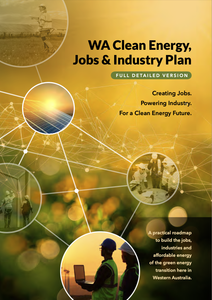
WA needs a clear and forward-thinking plan if it is going to become a competitive renewable energy powerhouse and maintain its economic strength through the energy transition.
“Western Australians know a faster renewable energy transition will lower their household expenses and prevent harmful climate pollution. But the community also needs clear direction to ensure this transition will create jobs, lower costs and not cause undue environmental harm.
“Here, sectors representing a broad range of interests have laid the groundwork for those outcomes, clearly outlining what is needed to create a future for WA that is good for the environment, for the climate, for workers and for the economy.
Summary
The WA Clean Energy, Jobs & Industry Plan sets out a strategic roadmap to position Western Australia as a global clean energy superpower while creating thousands of secure local jobs.
The report establishes three overarching goals:
- Creating local employment.
- Maintaining industrial competitiveness.
- Lowering household energy costs
To realize this vision, the framework details actionable measures to follow on from the recent WA Government announcement of a 75% Renewable Energy Target by 2031 for the South West Interconnected System. This includes developing a statewide Renewable Energy Target, coordinating statewide workforce and training pipelines, strategically planning regional infrastructure to safeguard high-value biodiversity and cultural heritage, and ensuring equitable benefit-sharing through household electrification incentives and First Nations equity partnerships. Ultimately, the plan highlights that establishing clear policy and regulatory certainty will unlock lower energy bills, boost power reliability, and secure the state’s global competitiveness in emerging green commodity export markets.

Key Findings
- Statewide Renewable Energy Target and Emissions Reduction Targets: The report calls for a statewide RET and 1.5°C aligned emission reduction targets to remove policy risk, lower capital costs, and attract clean energy investment.
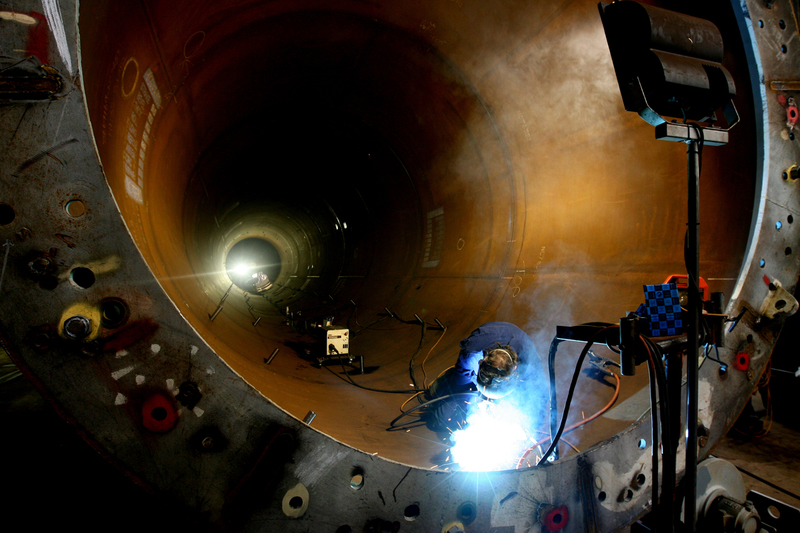
- Transformative Job Creation: Accelerating the transition offers massive employment prospects, including up to 8,800 solar and battery jobs by 2050, as well as 24,000 ongoing and 11,000 construction jobs in a commercial green iron industry.
- Industrial Electrification & Competitiveness: Requiring large gas users to adopt binding electrification timetables and providing concessional financing will protect existing energy-intensive manufacturers from rising energy costs and impending domestic gas shortfalls.
- Green Commodity Export Leadership: Western Australia can build new export markets in green iron, green ammonia, and offshore oil/gas decommissioning by constructing shared common-user infrastructure and setting dedicated Green Commodity Export Targets.
- Coordinated Workforce & Training Pipeline: To address critical skill shortages the plan recommends establishing a WA Clean Energy Jobs Plan 2050, three regional training hubs, and dedicated pathways for female and under-represented apprentices.
- Environmental Safeguards & Community Benefits: Fast-tracked development must be paired with State Planning Policies that avoid high-biodiversity and cultural heritage lands, mandate new data centres to run on additional renewable power, and deliver household electrification rebates and First Nations equity partnerships.
What you can do
WA has an opportunity to lead on sustainable, clean energy and associated industries. You can help by:
- Sending an email to Environment Minister Murray Watt and Prime Minister Anthony Albanese, calling on them to reject Browse.
- Sharing this story to help more Australians understand what’s at stake.
- Encouraging your friends and family to take action.
Countries have completed the first “global review” of their progress towards reversing nature loss by 2030 at the COP17 biodiversity talks in Yerevan, Armenia.
The review “notes with deep concern” that, unless action is “rapidly accelerated”, the goal to reverse nature loss and meet a set of 23 targets by 2030 “will not be achieved”.
It “urges” countries to accelerate action, including by “increased ambition in addressing the gaps”.
Much of the discussions in Yerevan focused on how to raise the necessary funds to help developing countries protect nature.
Some major economies pushed to expand the range of nations that are expected to provide f