


Joel and Tonje Olsen of Montgomery Sheep Farm in Montgomery County, NC.
Joel Olsen has developed 25 solar facilities over the past 15 years – mainly in North Carolina, a leading solar state.
His proudest project, called the Montgomery Sheep Farm, is where he’s re-writing the book on what a solar farm can be. In fact, it’s a “true” farm – complete with anywhere from 400-600 sheep providing landscaping for a 28-megawatt (DC) solar facility covering 123 acres of the 200-acre farm. This project is also a research station for developing best practices for raising livestock on solar farms.
“A solar facility can be more than just acres of solar panels,” says Olsen. “We are combining solar power with the best elements of agriculture. Around the country, we are seeing more of it … Not enough of it – but more.”
The project has evolved over the years. The site in Montgomery County, N.C., had been a private hunting preserve. From 2013 to 2015, O2 emc (O2), where Olsen was CEO, developed the solar facility at the site, preserving all the farm buildings. The barns, farm lodge, and farm cabin began renovations in 2016, including energy efficiency upgrades made possible by a grant from the Renewable Energy for America Program (REAP).
Offered through the U.S. Department of Agriculture, REAP grants promote energy independence, rural economic growth, and environmental sustainability by making renewable energy systems and energy efficiency improvements more accessible and affordable for rural small businesses and agricultural producers. With the passage of the Inflation Reduction Act in 2022, over $2 billion in REAP funding has been allocated through 2031, investing in more projects like the Olsen’s.
REAP funds allowed Olsen to transition the farm lodge to a renewable energy microgrid that helps power farming operations. Also in 2016, Olsen built a new 10,000-square-foot lambing barn, hired a farm manager, and began purchasing sheep to maintain the vegetation of the solar farm.

Olsen’s wife Tonje has long advocated for using sheep to manage landscaping at his solar farms versus the more common practices of spraying chemicals or relying only on traditional mowing.
She started Sun Raised Farms in 2012 to provide vegetative maintenance to solar farm owners by training and using local sheep farmers to graze sheep on their solar farms. They are steady grazers and don’t climb on the panels or damage the equipment.
“Just spraying chemicals to kill the grass seemed to be counter to what solar power is all about,” Olsen says. “Tonje urged us to design our solar facilities not only to accommodate sheep for grazing but also to have our solar facilities eventually become certified as Animal Welfare Approved farms.”
The Olsens’ vision was always to have solar power and agriculture work together at each site that O2 developed. Today, not only do the sheep help maintain the vegetation, but they also contribute to Sun-Raised Foods, which provides lamb salami and cuts to the market. Hint – the lamb salami has won the national “Good Food” Award and the “Our State Magazine Made in NC Food Award”.
In addition to buying lamb salami and cuts from Sun Raised Foods, customers can reserve a Great Pyrenees puppy or a trained adult dog to guard their own sheep, chickens and other livestock from predators like coyotes.
The Olsens also use the Montgomery Sheep Farm to host farm tours and farm-to-table dinner events throughout the year, introducing local lamb dishes and showcasing the clean-energy operation to the local community. Olsen is a tireless advocate of explaining how clean energy and agriculture can be combined.
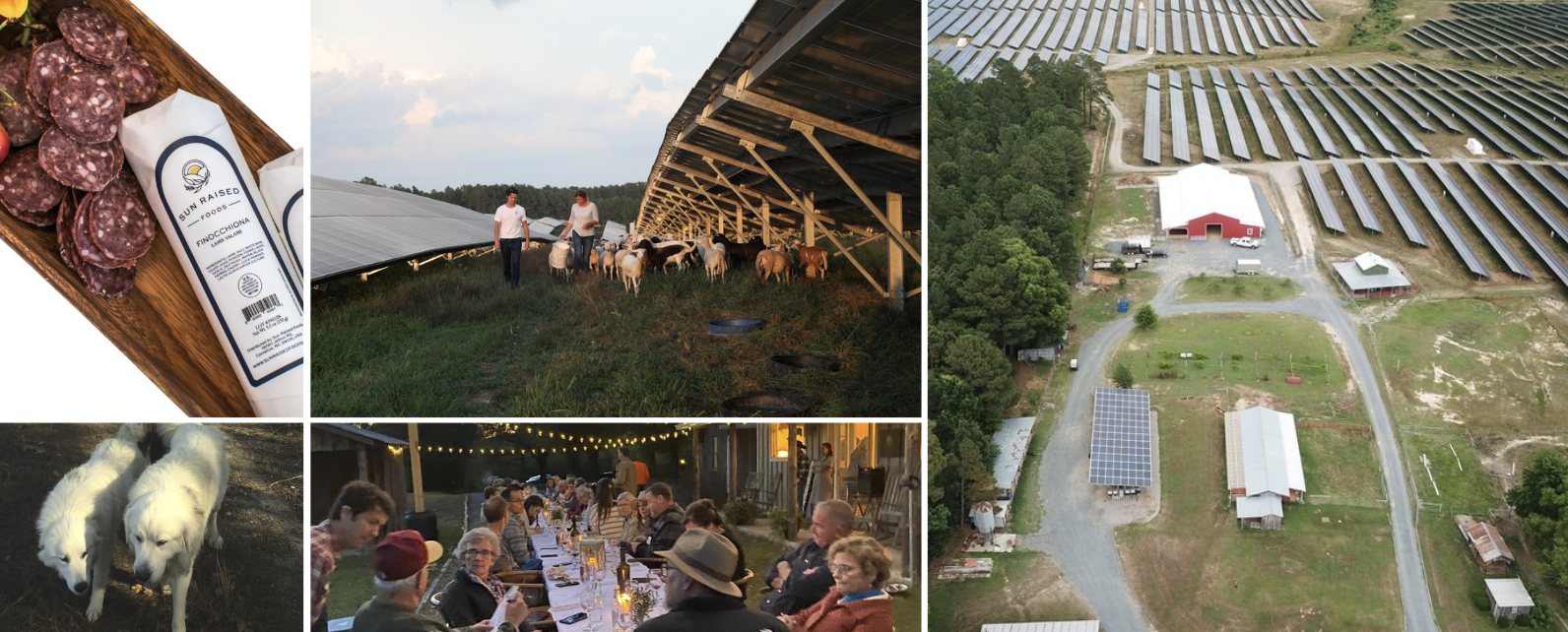
“I’ve hosted schools, colleges, and community groups. I want to show how solar power and farming can work together,” he says. “Most people come away saying, ‘This makes a lot of sense.’”
Others are starting to take notice. The Montgomery Sheep Farm was recently named the Solar Ranch of the Year in the 2024 North American Agrivoltaics Awards. It also helped spur the formation of the American Solar Grazing Association, which has more than 800 members across 45 states.
The clean-energy aspect of the site is expanding, too. While the 28 MW solar facility sells power to the local utility, the farming operation is powered by a separate solar power microgrid. With the addition of Tesla batteries, the farmhouse, cabin, barns, and other buildings operate off-the-grid about 70 percent of the time.
Olsen is still planning and expanding. The remodeled cabin is now an Airbnb, and there could be similar projects in the future. He’d be happy if others copied his concept.
“I want people to see this model,” he says. “It combines clean energy, sustainability, agriculture, and agritourism. We can expand and explore clean energy in a whole different way.”
Get Involved in the Clean Energy Generation
As the Clean Energy Generation, we’re living during a time of historic climate funding, support, innovation, and clean energy technology. There are ways for each of us to get involved, no matter who we are, where we live, or how much is in our wallets. To hear more stories like the Olsens’, learn more about how you can take action, and meet other passionate Clean Energy Generation members from across the Southeast, we invite you to join the movement. We all deserve a healthier, safer future powered by clean energy, and we have each the power to inspire others by spreading the news.
Join the Clean Energy Generation
The post In North Carolina, Putting the Farm in Solar Farm appeared first on SACE | Southern Alliance for Clean Energy.

 All I can say about the me here is that personally I refused, against considerable pressure from my family, to indoctrinate my children into something I myself could not accept.
Is it actually “psychological abuse” to indoctrinate children into monotheistic religion? Whether to take it that far is an open question.
My parents, both atheists, sent my brother and me to Sunday School, as they thought it wrong to cut us off from a modality of growing up in America in the early 1960s. I don’t blame them, but again, it’s not something I was willing to replicate with my own children.
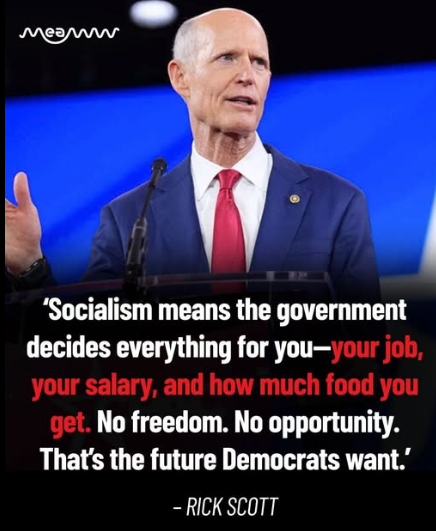 In less than a month, we’re going to learn how many idiots are buying this socialism crap.
Sure, there are people who don’t know anything about the way people live in northern England, New Zealand, Costa Rica, etc. Most of these people couldn’t find these countries on this globe.
But how many can there possibly be?
Clearly, Republicans are desperate, but isn’t asking voters to believe that the Swedes have to rely on the government for their job, salary, and food a bit over-the-top?
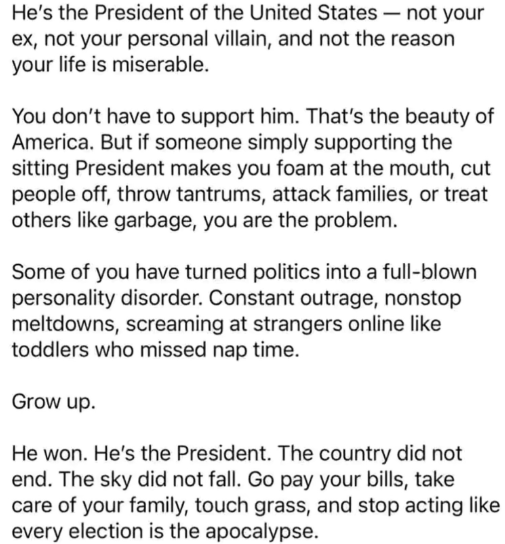 I got the meme here from a neighbor, but I wonder who actually wrote it. There is a ton of propaganda on social media suggesting that we need to normalize the sociopathic criminality of the U.S. president.
It’s true that not every election is an apocalypse, but 2024 was disastrous for the U.S. democracy.
Yes, the country did not end. But it took a giant leap towards authoritarianism.
Even that’s not the end of the world. Democracies fail with great frequency on this planet. I just never thought I’d be living in the biggest socio-political collapse in the last 2000 years.
In an average week, I meet quite a few travelers here from lands all around this planet. Their most common thoughts on what’s happening here: “We simply feel sorry for you.”

A ‘victory’ for communities as High Court rules climate impacts from coal and gas must be considered even where fossil fuels are exported

Indoctrinating Children into Religion

Republicans’ Last-Ditch Effort to Lie to Voters
-
Climate Change1 year ago
Guest post: Why China is still building new coal – and when it might stop
-

 Greenhouse Gases2 years ago
嘉宾来稿:满足中国增长的用电需求 光伏加储能“比新建煤电更实惠”
-
Greenhouse Gases1 year ago
Guest post: Why China is still building new coal – and when it might stop
-

 Climate Change2 years ago
嘉宾来稿:满足中国增长的用电需求 光伏加储能“比新建煤电更实惠”
-

 Renewable Energy12 months ago
Sending Progressive Philanthropist George Soros to Prison?
-
Climate Change2 years ago
Bill Discounting Climate Change in Florida’s Energy Policy Awaits DeSantis’ Approval
-
Greenhouse Gases1 year ago
嘉宾来稿:探究火山喷发如何影响气候预测
-

 Climate Change2 years ago
Analysis: China’s CO2 falls 1% in Q2 2024 in first quarterly drop since Covid-19