



- What timeline options were delegates debating?
- How did the timeline discussions unfold?
- What were the main points of disagreement?
- Why is the IPCC in a ‘serious funding crisis’?
- How have scientists reacted?
- What other issues remain unresolved?
- How are the IPCC AR7 reports progressing?
- How might the IPCC use AI and enhance gender inclusivity?

In Guatemala’s southwest region lies a large lake with a storied history.
Lake Atitlán is one of Central America’s most critical local sources of drinking water, and is surrounded by volcanoes, a thriving tourism industry and an ancient Mayan culture. The Sololá region has long been home to Indigenous communities who have been attracted to its fertile land and pristine natural resources.
But in recent years, this site of natural beauty in Guatemala’s highlands has had to contend with the growing impacts of the climate and nature crises. Climate change is disrupting the rain cycle and significant areas of land show signs of erosion and loss of soil fertility. These changes are threatening crop production and pushing local people into food insecurity.
Elena Wason, co-executive director at Natün, a local non-profit supporting Indigenous people, told Climate Home News that community leaders have “identified deforestation and the effects of climate change in their communities as among their greatest concerns”. Forest cover declined by an estimated 12% in the past two years alone.
Women are often the social group most exposed to these changes and Natün has focused its efforts on reviving Indigenous agriculture techniques in a bid to improve climate resilience and empower female farmers.
How to fight drought
The impacts of climate change on Indigenous communities can often lead to further environmental damage as farmers are forced to rely on unsustainable practices, such as cutting down trees to clear more land. This can accelerate water scarcity, soil erosion and ultimately food insecurity.
An ongoing adaptation project led by Natün has sought to reverse these impacts, working with local people to combine modern climate-smart agriculture and ancestral knowledge. The approach involves the use of drought-resistant crops, organic pest management and soil conservation techniques. This is increasingly recognised as an effective way to strengthen climate resilience.
“Our approach is based on soil analysis and the use of locally resilient, endemic tree species, significantly increasing survival rates and ensuring sustainable water availability despite changing rainfall patterns,” Wason explained.
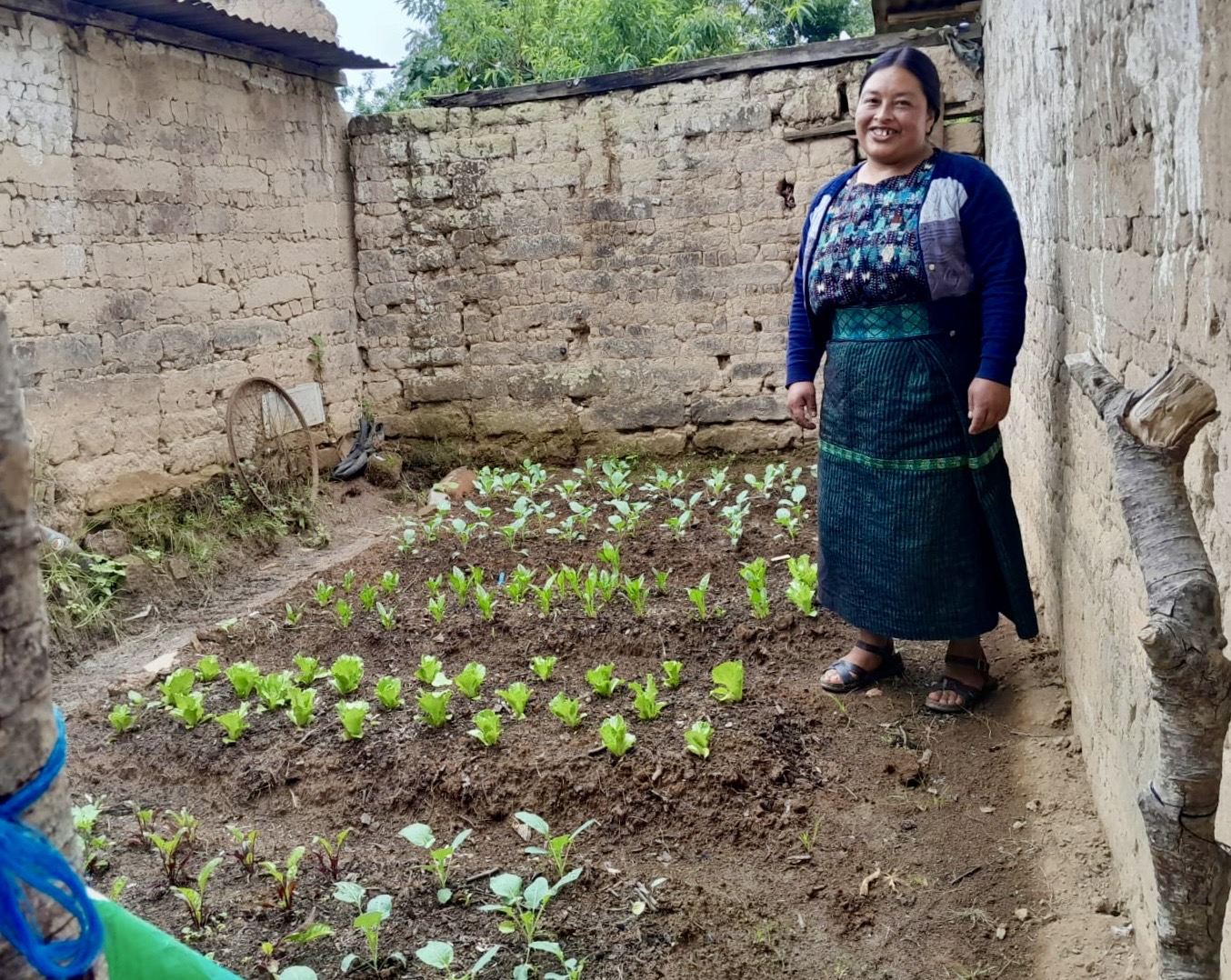
A US$170,000 grant from the Adaptation Fund-UNDP innovation platform (through the AFCIA programme) also allowed it to scale. For example, Natün established over 300 family food gardens – small spaces with shared resources that focus on growing nutrient-rich crops.
The project was built for the long-term by embedding innovation within Indigenous knowledge systems, organic farming and Mayan land stewardship rather than imposing external solutions. In this way, it ensures that communities remain the architects of their own resilience. Diversified revenue streams, including carbon credits and replicable learning kits, further support its longevity.
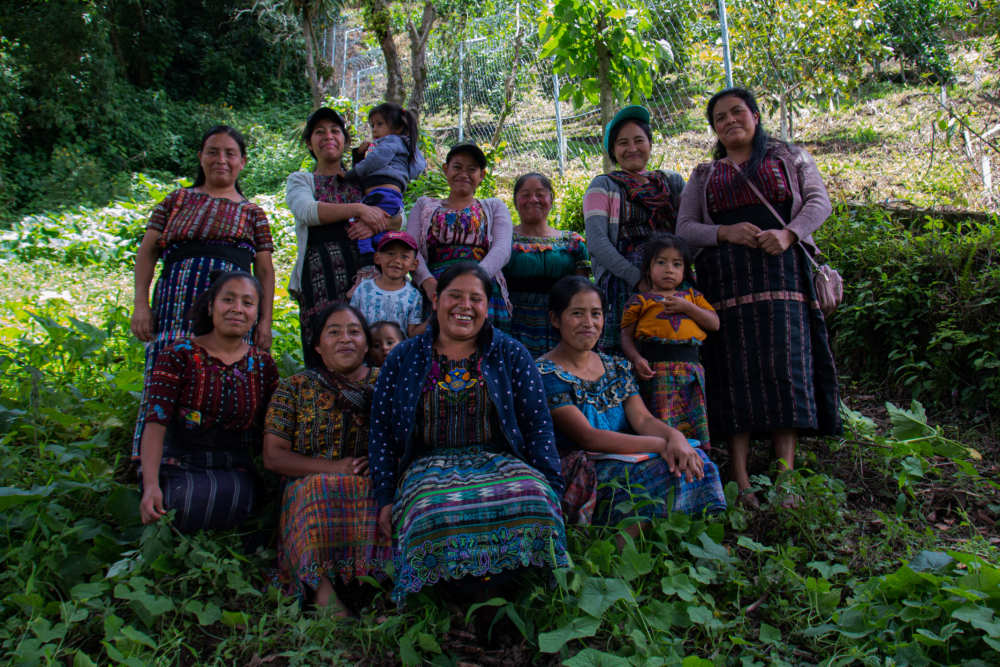
Nearly all of the typical Mayan gardens are managed by women, with the project training up to 30 women in climate-resilient practices, such as seed bank management. The approach has paid dividends by bolstering local food security and providing almost 19,000 people with sustainable food sources.
Young South Africans take up sustainable agriculture for food security
“The project uses locally led innovation by helping to restore sustainable Indigenous Mayan practices, while empowering vulnerable communities and women to build resilience and adapt to climate change and bolster food security,” said Mikko Ollikainen, head of the Adaptation Fund.
“Community-led approaches like these can have profound positive impacts on the directly affected communities and beyond by creating practical scalable solutions,” he added.
Growing incomes
The programme was expanded in 2025 with the creation of over 260 small poultry farms, further diversifying family incomes. The early results have been positive: two-thirds of families with both a garden and poultry now have surplus produce and incomes that have grown by an estimated $61 per month.
“These impacts especially benefit women, who not only make up 75% of programme participants and have taken leadership roles in managing community gardens, but also generally take on the responsibility of providing nutritious food for their families,” said Wason.
The project follows an earlier $5.4 million activity in Guatemala, also funded by the Adaptation Fund, that focused on honey bee production, forest conservation and ancestral knowledge across Suchitepéquez and Sololá. The aim was to empower vulnerable communities and Indigenous populations to adapt to floods and landslides, while enhancing diverse production landscapes and livelihoods.
Advancing women’s rights and empowerment in climate adaptation
That project resulted in 6,093 hectares under forest management and conservation, nearly 1,500 beehives in operation, and 328 family gardens with the purpose of helping women adapt. Utilising such ancestral practices have helped to increase agricultural resilience in the Nahualate River basin, benefiting some 1,125 people.
Enduring benefits
The long-term benefits of the Lake Atitlán project will be in providing communities, especially women, with practical tools to respond to the environmental challenges of drought, storms and deforestation in the Sololá region. These challenges are becoming more pronounced as the climate becomes more extreme and unpredictable.
Guatemala is ranked among the most exposed countries to climate risk. The World Bank estimates that up to 83% of its GDP is generated in areas prone to disasters. As such, it is not only the people around Lake Atitlán who stand to benefit from sustainable farming techniques.
The Natün project is easily replicable by harnessing local knowledge and offering a practical model that can be adapted across Indigenous communities facing similar climate pressures. In a country with an Indigenous population of over 6 million people, this approach will be of importance to many other communities as they face similar existential crises in a warming world.
Adam Wentworth is a freelance journalist based in Brighton, UK.
The post In Guatemala, Indigenous women build climate resilience with old and new farming methods appeared first on Climate Home News.
In Guatemala, Indigenous women build climate resilience with old and new farming methods
Continue Reading
Three countries have been named by the Paris Agreement’s compliance committee for failing to submit a nationally determined contribution (NDC) and repeatedly snubbing offers of help with their climate plans.
After months of internal debate over whether to identify serial non-responders, the Paris Agreement’s Implementation and Compliance Committee (PAICC) named the three countries which have failed to engage with it over their NDCs on Friday.
It named Democratic Republic of Congo, Senegal and North Korea in a footnote of its annual report, adding that it decided to name them “with a view to facilitating engagement”, adding that representatives of the three nations had been invited to its meeting in early 2027 “with the purpose of identifying any challenges and constraints”.
“The Committee noted the importance of Parties engaging with the Committee in a timely manner, while noting that some delays may be due to the national capabilities and circumstances of the Parties”, the report said.
-
Under US pressure, World Bank says it will back gas “where appropriate”
The US wants the World Bank to expand its gas support while climate campaigners are pushing for it to end – its head spoke this week of limited backing for the fossil fuel -
IPCC scientists vow to press on with climate reports despite political deadlock
After governments again failed to agree a timeline, nearly 120 IPCC authors pledged to complete their assessment on time and with full scientific rigour -
Paris Agreement committee snubbed over missing NDC climate plans
Many governments have still not submitted a nationally determined contribution to the UN, breaching a key requirement of the Paris Agreement
In July, PAICC said 12 countries had ignored its repeated attempts to discuss why they had not published an NDC as required every five years under the 2015 Paris accord.
Members of the committee had been divided over whether to name them, but at a September meeting decided to do so in their annual report to the annual climate COP summit.
By the time the report was published on Friday, only Congo, Senegal and North Korea “had not communicated an NDC or submitted a [Biennial Transparency Report] and had not yet responded to any of the Committee’s notifications, despite several reminders issued by the Committee in this regard”.
Rainforest and renewable energy ambitions
The silence from Congo and Senegal is notable because the former is home to much of the Congo Basin rainforest while the latter has sought billions of dollars in climate finance to support its renewable energy ambitions.
After Brazil, Congo has more rainforest than any country in the world. This forest, and the country’s peatlands, absorb huge amounts of greenhouse gas but are fast being lost to expanding farmland, charcoal production, logging and mining.
Senegal signed a Just Energy Transition Partnership with Canada and wealthy European nations in 2023, to help it meet its renewable energy targets under the-then government of Macky Sall. It was chair of the Least Developed Countries group between January 2022 and December 2023.

Tejas Rao, who is researching the PAICC as part of a doctoral thesis at Cambridge University, said the governments of the three countries should engage with the committee.
“Engagement costs these governments very little and the committee has shown it will listen,” he said.
“Silence leaves the committee with no basis to help, and it leaves the [governments] exposed to the narrative that they are simply disengaged,” he told Climate Home News.
Paris Agreement requirement
The 2015 Paris Agreement requires all parties to publish an NDC every five years outlining their emissions reduction targets, with each plan meant to be more ambitious than the country’s last NDC.
The latest set – the third round of plans, with new targets for 2035 – was due in February 2025. While most countries missed this deadline, all but around 30 – mostly small emitters but including Egypt, Vietnam and Argentina – have now submitted them.
Over the year, the PAICC – which is made up of government climate officials from developed and developing countries – has been communicating with governments that have not submitted NDCs and trying to overcome barriers to them doing so.
Some nations have cited exceptional circumstances as the reason for not submitting an NDC, a process that requires a significant amount of work in tracking emissions and consulting on how to curb them across the economy. For example, a letter from a Sudanese official to the PAICC, seen by Climate Home News, said that the country’s civil war had led to the suspension of its NDC preparation.
-
IPCC scientists vow to press on with climate reports despite political deadlock
After governments again failed to agree a timeline, nearly 120 IPCC authors pledged to complete their assessment on time and with full scientific rigour -
Under US pressure, World Bank says it will back gas “where appropriate”
The US wants the World Bank to expand its gas support while climate campaigners are pushing for it to end – its head spoke this week of limited backing for the fossil fuel -
Who shapes climate science? The equity question facing the IPCC
Early completion of the next global climate science assessment reports risks excluding research from the Global South, which is key to ensuring the findings are fair
The US and Iran are not signed up to the Paris Agreement and so do not have active NDCs, nor does Taiwan, which is not a UN member state.
Rao said that because the PAICC is “facilitative and non-punitive”, naming the countries “is meant to open a door, not close one – the invited consultation is the point”.
“In recent months, governments that explained their constraints, whether capacity, finance or domestic process, have been met with follow-up and support rather than sanction, and the number of silent governments has fallen sharply,” Rao said.
The post Paris Agreement committee names three countries snubbing it over NDCs appeared first on Climate Home News.
Paris Agreement committee names three countries snubbing it over NDCs
Countries have failed – for the sixth time running – to agree on the timeline for publishing the Intergovernmental Panel on Climate Change’s (IPCC) next set of influential reports.
The IPCC’s 65th session (IPCC