

Candidates are being nominated to take over as the UN secretary general, when António Guterres steps down after nearly a decade in the role at the end of 2026.
Since becoming the ninth secretary general on 1 January 2017, Guterres has been a strong advocate for climate action, saying in January 2026:
“We have been outspoken on the urgent need for climate action, demanding ambition and working to rally governments, businesses and civil society.”
According to the UN, his predecessor, Ban Ki-moon, also “fought tirelessly to ensure that climate change stays at the top of the leaders’ agendas”.
Following a call for nominations going out in November last year, member states are currently nominating candidates to be the next secretary general.
To date, six candidates have been nominated by UN member states, with more expected in the coming months.
Below, Carbon Brief looks at the candidates’ views on climate change.
The UN secretary general’s role in climate action
The UN charter describes the secretary general as the organisation’s “chief administrative officer”.
According to the UN, they are a “symbol of UN ideals and a spokesperson for the interests of the world’s peoples, in particular the poor and vulnerable among them”.
It adds that the role is “[e]qual parts diplomat and advocate, civil servant and CEO”.
Over the past two decades, UN secretaries general have used their platform to advance action on climate change.
They have done so both by serving as a “moral authority” on climate change and as mediators in the drive to bring countries together, according to the UN.
Ban Ki-moon, the UN secretary general from 2007 to 2016, oversaw and brokered negotiations that culminated in the Paris Agreement, which he described as a “peace pact with the planet”.
Additionally, he pushed for its rapid ratification by member states so it could enter into force in record time compared to other treaties – such as its predecessor the Kyoto Protocol, which took eight years to come into force – with Ban securing an early buy-in from the US and China.
He also worked to mobilise $100bn per year by 2020 in climate financing from developed to developing countries. (The target was, ultimately, met two years late.)
His successor and current secretary general, Guterres, had been Portugal’s prime minister from 1995 to 2002, making him the first former national leader to hold the position.
Guterres served as the UN’s high commissioner for refugees between 2005 and 2015, a period that saw the highest level of human displacement since the second world war.
Guterres was the first secretary general to be elected through the current process, which includes public hearings and anonymous polling. (See: Next steps.)
He was chosen as the successful candidate in 2016, when he was voted in without opposition “in a rare show of unity” by members of the security council.
In his near-decade in office, he has become known for his references to the climate “emergency” and his calls for nations to make rapid emissions cuts.
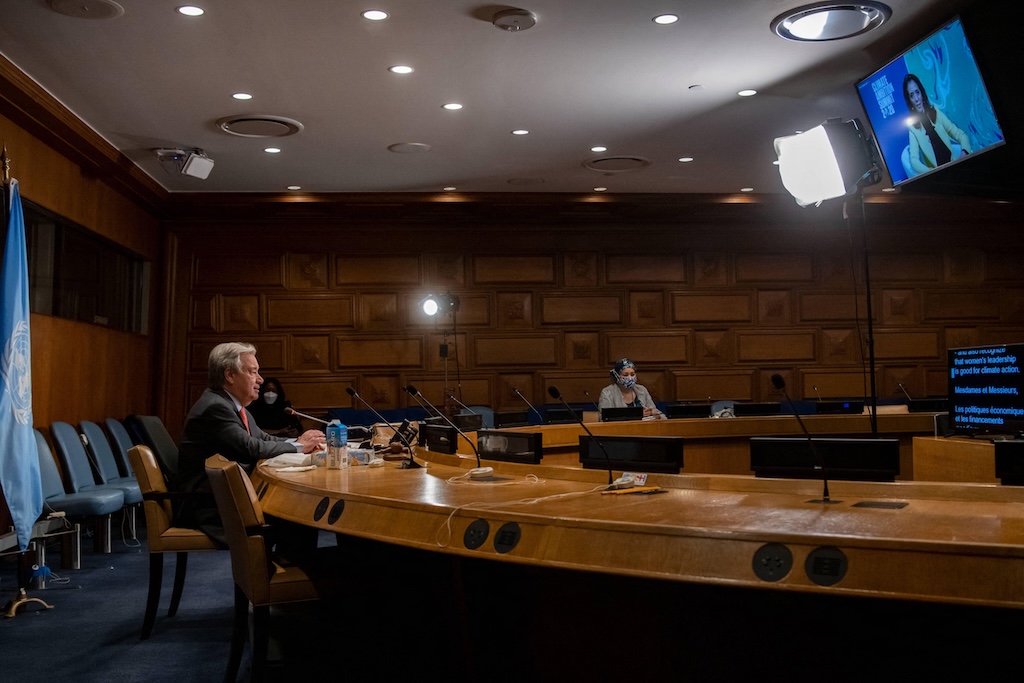
Describing climate change as a “battle for our lives” and the Intergovernmental Panel on Climate Change’s (IPCC) 2021 report as a “code red for humanity”, Guterres has repeatedly demanded immediate action towards limiting global warming to 1.5C.
In 2024, as the world edged closer to hitting 1.5C of warming in an individual year, Guterres said:
“The battle to limit temperature rise to 1.5C will be won or lost in the 2020s – under the watch of leaders today.”
Besides repeatedly urging developed countries to meet their climate-finance obligations, Guterres has also intervened in attempts to resolve gridlocked negotiations at the annual “COP” climate summits.
He is known for his pointed advocacy on phasing out fossil fuels and for regularly convening states to submit more ambitious climate pledges.
The candidates
In the run-up to the UN general assembly in September 2026, nations are putting forward candidates for the secretary general position.
According to Reuters, tradition dictates that the role rotates between regions, with Latin America and the Caribbean next in line.
Thus far, five of the six candidates are from South or Central America: Michelle Bachelet Jeria; Rebeca Grynspan Mayufis; Rafael Mariano Grossi; María Fernanda Espinosa Garcés; and Carolyn Rodrigues Birkett.
The outlier is Macky Sall, a former Senegalese president nominated by the east African nation of Burundi.
Reuters adds that there is an “unwritten rule” that the secretary general never comes from one of the five permanent members of the UN security council – the UK, China, France, Russia and the US – to avoid an over-concentration of power.
In its 80-year history, a woman has never held the position of UN secretary general. Four of the six candidates nominated to date are women.
As shown below, this fact was noted “with regret” by a UN general assembly resolution in 2025, setting out the rules of the process to appoint the next secretary general.

Speaking during the first candidates’ debate, Espinosa Garcés quipped:
“I think, of course, a woman – it’s about time, isn’t it? After 80 years [of the UN’s existence].”
The debate was held in June by the UN Foundation, in collaboration with women’s organisation GWL Voices.
Bachelet, Espinosa and Grynspan took part in person at the event in Geneva, Switzerland.
(Sall sent in a video intervention, played at the beginning of the debate. Grossi was, according to the presenter, “not available” to participate and “chose not to send” a message by video.)
The three candidates were asked by an audience member how they would “ensure the climate governance becomes more equitable in response to those on the front lines of the crisis”, if they were elected as secretary-general.
Bachelet called for increased urgency in tackling climate change. Grynspan highlighted the need for action on adaptation as well as mitigation. Espinosa emphasised the need for a wide range of people to be involved in climate action, from Indigenous people to the financial sector.
The three participants all emphasised the need for finance in their responses. Bachelet, for example, specifically highlighting the need for grant-based finance. She said that “we cannot” keep asking “states that are fighting with a terrible debt” to accept climate-finance loans, which, ultimately, add to their debt. She added:
“They’re drowning and we’re asking them to ask for loans with a debt service that’s so big.”
All six candidates attended the Jeju Forum for Peace and Prosperity, co-hosted in Geneva by the Ban Ki-moon Foundation, at the end of June, ahead of the scheduling of further debates.
Additionally, for the first time in the selection process, candidates have been asked to voluntarily disclose their funding sources at the time of nomination.
Below, Carbon Brief details the candidates that have been nominated so far, what climate-relevant roles they have held previously and their views on climate change. (The list will be updated as further candidates are announced.)
Michelle Bachelet Jeria
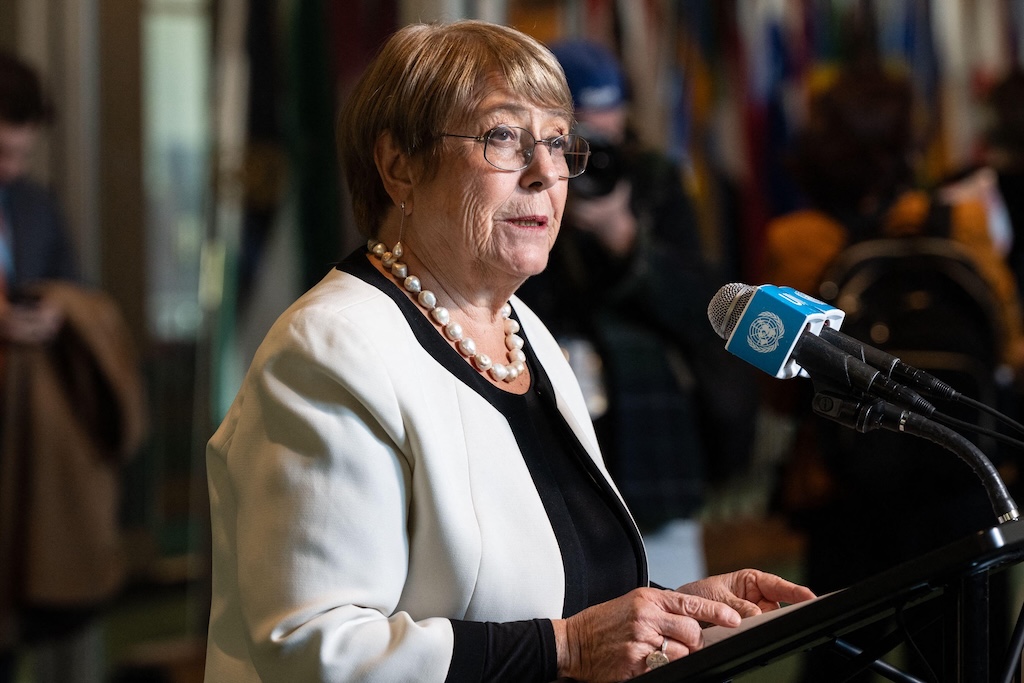
Dr Michelle Bachelet Jeria is a Chilean diplomat, politician and doctor, nominated to be the next UN secretary general by Brazil and Mexico.
Bachelet was the former UN high commissioner for human rights, having served as its seventh commissioner from 2018 to 2022 and as the first director of UN Women.
She originally trained as a doctor – an education that was disrupted by being exiled in 1975 following the Chilean coup d’état led by general Augusto Pinochet – and specialised in paediatrics and public health.
In 1990, she began taking on roles in government bodies, including work in the Ministry of Health. This led her to further study, completing courses in military strategy and continental defence.
She became health minister in March 2000, before becoming the first woman to be the defence minister in Chile and Latin America in 2002.
Bachelet was elected as Chile’s first – and only – woman president, serving two terms: from 2006 to 2010 and 2014 to 2018.
As president and in public office, she consistently framed action on climate change as a human-rights obligation and a preventive tool to mitigate the worst impacts, arguing that “there is no space for [climate] denial”.
During her second term as Chile’s president, the share of renewables in the nation’s energy mix grew from 6% to 17% in four years. Bachelet also enacted South America’s first carbon tax and announced a 70% by 2050 renewable-energy goal, as well as expanding marine protected areas.
Among the range of international positions she has held over the last 20 years, Bachelet was named as the first director of the UN Women agency by former UN secretary general Ban.
Throughout her first term as high commissioner for human rights, Bachelet advocated for the protection of environmental defenders at risk, particularly in Latin America and the Caribbean, as well as women and girls impacted by climate change.
In a 2022 address to the UN human rights council following devastating fires in the Amazon, Bachelet remarked: “We are burning up our future – literally.” She continued:
“The world has never seen a threat to human rights of this scope. This is not a situation where any country, any institution, any policymaker can stand on the sidelines.
“The economies of all nations; the institutional, political, social and cultural fabric of every State, and the rights of all your people – and future generations – will be impacted.”
In an interview after she stepped down as human rights chief, Bachelet described the “triple planetary crisis – climate change, pollution and biodiversity loss” – as the “worst threat for humanity”.
In February 2026, she “broke new ground” when she was nominated by multiple UN member states – Chile, Mexico and Brazil – for the secretary general position.
However, in March, Chile’s newly sworn-in right-wing government, led by José Antonio Kast, withdrew its backing for Bachelet. Her nomination was dubbed “unviable” and a “mistake” by figures in the new government.
This is the first time a nominating state has withdrawn its support for a candidate. Bachelet’s candidacy is still supported by Brazil and Mexico.
Additionally, more than two dozen Republican US lawmakers accused Bachelet of “prioritis[ing] an extreme abortion agenda” in a letter earlier in 2026. They called for the US to veto her nomination.
She pushed back during a hearing in New York, US, saying that she “will always be by the side of women”.
In her pitch for secretary general, Bachelet calls for “simplify[ing] access to climate funds”, “innovative financial instruments” to address biodiversity loss and climate change and “sustainable responses that ensure climate justice, particularly for developing countries and vulnerable communities”.
She calls for debt relief, “true reform” of the international financial architecture, promoting investment in sustainable infrastructure and accelerating a just energy transition, with special attention to small-island states and least-developed countries. She says:
“From climate change to armed conflict, from growing inequality to technological disruption, the future of the UN will depend on its ability to adapt, renew and lead.”
Rebeca Grynspan Mayufis
.jpg)
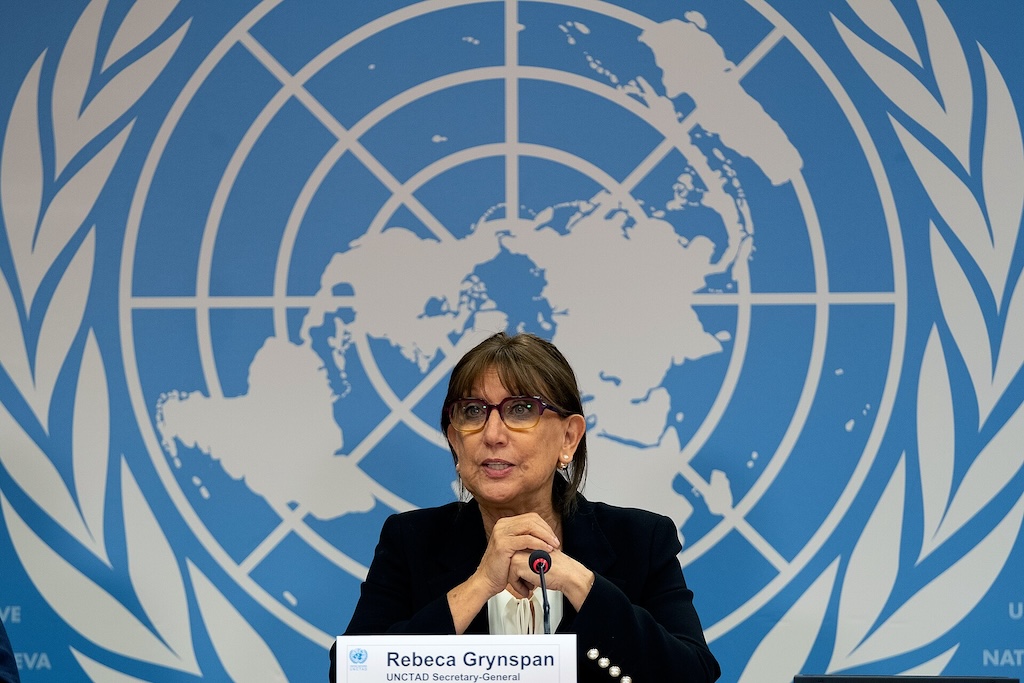
Rebeca Grynspan Mayufis is a Costa Rican economist, diplomat and the former vice-president of Costa Rica. The nation backed her nomination.
In 2021, Grynspan became the first woman to be appointed secretary general of the UN Conference on Trade and Development (UNCTAD).
As part of this role, in February 2022, she outlined the UN’s vision for a sustainable recovery from the Covid-19 pandemic that “avoid[s] another lost decade of development for developing countries”.
In July 2022, Grynspan was credited with playing a “central” role in negotiating the Black Sea grain initiative struck between Russia, Ukraine, Turkey and the UN.
Brokered on behalf of the UN and as part of the Istanbul agreements, the initiative allowed grain and fertiliser exports blocked by Russia to resume to some of the world’s most food-insecure nations, with global food prices falling 23% in response to the deals.
In her pitch to become secretary general, Grynspan prioritises “durable peace and security” and UN reform as the first two of her three key priorities.
She warns that the world is “sleepwalking into dangerous climate-change scenarios”. Still, she adds that “technology offers new paths to development”, including through clean energy and critical minerals that are becoming “as valuable as oil”.
Grynspan has been especially vocal on the interconnections between climate and debt, observing that “financing is really key for any objective that we set to stick to the 1.5C target”.
Grynspan also supports the Bridgetown Initiative, championed by Barbados’ prime minister, Mia Mottley, to reform the global financial architecture and address debt and climate change, particularly in climate-vulnerable countries.
In her pitch, Grynspan warns that many millions “will continue to live in crushing scarcity and face compounding crises” if current trends continue.
These, she says, include small-island states “hit by cyclones that grow fiercer each year, landlocked nations facing the brunt of rising trade costs [and] developing economies servicing debt while capital moves past them”. She continues:
“Many states, including middle-income countries that are home to most of the world’s poor, struggle to fully access the trade, finance, technology and investment opportunities of the global economy.
“The UN must help widen the pathways to economic opportunities and help remove the structural constraints that stifle people’s potential. Sustainable development is not given, but unleashed.”
Rafael Mariano Grossi
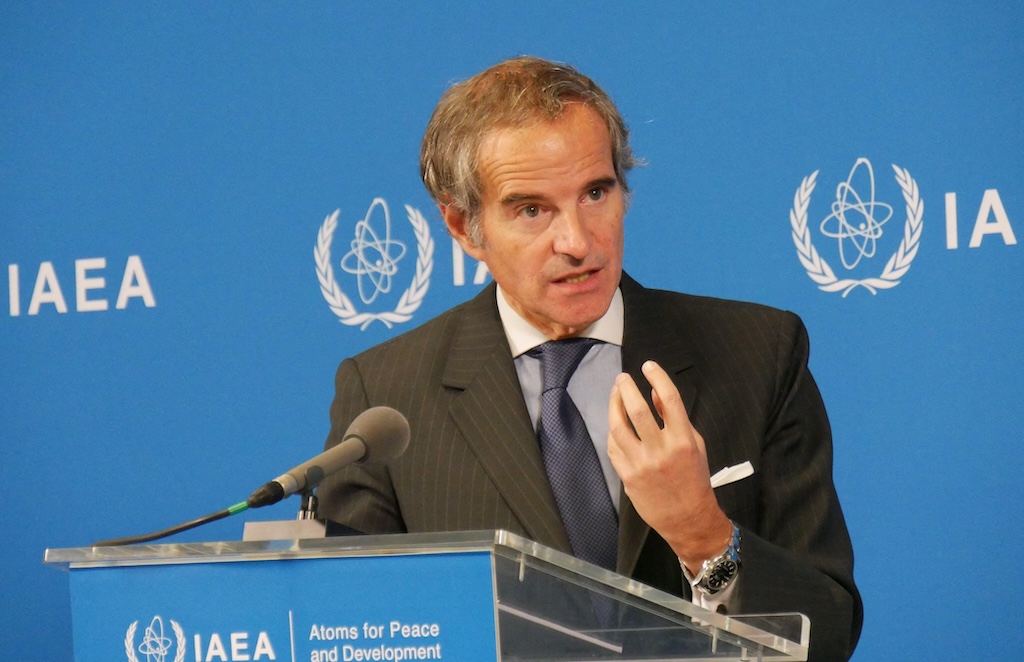
Rafael Mariano Grossi is an Argentine diplomat and has served as the director-general of the UN’s nuclear watchdog – the International Atomic Energy Agency (IAEA) – since 2019.
Grossi was nominated by Argentina in November 2025.
A month later, Iran opposed his candidacy for failing to condemn US-Israeli attacks against “safeguarded, peaceful nuclear facilities”. It has since accused him of political bias and “destructive statements”.
While his “vision statement” for the UN does not directly mention “climate” or “climate change”, he refers to progress on the UN’s Sustainable Development Goals as “unfulfilled aspirations”.
Grossi suggests a “grounded, sectoral approach” to the world’s challenges through “collaborative partnerships” with “civil society, the private sector and the scientific community”.
In the statement – his pitch for the secretary general position – Grossi writes:
“Development cooperation must deliver tangible benefits, including access to health care, food, water and energy security, environment, education and real opportunities for a better quality of life, especially in countries facing the greatest challenges. Words must lead to action, and action to impact.”
Grossi takes credit for helping to achieve “global consensus around the need for nuclear power in the energy transition”.
At the UN climate summit COP28 in Dubai in 2023, Grossi delivered a statement saying:
“Net-zero needs nuclear power. The world needs nuclear power to fight climate change and action should be taken to expand the use of this clean energy source and help build a low-carbon bridge to the future.”
At the conference, a declaration to triple nuclear energy was endorsed by 22 national governments, including the US, France, the UAE and the UK.
More recently, Grossi has described the annual COP summits as “unmanageable” due to their size. According to the National, he has also “said he hoped to bridge the gap between climate agreements and growing energy demands, particularly in developing countries”.
Macky Sall
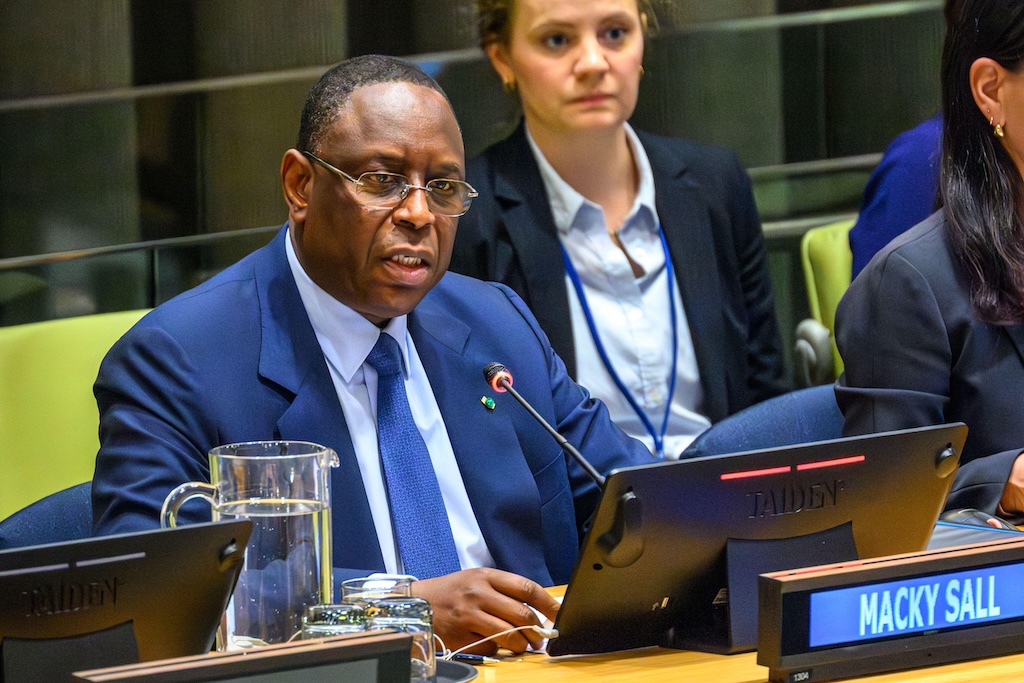
Macky Sall is a Senegalese politician who served as prime minister from 2004 to 2007 and then president from 2012 to 2024. He has been nominated by Burundi, which is currently the chair of the African Union (AU).
However, Sall’s candidacy has been rejected by other AU states, with Rwanda calling the use of a “silent procedure” to push through consensus on the African candidate for the position “a gross breach of AU rules and regulations”.
In his “vision statement”, Sall says that “peace and security cannot be sustained when the foundations of development are undermined by poverty, inequality, exclusion and climate vulnerability”.
While Sall underlines shortfalls in development financing, he emphasises that a “solidarity-based approach, founded on trust in crisis management, combined with sustained efforts for prevention and strengthening of early warning initiatives and mechanisms” is needed to address the challenges created by climate change.
Although Sall’s 12-year stint as president focused on “reducing power cuts and connecting remote villages to the power grid”, his candidacy is also facing charges of corruption, protestor crackdowns and media repression, according to Al Jazeera.
During the early part of Sall’s presidency, Senegal discovered oil and gas reserves – and the country’s oil exports have since surged from $0.4bn in 2015 to $2.4bn in 2024.
He was supportive of the African oil-and-gas sector, with much of the development of Senegal’s first oil production site undertaken during his term in office.
In 2019, a BBC Africa Eye investigation alleged that a company owned by Aliou Sall – Sall’s brother – received secret payments from businessmen who had obtained licences for two offshore gas blocks that same year. Sall denied the allegations.
María Fernanda Espinosa Garcés
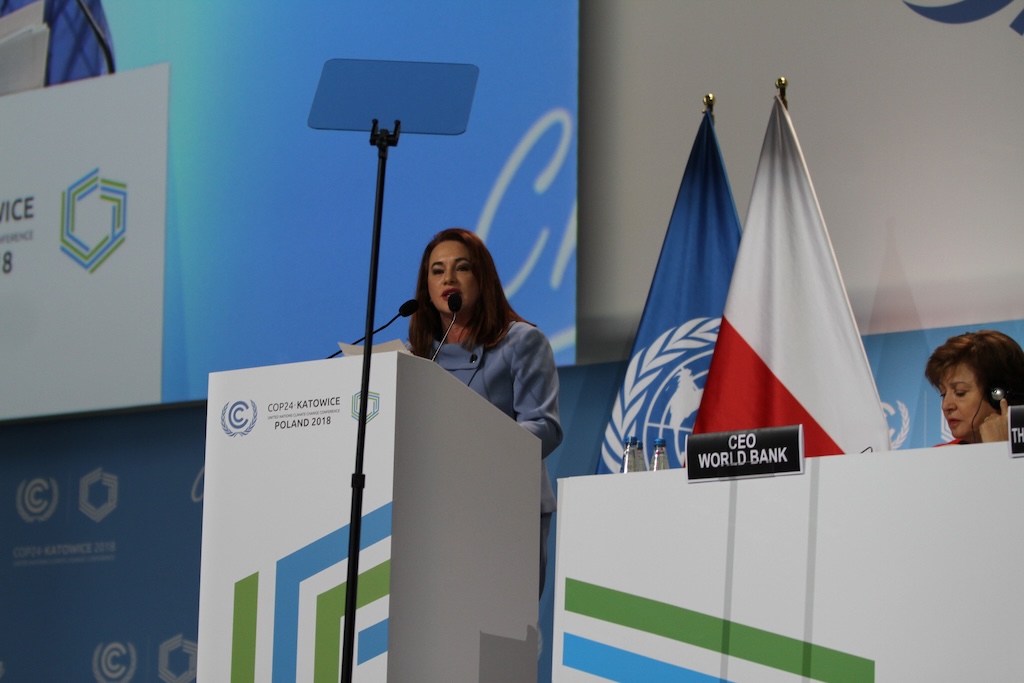
María Fernanda Espinosa Garcés is an Ecuadorian linguist, poet, politician and conservationist. She was nominated by Antigua and Barbuda on 12 May, the only Caribbean state to put forward a candidate in this year’s selection process.
Espinosa was the president of the UN general assembly (UNGA) from 2018 to 2019. She has also served as Ecuador’s minister of foreign affairs twice, as well as its defence minister.
Before her political career, Espinosa was known for her work with Indigenous communities in the Ecuadorian Amazon and biodiversity conservation.
She established the socio-environmental studies programme at the Latin American Faculty of Social Sciences (FLACSO) and served as the regional director for South America at the International Union for the Conservation of Nature (IUCN) from 2005 to 2007.
Espinosa is no stranger to climate talks: she was Ecuador’s chief climate negotiator at UN COPs from Copenhagen in 2009 to Paris in 2015.
In a statement ahead of COP24 in Katowice, Poland, Espinosa – as UNGA president – remarked:
“I clearly remember the long negotiation days; the emotions, the frustrations, the sense of duty fulfilled in Cancun, Johannesburg or Copenhagen; the great hope of Paris. Clearly, we have come a long way, and much has been achieved, but we must rise to the new evidence and the new threats.
“The current climate crisis gives us now the opportunity to show the world that effective, results-oriented multilateralism is not an option but a survival necessity.”
In a 2024 paper, she lists fragmentation, “coordination challenges” and an “implementation deficit” as some of the key hurdles undermining the UN’s global environmental governance framework. She argues that its effectiveness “is significantly compromised by its very structure”.
In the same paper, Espinosa observes that the UNFCCC’s consensus-based decision-making “paradoxically contributes” to challenges in responding to climate change.
In her vision statement, Espinosa says that she plans to encourage a “more coherent international response” to support highly indebted, climate-vulnerable countries.
She states that the UN must act as a platform to strengthen cooperation on energy and support states during energy shocks.
According to Espinosa, “energy security, access, sustainability, trade and strategic autonomy are central to global stability”, with the energy transition “reshaping patterns of dependence and competition”.
She also says critical mineral extraction is being “unevenly distributed and developing at breakneck speed”.
If selected as secretary general, Espinosa plans to establish a “global energy security coordination mechanism” between UN member states and “other key actors” to manage the impacts of global energy shocks. These include impacts on energy access and affordability, food security, development and social stability, according to her nomination statement.
At a special UNGA meeting on climate ambition and sustainable development in 2019, Espinosa warned the gathering:
“We are the last generation that can prevent irreparable damage to our planet. Climate justice is intergenerational justice.”
Carolyn Rodrigues Birkett
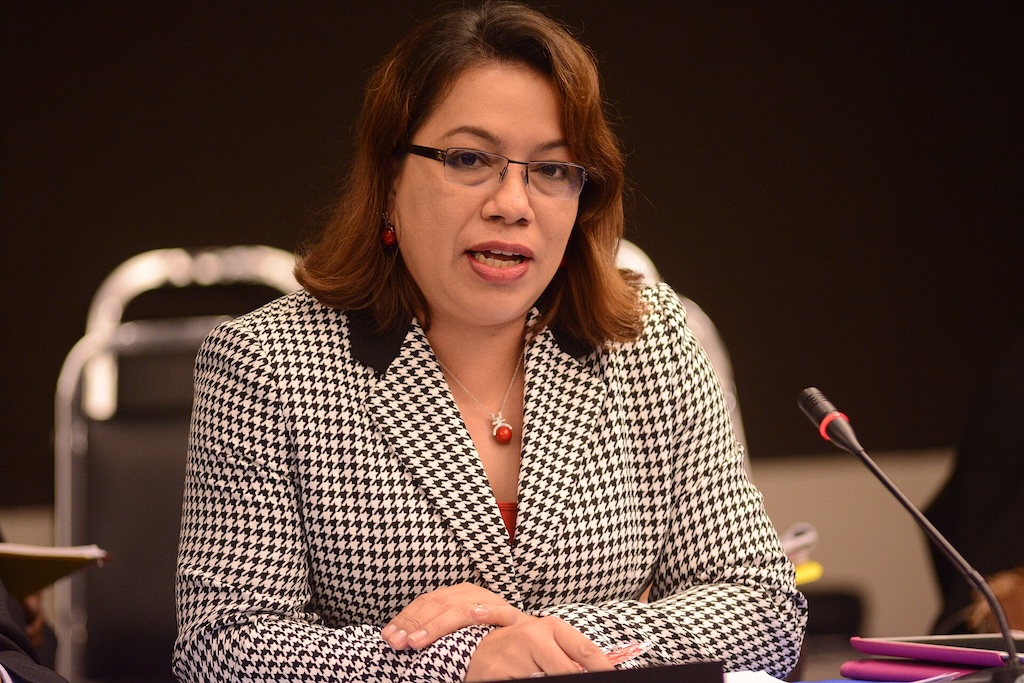

Carolyn Rodrigues-Birkett is a politician, diplomat, former school teacher and Guyana’s permanent representative to the UN. She was nominated by her home nation on 15 June 2026, becoming the first Indigenous candidate in the current elections.
Rodrigues-Birkett served as Guyana’s minister for Amerindian affairs – the Indigenous population – in 2001 and 2006.
Appointed at the age of 27, Birkett is widely recognised as one of the “architects” of the Amerindian Act of 2006 – a piece of legislation described as “a milestone for Amerindian land rights, not only in Guyana but the western hemisphere”.
The act codified Indigenous land rights, governance and mandates their consent before mining or development projects on communally owned forest land.
In 2008, Birkett was appointed the country’s minister for foreign affairs and trade for two terms, the first and youngest woman of Indigenous descent to rise to the role.
Birkett has served as Guyana’s envoy in the security council in its two-year tenure between 2024 to 2025, supporting statements on the linkages between climate, peace, security and food insecurity.
Between 2015 and 2020, she coordinated the Food and Agriculture Organization’s (FAO) work with other UN organisations and its outreach to parliamentarians, particularly in Africa, Latin America and the Caribbean.
In her vision statement for the role, Birkett places a strong emphasis on climate finance and unmet sustainable development goals. She says:
“While trillions exist globally in potential financing, many developing countries continue to struggle with access. There has also been a profound shift in the risk landscape characterised by interconnected threats and climate-related challenges.”
The new secretary general, she says, must work with member states to “champion the implementation of existing commitments”. She adds that “there must be continued support to [m]ember [s]tates as they implement agreed” climate commitments.
If elected, Birkett pledges to use the secretary general’s convening powers to “bring all stakeholders together to address climate impacts and protect the environment”.
Next steps
While parties were encouraged to submit their