Connect with us

Published

on

Toyota

Toyota is redefining the future of clean energy with its portable hydrogen cartridges showcased recently at the Japan Mobility Bizweek 2024. This cutting-edge technology could change how we power vehicles and appliances simultaneously offering a quick and sustainable alternative to time-consuming electric vehicle (EV) charging. Let’s explore it.

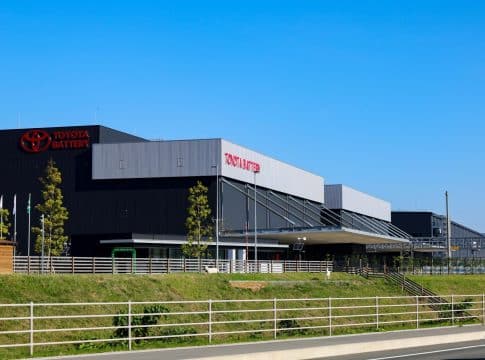
In March, Primearth EV Energy (PEVE) became fully owned by Toyota. On October 1, the company celebrated its new name, Toyota Battery, with a ceremony. President Masamichi Okada expressed his gratitude and promised to lead Toyota Group’s push toward electrification. He said,

“It goes without saying that we will contribute to the multi-pathway strategy with batteries for HEVs (hybrid electric vehicles), PHEVs (plug-in hybrid electric vehicles), and BEVs (battery electric vehicles), as well as secondary batteries for fuel cell vehicles. In addition, we want to explore all possible ways of supporting Toyota’s commitment to developing hydrogen-engine vehicles, including the potential for batteries to extend the cruising range or reduce fuel tank size.”

Portable Hydrogen Cartridges: A Game-Changing Innovation

Originally developed by Toyota’s mobility subsidiary, Woven, the hydrogen cartridge concept has come a long way since its initial prototype in 2022. Today, the cartridges are lighter, more compact, and easier to transport. In a way, they resemble giant AA batteries.

The press release says, that with these portable fuel sources, Toyota aims to solve one of the biggest challenges for hydrogen fuel cell electric vehicles (FCEVs): the need for refueling infrastructure with costly hydrogen pipelines.

Unlike conventional EVs that rely on electricity and can take hours to charge, Toyota’s hydrogen cartridges offer a swappable, portable power source.

  • Drivers can easily and quickly replace a depleted cartridge with a full one.
  • Enhances the driving experience and drivers can get back on the road faster.
  • Gives a major boost to hydrogen-powered mobility and is a potential game-changer for reducing EV downtime.

TOYOTA

Source: Toyota

Multiple Uses Beyond Vehicles

But Toyota’s vision for these hydrogen cartridges goes beyond just fueling cars. The company imagines them powering everything from motorcycles to home appliances. They could even be used for cooking, as Toyota and Rinnai Corporation demonstrated at the event with a hydrogen-powered stove. We can say, that this technology brings renewable energy directly to consumers without disrupting existing systems.

In emergencies, these cartridges could be removed from vehicles and used to power devices during blackouts. Toyota envisions a world where hydrogen cartridges can be delivered to homes alongside groceries and other essentials. Spent cartridges would be collected, refilled, and redistributed—creating a seamless system for hydrogen distribution.

Moreover, hydrogen is produced using renewable energy sources which is a great way to meet net-zero goals without relying on fossil fuels. Hydrogen can generate electricity, store energy, and burn for heat. But it emits only water and not carbon dioxide.

The new-age fuel has gained good momentum as BMW, Hyundai, and Honda are also exploring hydrogen potential. Worth mentioning, that it goes beyond the automotive sector. It could be used to power airplanes, heavy machinery, and industrial processes.

Toyota Envisions a Hydrogen-Powered Future

Toyota’s hydrogen cartridges could certainly build a more sustainable, efficient energy network. They are just bringing its vision of a hydrogen-powered future closer to reality.

The company has already well established itself in the hydrogen space. Its hydrogen-powered Corolla has been on the road since 2021. However, Toyota’s sustainability vision isn’t limited to hydrogen. The company is also investing heavily in battery technology, as we read before.

The Sweep Energy Storage System

One of the key exhibits at Japan Mobility Bizweek is Toyota’s Sweep Energy Storage System, which recycles used batteries from hybrid and electric vehicles. This system maximizes the remaining energy capacity of used batteries, supporting the wider adoption of renewable energy sources like solar and wind.

Toyota is building a circular economy with the Sweep System. The company’s focus on reducing waste and reusing materials is central to its sustainability strategy. Toyota’s innovations in both hydrogen and battery technology demonstrate its commitment to a greener future

The Road to Carbon Neutrality

Toyota aims to reach carbon neutrality across its entire vehicle life cycle by 2050. This goal involves reducing and offsetting greenhouse gas (GHG) emissions to achieve net zero across operations, manufacturing, logistics, and the full product cycle, from use to recycling. Furthermore, their science-based targets streamline their efforts to reduce emissions from every stage of the vehicle lifecycle.

toyota

Source: Toyota

The Japanese automaker firmly believes battery electric vehicles (BEVs) and hydrogen fuel cell electric vehicles (FCEVs) will rule the future. As these sustainability technologies develop, hybrids (HEVs), plug-in hybrids (PHEVs), and vehicles running on lower-carbon fuels will play a crucial role in their transition strategy.

Additionally, Toyota is collaborating with startups and other businesses to push hydrogen and renewable energy technologies further. These partnerships will advance its hydrogen cartridge concept and make the fuel cells commercially viable.

The post How Toyota’s Hydrogen Cartridges Will Change EVs Forever appeared first on Carbon Credits.

Continue Reading

Carbon Footprint

Climate-Linked Supply Chain Risk Is Already in Your P&L

Published

on

The earnings calls that quietly reframed climate from sustainability question to operating risk.

Three earnings calls in the last 18 months tell the story without any help from a press release.

Hershey, May 2024: cocoa price exposure compresses margin, and the company attributes part of the cost shock to West African weather. Olam, July 2024: coffee climate exposure quantified in the annual report. JBS, January 2025: supply chain climate disclosures expanded materially in response to investor pressure and regulatory expectation. None of these companies issued the announcement as climate news. They issued it as financial news. The climate-linked supply chain risk did not arrive with a sustainability framing; it arrived as a P&L line.

You are probably reading this article because you suspect the same thing is happening to your business. This piece walks through what is showing up on which earnings calls, how procurement and finance leaders are quantifying the exposure, and what serious corporates are doing about it before the regulator asks.

Where climate risk has already appeared in earnings

The pattern is consistent across resource-intensive sectors. A weather event compresses supply, the price spikes, the cost flows through the income statement, and the analyst on the call asks whether the event is anomalous or structural. Increasingly, the honest answer is the second one.

Cocoa is the cleanest example. The 2023 to 2024 West African harvest fell sharply on the back of erratic rainfall and disease. Cocoa futures more than tripled. Companies with concentrated West African sourcing absorbed the cost; companies with diversified sourcing absorbed less. The exposure was not climate as ESG topic. It was climate as cost of goods.

Coffee follows the same pattern. Brazilian and Vietnamese harvests have moved on weather more sharply across the last several seasons. Roasters with long-tenor supplier relationships and origin diversification have managed the volatility; roasters with spot-market exposure have not. Wheat, sugar, palm oil, beef: the same dynamic in different commodities, a pattern the IPCC AR6 Working Group II report projects will intensify across agricultural systems through mid-century.

What this means: climate risk is no longer a footnote in the 10-K. It is a line item the CFO has to explain on the call.

The three commodity exposures that hit margin first

For most companies with material Scope 3 exposure, three exposures dominate the near-term P&L risk.

  • Concentrated single-origin sourcing in a climate-vulnerable region. If your tier-one supply for any material commodity sits in one geography, you have a concentration risk that climate amplifies. Diversification across origins is the obvious hedge, but it takes years to build and requires relationships you cannot acquire by tender.
  • Supplier financial fragility under climate stress. Smallholder farmers, who supply a large share of the global cocoa, coffee, and palm oil market, do not carry the balance sheets to absorb yield shocks. When yields collapse, they exit. When they exit, your supply base shrinks, and the surviving suppliers raise prices. The risk is structural, not cyclical.
  • Logistics and storage exposure to extreme weather. Hurricane disruptions to Gulf shipping, drought-driven Panama Canal restrictions, flooding in European inland waterways: each of these has moved input costs in the last three years, a pattern documented in Munich Re’s natural catastrophe data. The exposure shows up as a one-quarter event in the financial press but accumulates over time on the cost line.

TCFD and ISSB disclosure changes

The disclosure architecture has now caught up with the risk. The Task Force on Climate-related Financial Disclosures, whose recommendations are now embedded in the ISSB’s IFRS S2 climate standard, requires companies to disclose climate-related risks across physical and transition categories, with quantification where possible.

For physical risk specifically (the climate-linked supply chain risk you are reading about), the disclosure must address both acute exposures (extreme weather events) and chronic exposures (gradual changes in temperature, precipitation, and growing seasons). The disclosure must address the time horizon over which the risk is material, the parts of the value chain exposed, and the financial impact under different scenarios.

The CSRD imposes similar requirements under European law, with double materiality (both financial and impact materiality) embedded in the assessment. The practical effect: your auditors and your investor relations team now need a defensible answer to the climate-linked supply chain risk question, and the answer needs to be quantified.

What procurement and finance can do now

Three actions matter near-term.

Map your exposure. Most companies do not have a clear view of which tier-one and tier-two suppliers sit in which climate-vulnerable geographies. Without the map, you cannot quantify the risk, and without the quantification, you cannot disclose it credibly. The map is the foundation, and World Resources Institute climate risk research provides useful public tooling to start.

Diversify and deepen, in that order. Diversification across origins reduces concentration risk, but the deeper move is to invest in the resilience of the suppliers you already have. Regenerative practices, agroforestry, soil health interventions: these reduce yield volatility under climate stress and protect your input cost trajectory.

Embed the climate spend inside procurement, not outside it. Treating climate risk as a sustainability cost line subordinates it to the ESG budget. Treating it as a procurement and resilience investment puts it in the budget that matters, which is the cost-of-goods budget that the CFO defends quarterly.

Nature-based supply chain investments are the asset class designed for exactly this purpose. They sit inside the value chain, they reduce climate-linked supply risk, they generate verifiable Scope 3 reductions, and they produce the documentation an auditor and a regulator can both test.

If you are quantifying climate-linked supply chain risk in advance of the next earnings cycle or the next disclosure period, the carbon and sustainability experts at Carbon Credit Capital can help you map your exposure and structure a Dual-Value Model response that addresses reduction, resilience, and disclosure-readiness in a single program. Schedule a consultation.

Continue Reading

Carbon Footprint

Where should an SME start with a carbon action plan?

Published

on

More and more small and medium-sized businesses are hearing the same question from their larger customers: What is your carbon footprint? That question now travels down entire supply chains, and it arrives next to tender requirements, certification criteria, and rising customer expectations.

Continue Reading

Carbon Footprint

Insetting vs Offsetting: Which Actually Counts Toward Your Scope 3 Targets

Published

on

The accounting differences that decide whether your nature investment shows up in inventory, in BVCM, or nowhere at all.

The question reaches a procurement team about three weeks before the next sustainability committee meeting. Someone has read about insetting. Someone else has just signed off on an offset purchase. The CSO wants to know if the two are interchangeable. The answer is no, and the GHG Protocol Land Sector and Removals Standard is the reason why.

This article walks through what each term means at audit-grade specificity, what the standards actually say about how each gets counted, and how to decide which tool fits which target. The insetting vs offsetting question is one of the most-searched in corporate climate strategy, and one of the most poorly answered. By the end of this piece, you should be able to brief a committee on the difference without notes.

The two definitions, in plain English

Offsetting means buying carbon credits generated outside your value chain and retiring them against your residual emissions. The reduction happens somewhere else, financed by you, and the credit is the receipt.

Insetting means investing in emission reductions or removals inside your own value chain, typically with suppliers, where the reduction is directly linked to the products and services you buy. The reduction happens inside the boundary of your Scope 3 inventory, and the accounting treatment is fundamentally different.

The shorthand from the University of Oxford’s Nature-based Insetting Initiative is useful: insetting is what you do with the supply chain you have; offsetting is what you do with the supply chain you do not have.

What the GHG Protocol Land Sector Standard actually says

The GHG Protocol Land Sector and Removals Standard, finalised in 2024 after a multi-year pilot, sets the rules for how land-based emission reductions and removals enter corporate inventories. The Standard distinguishes between inventory accounting (Scope 1, 2, and 3) and project or intervention accounting (a separate methodology for crediting).

For insetting, the practical implication is that supplier-level interventions, when properly measured and attributed, can reduce your Scope 3 category 1 (purchased goods and services) emissions in your inventory. The reduction is not a credit retired against the inventory; it is a lower inventory number, period.

For offsetting, the credit is retired separately. It can be reported as a contribution toward a net-zero claim under the SBTi Beyond Value Chain Mitigation framework or as part of a VCMI Carbon Integrity claim, but it does not lower the inventory number.

A practical consequence: if your Science Based Target requires a 50% absolute reduction in Scope 3 emissions by 2030, insetting moves you toward the target. Offsetting does not. This single point of difference reshapes the procurement decision.

When insetting counts toward Scope 3 (and when it does not)

Insetting counts toward Scope 3 only when several conditions are met:

  • The intervention must occur with an entity in your value chain.
  • The emissions reduction or removal must be measured against a defensible baseline.
  • The reduction must be attributed to your share of that supplier’s output, not double-counted with other buyers.
  • It must follow the inventory accounting rules in the GHG Protocol Land Sector Standard, not the project accounting rules used to generate credits.

The most common failure mode is double counting. If your supplier sells the same reduction as a credit on the voluntary market and also reports it to you as a Scope 3 reduction, the math breaks. The Standard requires you to address this risk, typically by purchasing and retiring the supplier-issued credit as part of your inventory or by contractual provisions that prevent the supplier from selling the reduction twice.

When insetting does not count toward Scope 3: when the intervention sits with a supplier you do not buy from, when the baseline is not defensible, when the attribution is unclear, or when the documentation does not survive audit. Those cases default to Beyond Value Chain Mitigation, which is still useful but operates on a different ledger.

The procurement and supplier engagement question

Insetting is harder than offsetting. That is the unfashionable truth most buyers eventually confront. Offsetting is a transaction; insetting is a relationship.

To run an insetting program, you need supplier mapping precise enough to know which farms or facilities sit at which Scope 3 boundary. You need an engagement model that gets suppliers to participate, which usually requires multi-year commitments and shared economics. You need an MRV architecture that measures the right things and produces audit-ready documentation. And you need a contractual structure that prevents double counting and protects both sides.

The trade-off you receive in return is significant. Reductions count against your inventory rather than your residual. Supplier relationships deepen, which protects sourcing continuity. Yield and quality improvements often follow regenerative interventions, which reduces your input cost over time. And the regulatory file, under CSRD, CSDDD, EUDR, and the SBTi FLAG Guidance, is materially stronger.

Choosing the right tool for the right target

A practical decision rule. If your target is a science-based Scope 3 reduction and you operate in a FLAG sector or source FLAG commodities, insetting is the structurally correct tool. If your target is a net-zero claim that includes neutralising hard-to-abate residual emissions outside your value chain, BVCM via high-integrity offsets is the structurally correct tool. Most companies with material Scope 3 exposure need both, in different proportions, sequenced over time.

The sequencing matters. Insetting takes longer to stand up but produces a permanent reduction in the inventory. Offsetting can be transacted faster but does not change the inventory and now sits under tighter claim restrictions. Treat them as complementary tools with different jobs, not as substitutes. The Accountability Framework Initiative and the IUCN Global Standard for Nature-based Solutions both provide useful guardrails for the insetting side, with biodiversity, human rights, and benefit-sharing requirements that go beyond carbon math.

If you are mapping a Scope 3 reduction roadmap and need to scope which interventions count toward your inventory versus which sit in Beyond Value Chain Mitigation, the carbon and sustainability experts at Carbon Credit Capital can help you structure a nature-based supply chain investment program that fits your FLAG exposure, your target architecture, and your audit horizon. Schedule a consultation.

Continue Reading

Trending

Copyright © 2022 BreakingClimateChange.com

