


The goal of reaching net zero emissions by 2050 is widely recognized, but the path to get there is complex. With rising electricity demand driven by data centers, electric vehicles, and cleaner industrial processes, we need reliable, carbon-free power.
The U.S. Department of Energy (DOE) predicts that an additional 200 GW of nuclear capacity will be required by 2050 to meet this demand. Fortunately, a significant portion of this capacity could come from an unexpected but familiar source—existing and retired nuclear plant sites.
Tapping Into Existing Nuclear Power Infrastructure
A new DOE report suggests that 60 to 95 GW of new nuclear capacity could be added by using sites of 54 operational and 11 recently retired nuclear plants across 31 states.
By examining each site’s footprint, cooling water availability, seismic risks, and proximity to population centers, the DOE’s researchers found that these locations hold great potential for future reactor deployment.
The Grand Gulf Nuclear Station in Port Gibson, Mississippi, has the largest U.S. nuclear reactor. With a net summer electricity generation capacity of about 1,400 MW.
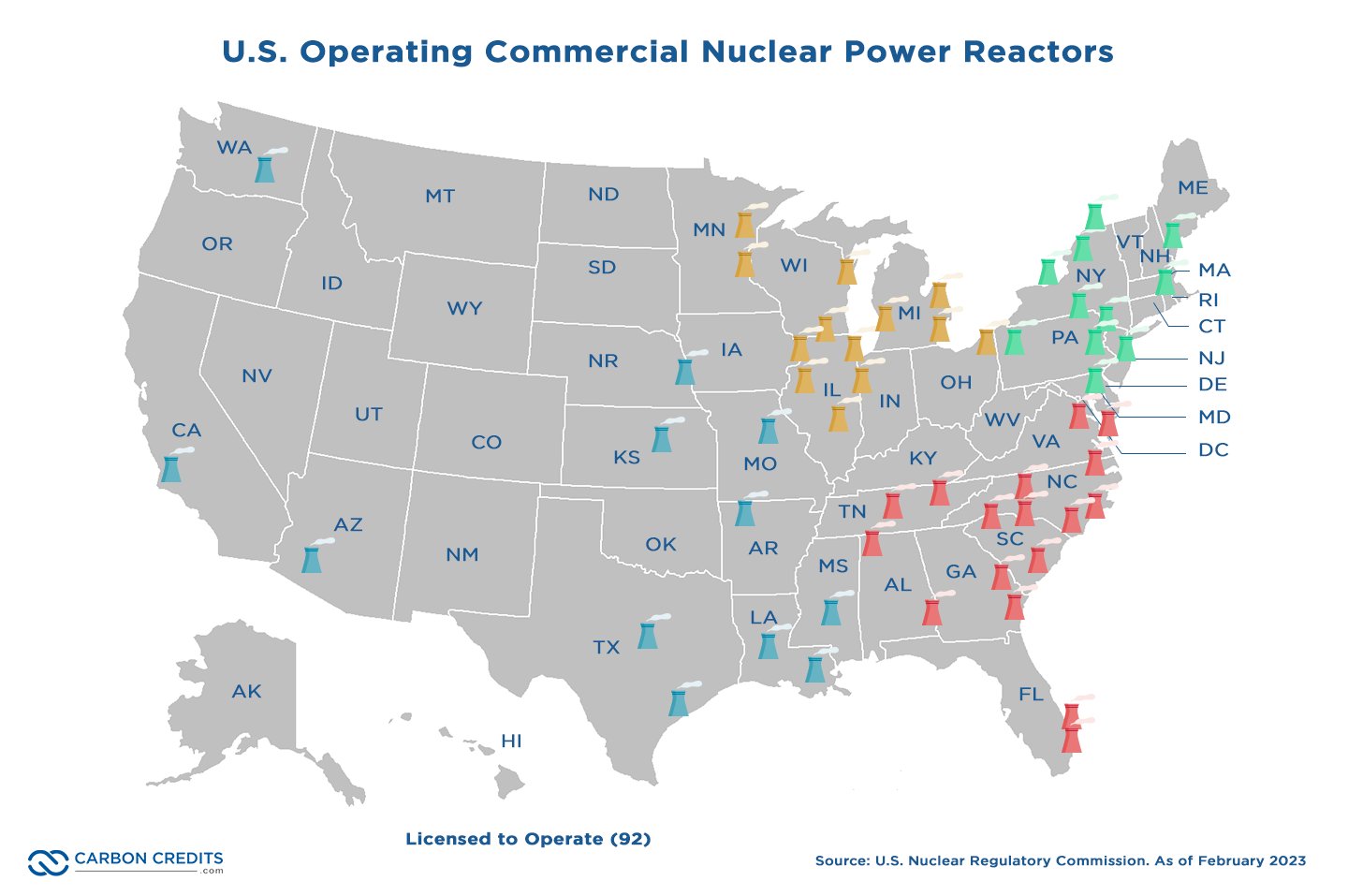
*** The US has 93 operating commercial nuclear reactors at 54 nuclear power plants in 28 states. The Grand Gulf Nuclear Station in Port Gibson, Mississippi, is the largest nuclear reactor in the United States.
The study’s analysis identified 41 operating and retired sites that have the space for large light-water reactors like the AP1000 reactors in Georgia. These sites could host up to 60 GW of new capacity.
Moreover, smaller advanced reactors with 600 MW capacity could raise that potential to 95 GW, offering a flexible solution to meet future energy needs.

A MESSAGE FROM URANIUM ROYALY CORP.
The Only Pure Play Uranium Royalty Company
Uranium Royalty Corp is the first company to apply the successful royalty and streaming business model exclusively to the uranium sector.
With interests in advanced, permitted and producing uranium projects, the company is well positioned as a capital provider to meet the growing need for uranium as fuel for carbon free, nuclear energy. Learn more about Uranium Royalty Corp’s portfolio of royalty assets and uranium holdings.
Discover their first mover pure-play uranium royalty exposure >>
NASDAQ: UROY | TSX: URC
*** This content was reviewed and approved by Uranium Royalty Corp. and is being disseminated on behalf of Uranium Royalty Corp. by CarbonCredits.com for commercial purposes.
Why Existing Sites Are Ideal for New Reactors
Building new reactors at existing or retired nuclear sites makes both economic and community sense. Many nearby residents already view nuclear energy as a positive presence, given its benefits. These include jobs with wages 30% higher than local averages and tax revenues that enhance schools and infrastructure.
Moreover, nuclear power plants are generally seen as “good neighbors,” which increases the likelihood of community support for new projects.

Regulatory Pathways to Speed Up Deployment
Another advantage of building at existing sites is that many have already engaged with the Nuclear Regulatory Commission (NRC) for additional reactors in the past. Although 17 reactors were planned but never built, these sites were thoroughly evaluated. Plus, eight of these sites even received construction and operating licenses (COLs). Leveraging these previous regulatory engagements could significantly speed up the licensing process, potentially saving both time and capital on future builds.
According to the report, 24 GW of clean energy could have been added through these planned reactors. By revisiting these sites and fast-tracking approval processes, the United States could accelerate the deployment of much-needed clean energy infrastructure.
Expanding Nuclear Capacity Beyond Existing Sites
The DOE report also explored another promising avenue for expansion—building nuclear power plants near coal power plant (CPP) sites. These locations offer another 128 to 174 GW of nuclear capacity potential, depending on reactor type. This potential capacity represents replacement power for existing/recently retired coal power plants to lower carbon emissions.
Transitioning from coal to nuclear at these sites could bring substantial economic and environmental benefits by leveraging the existing workforce and infrastructure in these energy communities.

The analysis of the 145 CPP sites suitable for nuclear development produced the following data for potential siting:
- 79% could site a large 1,117 MWe LWR (light-water reactor)
- 94% could site a large 1,000 MWe LWR
- 100% could site a generic 600 MWe reactor technology
The Road Ahead for Nuclear Power
While the findings from the DOE’s report are encouraging, it’s important to recognize that they are preliminary. A great deal of collaboration will be required between utilities, communities, and policymakers to determine the viability of building new reactors.
One of the most significant barriers to deployment will be capital costs, which have historically been a challenge for nuclear energy projects.
To address this, the DOE has developed a new tool aimed at quantifying capital cost reductions for new reactors. This tool will help stakeholders identify strategies to lower costs, making nuclear power a more feasible solution to meet future energy demands.
As the world works toward a net zero future, nuclear power has the potential to play a crucial role. By tapping into existing infrastructure, speeding up the licensing process, and exploring coal-to-nuclear transitions, the U.S. can significantly expand its clean energy capacity.
With the launch of new tools and ongoing research, the path forward for nuclear energy is becoming clearer. Stay updated for more updates on how nuclear power can help achieve the earth’s 2050 emissions goals.
The post How Retired Nuclear Power Sites in the U.S. Could Fuel Net Zero by 2050 appeared first on Carbon Credits.

Carbon Footprint
Bioleaching Breakthrough in Canada: How MIRARCO’s Pilot Facility Turns Mine Waste into Critical Minerals
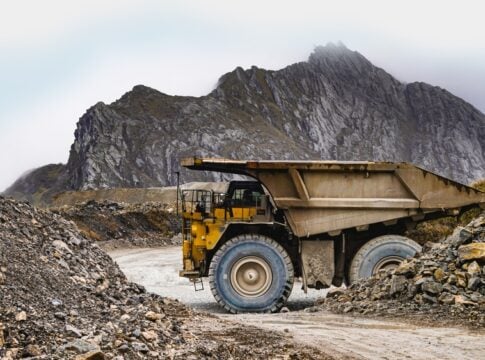
A new wave of innovation is reshaping how the mining industry approaches waste. CBC News, Canada, reported that researchers in Sudbury, northern Ontario, are developing a bacteria-based technology called bioleaching, which uses naturally occurring microbes to extract valuable metals such as nickel, cobalt, and copper from old mine tailings.
Led by MIRARCO Mining Innovation, the team recently opened a pilot facility in October 2025 to scale up this process, aiming to transform mining waste into a source of critical minerals while cutting emissions, reducing environmental risks, and unlocking billions of dollars in untapped resources.
Sudbury Moves Toward Commercial Bioleaching
Sudbury has a long history of mining, leaving behind massive piles of tailings—the leftover rock and sediment from ore extraction. These materials still hold billions of dollars’ worth of metals, but until now, recovering them was difficult, energy-intensive, and expensive. The bioleaching technology changes that. By using bacteria that naturally digest minerals, scientists can release metals from waste rock without relying on harsh chemicals or high temperatures.
According to Nadia Mykytczuk, CEO of MIRARCO, the new pilot facility represents a shift toward sustainable mining. She precisely mentioned that,
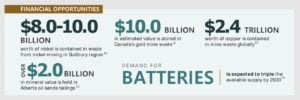
In Sudbury alone, the tailings contain $8 billion to $10 billion worth of nickel. With this facility, we are shaping a new era of mining innovation—one that focuses on clean technology, critical minerals, and preparing the workforce of tomorrow.
The facility connects research, industry, and community partners, creating a hub for applied research in bioleaching and bioprocessing.
Before moving to the new facility, MIRARCO operated within Laurentian University, and the long-standing partnership continues. The pilot center allows researchers to handle larger samples of mine waste and test how bioleaching works at a scale closer to industrial operations. This is essential for proving that the process can be commercially viable in Canada.
Bioleaching Breakthrough: Turning Tailings into Critical Minerals
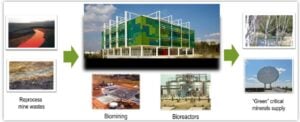
- The process starts by grinding the mine tailings and mixing them with a nutrient-rich liquid. Scientists then introduce specialized bacteria into the mixture.
- These microbes feed on the minerals, producing chemical reactions that dissolve metals into the liquid.
- The resulting slurry moves through a series of reactors, where the process continues, and metals are eventually collected in a liquid form.
Early experiments are promising. Scientists at MIRARCO have noted that the process can recover 98–99 percent of nickel from the tested tailings. The value surpasses traditional methods that often leave large amounts of valuable minerals behind.
In separate research, scientists are growing and refining the bacteria. Different microbes target specific minerals. Some thrive in acidic conditions, ideal for breaking down sulfide tailings, while others focus on iron oxides or silicate rocks.
This flexibility allows scientists to extract not only common metals like nickel and copper but also rare earth elements and lithium, which are critical for batteries and renewable energy technology.
Environmental and Carbon Benefits
Traditional metal extraction uses energy-intensive methods, including high-temperature processing, chemical treatments, and heavy machinery. This approach produces substantial carbon emissions and generates more waste. Bioleaching operates at ambient temperature and pressure, reducing energy use by an estimated 30–40 percent.
It also tackles the challenge of storing mining waste. Canada produces around 650 million tons of mine tailings every year. Much of this material sits in ponds behind dams, which can be unstable and pose long-term environmental risks.
Significantly, tailings may generate acid or release metals into the environment, and dam failures can have serious consequences. The 2014 Mount Polley mine tailings dam failure incident in British Columbia is a stark reminder of these dangers.
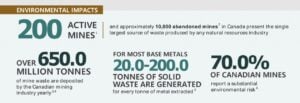
By turning tailings into a source of metals, bioleaching reduces the volume of waste requiring storage, cutting both environmental risk and the legacy costs of old mining sites.
Overcoming Challenges
While promising, the technology is not without hurdles. Processing tailings can be costly, and the bacteria require careful monitoring and specific growth conditions. Scaling up from pilot operations to full commercial production will also need investment in infrastructure and specialized equipment.
Environmental experts, such as MiningWatch Canada, note that tailings can behave unpredictably. They may chemically react over time or shift physically, posing stability concerns. Effective containment and monitoring are critical to ensure the process remains safe at larger scales.
Despite these challenges, researchers are optimistic. Early pilot studies indicate that the bacterial method could recover 65–80 percent of minerals left behind by conventional processing. This is a significant improvement that makes further investment worthwhile.
Fueling Canada’s Clean Energy Future
The technology comes at a crucial time. Global demand for critical minerals is rising as electric vehicles, wind turbines, and solar panels become more widespread. Canada has identified 31 minerals essential for the energy transition, but many are currently imported from regions with supply risks. Bioleaching offers a way to unlock domestic resources while reducing dependence on imports.
The process could provide materials for electric vehicle batteries, grid infrastructure, and industrial applications. Lithium and cobalt can power EVs, rare earth elements like neodymium and dysprosium support wind turbines and other clean energy systems, and copper and nickel are essential for electrical grids.
By recovering these from tailings, Canada could strengthen its supply chains while reducing environmental impact.
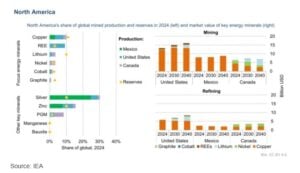
By 2040, the IEA expects the value of North America’s energy minerals to grow to around USD 30 billion for mining and USD 14 billion for refining. Mining growth will mainly come from copper in the United States and Mexico, and from lithium and nickel in Canada.
For refining, the region could make up about 4% of the global market, led by copper and lithium refining in the United States and copper and nickel refining in Canada.
Moving Toward Commercial Deployment
MIRARCO aims to transition from pilot testing to full-scale operations in the next two to three years. Globally, bioleaching is already in use at around 30 mining sites, but Canada has yet to deploy it commercially. The pilot facility in Sudbury is helping bridge that gap by testing continuous processing and demonstrating commercial viability.
Government support is also playing a key role. CBC further highlighted that funding through Canada’s Clean Technology Program and provincial innovation grants is helping advance research and development. The technology aligns with national goals to position Canada as a global leader in sustainable critical minerals production by 2030.
Overall, industry analysts predict bioextraction could become commercially viable within three to five years for specific minerals, with broader adoption following as operational experience grows.
The post Bioleaching Breakthrough in Canada: How MIRARCO’s Pilot Facility Turns Mine Waste into Critical Minerals appeared first on Carbon Credits.
Carbon Footprint
Thacker Pass Is Being Built: Here Is Why That Is the Best News NILI Investors Have Heard All Year.
Disseminated on behalf of Surge Battery Metals.
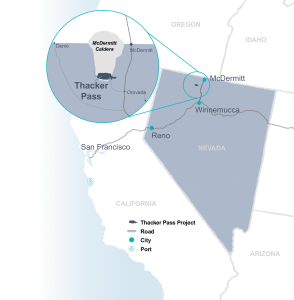
Lithium Americas (LAC) has officially broken ground at Thacker Pass, Nevada. The project is advancing toward its first production target in 2028. LAC CEO Jonathan Evans said in the company’s news release that the project should be mechanically complete by the end of 2026. Commissioning will happen through 2027, with commercial production starting in 2028.
For investors watching Nevada clay lithium, this milestone is more than an update. It’s a market signal that could change the investment landscape.
De-Risking the Clay Lithium Category
For years, clay-based lithium has faced a single recurring objection: “It has never been done at a commercial scale.” Unlike brine or hard-rock lithium, sedimentary clay deposits presented a technological and operational unknown. Investors and lenders were cautious, capital costs were higher, and early-stage projects struggled to secure financing.
Thacker Pass changes that narrative. Once LAC makes battery-grade lithium carbonate from sedimentary clay at a commercial scale, it reduces risks for the whole category. Projects in Nevada now have clear proof that clay-based lithium can be mined and processed effectively.
The historical precedent is instructive. In Chile’s Atacama region, the first brine lithium projects proved the chemistry and cost-effectiveness of large-scale lithium extraction. Later projects attracted capital more easily and on better terms. This created a ripple effect, speeding up the region’s lead in global lithium supply.
Thacker Pass is playing that same role for sedimentary clay. Its success is not just a win for LAC. It marks a key milestone for the whole Nevada clay lithium sector, including the Nevada North Lithium Project (NNLP) of Surge Battery Metals (TSX-V: NILI | OTCQX: NILIF).
Understanding the Technical Landscape
Thacker Pass Phase 1 has lithium levels of 1,500–2,500 ppm. They plan to extract it using sulfuric acid leaching to create battery-grade lithium carbonate. The project is important both geographically and operationally.
It features a large pit, a big processing facility, and integrated infrastructure. This covers access roads, water supply management, and energy sources that meet Nevada’s rules.
While Thacker Pass shows commercial viability, it is crucial to note that NNLP and Thacker Pass are not technically the same. NNLP employs a different beneficiation approach and reagent chemistry to optimize recovery.
NNLP: The Higher-Grade, Next-Generation Project
Thacker Pass shows clay lithium on a large scale. NNLP positions itself as the next evolution of this asset class, with clear geological advantages:
- Grade: NNLP averages 3,010 ppm lithium, significantly higher than Thacker Pass Phase 1 material. Recent drilling results show that step-out drilling found a 31-meter intercept with 4,196 ppm lithium from surface. This gives NNLP a potential extraction advantage.
- Strip Ratio: NNLP’s 1.16:1 strip ratio is among the lowest in the sedimentary clay peer group. This indicates that it has favorable material movement requirements relative to ore recovered.
- Operating Costs: NNLP’s estimated OPEX is US$5,097/t LCE, lower than Thacker Pass guidance of ~US$6,200/t C1. It suggests that it has competitive economic positioning within the peer group.
Both projects produce battery-grade lithium carbonate using sulfuric acid leaching. However, each method is customized for the specific geology of the project. NNLP is not a copy of Thacker Pass. Rather, it is a next-generation clay project designed to leverage lessons learned while improving key parameters.
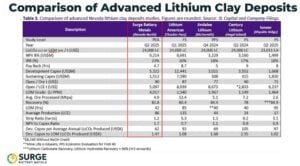
Moreover, infill drilling showed a steady, thick, high-grade core. It included intercepts like 116 meters at 3,752 ppm Li and 32 meters at 4,521 ppm Li. These results support future resource expansion. They also highlight the project’s scale, quality, and technical readiness as it prepares for a Pre-Feasibility Study.
- SEE MORE: Surge Battery Metals Strengthens Nevada North With High-Grade Expansion and Infill Success
Why Category De-Risking Matters for Investors
In emerging resource sectors, de-risking is often more valuable than the resource itself. Projects that validate a new extraction method or commodity unlock several market advantages:
- Lower financing risk: Investors are more willing to fund projects once proof of concept exists.
- Improved capital terms: Lending rates and equity expectations can improve when technology and economics are validated.
- Accelerated project development: Developers can move faster, reduce contingencies, and focus on optimization rather than proving viability.
Thacker Pass’s progress effectively removes the “first-mover risk” from sedimentary clay projects. NNLP has higher grades, near-surface mineralization, and competitive OPEX. Now, it can be assessed on its own merits, not on doubts about large-scale clay processing.
Strategic Significance in the U.S. Lithium Market
The timing of Thacker Pass’s construction and NNLP’s development aligns with broader policy and market trends. Lithium is a critical input for electric vehicles, grid-scale storage, and advanced defense technologies. The U.S. government has emphasized domestic lithium production as a strategic priority.
In March 2025, President Trump signed an executive order called “Immediate Measures to Increase American Mineral Production.” This order directs federal agencies to speed up permitting and support domestic projects. It also aims to lessen dependence on foreign supply chains for critical minerals.
Projects like Thacker Pass and NNLP benefit from this policy. They provide secure domestic sources that boost the lithium supply chain.
Nevada is central to this strategy. Its clay deposits are among the largest and best in the U.S. They provide a stable base for domestic lithium production, which supports electrification goals and helps reduce reliance on imports.
Thacker Pass’s progress also sends a signal beyond the Nevada clay sector. It demonstrates that investors and capital markets are willing to back sedimentary clay projects at scale. That validation reduces perceived risk for future projects. It also speeds up permitting and development timelines as well as strengthens valuation metrics.
NNLP, with its superior grade and shallower resource, stands to benefit disproportionately. It is no longer constrained by questions of category viability. It can now be evaluated based on its geological quality, operational efficiency, and potential returns.
NNLP’s advantages, combined with the category de-risking effect of Thacker Pass, position it as a next-generation investment opportunity in Nevada’s clay lithium space.
Looking Ahead: Domestic Lithium’s Role in Energy Transition
Lithium demand is set to grow rapidly as electric vehicles, battery storage, and renewable systems expand. Securing a high-quality, domestic supply is critical to maintaining U.S. leadership in clean energy technology.
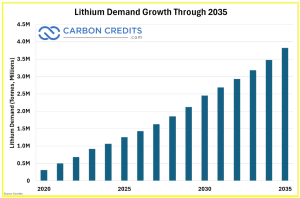
Thacker Pass proves that commercial-scale sedimentary clay lithium is achievable. NNLP demonstrates the potential for even higher efficiency and superior economics within the same category. Together, these projects show how local resources can support the energy transition while providing compelling investment opportunities.
NNLP’s higher grades, near-surface mineralization, low strip ratio, and competitive OPEX position it as a leading asset within a now-validated category.
For NILI investors, the message is clear: the clay lithium category is no longer theoretical, and NNLP is positioned to capitalize on the proof-of-concept success. The best news of the year is here—and it’s grounded in both science and strategy.
DISCLAIMER
New Era Publishing Inc. and/or CarbonCredits.com (“We” or “Us”) are not securities dealers or brokers, investment advisers, or financial advisers, and you should not rely on the information herein as investment advice. Surge Battery Metals Inc. (“Company”) made a one-time payment of $90,000 to provide marketing services for a term of three months. None of the owners, members, directors, or employees of New Era Publishing Inc. and/or CarbonCredits.com currently hold, or have any beneficial ownership in, any shares, stocks, or options of the companies mentioned.
This article is informational only and is solely for use by prospective investors in determining whether to seek additional information. It does not constitute an offer to sell or a solicitation of an offer to buy any securities. Examples that we provide of share price increases pertaining to a particular issuer from one referenced date to another represent arbitrarily chosen time periods and are no indication whatsoever of future stock prices for that issuer and are of no predictive value.
Our stock profiles are intended to highlight certain companies for your further investigation; they are not stock recommendations or an offer or sale of the referenced securities. The securities issued by the companies we profile should be considered high-risk; if you do invest despite these warnings, you may lose your entire investment. Please do your own research before investing, including reviewing the companies’ SEDAR+ and SEC filings, press releases, and risk disclosures.
It is our policy that information contained in this profile was provided by the company, extracted from SEDAR+ and SEC filings, company websites, and other publicly available sources. We believe the sources and information are accurate and reliable but we cannot guarantee them.
CAUTIONARY STATEMENT AND FORWARD-LOOKING INFORMATION
Certain statements contained in this news release may constitute “forward-looking information” within the meaning of applicable securities laws. Forward-looking information generally can be identified by words such as “anticipate,” “expect,” “estimate,” “forecast,” “plan,” and similar expressions suggesting future outcomes or events. Forward-looking information is based on current expectations of management; however, it is subject to known and unknown risks, uncertainties, and other factors that may cause actual results to differ materially from those anticipated.
These factors include, without limitation, statements relating to the Company’s exploration and development plans, the potential of its mineral projects, financing activities, regulatory approvals, market conditions, and future objectives. Forward-looking information involves numerous risks and uncertainties and actual results might differ materially from results suggested in any forward-looking information. These risks and uncertainties include, among other things, market volatility, the state of financial markets for the Company’s securities, fluctuations in commodity prices, operational challenges, and changes in business plans.
Forward-looking information is based on several key expectations and assumptions, including, without limitation, that the Company will continue with its stated business objectives and will be able to raise additional capital as required. Although management of the Company has attempted to identify important factors that could cause actual results to differ materially, there may be other factors that cause results not to be as anticipated, estimated, or intended.
There can be no assurance that such forward-looking information will prove to be accurate, as actual results and future events could differ materially. Accordingly, readers should not place undue reliance on forward-looking information. Additional information about risks and uncertainties is contained in the Company’s management’s discussion and analysis and annual information form for the year ended December 31, 2025, copies of which are available on SEDAR+ at www.sedarplus.ca.
The forward-looking information contained herein is expressly qualified in its entirety by this cautionary statement. Forward-looking information reflects management’s current beliefs and is based on information currently available to the Company. The forward-looking information is made as of the date of this news release, and the Company assumes no obligation to update or revise such information to reflect new events or circumstances except as may be required by applicable law.
Disclosure: Owners, members, directors, and employees of carboncredits.com have/may have stock or option positions in any of the companies mentioned: .
Carboncredits.com receives compensation for this publication and has a business relationship with any company whose stock(s) is/are mentioned in this article.
Additional disclosure: This communication serves the sole purpose of adding value to the research process and is for information only. Please do your own due diligence. Every investment in securities mentioned in publications of carboncredits.com involves risks that could lead to a total loss of the invested capital.
Please read our Full RISKS and DISCLOSURE here.
The post Thacker Pass Is Being Built: Here Is Why That Is the Best News NILI Investors Have Heard All Year. appeared first on Carbon Credits.
Carbon Footprint
Boeing Locks in 40,000 Tons of Soil Carbon Removal with Texas-Based Grassroots Carbon

The aviation industry is under pressure to cut emissions while demand for air travel continues to grow. Against this backdrop, Boeing’s latest agreement with Grassroots Carbon signals a clear shift in how large emitters approach climate action. Instead of relying heavily on traditional offsets, the company is now backing high-quality carbon removal rooted in nature.
This multi-year deal focuses on verified soil carbon removal. It reflects a broader industry trend: moving from compensation to actual carbon removal. More importantly, it connects climate goals with real economic benefits for rural communities.
Boeing’s Shift: From Offsets to Real Carbon Removal
Boeing’s agreement to purchase at least 40,000 metric tons of carbon removal credits marks more than just another sustainability initiative. It shows a deeper transition in its carbon strategy.
Earlier, many companies relied on carbon offsets to balance emissions. However, Boeing has refined its approach. It now follows an “avoid first, remove second” model. This means the company prioritizes cutting emissions directly—through renewable electricity and sustainable aviation fuel—before addressing the remaining footprint.
Targeting Scope 3 Emissions
Still, not all emissions can be eliminated. Business travel, classified under Scope 3 emissions, remains difficult to reduce. This is where carbon removal comes in. By investing in verified soil carbon credits, Boeing aims to tackle these residual emissions more credibly.
At the same time, this approach aligns with growing scrutiny in voluntary carbon markets. Buyers are increasingly looking for durable, science-backed solutions. Soil carbon, when properly measured and maintained, can meet these expectations.
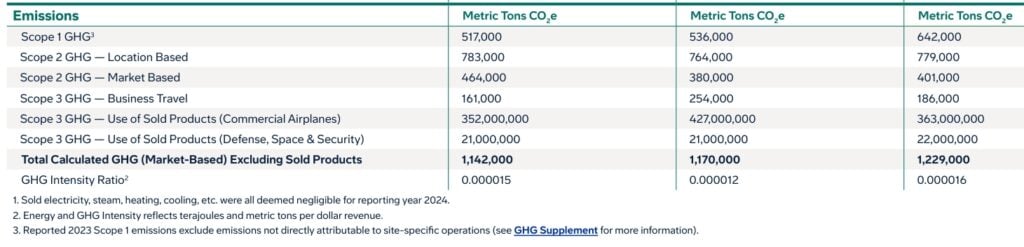
Allison Melia, vice president, Global Enterprise Sustainability, Boeing, said:
“We’re proud to work with Grassroots to accelerate carbon-removal technology that will benefit the entire global aviation industry. Enabling the long-term growth of air travel and supporting our airline customers’ emissions reduction targets are key priorities for Boeing.”
Regenerative Ranching: Turning Soil into a Climate Asset
At the core of this agreement lies regenerative ranching—a land management approach that restores ecosystems while capturing carbon.
Unlike conventional grazing, regenerative systems mimic natural herd movements. Ranchers rotate livestock across pastures. This prevents overgrazing and allows vegetation to recover. As a result, plant roots grow deeper and stronger.
This process plays a critical role in carbon sequestration. Through photosynthesis, grasses absorb carbon dioxide from the atmosphere. They then transfer this carbon into the soil through roots and organic matter. Over time, this builds stable soil carbon that can remain stored for decades.
Additionally, grazing itself can enhance this process. When managed properly, it stimulates plant growth and increases carbon storage below ground. Studies suggest these systems can capture between 1 to 5 tons of CO2 per hectare each year.
However, the benefits go beyond carbon. Healthier soils improve water retention, reduce erosion, and support biodiversity. Ranchers also see improved productivity and greater resilience to climate extremes.
This makes regenerative ranching a rare win-win solution. It supports climate goals while strengthening agricultural systems.
Soil Carbon Credits Are Gaining Credibility
Carbon credits often face criticism for lacking transparency or permanence. However, soil carbon credits are evolving quickly.
In this case, credits are generated by tracking changes in soil carbon over time. Projects establish a baseline and then measure improvements driven by regenerative practices. Each credit corresponds to one metric ton of CO2 removed or avoided.
To ensure credibility, projects use a combination of soil sampling, satellite monitoring, and modeling. Independent verification further strengthens trust. Many of these credits meet standards set by leading registries such as Verra and the Climate Action Reserve.
Durability remains a key question. Soil carbon is considered a long-term storage solution, especially when supported by ongoing land management. In many cases, carbon can remain stored for 25 to 100 years or more.
For corporate buyers, this level of integrity is critical. It allows them to make credible climate claims while supporting real-world impact.
How Grassroots Carbon Is Scaling a Natural Climate Solution
The United States holds a unique advantage in this space. Its grasslands cover roughly 655 million acres—nearly 40% of the country’s land area. These landscapes represent one of the largest untapped carbon sinks.
If managed effectively, they could remove up to 1 billion tons of CO2 equivalent annually. That potential makes soil carbon one of the most scalable nature-based solutions available today.
Grassroots Carbon is working to unlock this opportunity. The company partners with ranchers across more than 2.2 million acres in 22 states. It supports them in adopting regenerative practices while ensuring measurable climate outcomes.
Importantly, the company focuses on scientific rigor. It measures soil carbon directly, often up to one meter deep. Then, independent third parties verify the data using recognized standards. This process ensures that each carbon credit represents real and additional carbon removal.
- The company has already delivered 1.9 million tons of verified carbon removals. A large portion of these credits has been retired by corporate buyers, reflecting strong market demand.
This scale matters. It shows that soil carbon is not just a niche solution. Instead, it can operate at a level relevant to global climate goals.
Supporting Rural Economies
Moving on, regenerative ranching supports rural communities by creating new revenue streams. Ranchers can earn income from carbon credits while improving their land. This reduces financial pressure and encourages long-term stewardship.
Moreover, healthier ecosystems provide broader benefits. Improved soil structure enhances water retention, which is critical in drought-prone areas. Restored grasslands also support wildlife habitats, including bird populations.
Grassroots Carbon works with partners such as conservation groups and research institutions to ensure these outcomes. This collaborative approach strengthens both environmental and social impact.

Aviation’s Broader Climate Challenge
The aviation sector faces one of the toughest decarbonization challenges. Unlike power generation or road transport, it cannot be easily electrified. Aircraft require high-energy-density fuels, which limit near-term options.
Sustainable aviation fuel offers a partial solution. However, supply remains limited, and costs are high. As a result, carbon removal will likely play a growing role in the sector’s strategy.
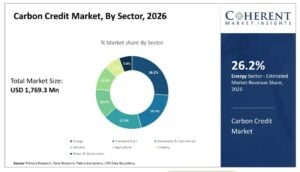
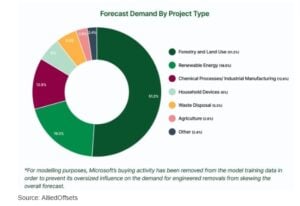
AlliedOffsets estimates that carbon credit buyers will spend around $2.27 billion per year. Aviation and energy are expected to contribute the most.
- The aviation sector alone has a budget of over $800 million per year, which is about one-third of the total.
Boeing, by supporting soil carbon projects, diversifies its approach to emissions reduction. The biggest advantage is that soil carbon removal is both scalable and immediately deployable. Unlike emerging technologies, it does not require decades of development. Instead, it builds on existing agricultural practices.
At the same time, this move sends a signal to the market. Large buyers can drive demand for high-quality carbon removal. This, in turn, encourages more investment and innovation in the space.
However, scaling this solution will require continued investment, strong verification, and supportive policies. It will also depend on maintaining trust in carbon markets. However, as demand for carbon removal grows, partnerships like this could become a cornerstone of global decarbonization efforts.
The post Boeing Locks in 40,000 Tons of Soil Carbon Removal with Texas-Based Grassroots Carbon appeared first on Carbon Credits.

Bioleaching Breakthrough in Canada: How MIRARCO’s Pilot Facility Turns Mine Waste into Critical Minerals
Iran Energy Shock Tests Limits of Trump’s Vision of US Energy Dominance
Unpacking Trump’s Use of Emergency Powers to Prop Up Coal
-
Climate Change8 months ago
Guest post: Why China is still building new coal – and when it might stop
-
Greenhouse Gases8 months ago
Guest post: Why China is still building new coal – and when it might stop
-

 Greenhouse Gases2 years ago
嘉宾来稿:满足中国增长的用电需求 光伏加储能“比新建煤电更实惠”
-
Climate Change2 years ago
Bill Discounting Climate Change in Florida’s Energy Policy Awaits DeSantis’ Approval
-

 Climate Change2 years ago
嘉宾来稿:满足中国增长的用电需求 光伏加储能“比新建煤电更实惠”
-
Climate Change Videos2 years ago
The toxic gas flares fuelling Nigeria’s climate change – BBC News
-

 Renewable Energy6 months ago
Sending Progressive Philanthropist George Soros to Prison?
-

 Carbon Footprint2 years ago
US SEC’s Climate Disclosure Rules Spur Renewed Interest in Carbon Credits