Connect with us

Published

on

LED lights are changing the design of retail stores, offering many benefits, such as saving energy and making products look more attractive.   

Stores worldwide, including Australia, are switching to LED lighting to improve their store atmosphere and run their businesses more efficiently.   

LED lights have other advantages besides improving the shopping experience. They last longer and don’t need frequent bulb changes, which is helpful in stores where replacing lights can disturb customers.   

Special discounts and financial rewards for stores upgrading to LED make the switch even more worthwhile.   

As retailers adjust to customer needs after the pandemic, it’s clear that creating a great shopping experience is a top priority. LED lighting plays a significant role in this, benefiting both stores and shoppers.

The Science Behind LED Lighting: How It Works

LED lighting works differently than traditional light bulbs. To understand how LEDs (Light-Emitting Diodes) work, it helps first to examine how regular bulbs produce light.  

Traditional incandescent bulbs use a thin wire called a filament, which gets very hot when electricity passes through it.  

The heat makes the filament glow and produce light, but most energy is wasted as heat rather than light. This is why incandescent bulbs are not energy-efficient.   

On the other hand, LEDs produce light using different methods. Instead of heating a filament, they rely on electroluminescence.  

Every LED contains a tiny semiconductor, a unique material that allows electricity to flow through it in a controlled way. When electricity passes through the semiconductor, it excites the atoms inside, causing them to release energy in the form of light.  

This process is much more efficient than heating a filament because very little energy is wasted as heat. This is why LED lights use less electricity while still producing bright light.   

Another reason LEDs are so efficient is that they don’t burn out in the same way traditional bulbs do. In a regular light bulb, the filament eventually wears out and breaks, causing the bulb to stop working.  

Since an LED has no filament, it has nothing to burn out. Instead, LEDs slowly become dimmer over time rather than suddenly stopping. This means they last much longer, often tens of thousands of hours, before needing to be replaced.   

LEDs are also designed to produce different light colours without needing coloured filters. In traditional bulbs, a filter is placed over the white light to create other colours, blocking some wavelengths and letting only specific colours pass through.  

This wastes some of the light. LEDs, however, can be made from different semiconductor materials that naturally produce different colours when electricity passes through them.  

This is why LED lights are available in a wide range of colours and can even be programmed to change colours in some cases.   

Because of their efficiency, long lifespan, and ability to produce different colours, LEDs are now used everywhere, from homes and offices to cars and streetlights.  

They are also used in electronic screens, such as smartphones and televisions, because they produce bright, clear images using less power.   

LED lighting uses tiny semiconductors to produce light efficiently without generating too much heat. This technology has changed how we light our homes, stores, and cities, offering a smarter, longer-lasting, and more energy-saving solution than older lighting types. 

LED Lights VS. Traditional Lights

LED lighting

Lighting technology has come a long way, and LED lights are now replacing traditional lighting in many places.  

But what makes LEDs so different, and why are they considered better? To understand this, let’s compare LED lights with traditional types of lighting, like incandescent and fluorescent bulbs.   

Energy Efficiency

One of the most significant advantages of LED lights is that they use much less electricity than traditional bulbs. Incandescent bulbs heat a thin wire (filament) until it glows, producing light and heat.  

However, most energy is wasted as heat rather than light, making them highly inefficient. On the other hand, LED lights use semiconductors to produce light through electroluminescence, which generates very little heat.  

This allows LEDs to use up to 80% less energy than incandescent bulbs, making them much more cost-effective in the long run.   

Lifespan

Traditional light bulbs, especially incandescent ones, burn out quickly. On average, an incandescent bulb lasts about 1,000 hours before needing to be replaced.  

Fluorescent bulbs last longer, around 8,000 to 10,000 hours, but wear out over time. In contrast, LED lights can last 25,000 to 50,000 hours or more.  

This makes LEDs a great choice for places where changing bulbs frequently would be inconvenient, like streetlights, office buildings, and retail stores.   

Heat Production

Incandescent bulbs produce a lot of heat, so they feel hot to the touch after being on for a while. This extra heat can warm rooms and increase air conditioning costs, especially in hot climates.  

Fluorescent lights also generate some heat, though less than incandescent bulbs. LEDs, however, produce very little heat, making them safer to use and reducing the risk of overheating.   

Get the best value for money on LED lighting for your business only at Cyanergy!  

Light Quality and Brightness

LEDs provide bright, high-quality light in different colour temperatures, from warm, yellowish tones to cool white light. This versatility makes them suitable for various uses, such as home lighting, office spaces, and outdoor areas.  

Traditional incandescent bulbs typically give off a warm, yellow light, while fluorescent bulbs often have a bluish or harsh white tone. Some older fluorescent bulbs can also flicker, which may cause eye strain, while LEDs provide steady, flicker-free lighting. 

Environmental Impact

LED lights are more eco-friendly than traditional lighting. Since they use less energy, they help reduce carbon emissions from power plants.  

Additionally, fluorescent bulbs contain small amounts of mercury, a toxic substance that requires unique disposal methods to avoid harming the environment. LEDs do not contain mercury or other harmful chemicals, making them safer to dispose of and recycle.  

Cost

lighting in retail

Although LED lights can initially be more expensive than traditional bulbs, they save money over time. Because they use less electricity and last much longer, replacing and maintaining them costs much less. 

Many governments and utility companies offer rebates or incentives to encourage people to switch to LED lighting, making it even more affordable.   

LED lights are a clear winner over traditional lighting in almost every way. They are more energy-efficient, last much longer, produce less heat, offer better light quality, and have a smaller environmental impact.  

While LEDs may have a higher upfront cost, their long-term benefits make them the smarter and more cost-effective choice for homes, businesses, and public spaces.  

With all these advantages, it’s no surprise that LED lighting is quickly becoming the new standard worldwide

How LED Lighting Transforms Retail Experience in Australia

Lighting plays a crucial role in shaping the shopping experience, and LED lights are transforming retail spaces in Australia.  

More than just an energy-saving choice, LEDs enhance store appeal, improve safety, and boost sales. 

Attracting Customers with LED Entrances

Bright LED lighting at store entrances creates an inviting atmosphere that draws in customers, especially at night. Well-lit storefronts improve visibility, increase foot traffic, and effectively highlight products. 

Better Product Displays

LEDs enhance the look of products by providing clear, adjustable lighting that highlights textures and colours. This is particularly useful in industries like cosmetics and jewellery, where accurate colour representation is essential.  

Smart LED systems can even change brightness and colour to match store themes or promotions.  

Improving Store Ambiance

Beyond product displays, LEDs create a well-lit, comfortable shopping environment. Unlike harsh fluorescent lights, LEDs provide even lighting without glare, making the store feel more spacious and pleasant. 

Enhancing Outdoor Safety

LED lights

Parking lot and sidewalk lighting are key to customer safety. LED lights brighten outdoor spaces, reducing security risks and making shoppers feel more comfortable, which can encourage longer visits. Their low energy cost allows retailers to install more lights affordably.  

Cost-Effective and Low Maintenance

LED lights last much longer than traditional bulbs and require less maintenance, preventing disruptions in the shopping experience. Retailers can also use rebates and incentives to switch to LED lighting, making the investment even more worthwhile. 

Sustainability and Savings

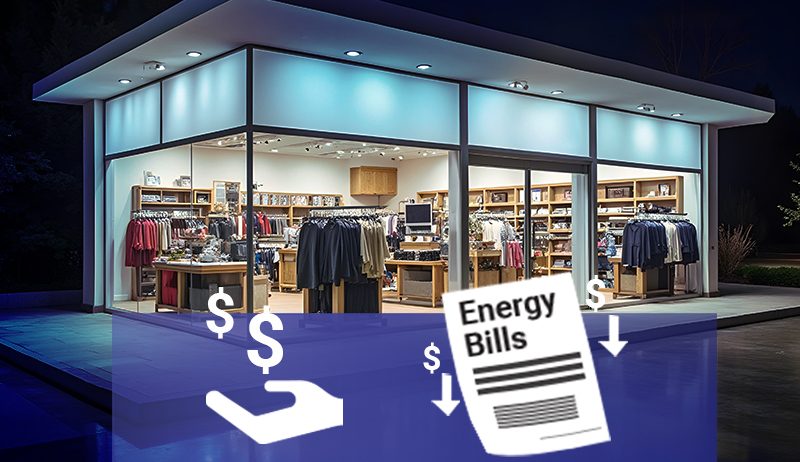
Consumers value eco-friendly businesses, and LEDs use up to 80% less energy than traditional lights. Retailers benefit from lower electricity bills and reduced environmental impact. Their long lifespan also means fewer replacements, cutting maintenance costs. 

The Smart Choice for Retailers

Switching to LED lighting improves the customer experience, enhances store appearance, boosts security, and saves money. With lower operating costs and long-term benefits, LED lighting is a practical and profitable upgrade for any retail business.  

Choosing the Right LED Lighting

Consider several factors before planning the layout for your retail LED lighting fixtures. At the same time, the fundamental goal of lighting up your retail space may be providing sufficient brightness for your products to shine.  

You should also consider energy consumption and its impact. Lighting up retail spaces can prove expensive, so working with an energy consultant who can help you design and install energy-efficient lighting is essential. 

Choose the best and the right LED light at Cyanergy! 

Your Solution Is Just a Click Away

The post How LED Lighting Transforms Retail Experience in Australia appeared first on Cyanergy.

https://cyanergy.com.au/blog/how-led-lighting-transforms-retail-experience-in-australia/

Continue Reading

Renewable Energy

As Europe Shuns Chinese Turbines and Components, Who Will Fill the Gap?

Published

on

Weather Guard Lightning Tech

As Europe Shuns Chinese Turbines and Components, Who Will Fill the Gap?

While most of Europe has spent most of this year itemizing reasons it cannot, should not, and will not use Chinese wind turbines or components, accusations and arm-twisting tactics have garnered most of the attention.

But we invite you to consider a future – maybe just five, or ten years from now?- in which those same countries and companies are eagerly awaiting orders from wind turbine manufacturing facilities in… India.
What?!
You know that the country has a lot of installed wind.

You may think – and many in the industry would agree – that India’s blade manufacturers are a few revs behind blade-makers elsewhere in the world. But the country is newly committed to manufacturing and it’s busy installing more – provided that it’s made in India, with Indian technology, by Indian workers.
Of course, similar domestic-focused policy currents are running through European countries – where wind OEMs are almost inarguably a decade ahead of Indian manufacturers. But there’s an important reason why we say, “watch India” in wind turbine manufacturing.

It’s because you might learn something.

If you follow The Uptime Wind Energy Podcast, you probably heard this discussion a few weeks ago. It wasn’t the headline story – we try to highlight as many major news items and trends that we can, and follow up as credible information becomes available. India’s quiet moves to strengthen its own renewable energy industries didn’t grab the headlines. But it comprised a good bit of our panelists’ discussion.

With India’s expanding manufacturing capacity, and Suzlon’s strategic offerings for the European market (Blue Sky), there are reasons for European developers to take a closer look at Indian manufacturers.

If Europe continues to squelch deals with Chinese manufacturers due to data security issues, India is a relatively obvious candidate to fill the void, for several reasons:

  • The country has depth and breadth in R&D: India (Suzlon, specifically) has a track record of involvement and relationships across the continent, as it operates research and development centers in Germany, the Netherlands, and Denmark.
  • Indian service providers have reach: Inox and Adoni Wind operate multiple wind turbine manufacturing plants and wind farms throughout several Indian states, and Apraava Energy has been commissioning wind projects, working with multiple OEMs, for more than 16 years.
  • The country’s energy sector has size: Tata Power is estimated to be worth about US$16 billion and employs 22,000 people.

And major manufacturers from other countries have had a strong presence in the country for years:

  • GE Vernova has turbine blade and nacelle manufacturing operations and multiple tech/R&D centers in India;
  • Vestas has a R&D technology center in Chennai; and
  • China’s SANY Wind has had assembly facilities in India since 2017, and in 2024, it signed a licensing agreement with JSW allowing SANY to manufacture blades and generators for JSW – enabling JSW Neo Energy to produce wind turbine generators and major components in-country.

So while there is hard data suggesting that India is already a global hub for wind turbines, sometimes the real strength comes from soft skills. Like sharing information.

We’ve noticed that Indian manufactures aren’t stingy with information. They share what they learn in the field and on the shop floor, so that the whole industry can move faster to solve problems. That bodes well for the industry overall, and particularly well for companies who figure out how to solve problems that some manufacturers aren’t even ready to admit to having.

We’ll be watching India with a great deal of interest in the coming months. Subscribe to The Uptime Wind Energy Podcast and follow along with us.

We’re not financial analysts. We’re engineers who watch the wind industry very closely. This is what we’ve noticed, and we thought it was worth sharing.

Where do you think you’ll be looking for solutions, components, and service providers in the next few years or the next decade? Tell us what you think. We’d love to hear from you.
Uptime Wind Energy Podcast Logo

As Europe Shuns Chinese Turbines and Components, Who Will Fill the Gap?

Continue Reading

Renewable Energy

When You Write for Idiots, You Can Get Away with Anything

Published

on

To the author of the meme here:

“Either” refers to two choices; “any” refers to three or more.

More importantly, it’s amazing how shamelessly the ultra-right wing exaggerates.  The left side of the Democratic party would like to see the United States look like social democracies in places like Scandinavia.  Having government programs that benefit the common person, e.g., Social Security, public schools, emergency relief, libraries, environmental responsibility, etc., does not equate to Stalinism.

When You Write for Idiots, You Can Get Away with Anything

Continue Reading

Renewable Energy

Are Muslims “Dangerous?”

Published

on

Some of my old prep school chums from the Class of 1973 convene via Zoom approximately every six weeks for a 90-minute discussion of current events, science, and anything else that sounds interesting.

Our professions range from medicine, law, finance, and business management. All from highly ranked colleges.  Over 50% hold doctorate degrees.

Here’s something I find fascinating about the group: it includes one right-wing conservative.  I don’t mean a Reaganite; I mean a Trump supporter.  This guy is incapable of any thought that doesn’t come directly from Nexsmax.

It’s almost eerie how closely he toes the line of the far-right.  Yesterday he echoed the Newsmax talking point and told the group that all Muslims holding public office are “very dangerous” and should be removed.

Now, the rest of us are sitting there, dumbfounded at this idea, unwilling waste our breath on this racist and utterly preposterous concept.

All this raises the question: How are our political viewpoints formed?  How much of this is genetics?  Epigenetics?  Early childhood experiences? How do take a boy from among the best environments and turn him into someone who struggles to understand the most basic principles on which our country was founded?

https://www.2greenenergy.com/2026/11/09/principles-country-was-founded/

Continue Reading