


The global lithium industry witnessed significant growth in reserves and resources during the first quarter of 2024, surging to 303.5 million metric tons, a remarkable 52.2% increase compared to the same period in 2021, per S&P Global Commodity Insights.
This uptrend aligns with the 2023 trajectory, where lithium reserves and resources expanded by 36.9 million metric tons. Despite this surge, lithium prices experienced fluctuations. While they soared to historic highs in 2022, reaching $79,650 per metric ton in China, they have since cooled down, resting at $15,250 per metric ton as of April 17, 2024.
Nonetheless, experts suggest a prevailing upward trajectory in lithium demand and prices since 2016. However, short-term challenges such as recent price corrections and surpluses in battery metals have been noted.
Still, medium-term supply deficits are anticipated to sustain interest in lithium exploration despite these fluctuations.

Mining Titans: Global Lithium Reserves Unearthed
Geographically, Argentina emerges as the global leader in lithium reserves and resources, contributing 29.6% in the Q1 of 2024. The United States comes second at 24.0% and followed by Bolivia at 18.2%.

Meanwhile, Australia, renowned as the top lithium producer globally, possesses 22.1 million metric tons of reserves and resources, securing the 6th position in global rankings.
Remarkably, Canada has shown substantial growth in its lithium sector. Its share of reserves and resources increase by 273.1% since Q1 of 2019, amounting to 28.2 million Mt in Q1 of 2024. This growth is underpinned by a surge in lithium exploration budgets, which spiked by 120% in 2023, marking the third consecutive year of expansion.
Canada, especially Quebec, is displaying a strong enthusiasm for the lithium and battery sectors. The country focuses on establishing a complete supply chain from mining to electric vehicle (EV) production.

Jean-François Béland, Ressources Québec’s Vice President, highlighted the imperative of car electrification, noting the demand will be there, whatever happens. He further stated that “lithium and critical minerals are, in the 21st century, what coal was in the 19th century and what oil was in the 20th century.”
Lithium’s Role in the EV Revolution
According to the S&P Global Commodity data, lithium-ion battery capacity is projected to reach 6.5 TWh by 2030. Lithium is recognized as a crucial component in manufacturing EVs and is considered the cornerstone of achieving net zero emissions.
The demand for lithium-powered EV batteries is anticipated to grow annually at a rate exceeding 22%. And the EV transport segment will capture 93% of the market share by 2030.
In response to the challenges posed by the pandemic and geopolitical tensions, companies are adopting these strategies to cope:
- Reevaluating undeveloped lithium assets,
- Expediting projects, and
- Exploring new opportunities.
This trend has been further fueled by national government policies that advocate for energy transition and support battery supply chains.
The global lithium exploration arena has also witnessed significant financial inflows. Exploration budgets skyrocketed to a historic high of $830 billion in 2023, marking a 77% increase.
Notably, four countries—Australia, Canada, Argentina, and the United States—each allocated over $100 million for lithium exploration in 2023. Collectively, they represent almost 75% of the global lithium exploration budgets for the year.
Looking ahead, projections indicate further expansion in lithium production. China expected to capitalize on lower-quality deposits and Bolivia is poised to elevate its status as a formidable lithium producer, leveraging its substantial lithium reserves of 39.0 million metric tons.
Balancing Demand and Production
In a separate report by Benchmark’s Solid-State and Lithium Metal Forecast, the global lithium metal production struggles to keep pace with the surging demand. The sector encounters challenges in securing sufficient lithium metal for battery manufacturing, despite its substantial capacity potential.
In 2024, if all viable lithium metal produced were allocated to batteries, it could potentially support the production of 5 to 10 gigawatt-hours (GWh) of cells.
However, a considerable portion of lithium metal is directed towards other industries, resulting in a supply shortfall this year. This deficit is projected to escalate from nearly 10 GWh in 2024 to about 60 GWh by 2026.
Interestingly, trading of the metal on platforms like CME Group Inc. is witnessing a notable uptick. This has garnered more interest from funds, even as prices of battery metals decline, showing market resilience.
The first quarter of 2024 marks a pivotal moment in the global lithium industry, with reserves and resources experiencing a remarkable surge. Despite price fluctuations, the upward trajectory in demand and prices remains evident as governments advocate for clean and sustainable energy transition.
The post Global Lithium Reserves and Resources Surge 52% in Q1 2024 appeared first on Carbon Credits.

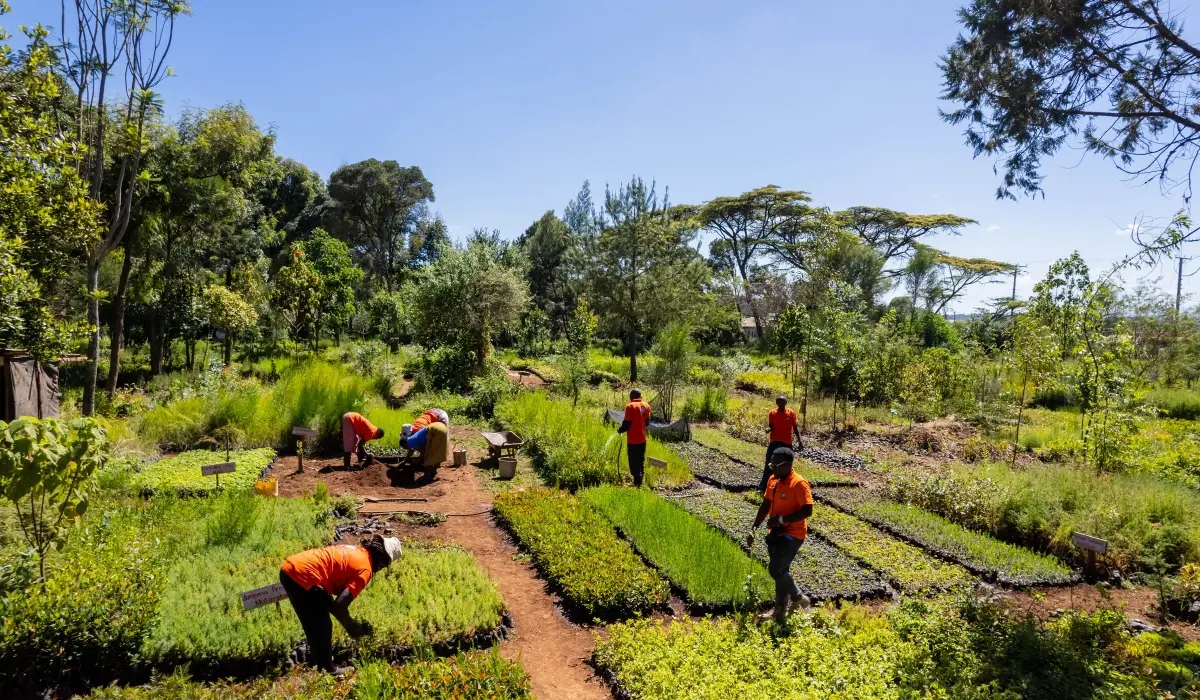
Carbon credit providers vs marketplaces is the first comparison many buyers try to make. In this comparison, a carbon credit provider is the project developer: the company that originates credits from its own projects and sells them directly. A carbon credit marketplace is a platform that lists credits from many projects at published prices.

Carbon Footprint
Democrats who call climate change an emergency should not defend a permitting system too slow to build the clean energy that would address it.”
Democrats, Take The Deal. New York Times editorial, Nov. 12.
Insetting program design starts with your supplier map. The carbon claim comes much later.
Consider a coffee procurement team that funds a farm intervention before checking its sourcing data. The supplier aggregates coffee lots from several regions. The buyer lacks farm-level traceability. Another purchaser expects to report the same outcome. A more attractive project brochure solves none of these problems.
If the distinction between a value-chain intervention and a purchased credit is still open, read CCC’s Insetting vs Offsetting guide before you set the brief.
Insetting program design begins with the purchasing relationship and works outward. You need to decide 1) where an intervention belongs, 2) what business problem it addresses, 3) who pays for it, 4) how results will be measured, and 5) what the evidence will let you say about them. This five-step playbook turns that sequence into a procurement plan.
Step 1: Insetting program design starts with supplier mapping
Start with the commodities that matter most to your Scope 3 inventory and sourcing continuity. Ask finance for spend by supplier, sustainability for the emissions baseline, and category managers for origin and volume records. Then identify which suppliers can trace material to a jurisdiction, sourcing region, producer group, or individual land-management unit.
The level of traceability affects what you can account for. Under the GHG Protocol Land Sector and Removals Standard, the spatial boundary for purchased land-based products depends on the traceability associated with each volume. Farm-specific factors or removals require physical traceability through an acceptable chain-of-custody model. A contract with a tier-one trader, by itself, does not establish a link to the farms behind its deliveries.[1]
Build a first-pass table with five columns: commodity and annual volume; supplier and origin; current traceability level; land-use and production risks; and the business owner who can change the purchasing terms. Mark missing data plainly. A blank cell is cheaper to fix before a program starts than after a claim is drafted.
If your company sets an SBTi Forest, Land and Agriculture target (FLAG), keep its land-related target boundary separate from energy and industry emissions. The current FLAG guidance also requires relevant companies to assess primary deforestation-linked commodities in their value chains.[2]
Step 2: Choose a commodity and jurisdiction for a pilot
Select one supply corridor where the sourcing connection can be established and procurement has a reason to stay. A useful pilot has repeat purchases, suppliers willing to share records, an intervention matched to a diagnosed problem, and a defined plan to measure the result. Carbon potential alone is a poor selection rule if the supplier cannot deliver the crop your business needs.
Compare candidate regions on land-use risk, supplier concentration, local rights and tenure, the availability of baseline data, and exposure to drought, erosion, or forest conversion. Check the relevant legal requirements separately. A nature project does not satisfy a due-diligence obligation merely because it has a carbon method attached.
Consider a coffee buyer sourcing from two districts. In the first, producer-group records identify the farms, while recent dry seasons have increased rejected green coffee lots. In the second, deliveries pass through several intermediaries and farm origins are unknown. Pilot shade management in the first district, with local agronomic advice and quality checks built into the plan. The buyer can trace purchases there and test the intervention against a defined sourcing problem.
Use a short decision memo to record why the selected corridor beats the alternatives, what remains uncertain, and what would stop the pilot. That memo is the first control against a project drifting toward whatever happens to photograph well.
Step 3: Design the supplier engagement and commercial model
The intervention needs an owner on each side of the contract. Decide who supplies planting material or training, who maintains the practice, who bears the cost if a harvest disappoints, and how long the buyer expects to purchase from participating suppliers. Where smallholders participate, budget cash flow and technical support for practices that offer a later return.
Put these terms in a supplier agreement or pilot addendum. It should cover eligible farms and volumes, consent to data collection, access for monitoring, any land or carbon rights that matter, benefit sharing, and what happens if the purchasing relationship ends. Ask local counsel and producer representatives to review the arrangement. The Accountability Framework is a useful reference for supply-chain work involving forests, ecosystems, and human rights.[3]
Avoid assigning an automatic carbon benefit to the buyer. The contract should say which party has the right to report each outcome, how overlapping claims will be checked, and how any issued credits will be handled. A reduction reported in a buyer’s inventory cannot simply be sold for someone else’s offset claim without an accounting review. SBTi FLAG guidance excludes purchased credits used as offsets from near-term FLAG target achievement.[2]
Set commercial measures beside environmental ones: delivered volume, rejection rate, supplier retention, and procurement cost. They tell you whether the program works as a supply-chain investment, even if carbon accounting takes longer to resolve.
Step 4: Build monitoring, reporting, and verification before rollout
Agree on the baseline and data flow before paying for a full rollout. Identify the land units or sourcing regions in scope, the practices that change, the records suppliers already keep, and the additional measurements the program requires. Decide which data can come from field visits, transaction records, or remote sensing, and who checks each source.
For carbon, separate three questions. Did the practice happen? Did emissions or removals change under an applicable method? Can the buyer attribute a defensible share to its purchased goods without double counting? The GHG Protocol’s 2026 guidance includes dedicated chapters on spatial boundaries, data and methods, evaluating actions, credited outcomes, and assurance.[1] These are distinct jobs. A photograph of a planted tree answers only part of the first.
CCC’s MRV and Additionality article explains the separate evidence questions a project reviewer will ask.
Create an evidence file for every reporting period: dated supplier and farm records, purchase volumes, methods and emission factors, uncertainty, quality checks, and changes from the baseline. Specify who can challenge the data and how corrections are recorded. If a project also seeks credit certification, keep project accounting and corporate inventory accounting separate. The GHG Protocol says its land standard focuses on entity-level inventories and does not set the rules for credit certification.[4]
Start with the minimum viable measurement design that can survive review. Add complexity when the pilot tells you which data actually changes a decision.
Step 5: Decide what can be reported and claimed
Insetting program design needs reporting rules before the marketing copy. Procurement, sustainability, finance, and legal should agree on four distinct outputs: operational performance; observed land or nature outcomes; inventory effects, if the accounting criteria are met; and any separately issued credits. One dashboard can display them, but they should not share a single unqualified headline.
SBTi FLAG guidance allows certain land-based removals within a company’s operations or supply chain to contribute to FLAG pathways, subject to criteria including permanence, traceability, data quality, and allocation. It does not allow purchased offsets to meet near-term FLAG targets.[2] Eligibility therefore depends on evidence and the applicable target rules, not on calling an activity “insetting.”
Draft a claims register. For each proposed sentence, record the period, boundary, data owner, calculation method, reviewer, and whether the result is measured, estimated, or still a goal. If the evidence supports only “we funded a pilot with 200 farms,” say that. Do not turn a funding fact into a verified emissions reduction.
What good looks like by year three
Treat year three as a review point, not a promised payback date. A mature pilot should have mapped participating supply volumes, a stable supplier agreement, a repeatable data collection process, and a comparison of commercial and environmental results against the baseline. It should also have a documented answer for outcomes that cannot be included in the buyer’s inventory.
Scale only where the pilot improves a sourcing decision and the evidence can follow the product. If neither condition holds, redesign the intervention or change the corridor. A disciplined program can conclude that a site is unsuitable. That is useful procurement intelligence.
Discuss your insetting program with CCC
Carbon Credit Capital designs nature-based supply chain investments around sourcing needs and measurable sustainability outcomes. Schedule a consultation with our carbon and sustainability experts to map your tier-one supplier network, FLAG exposure, and first pilot decision.
Sources
[1] GHG Protocol, Land Sector and Removals Standard, version 1.1, and companion Guidance, June 2026: https://ghgprotocol.org/land-sector-and-removals-standard ; https://ghgprotocol.org/land-sector-and-removals-guidance
[2] Science Based Targets initiative, Forest, Land and Agriculture Science-Based Target-Setting Guidance, version 1.2, March 2026, especially pp. 16–17, 37, and 41: https://sciencebasedtargets.org/resources/files/SBTiFLAGGuidance.pdf
[3] Accountability Framework initiative, Accountability Framework and guidance for companies: https://accountability-framework.org/
[4] GHG Protocol, Frequently Asked Questions: Land Sector and Removals Standard, questions 10 and 18: https://ghgprotocol.org/blog/frequently-asked-questions-land-sector-and-removals-lsr-standard

‘COP-out’: COP31 fails to deliver the ambition needed to phase out fossil fuels and address climate breakdown
COP31 Bulletin Day 13: New draft retains electrification goal but delays adaptation finance and science decisions

How “Marie Antoinnete” Can We Get?

-
Climate Change1 year ago
Guest post: Why China is still building new coal – and when it might stop
-
Greenhouse Gases1 year ago
Guest post: Why China is still building new coal – and when it might stop
-

 Renewable Energy1 year ago
Sending Progressive Philanthropist George Soros to Prison?
-
Greenhouse Gases1 year ago
嘉宾来稿:探究火山喷发如何影响气候预测
-

 Climate Change2 years ago
Analysis: China’s CO2 falls 1% in Q2 2024 in first quarterly drop since Covid-19
-

 Climate Change1 year ago
嘉宾来稿:探究火山喷发如何影响气候预测
-

 Renewable Energy5 months ago
Send a Bible to a Starving Child
-

 Green Living2 years ago
Our Picks for the Top 2024 Black Friday and Cyber Week Sales From Sustainable Brands