

A federal election is taking place in Germany on 23 February, following the collapse of the coalition government at the end of last year.
Germans will vote to elect 630 members of the nation’s parliament.
Polling suggests there will be a political shift to the right, with the centre-right Christian Democratic Union (CDU) in the lead and far-right Alternative for Germany (AfD) set to make significant gains.
A “traffic light” coalition of parties has ruled since 2021, led by the centre-left Social Democratic Party (SPD), alongside the Green Party and the Free Democratic Party (FDP).
However, successive crises led to its breakup at the end of 2024, when the liberal, free market-oriented FDP split from the rest.
This prompted a vote of no confidence by the German parliament, which, in turn, triggered a snap election several months earlier than previously scheduled.
The coalition government has been plagued by ideological differences, particularly between the FDP and its two centre-left partners.
Climate policies were at the heart of many of the disputes.
The centre-left SPD and Greens have broadly favoured more public spending on climate issues, while the FDP is opposed to state intervention of any sort.
In the interactive grid below, Carbon Brief tracks the commitments made by each of the main parties in their election manifestos, across a range of issues related to climate and energy.
The parties covered are:
- Christian Democratic Union (CDU)/Christian Social Union (CSU): The centre-right CDU and its regional Bavarian “sister party”, CSU, has been the dominant political force in modern Germany and is currently polling highest ahead of the election.
- Social Democratic Party (SPD): The centre-left SPD has led the ruling coalition in Germany since the last election in 2021 and has traditionally been the other dominant party in the nation’s politics.
- Green Party: The centre-left and environmentalist Greens have been part of the coalition government since 2021.
- Free Democratic Party (FDP): The FDP is an economically liberal party that prioritises free markets and privatisation. It was part of the coalition government, but its departure at the end of 2024 ultimately triggered the federal election.
- Left Party: In recent years, this left-wing, democratic-socialist party has lost much of its support base in the east of the country.
- Alternative for Germany (AfD): The far-right party has become a major force in the country’s politics over the past decade, particularly in eastern Germany.
- Sahra Wagenknecht Alliance (BSW): The party was only founded last year, as an offshoot of the Left Party, but it has rapidly risen in popularity with a left-wing economic message and a conservative approach to some social and cultural issues.
Each entry in the grid represents a direct quote from a manifesto document.
Net-zero and climate framing
Climate action has become a divisive topic in German politics.
This is evident in the major parties’ manifestos, which range from supporting more ambitious net-zero goals to outright climate scepticism.
Germany is currently aiming to reach net-zero greenhouse gas emissions by 2045, with interim targets including a 65% cut by 2030.
Government climate advisors on the Council of Experts on Climate Change have stated that the nation is on track to miss the 2030 target.
Despite starting out with ambitious aims, the coalition’s climate progress has faltered, with the FDP successfully pushing for weaker climate policies. Moreover, a major court ruling curtailed the government’s climate spending by enforcing Germany’s limit on debt.
Amid these wider tensions, Germany’s two traditionally dominant parties still want to retain the nation’s headline climate target. The CDU, which is leading the polls in the run-up to election day, commits to meeting the Paris Agreement goals in its manifesto, saying its sights are “firmly set” on net-zero by 2045.
The SPD, which is currently third in the polls and likely to end up in coalition with the CDU, also supports the 2045 net-zero target, as well as the interim goals.
However, the two parties differ substantially in their approach to meeting the 2045 target. The CDU prioritises carbon pricing and rejects the tougher policies to decarbonise heating and transport favoured by the SPD. (See: Heating dispute and Combustion engine phaseout.)
Meanwhile, the AfD manifesto repeatedly questions the “supposed scientific consensus” on “man-made climate change”. The party, which is currently second in the polls, “therefore rejects every policy and every tax that is related to alleged climate protection”.
Mainstream German parties across the spectrum have long agreed to a “firewall” against far-right groups, meaning they will not form coalitions with the AfD. However, the CDU recently sparked controversy when it backed an anti-immigration policy with the AfD.
The Green Party also supports the 2045 net-zero target in its manifesto, emphasising Germany’s status as the EU member state with the highest emissions. The Left Party goes further, calling for a 2040 net-zero goal.
As for the FDP, its manifesto argues for the 2045 net-zero goal to be pushed back to 2050, stating that this would align Germany with the EU target. Prior to exiting the coalition government last year, the party had demanded this policy change, claiming that it would be a way to boost the German economy.
(Germany already revised its net-zero target, bringing it forward by five years, following a supreme court ruling in 2021 that its 2050 goal was insufficient. Moreover, even with a later goal, Germany would still need to align with wider EU targets, meaning its climate policies may not change much due to its “effort sharing” obligations.)
Finally, the BSW is not specific about when the net-zero goal should be achieved, but pushes for a “departure from the wishful thinking of quickly achieving complete climate neutrality”.
It does not reject climate policies outright, stating that climate change should be “taken seriously”. However, it frames many climate policies as being “extremely expensive and often unrealistic”.
Heating dispute
Home heating has become a major political issue in Germany. Along with transport, buildings make up one of the key German sectors that have repeatedly missed their decarbonisation goals, prompting the coalition government to take action.
Towards the end of 2023, the German parliament passed an amendment to the Building Energy Act, meaning that newly installed heating systems had to be powered by at least 65% renewable energy.
This covered heat pumps, “hydrogen-ready” gas boilers and other low-carbon systems. There are caveats to ensure the law is phased in gradually in different areas and types of homes, starting with new builds.
The amendment had been watered down compared to the coalition’s initial proposal, with allowances for people to keep gas boilers for longer. This followed relentless campaigning by the AfD and the right-leaning tabloid newspaper Bild, which dubbed the policy the “heizhammer” – or “heating hammer”.
There were also attacks from within the coalition, with the FDP criticising the law proposed by its partners in the Greens and SDP. Opponents framed the policy as an excessive burden on consumers.
These disputes are reflected in the election manifestos, with many parties outright rejecting the amended law. The CDU, FDP and AfD all say they would abolish it, as does the populist left BSW.
Meanwhile, the Green Party pledges to provide more government support for the installation of new heating systems by covering up to 70% of the price. The Left Party commits to covering 100% of the cost for low-income households.
(The current law covers 30% of the cost as a starting subsidy, with more available for low-income households and people who replace their boilers before 2028.)
Combustion engine phaseout
Several German political parties are pushing back against the EU-wide ban on the sale of new petrol and diesel cars, which is set to come into effect in 2035.
The CDU says the “ban on combustion engines must be reversed”, while the AfD says the “one-sided preference for electromobility must be stopped immediately”.
(EVs are “likely crucial” for tackling transport emissions, according to the Intergovernmental Panel on Climate Change [IPCC].)
The FDP and the BSW also argue that the 2035 phaseout date should be dropped, with less focus on the transition to electric cars. (This is in spite of Germany being the second-biggest manufacturer of electric cars in the world.)
These parties also favour getting rid of supposed “anti-car” policies. For example, they oppose speed limits on the German “autobahns” and support funding for alternative fuels, such as synthetic fuels.
The issue with ending the 2035 ban on new combustion-engine cars is that this policy is set at the EU level. Far-right and centre-right coalitions within the EU, including German parties, have been pushing hard to weaken the ban across the bloc.
However, the centre-left parties that may end up forming a coalition with the CDU, notably the SPD, stand by the 2035 phaseout date.
There is growing pressure on Germany’s car industry, linked to global competition and slow economic growth. Some German industry figures have stressed the need for consistent policy signals from the government, regarding the transition to electric vehicles.
Clean energy and fossil fuels
Broadly speaking, German parties on the left tend to be more supportive of renewables, while strongly opposing nuclear power. Those on the right are generally more open to nuclear and in some cases coal power.
Germany, which uses more coal than any other EU member state, has a coal power phaseout date of 2038. This is supported by the CDU and the FDP, but the Greens and the Left Party want a quicker phaseout by 2030.
(When the coalition government formed in 2021, the parties agreed to “ideally” move the coal phaseout date to 2030, but this has not happened formally. The SPD manifesto does not include any mention of coal power,)
Only the AfD advocates for the construction of new coal power plants, framing them as filling a gap until new nuclear plants are built.
Last year, Germany closed down its final nuclear reactors, bringing an end to a long-term plan to phase out the power source. However, nuclear power continues to be a politicised topic, with some arguing that its continued use is necessary to ensure the nation’s energy security.
Notably, the CDU suggests in its manifesto that it is open to reviving nuclear power in the future. It proposes an “expert review” around restarting closed plants and advocates for research on advanced nuclear technologies, such as small modular reactors.
Despite this wording, CDU leader Friedrich Merz has conceded that it is unlikely any old reactors will be restarted. This echoes views expressed by German utility companies and energy experts.
Both the CDU and the SPD support the expansion of renewables in their manifestos. The Greens include a specific target to achieve a net-zero electricity grid by 2035. By contrast, the AfD calls for an end to wind power expansion, in favour of other technologies.
Finally, both the far-right AfD and the BSW say the German government should repair the damaged Nord Stream pipelines in order to import what the BSW refers to as “cheap” gas from Russia. (The Baltic Sea pipelines were blown up in 2022 under mysterious circumstances.)
Germany has tried to wean itself off Russian gas since the country’s invasion of Ukraine, with considerable success. However, both the AfD and the BSW are more open to cooperating with Russia, and less supportive of Ukraine, than mainstream German parties.

The post Germany election 2025: What the manifestos say on energy and climate change appeared first on Carbon Brief.
Germany election 2025: What the manifestos say on energy and climate change

Saturday, 17 October 2026
7.18 AM AWST
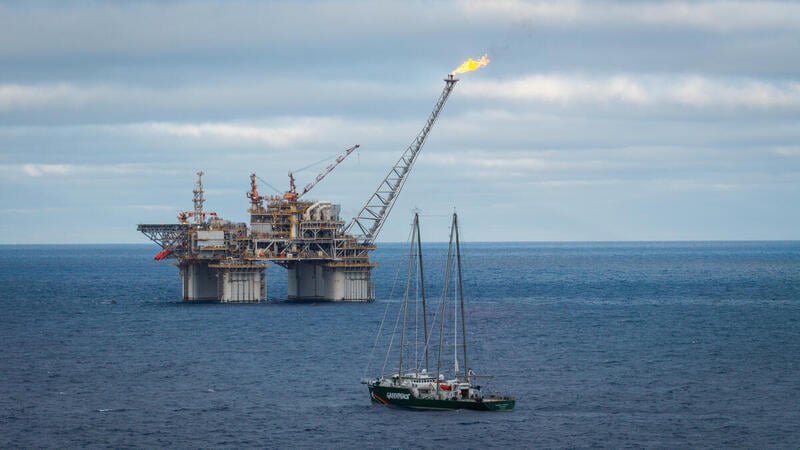
Hi folks! We’re joining you live from the Rainbow Warrior where we will be providing you with updates as our four activists continue scaling and occupying Woodside’s gas platform. The activists are peacefully protesting against Woodside’s latest gas expansion plans, the Browse project, which would see up to 57 toxic wells drilled at Scott Reef.
“Right now our activists are scaling Woodside’s massive Floating Production Unit. They are scaling the South-East pillar and the underside of the Helideck. They’ll be setting up camp soon and have plenty of provisions with them – so stick around!”
5:45 AM AWST
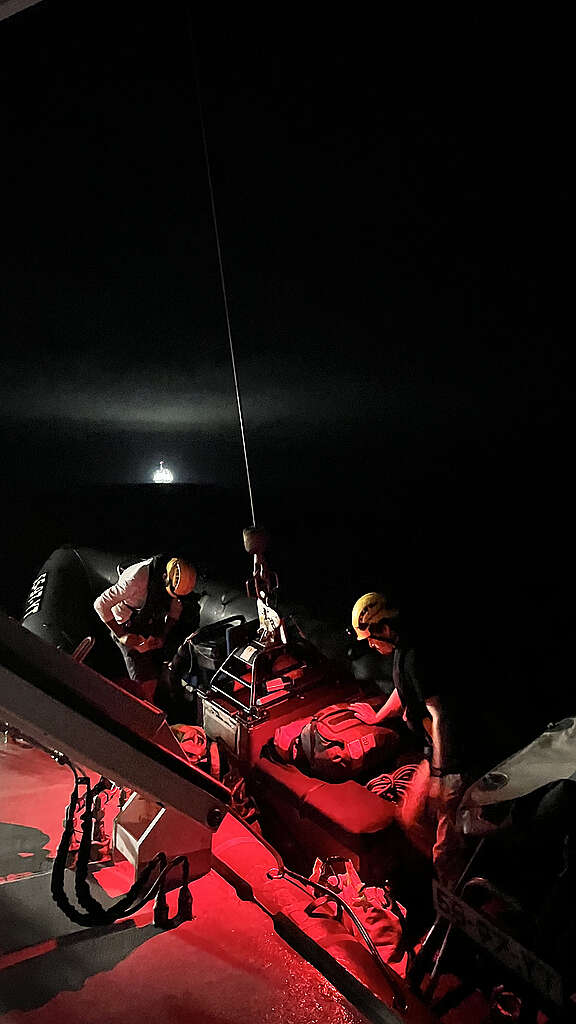
Our RHIBS are in the water! We’ve deployed our four activists and our ship crew on our small fast boats, headed to the gas platform. We’re carrying crew and equipment, plenty of food, all of our safety climbing gear, some big banners, cameras and a whole lot of heart… someone even has something to read after they get settled in.
5:26 AM AWST
Before sunrise activists prepared to launch RHIBS from the Rainbow Warrior.
Looking for a front seat view?
You can follow along with the Live Rainbow Warrior bow cam here!
Looking for more?
Follow us on Instagram for a peek behind the scenes and hear from our Rainbow Warrior crew.
Live blog: Greenpeace activists occupy Woodside gas project to save Scott Reef
Climate Change
Greenpeace activists climb and occupy Woodside’s Scarborough gas project calling on the Australian government to “Stop Woodside’s Dirty Gas” and “Save Scott Reef”
PERTH, Saturday 17 October 2026 — Four Greenpeace Australia Pacific activists are scaling and occupying a Floating Production Unit at Woodside’s Scarborough gas project off the coast of Western Australia, displaying banners reading: “Stop Woodside’s Dirty Gas. Save Scott Reef.”
- Photos and video available here and here. More will be uploaded throughout the day.
- Content and live updates will be uploaded to a live blog and to Instagram
Early this morning at 05:45 AWST, Greenpeace Australia Pacific activists launched from the Rainbow Warrior, Greenpeace’s flagship vessel, scaling and attaching themselves to a Floating Production Unit (FPU), a key piece of gas processing infrastructure at the Scarborough gas field over 200km off the coast of Exmouth.
Woodside has since confirmed it has initiated a temporary shut down of the FPU.
Greenpeace Australia Pacific is occupying the gas platform in peaceful protest of Woodside’s plans to drill for oil and gas at Scott Reef as part of its Browse proposal.
David Ritter, CEO at Greenpeace Australia Pacific, said: “Greenpeace Australia Pacific is taking action today to expose the unacceptable risk to Scott Reef posed by Woodside’s plans.
“Australians love our oceans. Woodside’s reckless Browse gas proposal would turn the magnificent Scott Reef into an industrial gas zone. Woodside wants to drill up to 57 toxic wells around Scott Reef, Australia’s largest oceanic reef, home to nesting green sea turtles, and endangered species like pygmy blue whales and the dusky sea snake; it is a place like nowhere else on Earth.
“Woodside has an alarming track record of oil spills, incidents and environmental neglect, and can’t be trusted with our oceans. From whaling in Albany in the seventies, to Woodside’s threat to Scott Reef today, there’s more than fifty years of history, of Greenpeace taking action off WA’s coasts to protect our oceans.
“There’s no future in new gas projects. Our future is in secure homegrown renewable energy, green industry and exports, where communities and places like Scott Reef are protected — there’s no future in dirty gas shipped offshore.
“The prospect of drilling for oil or gas on the Great Barrier Reef would be considered absolute madness today, but that is exactly the decision before the government: save Scott Reef or risk its destruction at the hands of a gas corporation.”
From aboard the Floating Production Unit, Dr Chris Holden, Greenpeace Australia Pacific activist said: “As a doctor, when I see new fossil fuel projects like Woodside’s Browse project being put forward, I can’t help but think about the impact this is going to have on the health of our communities and planet, and feel a sense of duty to act.
“Not only will this project do irrevocable harm to nature at Scott Reef, it will have a terrible impact on our climate, putting all of our lives at risk.
“On the Rainbow Warrior I’m carrying a copy of the 2025 Lancet countdown report, which warns that health impacts of climate change are worsening, with millions dying needlessly each year due to fossil fuel dependence, growing emissions, and failure to adequately adapt.
“With warnings like this from the leading global health professionals, our government simply can’t allow fossil fuel projects like Woodside’s Browse project to go ahead. It is their duty to do what is in the best interest of our communities.”
Almost half a million people have signed a petition calling on the government to Save Scott Reef and Woodside’s Browse gas project.
-ENDS-
Notes:
- Dial-in, SimSat and Zoom interviews with Geoff Bice, WA Campaign Lead at Greenpeace Australia Pacific, currently aboard the Rainbow Warrior, can be organised separately
Media contact:
Greenpeace Australia Pacific media team on +61 406 231 892 or +61 407 581 404
The board of the Fund for Responding to Loss and Damage (FRLD) will decide on Thursday on whether to “provisionally set aside” $20 million for Nepal to deal with some of the effects of the climate-driven flood it suffered in August.
The motion, seen by Climate Home News, has been drafted by a group of board members from both developed and developing countries and so is likely to pass easily at the fund’s first-ever extraordinary board meeting on October 22.
It invites the government of Nepal to submit a proposal for how to use the money, with the board then deciding at one of its regular board meetings whether to approve the proposal or not.
While Nepali officials have described $20 million as merely “symbolic” in the face of the $4.8 billion estimated costs of recovery and reconstruction, it would be the first time the new FRLD – agreed in 2022 months after devastating floods in Pakistan – has set aside money for a specific disaster.
Until now the fund has only taken requests through a single call for proposals, launched at COP30 in Belém last November, that gave countries six months to submit requests.
Most of the 180 projects the FRLD is currently considering are designed to help countries avoid damage from future climate disasters, for example by strengthening responses to floods in Bangladesh and Lagos.
The draft decision says Nepal’s proposal will serve as a pilot for how funding requests can be submitted outside of the fund’s current timetable. That could let governments seek funds quickly after a climate disaster strikes, rather than waiting for the next call.
This arrangement would set the fund apart from other United Nations funds designed for climate adaptation or cutting emissions like the Green Climate Fund.
Climate campaigners from Fill the Fund said the draft decision is “a real step forward” as it is “the first time this Fund has moved to respond to a specific disaster”.
Too little, too late
The FRLD was agreed by governments at COP27, set up and operationalised at COP28 in 2023 but has yet to award any money. The 180 funding requests it is currently considering would cost around $2.8 billion, but it only has $350 million to allocate.
The United Nations Secretary-General António Guterres has described the amount of money available in the fund as “ridiculously small” and Fill the Fund said $20 million “is a meaningful signal but it is a drop against an ocean of need”.
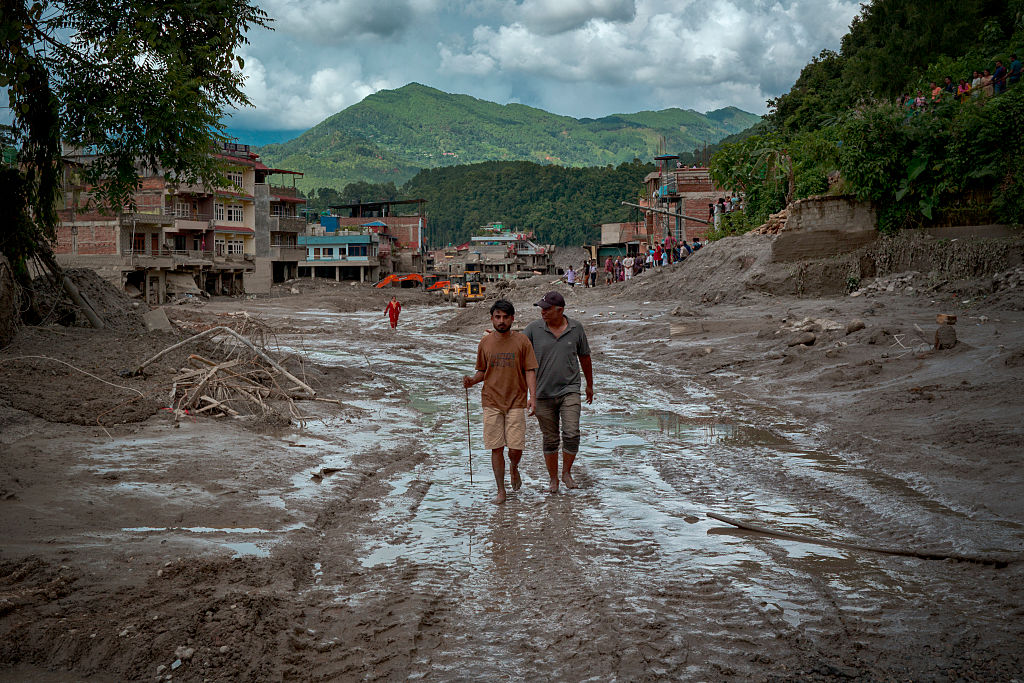
A glacial rock and ice collapse sent a torrent of water and debris through Nepal and the Chinese-administered region of Tibet on August 26. It killed more than 1,400 people, left thousands more missing and destroyed homes, bridges, roads and hydropower plants. Nepal’s finance and environment ministers quickly appealed to the FRLD board for funds, saying that “time is of the essence”.
Their call was