Gentoo.earth, a California-based company has launched an advanced, AI-powered intelligence platform to support carbon removal companies to scale up their operations. The company is founded by Juliet Kirby, an ex-Product Manager at Australian food-tech company Harvest B and former Oliver Wyman Management Consultant.
With powerful insights into market trends, their innovative tool can simplify the complexities of carbon removals and support companies for a lasting impact. This strategy will also help rebuild the VCM from the very beginning to achieve a measurable impact.
Fixing a Market in Crisis: Tackling VCM Challenges with Innovation and Transparency
The company has fairly analyzed the flaws of the traditional Voluntary Carbon Market (VCM). Due to an unstable foundation, it suffers from conflicting incentives, unreliable methodologies, and a few unreliable parties. As a result, the VCM has largely failed to support the global net-zero transition.
According to Gentoo.earth, the key issues include:
- Shortage of permanent removals as the market lacks a steady supply of long-term carbon removal solutions.
- Inconsistent standards create confusion and entry barriers.
- Flawed, untrustworthy methods and opaque practices have damaged market credibility.
Elaborating further, the VCM faces problems due to unclear guidance on how carbon credits support net zero goals. There are also limited options for permanent fossil fuel emissions removal, making it hard for companies to find effective solutions. Another significant issue is the high costs for permanent removals that discourage buyers and reduce market participation.
These challenges contribute to a market that struggles to make a tangible contribution to global net-zero goals. Due to this inconsistency, corporations often find it difficult to track and understand varying net-zero strategies. This makes it hard for carbon removal companies to find suitable buyers.
Unveiling Demand in Carbon Removals
Gentoo.earth addresses a critical question in the market: Where are the buyers? By analyzing thousands of corporate climate reports, the platform has discovered that 19% of evaluated companies are interested in permanent carbon dioxide removal (CDR) solutions, even though they may not be highly visible to suppliers.
This data highlights an untapped demand for durable removals and bridging a significant gap in the market.
So, what are their solutions for carbon removal companies?
Gentoo.earth’s Solution: Empowering Carbon Removers
Gentoo.earth empowers carbon removal suppliers by offering unique, data-driven insights traditionally held by buyers. The platform encompasses detailed data from over a thousand public companies, shedding light on:
- Corporate Net-Zero Targets: Track goals and commitments.
- Annual GHG Reduction Progress: Monitor companies’ progress toward emissions goals.
- Carbon Credit Strategies: Discover carbon credit preferences and usage.
- Key Climate Priorities: Identify what drives companies’ climate agendas.
By consolidating this data, Gentoo.earth makes it easier for companies to find buyers, saving them up to 80% of the time they would spend analyzing climate strategies manually.
Building a Sustainable VCM for the Future
The VCM must scale rapidly to mitigate the impact of climate change effectively. To achieve this, the company advocates a fundamental reset based on transparency, scientific rigor, and equitable access to data across market participants. Key aspects of this transformation include:
- Independent standards and exchanges: built with scientific accuracy and impartial oversight.
- Clear carbon credit pathways: establishing which credit types apply to specific emissions sources.
- Accessible market data: ensuring all participants have access to transparent, high-quality data.
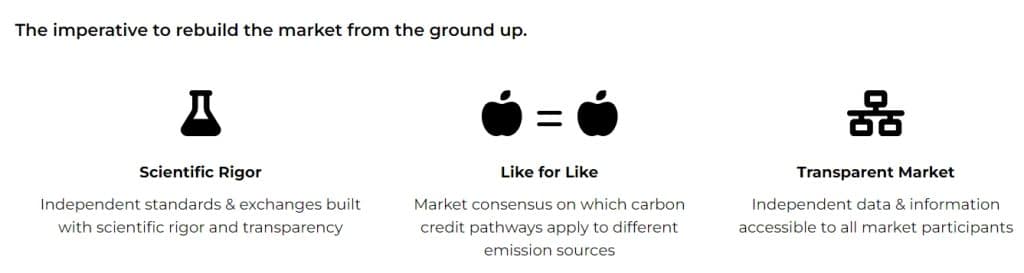
source: Gentoo.earth
The company draws inspiration from Bloomberg’s transformative approach in financial markets, where increased transparency enabled both buyers and sellers to make informed decisions, drastically increasing transaction volumes. They also envision a similarly transparent VCM, where suppliers gain insight into buyers’ demands, reducing friction and accelerating market growth.
Overall, with this explanation, one can understand how Gentoo.earth’s innovative platform transforms the VCM by enabling suppliers to efficiently meet buyer demands. With these tools, carbon removal companies can succeed and create a more effective and sustainable carbon market together.
- FURTHER READING: Study: Fortune 500 Companies Using Carbon Credits Are Reducing Their Emissions Faster
The post Gentoo.earth Launches AI-Driven Platform to Simplify Corporate Net Zero appeared first on Carbon Credits.
Carbon Footprint
Canada’s Climate Momentum Slows in 2026 Despite 7% Emissions Drop, RBC Report Finds
Canada’s climate journey is entering a more uncertain phase. Emissions are trending lower, investments continue to flow, and clean technologies remain in play. Yet momentum is clearly weakening. That is the central message of Climate Action 2026: Retreat, Reset or Renew, the third annual report from the RBC Climate Action Institute.
The report paints a nuanced picture. Progress has not stopped. But it has slowed. Policy reversals, economic pressures, and shifting public priorities are weighing on climate ambition at a time when speed matters most.
Canada now faces a defining question: retreat from climate action, reset its approach, or renew its commitment with a sharper focus.
Emissions Are Falling, but Not Fast Enough
Canada’s total greenhouse gas emissions are projected to be 7% lower in 2025 than in 2019, according to RBC’s estimates. That marks real progress, especially after years of volatility during and after the pandemic.
However, this pace remains well short of what Canada needs to hit its longer-term targets. The country has committed to reducing emissions by 40% to 45% below 2005 levels by 2030 and by 45% to 50% by 2035. Current trends suggest those goals will be difficult to reach without stronger policy signals.
Several sectors have reduced emissions intensity:
- Electricity: down 27%
- Buildings: down 19%
- Oil and gas: down 19%
These gains reflect cleaner power generation, improved efficiency, and gradual technology upgrades. Still, absolute emissions reductions remain modest, especially in sectors tied to economic growth and population expansion.
Climate Action Barometer Hits a Turning Point
For the first time since its launch, the Climate Action Barometer declined. This index tracks climate-related activity across policy, capital flows, business action, and consumer behavior.
The drop was broad-based. No single sector drove the decline. Instead, multiple pressures hit at once.
Key factors include:
- The removal of the consumer carbon tax
- The rollback of electric vehicle incentives
- Economic uncertainty and rising trade tensions
- Alberta’s restrictions on new renewable energy projects
Together, these shifts weakened confidence. Businesses delayed or canceled projects. Consumers pulled back on major clean-energy purchases. Climate policy slipped down the priority list for governments focused on affordability and job creation.
While climate action remains above pre-2019 levels, the trendline has clearly flattened.
Capital Flows Hold Steady, but Growth Has Stalled
Climate investment in Canada has leveled off at around $20 billion per year. That figure has barely moved in recent years.
Public funding remains a stabilizing force. Nearly $100 billion in incentives for clean technology and climate programs is already budgeted for deployment through 2035 by Ottawa and the largest provincial governments.
However, private capital is showing signs of caution. Investment declined compared to 2024, driven largely by cooling sentiment toward early-stage climate technologies. Policy uncertainty has amplified investor risk concerns, especially in capital-intensive sectors like renewables and clean manufacturing.
Some bright spots remain. Wind projects on Canada’s East Coast have supported investment flows, even as renewable development slowed elsewhere.
Carbon Pricing Changes Ease Pressure
The federal government eliminated the consumer carbon tax in April 2025, refocusing carbon pricing solely on industrial emitters. The change had a limited impact on national emissions coverage, as only around three percent of agricultural emissions were subject to consumer pricing.
For farmers, the move delivered meaningful financial relief. Many agricultural operations rely on propane to dry grain or heat livestock facilities. Few cost-effective, lower-carbon alternatives exist in rural regions, making the tax a direct burden on operating costs. Removing it eased pressure without significantly weakening the overall emissions policy.
Still, the decision lowered Canada’s climate policy score and sent mixed signals to investors and businesses evaluating long-term decarbonization strategies.
EV Slowdown Signals Shifting Consumer Priorities
Consumer behavior has become a significant hindrance to climate momentum. Electric vehicle adoption slowed sharply in 2025. EVs accounted for just eight percent of total vehicle sales in the first half of the year, down from twelve percent during the same period in 2024. Passenger EVs now make up only about four percent of Canada’s total vehicle stock.
Higher interest rates, the removal of purchase incentives, and uncertainty around future mandates all contributed to the pullback.
- The federal government also delayed the Electric Vehicle Availability Standard, which was set to require EVs to represent 20% of new vehicle sales by 2026. That pause further weakened confidence across the market.
At the same time, not all clean technologies lost ground. Heat pump adoption edged higher, supported by new efficiency funding, particularly in Ontario. The province’s $10.9 billion commitment to energy efficiency programs could support further uptake, even as other consumer-facing climate actions slow.
Public priorities have also shifted. Only about a quarter of Canadians now identify climate change as a top national issue. Cost of living pressures, healthcare access, and economic stability dominate public concerns, reshaping how households weigh climate-related decisions.

Buildings Sector Becomes the New Battleground
The RBC Institute’s 2026 “Idea of the Year” focuses squarely on Canada’s buildings sector, which has quietly become one of the country’s most challenging emissions sources. Emissions from buildings rose 15% between 1990 and 2023 and now represent a larger share of national emissions than heavy industry.
Today, buildings account for roughly 18% of Canada’s greenhouse gas emissions when electricity-related emissions are included. Progress remains slow. Emissions from the sector are projected to fall by just one percent in 2025, a pace that leaves Canada far from its net-zero target for buildings by 2050.
New construction adds to the risk. If projects continue to follow prevailing building codes, emissions could rise by an additional 18 million tonnes over time, locking in higher emissions for decades.

Responsible Buildings Pact Points to a Reset
Against this backdrop, the Responsible Buildings Pact offers a potential reset. Launched in 2024 under the Climate Smart Buildings Alliance, the initiative aims to accelerate the adoption of low-carbon designs and materials across the construction sector.
The pact focuses on scaling the use of mass timber and low-carbon concrete, steel, and aluminum. These materials can significantly reduce embodied carbon in new buildings while strengthening domestic supply chains. The approach is particularly timely as Canadian producers face constraints from U.S. trade tariffs, limiting access to lower-emissions materials.
If widely adopted, the pact could transform how Canada builds homes, offices, and infrastructure. By embedding emissions reductions into construction decisions today, the sector could deliver long-term climate gains while supporting industrial competitiveness.
Electricity Progress Slows After Early Success
Canada’s electricity sector remains one of its strongest climate performers. Emissions have fallen an estimated 60% since 2005, surpassing Paris Agreement targets. Coal phase-outs continue to drive reductions, with more than six terawatt-hours of coal power expected to be removed from the grid this year.
Still, progress slowed in 2025. Uncertainty surrounding Alberta’s renewable energy policies led to the cancellation of 11 gigawatts of planned capacity, roughly half of the province’s existing generation. At the same time, natural gas use rose sharply, offsetting some of the emissions gains from coal retirements.
Canada now faces a dual challenge: doubling electricity capacity while fully decarbonizing it by 2050. Estimates suggest the required investment could exceed $1 trillion, underscoring the scale of the task ahead.

Climate Action at a Defining Moment
The RBC report makes one point clear. Canada has not abandoned climate action, but it has lost momentum. Emissions are lower, capital remains available, and technology continues to advance. Yet policy clarity has weakened, consumer confidence has faded, and investment growth has stalled.
With just 25 years left to reach net zero, the choices made now will shape Canada’s emissions trajectory for decades. Renewed coordination between governments, businesses, and consumers will be essential, along with policies that balance economic realities without sacrificing long-term climate goals.
Canada still has time to reset and renew. What it cannot afford is continued drift.
- ALSO READ: Canada to Launch Sustainable Investment Taxonomy in 2026 to Guide Green and Transition Finance
The post Canada’s Climate Momentum Slows in 2026 Despite 7% Emissions Drop, RBC Report Finds appeared first on Carbon Credits.
Carbon Footprint
Tech Giants Like NVIDIA and Google Eye Space to Power AI with Orbital Data Centers
Some of the world’s biggest tech companies and space startups are racing to build data centers in space. These orbital data centers are meant to support the massive computing needs of artificial intelligence (AI). Companies see space as a place to get abundant solar energy and natural cooling without the limits of Earth’s power grids. This idea moved from theory to early testing in late 2025–2026 and gained spotlight at the AIAA SciTech Forum 2026 in Orlando, Florida, last week.
Several tech giants, including Google, SpaceX, and Blue Origin, are exploring space‑based computing. At the same time, startups like Starcloud have already launched prototypes with advanced AI hardware into orbit. These efforts reflect growing interest in solving energy, cooling, and infrastructure challenges that terrestrial data centers face.
Why the Tech Giants Look to Space
AI needs more computing power than ever. Traditional data centers on Earth use huge amounts of electricity and water for power and cooling. In the U.S., data centers used over 4% of total electricity in 2024 and could increase to between 6.7% and 12% by 2028 if current trends continue.
At the same time, global data center electricity demand may nearly double by 2030 to about 945–980 terawatt‑hours per year due to AI and cloud services.

- Space offers two major advantages: near‑constant solar power and natural cooling.
Solar panels in orbit can be up to 8x more efficient than on Earth because there is no atmosphere to block sunlight. Heat can also be released directly into space by radiation, without the need for water‑based cooling systems.
These factors could lower energy costs and help AI computing scale without straining terrestrial power systems. Companies see space as a place where solar energy is abundant, and energy from the sun is almost always available, especially in certain orbits.
What the Tech Giants Are Doing
Google: Project Suncatcher
Google has announced a research initiative called Project Suncatcher. The project aims to put AI computing hardware into orbit using solar‑powered satellites.
The tech giant plans to launch two prototype satellites equipped with its own AI chips by early 2027 to test whether they can run in space. The goal is to create blueprints for future space‑based data centers.
Google says these satellites will use Tensor Processing Units (TPUs), chips designed for AI tasks, and connect via laser links instead of traditional wires. The company’s CEO said that using solar energy in space could help support the AI industry’s rapidly rising computing needs.
Starcloud: First AI Model in Orbit
Starcloud, a startup backed by Nvidia and venture capital firms, has achieved an important milestone. In late 2025, the company launched a satellite called Starcloud‑1 carrying an Nvidia H100 GPU. This satellite successfully trained and ran AI models, including a version of Google’s Gemma model, in orbit. This marked the first AI model training in space.
Starcloud aims to expand this capability with future satellites. The company has proposed building a large space data center with about 5 gigawatts (GW) of solar panels spread over several kilometers. The design would deliver more compute power than many terrestrial data centers with efficient energy use.
SpaceX and Blue Origin
Elon Musk‘s SpaceX and Blue Origin are also exploring space data centers. SpaceX plans to use its Starlink satellite network and future satellites that could carry AI compute hardware.
Reports suggest SpaceX may launch upgraded Starlink satellites with terabit‑class capacity starting in 2026. Musk has also talked about using reusable rockets to place larger compute hubs into orbit at scale.
Blue Origin, backed by Jeff Bezos, reportedly has a team working on technology for orbital data centers. The aim is to develop systems that can support AI workloads beyond Earth. These efforts build on Blue Origin’s long history in rocket and space technology.
Global Competition: Startups and Nations Join In
Space data centers are attracting attention beyond the big tech names. Multiple startups and international players are racing to build compute infrastructure in orbit.
Companies like PowerBank Corporation and Orbit AI are planning space‑based nodes or cloud services powered by solar energy. Moreover, Axiom Space has outlined plans for data center modules on its private space station by 2027.
Outside the U.S., China is also advancing space compute projects. The Three‑Body Computing Constellation aims to deploy thousands of satellites equipped with high‑performance GPUs and AI models. The long‑term goal is to provide a combined computing capacity of 1,000 peta‑operations per second (POPS) — a measure of compute power far beyond many ground‑based supercomputers.
This global competition highlights how nations and companies see orbital data centers as strategic infrastructure for AI and other advanced computing tasks.
Challenges and Engineering Hurdles Above the Atmosphere
Building data centers in space is not easy. Engineers must solve many technical problems before full‑scale orbital centers become common.
- Radiation: Space radiation can damage GPUs and other chips. Orbital data centers need heavy shielding and backup hardware.
- Cooling: Space has no air or water. Systems must use radiative cooling, which is complex but essential.
- Debris: Crowded orbits raise collision risks. Large structures could worsen the Kessler syndrome.
- Costs: Launching hardware is costly. Firms expect costs to fall to about $200 per kilogram by the mid-2030s, improving feasibility.
Potential Benefits: Solar, Cooling, and Scaling
Despite the challenges, space‑based data centers offer potential benefits that are hard to match on Earth. More remarkably, the market is set for rapid growth as demand for AI compute expands.
Analysts expect the market to rise from about $1.77 billion in 2029 to nearly $39.1 billion by 2035. This shows an annual growth rate of about 67.4%. This surge is driven by rising AI workloads, growing satellite constellations, and the need for more sustainable, high-performance computing beyond Earth-based limits.

Major advantages of orbital data centers include:
Continuous Solar Power
Satellites in certain orbits can receive sunlight almost 24 hours a day. This could allow data centers to run on clean solar energy constantly, without interruptions from night, clouds, or weather. Solar panels in orbit operate at efficiencies up to eight times those on Earth’s surface.
Natural Cooling
The vacuum of space can help with cooling. Heat radiates into cold space at temperatures as low as 4 Kelvin (−269°C). This natural cooling eliminates the need for water‑intensive cooling systems used by terrestrial data centers.
Compute Scaling
As AI models grow larger, so too does their compute demand. Space data centers could provide new capacity that is not limited by Earth’s land, water, or grid constraints. If prototypes prove successful, large orbital systems might be scaled over the next decade.
Future Outlook: Will AI Go Beyond Earth?
Tech companies and startups are actively exploring space‑based data centers to meet the rapidly rising computing requirements of AI. Google’s Project Suncatcher, Starcloud’s prototypes, and efforts by SpaceX and Blue Origin show that orbital compute infrastructure is moving from concept to early reality.
Space offers nearly constant solar energy and natural cooling, which could ease the energy and environmental pressures associated with traditional data centers. Still, radiation, heat management, space debris, and launch costs are major challenges ahead.
The next few years — especially prototype launches around 2027 — will show whether space data centers can become a practical part of the future AI infrastructure landscape.
The post Tech Giants Like NVIDIA and Google Eye Space to Power AI with Orbital Data Centers appeared first on Carbon Credits.
Carbon Footprint
L’Oréal Taps 13 Global Startups to Boost Climate, Nature, and Circular Innovation
L’Oréal, the global beauty giant, has unveiled its first cohort of startups participating in its new sustainable innovation program, L’AcceleratOR. The program chose 13 startups focused on climate, nature, and circularity. They were selected from nearly 1,000 applicants across 101 countries. It aims to find, pilot, and scale solutions that address key environmental challenges in the beauty industry and beyond.
The initiative is part of L’Oréal’s larger sustainability plan, called “L’Oréal for the Future.” This plan includes bold goals for climate action, resource use, and a shift to a circular economy by 2030 and beyond.
Inside L’AcceleratOR: Funding, Pilots, and Scale
L’AcceleratOR is a €100 million (about US$116 million) sustainable innovation program. The funding will be provided over a five-year period. The program helps startups and small to medium-sized enterprises (SMEs) that create sustainable solutions for L’Oréal and the beauty industry.
L’AcceleratOR is in partnership with the University of Cambridge Institute for Sustainability Leadership (CISL). Selected startups will enter an intensive support phase led by CISL. They will receive funding, expert guidance, and access to L’Oréal’s research and testing capabilities. The aim is to help these companies become pilot-ready and scale their solutions for broader use.
The accelerator focuses on key strategic themes tied to L’Oréal’s sustainability goals:
- Next-generation packaging and materials
- Nature-sourced ingredients
- Circular solutions
- Data intelligence tools to measure and reduce environmental impacts
Startups may run six- to nine-month pilots with L’Oréal and its partners. Successful pilots may be scaled across global operations if they show measurable benefits.
Ezgi Barcenas, Chief Corporate Responsibility Officer, remarked:
“To accelerate sustainable solutions to market, we are being even more intentional and inclusive in our pursuit of partnerships through “L’AcceleratOR”. We are really energized to be co-designing the future of beauty with the University of Cambridge Institute for Sustainability Leadership, and these 13 change makers.”
The 13 Startups and Their Focus Areas
The selected startups and SMEs represent a range of sustainable innovations across climate, nature, and circularity. They fall into four main categories:
- Packaging and materials
- Nature-sourced ingredients
- Circular solutions
- Data intelligence

These 13 startups use different ways to cut environmental impact. They focus on product design, supply chain management, and manufacturing to promote circularity.
How L’AcceleratOR Fits L’Oréal’s 2030 Strategy
L’AcceleratOR is part of L’Oréal’s broad 10-year sustainability roadmap, “L’Oréal for the Future.” The roadmap covers four main areas: climate, nature, materials circularity, and communities. It includes the 2030 goals that aim to transform operations while driving innovation in sustainable solutions.

Some of L’Oréal’s key targets under the roadmap include:
- 100% renewable energy for all operations.
- Sustainable sourcing of at least 90% bio-based materials in formula and packaging.
- 100% recycled or reused water for industrial purposes.
- Reducing virgin plastic use by 50%.
- Sourcing 50% of packaging from recycled or bio-based materials.
- Cutting Scope 1 and 2 emissions by 57% and some Scope 3 emissions by 28% against a baseline year.

The L’AcceleratOR program expands these efforts by tapping external innovation. L’Oréal supports startups to speed up solutions that can cut environmental impacts throughout its value chain.
L’Oréal’s Scope 3 emissions are by far the largest part of its footprint, as seen below. This reflects impacts from sourcing, production inputs, logistics, product use, and end-of-life. In 2024, Scope 1 and 2 fell further to about 227,051 tCO₂e, showing continued reductions in direct and energy-related emissions. Total emissions, though, remained roughly stable at 7.41 million tCO₂e, increased with Scope 3 again the largest component.

L’Oréal also has other sustainability initiatives. For example, its Fund for Nature Regeneration has invested more than €25 million (about US$29.1 million) in projects like forest, mangrove, and marine ecosystem restoration. This reflects L’Oréal’s commitment to nature and biodiversity alongside climate action.
Water stewardship is another strategic focus. In 2024, 53% of the water used in L’Oréal’s industrial processes came from reused and recycled sources. This was supported through water recycling systems in areas facing water stress.
Implications for the Beauty and Consumer Goods Sector
L’Oréal’s accelerator initiative reflects a larger industry trend. Many global companies are increasingly investing in sustainable technologies through partnerships, incubators, and venture funds. These partnerships aim to speed up climate, nature, and circular solutions. They combine corporate scale with startup agility.
The L’AcceleratOR program connects L’Oréal with companies that use innovation and partnerships to achieve their environmental goals. It also shows that sustainability strategies can go beyond internal changes. They can support the larger ecosystem, too. Helping startups scale can benefit whole industries, not just single companies.
This trend is important in areas like packaging, materials science, green chemistry, and digital climate tools. Packaging waste and carbon emissions from supply chains are major problems for consumer goods. This is especially true in beauty and personal care.
The beauty industry accounts for about 0.5% to 1.5% of global greenhouse gas emissions. Most of these emissions come from the value chain, not from company factories. For many beauty companies, around 90% of total emissions are Scope 3, such as raw materials, packaging, transport, and product use.
Raw material sourcing, including agricultural inputs and plastics, can make up 30% to 50% of industry emissions. Consumer use also adds a large share, especially for products that require water and heat.

The industry produces about 120 billion beauty packaging units each year worldwide. Much of this packaging is single-use and hard to recycle. A typical beauty product can generate several kilograms of CO₂-equivalent over its life cycle, from production to disposal.
Notably, most emissions are in the value chain. So, new solutions in packaging, materials, and data tools are key to cutting the beauty sector’s climate impact. This is what L’Oréal seeks to address. By supporting solutions in these areas, it hopes to change old industry practices.
Early Expectations and Next Steps
The 13 selected startups will now enter the pilot readiness phase of the L’AcceleratOR program. During this phase, the startups will refine their technologies with CISL guidance and L’Oréal support. The goal is to ensure their solutions are ready for real-world testing in commercial environments.
If pilot outcomes are successful, solutions may be scaled beyond initial tests. Some could fit into L’Oréal’s global operations or be used by industry partners. This would speed up sustainable progress.
L’Oréal and CISL plan future cohorts for the L’AcceleratOR program. Future rounds will create chances for more companies. They will also expand the pipeline of sustainable solutions.
By partnering with the University of Cambridge Institute for Sustainability Leadership and supporting startups across packaging, materials, ingredients, circular systems, and data tools, L’Oréal aims to fast-track real solutions that reduce environmental impacts.
The initiative boosts L’Oréal’s sustainability plan, “L’Oréal for the Future.” This plan sets bold goals for 2030, focusing on renewable energy, resource use, cutting emissions, and promoting circularity.
The pilot and scaling opportunities in the program can help new technologies join global supply chains. This support will aid L’Oréal and its partners in tackling climate, nature, and circular economy challenges towards its net-zero goals.
The post L’Oréal Taps 13 Global Startups to Boost Climate, Nature, and Circular Innovation appeared first on Carbon Credits.
-
Greenhouse Gases5 months ago
Guest post: Why China is still building new coal – and when it might stop
-
Climate Change5 months ago
Guest post: Why China is still building new coal – and when it might stop
-
Greenhouse Gases2 years ago嘉宾来稿:满足中国增长的用电需求 光伏加储能“比新建煤电更实惠”
-

Climate Change2 years ago
Spanish-language misinformation on renewable energy spreads online, report shows
-
Climate Change2 years ago
Bill Discounting Climate Change in Florida’s Energy Policy Awaits DeSantis’ Approval
-
Climate Change Videos2 years ago
The toxic gas flares fuelling Nigeria’s climate change – BBC News
-
Climate Change2 years ago嘉宾来稿:满足中国增长的用电需求 光伏加储能“比新建煤电更实惠”
-
Carbon Footprint2 years agoUS SEC’s Climate Disclosure Rules Spur Renewed Interest in Carbon Credits


