

Cleaner air is on the way to 280 school districts across the country, including 35 in the Southeast! The Environmental Protection Agency (EPA) awarded nearly $1 billion this week to applicants through the Clean School Bus Grants Program. The funds will support the purchase of more than 2,675 electric school buses nationwide, including 464 in the Southeast. Of the EPA’s 10 regions, the Southeast received the most funding, totaling more than $172 million. Also unique to the region, the Eastern Band of Cherokee Indians was the only Tribal nation that was awarded funding.
The second round of the Clean School Bus (CSB) Rebate Program is still open and accepting applications for 2024. Continue reading to learn more.
Created by the Bipartisan Infrastructure Law of 2021, the Clean School Bus Program is investing $5 billion through 2026 to replace diesel school buses with cleaner options, like electric buses. This latest round is in addition to the $875 million awarded through the CSB Rebate Program released in October of 2022. This resource from the Alliance for Electric School Buses helps explain the two programs at a glance.

Graph credit: Alliance for Electric School Buses
School Districts Are Asking for Electric Buses
One striking note about the program is that electric school buses are in demand. Over 95% of the applications that were funded will purchase electric buses. This closely mirrors the percentage for electric powertrains requested from all applications submitted.

Keep the Wheels for ESB Going Round and Round
You can help us continue the momentum for electric buses in two ways:
- Reach out to your local school board and superintendent and thank them for investing in the health of our children (if they applied for electric buses). If they applied for propane, you can inform them of how electric school buses are the best choice to reduce emissions.
- If your school district is not on the list, please reach out to your local school board and superintendent, make them aware of the benefits of ESB and the opportunity to apply for the EPA Clean School Bus Rebate (CSB) Program ending January 31, 2024 and invite them to participate in the upcoming EPA webinar on January 18, 2024 (see below).
Don’t Miss the Bus, Rebate Program Closing Soon!
The second round of the CSB Rebate program is open now but closing on January 31, 2024. If your district is interested in participating, they need to act fast. Learn what needs to be done with this quick primer on the program. For a deeper dive explore this list of resources from Alliance for Electric School Buses, of which SACE is a proud member.
Upcoming Rebate Webinar
The EPA District 4 and SACE will be co-hosting the webinar An Overview of the 2023 Clean School Bus Rebate Program for Florida Applicants Webinar on Thursday, January 18, 2024, from 10:00 AM – 10:45 AM (EST).
During this free webinar, EPA Region 4 staff will discuss the considerations when applying for the U.S. Environmental Protection Agency’s (EPA) Clean School Bus programs. This will include discussions on the difference between rebates and grants, how to apply for the 2023 rebate program, and next steps to be taken. This webinar is curated for Florida applicants, but any applicants in Region 4 are welcome to join.
Eligible Applicants Register Here
Catch the Big Green Bus
We’re already making great strides in the new year, but there is much work to be done to spread the word of the public health benefits and environmental benefits of electric school buses and ensure every school district is informed on the incredible financial benefits they provide – including lower fuel and maintenance costs – especially when paired with current federal opportunities. To stay engaged and learn more, join the Clean Energy Generation movement alongside others who are taking action today to create a healthier, safer reality where we all can thrive.
The Southern Alliance for Clean Energy’s Electrify the South program leverages research, advocacy, and outreach to accelerate the equitable transition to electric transportation across the Southeast. Visit ElectrifytheSouth.org to learn more and connect with us.
The post Electric School Bus Awards and Opportunities for Southeastern Schools appeared first on SACE | Southern Alliance for Clean Energy.
En Route to the Southeast: Electric School Bus Opportunities and Awards

 Apparently, this guy believes that the majority of Americans think poorly of Trump supporters, and wonders if this the message we want to send.
News flash: This is precisely the message we want to send.
I wonder what his doctorate is in. Filth? Debauchery? White collar felonies? War crimes?
 The idiot’s t-shirt shown here raises the question: How do you define the word “support?”
In a certain sense, I support all countries, insofar as the people living in each deserve to live freely.
As an American, I support the United States. I revere it for its strengths, while I advocate for remedying its considerable set of weaknesses: corruption, injustice, racism, indifference to human suffering, militarism, and greed.
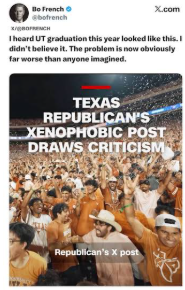 BREAKING: Texas Republicans are flailing after a party nominee posted vile racist commentary and refused to take it back.


-
Climate Change1 year ago
Guest post: Why China is still building new coal – and when it might stop
-

 Greenhouse Gases2 years ago
嘉宾来稿:满足中国增长的用电需求 光伏加储能“比新建煤电更实惠”
-
Greenhouse Gases1 year ago
Guest post: Why China is still building new coal – and when it might stop
-

 Climate Change2 years ago
嘉宾来稿:满足中国增长的用电需求 光伏加储能“比新建煤电更实惠”
-

 Renewable Energy11 months ago
Sending Progressive Philanthropist George Soros to Prison?
-
Climate Change2 years ago
Bill Discounting Climate Change in Florida’s Energy Policy Awaits DeSantis’ Approval
-
Greenhouse Gases1 year ago
嘉宾来稿:探究火山喷发如何影响气候预测
-

 Carbon Footprint2 years ago
US SEC’s Climate Disclosure Rules Spur Renewed Interest in Carbon Credits