

- Formal negotiations
- Finance
- Global review
- Global report
- Digital sequence information
- Harmful subsidies
- Marine biodiversity
- Planning, monitoring, reporting and review
- Article 8(j) implementation
- Biodiversity and climate change
- Links with other bodies
- Around the COP
- Armenian presidency
- Protests
- Lobbying and influence
- Carbon and biodiversity markets

The African continent’s hopes for a legally binding agreement to combat drought have been dashed again, as UN land restoration talks in Mongolia passed the issue onto the next set of talks in Egypt in two years’ time.
For over a decade, Africa has pushed for a UN protocol on drought risk management that would acknowledge drought as an issue requiring a regional and global – not just a national – response, potentially paving the way for more finance to help ensure water is available when drought hits.
A formal protocol would enable countries to transition from reacting to drought once it hits to “a proactive enabling mechanism to address drought and its effects such as migration”, said a Tunisian negotiator on behalf of the African Group of countries last week. Once land is regularly too dry and infertile to grow crops or graze animals, people often leave to seek a living elsewhere.
But this effort to adopt a protocol, led by Africa, has been resisted at successive land restoration COPs under the UN Convention to Combat Desertification (UNCCD), mainly by developed countries, which argue that a legally weaker alternative – a framework – would be faster and cheaper to set up.
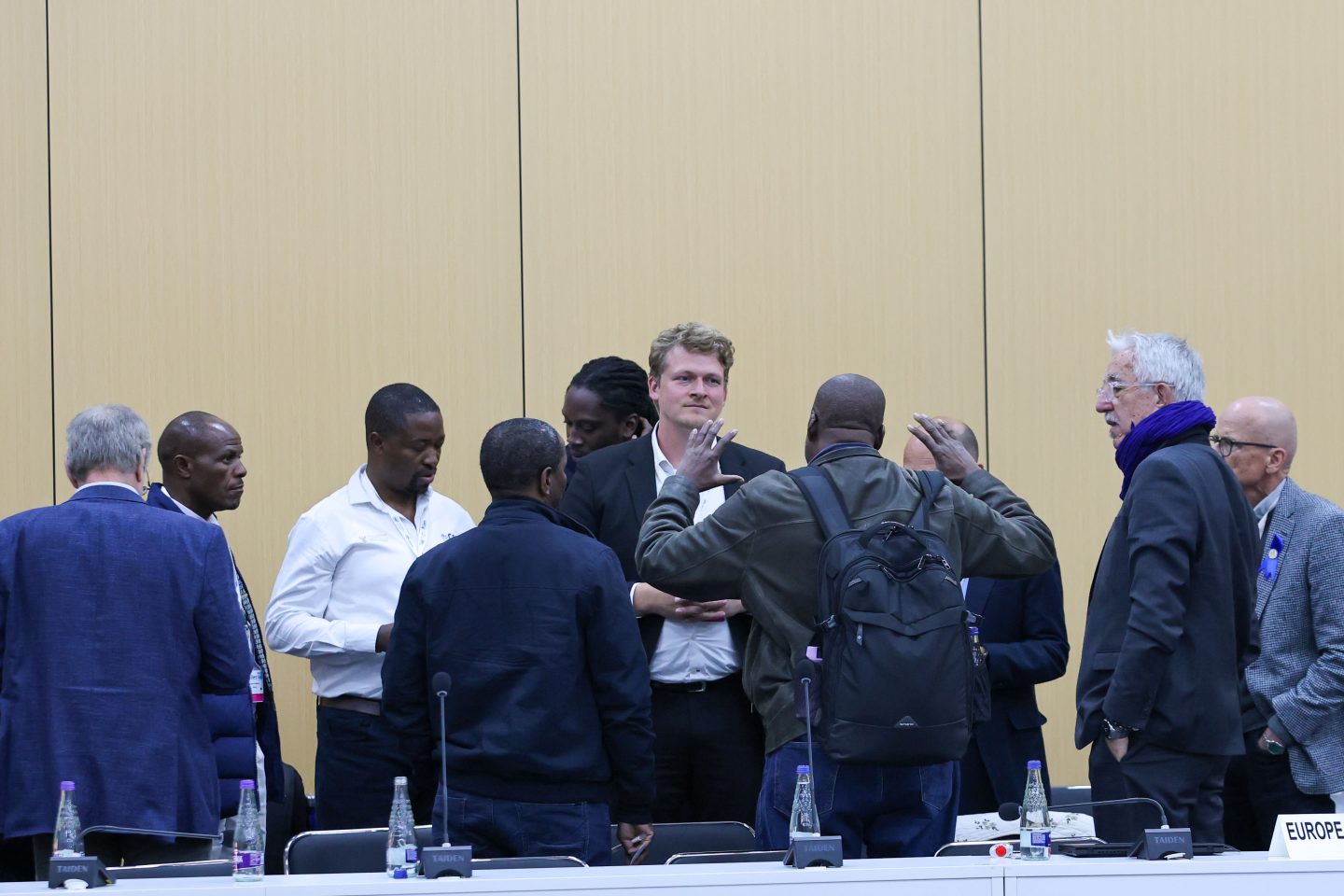
Governments at the previous COP in Saudi Arabia in 2024 failed to reach agreement despite talks running past midnight, while this year’s saw African officials coordinate a walkout from negotiating rooms on Wednesday morning, according to two sources at the talks.
Drought deal delayed until 2028
The IISD’s Earth Negotiations Bulletin, a non-governmental organisation which unlike the media is allowed to watch and report on closed-door talks, said a call to suspend negotiations on Wednesday showed negotiations had reached “boiling point” and “made some jaws drop”.
Negotiations resumed after a lunchtime meeting with the Mongolian COP presidency although governments were only eventually able to agree that they could not find consensus in Ulaanbaatar and should resume talks on an instrument to deal with drought in 2028.
Christine Colvin, WWF’s head of freshwater policy, told Climate Home News that, with droughts hitting from Honduras to the English region of Hampshire, something concrete – whether a protocol or a framework – is needed urgently “rather than the can being kicked down the road for another two years as will now happen with the protocol procrastination”.
But, in a closing press conference on Friday, the Mongolian minister presiding over talks celebrated that governments had reached consensus on several “contentious” issues and that agenda items blocked at this year’s COP17 would be put on the agenda for COP18 in Egypt.
US blocks agenda items
Other agenda items that divided countries were on measuring land degradation’s effects on women, enhancing the involvement of civil society and women in land COPs, and the UNCCD working more closely and effectively with the UN’s climate and nature conventions.
On the COP’s opening day two weeks ago, the US representative said the Trump government objects to these agenda items “on their premise and no amount of negotiation will allow us to join consensus on these items. As such we request that they be struck from the agenda at which time we will then be able to approve it, saving us valuable negotiating time.”
A US State Department spokesperson later told Climate Home News that the US wants the UN “to get back to basics by refocusing on its core mandate, eliminating overlap, and reducing competition for scarce resources”.
The spokesperson added, “that means prioritising the concrete work member states created [the UN] to do – rather than diverting limited time, attention, and resources toward social and political agendas, including gender-related initiatives.”
On COP’s first day, the European Union and Brazil pushed back against the blocking of these agenda items, with a Brazilian negotiator saying his country attaches “great importance” to them. But the Mongolian presidency directed governments to adopt the rest of the agenda without the controversial items, which were discussed privately with countries throughout the two weeks.
An EU statement, read out later by Irish minister Timmy Dooley, accused “some parties” (meaning national governments) of having adopted a “less constructive approach” and preventing “discussions on important matters from even commencing”.
The agenda items the US refused to engage with were never discussed and were only placed onto the agenda for the next COP on the last day. Those talks will take place in Egypt in two years’ time, with Donald Trump due then to be in his last year as US president.
No restoration without women
The blocking of the gender agenda item has stymied attempts, agreed on by governments at the last COP, to develop gender-specific indicators for the UNCCD’s next overall framework and to facilitate more women delegates at COPs. Women made up only about a quarter of delegates to COP15 in 2022, UNCCD analysis with the latest data shows
Criticising the move to keep gender off the agenda, the EU said in a statement that it welcomes “the attention being given at COP17 to women pastoralists and herders, recognising their contribution to sustainable land management and resilient rural livelihoods”.
The head of the UNCCD, former Egyptian environment minister Yasmine Fouad, said on Friday that “regardless that the agenda item was blocked”, she was proud that she and COP17 President Batmunkh Battsetseg had led the COP as women and attended the gender caucus (a meeting of groups supporting women at the talks).

“Without the women,” she told the closing press conference on Friday, “we will not be able to restore land, restore hope, restore life or restore even our children and grandchildren. And we will keep on pushing that agenda.”
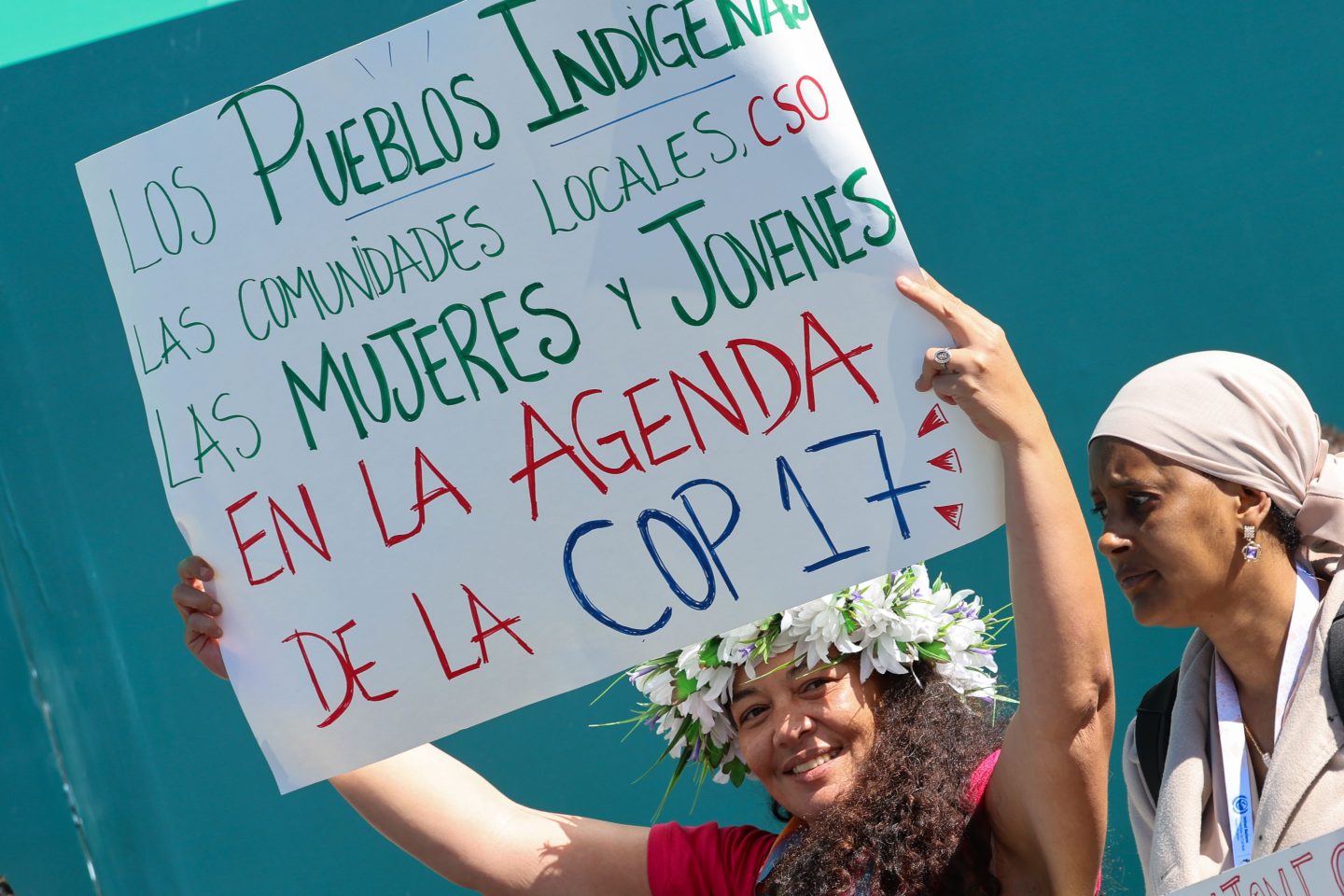
The civil society agenda item aimed to allow NGOs to attend land COP negotiations, as they do at climate COPs, and included terms of reference for an Indigenous Peoples Caucus.
A representative of Indigenous Peoples told the COP’s closing plenary meeting that the group had “deep disappointment that the agenda of this COP has removed the dedicated space for indigenous peoples”. “We cannot restore the land while removing the voices of those who care for it,” she said.
On Tuesday, the UNCCD’s deputy head Andrea Meza was asked about Indigenous Peoples’ participation. She said that the blocking of “one agenda item” is “generating uncertainty in the progress” towards creating caucuses for Indigenous Peoples and for Local Communities within the talks.
Because of the “complex geopolitical situation” making it hard to obtain consensus, coalitions of the willing have become more important, she added.
Mining out, money in
Outside the formal negotiations, the summit was marked by a focus on the strongly Mongolian issues of the role played by pastoralists and rangelands like grasslands, as well as mining, in both degrading and restoring land.
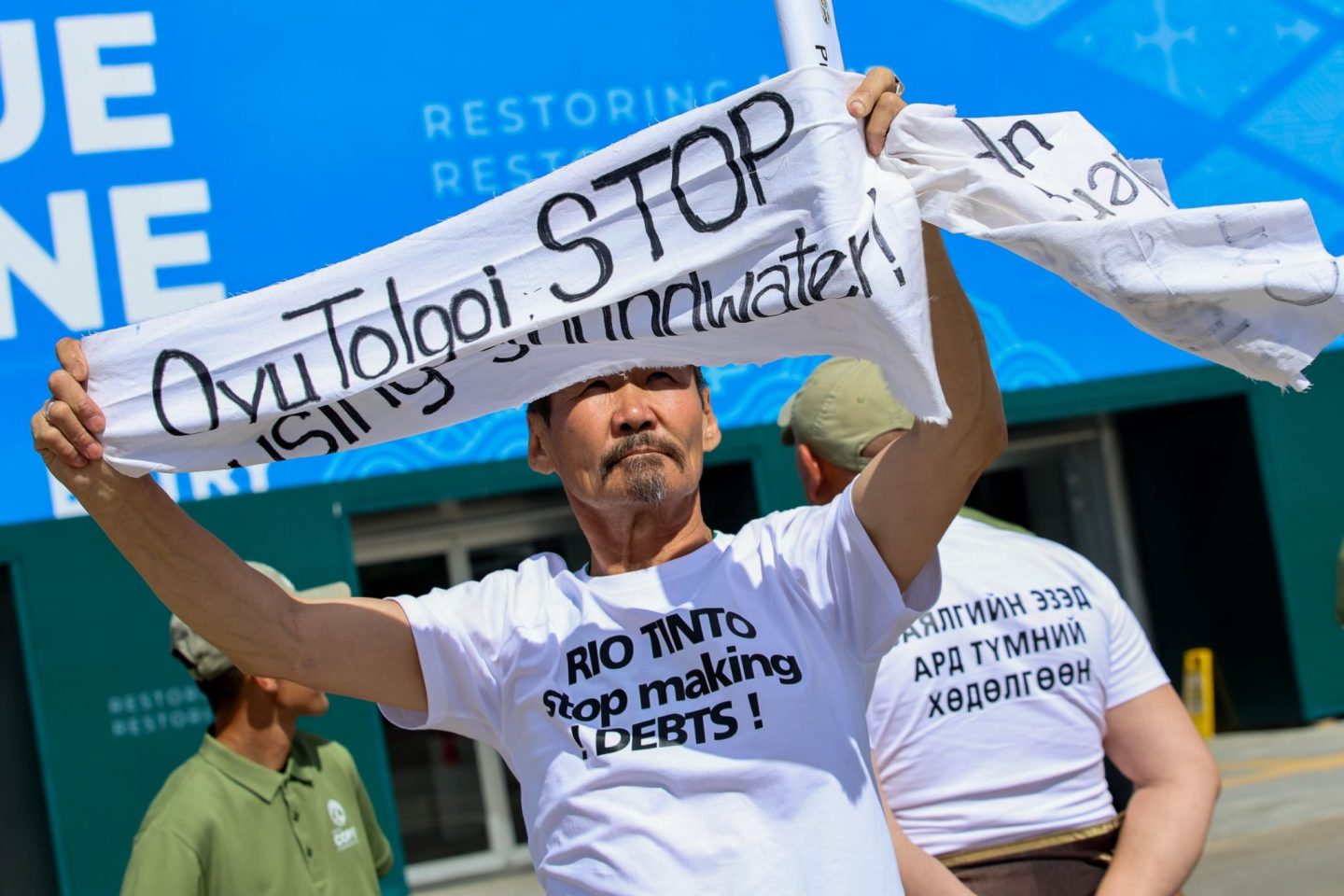
Part of the conference was sponsored by Australian mining company Rio Tinto and its local partner Oyu Tolgoi. Their presence was protested by campaigners wearing T-shirts calling on the companies to “stop wasting drinking water” and to “get out of Mongolia”.
The UNCDD and others praised the success of the summit in raising more finance for land restoration. The COP saw institutions like the Asian Development Bank and Global Environment Facility pledge money to combat land degradation, with the UNCCD estimating that $645 million of new commitments were made.
An estimated $355 billion a year is needed through 2030 to meet global land restoration commitments, compared with around $77 billion currently invested. Private finance accounts for only around 6% of global investment, according to the UNCCD.
UNCCD chief scientist Baron Orr told a press conference that many of the announcements were public-private partnerships that use government money to “even the playing field” for companies that want to protect land, in a bid to ensure they are not disadvantaged compared with those that do not.
Such partnerships are a “huge opportunity”, he said, especially as “we’re not in a moment of public finance – public finance is tight in every country.”
The post Despite African walkout, fractious land COP ends without drought deal appeared first on Climate Home News.
Despite African walkout, fractious land COP ends without drought deal
Continue Reading
Prepared by a coalition of nine Western Australian union, industry, conservation, and community organisations—including UnionsWA, the Conservation Council WA, and the Smart Energy Council—the WA Clean Energy, Jobs & Industry Plan provides a practical roadmap to transform Western Australia into a clean energy powerhouse while creating thousands of secure local jobs.
Western Australia stands at a pivotal crossroads: lead the global clean energy economy or watch investment, future industries, and secure jobs go elsewhere. The WA Clean Energy, Jobs & Industry Plan outlines a transformative blueprint to harness the state’s world-class solar and wind resources. Discover how legislated renewable targets, green iron manufacturing, and a dedicated regional training strategy can generate tens of thousands of local jobs, lower household bills, and build a resilient, net-zero future for all Western Australians.

WA needs a clear and forward-thinking plan if it is going to become a competitive renewable energy powerhouse and maintain its economic strength through the energy transition.
“Western Australians know a faster renewable energy transition will lower their household expenses and prevent harmful climate pollution. But the community also needs clear direction to ensure this transition will create jobs, lower costs and not cause undue environmental harm.
“Here, sectors representing a broad range of interests have laid the groundwork for those outcomes, clearly outlining what is needed to create a future for WA that is good for the environment, for the climate, for workers and for the economy.
Summary
The WA Clean Energy, Jobs & Industry Plan sets out a strategic roadmap to position Western Australia as a global clean energy superpower while creating thousands of secure local jobs.
The report establishes three overarching goals:
- Creating local employment.
- Maintaining industrial competitiveness.
- Lowering household energy costs
To realize this vision, the framework details actionable measures to follow on from the recent WA Government announcement of a 75% Renewable Energy Target by 2031 for the South West Interconnected System. This includes developing a statewide Renewable Energy Target, coordinating statewide workforce and training pipelines, strategically planning regional infrastructure to safeguard high-value biodiversity and cultural heritage, and ensuring equitable benefit-sharing through household electrification incentives and First Nations equity partnerships. Ultimately, the plan highlights that establishing clear policy and regulatory certainty will unlock lower energy bills, boost power reliability, and secure the state’s global competitiveness in emerging green commodity export markets.

Key Findings
- Statewide Renewable Energy Target and Emissions Reduction Targets: The report calls for a statewide RET and 1.5°C aligned emission reduction targets to remove policy risk, lower capital costs, and attract clean energy investment.
- Transformative Job Creation: Accelerating the transition offers massive employment prospects, including up to 8,800 solar and battery jobs by 2050, as well as 24,000 ongoing and 11,000 construction jobs in a commercial green iron industry.
- Industrial Electrification & Competitiveness: Requiring large gas users to adopt binding electrification timetables and providing concessional financing will protect existing energy-intensive manufacturers from rising energy costs and impending domestic gas shortfalls.
- Green Commodity Export Leadership: Western Australia can build new export markets in green iron, green ammonia, and offshore oil/gas decommissioning by constructing shared common-user infrastructure and setting dedicated Green Commodity Export Targets.
- Coordinated Workforce & Training Pipeline: To address critical skill shortages the plan recommends establishing a WA Clean Energy Jobs Plan 2050, three regional training hubs, and dedicated pathways for female and under-represented apprentices.
- Environmental Safeguards & Community Benefits: Fast-tracked development must be paired with State Planning Policies that avoid high-biodiversity and cultural heritage lands, mandate new data centres to run on additional renewable power, and deliver household electrification rebates and First Nations equity partnerships.

What you can do
WA has an opportunity to lead on sustainable, clean energy and associated industries. You can help by:
- Sending an email to Environment Minister Murray Watt and Prime Minister Anthony Albanese, calling on them to reject Browse.
- Sharing this story to help more Australians understand what’s at stake.
- Encouraging your friends and family to take action.
Countries have completed the first “global review” of their progress towards reversing nature loss by 2030 at the COP17 biodiversity talks in Yerevan, Armenia.
The review “notes with deep concern” that, unless action is “rapidly accelerated”, the goal to reverse nature loss and meet a set of 23 targets by 2030 “will not be achieved”.
It “urges” countries to accelerate action, including by “increased ambition in addressing the gaps”.
Much of the discussions in Yerevan focused on how to raise the necessary funds to help developing countries protect nature.
Some major economies pushed to expand the range of nations that are expected to provide finance, with countries agreeing at the end of the two weeks of talks that non-donors that want to contribute can “signal interest” before COP18.
This came after developed countries failed to meet a target to significantly ramp up nature finance over the last few years.
It also came as a landmark fund agreed at COP16 in Colombia to pay communities for the genetic resources derived from nature stands nearly empty two years on.
The Yerevan talks marked the halfway point of the “Kunming-Montreal Global Biodiversity Framework” (GBF), the “Paris Agreement for nature” first made in 2022 and due to be achieved by 2030.
During the nearly 12-hour-long final plenary, countries voted for Quito, Ecuador, to host the COP18 nature talks, which will be held in 2028.
Countries managed to sign off on all the major negotiation texts, marking a stark contrast to COP16, which ran so far over time that the Colombian presidency lost “quorum”, forcing talks to resume in Rome months later.
Below, Carbon Brief has detailed analysis of all of the key outcomes from COP17.
Formal negotiations
Finance
Finance, predictably, was at the heart of the discord and deadlock at the Yerevan talks.
At COP17, discussions on finance had to achieve several outcomes.
The first part – to take stock of biodiversity finance mobilised so far to meet the nature deal’s goals – fell under the global review.
As the global report noted, developed countries failed to meet their commitments to raise “at least $20bn a year by 2025” for nature. Delegates pointed to falling aid levels and a sharp