

Welcome to Carbon Brief’s DeBriefed.
An essential guide to the week’s key developments relating to climate change.
This week
Balmy new year
NEW RECORD: Last month was the warmest January recorded on Earth, the Financial Times reported, based on data from the EU’s earth observation agency. This “surprise[ed] scientists who expected the cooling La Niña weather cycle in the tropical Pacific to slow almost two years of record-high temperatures”, the newspaper said. January 2025 was also the third-hottest month ever recorded.
2C ‘DEAD’?: The aim to limit global temperature rise to “well below” 2C is “dead”, said veteran climate scientist Prof James Hansen, after publishing an analysis on “underestimated” warming, the Guardian reported. The analysis focused on areas of “deep scientific uncertainty”, Carbon Brief science contributor Dr Zeke Hausfather told the newspaper, and, in his opinion, “represent[s] something closer to a worst-case opinion”.
NORTH POLE: A separate Guardian article noted that temperatures north of Svalbard in the Arctic Ocean soared more than 20C above average last Sunday. This put “actual temperatures close to ice’s melting point of 0C”, the newspaper said. Mika Rantanen, a scientist at the Finnish Meteorological Institute, told the newspaper that it was “probably not the most extreme ever observed, but still at the upper edge of what can happen in the Arctic”.
Trump tariffs and funding cuts
TRADE THREATS: US president Donald Trump sent ripples through global markets by adding a 10% tariff on goods imported from China, CNN reported. China retaliated with 10% tariffs on US “crude oil, agricultural machinery, large-displacement cars and pickup trucks”, plus 15% tariffs on coal and liquefied “natural” gas, Sky News said. Trump’s tariff threats against Mexico and Canada were paused for 30 days, the Associated Press noted.
CHANGES: Trump nominated Neil Jacobs, an ally previously “cited for misconduct”, as the new head of the National Oceanic and Atmospheric Administration (NOAA), NPR reported. Elsewhere, 168 employees working on environmental justice programmes at the Environmental Protection Agency were placed on administrative leave, Reuters reported. Separately, the Guardian found that mentions of climate change were removed from the websites of “several major” US government departments.
FUNDING CUT FALLOUT: Hundreds of climate programmes funded by the US government “risk disappearing” after the Trump administration’s “attack” on the US aid agency, Climate Home News reported. USAID is a “major provider of grant-based finance for climate action in the global south”, the outlet noted. Amid the continued fallout from other federal funding cuts, Science reported: “Many scientists remain in limbo at thousands of academic institutions and nongovernmental agencies that rely on federal research grants.”
Around the world
- LATE PLANS: Major polluters such as India and the EU are expected to miss the UN deadline to submit climate plans for 2035 by 10 February, the Financial Times reported. UN climate chief Simon Stiell said latecomers must submit plans “by September”.
- QUEENSLAND DOWNPOUR: Up to 1.5m of rain fell in Queensland, Australia last weekend in a deluge likely to have been exacerbated by climate change, the Sydney Morning Herald said. Scientists linked the rain to a “prolonged marine heatwave in the Coral Sea”, but noted that an official attribution study has not been carried out.
- UPHEAVAL: Indonesia’s special envoy for climate and energy said the Paris Agreement is “no longer relevant” for the country, Antara News said. Argentina is analysing the impact of withdrawing from Paris and other agreements after announcing it will follow Trump in exiting the World Health Organization, Ámbito said.
- OIL AND GAS: The Guardian reported on “growing internal backlash” against UK prime minister Keir Starmer’s potential plans to approve the controversial Rosebank oilfield. Starmer allegedly assured executives at energy company Equinor, Rosebank’s lead developer, of his support for the project, according to the Daily Telegraph.
- ROLLBACK: Equinor announced plans to halve renewable investment and increase oil and gas production by 10% over the next two years, BBC News said.
- COLLABORATION: An editorial in the Global Times, a major state-supporting newspaper in China, said that the nation and the EU should “strengthen cooperation” on climate change and “lead the rest of the world on a cooperative path of green development” in light of Trump’s withdrawal from the Paris Agreement.
$158
The usual price for a night in an apartment in Belém, Brazil.
$15,266
The currently offered “surreal” price for this November when the city will host COP30, the Associated Press reported.
Latest climate research
- Rat numbers are on the rise in cities such as Washington DC, New York and Amsterdam due to climate change and other factors, according to a Science Advances study.
- Analysis in PLOS Climate found that some of the countries most vulnerable to climate change received disproportionately less adaptation-focused global government aid over a recent 10-year period.
- Strategies around energy demand could reduce emissions from buildings by 51-85% and transport by 37-91% by 2050, compared to a “current policies scenario”, research in Nature Energy said.
(For more, see Carbon Brief’s in-depth daily summaries of the top climate news stories on Monday, Tuesday, Wednesday, Thursday and Friday.)
Captured

“Natural” world heritage sites, such as the Galápagos Islands, Serengeti national park and the Great Barrier Reef, could be exposed to multiple climate extremes by the end of the century, a new study covered by Carbon Brief found. The maps show which sites will face climate impacts under low (top left), intermediate (top right), high (bottom left) and very high (bottom right) warming pathways. The dots are coloured red if the site will face climate impacts from heat, drought or extreme rainfall by the year 2100.
Spotlight
Climate negotiations in the West End
This week, Carbon Brief speaks to the writers of Kyoto, a new London play dramatising the signing of the first global agreement to cut greenhouse gas emissions at COP3.
Carbon Brief readers are likely all-too familiar with the annual climate COP summits, where delegates from almost every country in the world negotiate on climate action.
In 1997, for the first time, developed nations agreed to set binding targets to reduce their greenhouse gas emissions. Now, a play in London’s West End delves into how this deal – the Kyoto Protocol – came about.
It was written by Joe Murphy and Joe Roberston, the playwrights behind The Jungle, a hit show set in a refugee camp in Calais, France.
Kyoto emerged from a desire to write about climate change in a “compelling way that would engage people”, Robertson told Carbon Brief:
“We had been talking a lot about the disagreeable nature of society at the moment and so we were looking for stories of agreement. The question of how to write about climate, and the search for a story of agreement, sort of fused together in finding and diving into the world of Kyoto and the protocol.”
Murphy said this kicked off two years of research and discussions with people involved in the Kyoto talks. He added:
“[We] spoke to incredible diplomats and delegates and scientists and lawyers and world leaders who, almost unanimously, were desperate to talk about this time and spoke with such emotion and pride.
“As artists trying to grapple with a subject that often despairs people, or disempowers people, or disengages people, we realised this was a route into the subject that could actually genuinely be dramatic, could genuinely have jeopardy.”

Kyoto – whose lead character is oil lobbyist Don Pearlman – is not short on drama as delegates fight about the placement of brackets and commas in the negotiating text to the bitter end. In one chaotic scene, translators go home after talks run too late, leaving negotiators in a mess of language.
The show also highlights how the real COP3 chair, Raúl Estrada-Oyuela from Argentina, “went out of his way to talk to everyone” in search of agreement, Robertson said:
“He understood that there are all sorts of influences on the conference floor…He would talk about the zone of agreement. With certain people, the zone of agreement was tiny, almost invisible…But you can expand out once you’ve established something that’s commonplace.”
The writers are working on two more COP plays – focused on Copenhagen in 2009 and Paris in 2015. Robertson said they are “really excited to think about how to represent those two very different conferences – each a stepping stone, it feels, to where we are today”.
Murphy added that they want to see more collaboration between science, activism, politics and arts to “tell these stories in really exciting ways”, saying:
“It’s thrilling and I think there’s so much more to do.”
Kyoto runs until 3 May 2025 at Soho Place in London.
Watch, read, listen
SPOKEN WORD: The Third Pole Podcast from Dialogue Earth explored the impact of climate change on Indigenous languages in Pakistan’s remote mountain communities.
CRITICAL MINERALS: Issues around mining for cobalt – a mineral “essential to decarbonisation” – in the Democratic Republic of the Congo employ “new forms of old colonial practices”, researchers wrote in the Conversation.
CLEAN POWER: The head of the UK’s mission control for clean power, Chris Stark, discussed the UK’s energy and climate goals on the Bloomberg Zero podcast.
Coming up
- 9 February: Ecuador general election
- 10 February: Deadline for countries to submit new nationally determined contributions to the United Nations Framework Convention on Climate Change
- 14-16 February: Munich Security Conference, Germany
Pick of the jobs
- The Guardian, environment desk work experience for Black, Asian and Minority Ethnic applicants | Salary: Unknown. Location: London
- Climate Change Committee, senior executive officer analyst on land-use, agriculture and nature team | Salary: £45,308-£49,775. Location: London
- Human Rights Watch, senior researcher. Salary: $79,500-$85,000. Location: Kinshasa, Democratic Republic of the Congo
- Climate & Community Institute, junior research fellowship | Salary: $50 per hour. Location: US, remote
DeBriefed is edited by Daisy Dunne. Please send any tips or feedback to debriefed@carbonbrief.org.
This is an online version of Carbon Brief’s weekly DeBriefed email newsletter. Subscribe for free here.


The post DeBriefed 7 February 2025: Hottest January on record; Trump tariffs; UN climate talks star in theatre thriller appeared first on Carbon Brief.

Saturday, 17 October 2026
7.18 AM AWST
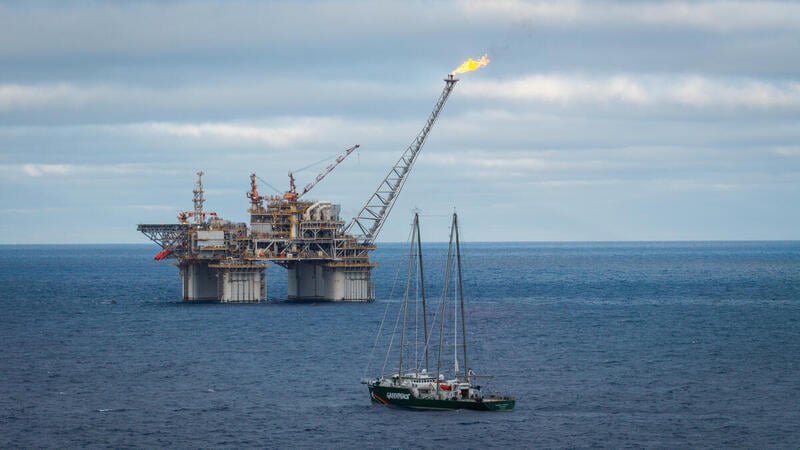
Hi folks! We’re joining you live from the Rainbow Warrior where we will be providing you with updates as our four activists continue scaling and occupying Woodside’s gas platform. The activists are peacefully protesting against Woodside’s latest gas expansion plans, the Browse project, which would see up to 57 toxic wells drilled at Scott Reef.
“Right now our activists are scaling Woodside’s massive Floating Production Unit. They are scaling the South-East pillar and the underside of the Helideck. They’ll be setting up camp soon and have plenty of provisions with them – so stick around!”
5:45 AM AWST
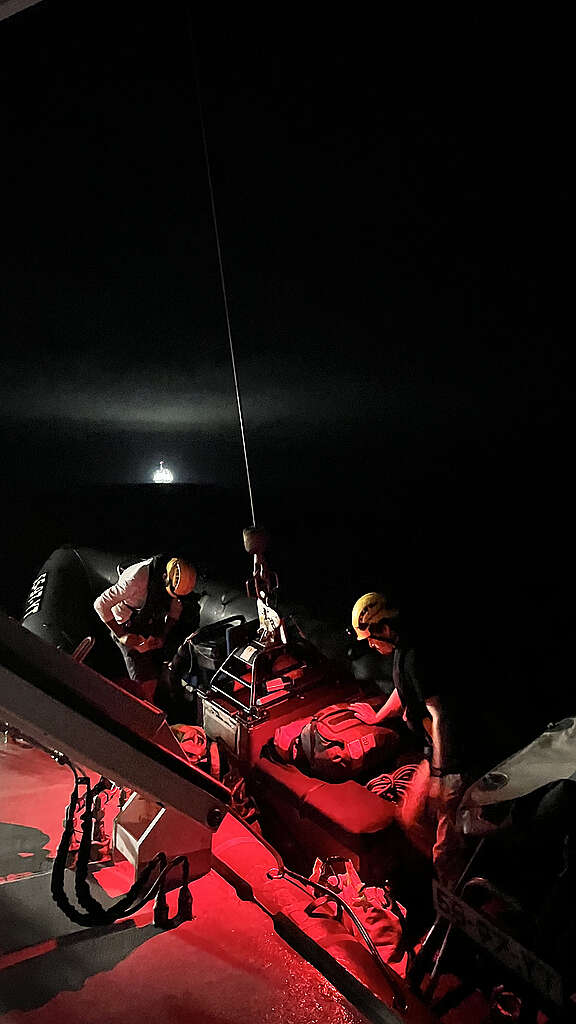
Our RHIBS are in the water! We’ve deployed our four activists and our ship crew on our small fast boats, headed to the gas platform. We’re carrying crew and equipment, plenty of food, all of our safety climbing gear, some big banners, cameras and a whole lot of heart… someone even has something to read after they get settled in.
5:26 AM AWST
Before sunrise activists prepared to launch RHIBS from the Rainbow Warrior.
Looking for a front seat view?
You can follow along with the Live Rainbow Warrior bow cam here!
Looking for more?
Follow us on Instagram for a peek behind the scenes and hear from our Rainbow Warrior crew.
Live blog: Greenpeace activists occupy Woodside gas project to save Scott Reef
Climate Change
Greenpeace activists climb and occupy Woodside’s Scarborough gas project calling on the Australian government to “Stop Woodside’s Dirty Gas” and “Save Scott Reef”
PERTH, Saturday 17 October 2026 — Four Greenpeace Australia Pacific activists are scaling and occupying a Floating Production Unit at Woodside’s Scarborough gas project off the coast of Western Australia, displaying banners reading: “Stop Woodside’s Dirty Gas. Save Scott Reef.”
- Photos and video available here and here. More will be uploaded throughout the day.
- Content and live updates will be uploaded to a live blog and to Instagram
Early this morning at 05:45 AWST, Greenpeace Australia Pacific activists launched from the Rainbow Warrior, Greenpeace’s flagship vessel, scaling and attaching themselves to a Floating Production Unit (FPU), a key piece of gas processing infrastructure at the Scarborough gas field over 200km off the coast of Exmouth.
Woodside has since confirmed it has initiated a temporary shut down of the FPU.
Greenpeace Australia Pacific is occupying the gas platform in peaceful protest of Woodside’s plans to drill for oil and gas at Scott Reef as part of its Browse proposal.
David Ritter, CEO at Greenpeace Australia Pacific, said: “Greenpeace Australia Pacific is taking action today to expose the unacceptable risk to Scott Reef posed by Woodside’s plans.
“Australians love our oceans. Woodside’s reckless Browse gas proposal would turn the magnificent Scott Reef into an industrial gas zone. Woodside wants to drill up to 57 toxic wells around Scott Reef, Australia’s largest oceanic reef, home to nesting green sea turtles, and endangered species like pygmy blue whales and the dusky sea snake; it is a place like nowhere else on Earth.
“Woodside has an alarming track record of oil spills, incidents and environmental neglect, and can’t be trusted with our oceans. From whaling in Albany in the seventies, to Woodside’s threat to Scott Reef today, there’s more than fifty years of history, of Greenpeace taking action off WA’s coasts to protect our oceans.
“There’s no future in new gas projects. Our future is in secure homegrown renewable energy, green industry and exports, where communities and places like Scott Reef are protected — there’s no future in dirty gas shipped offshore.
“The prospect of drilling for oil or gas on the Great Barrier Reef would be considered absolute madness today, but that is exactly the decision before the government: save Scott Reef or risk its destruction at the hands of a gas corporation.”
From aboard the Floating Production Unit, Dr Chris Holden, Greenpeace Australia Pacific activist said: “As a doctor, when I see new fossil fuel projects like Woodside’s Browse project being put forward, I can’t help but think about the impact this is going to have on the health of our communities and planet, and feel a sense of duty to act.
“Not only will this project do irrevocable harm to nature at Scott Reef, it will have a terrible impact on our climate, putting all of our lives at risk.
“On the Rainbow Warrior I’m carrying a copy of the 2025 Lancet countdown report, which warns that health impacts of climate change are worsening, with millions dying needlessly each year due to fossil fuel dependence, growing emissions, and failure to adequately adapt.
“With warnings like this from the leading global health professionals, our government simply can’t allow fossil fuel projects like Woodside’s Browse project to go ahead. It is their duty to do what is in the best interest of our communities.”
Almost half a million people have signed a petition calling on the government to Save Scott Reef and Woodside’s Browse gas project.
-ENDS-
Notes:
- Dial-in, SimSat and Zoom interviews with Geoff Bice, WA Campaign Lead at Greenpeace Australia Pacific, currently aboard the Rainbow Warrior, can be organised separately
Media contact:
Greenpeace Australia Pacific media team on +61 406 231 892 or +61 407 581 404
The board of the Fund for Responding to Loss and Damage (FRLD) will decide on Thursday on whether to “provisionally set aside” $20 million for Nepal to deal with some of the effects of the climate-driven flood it suffered in August.
The motion, seen by Climate Home News, has been drafted by a group of board members from both developed and developing countries and so is likely to pass easily at the fund’s first-ever extraordinary board meeting on October 22.
It invites the government of Nepal to submit a proposal for how to use the money, with the board then deciding at one of its regular board meetings whether to approve the proposal or not.
While Nepali officials have described $20 million as merely “symbolic” in the face of the $4.8 billion estimated costs of recovery and reconstruction, it would be the first time the new FRLD – agreed in 2022 months after devastating floods in Pakistan – has set aside money for a specific disaster.
Until now the fund has only taken requests through a single call for proposals, launched at COP30 in Belém last November, that gave countries six months to submit requests.
Most of the 180 projects the FRLD is currently considering are designed to help countries avoid damage from future climate disasters, for example by strengthening responses to floods in Bangladesh and Lagos.
The draft decision says Nepal’s proposal will serve as a pilot for how funding requests can be submitted outside of the fund’s current timetable. That could let governments seek funds quickly after a climate disaster strikes, rather than waiting for the next call.
This arrangement would set the fund apart from other United Nations funds designed for climate adaptation or cutting emissions like the Green Climate Fund.
Climate campaigners from Fill the Fund said the draft decision is “a real step forward” as it is “the first time this Fund has moved to respond to a specific disaster”.
Too little, too late
The FRLD was agreed by governments at COP27, set up and operationalised at COP28 in 2023 but has yet to award any money. The 180 funding requests it is currently considering would cost around $2.8 billion, but it only has $350 million to allocate.
The United Nations Secretary-General António Guterres has described the amount of money available in the fund as “ridiculously small” and Fill the Fund said $20 million “is a meaningful signal but it is a drop against an ocean of need”.
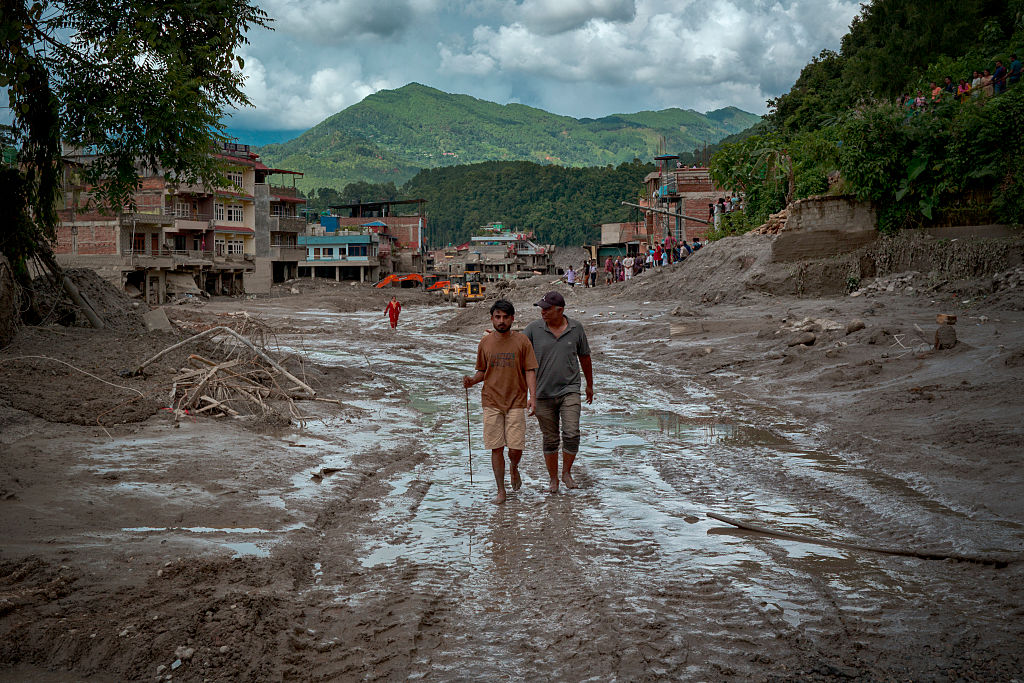
A glacial rock and ice collapse sent a torrent of water and debris through Nepal and the Chinese-administered region of Tibet on August 26. It killed more than 1,400 people, left thousands more missing and destroyed homes, bridges, roads and hydropower plants. Nepal’s finance and environment ministers quickly appealed to the FRLD board for funds, saying that “time is of the essence”.
Their call was followed swiftly by a letter from developing country FRLD board members urging the board’s co-chairs to organise an extraordinary meeting to allocate funds to Nepal.
But developed countries initially called for an informal consultation rather than a full board meeting. It took a further 45 days for the board’s co-chairs to organise an extraordinary board meeting for October 22 and to draft a motion for adoption.
Fill the Fund called for a permanent way of the fund rapid responding to disasters as “Nepal should not have required historic letters, an informal drafting group and the Fund’s first-ever extraordinary meeting simply to unlock an emergency response. The next country cannot wait two months and a bureaucratic marathon. Speed must be built in, not improvised.”
The post