

Welcome to Carbon Brief’s DeBriefed.
An essential guide to the week’s key developments relating to climate change.
This week
Energy outlook
DEMAND SURGING: The International Energy Agency (IEA) published its annual World Energy Outlook report – a “comprehensive” summary of global energy trends – the New York Times reported. The outlet said, over the next decade, the world will add the equivalent of Japan’s annual electricity demand each year, driven by demand for new factories, electric vehicles, air-conditioners and data centres. (Axios said the IEA included a “reality check” about data centre demand, which would only make up a “small share” of growth by 2030.)
AGE OF ELECTRICITY: Reuters reported that the “world is on the brink of a new age of electricity”, with global fossil fuel demand set to peak by the end of the decade. The newswire added that “surplus oil and gas supplies could drive investment into green energy”. The Wall Street Journal said clean energy would grow faster than global energy demand, becoming the largest source of power in the mid-2030s, according to the IEA. Carbon Brief has just published an in-depth analysis of the report’s findings. (See Captured below.)
COP16 kickoff
BIODIVERSITY TALKS: The COP16 biodiversity summit begins in Cali, Colombia, on Monday. It will be the first set of UN biodiversity negotiations since the world’s nations agreed a landmark deal in 2022 to “halt and reverse” nature loss by the end of the decade.
MISSED PLEDGES: Joint analysis published on Tuesday by Carbon Brief and the Guardian showed that more than 85% of countries are set to miss the UN’s deadline to submit new nature pledges, known as national biodiversity strategies and action plans (NBSAPs).
WHAT TO WATCH: Carbon Brief’s team of journalists on the ground in Cali will host a webinar on Tuesday at 3pm UK time to discuss the key issues facing negotiators and answering questions. (Sign up for free.) Through the fortnight of the talks, they will also be scrutinising each new draft negotiating text as it lands, explaining areas of disagreement and updating Carbon Brief’s interactive text tracker.
After the storm
DEVASTATING DAMAGES: Hurricanes Helene and Milton are “likely” to each rack up costs of more than $50bn, the Associated Press reported. According to the newswire, “government and private experts” say the hurricanes could join the “infamous ranks” of Katrina, Sandy and Harvey – which are among the eight US storms to have ever caused damages of more than $50bn.
PAYOUTS: The US Small Business Administration has exhausted funds for its disaster loan program following increased demand from Hurricane Helene, Reuters warned. Officials said the program needs about $1.6bn amid heightened demand following Hurricane Helene, according to the Hill. The Financial Times estimated that Milton alone will lead to about $36bn of insurance payouts for the private sector.
Around the world
- DIRTY ENERGY: Burning household rubbish to make electricity is now the “dirtiest way the UK generates power”, BBC News reported.
- COP BID: Australia has launched a bid to host the COP31 climate summit in 2026 in Adelaide, according to the Guardian.
- FINANCE FAIL: The EU unveiled its negotiating stance for the COP29 climate talks next month, but did not address how it will boost funding for developing countries, according to Bloomberg.
- CURBING COAL: The US Supreme Court allowed the Environmental Protection Agency to move ahead with its plans to limit carbon emissions by power plants, despite a pending challenge from 27 mainly-Republican states, the New York Times reported.
- WARNING MESSAGE: Activist group Friends of the Earth warned the UK government to drop its support for a Mozambique gas project “embroiled in allegations of abduction, murder and rape”, said Politico.
- WIND POWER: A Chinese company developed the world’s “most powerful” floating offshore wind turbine with a capacity of 20 megawatts, state news agency Xinhua said.
60%
Global increase in forest fire carbon emissions over 2001-23, according to a new paper in Science.
Latest climate research
- Recent floods that killed at least 244 people in Nepal were driven by rainfall made “about 10% more intense” by human-caused climate change, according to a rapid attribution study.
- Drought and aridity are already having a “significant impact” on internal migration – especially in arid and “hyper-arid” regions of southern Europe, South Asia, Africa and the Middle East and South America – new research found.
- Many people in the US are experiencing “psychological distress” from climate change, but those who do are more involved in collective climate action, a new study said.
(For more, see Carbon Brief’s in-depth daily summaries of the top climate news stories on Monday, Tuesday, Wednesday, Thursday and Friday.)
Captured

Electricity generation from solar is set to quadruple by 2030, sending coal power tumbling and becoming the world’s largest source of electricity by 2033, according to Carbon Brief analysis of the International Energy Agency’s World Energy Outlook. The report finds that global CO2 emissions are set to peak “imminently”, as the “age of electricity” sends fossil fuels into decline. See Carbon Brief’s in-depth coverage of the report.
Spotlight
Is global warming ‘accelerating’?
A recent “surge” in global warming is not statistically “detectable”, according to a study published this week. But does this mean it is not happening? Carbon Brief speaks to the lead author of the study and explores the debate on a warming acceleration.
Global temperatures are soaring. Last year was the hottest year on record, with global surface temperatures reaching 1.34-1.54C above pre-industrial levels. But 2024 is already setting blistering new records and is expected to knock 2023 off the top spot.
Against this backdrop of ever-worsening heat, a new study in Communications Earth and Environment used statistical methods to see whether an acceleration in global warming could be formally detected.
The authors find a “changepoint” in the rate of warming around the year 1970, but find no “statistically detectable” acceleration since then.
Dr Claudie Beaulieu is the paper’s lead author and an associate professor in the Ocean Sciences Department at UC Santa Cruz. She told Carbon Brief: “If an acceleration in global warming is occurring, the size of that acceleration is either too small or too recent to robustly detect it in globally-averaged surface temperature records.”
However, some scientists questioned the methods used in the study. Prof Richard Allan, a professor of climate science at the University of Reading, said the surface warming data used in this study is “influenced by natural variation”. He argued that “when all lines of evidence are scrutinised” – such as satellite data and ocean measurements – “it is apparent that climate change is accelerating rather than continuing steadily”.
Carbon Brief’s climate science contributor, Dr Zeke Hausfather, published a factcheck earlier this year on the acceleration in global warming. Assessing observations and climate model output, he concluded that “that there is increasing evidence of an acceleration in the rate of warming over the past 15 years”.
Beaulieu told Carbon Brief that present-day discussion about an acceleration in warming is similar to the debate over a warming “hiatus” about a decade ago. She continued:
“Back then, also using statistical methods, we showed that a ‘hiatus’ in warming was not detectable. With hindsight of more years of observations it is now obvious warming had just continued leading to the record heat of 2023. We need to keep monitoring.”
Dr John Kennedy is the co-chair of the World Meteorological Organisation (WMO) expert team on climate monitoring and assessment and scientific coordinator for the annual WMO State of the Global Climate reports.
He warned that this statistical method can mean waiting many years for warming – or a lack of warming – to be detectable. In a blog post earlier this year, Kennedy wrote:
“One thing that became clear during the ‘hiatus’ is that this kind of analysis is the kind of thing you do when you’re set (for whatever reason) on being the last person to know there is a hiatus.”
He added: “There are good physical reasons to expect an increase in the underlying warming.”
Beaulieu does not refute that warming might be accelerating. She said that “the point of the paper is that it will take additional years of observations to detect a sustained acceleration”.
Watch, read, listen
CLIMATE LINGO: Author and climate change activist Genevieve Guenther joined the Drilled podcast to discuss her new book, The Language of Climate Politics, which digs into rhetorical devices that she says are being used to slow or block climate action.
FAILING SINKS: “Is nature’s carbon sink failing?” asked a feature in the Guardian. The article warned that forest, plants and soil absorbed almost no carbon in 2023, and asked whether this “could rapidly accelerate global heating”.
FARM SUBMERGED: A short video by BBC News follows Nigerian farmers discussing the impacts of climate change on their livelihoods and highlights possible solutions.
Coming up
- 21 October-1 November: United Nations Biodiversity Conference, COP16, Cali, Colombia.
- 23 October: Ministerial Meeting of the Coalition of Finance Ministers for Climate Action, Washington DC, US.
- 25 October: Kiribati Presidential elections, Kiribati.
Pick of the jobs
- University of Bath, Centre for Climate Change and Social Transformations, research associate | Salary: £37,999-45,163. Location: Bath, UK
- Intergovernmental Panel on Climate Change (IPCC), science coordinator in the Working Group I Technical Support Unit | Salary: unknown. Location: Gif-sur-Yvette, France.
- Cornell University, Oceanography of a Changing Planet – assistant/early associate professor | Salary: $90,000-130,000. Location: New York.
DeBriefed is edited by Daisy Dunne. Please send any tips or feedback to debriefed@carbonbrief.org.
This is an online version of Carbon Brief’s weekly DeBriefed email newsletter. Subscribe for free here.
The post DeBriefed 18 October 2024: IEA projects solar surge; US counts cost of hurricanes; Is global warming ‘accelerating’? appeared first on Carbon Brief.

Governments at the COP17 nature summit in Armenia agreed on Saturday to scale up their policies to protect the planet’s shrinking biodiversity, and for the first time invited large emerging economies like China and Gulf states to take on donor responsibilities to help fund those efforts.
For the past two weeks, countries held talks in Yerevan under the UN Convention on Biological Diversity to outline a plan to ramp up currently “insufficient” policies to conserve land and marine ecosystems. A recent UN progress report found the world is off track to meet 22 out of 23 global targets aimed at reversing species loss and protecting 30% of land and seas by 2030.
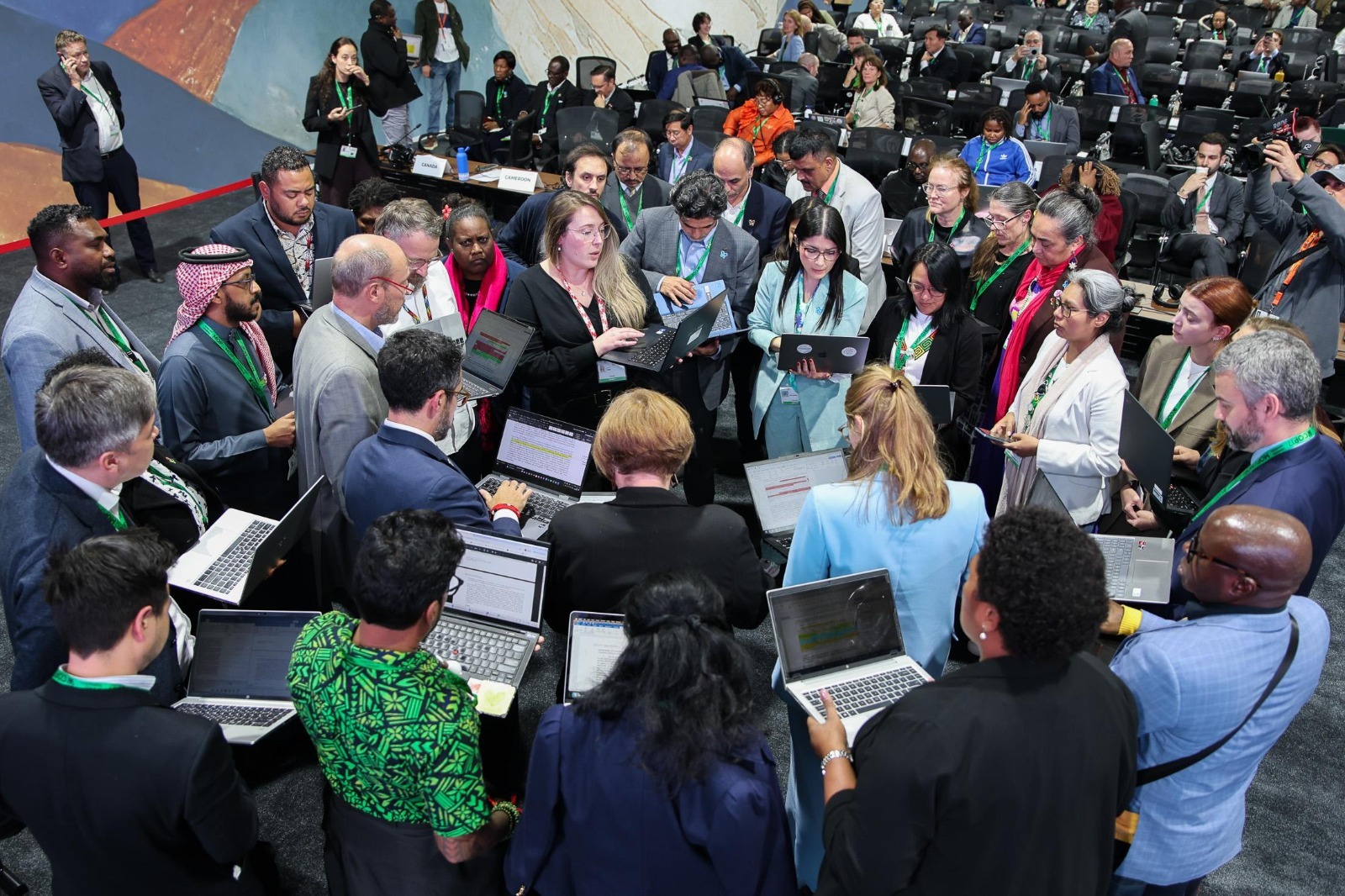
While a response plan, called the “Global Review of Collective Progress”, was expected to be the main outcome of COP17, negotiations struggled to advance amid a deadlock over the controversial subject of how to finance the boost in conservation measures needed.
After an all-night session on Friday, delegates agreed to invite developing countries to voluntarily signal their interest in assuming donor funding obligations alongside developed nations. Negotiators repeatedly warned that any stronger provisions on expanding the donor base would collapse the deal.
COP president: Results beat expectations
An exhausted COP17 president Hambardzum Matevosyan, Armenia’s environment minister, told journalists in the early hours of Saturday that “we’ve achieved more than we could’ve expected” given the “importance” of the decisions being taken.
“It was 100% possible that those items did not made it through. 100% possible,” he said, adding that the conference had made progress on “all the most important items”.
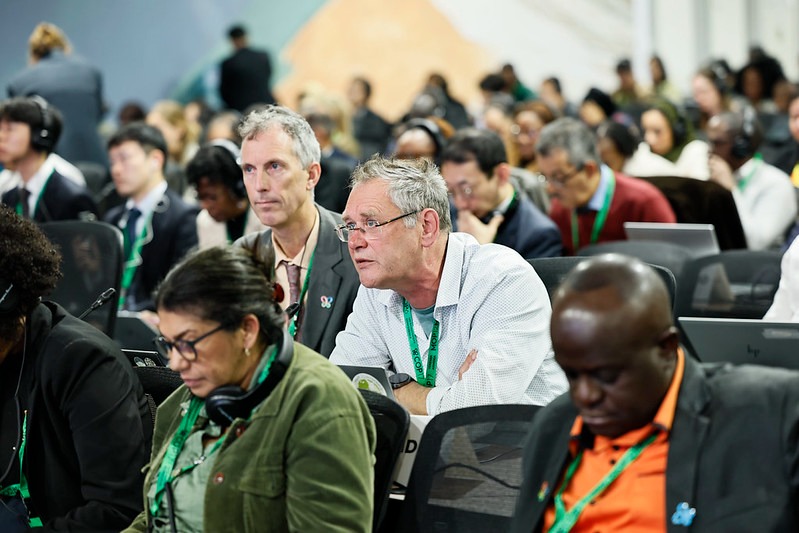
Speaking at the closing plenary, the group of Pacific Islands said that, while the summit had achieved “great outcomes”, delegates are also departing Yerevan “with realities not reflected in the official text”, such as the low replenishment of the Global Environment Facility (GEF), a key funder of nature projects.
-
Lula’s election win in Brazil raises hopes for zero deforestation drive
Lula’s re-election makes it more likely Brazil can meet a key goal to end forest loss in the Amazon and builds confidence in a new fund to protect the world’s rainforests, experts say

Some observers also said the deal did not go far enough. Steven Guilbeault, a former Canadian environment minister who helped broker the Global Biodiversity Framework (GBF), said the Yerevan package of action is “an important step forward”, but still “falls short of what is needed to meet our 2030 commitments”.
An Lambrechts, biodiversity politics expert at Greenpeace International, said COP17 had kept things moving forward and set well-intentioned promises, but added that these “won’t remove major roadblocks to implementation” such as insufficient finance and debt constraints in developing countries.
WWF chief conservation officer Daudi Sumba noted that financial issues were not fully resolved. Despite the deal in Yerevan, “I fear finance will remain the key issue that continues to haunt the UN biodiversity summits,” he said in a statement.
‘Yerevan Pathway’ tackles nature plans and subsidies
In the lead-up to the summit, the UN assessment report showed countries are falling short on virtually all targets in the GBF, the 2022 global deal often referred to as the ‘Paris Agreement for nature’.
They include a landmark target to protect at least 30% of the planet’s land and sea by 2030. If countries all stick to their current national goals, about 26% of land would be protected and only about 12% of marine ecosystems would be under conservation measures.
The main COP17 decision – named the Yerevan Pathway by the presidency – calls for countries to revise their biodiversity plans, subject to available funding, with a particular focus on addressing the gap in coverage of “marine, coastal and inland water ecosystems”.
It also urges the over 60 countries who have not submitted a biodiversity plan yet to finalise them “as soon as possible” and taking into account the gaps identified by the UN progress report.
Countries also agreed to tackle the drivers of biodiversity loss by “accelerating” the reduction of subsidies for activities that damage nature. Subsidy reform, covered by Target 18 of the GBF, is where countries have made the least progress so far, according to the assessment report.
Jill Hepp, director of nature and marine policy and incentives at green group Conservation International, said singling out subsidies in the Yerevan Pathway “gives a strong signal” that closing the gap for biodiversity action requires “more urgent efforts to reform harmful incentives and scale up positive incentives”.
“Timid” steps to expand base of donors
Having failed to meet a target to channel $20 billion for biodiversity conservation by 2025 and faced with shrinking aid budgets, the EU pushed a proposal to expand the list of which countries count as donors, so that wealthy emerging economies like China and Saudi Arabia could also voluntarily contribute. The group of Arab nations strongly opposed this.
During the talks, Irish minister of state for nature, Christopher O’Sullivan, whose country holds the EU presidency, said the bloc wanted the world’s “new realities” to be reflected in the donor list.
Negotiations remained gridlocked for most of the two-week talks, until a last-day compromise was struck to invite developing countries that may want donor status “to indicate to the [Convention on Biological Diversity] secretariat their interest in being included in the corresponding list”.
Countries also asked the secretariat to send an invitation to emerging economies wanting donor status at each subsequent COP, and requested a technical report on “the implications of inclusion in the list” for emerging economies.
Swiss lead negotiator Gabriela Blatter said during one of the sessions that her country had expected greater steps towards expanding the base of contributing countries, but added that “if we’re mutually unhappy, it’s probably the closest we can get on these very delicate political compromises”. Saudi Arabia, on the other hand, also noted their dissatisfaction but said it had expected “a lot less”.
The fragile deal was approved in a package of decisions together with the Global Review, after some delegations including Brazil and China appealed to the plenary not to make further changes to the text at the risk of collapsing the whole agreement.
In a statement delivered to the closing plenary, the EU said the finance outcome had delivered “timid” progress towards fully broadening the base of donors.
Cali Fund still not operational
Adopted two years ago at COP16, the Cali Fund was seen by some observers as a way to channel private-sector finance into biodiversity conservation, as governments struggle to find public funds. But it is still struggling to get up on its feet.
The fund allows big corporations to access certificates for the use of genetic material found in biodiversity in return for a financial contribution, which experts estimate has the potential to raise up to $6.9bn for biodiversity. While voluntary, companies are encouraged to pay 1% of their profits or 0.1% of revenue into the fund.
But since its creation, the fund has received little more than $10,000, which Guilbeault argued is because the rules for disbursements to local communities and the operation of the fund had yet to be fleshed out. This was due to happen at COP17.
Yet, while the final decision on the fund laid out some of the rules – including how companies can earn “Cali Fund certificates” – some key technical details were left to the next COP in 2028 in Ecuador. This includes the issue of whether companies can pay a lower rate if they use genetic data for only a small portion of their products.
“By punting essential decisions to two years from now, parties have all but ensured the fund remains empty until then,” said Pakhi Das, a public policy advisor at NGO Plant-for-the-Planet.
The post COP17 delivers fragile deal to boost conservation and funding for nature appeared first on Climate Home News.
COP17 delivers fragile deal to boost conservation and funding for nature
SYDNEY, Thursday 30 October 2026 — In response to reports that the Albanese government is set to introduce draft legislation this year that would seek to ban data centres in Australia’s suburbs, Joe Rafalowicz, Head of Climate and Energy at Greenpeace Australia Pacific, said:
“These reports are a testament to the growing community opposition to these completely inappropriate AI factories that have sprung up across our suburbs, and Big Tech corporations should take heed — the data centre build-out must not happen without the endorsement of the Australian people.
“But the government can’t simply ship this problem out to regional Australia without addressing the fundamental issues with this extractive new industry.
“We’re already seeing a trend of AI data centre proposals moving to the regions, in areas that are more water-scarce, more environmentally sensitive, and next to sources of fracked and coal seam gas to support their massive BYO gas-fired power plans — a pattern we’ve seen play out in the United States.
“From the Beetaloo Basin in the NT to the Western Downs in Qld, we’re seeing a wave of AI data centre proposals that would see new gas fast-tracked to support their massive energy demand, and threaten to completely derail Australia’s energy transition.
“Just as suburban Australians are asking, “what for?”, regional communities like Berry Springs and Dalby do not want dirty data centres setting up shop with absolutely no benefit to their communities. Greenpeace is calling for a moratorium on AI data centre developments until strict and enforceable safeguards are in place to protect our climate and our communities.”
-ENDS-
Media contact
Kate O’Callaghan on +61 406 231 892 or kate.ocallaghan@greenpeace.org
AI data centre ban in suburbs would not address fundamental issues: Greenpeace