

The world’s most biodiverse nation, Brazil, has belatedly published its UN plan for halting and reversing nature decline by the end of this decade.
Brazil is home to 10-15% of all known species on Earth, 64% of the Amazon rainforest and it supplies 10% of global food demand, according to official estimates.
It was among around 85% of nations to miss the 2024 deadline for submitting a new UN nature plan, known as a national biodiversity strategy and action plan (NBSAP), according to a joint investigation by Carbon Brief and the Guardian.
On 29 December 2025, Brazil finally published its new NBSAP, following a lengthy consultation process involving hundreds of scientists, Indigenous peoples and civil society members.
The NBSAP details how the country will meet the goals and targets of the Kunming-Montreal Global Biodiversity Framework (GBF), the landmark deal often described as the “Paris Agreement” for nature, agreed in 2022.
Below, Carbon Brief walks through six key takeaways from Brazil’s belated NBSAP:
- The government plans to ‘conserve’ 80% of the Brazilian Amazon by 2030
- It plans to ‘eliminate’ deforestation in Brazilian ecosystems by 2030
- Brazil has ‘aligned’ its actions on tackling climate change and biodiversity loss
- The country seeks to ‘substantially increase’ nature finance from a range of sources
- Brazil’s plans for agriculture include ‘sustainable intensification’
- Brazil conducted a largest-of-its-kind consultation process before releasing its NBSAP
The government plans to ‘conserve’ 80% of the Brazilian Amazon by 2030
The third target of the GBF sets out the aim that “by 2030 at least 30% of terrestrial, inland water and of coastal and marine areas…are effectively conserved and managed”. This is often referred to as “30 by 30”.
Previous analysis by Carbon Brief and the Guardian found that more than half of countries’ pledges were not aligned with this aim. (Importantly, all of the GBF’s targets are global ones and do not prescribe the amount of land that each country must protect.)
Brazil’s NBSAP sets a substantially higher goal – it seeks to conserve 80% of the Amazon rainforest within its borders, as well as 30% of the country’s other ecosystems.
Since Brazil is one of the largest countries in the world, in addition to being the most biodiverse, this higher target represents a significant step towards achieving the global target.
For the purposes of its protected areas target, Brazil considers not just nationally designated protected areas, but also the lands of Indigenous peoples, Quilombola territories and other local communities.
As the NBSAP notes, Brazil has already taken several steps towards achieving the “30 by 30” target.
In 2018, the country created or expanded four marine protected areas in its territorial waters, increasing its protected area coverage from around 1.5% to greater than 25%.
According to Brazil’s sixth national report, submitted to the CBD in 2020, 18% of the country’s “continental area” – that is, its land and inland waters – was part of a protected area. More than 28% of the Amazon received such a designation.
A further 12% of the country is demarcated as Indigenous lands, which “provide important protection to a large territorial extension of the country, particularly in the Amazon biome”, the report says.
The action plan that accompanies the new NBSAP sets out 15 actions in support of achieving target three, including recognising and titling Indigenous lands, establishing ecological corridors and biosphere reserves and implementing national strategies for mangrove, coral reef and wetlands protection.
It plans to ‘eliminate’ deforestation in Brazilian ecosystems by 2030
As well as committing to the GBF targets of protecting and restoring ecosystems, Brazil’s NBSAP also sets a separate target to “eliminate” deforestation in Brazilian biomes by 2030.
Target 1B of Brazil’s NBSAP says that the country aims to “achieve zero deforestation and conversion of native vegetation by 2030”.
The country hopes to achieve this “through the elimination of illegal deforestation and conversion, compensation for the legal suppression of native vegetation, prevention and control of wildfires, combating desertification and attaining land degradation neutrality”.
This goes above and beyond what is set out in the GBF, which does not mention “deforestation” at all.
Brazilian president Luiz Inácio Lula da Silva was reelected as leader in 2022 on a promise to achieve “zero deforestation”, following a rise in Amazon destruction under his predecessor, Jair Bolsonaro.
Data from Global Forest Watch (GFW), an independent satellite research platform, found that deforestation in the Brazilian Amazon fell by a “dramatic” 36% in 2023 under Lula.
However, Brazil remains the world’s largest deforester. Separate GFW data shows that the country accounted for 42% of all primary forest loss in 2024 – with two-thirds of this driven by wildfires fuelled by a record drought.
Brazil has ‘aligned’ its actions on tackling climate change and biodiversity loss
Brazil’s NBSAP comes shortly after it hosted the COP30 climate summit in the Amazon city of Belém in November.
One of the presidency’s priorities at the talks was to bring about greater coordination between global efforts to tackle climate change and biodiversity loss.
At the Rio Earth summit in 1992, the world decided to address Earth’s most pressing environmental problems under three separate conventions: one on climate change, one on biodiversity and the final one on land desertification.
But, for the past few years, a growing number of scientists, politicians and diplomats have questioned whether tackling these issues separately is the right approach.
And, at the most recent biodiversity and land desertification COPs, countries agreed to new texts calling for closer cooperation between the three Rio conventions.
At COP30, the Brazilian presidency attempted to negotiate a new text to enhance “synergies” between the conventions. However, several nations, including Saudi Arabia, vocally opposed the progression of a substantive outcome.
Following on from this, Brazil’s NBSAP states that its vision for tackling nature loss is “aligned” with its UN climate plan, known as a nationally determined contribution (NDC).
In addition, the NBSAP states that Brazil is taking a “holistic approach to addressing the existing crises of climate change and biodiversity loss in a synergistic manner”.
It lists several targets that could help to address both environmental problems, including ending deforestation, promoting sustainable agriculture and restoring ecosystems.
Brazil joins a small number of countries, including Panama and the UK, that have taken steps to bring their actions to tackle climate change and biodiversity loss into alignment.
The country seeks to ‘substantially increase’ nature finance from a range of sources
According to target 19 of the NBSAP, the Brazilian government will “develop and initiate” a national strategy to finance the actions laid out in the document by the end of 2026.
This financial plan “should aim to substantially increase…the volume of financial resources” for implementing the NBSAP.
These resources should come in the form of federal, state and municipal funding, international finance, private funding and incentives for preserving biodiversity, the document continues.
The accompanying action plan includes a number of specific mechanisms, which could be used to finance efforts to tackle nature loss. These include biodiversity credits, a regulated carbon market and the Tropical Forest Forever Facility.
Separately, the NBSAP sets out a goal in target 18 of identifying “subsidies and economic and fiscal incentives that are directly harmful to biodiversity” by the end of this year. Those identified subsidies should then be reduced or eliminated by 2030, it adds.
The document notes that the phaseout of harmful subsidies should be accompanied by an increase in incentives for “conservation, restoration and sustainable use of biodiversity”.
The NBSAP does “important work” in translating the targets of the GBF into “ambitious targets” in the national context, says Oscar Soria, co-founder and chief executive of civil-society organisation the Common Initiative.
Soria tells Carbon Brief:
“While the document is laudable on many aspects and its implementation would change things for the better, the concrete financial means to make it a reality – funding it and halting the funding of activities going against it – are still lacking. In this regard, this NBSAP is a good example of the GBF’s problem at the global level.
“The hardest part of political negotiations will begin only now: in 2026, the Brazilian government will have to evaluate the cost of implementing the NBSAP and where finance will come from.”
Brazil’s plans for agriculture include ‘sustainable intensification’
Brazil is one of the world’s leading food producers, meeting 10% of global demand, according to its NBSAP.
It is also the world’s largest grower of soya beans and the second-largest cattle producer.
However, agriculture is also a major driver of biodiversity loss in Brazil, largely due to the clearing of rainforest or other lands for soya growing and cattle ranching. Agriculture itself is also affected by biodiversity loss, particularly the loss of pollinators. The NBSAP says:
“Biodiversity loss directly undermines agricultural production and human well-being, demonstrating that agriculture, other productive activities and biodiversity conservation are interdependent rather than antagonistic.”
Brazil’s NBSAP addresses sustainable agriculture in target 10A, which aims to “ensure that, by 2030, areas under agriculture, livestock, aquaculture and forestry are managed sustainably and integrated into the landscape”.
It lists several approaches to achieving sustainable production, including agroecology, regenerative agriculture and sustainable intensification.
Targets seven and 10B also pertain to food systems. Target seven seeks to reduce the impacts of pollution, including nutrient loss and pesticides, on biodiversity, while target 10B commits to the sustainable fishing and harvesting of other aquatic resources.
In 2021, Brazil launched its national low-carbon agriculture strategy, known as the ABC+ plan. The plan promotes sustainability in the agricultural sector through both adaptation and mitigation actions.
Brazil conducted a largest-of-its-kind consultation process before releasing its NBSAP
Brazil was among the majority of nations to miss the UN deadline to submit a new NBSAP before the COP16 biodiversity summit in Colombia in October 2024.
At the time, a representative from the Brazilian government said that it was unable to meet the deadline because it was embarking on an ambitious consultation process for its NBSAP.
Braulio Dias, director of biodiversity conservation at the Brazilian Ministry of Environment, who is responsible for the NBSAP process, told Carbon Brief and the Guardian in 2024:
“Brazil is a huge country with the largest share of biodiversity [and] a large population with a complex governance. We are a federation with 26 states and 5,570 municipalities. We started the process to update our NBSAP in May last year and have managed to conclude a broad consultation process involving over a thousand people in face-to-face meetings.
“We are in the process of consolidating all proposals received, consulting all the departments of the Brazilian Ministry of the Environment and Climate Change, all the federal ministries and agencies engaged in the biodiversity agenda and the National Biodiversity Committee, before we can have a high-level political endorsement.
“Then we still have to build a monitoring strategy, a finance strategy and a communication strategy. We will only conclude this process toward the end of the year or early next year.”
In its NBSAP, the Brazilian government says it engaged with around 200 scientific and civil society organisations and 110 Indigenous representatives while preparing its NBSAP.
Around one-third of the Amazon is protected by Indigenous territories.
Indigenous peoples in Brazil have continuously called for more inclusion in UN processes to tackle climate change and nature loss, including by holding multiple demonstrations during the COP30 climate summit in November.
Michel Santos, public policy manager at WWF Brazil, says that many in Brazil’s civil society were pleased with the NBSAP’s extensive consultation process, telling Carbon Brief:
“Brazilian civil society is very happy with everything. It was a long process with broad participation. It took a while to be completed, but we consider the result quite satisfactory.”


The post Brazil’s biodiversity pledge: Six key takeaways for nature and climate change appeared first on Carbon Brief.
Brazil’s biodiversity pledge: Six key takeaways for nature and climate change

Scientists have vowed to keep working on the next flagship set of reports for the Intergovernmental Panel on Climate Change (IPCC), after a political row over the timeline for their release saw its latest session suspended on Friday evening without agreement.
During the weekend, government officials and scientists alike expressed disappointment over the inability to reach a compromise before some delegates from developing countries and small island states had to leave the week-long meeting in Ethiopia to catch flights home.
The disagreement – which has persisted since early 2024 – turns on whether the three key parts of the AR7 assessment should all be published before the conclusion of the UN’s next Global Stocktake of global climate action, which is due to be completed in late 2028.
The IPCC issued a statement after the close of the session, saying that “key agenda items” – the timelines for the three AR7 reports, as well as the IPCC budget – remain open and under discussion. It said the IPCC’s plenary session and its deliberations on the pending agenda “will resume at the earliest opportunity”, giving no further details of when.
IPCC Chair Jim Skea told delegates in closing remarks that recent months had been some of the most turbulent for the climate science panel and that, if there were stronger words than “profound disappointment” he would use them, according to a summary published by the Earth Negotiators Bulletin (ENB). IPCC discussions happen behind closed doors.
IPCC scientists remained committed
In an open letter, issued on Monday, a group of nearly 120 scientists – from a total of 664 AR7 authors – said they “stand committed to continue working to deliver the AR7 reports in a manner that is rigorous, timely and inclusive, in line with our mandate to be policy-relevant”.
“An assessment that arrives after the decisions it is meant to inform cannot serve its purpose,” they emphasised. “The second Global Stocktake in 2028 is such a decision point, and the world should not have to face it without the IPCCʼs latest assessment.”
Europe, small islands and the least developed countries, plus many Latin American and developed nations, want the IPCC to meet this deadline, arguing that the findings from the UN climate science body are irreplaceable in the UN climate policy-making process.
However, around a dozen developing countries plus Russia have argued that the reports should come later in order to allow for greater research input from the Global South – something that, in their view, would make the findings fairer. They also claim that a shorter timeline would put excessive pressure on experts.
-
Who shapes climate science? The equity question facing the IPCC
Early completion of the next global climate science assessment reports risks excluding research from the Global South, which is key to ensuring the findings are fair -
Governments that support climate science must stand firm against naysayers
The IPCC is meeting to decide the timing of its next major report, as some countries try to delay it and weaken the case for faster emissions cuts


The most vocal of this group at last week’s meeting were India and Saudi Arabia, according to the ENB summary and a developed country diplomat. Critics see this push for a longer timeline as an excuse to deprive government decision-makers of the latest science and ease pressure on emerging economies to raise their ambition, particularly on cutting emissions.
Commenting on last week’s meeting, France’s ambassador for climate negotiations Benoît Faraco said a broad coalition of developed and developing countries from all five continents, “united in their support for science and the timeline proposed by scientists”, had withstood pressure “from a few countries” seeking to slow down the process of adopting the IPCC reports.
He added that France would not back down and would “continue to fight tirelessly for science, protect the integrity of information, and convince our partners that without the best available scientific data, we will be less effective in tackling climate change and protecting our populations”.
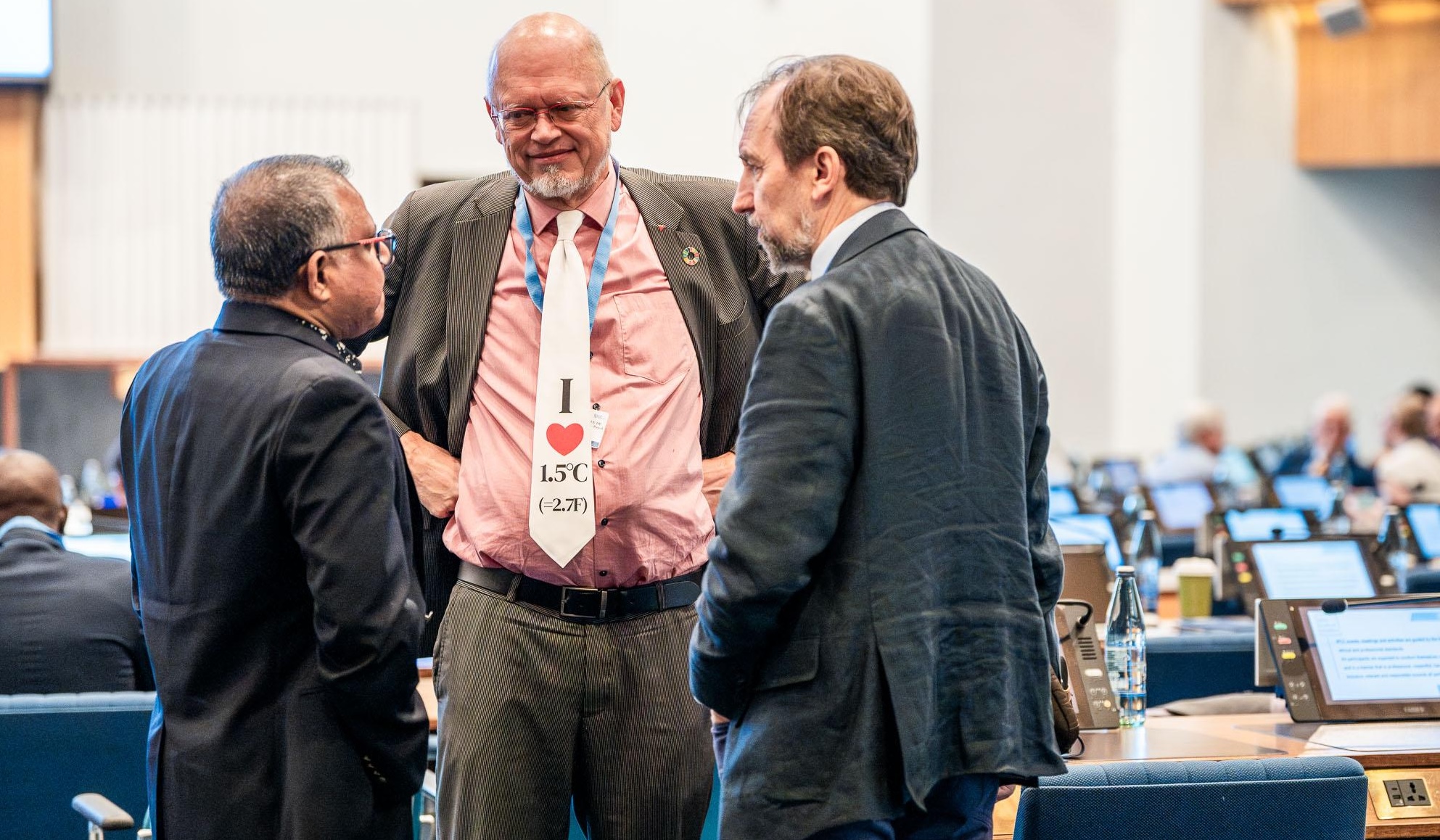
Inclusivity proposal stalled
In a bid to unlock a solution for the AR7 timeline, countries discussed ways to improve the inclusivity of the IPCC’s work. One option put on the table was for the IPCC to expand its funding for delegates from developing countries to attend some or all of its sessions from one to two participants, according to the ENB summary and a delegate speaking to Climate Home News.
That would increase the costs for the IPCC to complete AR7 by up to a quarter, according to an assessment shared by the secretariat. The panel’s budget is under severe strain and its officials have warned that, without additional voluntary contributions, it risks running out of money before it can deliver on this assessment cycle.
Climate Home News understands that some of the IPCC’s traditional donors – which mainly include European countries, Japan and Australia – indicated a willingness to support funding for an additional developing country participant. But without an agreement over the budget or the timeline for the reports, that option was ultimately not adopted.
‘Disappointed and worried’
The three reports are managed by working groups that collate and draw overall findings from the latest scientific studies and data on the physical effects of global warming around the world, how to adapt to it, and pathways for cutting planet-heating emissions in order to meet the temperature goals of the Paris Agreement.
Winston Chow, an urban climate professor at Singapore Management University who co-chairs Working Group II on adaptation, wrote in a LinkedIn post that he was “disappointed and worried” for the IPCC authors who have worked “extraordinarily hard” to assess the relevant climate science over the past two years.
He said he shared their concern that “the rigour, time and goodwill they’ve invested are now being put at risk by the Panel’s stalemate”.
As science comes under attack at UN talks, climate movement splits over how to respond
For Working Group II, a meeting for 250 experts writing that report is scheduled for January 2027, followed by the approval of a special report on cities and climate change in Singapore next March.
But because the IPCC’s budget has not been confirmed due to uncertainty about the AR7 schedule, travel support for those researchers is at risk, wrote Chow. “If they cannot participate, our assessments will lose vital expertise, perspectives and scientific breadth, and the collective effort of our authors will be undermined,” he warned.
Scientific work continues
Despite the political holdups, he – together with French climate scientist Robert Vautard, co-chair of Working Group 1 – agreed with IPCC head Skea who told the IPCC’s closing session on Friday: “The engine room of the IPCC is working, and it’s healthy.”
Vautard commented in a separate post on LinkedIn after it ended: “The boat is at full steam.” Working groups I and II are due to start revising the first drafts of their reports, while Working Group III on reducing emissions is finalising its first draft which will be out soon, he wrote.
“The most exciting two years of the cycle are ahead, for the authors. The momentum in the engine room is here and now. Trust the engine room!” he added.
The IPCC and some scientists report that progress has been made towards achieving an equitable balance of authors from the Global North and the Global South.
The group of researchers who signed the open letter on Monday noted that “inclusivity is at the heart of how we work”, with author teams bringing together experts from developed and developing countries with diverse backgrounds and at different stages of their careers.
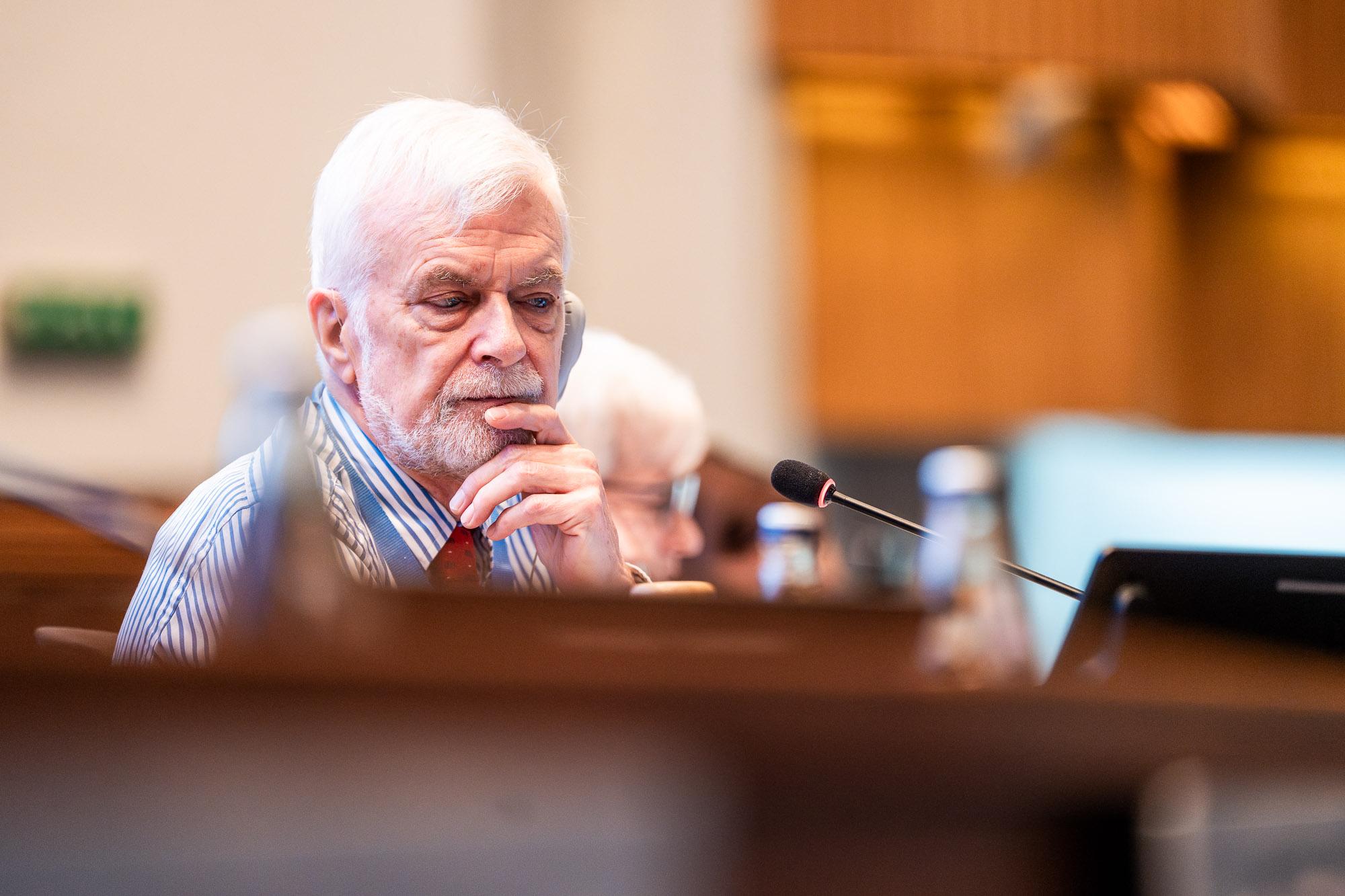
Plea to overcome political differences
The signatories include several scientists from some of the countries opposed to the alignment of all IPCC reports with the Global Stocktake.
“We are committed to an assessment in which the knowledge, experience and priorities of every region are fully reflected, a commitment we share with the leadership of the IPCC.
Equity is built into how our assessment is being drafted,” they added.
They appealed to governments that make up the IPCC “to overcome their political differences and work together as we do as a global scientific community, so that we can deliver the IPCC reports the world needs to hear”.
In a statement published on Monday, IPCC chair Skea said reaching consensus on the schedule for the reports is “vital”. He added that the assessments provide authoritative scientific evidence to inform national climate policies, strengthen adaptation and resilience and support access to climate finance, as well as helping communicate the scale of the climate crisis and the urgency of efforts to tackle it.
The post IPCC scientists vow to press on with climate reports despite political deadlock appeared first on Climate Home News.
IPCC scientists vow to press on with climate reports despite political deadlock
An Lambrechts is a biodiversity politics expert at Greenpeace International with extensive experience in biodiversity-related multilateral negotiations. She is the head of the Greenpeace delegation at the Convention on Biological Diversity (CBD) COP17 happening in Yerevan, Armenia.
In 2022, COP15 delivered the landmark Kunming-Montreal Global Biodiversity Framework to halt and reverse biodiversity loss by 2030. With COP17 starting in Yerevan, we are now halfway to the deadline, and according to the first Global Review of progress, countries are not on track to meet the biodiversity targets, and implementation must accelerate fast.
One of the main findings of the Global Review is that funding falls far short of the scale needed to halt and reverse nature loss. But the crisis facing the world’s biodiversity is not an absolute scarcity of capital – it is a profound public policy distortion.
The global economy currently spends roughly $30 destroying nature for every single dollar invested in its protection. According to a report from the Intergovernmental Science-Policy Platform on Biodiversity and Ecosystem Services, a staggering $2.4 trillion is spent in public subsidies for fossil fuels, agriculture and water use, while global investment in biodiversity conservation and restoration stands at a mere $220 billion.
Countries urged to ramp up “insufficient” nature policies at COP17
Yet, discussions about how to close the biodiversity finance gap continue to claim that salvation lies in mobilising private capital, scaling offsets and “derisking” investments in nature. This is a fundamental misunderstanding of both the nature of ecological stewardship and of the global financial architecture.
Biodiversity conservation is not a speculative investment portfolio – it is the foundation of human survival. The health of our planet is a non-monetisable, non-excludable public good. Expecting profit-seeking private capital to protect nature perpetuates the structural drivers of ecosystem destruction in the first place.