

After two weeks of climate negotiations riven by arguments over finance and science, the UN climate chief expressed disappointment and denounced governments for “cherry-picking” commitments they have already made and waiting for others to move first.
In their final hours on Thursday evening, the talks tried – and failed – to reach a deal that would have balanced developing countries’ demands for reassurance on finance to help them adapt to climate impacts with richer nations’ desire to move forward with work on speeding up emissions reductions in line with science.
Simon Stiell, the head of the UN climate body, released a statement as the Bonn talks wound up, saying that “in some negotiating rooms, we’ve heard a familiar tendency towards you-first-ism – groups refusing to deliver commitments or allow the process to move forward unless others go first”.
“This is a recipe for gridlock when we need all negotiating tracks to be moving in the fast lane,” he added.
Gridlock is where the talks ended, with countries unable to agree conclusions on at least three major areas of climate action, including adaptation and mitigation, invoking “Rule 16”. That means they will be taken up again at COP31 in Türkiye in November.
Bonn Bulletin: Finance row threatens to scupper work on adaptation goal
On the emissions reduction (mitigation) work programme, pushback – primarily from fossil-fuel producing nations – has prevented any meaningful progress since its creation at COP27, as countries have been unable to come up with a united vision for its scope and purpose.
Despite many countries expressing disappointment at the end of Bonn, China argued that some common ground had been found that could serve as positive elements to build on at COP31, including that “no one is against mitigation implementation and ambition”.
Adaptation “salt in our wounds”
Small island states and developing nations spoke bitterly of the lack of progress on the global goal on adaptation, which had been expected to launch technical work on putting into practice indicators agreed at COP30 in Brazil, and said it had destroyed trust between countries.
Fiji’s delegate described the need to adapt to evolving climate risk as a “daily burden”, which he said is a question of water and food security and, in some cases, forcing people to face relocation on the Pacific islands.
“Some of us will now travel more than 30 hours home to report that one of the most fundamental issues we sought progress on here for vulnerable countries has stalled at a time when we need guidance and outcomes the most. In light of overshoot [of 1.5C of warming] and attacks on the science, this is simply further salt in our wounds,” he told the closing plenary as the clock ticked towards midnight local time.
On Wednesday, a coalition of European and climate-vulnerable developing countries accused fossil fuel interests and the “usual suspects” of mounting ”coordinated attacks” on science, as arguments erupted over the Paris Agreement’s 1.5C warming limit and its overshoot and when the next UN climate science reports should be published.
Science ‘under attack’ from fossil fuel interests at UN climate talks
Stiell urged the Turkish and Australian COP31 co-presidencies to get ministers working “as soon as possible” on the “thorniest issues” in the UN climate process so that negotiations can move into the “fast lane”. The presidencies are under pressure to appoint pairs of ministers to resolve these issues earlier than usual, so that they are well-briefed and know their counterparts ahead of COP31.
Alden Meyer, senior associate for climate diplomacy and geopolitics with E3G, lamented the “limited progress in most of the negotiating rooms” over the past fortnight. “As people across the world suffer the twin crises of mounting climate impacts as well as the sharply higher energy and food prices resulting from the war in the… Gulf, there was no sense of urgency at the Bonn climate talks.”
Electrification bright spot
Meyer and others observers did, however, welcome a new goal on electrification proposed by COP31 host Turkiye outside of the formal talks under the Global Climate Action Agenda, which also brings in the private sector and cities.
The electrification target would strive to ramp up the share of final energy consumption provided by electricity to 35% by 2035 from about 20% today by accelerating the switch to technologies such as heat pumps, electric vehicles (EVs) and electric cookers.
COP31 leaders unveil global targets, with spotlight on electrification
Nonetheless, some analysts said such goals lack significance without a global plan to transition away from fossil fuels. Brazil is now working on one, with inputs from countries and civil society, but it is unclear how this will be incorporated into the UN climate process, if at all.
Jasper Inventor, deputy programme director at Greenpeace International, said the stalled talks around climate finance for developing countries and a repeated deadlock on mitigation “took some of the shine off the emergence of a coalition of countries supporting a transition away from fossil fuels at a time where the climate and energy crisis is set to be supercharged” by an emerging El Niño pattern.
Bonn paves way for new just transition mechanism
One key topic that advanced more calmly at the Bonn talks and even achieved some promising consensus was just transition – how to achieve a green economic and social shift that is fair from the global to the local level. Countries approved the terms of reference under which the just transition work programme (JTWP), which began in 2023, will be reviewed.
And following up on a COP30 decision to develop a mechanism to guide and enable support for just transition initiatives, which was hailed by civil society as a big win, countries in Bonn provided a first set of options on its structure and other elements of how it will operate, with a view to it being launched at COP31.
Comment: The UN climate process was built for negotiation – now it must support implementation
Anabella Rosemberg, senior advisor on just transition at Climate Action Network International, which represents hundreds of green groups, noted that “it will require a bit of work between now and COP31 to have an agreement”. Informal discussions could take place, for example, during Regional Climate Week in Baku in October, or at the invitation of the COP31 presidency in Australia, she added.
Key considerations for the new mechanism are to include ways to provide the resources for just transition, to provide technical support, and include communities and workers, she said.
“Civil society is going to continue working. This is the legitimate space to bring the fight for just transition,” she told journalists in Bonn on Thursday.
The post Bonn climate talks end in “gridlock” on adaptation and emissions-cutting appeared first on Climate Home News.
Bonn climate talks end in “gridlock” on adaptation and emissions-cutting

Next week, diplomats from around the world will descend on Yerevan, Armenia, to negotiate a series of decisions under the UN Convention on Biological Diversity (CBD).
Between 19 and 30 October, 196 parties will gather to hammer out the precise wording of the dozens of legal texts that make up the decisions under the Conference of the Parties (COP) to the CBD.
This year’s summit is particularly significant, as it marks the halfway point between the agreement of the Kunming-Montreal Global Biodiversity Framework and the deadline for achieving its targets.
The CBD has found that countries are currently not on track to meet 22 out of the framework’s 23 targets.
During the fortnight, delegates will also be negotiating decisions relating to the two supplemental protocols to the CBD: the Cartagena Protocol, which covers biosafety; and the Nagoya Protocol, which covers access and benefit-sharing for the use of genetic resources.
(The Cartagena and Nagoya Protocols, which are each governed by a “meeting of the parties”, or “MOP”, have fewer parties than the CBD as a whole, with 173 and 141, respectively.)
Carbon Brief is tracking the progress of countries towards consensus on dozens of negotiating texts using the interactive table below.
The tracker includes texts from the COP, as well as the MOPs for the Cartagena and Nagoya protocols. It also includes draft decisions from the most recent subsidiary body meetings, as these form the starting point for the negotiations in Yerevan.
The CBD has three subsidiary bodies: the subsidiary body on scientific, technical and technological advice (SBSTTA), the subsidiary body on implementation (SBI) and the subsidiary body on article 8(j) and other provisions (SB8J).
SB8J focuses on issues related to the Indigenous peoples and local communities. It was established at COP16 in Cali, Colombia, in 2024.
The first two columns of the interactive tracker list the topic of each agenda item and the relevant body, with subsequent columns including dates, page counts and links to the original documents.
The table is searchable and can be sorted using the arrows in the header.
Areas of disagreement in UN draft texts are denoted by square brackets. Counting the brackets in a particular iteration of a text therefore gives a sense of how far parties are from reaching consensus.
The bracket column is colour-coded, with dark green indicating a low number of brackets and red indicating a high number of brackets remaining.
Texts can also present parties with choices using “options” or alternatives (“alt”), which are counted together in the sixth column of the table.
The key discussions in Yerevan will centre around two agenda items in particular. The first is the global review, which will assess progress towards the GBF and make recommendations for accelerating action.
The second is finance, which can be separated into two parts: resource mobilisation and the financial mechanism. On resource mobilisation, biodiverse global south countries are likely to push for an increased amount of international finance for conservation.
Disagreement over the creation of the financial mechanism led to the suspension of COP16 in Cali in October 2024, as parties failed to find agreement on the mobilisation of finance before the end of the summit.
Global south countries want the establishment of a separate financial mechanism under the control of the CBD; global north countries largely prefer to maintain the existing mechanism, which sits under the Global Environment Facility.
At the resumed session of COP16 in Rome in early 2025, countries agreed on a roadmap that would lead to the establishment of a permanent mechanism.
related
Analysis: Lula presidency saved at least 20,000km2 of Brazilian Amazon since 2022
Why land-use emissions have fallen by a third this century – in six charts

Analysis: 84% of nations miss deadline to identify ‘nature-harming’ subsidies by 2025
UK withdraws millions in funding from world’s second-largest rainforest in Congo
The post Interactive: Tracking negotiating texts at the COP17 biodiversity summit appeared first on Carbon Brief.
Interactive: Tracking negotiating texts at the COP17 biodiversity summit
A beacon of love
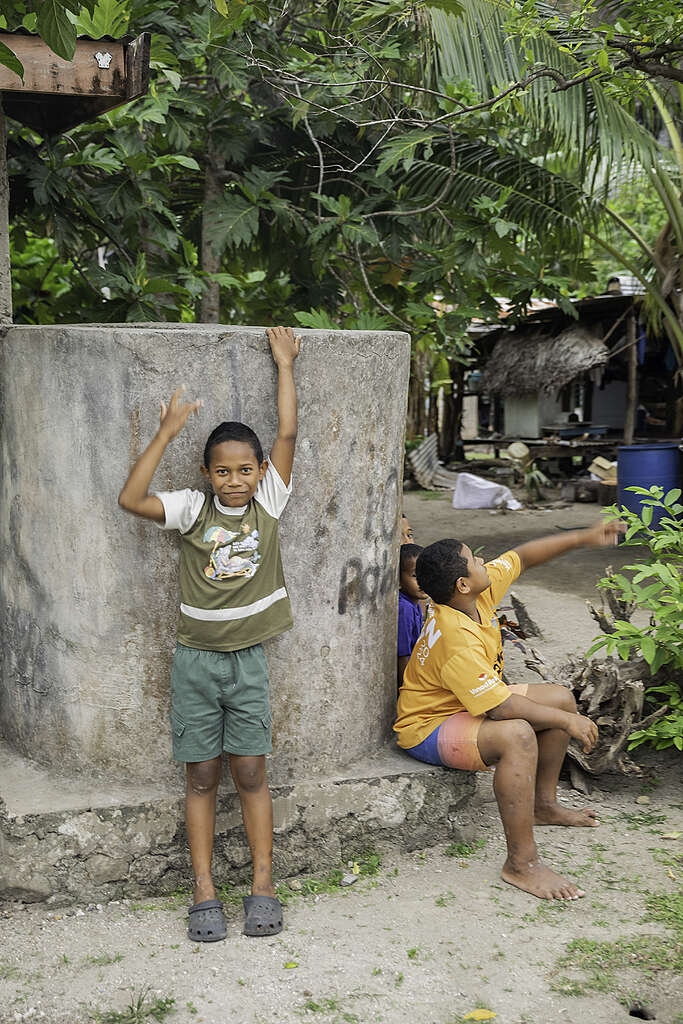
On an outer island of Fiji, two thousand nautical miles from Sydney, is a shining light of hope and resilience for our troubled world.
The island of Kioa is home to a Tuvaluan community who migrated from their atoll of Vaitupu in the late 1940s. It is a land of warm hearts, big smiles, and deep cultural roots; a place where the sound of a conch still summons the island together, where islanders paddle out to fish in carved outrigger canoes, and healthy happy children walk barefoot to school.
Here, culture is life. Kioans live sustainably through their traditional knowledge and practices. The island is alive with song, dance and the rhythms of a life tied to the tides, the winds, and the seasons.
Facing the future
Greenpeace has been lucky to have a relationship with Kioa for a number of years now, and we are continually learning from this remarkable community.
Last week, as part of our Voyaging Oceania project, we returned to the island. Our purpose was twofold —- to carry messages from the island to leaders gathering in Nadi this week for the Pacific Pre-COP, and to support the Kioa community in their efforts to improve water security for the island.
Unlike Tuvalu itself, with its eight atolls, Kioa is a mountainous, forested and richly fertile island. It will remain habitable far into the future. Kioans did not initially migrate from Vaitupu due to climate change, but the move was prophetic. They now have a lifeboat.
However, even Kioa faces challenges on our rapidly warming planet, in particular when it comes to water. Climate change is shifting once reliable rainfall patterns. On top of this, the island is already feeling the effect of this year’s intensifying El Niño event, which for Fiji means reduced rainfall and prolonged dry spells.
Right now, fresh water has to be carefully rationed, and is only available for a few hours a day. During last week’s visit aboard our campaigning ship Oceania, Greenpeace was privileged to work with the Kioa community on a new solar-powered water distribution project for the island.
Designed and led by the island, the project involves using a solar pump to move water from a reliable source to a storage tank and then using gravity to distribute the water around the village.
It was a lesson in how local knowledge and ingenuity can be the backbone of today’s climate solutions. To build a dam around the source, the local community knew the exact spot where they could gather gravel at low tide to mix with the cement. They took only what was needed, knowing that all resources must be carefully conserved. Kioa has no roads and no machinery, and it was an all-of-island effort to carry the materials up to the project site, including many heavy bags of sand and rock.
Such projects truly bring to life the vision of a resilient, locally-led, fossil fuel free Pacific.