

As the closure of the Strait of Hormuz wreaks havoc on fossil-fuel supplies across the world, a prominent narrative in western media has been that low-carbon energy has helped mitigate the worst of the impact on China.
While Chinese-language media has featured similar arguments, it has also highlighted China’s coal industry and broader energy security narratives.
Below, Carbon Brief looks at how Chinese news outlets have covered the implications of the US and Israel war with Iran on energy use.
Justification for ‘new energy’ system
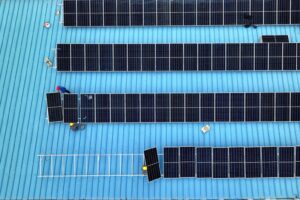
As the conflict has intensified, several Chinese-language outlets have put the spotlight on China’s clean-energy infrastructure.
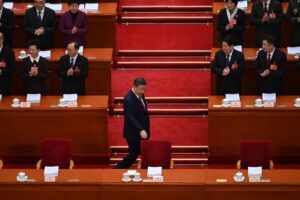
The tensions highlight the “importance” of energy security and the energy transition, writes Bo’ao forum secretary-general Zhang Jun in a commentary for the Communist party-affiliated People’s Daily.
The China Youth Daily, a party-run newspaper oriented towards younger readers, says the conflict has “exacerbated” fragile energy supply chains, underscoring the need to “develop ‘new energy’ sources for energy security”.
Building “localised” clean-energy capacity is a “strategic necessity”, as well as an important aspect of climate action, writes Wang Ning, associate researcher at the government-affiliated Institute of World Economy in the state-supporting Global Times.
Meanwhile, Liu Ying, research fellow at Renmin University’s Chongyang Institute for Financial Studies, tells state news agency Xinhua that China is well-placed to benefit if the crisis catalyses a “restructuring of the global energy order” and hastens uptake of solar and wind power.
Echoing this sentiment, WeChat account Photovoltaic News, which is run by an unnamed individual, says: “New energy is precisely the core of China’s strength.”
Coal is king?
However, the broader commentary on the war has tended to emphasise China’s “all-of-the-above” approach to the energy transition.
State broadcaster CCTV ran a segment on 6 April underscoring Chinese president Xi Jinping’s focus on the “need to accelerate the planning and construction of a new energy system to ensure energy security”. The broadcast did not explicitly mention the conflict.
It said Xi also emphasised “coordinating” hydropower development with ecological conservation, “actively” building nuclear power in a “safe and orderly manner” and ensuring energy supply by “strengthening” development of the energy system across production, supply, storage and sales.
A “greener, more diversified and more resilient” energy system will “provide a strong guarantee for China’s energy security and economic development”, CCTV added, but it also emphasised the need to develop “clean and efficient” fossil fuels.
A “sharp commentary” in the People’s Daily – a designation for comments that the newspaper finds important – says that a range of initiatives, from “diversified energy imports” to “vigorous development of green energy” allowed China to “secure its energy supply” and “take the initiative in energy security”.
Similarly, an editorial in commercial news outlet 21st Century Business Herald says that China is “less likely to face direct impacts from this oil crisis” because of its reliance on both coal and renewables.
It also notes the opportunity that the conflict represented in terms of greater global demand for Chinese clean-energy technology.
Coal’s role in the energy mix as a “ballast” and “peak-shaving” tool “continues to strengthen”, says economic news outlet Jiemian – although the outlet also acknowledges China’s “vigorous” clean-energy additions.
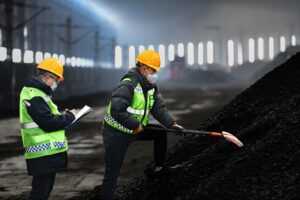
Pro-coal accounts on WeChat especially emphasise the fuel’s role in the crisis.
Coal will “continue to serve as the cornerstone of energy supply”, says Coal Vision, a WeChat account run by Xiamen Zhengzhuo Trading, a firm that trades coal and other commodities.
Similarly, Guizhou Coal Data argues: “When a real emergency strikes, you have to ask: which energy source do we truly control? There’s only one answer: coal.” The account is run by the information services firm Guizhou Yuteng Coal Industry Big Data Information Center.
Several outlets also highlight China’s efforts to secure gas supplies from elsewhere.
Wen Shaoqing, columnist at nationalist outlet Guancha, writes that an agreement between China and Turkmenistan shortly after the conflict began that reaffirmed plans to develop a new gas pipeline represented a “strategic” move to secure the “nation’s survival”.
Notably, two articles in Guancha summarising foreign outlets’ coverage of China’s response – both emphasising the role renewable energy played in insulating China from the energy shock – also received more than 100,000 views.
Security in coal chemicals
Meanwhile, Xinhua has published an article on “turning China’s advantage in coal resources into an advantage in developing natural gas”, although it does not explicitly mention Iran.
It adds that the head of China’s state-owned PetroChina Coalbed Methane Co has argued that coalbed methane could “propel China from [being] an energy giant to an energy powerhouse”.
Shortly after the Xinhua article was published, Jiemian said China had a responsibility to develop coalbed methane to “secure our energy self-sufficiency”.
Similarly, several news outlets have covered the “boon” that the war might be for China’s coal-chemical industry.
An article posted by WeChat account Xinghai Intelligence Bureau argues that China’s development of a coal-chemical industry, rather than “new energy”, is what prepared it for “worst-case scenarios” such as the war. The account is run by technology media company Beijing Lightspeed Time Network Technology.
Finance news outlet EastMoney says that the “strategic value” of China’s coal-chemical industry will likely rise “against the backdrop of growing global instability”.

The post Analysis: How Chinese media is covering the Iran energy crisis appeared first on Carbon Brief.
Analysis: How Chinese media is covering the Iran energy crisis

Climate Change
Alabama’s Governor Signed a Landmark Utility Regulation Bill Into Law. Many Say It’s a Win For Alabama Power.
The legislation was weakened so significantly its original sponsor ultimately voted against it. Alabamians say they’ll continue to push for real reform.
BIRMINGHAM, Ala.—Alabama Power customers aren’t giving up yet. On Monday, around two dozen of them marched from Birmingham’s Kelly Ingram Park to the nearby headquarters of the investor-owned utility company to make that much clear.
Utility spending on infrastructure has more than tripled in the last decade, making up the bulk of customer costs, according to a new report by the Building Decarbonization Coalition.
From the cold snap this winter to the U.S.’s war with Iran, rising energy bills are making headlines. But there’s a larger story behind spikes in gas-utility costs, one decades in the making.
Recent research found climate-fueled disturbances in European forests could more than double by the end of the century.
The world’s forests are simultaneously climate powerhouses and victims, sucking carbon from the air while facing myriad global warming impacts—from wildfires to pest outbreaks.


Best of Sustainability In Your Ear: Plastic Bank’s David Katz on Grassroots Recycling Solutions
Alabama’s Governor Signed a Landmark Utility Regulation Bill Into Law. Many Say It’s a Win For Alabama Power.

Trump Is Criminally Insane, and ….
-
Climate Change8 months ago
Guest post: Why China is still building new coal – and when it might stop
-
Greenhouse Gases8 months ago
Guest post: Why China is still building new coal – and when it might stop
-

 Greenhouse Gases2 years ago
嘉宾来稿:满足中国增长的用电需求 光伏加储能“比新建煤电更实惠”
-
Climate Change2 years ago
Bill Discounting Climate Change in Florida’s Energy Policy Awaits DeSantis’ Approval
-

 Climate Change2 years ago
嘉宾来稿:满足中国增长的用电需求 光伏加储能“比新建煤电更实惠”
-
Climate Change Videos2 years ago
The toxic gas flares fuelling Nigeria’s climate change – BBC News
-

 Renewable Energy6 months ago
Sending Progressive Philanthropist George Soros to Prison?
-

 Carbon Footprint2 years ago
US SEC’s Climate Disclosure Rules Spur Renewed Interest in Carbon Credits