

Climate Generation was founded in 2006 after polar explorer Will Steger’s eyewitness account of climate change in the arctic. Will brought this story back to Minnesota after his experience observing the arctic ice shelf melting, and moved a community of educators, politicians, and climate change communicators to take action. Unlike this rather clean, uncluttered story of Will, my story as an observer of and advocate for climate change hasn’t happened in one place nor am I even able to make sense of it most days. My story paints a picture of a woman who has come to climate awareness and action through many isolated and seemingly unconnected experiences.

Around the time that Will was sharing his story for the first time, I was in my first year of undergrad at college. I was completely unaware of Will and his story. In fact, I didn’t learn about climate change until my second or third year in college. I don’t want to discredit my university, so I will admit that I probably heard about it in some science classes. However, I didn’t really learn about the human-dimensions, like the fact that people caused it, that people’s health is impacted by it, and that we have a responsibility to fix it, until my junior year. Can you imagine a student today going that long—until they were 22—without learning about climate change?
Most youth now, even if they don’t learn about climate change in schools, learn about it online through social media and through their friends. As an educator, youth learning about climate change out in the wild so to speak is scary because of all the misinformation and fear mongering that I know is happening out there.
I grew up bouncing between two predominantly politically conservative communities. My school-year home was in Texas within an education system that taught intelligent design and never talked about climate change. My summer home was in a rural farming community in Iowa which regularly observed the effects of changing weather patterns, but didn’t discuss the depths of climate change within their community. Over twenty-five years later, this experience is strikingly similar to students in some rural and conservative states today suffering from political decisions to remove climate change from schools.

On the farm was where my love of the earth was forged. Daily chores caring for pigs and cows and harvesting corn was where I began to understand peoples’ reliance on animals and the land for food. Hunting, fishing and trapping with my uncles and older cousins taught me the importance of stewardship of wild animals and the ecosystems they rely on. Because of our reliance and interdependence with the outdoors, my family was deeply steeped in conversation about weather. We would check the rain gauge every morning, talk with neighbors about the precipitation predictions for the next week, and worry about the forecast for droughts for the season. Unbeknownst to me, this culture was forming the foundation through which I would become a climate change advocate and educator.
When I graduated in 2009 from college, Climate Generation was three years old, An Inconvenient Truth had recently come out, a coalition of federal partners had recently developed the Climate Literacy Principles, and the Intergovernmental Panel on Climate Change (IPCC)’s Fourth Assessment Report warning that serious effects of warming had become evident has just been released. At this time, nearly 50% of U.S. adults believed in climate change and were concerned about its potential impacts. I would say I was one of those, but I definitely wasn’t in conversation with anyone about climate change at the time.
After my summers on the farm, I had finished school and moved to Washington to complete a degree in Environmental and Conservation Studies at the University of Washington. Through my degree, I was trained as a field ecologist and after graduating spent 10 years working on agricultural farms studying the efficiency of bees and other pollinators on crops. My days were spent watching honeybees and native bees busily buzz from flower to flower doing the hard work of making our food. Bees are uniquely attuned and sensitive to weather patterns: they will become less active in cloudy conditions, hide under leaves during a wind burst, and stay in their underground homes during rain for days on end. Watching an insect, who is responsible for producing U.S. crops valued at $50 billion annually, respond to weather patterns this intimately always made me wonder and worry about the larger patterns of climate and how even the smallest of shifts would impact our pollinating insects, and therefore our food supply.

In the roughly 15 years since, the climate change community has made some huge strides in changing the way they communicate about climate change. These strides have increased public acceptance of anthropogenic climate change, up to about 70% across the U.S. now, as well as ushered in some amazing solutions-centered work. U.S. Americans have become more concerned about climate change, and denialism has stayed consistently low. Next Generation Science Standards, which heavily center climate change, were published and adopted or accepted in 42 states! And, in very recent years, the connection between science, education and social justice have become regular features in the education system, and are becoming more wide-spread knowledge in the education system.
In 2020, just three months before the COVID 19 pandemic hit, I was hired as Climate Generation’s Climate Change Education Manager. I had recently gotten my Masters in Education from Rutgers University, and I wasn’t ready to jump into the school setting. At the time, I was completely unaware of the connection between my life as a farm kid, a student who came up through a politically conservative educational system, and a field ecologist to this new role. I applied because I had wanted to apply my knowledge and skills as an educator to something that seemed important.
It’s only through my job at Climate Generation, and the deep relationships I’ve forged with our partners and my colleagues, that I’ve come to understand how our identities throughout our lives can prepare us to understand and overcome the challenges of living through a crisis, such as the climate crises. I am now happy to say that I am a contributing member of the climate change movement, and I’m truly grateful that I work alongside so many people working towards solutions together.

Lindsey Kirkland supports on-going climate change education programs for K-12 educators and public audiences. As the Education Manager, she also develops a vision for and provides strategic coordination for programs focusing primarily on professional development for teachers and informal educators. Lindsey is adjunct faculty at Hamline University and supported the development of their Climate Literacy Certificate, a contributing author of NSTA’s Connect Science Learning journal, and an active member of Climate Literacy and the Energy Awareness Network (CLEAN) and the North American Association of Environmental Education (NAAEE) Guidelines for Excellence writing team. Lindsey has served as an environmental educator with the AmeriCorps program the NJ Watershed Ambassadors, worked as a naturalist and education program coordinator for the NJ Audubon Society, and assisted in program development for museums, universities, and new nonprofit organizations in the United States and Australia. Lindsey holds a BS in Environment, Conservation and Fisheries Sciences from the University of Washington in Seattle, WA and a MEd in Science Education from Rutgers University in New Brunswick, NJ. In her spare time, Lindsey enjoys spending time with her husband and her son.
The post An Educator’s Messy Journey into Climate Work appeared first on Climate Generation.

Scientists have vowed to keep working on the next flagship set of reports for the Intergovernmental Panel on Climate Change (IPCC), after a political row over the timeline for their release saw its latest session suspended on Friday evening without agreement.
During the weekend, government officials and scientists alike expressed disappointment over the inability to reach a compromise before some delegates from developing countries and small island states had to leave the week-long meeting in Ethiopia to catch flights home.
The disagreement – which has persisted since early 2024 – turns on whether the three key parts of the AR7 assessment should all be published before the conclusion of the UN’s next Global Stocktake of global climate action, which is due to be completed in late 2028.
The IPCC issued a statement after the close of the session, saying that “key agenda items” – the timelines for the three AR7 reports, as well as the IPCC budget – remain open and under discussion. It said the IPCC’s plenary session and its deliberations on the pending agenda “will resume at the earliest opportunity”, giving no further details of when.
IPCC Chair Jim Skea told delegates in closing remarks that recent months had been some of the most turbulent for the climate science panel and that, if there were stronger words than “profound disappointment” he would use them, according to a summary published by the Earth Negotiators Bulletin (ENB). IPCC discussions happen behind closed doors.
IPCC scientists remained committed
In an open letter, issued on Monday, a group of nearly 120 scientists – from a total of 664 AR7 authors – said they “stand committed to continue working to deliver the AR7 reports in a manner that is rigorous, timely and inclusive, in line with our mandate to be policy-relevant”.
“An assessment that arrives after the decisions it is meant to inform cannot serve its purpose,” they emphasised. “The second Global Stocktake in 2028 is such a decision point, and the world should not have to face it without the IPCCʼs latest assessment.”
Europe, small islands and the least developed countries, plus many Latin American and developed nations, want the IPCC to meet this deadline, arguing that the findings from the UN climate science body are irreplaceable in the UN climate policy-making process.
However, around a dozen developing countries plus Russia have argued that the reports should come later in order to allow for greater research input from the Global South – something that, in their view, would make the findings fairer. They also claim that a shorter timeline would put excessive pressure on experts.
-
Who shapes climate science? The equity question facing the IPCC
Early completion of the next global climate science assessment reports risks excluding research from the Global South, which is key to ensuring the findings are fair -
Governments that support climate science must stand firm against naysayers
The IPCC is meeting to decide the timing of its next major report, as some countries try to delay it and weaken the case for faster emissions cuts


The most vocal of this group at last week’s meeting were India and Saudi Arabia, according to the ENB summary and a developed country diplomat. Critics see this push for a longer timeline as an excuse to deprive government decision-makers of the latest science and ease pressure on emerging economies to raise their ambition, particularly on cutting emissions.
Commenting on last week’s meeting, France’s ambassador for climate negotiations Benoît Faraco said a broad coalition of developed and developing countries from all five continents, “united in their support for science and the timeline proposed by scientists”, had withstood pressure “from a few countries” seeking to slow down the process of adopting the IPCC reports.
He added that France would not back down and would “continue to fight tirelessly for science, protect the integrity of information, and convince our partners that without the best available scientific data, we will be less effective in tackling climate change and protecting our populations”.
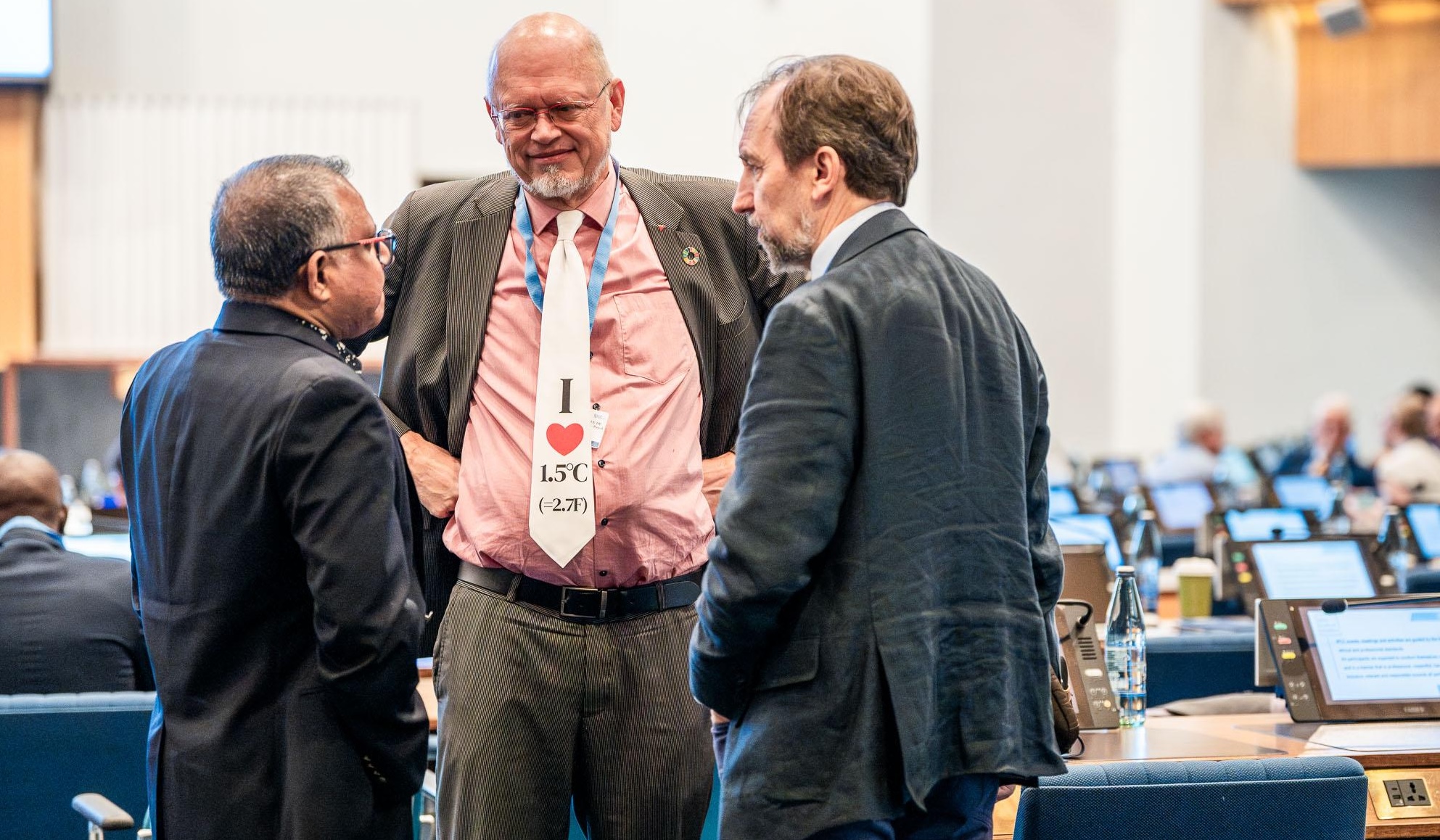
Inclusivity proposal stalled
In a bid to unlock a solution for the AR7 timeline, countries discussed ways to improve the inclusivity of the IPCC’s work. One option put on the table was for the IPCC to expand its funding for delegates from developing countries to attend some or all of its sessions from one to two participants, according to the ENB summary and a delegate speaking to Climate Home News.
That would increase the costs for the IPCC to complete AR7 by up to a quarter, according to an assessment shared by the secretariat. The panel’s budget is under severe strain and its officials have warned that, without additional voluntary contributions, it risks running out of money before it can deliver on this assessment cycle.
Climate Home News understands that some of the IPCC’s traditional donors – which mainly include European countries, Japan and Australia – indicated a willingness to support funding for an additional developing country participant. But without an agreement over the budget or the timeline for the reports, that option was ultimately not adopted.
‘Disappointed and worried’
The three reports are managed by working groups that collate and draw overall findings from the latest scientific studies and data on the physical effects of global warming around the world, how to adapt to it, and pathways for cutting planet-heating emissions in order to meet the temperature goals of the Paris Agreement.
Winston Chow, an urban climate professor at Singapore Management University who co-chairs Working Group II on adaptation, wrote in a LinkedIn post that he was “disappointed and worried” for the IPCC authors who have worked “extraordinarily hard” to assess the relevant climate science over the past two years.
He said he shared their concern that “the rigour, time and goodwill they’ve invested are now being put at risk by the Panel’s stalemate”.
As science comes under attack at UN talks, climate movement splits over how to respond
For Working Group II, a meeting for 250 experts writing that report is scheduled for January 2027, followed by the approval of a special report on cities and climate change in Singapore next March.
But because the IPCC’s budget has not been confirmed due to uncertainty about the AR7 schedule, travel support for those researchers is at risk, wrote Chow. “If they cannot participate, our assessments will lose vital expertise, perspectives and scientific breadth, and the collective effort of our authors will be undermined,” he warned.
Scientific work continues
Despite the political holdups, he – together with French climate scientist Robert Vautard, co-chair of Working Group 1 – agreed with IPCC head Skea who told the IPCC’s closing session on Friday: “The engine room of the IPCC is working, and it’s healthy.”
Vautard commented in a separate post on LinkedIn after it ended: “The boat is at full steam.” Working groups I and II are due to start revising the first drafts of their reports, while Working Group III on reducing emissions is finalising its first draft which will be out soon, he wrote.
“The most exciting two years of the cycle are ahead, for the authors. The momentum in the engine room is here and now. Trust the engine room!” he added.
The IPCC and some scientists report that progress has been made towards achieving an equitable balance of authors from the Global North and the Global South.
The group of researchers who signed the open letter on Monday noted that “inclusivity is at the heart of how we work”, with author teams bringing together experts from developed and developing countries with diverse backgrounds and at different stages of their careers.
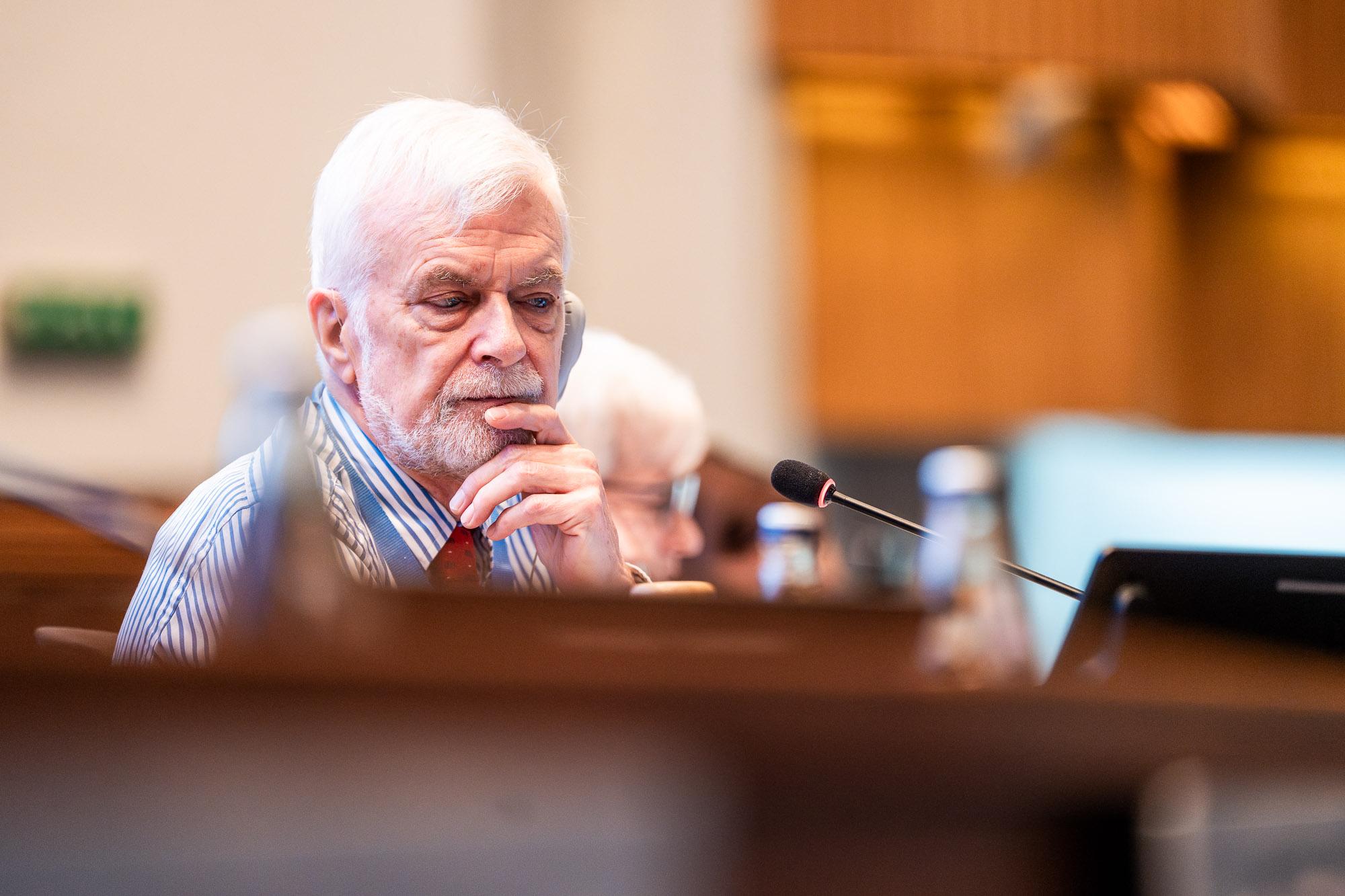
Plea to overcome political differences
The signatories include several scientists from some of the countries opposed to the alignment of all IPCC reports with the Global Stocktake.
“We are committed to an assessment in which the knowledge, experience and priorities of every region are fully reflected, a commitment we share with the leadership of the IPCC.
Equity is built into how our assessment is being drafted,” they added.
They appealed to governments that make up the IPCC “to overcome their political differences and work together as we do as a global scientific community, so that we can deliver the IPCC reports the world needs to hear”.
In a statement published on Monday, IPCC chair Skea said reaching consensus on the schedule for the reports is “vital”. He added that the assessments provide authoritative scientific evidence to inform national climate policies, strengthen adaptation and resilience and support access to climate finance, as well as helping communicate the scale of the climate crisis and the urgency of efforts to tackle it.
The post IPCC scientists vow to press on with climate reports despite political deadlock appeared first on Climate Home News.
IPCC scientists vow to press on with climate reports despite political deadlock
An Lambrechts is a biodiversity politics expert at Greenpeace International with extensive experience in biodiversity-related multilateral negotiations. She is the head of the Greenpeace delegation at the Convention on Biological Diversity (CBD) COP17 happening in Yerevan, Armenia.
In 2022, COP15 delivered the landmark Kunming-Montreal Global Biodiversity Framework to halt and reverse biodiversity loss by 2030. With COP17 starting in Yerevan, we are now halfway to the deadline, and according to the first Global Review of progress, countries are not on track to meet the biodiversity targets, and implementation must accelerate fast.
One of the main findings of the Global Review is that funding falls far short of the scale needed to halt and reverse nature loss. But the crisis facing the world’s biodiversity is not an absolute scarcity of capital – it is a profound public policy distortion.
The global economy currently spends roughly $30 destroying nature for every single dollar invested in its protection. According to a report from the Intergovernmental Science-Policy Platform on Biodiversity and Ecosystem Services, a staggering $2.4 trillion is spent in public subsidies for fossil fuels, agriculture and water use, while global investment in biodiversity conservation and restoration stands at a mere $220 billion.
Countries urged to ramp up “insufficient” nature policies at COP17
Yet, discussions about how to close the biodiversity finance gap continue to claim that salvation lies in mobilising private capital, scaling offsets and “derisking” investments in nature. This is a fundamental misunderstanding of both the nature of ecological stewardship and of the global financial architecture.
Biodiversity conservation is not a speculative investment portfolio – it is the foundation of human survival. The health of our planet is a non-monetisable, non-excludable public good. Expecting profit-seeking private capital to protect nature perpetuates the structural drivers of ecosystem destruction in the first place.
But if private market mechanisms cannot save biodiversity, where will the necessary public resources come from?
Money going to the wrong places
The answer lies in recovering the vast public wealth currently drained by cross-border tax abuse, financial secrecy and corporate impunity. Finance and environment ministers meeting in Yerevan must give a strong political signal that, to avert ecological breakdown, countries need to take swift action to reform global tax rules, eliminate harmful public subsidies and cancel unsustainable sovereign debts for the public revenues to end up where they belong.
Extractive sectors such as industrial agriculture, fishing, timber and mining continue business-as-usual, often heavily subsidised by public treasuries, while voluntary carbon and biodiversity offset markets pose a serious risk to nature conservation. Offset schemes have delivered only a negligible fraction of the funding needed to preserve ecosystems, allowing industries to continue with their destructive business-as-usual practices.
-
Global deforestation slowed in 2025 but Brazil’s election could undo “fragile” gains
Countries remain 70% off track to meet a goal to end deforestation by 2030, as progress in Latin America offset by failures in Africa -
Brazil confident new rainforest fund will reach $10bn donor milestone
Brazil’s environment minister said the Tropical Forest Forever Facility has raised billions in record time – which he hopes will convince more investors


In advanced economies, public funding often actively undermines biodiversity. In Europe, over €5.3 billion in public subsidies is funnelled annually into intensive forest biomass harvesting under renewable energy directives, degrading primary forest ecosystems and undermining long-term climate resilience. Pleading with private investors to fill a “finance gap” while pouring billions into ecological destruction is an exercise in futility.
Developing countries struggle with debt burden
For developing countries, reliance on private finance is further compounded by a crushing sovereign debt crisis. In 2024, public debt in developing economies reached record levels, with net interest payments alone absorbing $921 billion. A record 61 developing countries now spend more than 10% of government revenue on foreign debt service, with many climate-vulnerable nations spending twice as much servicing external debt as they receive in climate and biodiversity finance combined.
This burden acts as a structural driver of ecosystem destruction. Under pressure from external creditors and international financial institutions to avoid default and secure foreign exchange, governments are routinely forced into austerity measures and pushed to expand raw commodity exports into pristine biomes.
Comment: World Bank and IMF should lead the financial system in responding to the climate crisis
The current negotiations for a United Nations Framework Convention on International Tax Cooperation (UNFCITC) also offer a way forward. An estimated $492 billion in tax revenue is lost every year to offshore tax havens. Multinational corporations account for around $348 billion of this total by shifting profits away from the countries where real economic extraction and environmental degradation occur.
In the mining sector alone, developing nations lose tens of billions annually to corporate tax dodging. Furthermore, international financial secrecy shields environmental criminals, with illicit financial flows from illegal logging draining between $51 billion and $152 billion annually.
At COP17, leaders must seize the opportunity to build a bridge between the two conventions and enhance cooperation. Governments must put the world on a firm path to securing predictable, sufficient, sovereign public finance for biodiversity conservation. It’s the only path to a restorative, rights-based future for people and the planet.
The post Protecting nature is a public duty, not a Wall Street profit opportunity appeared first on Climate Home News.
Protecting nature is a public duty, not a Wall Street profit opportunity
Climate Change
Greenpeace delivers 47 metre-long petition with half a million signatures to Woodside HQ following major gas protest
Greenpeace delivers 47 metre-long petition with half a million signatures to Woodside HQ following major gas protest
PERTH, Monday 19 October 2026 — Dozens of Perth community members delivered a giant petition, signed by almost half a million people, to Woodside’s corporate headquarters this morning, calling on the government to save Scott Reef from Woodside’s reckless Browse gas proposal.
- Photos and video available here and <