

The action comes after weeks of law enforcement crackdowns on leaders of the summer-long campaign against the bank’s fossil fuel financing.
On Thursday, 63-year-old John Mark Rozendaal, a grandfather, climate activist and professional cellist, will defy a restraining order to play Bach’s “Suites for Cello” as a climate protest at Citibank’s Manhattan headquarters. He is calling the performance “a plea for our future.”


Efe Baysal leads the Türkiye team of global climate advocacy group 350.org.
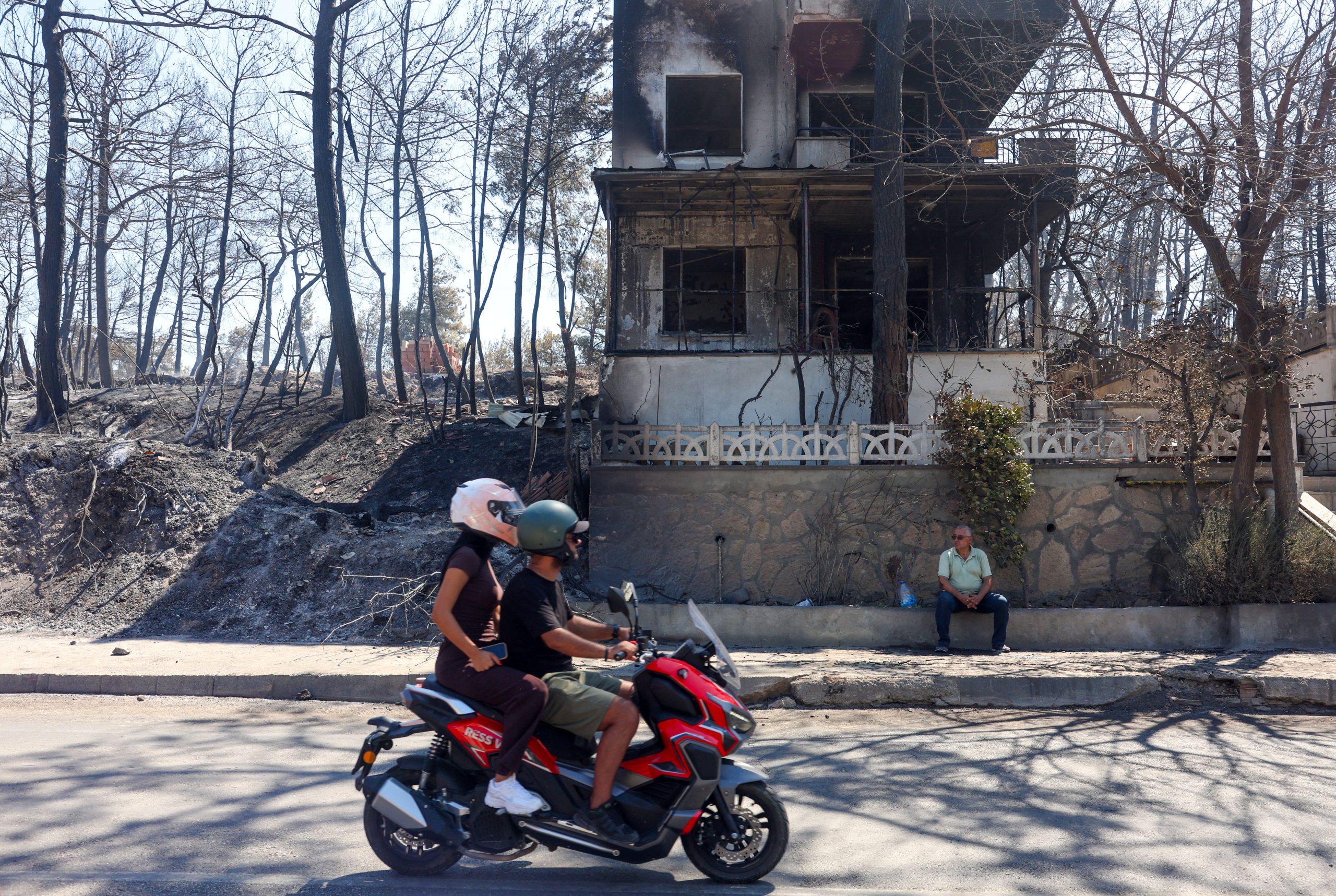
As Türkiye welcomed world leaders in Antalya during the first week of the UN climate summit, few were probably aware that wildfires raged just a few kilometres from the COP31 venue in September, injuring several people and forcing hundreds to flee their homes.
Wildfires are one of the signs of a rapidly heating planet. Prolonged heatwaves and drought create ideal conditions for fires to start and to spread. In the coastal province of Antalya, 8,000 hectares have already been lost to forest fires this year alone.
It is a crucial moment for climate diplomacy. This year we have seen the human cost and mounting economic damage of climate impacts, from Europe’s heatwaves to Nepal’s deadly glacial floods. Scientists warn that the world will breach the 1.5C temperature limit within a few years.
-
Turkish giant sponsoring COP31 cut climate goals then cashed in on oil boom
COP31 sponsors should be screened for “climate integrity”. Yet Koç Holding has become a top partner while its oil refiner runs flat out and its climate targets slip -
Africa wants adaptation finance on COP31 agenda, raising risk of a fight
The African Group wants dedicated space on tripling adaptation finance, the Green Climate Fund and trade, setting up a possible clash -
European nations signal support for fossil fuel roadmap, says COP30 president
André Corrêa do Lago told Climate Home News that it’s up to other nations to decide how the fossil fuel and deforestation roadmaps are used

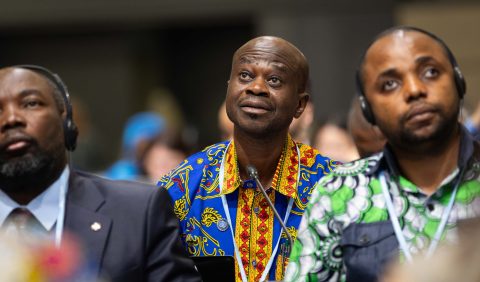

The stakes have never been higher as the Turkish government takes its turn hosting the Conference of the Parties (COP) to the UN climate convention. Türkiye has a lot riding on the summit, and not only its ability to stage one. Many in the country hope COP31 will put a spotlight on its own climate and environmental crisis.
Extreme weather in Türkiye is becoming far more frequent. In 2011, the country recorded more than 300 extreme weather events. By 2023, according to the Turkish State Meteorological Service, the figure had reached almost 1,500.
Dried-up lakes and sinkholes
For a semi-arid country, drought is a particular threat. Half of Türkiye’s population is at risk of water shortages by 2030, and last year brought the lowest rainfall in 61 years.
Perhaps the starkest sign of this is the alarming rate at which Türkiye’s lakes are vanishing. Three-quarters of its lakes have dried up in the past 50 years, many of them just in the last decade, marking the loss of ecological systems that have sustained generations of farmers and fishermen.
An example is Lake Iznik, the country’s fifth-largest natural lake and the site of the Byzantine Basilica of Saint Neophytos, a fifth-century site whose ruins were first discovered underwater. When Pope Leo visited last year, they stood exposed on dry land as the shoreline had dramatically retreated.
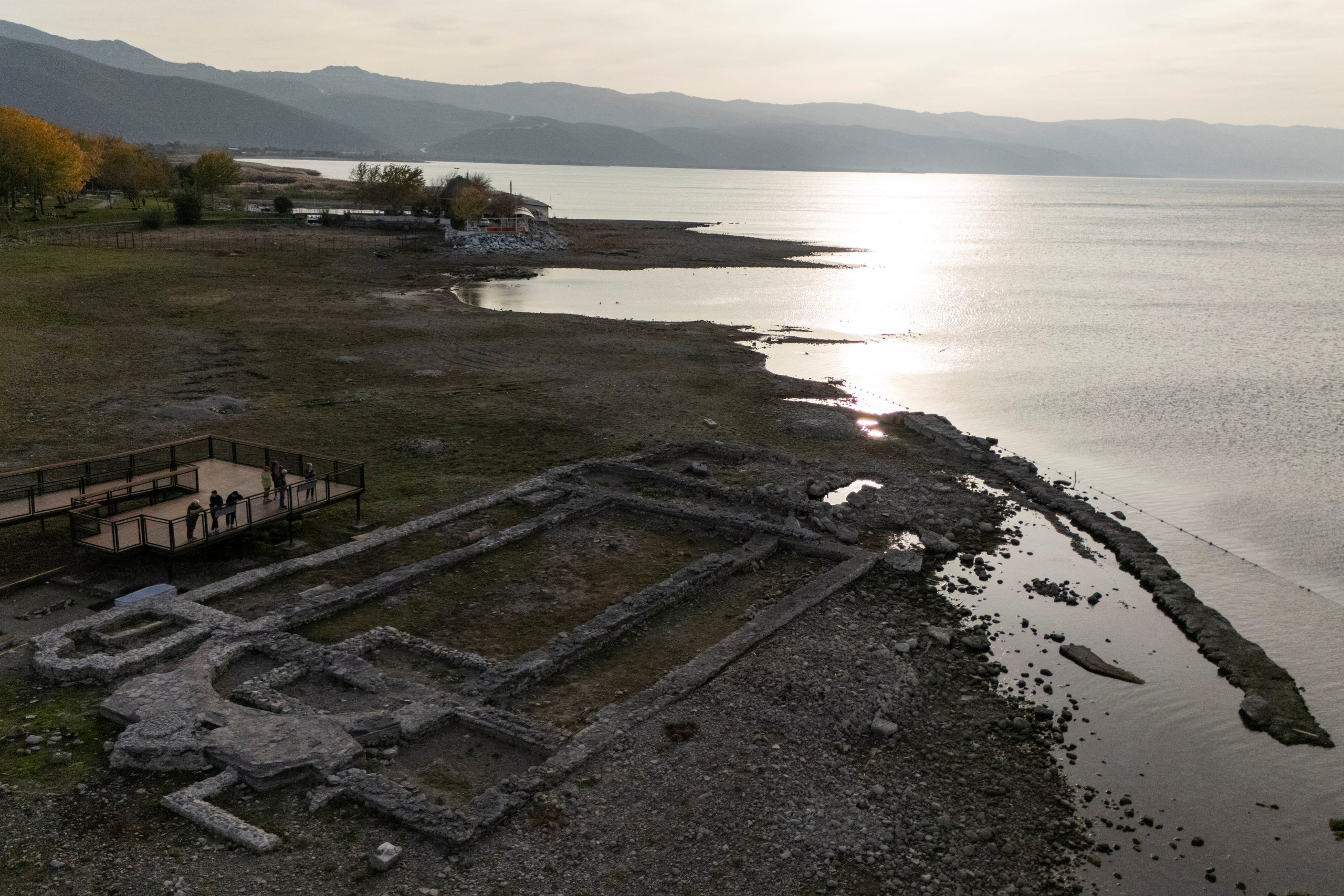
Locals fear that due to drought, as well as the pumping of large volumes of water by big agricultural companies, Lake Iznik will disappear. As Iznik recedes, the coastal water wells that irrigate olive groves have run dry.
“Everyone stands over their phones waiting for weather forecasts, wondering, ‘Will it rain today?’,” one 65-year-old olive farmer told me. “It used to snow waist-deep, and roads would remain closed for weeks. Today, children have forgotten what snow is.”
Agricultural stress isn’t limited to Iznik. In 2025, Türkiye’s crop and field production fell by 9%, while fruits, beverage and spice plants lost nearly a third of their output. According to the agriculture ministry, drought and frost were the main causes.
Visible scars of climate crisis
Sinkholes are also rapidly increasing, now numbering more than 1,000. Most of them are located in the Konya Basin, where groundwater levels fall by about 2 metres a year due to reduced rainfall and excessive extraction.
Türkiye’s sinkholes aren’t just a hazard to human life and infrastructure. They’re a graphic representation of how two human-made phenomena – groundwater exploitation and the climate crisis – combine to weaken the land, causing it to collapse upon itself.
Burnt forests, disappearing lakes, gaping sinkholes: many of these reminders of the climate crisis will remain hidden from visitors in Antalya this month. But the clamour for action will be on full display.
Since last year’s climate summit, a growing number of countries have rallied around a way forward: roadmaps to transition away from fossil fuels. More than just emission-reduction targets, these transition roadmaps are concrete plans on how to end dependence on fossil fuels, the main driver of climate change, in a just and orderly way.
As the Hormuz crisis has shown, not having to rely on oil and gas is no longer just about saving future generations from climate catastrophe – it’s also about saving next month’s household budget.
Electrification milestone
Türkiye is highly dependent on imported fossil fuels, spending an average of $42 billion annually on oil, gas, and coal over the last 10 years. The Hormuz crisis has increased these costs, with Turkish households and businesses losing an additional $3 billion in just two months’ worth of fossil fuel price spikes.
In launching the “35 by 35” electrification target, Türkiye’s COP President Murat Kurum acknowledged the need to protect citizens from high energy prices. This new global target for electricity to meet 35% of final energy demand by 2035 is shaping up to be one of the milestones of this year’s climate talks.
It’s a good target because electrifying transport, buildings and industry significantly cuts not just pollution, but daily expenses too. But electrification alone is not enough. Without an accompanying fossil fuel phase-out, electrification won’t be able to stop further climate and economic catastrophe.
Comment: Turkey must make COP31 a turning point for global climate action
A case in point is Türkiye’s new National Energy Plan 2040. The plan’s emphasis on electrification and the expansion of renewable energy capacity is welcome – these are positive steps that align with the messages coming from Türkiye’s COP31 presidency. However, for the plan to represent genuinely ambitious climate action, it must include a clear commitment and timeline to phase out coal.
Türkiye still relies on mostly imported coal for around one-third of its energy. A 350.org report has revealed that the coal trade between Türkiye and Australia – with which it shares the COP31 presidency – has been responsible for roughly 75 million tonnes of carbon emissions since the Paris Agreement was signed. Neither country has a coal phase-out date.
COP31 is an opportunity to change course. The Turkish government has made good progress on expanding solar and wind energy. In 2025, Türkiye surpassed its solar target as capacity had more than doubled in recent years. It must now build on this progress.
The world will be watching Türkiye as the climate summit heads into its second week. The Turkish government must ensure that global leaders implement real solutions that won’t leave its own citizens high and dry.
The post Behind the COP31 fanfare, Türkiye is worried about water appeared first on Climate Home News.
Scientists behind a landmark UN report on overshooting the 1.5C warming limit have defended its credibility, after Saudi Arabia and other large developing countries questioned its scientific legitimacy and sought to keep it out of the main political decision expected from COP31.
The UN Environment Programme’s (UNEP) Limiting Overshoot report, published in September, examines how to minimise an almost certain breach of the Paris Agreement’s temperature goal, what crossing it will mean for people and ecosystems and how temperatures could be brought back down.
The European Union, the UK, the Least Developed Countries (LDCs) and small island states are among those pushing for COP31 to make the response to overshoot of 1.5C one of the summit’s priorities.
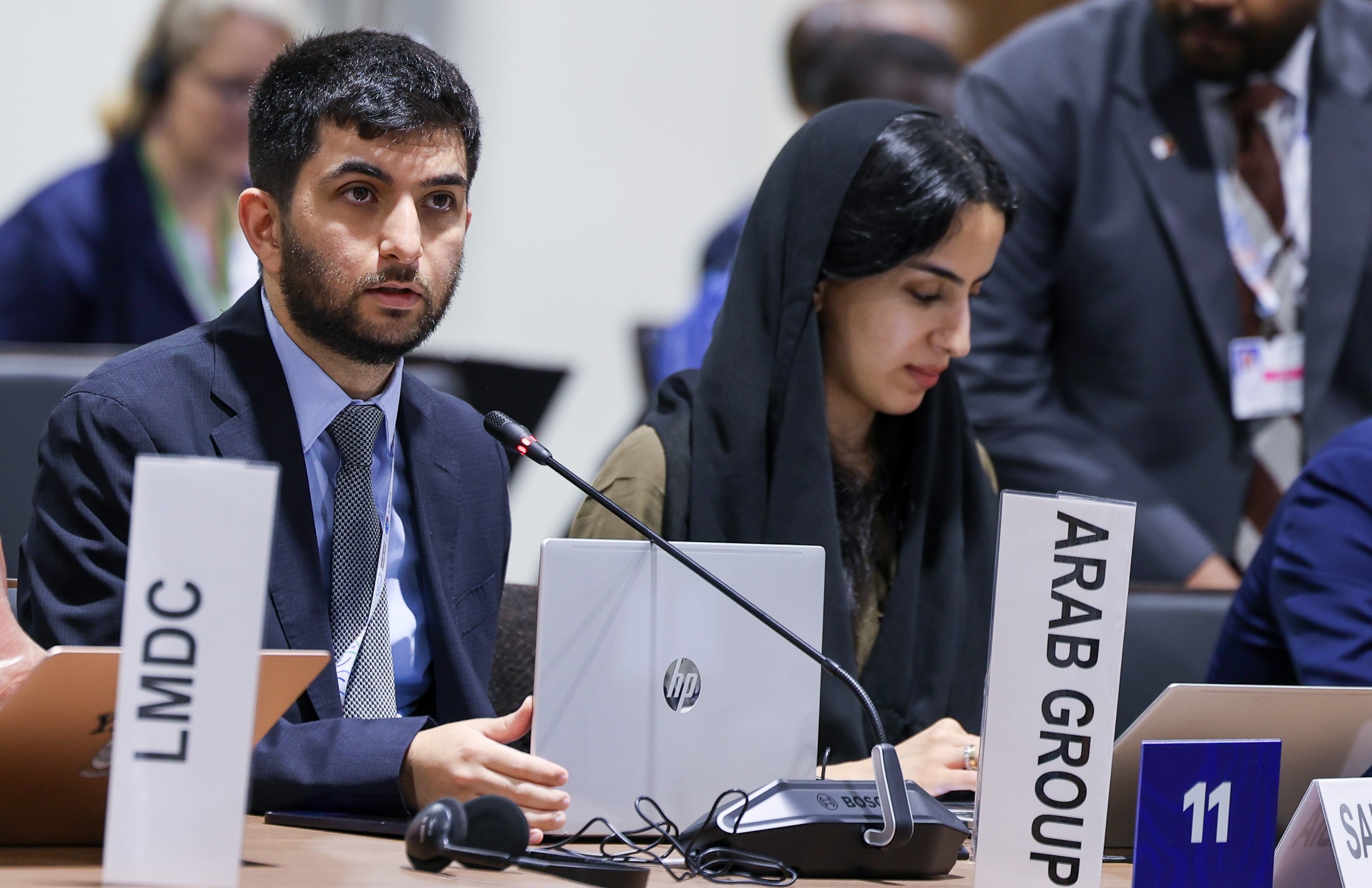
But during closed-door consultations on the cover decision this week, the Arab Group, led by Saudi Arabia, have tried to cast doubt on the report’s scientific rigour, arguing it had not been peer-reviewed, according to sources familiar with the discussions.
Meanwhile, the bloc of Like-Minded Developing Countries (LDMCs), which included India and China, called for the cover decision to avoid references to reports produced outside the UN climate process, seen by observers as a thinly-veiled reference to the UNEP report.
Laurence Tubiana, CEO of the European Climate Foundation and one of the key architects of the Paris Agreement, said the overshoot report “tells us a truth some would rather hide”.
“We are on course to exceed 1.5C and limiting how far and for how long is a matter of survival for us all,” she told Climate Home News. “The attacks on climate science are an attempt to delay action. They target intergovernmental institutions that give countries a shared scientific basis for acting together.”
-
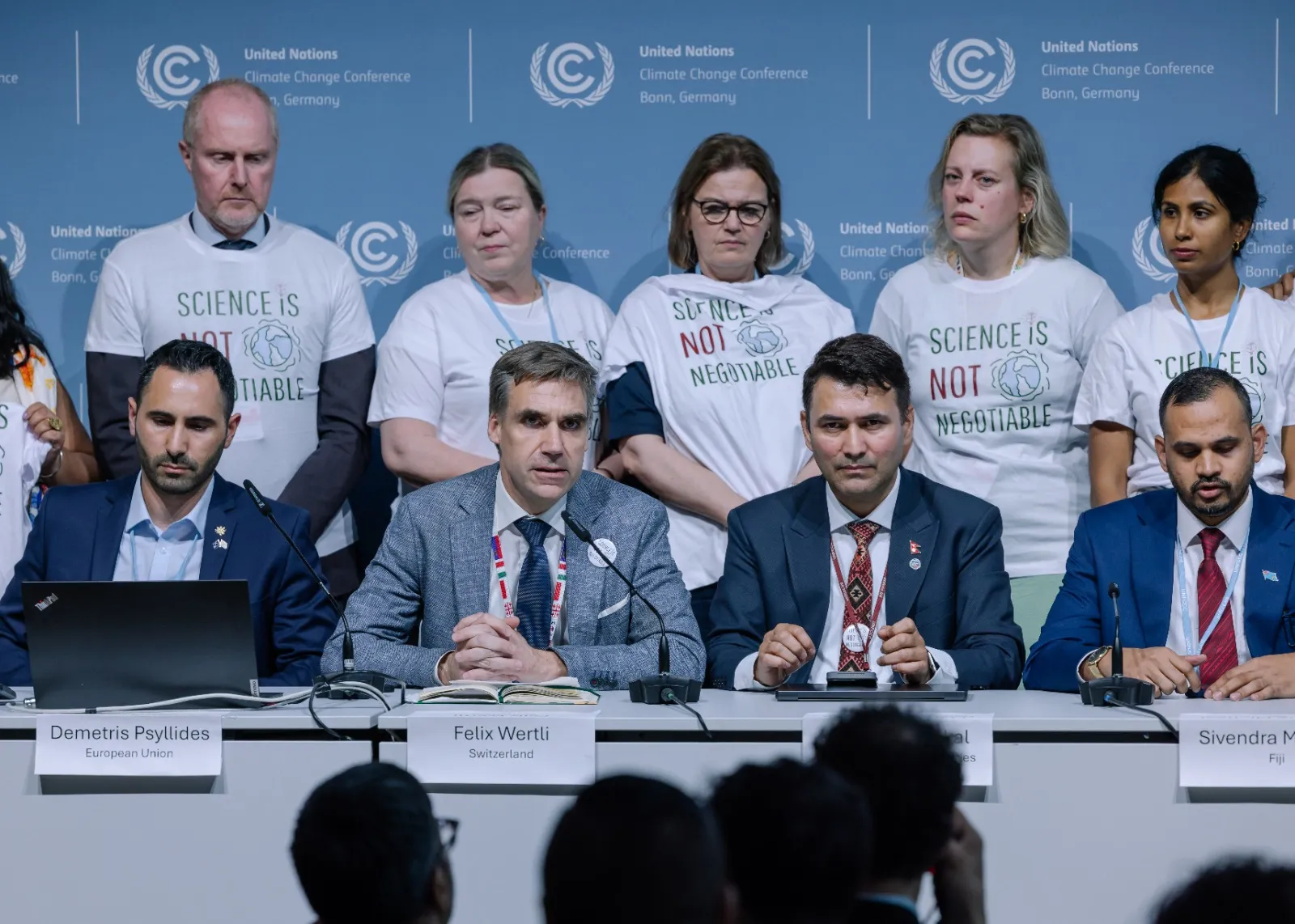
Science ‘under attack’ from fossil fuel interests at UN climate talks
A coalition of some rich nations and the world’s most vulnerable have vowed to protect climate science in UN negotiations -
Framing the climate science debate as a binary battle isn’t just wrong – it’s dangerous
Achieving the Paris Agreement goals requires robust science that fully integrates the experiences, economic realities and academic contributions of the Global South

Rigorous approach
Speaking at an event in Antalya on Saturday, scientists involved in the report also pushed back.
Debra Roberts, a South African scientist who co-chaired the IPCC’s Working Group II in its last assessment cycle and was part of the UNEP report’s core coordinating team, said the authors had followed the standard process for a global assessment of existing science, in line with the practices of the Intergovernmental Panel on Climate Change (IPCC). The only difference, she said, was that governments did not review the outputs.
“It was certainly reviewed internally by the authors, external peer-reviewers were brought into the process, and UNEP also reviewed it,” she told Climate Home News.
Forty-four experts from across the globe authored the report, which largely synthesises existing literature, and their work was scrutinised by a further 44 reviewers in a year-long exercise.
“Let’s be straightforward here: the reports are being attacked because some people don’t like the conclusions and it’s fairly obvious why,” Bill Hare, CEO of Climate Analytics and one of the report’s reviewers, told Climate Home News.
“If you as a government are basing your economy on burning and selling fossil fuels, then the last thing you want to do is accept that we are overshooting 1.5C, because then obviously you will take on some responsibility for paying for the damage,” he added.
“Grey literature” debate
In Antalya, some big emerging economies have also called for “grey literature”, including the overshoot report, to be kept out of the cover decision. The term refers to scientific products that are published outside of traditional academic journals.
While that applies to the UNEP report, some of its authors said it should not mean “grey literature” is of lower quality and cannot be used to inform policy-making.
They added that other forms of “grey literature”, including the UNEP Emissions and Adaptation Gap reports or the work of the International Energy Agency (IEA), are routinely used in the IPCC climate science assessment cycles and sometimes referenced in COP decisions.
Manjeet Dhakal, a Nepalese advisor to the LDCs, told Climate Home News those reports have previously been very useful to inform policy-makers. He added that the overshoot report is comprehensive and countries should be guided by it in Antalya.
‘A distraction’ amid bigger science spat
One of the UNEP report authors said the attempts by some countries to cast doubt on the overshoot report is just “a distraction”.
Clashes over climate science and its role in policy-making have escalated over the last few years amid a long-running stand-off at the IPCC. Most governments want the panel to produce all of its key assessment reports in time to inform the next UN Global Stocktake of climate action, due to be completed in November 2028.
But a smaller group of countries, led by Saudi Arabia, India and Russia, have resisted, claiming that timeline would be too rushed for scientists and governments from developing countries to contribute to and review the reports.
The IPCC will reconvene in an online meeting in early December in a last-ditch effort to find a solution.
As well as the IPCC assessments, Tubiana said the findings of the overshoot report must also inform the next global stocktake.
The post Scientists defend UN overshoot report after Saudi-led push to sideline it at COP31 appeared first on Climate Home News.
Scientists defend UN overshoot report after Saudi-led push to sideline it at COP31
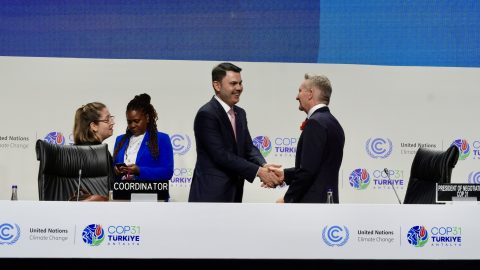
As technical negotiators race to lay the ground for the big political fights coming in the second week of COP31, delegates will spend their Saturday night at a stocktaking plenary presided over by Türkiye and Australia, where countries’ first red lines are expected to emerge.
Countries will have to decide whether to move forward with a cover decision as the main outcome from the Antalya talks. Some large developing countries have pushed back on it all week, as well as on any inclusion of sectoral targets, including a flagship new pledge to increase electrification to 35% by 2035.
UN climate chief Simon Stiell told a press conference on Saturday morning that progress so far has been “constructive” and praised the fact that negotiations were able to start on time as countries avoided what had seemed to be shaping up as a fight over the agenda.
He added that Saturday’s plenary will provide a sense of the most controversial issues, which government ministers now flying will have to take up and settle.
As of now, most issues on the formal agenda still need a lot of work. The cover text is more a wishlist of every proposal tabled and still needs to be worked up into a draft – expected by early next week.
An informal note on the Mitigation Work Programme (MWP), which tackles cutting planet-heating emissions, is heavily bracketed. The EU has said one of its priorities is to extend the MWP, with current options for a timeline going up to 2030, 2031 or 2040 (at COP45!). The MWP has so far delivered weak outcomes, but the current fight is over whether to expand its scope and task it with informing the next Global Stocktake of climate policies in 2028.
-
COP31 Bulletin Day 5: Cover decision wishlist issued as China bows out of COP33 hosting
Governments must start narrowing down what a political decision could look like in Antalya, while the conversation buzzes around who will host 2028’s important COP -
Push for ocean roadmap that informs next global stocktake grows at COP31
A group of countries including African nations, European Union, and small island states wants COP31 to deliver an ocean roadmap towards 2028 -
COP31’s electrification pledge wins support, with caveats on clean power and finance
At least 14 countries have endorsed the voluntary pledge so far, but island nations warn it must not distract from the shift away from fossil fuels

A separate draft text on the global goal on adaptation released overnight is set to become the main battleground for Africa’s top priority to triple adaptation finance to “at least $120 billion per year by 2035”, based on a previous goal set in 2021 – a figure it wants agreed in Antalya.
Another option in the text proposes starting a process to review several elements of this finance target – which was adopted in the final deal at COP30 – including the baseline, the total amount and its scope. It requests this to be reflected in a report that would then be considered at a later summit. African countries are likely to push back on this idea.
An informal note that includes the set-up of a new Just Transition Mechanism also came out late on Friday and has been condemned by civil society groups for the limited scope of what it would be expected to achieve.
In the meantime, the Turkish and Australian co-presidency has continued consultations on a number of issues, including on how to strengthen the UN climate process itself. Some countries – including Arab nations, Mexico, Korea and Switzerland – have proposed switching COPs to a biennial format, instead of the current yearly summits.
Brazil says it wants to host third fossil fuel phase-out conference
Brazilian President Lula da Silva told civil society in Antalya this week that his country should host the third global conference on Transitioning Away from Fossil Fuels (TAFF), which would likely fall in 2028.
“We have the moral obligation,” Lula said at a meeting before heading off to the Philippines for the ASEAN summit. The Brazilian president told the event he came to Antalya to demonstrate that “no country has more credibility on climate” than his.
The first conference on TAFF was held in Santa Marta by a coalition of around 60 governments that decided to take voluntary measures to wean their economies off coal, oil and gas. The next conference is expected to take place mid-next year in Tuvalu, with a pre-conference event for academics, subnational governments and civil society in Dublin.
In Antalya, Brazil’s COP30 presidency held a big launch event for a voluntary global roadmap it produced to help countries shift off fossil fuels, proposing a build-up of clean energy systems followed by a push to start phasing out coal, oil and gas production and consumption after 2031.
Currently, a proposal to welcome the Brazil-led roadmap in the formal UN negotiations is included in the COP31 cover decision, as well as an option for “ongoing implementation” of a COP28 landmark deal to transition away from fossil fuels in energy systems.
The post COP31 Bulletin Day 6: Limited progress as ministers arrive in Antalya appeared first on Climate Home News.
https://www.climatechangenews.com/2026/11/14/cop31-bulletin-day-6-limited-progress-as-ministers-arrive-in-antalya/



-
Climate Change1 year ago
Guest post: Why China is still building new coal – and when it might stop
-
Greenhouse Gases1 year ago
Guest post: Why China is still building new coal – and when it might stop
-

 Renewable Energy1 year ago
Sending Progressive Philanthropist George Soros to Prison?
-
Greenhouse Gases1 year ago
嘉宾来稿:探究火山喷发如何影响气候预测
-

 Climate Change2 years ago
Analysis: China’s CO2 falls 1% in Q2 2024 in first quarterly drop since Covid-19
-

 Climate Change1 year ago
嘉宾来稿:探究火山喷发如何影响气候预测
-

 Green Living2 years ago
Our Picks for the Top 2024 Black Friday and Cyber Week Sales From Sustainable Brands
-
Renewable Energy1 year ago
US Grid Strain, Possible Allete Sale