

In 2018, devastating rains hit Mike Tidwell’s community of Tacoma Park, Maryland, leading to a loss of tree canopy the following year unparalleled in the city’s history. After the torrential rainfall, Tidwell went on a kind of detective’s quest to find out what was killing the trees of Willow Avenue and elsewhere in Tacoma Park, and to try to connect the dots to climate change.
“One theory is that the ground was soaked for so long that it triggered the explosion of a latent underground mode called Phytophthora,” he said. “It forced the trees to begin borrowing nutrients and carbohydrates stored in their trunks.”
As a result, ambrosia beetles began to attack the weakened trees.
“When the tree started to die in 2019, everyone in this neighborhood was aware of it. You could not not be aware of it,” he said.

Tacoma Park resident Pat Neill next to the remains of her gigantic willow oak. Mike Tidwell
A result of his observations and reportage is his new book The Lost Trees of Willow Avenue, which starts on his block and then expands into other parts of the state and the world. Tidwell writes about tree burial, solar reflection and the scourge of Lyme disease that is on the rise, and that he personally suffered from.
“I want to tell the story of climate change through the trees on my block,” he said. “By keeping a record for one year of the credible impacts of climate change on my one block, I was able to see in microcosm the same sort of impacts we’re seeing worldwide to humans and ecosystems from a warming planet.”
In the book’s first section, Tidwell writes about the emotional impact of losing the massive trees that provided a huge and cooling canopy for the neighborhood.
“There are literally hundreds of households in my little town of Tacoma Park who’ve lost a dear friend,” he said. “I could have written a whole chapter about just the ceremonies people organize when their tree dies.”

A tree stump at the home of the Miller family on Willow Avenue. Mike Tidwell
As he dug deeper into his neighborhood, Tidwell also became of aware of a local church building a flood berm due to a flooded basement from the incessant rainfall. Ironically, the church had solar panels on its roof.
“That just blew me away,” Tidwell said. Out of this, flooding became another story to tell in his book.
“I was starting to see cascading impacts of climate change on my block,” he said. “These moments of surprise and discovery and cascading events and interlocking narratives — I didn’t know I was going to find that out. But as I really paid attention for a year and a half on this really small area, it was clear that that was what’s happening.”
Recent books such as The End of Eden by Adam Welz, Hope Dies Last by Alan Weisman, and recent documentaries like Sea Change and Earth Protectors are exposing the drastic impacts of climate change on the hyperlocal – local impacts that in turn, affect the globe.
“Climate change has gotten so bad you could throw a dart at a spinning lacquer globe, and wherever that dart lands, you can write a whole book about that one little spot,” Tidwell said. “People may push back and say, how in the world could you claim that you can see climate change within a one or two square block area? I think it’s very compelling and parallels climate trends throughout the nation.”
Tidwell’s book is like a climate change memoir, exploring the topic through his own local story and observations, but also through scientists, activists and politicians. Another main character is Ning Zeng, a climate professor at the University of Maryland. Zeng is proposing burying dead and mature trees, a form of carbon sequestration, rather than letting them be turned into wood chips, or burned. Scientists have found that trees can store their carbon for thousands of years underground.

Mike Tidwell’s author photo
Tidwell also writes about “solar radiation modification,” an idea that entered the climate solutions dictionary more forcefully after the famous letter from climate scientists in 2023 that stated that drastic climate warming could no longer be reversed. To this end, Tidwell thinks that reflecting sunlight away from the Earth is a viable solution.
“The metaphor is if the actual tree canopy, the protective shade of trees is disappearing in our neighborhood, is there a way to create an artificial solar shade in the stratosphere? We just haven’t managed the clean energy transition fast enough,” he said. “If we can’t store the carbon, and we started the clean energy revolution too late, what other options do we have?
“But — any efforts by human beings to artificially cool the planet by reflecting sunlight away from the Earth must only be done after years of careful research and through an international process of deliberation and decision making,” he added.
In addition to solar reflections, he writes about the idea of putting sulfur dioxide into the atmosphere as another way to reduce global warming, like the cooling effect on the atmosphere after a volcano erupts.
“Dr. James Hansen says the world’s countries must come together to do research on how we might mimic the natural cooling effect created when volcanoes erupt and emit sulfur dioxide into the stratosphere,” he said. “The question is, can humans artificially emit sulfur into the stratosphere for a few decades, slightly cooling the planet enough to give us time to complete the clean energy revolution? That will take years of careful research and international debate and inclusive decision making.”
Tidwell, as director of both the Chesapeake Climate Action Network and the CCAN Action Fund and the author of books on coastal flooding, has dedicated the last two decades of his life to promoting clean energy solutions.
🌳 Tune into the latest @wdcgardener episode as author and climate activist Mike Tidwell shares the moving story behind his new book, "The Lost Trees of Willow Avenue." Discover why we're losing our trees & there’s still hope rooted in our communities.
🎧 Listen here: open.spotify.com/episode/7wbH…— Chesapeake Climate (@chesapeakeclimate.bsky.social) May 19, 2025 at 12:55 PM
Chesapeake Climate Action Network has had success in banning fracking in Maryland, stopping the Atlantic Coast pipeline, and helped pass legislation to help make offshore wind a reality. Of course, with the new Republican administration, some of these gains might be reversed in the short term. But Tidwell remains optimistic.
“Donald Trump can do whatever he wants right now. It’s not going to change the fact that half of all new cars in China are going to be electric this year,” he said. “It can’t change the fact that Australia is going to reach 80% clean electricity for the entire country by 2030. It’s not going to stop the fact that the European Union is reducing emissions every year. It’s not going to change the fact that California and New England states and Minnesota all have policies that are pretty dramatic in terms of clean energy transition.”
The post All Climate Change Is Local: A Story of Tacoma Park’s Trees With Author Mike Tidwell appeared first on EcoWatch.
https://www.ecowatch.com/mike-tidwell-trees-of-willow-avenue-ecowatch.html

Green Living
Classic Sustainability In Your Ear: Ecosia.org’s Christian Kroll on Planting Trees With Every Web Search
How do you reduce your digital life’s environmental impact? Making changes to reduce your environmental impact around the house is straightforward — you can eat less meat, reduce your purchases of single-use plastic or turn down the thermostat by a few degrees to make a difference. But when you go online, there aren’t many obvious choices to cut your impact. Enter Ecosia.org, which has planted more than 143 million trees to offset the environmental impact of web searches. Ecosia remains a stalwart of ecologically responsible tech four years after this interview.

Christian started Ecosia in 2009 after seeing the devastating impact of deforestation first-hand while traveling after graduating from college. The company was also the first B Corporation in Germany. While the search engine does produce CO2, the trees planted offset more emissions than ecosia.org creates — they estimate that the trees planted result in a net reduction of CO2 of 2.2 lbs. per search. To put that in context, Ecosia estimates that if it had the same volume of searches as Google, it could plant enough trees to remove 15% of humanity’s CO2 emissions each year. You can search, plant trees, and learn more at ecosia.org.
- Subscribe to Sustainability in Your Ear on iTunes and Apple Podcasts.
- Follow Sustainability in Your Ear on Spreaker, iHeartRadio, or YouTube
Editor’s Note: This episode originally aired on February 16. 2022.
The post Classic Sustainability In Your Ear: Ecosia.org’s Christian Kroll on Planting Trees With Every Web Search appeared first on Earth911.
https://earth911.com/podcast/earth911-podcast-ecosia-orgs-christian-kroll-on-planting-trees-with-every-web-search/
As the spring flowers start to appear and the days get longer, the urge to dig in the dirt returns. But you don’t have to wait for warmer weather to get growing. Starting plants from seed extends your relationship with the garden, gives you more control over seed sourcing, and saves real money compared to buying nursery starts, sometimes as much as 90% per plant.
Seed starting is also a lower-waste choice. You don’t need plastic nursery pots or peat-heavy commercial growing media, and get the option to select organic or open-pollinated varieties that big-box stores rarely carry. Here’s how to do it right.
This article includes affiliate links. If you buy something through these links, we earn a small commission that helps support our work.
Choose Seeds Worth Growing
Not all seeds are created equal, or equally easy. For beginners, stick to varieties with reliable indoor germination rates. Good bets include basil, broccoli, cabbage, cauliflower, chives, lettuce, melon, onion, pepper, and tomatoes.
For direct sowing outdoors, which lets you skip the indoor start entirely, beans, beets, carrots, corn, peas, spinach, squash, and zucchini all transplant poorly and are better started where they’ll grow.
When selecting seeds, consider choosing open-pollinated or heirloom varieties — they let you save seeds at season’s end and replant the following year, compounding your savings over time. Rebel Gardens’ certified organic 13-variety heirloom pack (seeds grown and packed in the USA in 100% recycled packets) is a solid starting point, as is Purely Organic’s USDA-certified vegetable starter kit. For herbs, Sweet Yards’ organic herb seed pack covers the kitchen essentials — basil, cilantro, dill, parsley, thyme, and more.
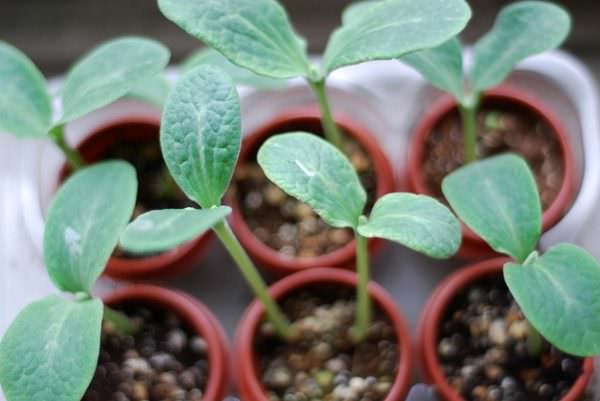
Reuse Containers or Go Soil Blocking
The sustainability case for seed starting is strongest when you skip buying new plastic plug trays. Save nursery flats from prior seasons or raid the recycling bin for 2- to 3-inch containers such as single-serve yogurt, applesauce, or pudding cups. Wash thoroughly and punch drainage holes in the bottom.
A more advanced option is soil blocking. A soil blocker tool compresses growing medium into self-contained cubes that need no container at all. Roots hit air at the block’s edge and stop growing (a phenomenon called air pruning), which produces a denser, healthier root mass.
Ladbrooke’s 20-block Mini 4 Blocker is the most widely used model for home gardeners.
Get Your Growing Medium Right
Don’t use garden soil or standard potting mix for seed starts; both are too dense and can introduce pathogens. You need a dedicated starter mix: light, sterile, and fine-textured enough to let tiny roots push through.
A premixed option, Old Potters’ Professional Germination Mix, offers a pH-adjusted medium made from peat moss, perlite, and vermiculite that eliminates the guesswork of blending your own starter soil. Or mix your own by combining equal parts perlite, vermiculite, and peat moss, then add 1/4 teaspoon of lime per gallon to neutralize the peat’s acidity.
Peat moss extraction raises sustainability concerns. It’s a slow-renewing carbon store. Coco coir, made from coconut processing byproduct, is a renewable alternative with similar moisture-retention properties. Plantonix’s coco coir + perlite + vermiculite bundle is worth considering if you want to skip peat entirely.
Heat Is the Underrated Variable
Most vegetable seeds germinate best between 65–85°F, and soil temperature matters more than air temperature. A spot near a heat vent can work, but that can be inconsistent. A seedling heat mat is the most reliable solution because it warms the root zone 10–20°F above ambient air temperature, which can cut germination time.
The VIVOSUN Seedling Heat Mat is a top-rated, UL-certified 10″×20.75″ mat that fits standard nursery flats and allows you to control the temperature. For an all-in-one solution, SOLIGT’s 60-cell seed starter kit with grow light and heat mat bundles tray, dome, light, and mat in a single purchase.
Before germination, seeds need consistent moisture, not light. Cover your flat with plastic wrap, a humidity dome, or a pane of glass to hold humidity while seeds sprout. Once you see green, remove the cover immediately: trapped humidity post-germination promotes damping-off, a fungal disease that collapses seedlings at the soil line.
Water Smart, Not Hard
Overwatering kills more seedlings than drought does. The goal is consistent moisture, which will make the soil feel like a well-wrung sponge, not a puddle. A fine-mist spray bottle is better than pouring water from above, which can displace seeds and compact the growing medium.
A quality garden mist sprayer runs under $25 and pays for itself immediately.
Grow Lights: Non-Negotiable Unless You Have a South-Facing Window
Seedlings need 12–16 hours of light per day. A sunny south-facing window might deliver 6–8 hours on a clear day. The gap produces leggy, weak starts that struggle when transplanted. Grow lights eliminate the variable entirely.
Position the bulb 2–4 inches above seedlings and use an outlet timer to automate the schedule. Full-spectrum LEDs are the current standard, as they run cooler and more efficiently than fluorescents. GROWFRIEND’s 40-cell all-in-one kit includes dual LED grow lights, a heat mat, humidity dome, and a soil moisture meter in one package.
Label Everything Because You Will Forget
This sounds obvious until you’re staring at 60 identical seedlings in March. Label every cell or flat immediately after sowing, noting the variety and the date. Reusable plant markers and a waterproof pen cost almost nothing and save considerable grief later.
Waterproof garden plant markers with permanent pen included are available in packs of 100+ for a few dollars.
Feed Lightly, Starting at Week 3
Commercial seed-starting mix contains little to no fertilizer by design, as high fertility can burn delicate seedlings. But after the first true leaves appear, plants need a nutritional boost. Start with a diluted liquid fertilizer (half the label-recommended strength) and apply weekly.
Fish emulsion and kelp-based fertilizers are popular organic choices that provide a balanced nutrient profile without the risk of chemical burn from synthetic fertilizers.
Thin Ruthlessly
Sowing two or three seeds per cell is standard practice. It hedges against low germination rates. But once sprouts emerge, you need to thin to one per cell. The instinct is to leave multiples “in case.” Resist it. Crowded seedlings compete for light, water, and nutrients, and the result is weaker plants across the board.
Thin by snipping extras at soil level with small scissors rather than pulling, which can disturb roots of the seedling you’re keeping.
Pot Up Before Roots Get Crowded
Seed-starting mix has almost no nutrients. Once seedlings develop their first true leaves, which are the second set, after the initial seed leaves, they need more root space and fertility. Move them into 3- to 4-inch pots filled with a nutrient-rich potting mix.
This “potting up” step is often skipped, and seedlings suffer for it, becoming stunted, yellowed, slow to establish when finally transplanted. Pot up early rather than late.
Harden Off: Skipping This Step Is Costly
Indoor seedlings are soft. They haven’t experienced wind, direct UV, or temperature swings. Transplanting directly from a grow light to full outdoor sun causes transplant shock that can set plants back weeks or can kill them outright.
Harden off over 7–10 days: start with 2–3 hours in filtered shade on a mild day, gradually increasing sun and wind exposure. Growveg’s hardening-off guide has a clear day-by-day schedule.
Timing: Use a Planting Calendar, Not Gut Feel
The single most common beginner mistake is planting too early. Tomatoes and peppers in the ground before nights are consistently above 50°F will sulk rather than grow. Frost-tender crops started too early indoors get root-bound before it’s safe to plant them out.
The Old Farmer’s Almanac planting calendar calculates seed-starting dates based on your last frost date. Input your zip code and it generates a personalized schedule. Check the forecast in the 48 hours before any outdoor transplanting.
What You Can Do
- Start with easy wins: basil, broccoli, lettuce, and tomatoes have high germination rates and forgive beginner mistakes.
- Choose open-pollinated seeds: you can save and replant them each year, building independence from annual seed purchases.
- Skip peat when possible: coco coir-based growing media performs similarly and avoids harvesting slow-renewing peat bogs.
- Reuse containers: clean nursery flats or single-serve food containers reduce plastic demand before a single seed goes in.
- Use a heat mat and grow light: these two tools account for the majority of seed-starting failures when absent.
- Harden off every seedling: skipping this step costs plants; the process takes 10 days and pays off every time.
- Time your starts correctly: use a frost-date-based planting calendar, not the date on the seed packet, which isn’t calibrated to your region.
Related Reading on Earth911:
Editor’s Note: This article was originally published April 30, 2015, by Sarah Lozanova, and most recently updated in March 2026.
The post Seed, Sprout, Spectacular: Tips for Starting Your Garden From Scratch appeared first on Earth911.
https://earth911.com/home-garden/seed-sprout-spectacular-tips-for-starting-your-garden-from-scratch/
Most business leaders believe sustainability costs money. They’re wrong. The proof is sitting right under their noses, bleeding out quietly as waste, excess heat, and byproducts every day the factory runs. Danish manufacturing data shows that more than 20% of raw materials purchased by the average company never reach a finished product. In a sector where resource costs account for more than 50% of total operating expenses — compared to less than 25% for salaries — that’s not a compliance problem or a branding challenge. It’s a structural, strategic failure that most business leaders have never been trained to see. Jasper Steinhausen spent two decades watching that failure play out across more than 100 companies in the Nordic countries. He came to sustainability not from the environmental side, but from marketing, where the core lesson was that people act on what they care about, not on what you think they should care about. When he started connecting the dots between resource-flow analysis and business strategy, the conversation changed. Leaders who tuned out every sustainability pitch suddenly leaned in when the frame was cost reduction, supply chain resilience, and competitive advantage. The “green” problem turned out to be a business problem in disguise — and a solvable one. That reframing is in his book, Making Sustainability Profitable: A Leader’s Guide to Growing a Thriving Business That Makes the World a Better Place. A free digital copy of the book is available at freebook.scoreapp.com — Jasper recommends starting with Chapter Three.

The argument Jasper makes is structural. Today’s business leaders have been trained rigorously in managing time and money, but almost never in managing material flows, even though materials dwarf payroll in the cost structure of most manufacturing companies. The result is a generation of leaders who are leaving more than half their cost base strategically unmanaged. The narrative problem compounds the structural one. When every leader wakes up believing sustainability is a cost, a constraint, and a compromise, they never get to the question of whether it might be something else. Jasper’s idea, which he posts about on LinkedIn and tests with clients ranging from small manufacturers to government advisory roles, is that the narrative is the first hurdle. The mental transformation has to precede the business transformation. Companies that clear that hurdle and start treating sustainability as an innovation platform consistently find themselves with a layer of competitive advantage their rivals haven’t even thought to open. Our conversation also covers the greenwashing trap, and how to avoid it by going around it entirely. The problem with leading on sustainability as a marketing message, Jasper argues, is that it inverts the logic. The job isn’t to convince customers to care about the planet. It’s to identify the problem they’re already trying to solve and deliver a better solution. Once that happens to be more sustainable because sustainability, done right, produces better outcomes. “Impact follows perceived value,” he says. A water company with a genuinely pure, chemical-free source doesn’t lead with environmental stewardship. It leads with safer drinking water for your kids. The sustainability isn’t hidden — it’s structural. It’s why the product delivers what it promises. Communicating it means doing what you say, saying what you do, and backing every claim with data and a visible roadmap. That’s not a compromise. That’s the only version of sustainability communication that survives contact with a skeptical market.
You can learn more about Jasper’s work at bwimpact.com and connect with him on LinkedIn.
- Subscribe to Sustainability In Your Ear on iTunes
- Follow Sustainability In Your Ear on Spreaker, iHeartRadio, or YouTube
Interview Transcript
Mitch Ratcliffe 0:09
Hello, good morning, good afternoon, or good evening, wherever you are on this beautiful planet of ours. Welcome to Sustainability In Your Ear. This is the podcast conversation about accelerating the transition to a sustainable, carbon-neutral society, and I’m your host, Mitch Ratcliffe. Thanks for joining the conversation.
Today we’re going to talk about sustainable business — making it sustainable, making it profitable; in other words, making it a business. Many people still believe that sustainability is just a cost center: a compliance hassle, a PR move, or something that hurts profits. This belief has kept many companies from joining the green transition. Instead, they’re waiting for rules to change or for others to show how it works. But the data tells a different story, and according to our guest today, when manufacturers in Denmark account for all their inputs, more than 20% of raw materials they purchase never reach a finished product. Instead, they bleed out as waste, excess heat, and other byproducts. That’s not just an environmental problem — that’s money leaving through a hole in the floor. And it points to something deeper: sustainability, when done right, isn’t a cost to be managed. It’s a source of competitive advantage that most business leaders have not yet learned to see.
So I’m joined today by Jasper Steinhausen, founder and CEO of Business With Impact, and the author of the book Making Sustainability Profitable. Jasper is a longtime circular economy business consultant to businesses in the Nordic countries. Over the past two decades, he’s worked with over 100 companies and has served as an advisor to the Danish government’s Green Transition Fund. He’s developed a framework — the Impact Blueprint — that guides business leaders through five key actions connecting sustainability with growth, resilience, and profit. Companies that use it have reported their best financial results ever.
So let’s talk with Jasper about common mistakes small and medium-sized companies make when starting with sustainability, how circular economy thinking is really about using resources better and making more profit, and how companies that go beyond compliance can stand out from the competition. We’ll also try to get into some tougher questions: Why isn’t the business case catching on faster? How do you tell real sustainability from greenwashing? And can businesses move quickly enough to meet what science says is needed?
To learn more about Jasper’s work, you can visit bwimpact.com — that’s all one word, no space, no dash. You can find his book Making Sustainability Profitable on Amazon or at your local bookseller. If sustainability is truly a profit driver hiding in plain sight, why do so many business leaders still see it as a burden, and what would it take to change that? Let’s find out right after this brief commercial break.
[COMMERCIAL BREAK]
Mitch Ratcliffe 2:58
Welcome to the show, Jasper. How are you doing today?
Jasper Steinhausen 3:01
Thank you, Mitch. I’m doing really, really well. Looking forward to having this conversation with you.
Mitch Ratcliffe 3:06
Well, thank you for joining me. I really appreciate it. You know, like myself, you’ve been working for 20 years or so at the intersection of sustainability and business strategy. I’m wondering — was there a moment, or maybe a specific client, that made the bell ring for you, that these two things are intimately connected?
Jasper Steinhausen 3:23
Well, for me, the problem is that most people tend to focus on only one problem at a time, right? We tend to isolate problems, especially those we don’t quite understand. And that’s not just a sustainability thing — that’s just how our brains work. But the reality is that sustainability integrates into so many areas in a business, as you probably realize yourself.
And I’ve always been looking at the positive side of things, looking for the opportunity. At some point, back in the mid-2000s or so, I was very much into climate. This was heading up towards COP 15 in Copenhagen, so climate was the thing — also for me. I started looking at climate as the opportunity to innovate and to rethink, and thereby to solve more than one problem at the same time, because there was lots of stuff that needed fixing.
My experience from working in marketing right after I left university was that the more I talked to people about what they care about, the more they listened. So I started connecting the dots: what are the types of problems they do care about? Because a lot of people don’t necessarily care enough about sustainability — it’s not their top priority. So I started to look at it this way: What if I get curious, try to understand what your top priority is, and then figure out how climate — or sustainability, or whatever your slice of this pie is — intersects with that problem? And then speak to solving that problem in a way that also has impact. Basically turning sustainability into the toolbox and using it to solve the problems people actually care about.
And things started moving more easily. Conversations were more interesting to people. From there, I’ve just been refining that process for — yeah, 20-plus years.
Mitch Ratcliffe 5:32
Well, as you say, there are a lot of problems, and the range of challenges a business or policymaker faces today is growing constantly. What do you find the primary motivation is — is it profitability, or is it a combination of financial sustainability and a genuine desire to do better? Where does the motive lie these days?
Jasper Steinhausen 5:56
Well, it depends. Usually I just start by asking people: What are your top priorities right now? What do you really want to succeed with? Not necessarily in sustainability, but where’s your head on the line — what have you promised the board, or your senior leadership, or whoever I’m speaking to in the organization? So rather than having a conversation around sustainability, I find it more interesting to have a conversation about what we really want to achieve.
But I do find that many leaders feel a fairly significant pain around the gap between the values they live by in their private life — the choices they make about food, cars, travel, housing, what they buy, what they choose to repair — and their professional life. In their private life, they make conscious, deliberate choices that factor in sustainability. Then they go to work for eight or nine hours a day, and there they just can’t connect the dots. So they’re basically living a split, unable to live up to their values in their professional life — which is a big part of your life. And that’s painful.
So for some there is an underlying personal pain point, but it always comes back to: I’m being measured on delivering business results. And if you’re not in a company that’s advanced and mature in sustainability — where it’s an integrated part of the brand — well, then it’s a distant second to cutting costs, increasing sales, and attracting talent. So to come back to your question: the short answer is that it’s the business side for the vast majority, but a lot of them have a personal drive underneath. They just can’t connect the two, so they don’t even try. When I help them do that, it becomes a real personal relief as well.
Mitch Ratcliffe 8:30
So what would you say is the most common objection you hear when you make the argument to, say, a room full of CEOs that sustainability can be profitable? Is there a common myth you can dispel right off the bat?
Jasper Steinhausen 8:42
Yeah, I guess they don’t say this, but I’m pretty sure they think it — “BS, this can’t be true” — though they’re polite people and don’t say it to my face. But the thing is, I’ve asked people on every continent, and I get the same response: sustainability is a problem, it’s expensive, it’s hard for business, and you have to compromise in so many ways. That seems to be the decisive narrative globally on what sustainability is.
The reality is that sustainability delivers competitiveness. It drives down cost. It drives innovation. It fuels engagement — and engagement equals productivity, less sick leave, attracting talent, more innovation. And combine all those, as you advance further and further, it also starts to lead to increased customer loyalty, because you make better solutions and find people and companies who see that alignment. There is so much business value to be gained, and people just don’t get that.
When we make what I call a mental transformation — before we’re capable of doing a business transformation — it’s kind of like all of a sudden thinking: well, what have I been thinking for all these years? You can read more about this process in Making Sustainability Profitable.
Mitch Ratcliffe 10:31
Well, you’re describing the recognition of a series of connections that constitute the system in which the business does its work — whatever that work might be. And one of the things that was interesting, and why I wanted to talk with you, is that you frame this all initially as a waste issue. I was surprised by the Danish manufacturing results you reported — that 20% of raw materials never make it into the product or service. For business leaders who haven’t thought about it that way, how does framing sustainability primarily as a resource-efficiency problem change the conversation? Does it make it easier to take that first step?
Jasper Steinhausen 11:08
Well, it’s a really good question. In general, it shifts things quite a lot. The thing is that business leaders don’t really know how to deal with resource flow strategically, and there’s a reason for that. From around the early 1950s to the early 1970s — what’s often referred to as the golden age of capitalism — there was a notion of seemingly endless abundance in energy and materials, and prices just kept falling. So it became less of a strategic issue and more like a cost of operations, something to hand down the chain to the head of manufacturing or wherever it sits today. In leadership literature, it gradually disappeared as a strategic topic, meaning that today’s leaders have never really been trained to strategically look at the flow of resources. They focus mainly on the flow of time and the flow of money.
So through no fault of their own — because nobody ever taught them, it was never part of their education or their portfolio — now this massive area has been ignored. I once had an opportunity to dig into Danish national statistical data — about ten years ago, though I’m quite sure the picture is the same today, perhaps even more significant. Less than 25% of costs go to salary. A bit more than 50% is tied to resources. If you combine these two things — it’s kind of mind-blowing. More than 50% of all costs are not part of leadership’s strategic focus. Let’s leave that for listeners to chew on, because that’s insane when you look at it like that. But it kind of just disappeared.
So when I come in and help rewire this connection — have them look at where the resource flows are — it becomes quite easy to see that there are things really going wrong in how we produce today. When I look at a company or a value chain, I basically see money bleeding out all over the place. If I’m asking how we can increase competitiveness and reduce cost, the first thing I’d say is: well, why don’t we start by stopping some of these holes? And the response is: “Oh, yeah, okay — I hadn’t thought about that.” Because that’s just how things run. Procurement procures, manufacturing produces, sales sells, everybody’s busy, the cost structure is baked into the price, and that’s it. Just intercept a bit and show them what it really is, and it’s kind of “holy moly.” And then you can start doing things.
Mitch Ratcliffe 14:39
Well, you’re describing what happens when suddenly the water is off and you recognize you’ve been counting on it without thinking about it for a long time. Each organization within the entity is in its own silo, focused on its own thing. So how do you move from being reactive to being proactive about sustainability? What does the sweet spot look like in practice?
Jasper Steinhausen 14:58
Yeah, well, I guess you could say that things move a little more easily once you align strategy and offering, and you and your team are working toward something bigger than yourselves. As some of your listeners probably know, we understand quite a lot about intrinsic versus extrinsic motivation. And we know that when we contribute to something beyond ourselves — something bigger — it feels really good.
So if you’re in a company that’s not just about profit, but also a profitable way to be part of making the world a better place — in whatever area fits that company — we can all see that a lot of things in this world are out of balance and moving in the wrong direction, whether that’s climate change, biodiversity, plastics, the amount of chemicals, or something in the social space. Whatever is your flavor, that’s up to you. And the second you can see: “Now I’m part of a team or a culture or movement that’s actually taking some real steps” — and you’re leveraging the full power of a business to do it — it becomes this massively leveraged change. You make better products because you use sustainability as an innovation platform. You put customers’ problems at the center, so you come up with solutions that are better for clients and better for the planet. Your team becomes more engaged, stays longer, works harder. And that’s why they beat the competition. It’s simply a better way of doing business.
Mitch Ratcliffe 17:15
Well, you see yourself within a larger system and a bigger context, and that allows you to find greater motivation as well as more opportunities for innovation. Can you share the principles of the Impact Blueprint — the five steps a leader listening right now on their commute can identify and potentially apply when they get to the office?
Jasper Steinhausen 17:39
Sure. There are five steps: mindset, mission, mapping out a course to move toward it, actually doing stuff, and then going out and talking about it. You can read through all of them in depth in Making Sustainability Profitable — and I’d be happy to gift your listeners a digital copy. Check the show notes for a link to download a free copy.
The mindset step is a lot of what we’ve already been talking about: shifting out of “it’s bad, costly, and a compromise” and into the opportunity space. Don’t start with “what environmental problems should I solve?” Start with “what business problem am I most focused on solving?” and then look at that through the lens of sustainability or resource flow. How does that intersect with the problem? Don’t go in thinking it’s more costly — it’s an innovation game. Find ways to make better solutions.
Mitch Ratcliffe 19:11
Great. We’ll include a link in the show notes.
Jasper Steinhausen 19:15
Perfect. Just read Chapter Three — that’s about a 20-minute read and you’ll be all good to go.
Mitch Ratcliffe 19:23
Chapter Three. Check it out.
Jasper Steinhausen 19:23
Check it out. The mission step is figuring out why we’re all doing this. What’s the bigger thing? Where do we want to go with this? Say you’re a smaller company, or founder-led, or owner-operated — where do I really want to go with this? What’s important to me? And making sure that matches with the business. You can look at a SWOT analysis — strengths, weaknesses, opportunities, and threats — and then match that with what’s personally important to you. Kind of like legacy thinking: what would you like to be known for? Is it children? Is it animals? Is it climate change? And then make sure those match, so you don’t choose an impact area you have no ability to actually move.
I’ve worked with clients who really wanted to do something on climate, but had a business with a very insignificant direct climate impact, or where the impact was tied into a supply chain where they had zero ability to influence anything, because they were a small company with giant suppliers on the other side of the world. So you need to match those things so you actually choose something that gives you a real chance of working on sustainability in a way that also improves your business.
Mitch Ratcliffe 20:56
And those two — mindset and mission — are a great place to anchor the rest of the conversation. What is the minimum viable move in terms of its ability to catalyze the passion you’re talking about for making the world a better place, while balancing the day-to-day challenge of covering payroll at the end of the month? Is there some initial investment or activity that takes you out of your comfort zone — where the silos stop you in your tracks?
Jasper Steinhausen 21:41
Well, you’re very right that getting out of the comfort zone is part of it. I find that the absolute majority of leaders don’t know how to lead sustainability — they see it as this separate thing.
Mitch Ratcliffe 21:54
And I would argue that they may not even know how to lead.
Jasper Steinhausen 22:00
Point taken — yes, duly noted. And especially for smaller businesses. A lot of founders or engineers who suddenly have 20 people on their hands are struggling just to keep everything going. Some even dream about going back to being in the weeds doing the actual work rather than all this leadership stuff. So, yeah.
Mitch Ratcliffe 22:28
The lone innovator is often where a lot of us begin this journey.
Jasper Steinhausen 22:32
Exactly — true. But what I would say is that there’s a lot you can do that doesn’t require big, long-horizon investments. The story about sustainability is very often that it’s about investing for the long view or future-proofing. But what I sometimes refer to as the “brilliant basics” — not a phrase coined by me, but still very valid — is to look at your company and see what you’re going to keep doing for a very long time. You’re going to keep taking raw materials, running them through process A, B, and C, and turning out a product for your customers. And your customers will keep wanting good quality, reliability, and the best possible price. OK — so here is something you can invest in, because it’s going to be ongoing. Are you doing it the right way?
And again, back to the resource flow and waste issue: you are not doing it the right way if you’ve never really looked at it. Unless you’re a very high-volume, low-margin Walmart-type operation that scrutinizes every penny — or you’ve been on the brink of bankruptcy — odds are good you’ve never really looked hard at this. When the Ukraine war broke out four years ago, what we saw here in Europe was a massive, near-overnight increase in energy prices. All of a sudden, companies saw a doubling or more of their energy costs, and for many, that was lethal. All hands on deck.
And within weeks, so many things were changed — none of which required big new investments. It was just smarter practice: let’s produce at night when energy is cheaper; maybe we don’t need the temperature at 98 degrees — maybe 92 is fine. All these things that were never looked at, because it wasn’t on the radar. You can do a lot of that. The minimum viable move is really just getting the basics right.
Mitch Ratcliffe 25:41
So you’re describing that moment of crisis when the reframing is almost automatic — because you don’t have control anymore. This is also a great place to take a quick commercial break, folks, because the wheels have been clipped off the plane. Will we land it? We’ll find out right after a quick commercial break.
[COMMERCIAL BREAK]
Mitch Ratcliffe 26:08
Welcome back to Sustainability In Your Ear. Now, let’s get back to my discussion with Jasper Steinhausen, author of Making Sustainability Profitable and founder and CEO of Business With Impact. So Jasper, one of the testimonials I read about your work is that in a single coaching session, you reframed an entire business through your questions. What do those questions look like when you sit down with somebody who says, “I know I need to do something — I think it might be sustainability.” How do you drill in to find out what they can actually do?
Jasper Steinhausen 26:41
Well, I can walk you back to that specific session, because I think it’s a story that underpins quite well what we’ve been talking about. So it’s a company that sells a water product of really, really high standard, and the founder is passionate about sustainability — but they were struggling a bit with getting traction in the marketplace and getting people to support it, whether that was investors, partners, or whatever. She was clearly more passionate about the sustainability part than a lot of the peers around her that she was trying to persuade.
But the thing is, she had really, really clear water — one of the few sources that could actually claim it was not contaminated with any man-made substances: no plastics, no chemicals, no PFAS, nothing. So I thought: what if we reframe this not as “a sustainable source” but as “better for your health”? How many people walk around caring about what they eat and drink? How many are worried about chemicals in their bodies or in their children? If this was the truly safe source of drinking water, what would that look like compared to pitching it as “the sustainable drinking water”? And she was like —
Mitch Ratcliffe 28:31
However — does that get them away from sustainability as a focus of the company? How do you avoid repositioning defocusing the mission?
Jasper Steinhausen 28:46
Well, the thing is that in order to deliver on that promise, she had to maintain exactly those sustainability standards. I was just reframing from selling the “green” solution to selling the value that comes out of doing that work.
Mitch Ratcliffe 29:03
Back to what I was asking about. So is leading with sustainability the wrong way to think about this, generally?
Jasper Steinhausen 29:12
It depends on your target market. So if you’re targeting people like you and me, it’s probably a good idea to lead with sustainability, because when I’m looking for something, my starting point is: where can I find anyone who’s done something remotely interesting in terms of sustainability? But the majority of people don’t start there. So if it’s green versus better, I’ll almost always go with better. What’s the better outcome that comes out of it?
In the water story, the pitch is cleaner and safer drinking water — P.S., it also happens to be sustainable. And that’s why she would not bottle it in plastic, obviously, because micro-plastics would migrate in and destroy the quality of the product. So it has to be in glass bottles — but you’re still not devaluing your mission. You’re just reframing the value. And basically it goes like this: impact follows perceived value. The job is to figure out what your ideal client perceives as valuable right now, and then show how your sustainable practice supports that. How do my choices become a reason for you to feel more confident in the product — because it helps you with the problem you know you have? And I know that, at the same time, it’s also good for climate or for whatever else. But that’s the icing on the cake.
Mitch Ratcliffe 31:05
One of the things I’ve learned over the years is that basing your product positioning on your own preference can be very challenging, because your preference and values may not map to the market’s. In this case, people are thirsty. They want good, clean, healthy water. Some of them — maybe not even most of them — want it delivered sustainably. Is it really important to lead with sustainability in any way, shape, or form? Or is that a subterranean activity? The thinking should be: let’s do this sustainably — but we don’t necessarily need to pitch that upfront. Let your quality speak first: you’re going to drink good, clean water; it won’t harm your kids; and, by the way, we’re going to be able to continue doing this without having destroyed nature.
Jasper Steinhausen 31:57
Yeah, I would probably go with something like that — but it depends on the room. Say I’m pitching this at Patagonia’s annual leadership assembly. Well, it’s probably a good idea to start by saying this is an amazing, sustainable product. They’re exactly the right audience for that. So it’s audience first — it’s page two of any book on selling.
So if people are on their commute back to the workplace thinking “what do I do?” — it’s just business. Sales is sales. Marketing is marketing. Innovation is innovation. What you can see is that sustainability is just an extra layer in the toolbox — and it’s one you probably haven’t utilized, and one that most of your competitors have never even thought about. That’s why you can beat the competition: by starting to utilize a layer in the toolbox nobody else is looking at, to develop better solutions, better business, lower costs, and more innovation.
And once you’ve done that, there’s a completely separate discussion: how much do you want to flag this externally? That comes back to who your target market is. Some you want to flag it a lot. Others — maybe not. “I’m trying to sell this to the White House right now, okay, I probably shouldn’t lead with sustainability. Let’s save that for later.” But if I’m selling to Patagonia, I probably want to flag it quite a lot. That’s a different discussion. You use the toolbox to make the better solution, and then you make a choice about whether and how much to flag it.
Mitch Ratcliffe 34:02
Well, in a lot of ways, what you’re doing is going around the greenwashing problem by actually focusing on why you’re making the decision. Greenwashing is a credibility killer in this space. If you were to go to Patagonia and say “we’re sustainable,” and it turns out you’re generating vast amounts of PFAS you’re dumping into the local water supply — you’re done with that audience. How do you recommend companies communicate sustainability in an authentic way, without making exaggerated claims? Because often, at the beginning of the process, they’re talking about their long-term goal rather than how they’re actually performing today. How do you begin that reveal in a way that lets people see you’re making progress, but without overpromising?
Jasper Steinhausen 34:51
Yes. If I should put this in really plain English: do what you say, say what you do, and be able to back it up with data. End of story. You could add: please don’t lie. In Europe, there’s regulation against this — it’s tied into marketing law. So making false claims is just breaking the law, the same as trying to sell liquor to minors.
But the key thing is: always be specific. Stay away from the generics — “I’m sustainable,” “I’m green,” whatever. No. We have done this specific thing. The problem is that when sustainability is pursued mainly as a branding exercise, because companies still believe it’s costly for business and the only return is PR — they try to push the envelope as far as possible. And that’s where all the greenwashing problems come from.
Whereas, if you go about it the way we’ve been discussing, the approach is: What are the three to five biggest business problems we have? What are the three to five biggest problems our clients have? Go to work on those. If you solve one of a customer’s biggest priorities, you don’t go out and say “this is amazing for climate.” You go out and say “we just fixed your problem — and, by the way, it’s also better for the climate.” See Chapter 3 of Making Sustainability Profitable for a full walk-through of this approach.
So there are three things to try to get at least a dash of in your communications. First, the mission — the bigger picture, the roadmap, the plan, whatever you call it. Show that this isn’t a standalone thing; it’s one in a series, and here’s what you plan to do next year and the year after. Then spend the majority of your time on the actual results: we have removed X, optimized Y, extended product life by Z. And be able to back it with data. In Europe, you need trusted third parties to verify the data. I’m not sure about the regulations on your end —
Mitch Ratcliffe 38:02
— here, we don’t have regulations anymore. Makes it easier, doesn’t it? Ha. You made reference earlier to potentially selling to our White House — which I’d argue is a fool’s gambit, because you’ll get stabbed in the back. But sorry, folks — it’s true. Do you see, in this environment of political pushback against sustainability, that the green transition is actually taking deeper hold — not just in Europe, but in business everywhere — because of the underlying resource-cost crisis you’ve been talking about? If we don’t find ways to reuse and reduce the cost of virgin material extraction, prices will just keep going up. Are we on the path to a greener, more environmentally responsible economy, or is it more talk than action?
Jasper Steinhausen 39:06
Well, that’s a really good question. There’s a long-form answer and a short form. Which one do you want?
Mitch Ratcliffe 39:13
Let’s go short — we’ve been talking for a while, and the commute for our listener is probably getting close to an end.
Jasper Steinhausen 39:19
- I think we are nowhere near realizing the potential, simply because way too few people have the right understanding of what this is all about. There’s a great misconception we’ve referred to a couple of times, and that’s really what’s holding us back. It’s what makes politicians pass the wrong type of laws and legislation; it’s what makes decision-makers pull back again. It’s somewhere between tragic and hilarious — because in the name of cutting costs and increasing competitiveness, we’re ignoring one of the most powerful levers available to do exactly that. This is probably one of the biggest opportunities to increase competitiveness in our time, rivaled only by AI. And yet, because we don’t understand it, we’re removing focus from it.
Mitch Ratcliffe 40:20
That’s a really important point — and it goes all the way back to the beginning of the conversation. You’re in your silo, focused on your particular challenge. If you just look up a little and see the synergistic opportunities in thinking across silos — first to reduce waste overall, and potentially even to begin regenerating nature by putting raw material back into it — that can be transformative.
One problem a lot of businesses have is that they think of the circular economy only as waste management or recycling. How do you talk about that with your clients? How do you make the case for a full life-cycle approach versus “I took care of my part of the job, I hope somebody else does theirs”?
Jasper Steinhausen 41:15
Well, basically — if they’re not ready to talk circularity, I don’t talk circularity. I might get there eventually, but I use different words. If the reason for taking materials back is to get cheaper or less risky raw materials — because right now they’re sourcing everything from the other end of the world, and we’ve all learned that international supply chains are far more fragile than we thought, what with wars and conflicts and all of that — then perhaps the smarter move is to start sourcing from more regional waste streams. OK, well, then maybe we’re talking about de-risking the supply chain, or cutting cost through access to cheaper raw materials. Whatever it is, I try to listen, tune in, and translate.
I’ve trained myself to speak the language of the CFO, CEO, CTO, head of manufacturing, and sales — whatever the role, I can probably find my way into it. The goal is to make sure they feel they’re on their own turf. In reality, I’m just getting them to use my tools — they’re just not necessarily aware of it. And if they are ready to talk circularity, great — we can go as deep as you like. But for most, that’s not the case.
Mitch Ratcliffe 43:09
Well, you’re hitting on the opportunity of the times, really — the era of code-switching, being able to move from one dialogue to another while maintaining continuity. That’s the authenticity piece, the non-greenwashing part we were discussing a moment ago. If this business case is so compelling, why isn’t every company doing it? What’s the real barrier — is it knowledge, lack of incentives, the need for a new culture, or the need to connect with a bigger culture than your organization? How would you encapsulate that for a business leader who asks?
Jasper Steinhausen 43:49
Well, my analysis is that the single biggest — or perhaps the first — hurdle to get over is changing the narrative. When every business leader wakes up every morning thinking “this is bad for business, this is costly, and it’s going to restrict me and force me to compromise” — and then sits down and thinks “OK, I’m trying to cut costs, trying to find new creative ways to expand into new territory” — they immediately think: “I’m probably not going to use this tool, because I know it’s more costly. It restrains me, and I’m trying to create maneuvering space.” When they think that’s what sustainability is, it never fits the purpose.
The reality is, it fits the purpose extremely well. But nobody knows why — which is also why I spend so much time pushing this narrative by posting six days a week on LinkedIn and being lucky enough to be invited onto programs like this. We need this change in narrative, because otherwise people never even get started. They never get to ask the questions. They never open their eyes to realize: “Huh, that’s strange — maybe we should have a look at this.”
Mitch Ratcliffe 45:19
And it’s because, in a lot of ways, we tell ourselves the same old stories — both because they’re comfortable and because you don’t have to explain them to anyone. As you think about the transition we need to make, what’s that one factor you would urge a business leader to consider as they think about the story of their business — is it the missed opportunity to do the world-improving work they want? Is it missed profitability? Or something else?
Jasper Steinhausen 45:51
Well, in the world of today — where competition is as fierce as it’s ever been for most — I would probably lead with the business side. Just: stop wasting money all the time. Stop that. So you could start by simply looking at what percentage of your overall cost is tied to resources, and how much of what you buy is turning into waste.
Waste is the most expensive and idiotic thing we can create. First, you pay good money to get raw materials. Then you pay people and equipment to work on them. You also pay for marketing, advertising, and sales. And by the time you’re nearly done, some of all of this is lost — and then you pay somebody to come and take it away. It’s lose, lose, lose, lose all the way through. And it’s also bad for the world.
So if we could just eliminate some of that, you’ll save money in procurement. You’ll save money in wasted time, salary, machinery, energy — all of it. And you’ll do a really, really good thing for the planet. And you can turn that into part of your story as well — your people will love you for it, and your clients potentially will too, depending on how you position it. It could turn a lose, lose, lose, lose, lose into a win, win, win, win. Or you could stay where you are and just be damned ineffective. It’s up to you.
Mitch Ratcliffe 47:41
I almost don’t know how to follow that last line — because that is the “I’m just going to stick to my guns” approach I hear from so many business leaders: “I don’t have time for that.” But when you open your thinking to new options, almost invariably, any business can recover. How can folks keep up with your thinking? Where can they see you? Posting on LinkedIn every day?
Jasper Steinhausen 48:03
Yeah, it’s fairly simple, because there’s only one person called Jasper Steinhausen. So if you find me on LinkedIn, I’d really love to have you following and engaging with my content. Hopefully there will be something that inspires you. And, as I said, I’ll be happy to gift you a copy of the book — check the show notes for a link to download a free copy. Start with Chapter Three, as we talked about.
Mitch Ratcliffe 48:29
Well, thank you, Jasper, for your time today. It’s really been a great conversation. I appreciate it.
Jasper Steinhausen 48:34
Likewise, likewise. And thank you for doing all of this. Thank you.
[COMMERCIAL BREAK]
Mitch Ratcliffe 48:43
Welcome back to Sustainability In Your Ear. You’ve been listening to my conversation with Jasper Steinhausen — sorry about mispronouncing his name earlier, by the way. He’s founder and CEO of Business With Impact and the author of Making Sustainability Profitable. You can learn more about his work at bwimpact.com — all one word, no space, no dash. And you can download a free digital copy of his book at freebook.scoreapp.com. When you do, check out Chapter Three first.
Jasper’s reframing of sustainability as a resource-efficiency problem hiding in plain sight is an effective tool for sustainability advocates in any organization. Danish manufacturing data shows that more than 20% of raw materials purchased by the average company never reach a finished product — instead, they bleed out as waste, excess heat, and byproducts. And by the way, you can also be wasting electricity excessively or burning too much coal. Don’t do that. That’s money leaving through a hole in the floor, not to mention an environmental impact too long ignored by business.
But as Jasper points out, this isn’t a failure of character on the part of business leaders. It’s a failure of training and culture. Ever since capitalism began, it has ignored the importance of resource costs. Sure, people talk about it — but when you actually look at it, we waste so much it’s insane. Today’s leaders have been schooled in managing time and money, but almost never in managing material flows, even though resource costs dwarf payrolls and account for more than 50% of the total cost in the average manufacturing company.
The second takeaway I urge you to think about is Jasper’s argument that the single biggest barrier to a green transition isn’t regulation, capital, or technology — it’s a narrative problem. In other words, we have to tell the story that becomes behaviors, repeated over and over to become culture. When every business leader wakes up believing sustainability is a cost, a constraint, and a compromise, their mental calculation about its value is over before it begins. Jasper’s bet is that once companies make the mental transformation — recognizing waste reduction, supply-chain resilience, and innovation capacity as the actual deliverables of a sustainable practice — the business case becomes self-evident. The companies that crack this beat the competition simply by using a layer of the strategic toolbox other companies never bother to open.
Finally, there’s the idea that runs counter to much sustainability advocacy: leading with sustainability as a primary value in your marketing is often the wrong move. Jasper’s principle that “impact follows perceived value” makes the job of the sustainable business clear — it isn’t to convince the market to care about the planet; it’s to identify the problem the customer is already trying to solve, and then bring a sustainable practice to bear on that problem in a way that makes the solution visibly better. That water company with the purest, chemical-free source doesn’t lead with environmental stewardship — it leads with safer drinking water for your kids. Sustainability is structural: it goes deeper than product messaging to why the product delivers what it promises. But it’s best positioned as a consequence of quality, not a call to conscience. Yes, it works with some consumers — like myself, who really pay attention — but for most people, we need to lead with quality. And that distinction matters, especially now, because greenwashing remains one of the fastest ways to destroy trust with an audience that cares most about the environment.
Jasper’s suggestion that you should do what you say, say what you do, and back it with data summarizes the challenge for any sustainability effort — whether it’s an internal initiative or the basis for a major product launch. Communicate specific results, not general claims, which we see far too often from companies pitching stories to Earth911. Anchor your results in a visible roadmap, so that your progress today can be seen as the first accomplishment on your road to a more sustainable world — not just the first in a long series of promises not yet kept.
So here’s the tension worth sitting with. Jasper’s model depends on business leaders choosing to look up from their siloed priorities long enough to see the resource flows bleeding money all around them. The global narrative that sustainability is a burden rather than a tool is nowhere near being corrected. It’s still driving policy decisions, investment decisions, and competitive strategy in the wrong direction. The irony is almost painful: in the name of cutting costs and increasing competitiveness, companies are ignoring one of the most powerful levers available to do exactly that — reducing resource costs by eliminating waste.
The window to act is open — wide open — and people are screaming for us to do better. The question is whether enough leaders will decide to stop leaving money and a livable planet on the cutting-room floor. We’ll keep talking with the leaders who do see the light and use it to illuminate the waste we can no longer afford — as a species, as a society, and as an economy.
I hope you’ll also take a look at our archive of more than 540 episodes of Sustainability In Your Ear. We’re in our sixth season, and I guarantee there’s an interview you’ll want to share. Writing a review on your favorite podcast platform will help your neighbors find us — because folks, you’re the amplifiers that can spread more ideas to create less waste. Please tell your friends, family, co-workers, and the people you meet on the street that they can find Sustainability In Your Ear on Apple Podcasts, Spotify, iHeartRadio, Audible, or whatever purveyor of podcast goodness they prefer.
Thank you for your support. I’m Mitch Ratcliffe. This is Sustainability In Your Ear, and we’ll be back with another innovator interview soon. In the meantime, folks, take care of yourself, take care of one another, and let’s all take care of this beautiful planet of ours. Have a green day.
The post Sustainability In Your Ear: Jasper Steinhausen on Making Sustainability Profitable appeared first on Earth911.
https://earth911.com/podcast/sustainability-in-your-ear-jasper-steinhausen-on-making-sustainability-profitable/

India sets achievable green electricity and emissions instensity targets

Limiting global warming to 2C would not ‘rule out’ extreme impacts
Cropped 25 March 2026: Seabed mining talks stall | ‘Blueprint’ for land use | India feels Iran war impacts
-
Greenhouse Gases8 months ago
Guest post: Why China is still building new coal – and when it might stop
-
Climate Change8 months ago
Guest post: Why China is still building new coal – and when it might stop
-

 Greenhouse Gases2 years ago
嘉宾来稿:满足中国增长的用电需求 光伏加储能“比新建煤电更实惠”
-
Climate Change2 years ago
Bill Discounting Climate Change in Florida’s Energy Policy Awaits DeSantis’ Approval
-

 Climate Change2 years ago
嘉宾来稿:满足中国增长的用电需求 光伏加储能“比新建煤电更实惠”
-
Climate Change Videos2 years ago
The toxic gas flares fuelling Nigeria’s climate change – BBC News
-

 Carbon Footprint2 years ago
US SEC’s Climate Disclosure Rules Spur Renewed Interest in Carbon Credits
-

 Renewable Energy5 months ago
Sending Progressive Philanthropist George Soros to Prison?