
Connect with us

Published

on

Albemarle Shuts Lithium Plant But Bets Big on Strong Demand Outlook for 2026

Albemarle Corporation, one of the world’s largest lithium producers, has closed its Kemerton lithium hydroxide processing plant in Western Australia. The company made the decision due to rising costs and competitive pressures in hard-rock lithium processing. The closure affects more than 250 jobs and dozens of contractors.

The Kemerton plant processed lithium from the Greenbushes mine and was intended to supply battery-grade lithium chemicals. Albemarle invested over US$4 billion in the site, but the facility never reached its target performance. The company cited structural challenges and higher operating costs compared with plants in China.

The shutdown highlights difficulties in building competitive lithium processing outside China. China currently dominates lithium refining and battery supply chains. Many Western firms have struggled to build profitable chemical conversion capacity, even with recent lithium price improvements.

Solid Earnings, Shaky Investor Sentiment

Albemarle reported its fourth-quarter and full-year 2025 earnings in mid-February 2026. The company posted net sales of US$1.4 billion, up about 16% year-on-year, driven by growth in energy storage volumes and pricing. Adjusted earnings before interest, tax, depreciation, and amortization (EBITDA) rose about 7% compared with 2024.
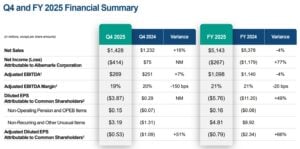
Albemarle financial results 2025
Source: Albemarle

Despite these positive metrics, Albemarle’s stock fell sharply after the earnings release. Morningstar reported that on February 12, 2026, shares fell about 7%. This drop happened during a wider market sell-off. Still, the company’s profit outlook was better than what analysts expected.
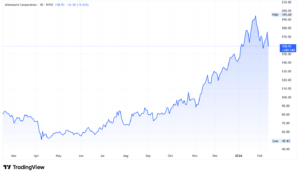
Albemarle stock price

Investors reacted to a mixed message from the earnings data. The company had sales growth and strong cash flow. However, the closure of the Kemerton plant and ongoing cost pressures affected sentiment. Some investors were cautious about near-term guidance amid global market volatility.

But Management Bets on a 2026 Demand Rebound

Despite short-term pressures, Albemarle’s management outlined a strong demand outlook for lithium in 2026. In a recent earnings call, company leaders projected that global lithium demand could grow by 15% to 40% in 2026.
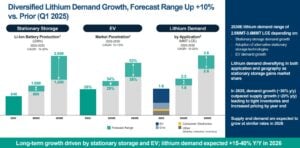
Albemarle lithium demand outlook
Source: Albemarle

This growth is driven in part by a sharp rise in stationary energy storage demand and continued EV adoption. Stationary storage includes large battery systems used for grid balancing, renewable energy smoothing, and data centers. These systems are becoming major new consumers of lithium-ion batteries.

Industry reports say global energy storage installations more than doubled in 2025. This rise shows growing demand, extending beyond just electric vehicles.
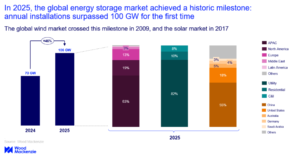
global energy storage market 2025
Source: Wood Mackenzie

Albemarle also reported that its free cash flow in 2025 was about US$692 million after cost controls and capital discipline. The company plans to keep capital expenditures steady in 2026. It will focus on boosting productivity and developing resources instead of expensive expansion projects.

EVs and Grid Storage Keep the Battery Boom Alive

Lithium is a key metal for lithium-ion batteries. These batteries power electric vehicles (EVs), grid storage systems, portable electronics, and more.

Electric vehicle adoption continues to grow globally. The International Energy Agency says EV sales hit around 20 million units in 2025. This makes up nearly 25% of all car sales globally. EVs alone account for about 75% of total lithium demand in 2025 in battery markets.

In addition, stationary energy storage systems are becoming more common. Battery storage helps balance renewable energy like wind and solar on the grid. Storage growth is part of broader climate and energy policies in many countries.

  • Demand growth is also supported by new battery applications, such as data centers and backup power systems.

Some market analysts expect global lithium demand to more than double by the decade’s end. This will depend on EV adoption rates, renewable energy growth, and storage needs.

Processing Bottlenecks and Price Swings Complicate Supply

While demand is rising, the supply side of lithium faces challenges.

Mining output increased sharply between 2021 and 2025. Australia, Chile, and China expanded production during that period. However, processing capacity, especially outside China, has lagged.
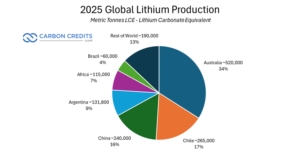
2025 lithium global production

The closure of Albemarle’s Kemerton plant underscores these supply constraints. Western plants face higher labor, energy, and infrastructure costs compared with counterparts in China. These factors make lithium hydroxide production less profitable in some regions.

China dominates downstream lithium processing and battery cell production. The country holds 60–70% of the world’s lithium chemical processing capacity. It also makes around 75% of lithium-ion batteries, based on data from the International Energy Agency.

At the same time, some supply projects have delayed expansion, held back by financing costs, permitting hurdles, and fluctuating prices.

Price volatility has been a feature of the lithium market over the past few years. After reaching multiyear highs in 2022, lithium carbonate prices plunged through 2023 and 2024 due to oversupply. Prices bounced back in late 2025 and further skyrocketed in early 2026.
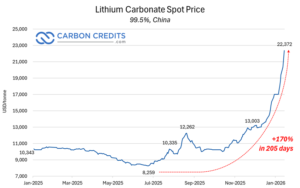
lithium carbonate spot price

Cost Cuts and Capital Discipline Take Center Stage

Albemarle’s recent actions illustrate how lithium producers respond to shifting conditions.

The company cut costs, lowered capital spending, and sold non-core assets to boost its balance sheet. These moves helped Albemarle generate strong free cash flow even with price swings.

Management noted cost and productivity gains of US$100–150 million aimed for 2026. This will help boost profit margins, particularly in energy storage segments.

Albemarle’s strategy focuses on maintaining stable operations while positioning for long-term demand growth. This includes optimizing asset portfolios, managing supply chains, and shifting production toward lower-cost channels.

Other companies in the lithium sector are also adapting. Some are concentrating on mining expansions, processing partnerships, and technology improvements. Others are exploring recycling and alternative battery chemistries to reduce reliance on lithium.

Miners like Pilbara Minerals, SQM, and Sigma Lithium are expanding and optimizing supply. They do this to stay competitive during price cycles. Refiners like Ganfeng Lithium and Tianqi Lithium are expanding their conversion capacity. They are also integrating their supply chains.

Moreover, firms like Standard Lithium and EnergyX are developing direct lithium extraction methods. These aim to boost recovery and lower water impacts. Recycling companies like Redwood Materials, Li-Cycle, and Umicore are expanding systems. They recover lithium and other metals from used batteries.

Battery makers such as CATL are also investing in sodium-ion technology, which can reduce lithium demand in some market segments.

A Tightening Market in the Making?

The lithium market continues to evolve. There are signs of a structural shift as demand grows faster than supply in some scenarios.

Analysts expect that demand from EVs and energy storage will keep pushing lithium consumption up for the rest of the decade. Albemarle’s plant closure shows that supply issues and processing challenges might tighten the market. This could happen if new capacity isn’t ready soon.

Long-term forecasts suggest many countries and companies will need secure lithium sources. They will also need more downstream processing capacity to meet climate and clean energy goals.

For Albemarle, the mix of cost discipline, demand growth forecasts, and strategic positioning could help the company navigate a market that is both dynamic and competitive.

The post Albemarle Shuts Lithium Plant But Bets Big on Strong Demand Outlook for 2026 appeared first on Carbon Credits.

Continue Reading

Carbon Footprint

How Climate Change Is Raising the Cost of Living

Published

on

Americans are paying more for insurance, electricity, taxes, and home repairs every year. What many people may not realize is that climate change is already one of the drivers behind those rising costs.

For many households, climate change is no longer just an environmental issue. It is becoming a cost-of-living issue. While climate impacts like melting glaciers and shrinking polar ice can feel distant from everyday life, the financial effects are already showing up in monthly budgets across the country.

Today, a larger share of household income is consumed by fixed costs such as housing, insurance, utilities, and healthcare. (3) Climate change and climate inaction are adding pressure to many of those expenses through higher disaster recovery costs, rising energy demand, infrastructure repairs, and increased insurance risk.

The goal of this article is to help connect climate change to the everyday financial realities people already experience. Regardless of where someone stands on climate policy, it is important to recognize that climate change is already increasing costs for households, businesses, and taxpayers across the United States.

More conservative estimates indicate that the average household has experienced an increase of about $400 per year from observed climate change, while less conservative estimates suggest an increase of $900.(1) Those in more disaster-prone regions of the country face disproportionate costs, with some households experiencing climate-related costs averaging $1,300 per year.(1) Another study found that climate adaptation costs driven by climate change have already consumed over 3% of personal income in the U.S. since 2015.(9) By the end of the century, housing units could spend an additional $5,600 on adaptation costs.(1)

Whether we realize it or not, Americans are already paying for climate change through higher insurance premiums, energy costs, taxes, and infrastructure repairs. These growing expenses are often referred to as climate adaptation costs.

Without meaningful climate action, these costs are expected to continue rising. Choosing not to invest in climate action is also choosing to spend more on climate adaptation.

Here are a few ways climate change is already increasing the cost of living:

  • Higher insurance costs from more frequent and severe storms
  • Higher energy use during longer and hotter summers
  • Higher electricity rates tied to storm recovery and grid upgrades
  • Higher government spending and taxpayer-funded disaster recovery costs

The real debate is not whether climate change costs money. Americans are already paying for it. The question is where we want those costs to go. Should we invest more in climate action to help reduce future climate adaptation costs, or continue paying growing recovery and adaptation expenses in everyday life?

How Climate Change Is Increasing Insurance Costs

There is one industry that closely tracks the financial impact of natural disasters: insurance. Insurance companies are focused on assessing risk, estimating damages, and collecting enough revenue to cover losses and remain financially stable.

Comparing the 20-year periods 1980–1999 and 2000–2019, climate-related disasters increased 83% globally from 3,656 events to 6,681 events. The average time between billion-dollar disasters dropped from 82 days during the 1980s to 16 days during the last 10 years, and in 2025 the average time between disasters fell to just 10 days. (6)

According to the reinsurance firm Munich Re, total economic losses from natural disasters in 2024 exceeded $320 billion globally, nearly 40% higher than the decade-long annual average. Average annual inflation-adjusted costs more than quadrupled from $22.6 billion per year in the 1980s to $102 billion per year in the 2010s. Costs increased further to an average of $153.2 billion annually during 2020–2024, representing another 50% increase over the 2010s. (6)

In the United States, billion-dollar weather and climate disasters have also increased significantly. The average number of billion-dollar disasters per year has grown from roughly three annually during the 1980s to 19 annually over the last decade. In 2023 and 2024, the U.S. recorded 28 and 27 billion-dollar disasters respectively, both setting new records. (6)

The growing impact of climate change is one reason insurance costs continue to rise. “There are two things that drive insurance loss costs, which is the frequency of events and how much they cost,” said Robert Passmore, assistant vice president of personal lines at the Property Casualty Insurers Association of America. “So, as these events become more frequent, that’s definitely going to have an impact.” (8)

After adjusting for inflation, insurance costs have steadily increased over time. From 2000 to 2020, insurance costs consistently grew faster than the Consumer Price Index due to rising rebuilding costs and weather-related losses.(3) Between 2020 and 2023 alone, the average home insurance premium increased from $75 to $360 due to climate change impacts, with disaster-prone regions experiencing especially steep increases.(1) Since 2015, homeowners in some regions affected by more extreme weather have seen home insurance costs increased by nearly 57%.(1) Some insurers have also limited or stopped offering coverage in high-risk areas.(7)

For many families, rising insurance costs are no longer occasional financial burdens. They are becoming recurring monthly expenses tied directly to growing climate risk.

How Rising Temperatures Increase Household Energy Costs

A light bulb, a pen, a calculator and some copper euro cent coins lie on top of an electricity bill

The financial impacts of climate change extend beyond insurance. Rising temperatures are also changing how much energy Americans use and how utilities plan for future electricity demand.

Between 1950 and 2010, per capita electricity use increased 10-fold, though usage has flattened or slightly declined since 2012 due to more efficient appliances and LED lighting. (3) A significant share of increased energy demand comes from cooling needs associated with higher temperatures.

Over the last 20 years, the United States has experienced increasing Cooling Degree Days (CDD) and decreasing Heating Degree Days (HDD). Nearly all counties have become warmer over the past three decades, with some areas experiencing several hundred additional cooling degree days, equivalent to roughly one additional degree of warmth on most days. (1) This trend reflects a warming climate where air conditioning demand is increasing while heating demand generally declines. (4)

As temperatures continue rising, households are expected to spend more on cooling than they save on heating. The U.S. Energy Information Administration (EIA) projects that by 2050, national Heating Degree Days will be 11% lower while Cooling Degree Days will be 28% higher than 2021 levels. Cooling demand is projected to rise 2.5 times faster than heating demand declines. (5)

These projections come from energy and infrastructure experts planning for future electricity demand and grid capacity needs. Utilities and grid operators are already preparing for higher peak summer electricity loads caused by rising temperatures. (5)

Longer and hotter summers also affect how homes and buildings are designed. Buildings constructed for past climate conditions may require upgrades such as larger air conditioning systems, stronger insulation, and improved ventilation to remain comfortable and energy efficient in the future. (10)

For many households, this means higher monthly utility bills and potentially higher long-term home improvement costs as temperatures continue to rise.

How Climate Change Affects Electricity Rates

On an inflation-adjusted basis, average U.S. residential electricity rates are slightly lower today than they were 50 years ago. (2) However, climate-related damage to utility infrastructure is creating new upward pressure on electricity costs.

Electric utilities rely heavily on above-ground poles, wires, transformers, and substations that can be damaged by hurricanes, storms, floods, and wildfires. Repairing and upgrading this infrastructure often requires substantial investment.

As a result, utilities are increasing electricity rates in response to wildfire and hurricane events to fund infrastructure repairs and future mitigation efforts. (1) The average cumulative increase in per-household electricity expenditures due to climate-related price changes is approximately $30. (1)

While this increase may appear modest today, utility costs are expected to rise further as climate-related infrastructure damage becomes more frequent and severe.

How Climate Disasters Increase Government Spending and Taxes

Extreme weather events also damage public infrastructure, including roads, schools, bridges, airports, water systems, and emergency services infrastructure. Recovery and rebuilding costs are often funded through taxpayer dollars at the federal, state, and local levels.

The average annual government cost tied to climate-related disaster recovery is estimated at nearly $142 per household. (1) States that frequently experience hurricanes, wildfires, tornadoes, or flooding can face even higher public recovery costs.

These expenses affect taxpayers whether they personally experience a disaster or not. Climate-related recovery spending can increase pressure on public budgets, emergency management systems, and infrastructure funding nationwide.

Reducing Climate Costs Through Climate Action

While this article focuses on the growing financial costs associated with climate change, the issue is not only about money for many people. It is also about recognizing our environmental impact and taking responsibility for reducing it in order to help preserve a healthy planet for future generations.

While individuals alone cannot solve climate change, collective action can help reduce future climate adaptation costs over time.

For those interested in taking action, there are three important steps:

  1. Estimate your carbon footprint to better understand the emissions connected to your lifestyle and activities.
  2. Create a plan to gradually reduce emissions through energy efficiency, cleaner technologies, and more sustainable choices.
  3. Address remaining emissions by supporting verified carbon reduction projects through carbon credits.

Carbon credits are one of the most cost-effective tools available for climate action because they help fund projects that generate verified emission reductions at scale. Supporting global emission reduction efforts can help reduce the long-term impacts and costs associated with climate change.

Visit Terrapass to learn more about carbon footprints, carbon credits, and climate action solutions.

The post How Climate Change Is Raising the Cost of Living appeared first on Terrapass.

Continue Reading

Carbon Footprint

Carbon credit project stewardship: what happens after credit issuance

Published

on

A carbon credit purchase is not a transaction that closes at issuance. The credit may be retired, the certificate filed, and the reporting box ticked. But on the ground, in the forest, in the field, and in the community, the work continues. It endures for years. In many cases, for decades.

Continue Reading

Carbon Footprint

Industries with the biggest nature footprints and what their decarbonisation looks like

Published

on

A corporate carbon footprint is never just an accounting figure. It maps onto real ecosystems. Before a product leaves the factory gate, something on the ground has already paid the cost. A forest has been converted. A river has been depleted. A patch of savannah that was once home to dozens of species now grows a single crop in every direction.

Continue Reading

Trending

Copyright © 2022 BreakingClimateChange.com

