

The UK government has approved extraction at the Jackdaw gas field in the North Sea, despite acknowledging that this decision could make it harder for Britain to convince other countries to move away from fossil fuel production.
UK energy secretary Miatta Fahnbulleh approved the drilling on Wednesday after months of high-profile debate, fuelled in part by interventions from US President Donald Trump. She argued that the project would boost energy security in the wake of the Middle East fossil fuel crisis, protect hundreds of jobs and add £2.9 billion ($3.88bn) to the UK economy.
She said Jackdaw’s gas would be cleaner than imported gas and would not prevent the UK from meeting its legally-binding carbon targets and its goal of net zero by 2050. As the field is already licensed, she said extraction was consistent with the Labour Party’s 2024 manifesto promise not to issue any new oil and gas licenses.
The same morning, the government announced a new Energy Wealth Fund to reinvest oil and gas revenues in the climate transition. It will start with £2 billion ($2.67bn) from the government and be topped up over time with tax revenues from offshore oil and gas production.
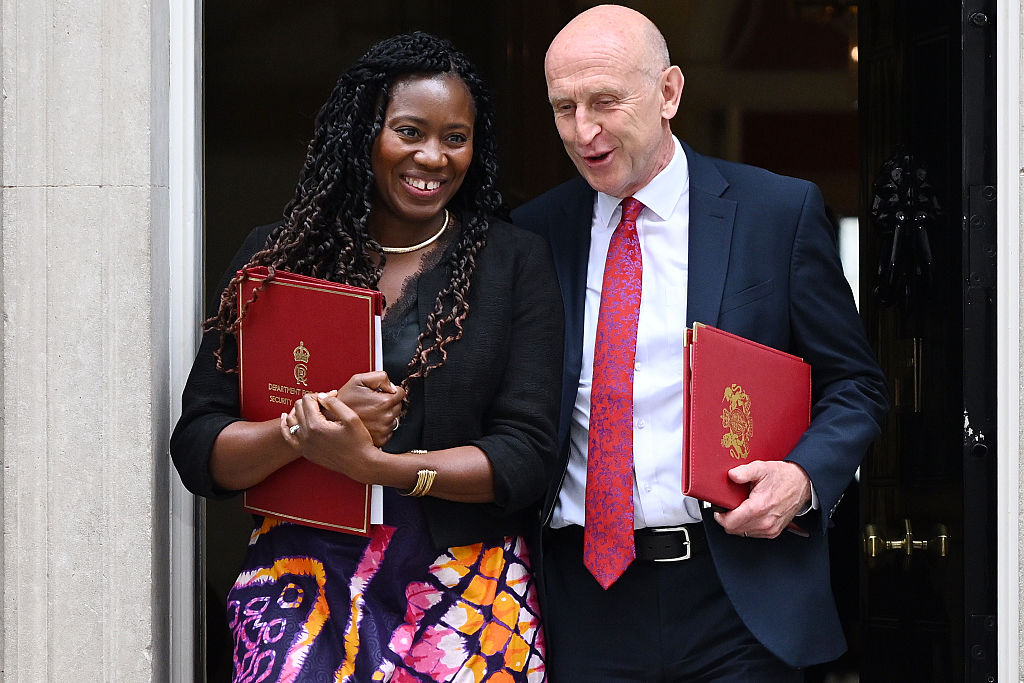
Climate campaigners in the UK and abroad were quick to condemn the decision, while a leading legal expert told Climate Home News it goes against the advice of the International Court of Justice. Meanwhile, the government’s own documents reveal that it recognises the drilling could damage the UK’s reputation and its ability to push forward the global transition away from fossil fuels.
“Climate leadership” blow
The 92-page decision document says Fahnbulleh “acknowledges that international standing on climate is important and accepts that a decision to grant consent may not further the UK’s international climate leadership.”
It adds: “She acknowledges concerns about the potential implications for the UK’s credibility and influence – including the difficulty inherent in encouraging other states to move away from fossil fuel production while the UK continues, in a limited and transitional way, to draw on its own domestic resources.”
While noting that Jackdaw has not been issued with a new license – just permission to extract gas – the document says Fahnbulleh “accepts this does not fully resolve the underlying tension in the UK’s position” but “considers this alongside the substance of the UK’s wider record [on emissions reduction], which remains significant”.
It continues that she accepts these concerns are “legitimate” and weigh against approving gas extraction, but only gives this argument a “moderate negative weight” set against the benefits of gas production.
“Huge” wrong signal
In international climate talks, the UK has long supported the transition away from fossil fuels and is one of very few major oil and gas producers to ban new licenses. Across the North Sea, the Norwegian government continues to make offshore areas available for oil and gas exploration through annual licensing rounds.
Climate experts and campaigners shared the concern, acknowledged in the decision document, that approving Jackdaw could set a precedent for fossil fuel production elsewhere. Sam Fankhauser, professor of climate change economics at Oxford University, said the direct climate impact of Jackdaw is “much smaller than the debate around it would suggest” but the “wrong signal it sends, however, is huge”.
-
Carbon capture industry faces tough future, as UK raids green spending
Despite a spate of projects getting underway, the mood at an industry conference in London this week was low with government subsidies set to shrink -
Paris Agreement committee names three countries snubbing it over NDCs
More than 30 countries have failed to submit an NDC, but only three have repeatedly ignored the committee’s efforts to engage with them -
Turkish giant sponsoring COP31 cut climate goals then cashed in on oil boom
COP31 sponsors should be screened for “climate integrity”. Yet Koç Holding has become a top partner while its oil refiner runs flat out and its climate targets slip


Bob Ward, policy and communications director at the Grantham Research Institute on Climate Change, said that while Jackdaw’s output will be very small, “it will signal to other fossil fuel producers that they too should carry on with business as usual, less than a month before the COP31”.
Kenyan campaigner Mohamed Adow, director of Power Shift Africa, called the decision “a serious blow to Britain’s international climate credibility” as “the UK cannot expect developing countries to move away from fossil fuels while giving the green light to new drilling in its own backyard”.
International Court of Justice
In July 2025, the International Court of Justice (ICJ) advised that government failure to take appropriate climate action “including through fossil fuel production” may amount to an internationally wrongful act.
The UK voted in favour of a United Nations resolution welcoming the advisory opinion. Yet, in its Jackdaw decision document, it notes that the ICJ opinion is not legally binding and says the UK does not accept the court’s opinion that the customary international law duty to prevent significant harm to the environment applies to climate change.
Fahnbulleh concludes that, although it will have “significant effect on the environment”, gas drilling in Jackdaw “would not lead to significant harm to the environment” – and so does not breach any duty to prevent such harm. Instead, the government document says the duty should be considered “as a matter of policy rather than legal obligation”.
Margaretha Wewerinke-Singh, who led Vanuatu’s legal team pushing for the ICJ’s advisory opinion, told Climate Home News that treating the duty as a matter of policy rather than legal obligation is “not how international law works”. “An advisory opinion is not a judgement,” she said, “but it states the law as it stands, and that law binds the UK whether or not it accepts it.”
“Even as a matter of policy,” she added, “the decision asks the wrong question: whether Jackdaw on its own would cause significant harm. The Court found that accumulated emissions are already causing significant harm. What matters is whether approving new production is consistent with the stringent due diligence the duty requires.”
Public support for decision
While the decision was criticised by climate campaigners and the opposition Green party, polling reported by Politico suggests that 55% of British adults support drilling at Jackdaw, with just 14% opposed. Even supporters of the UK’s net zero target back new drilling by more than two to one, the polling found.
Jackdaw is one of two North Sea oil and gas fields the government has been debating whether to extract more from for months. While Jackdaw is a small gas field, the other, Rosebank, is a much larger field that holds mostly oil.
Rosebank’s emissions are estimated to be around seven times higher than Jackdaw’s. Fahnbulleh told Sky News that Rosebank is “different” to Jackdaw because its oil would be exported, whereas Jackdaw’s gas will be used in the UK, adding that she will consider it “in its own right”.
The Guardian reported on Wednesday that UK officials say Fahnbulleh is minded to refuse approval for Rosebank. She has not yet taken a final decision on Rosebank, the newspaper said, but a ruling is expected later this year.
The post UK approves gas drilling despite admitting blow to “climate leadership” status appeared first on Climate Home News.
UK approves gas drilling despite admitting blow to “climate leadership” status

Climate Change
Albanese must deliver credible action to end fossil fuel chokehold, not just rhetoric
ANTALYA,Türkiye, Thursday 12 November 2026 — In response to Prime Minister Albanese’s COP31 Leaders’ Summit address, Shiva Gounden, Head of Pacific at Greenpeace Australia Pacific, speaking from Antalya said:
“Prime Minister Albanese’s COP31 address was full of nice rhetoric, but once again failed to confront or even mention the root cause of the climate crisis — fossil fuels.
“In Antalya, UN climate chief Guterres told leaders to “tell the truth”. The truth is Australia can not credibly talk about its clean energy transition while continuing to expand the industry it needs to leave behind. Australia must reckon with reality; its damning track record of 38 coal and gas approvals since it took office in 2022.
“We meet in Antalya amidst a global energy shock and dire projections of 1.5°C overshoot. Overshoot means something in the Pacific — it means irreversible harm, lives and cultures lost forever, entire nations at stake. We must face the fierce urgency of now.
“Never before has the need to end the fossil fuel chokehold been so abundantly clear, as our Pacific communities again suffer the consequences of a global economy hooked on coal, oil and gas. The Pacific needs credible roadmaps and clear timelines to unhook from fossil fuels — Australia can’t keep saying implementation and not reflect it with credible action.”
ENDS
COP31 images and video available here in Greenpeace Media Library
Media contact: Kate O’Callaghan in Antalya (GMT+3) on +61 406 231 892 (Whatsapp/Signal)
Albanese must deliver credible action to end fossil fuel chokehold, not just rhetoric
A second set of world leaders give their speeches on Thursday before heading out of town and leaving their negotiators to it. After around 40 leaders spoke on Wednesday, today there will be just 25 or so including the UK’s Andy Burnham, Venezuela’s Delcy Rodriguez and Bangladesh’s Tarique Rahman.
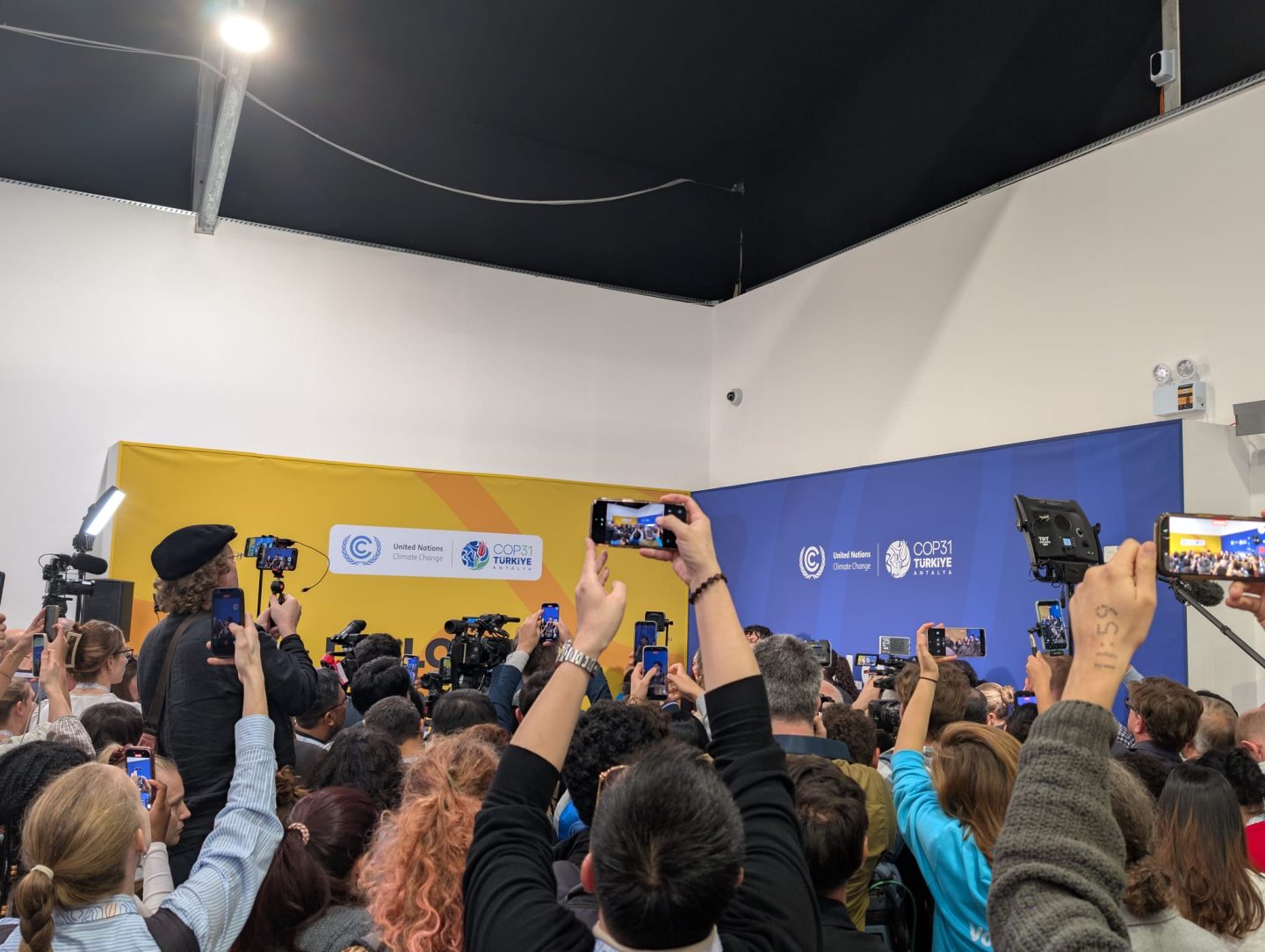
But Brazil’s President Lula is still there and is expected to keep grabbing headlines, along with California’s Governor – and maybe next US president – Gavin Newsom – and Swedish climate activist Greta Thunberg who has lost none of her star power, if the crowd around her in the press centre was anything to go by.
We’ll bring you highlights through the day on issues ranging from finance to methane, and update you on a pledging event for the Pacific Resilience Facility, which the climate-vulnerable region is relying on to keep small island nations as safe as possible in the face of intensifying storms, drought and sea level rise.
The post COP31 Bulletin Day 4: Burnham speaks with UK climate policy under fire appeared first on Climate Home News.
COP31 Bulletin Day 4: Burnham speaks with UK climate policy under fire
Climate Change
Australia must ‘pull all available levers’ to deliver fossil fuel phase out, following Albanese’s COP31 address
ANTALYA, Türkiye, Wednesday 11 November 2026 — In response to Prime Minister Albanese’s COP31 Leaders’ Summit address, Dr Susie Byers, Head of Advocacy at Greenpeace Australia Pacific, speaking from Antalya said:
“Prime Minister Albanese’s Leaders’ Summit address emphasised the power and clarity of Pacific climate leadership and that we must all fight to return warming to below 1.5°C. To inject the momentum these talks critically need, Australia must lead by example.
“Australia takes the reins of the COP31 talks at a critical moment where global instability can spark transformative change, or entrench more of the same inaction and paper pledges. Australia must pull all available levers over the next two weeks, taking the baton from Brazil and sprinting forward.
“The world’s most important job in Antalya is to deliver tangible action to end the fossil fuel era. Communities in Australia, the Pacific and around the world who are grappling with climate disasters and a cost of living crisis need concrete dates and credible plans. We know the transition is coming, one way or another. Our Government has a responsibility to make a plan for this change, which is based on the best available science, and a commitment to put people, energy security and our environment ahead of fossil fuel profits.
“In his address, UN climate chief Guterres told leaders to “tell the truth”. Prime Minister Albanese told an important truth today: that we all have solemn responsibilities to return warming to below 1.5°C. We also know that the best way for Australia to lead through this summit is to start by making its own commitments to turn the temperature down, by stopping developing and exporting fossil fuels.
“Australia’s domestic progress on renewables, and the ‘35 by 35’ electrification goal, are welcome and important. Now we must ensure electricity comes from clean, renewable sources that actually displace fossil fuels and align with the science of 1.5°C.
“The pressure on Australia is building. COP31 must deliver real action to advance multilateral climate cooperation, accelerate the just transition away from fossil fuels, and advance Pacific priorities — including significantly scaling-up climate finance and keeping 1.5°C alive.”
ENDS
COP31 images and video available here in Greenpeace Media Library
Media contact: Kate O’Callaghan in Antalya (GMT+3) on +61 406 231 892 (Whatsapp/Signal)



-
Climate Change1 year ago
Guest post: Why China is still building new coal – and when it might stop
-
Greenhouse Gases1 year ago
Guest post: Why China is still building new coal – and when it might stop
-

 Greenhouse Gases2 years ago
嘉宾来稿:满足中国增长的用电需求 光伏加储能“比新建煤电更实惠”
-

 Climate Change2 years ago
嘉宾来稿:满足中国增长的用电需求 光伏加储能“比新建煤电更实惠”
-

 Renewable Energy1 year ago
Sending Progressive Philanthropist George Soros to Prison?
-
Greenhouse Gases1 year ago
嘉宾来稿:探究火山喷发如何影响气候预测
-