

American Electric Power (AEP) has agreed to sell its 50% interest in New Mexico Renewable Development (NMRD) to Exus North America.
AEP and PNM Resources, which also owns 50% of NMRD, plan to sell the portfolio of 15 solar projects totaling 625 MW to Exus for approximately $230 million, subject to true-up adjustments at close.
AEP’s share of the sale is approximately $115 million and the company expects to receive about $104 million in cash after tax, transaction fees and other customary adjustments. The sale is expected to close in February 2024 and will not have a material impact on financial results.
“This sale is another step forward on our path to simplify our business and focus on investing in our core regulated operations, and we continue to execute on our strategy to de-risk the company,” says AEP’s Julie Sloat. “Earlier this year, we completed the $1.5 billion sale of other parts of our contracted renewables business. The proceeds from these sales are strengthening our balance sheet and supporting our continued efforts to create an energy system that benefits customers by providing safe, reliable and affordable electricity.”
The NMRD portfolio includes nine operating solar developments totaling 185 MW and six projects under development with an estimated output of 440 MW, says the company.
AEP launched the sale process for NMRD in June. KeyBanc Capital Markets is serving as financial advisor and Foley & Lardner LLP is serving as legal counsel to AEP and PNM Resources.
The post AEP to Sell Interest in New Mexico Renewable Development to Exus appeared first on Solar Industry.
AEP to Sell Interest in New Mexico Renewable Development to Exus

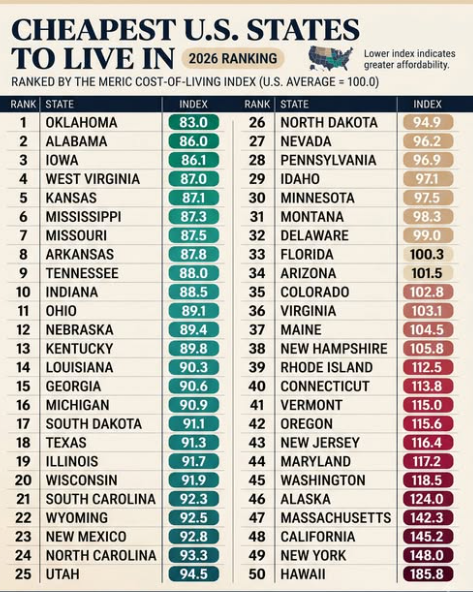 About 40 years ago, I used to lie in bed on Sunday mornings with my coffee and Los Angeles Times opened to the real estate section: “Homes in Other States.” I recall voicing some level of buyer’s remorse, having just paid more for a who-cares house in Southern California, where I could have bought half a county in Oklahoma or Mississippi.
My girlfriend at the time, now my wife, would ask me, “But do you think you’d be happy living in West Virginia, with some of the most poorly-educated people in the country? Do you think that would forward your career and your overall life satisfaction?” She had a point, to be sure.
Today’s MAGA conspiracy theorists will tell you that people are leaving California in droves, because of things like environmental regulations. Yet that doesn’t explain why the Golden State, if it were a country, would have the fourth largest economy on the planet, and a house here identical to one in Alabama whose value there may be $200K would fetch about $1.2 million here.
People don’t come here for the wide-open freeways. We’re here for the beauty, the sophistication of so many people, highly educated people, and unparalleled business opportunities.
There’s a reason that Google, Oracle, Apple, Nvidia, Adobe, Salesforce, Facebook, Visa, Wells Fargo, Disney, etc. aren’t located in Arkansas or Louisiana.
 At left we have John Fetterman talking to people so stupid they’ll believe that it would have been wrong for the British colonists to oppose King George III in the late 18th Century, or for the people of Germany and Italy in the 1930s to stand up against Hitler and Mussolini. What about the people in today’s dictatorships, i.e., the people in Russia, China, North Korea, or any of the other 50+ authoritarian regimes around the world?
Morons tend to agree with the loudest, most aggressive voice of nationalism, regardless of how little sense it makes.
It’s a great moment of opportunity for Fetterman.
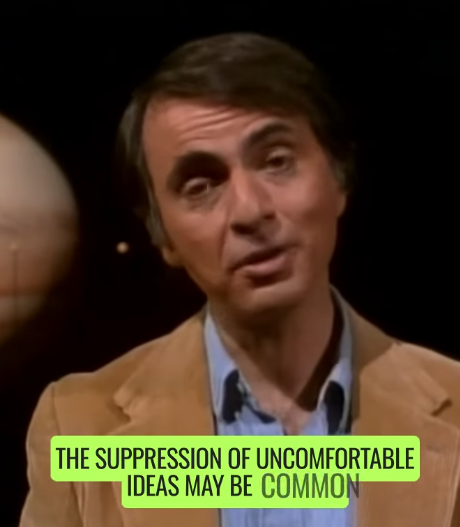 Seminal astrophysicist Carl Sagan explains why uncomfortable ideas may be banned in religion, they must not be shunned in science.
This is an important concept in American life today, as conspiracy theorists are convinced that climate change denial cannot be considered in scientific circles.
I happened to bring this up in my interview with Dr. V. Ramanathan of the Scripps Institution, who has been amassing data on global warming since the 1970s. He laughed, and explained, “If I could prove that human activity was not causing temperatures to rise, I’d be be one of the wealthiest and most famous scientists in world history.”



-
Climate Change1 year ago
Guest post: Why China is still building new coal – and when it might stop
-

 Greenhouse Gases2 years ago
嘉宾来稿:满足中国增长的用电需求 光伏加储能“比新建煤电更实惠”
-
Greenhouse Gases1 year ago
Guest post: Why China is still building new coal – and when it might stop
-

 Climate Change2 years ago
嘉宾来稿:满足中国增长的用电需求 光伏加储能“比新建煤电更实惠”
-

 Renewable Energy1 year ago
Sending Progressive Philanthropist George Soros to Prison?
-
Greenhouse Gases1 year ago
嘉宾来稿:探究火山喷发如何影响气候预测
-

 Climate Change2 years ago
Analysis: China’s CO2 falls 1% in Q2 2024 in first quarterly drop since Covid-19
-

 Climate Change1 year ago
嘉宾来稿:探究火山喷发如何影响气候预测