

Weather Guard Lightning Tech

ACP OM&S Recap, Siemens Energy Shareholder Meeting, Nordex Underperforms with Engie
Recap of ACP OM&S, Siemens Energy Annual Shareholder Meeting and Siemens Gamesa’s persisting 4X/5X turbine sales halt, and underperformance of Engie’s Nordex turbines.
Sign up now for Uptime Tech News, our weekly email update on all things wind technology. This episode is sponsored by Weather Guard Lightning Tech. Learn more about Weather Guard’s StrikeTape Wind Turbine LPS retrofit. Follow the show on Facebook, YouTube, Twitter, Linkedin and visit Weather Guard on the web. And subscribe to Rosemary Barnes’ YouTube channel here. Have a question we can answer on the show? Email us!
Pardalote Consulting – https://www.pardaloteconsulting.com
Weather Guard Lightning Tech – www.weatherguardwind.com
Intelstor – https://www.intelstor.com
Allen Hall: So Joel, after the ACP OM&S event, we went to the San Diego Safari, which is this massive zoo out in the hills of California, just north of San Diego. That was really impressive. And the one thing they have there, you can’t see anywhere else in the world besides Australia, is platypus. Evidently Australia does not let platypus out of the country, except somebody must have snuck one out and brought it to San Diego.
Joel Saxum: I saw the thread with you and Rosemary talking on Slack.
Allen Hall: Did you know that platypus are venomous?
Joel Saxum: I did not know that. That makes no sense to me.
Allen Hall: And I thought that’s crazy, right? But Rosemary said, yes they’re venomous. And you stupid Americans should know that. And I thought isn’t everything in Australia venomous?
Obviously, but here’s the thing, right? So when you get into the platypus area it’s dark like night because they’re active at night. And they have this pool there and you see these platypus swimming along. And in my head, I thought platypus was like the size of a beaver or a small dog.
It’s about the size of a squirrel. They’re tiny.
Joel Saxum: Oh, I thought, I legitimately thought it was like a river otter size, like animal.
Allen Hall: I know, right? And maybe it’s just because of that platypus cartoon, I just assumed that they were bigger. You ever seen that platypus cartoon? But I was just really thrown off by how small they were.
I thought okay. It was worth seeing. Obviously, it was worth seeing. But the coolest thing we saw was elephants. So they had a really big area for elephants and they had a lot of elephants and they had put these hay bales way up high. So the elephants had to really, I don’t know why you torture an elephant like this, but they had to reach really high to, with their trunks to reach up to grab the hay.
And I, was sitting there with my son Adam, and I said, how those, they can’t reach that high. He said, don’t worry. So the elephants actually took these blocks and stacked them to make a step to get up to, to get up to the hay. So it was like, Watching animals use tools to get to the food.
Wow, that was pretty cool.
Joel Saxum: You can do that at a buffet in Texas. You don’t have to go all the way to San Diego or that.
Allen Hall: Alright, Phil, the Siemens Energy annual shareholder meeting was today. So when this podcast comes out which will be Tuesday that shareholder meeting was held on Monday early in America time. That was fascinating to watch. I haven’t seen a shareholder meeting like that in the past, but it was all virtual.
So you had a panel of the Siemens executive committee and the yeah all the important players are in one spot but everybody that was chiming in was remote from their home. It looked like there’s a lot of problems going on with Siemens energy at the moment and it’s all focused on Siemens Gamesa, right?
So the, every part of Siemens energy seems to be making money. It is really solid. It’s the Siemens Gamesa. Piece that’s making the shareholders really upset. The approach from Siemens Energy today was we’re going to provide a leash for Siemens Gamesa to straighten things out and if they can’t turn it around in the midterm, then we’re going to thinking about.
unloading it. I’m not sure who they would unload it to, but the, a lot of questions about the due diligence that happened when they acquired the last little bit of Siemens Gamesa, who reviewed the assets what happened on the engineering side for all these problems they’re having, who reviewed that, how much did it cost?
And maybe Phil, you saw something different than I saw, but, or read it something different, but Siemens was providing. No answers to questions like that. It was we had reviewed, we had, we thought we’re going to buy Siemens Kamesa in 22. The problems happened in early 23 and it’s just too late.
We’re locked into buying this thing. We still don’t have solutions for the problems on the four X and the five x platform. And a sub tier to that is they may end up suing the suppliers. Which suppliers those are, were not mentioned. There was some probing around that nobody knows. This is weird.
The whole situation is weird because there are very pointed questions asked of the board, but there were not much answers returned. And I, we’ll have to see what the stock price does, Phil, but is the industry getting confidence in Siemens Energy? Because it is profitable if you leave out Siemens Gamesa.
Strong company, obviously.
Philip Totaro: Sure. The challenge though was, they’re, they basically came out and said that they weren’t either misled or fed. Dodgy information for this to happen where you’ve got an issue that a blade Manufacturing issue that they still don’t seem to understand or at least if they do they’re not Communicating the fact that they understand it that they’ve resolved it and that they’re gonna get back to selling which is something we talked about, you know for the past few weeks and the reality of that is they must have been provided Either bad advisory, or they’re just somehow negligent in, their own job as leaders of this company.
And I’m, I just, I can’t really get my head around how you’re gonna say that you weren’t provided Incomplete information, or at least, maybe you just didn’t know enough to ask the right questions. But again, that’s on you, if you’re Siemens Energy and you got yourself into this situation, you really only have the mirror to look at.
Allen Hall: The blade issue was interesting in the discussion because the description that was given was they didn’t know there was a defect in the blade unless you got to these particular load conditions. It wasn’t like every blade’s gonna break, it just, it has to be. In a particular wind configuration, which they didn’t describe at all.
And so I interpreted that maybe the certification process wouldn’t have caught it. If there was a defect in the basic design that there’s some sort of odd load, wind load that they, or vibration or torque or something, it was hard to understand because it was such a high level what the detail was, which was a little confusing.
I think they would have helped themselves by just saying. It’s this. It’s wrinkles. Everybody has wrinkles. Wrinkles we can fix. But they didn’t say that, which makes me think it’s something a little more deeper into the design, the basic fundamental design.
Philip Totaro: Yeah, and keep in mind, by the way, they weren’t clear about who their suppliers are to the investors, but if, in case the investors want to know, their suppliers are at least for fabrics and pultrusions, they’re, companies in Europe and a couple in Turkey and China, and, one would assume, oh it may have been, like, the Chinese companies or whatever, dodgy parts or just cheaply made stuff.
But I’m not so sure, necessarily, because this, the pultruded rods, it’s a different, it’s obviously a different technology than just making a glass blade, even a glass blade that’s got high modulus material in it or there’s single shot cast blades like the, the B 75 and everything, that’s bigger than that this is, it’s a new technology, it was originally conceived of to be a carbon glass hybrid, and, again, maybe there’s just a fundamental issue with the way they were approaching the manufacturing of that.
Other companies have been using carbon glass hybrids, although not quite as as readily even Vestas is still using just the carbon pultruded rods for the big turbines even the big offshore turbines. Um, yeah, it’s, I will acknowledge the fact that it’s probably something that might have been missed by like a DNV or TUV or whoever they got to sign off on the certification.
Joel Saxum: I think it was UL. To be honest with you, I think it was UL. I’m not 100 percent on that, but I think it was.
Philip Totaro: Yeah, but that’s still the point. It’s, okay I buy into you could have loads cases that might have been outside the design parameters, but even with that, you always have safety factors, and so I still don’t really There’s something that we’re all missing with this, I guess is the easiest way to say it.
Joel Saxum: At some level, too. You can have The best looking FEA model in the world, but if you’re doing a FEA finite element analysis, that’s how it base, it’s CAD software that models all of these things, right? Testing and modeling are two separate things, but modeling usually comes first.
You can have the best modeling software solution in the world. However, they’re not always 100 percent correct, right? They’re, they can miss stuff too, because they’re only as good as they are ground truth. So there, it’s a possibility that this thing went through all kinds of certification testing. They never actually hit that load situation.
Whatever that may be. And FEA didn’t catch it because the FEA models didn’t catch it. There’s actually some pretty famous cases of that happening with bridges with load modeling and things like that. Of course, they were, it’s mostly frequency stuff.
Allen Hall: But Joel the issue I think is they haven’t started taking orders again, which makes me think there’s at least six months away from having an answer, right?
Joel Saxum: My biggest trouble here, Allen, you and I talked about the software earlier today. We were saying like, okay, you listened to the call. I didn’t listen to the call, but you saying they dodged some questions, right? Who, who did the investigation? Who did this? What’s going on here? And they still have not come.
To my knowledge, clean anywhere where they’re like, this is the issue. This is how it’s going to get fixed. This is when we’re going to start selling these things again, because we’re going to have an updated design model. And now it is okay. So today is February 26th. When this initially broke, I think it was actually August 26th when we were talking about this.
The first time, right? It’s, so it’s been six months now for a massive, and they late and they fired a bunch of engineers and they, so of course they’ve had third party consultants come in. Six months is a lot of time. You’re in a fiscal year, half a fiscal year cycle to not be able to say what’s really going on.
I’m think it’s too and that’s where you can see from an investor standpoint, from a person buying new turbines. If I was buying new turbines right now. I wouldn’t even invite him to the table because I’m not going to deal with what’s going on here. I’m going to say GE, Vestas, maybe some Nordex, depending on where I’m at, what’s going on.
Allen Hall: That’s my take on it. And Phil, what does that mean long term? If Siemens is expecting Siemens Gamesa to produce in the midterm, they’re not hoping for anything this year. Clearly, they’re looking towards 26, maybe even 27. The lack of orders right now is going to hurt them at 26 and 27. So is this a foregone conclusion at this point.
If this goes on another six months where they’re not selling 4X and 5X machines I don’t know if they can get out of that hole.
Philip Totaro: I would tend to agree. I think this is, and that would be just the craziest and saddest thing to, that you’ve ever seen in this industry, because Think about, 10 or 15 years ago, how, successful and how much Siemens Wind, Danish Siemens Wind, was thriving after, having gotten in bed with Bonus, and just building, tanks of wind turbines, basically.
Those things, we’re built to last and this whole thing. It’s, the investors have called this whole merger and nothing but a debacle, and I guess I would have to agree. But the investors even on the call today were like all right we’ll give you, a little more time, but this is your fair warning that if you don’t get your act together we’re coming for you and it’s going to be heads are going to roll and it’s, it couldn’t even lead to them not only selling off this wind energy business unit, which again, I don’t necessarily know who wants it, Cause in the history of the wind sector, nobody’s ever wanted to really buy a distressed asset, they all want an asset strip which is, the only thing that, that Siemens Gamesa is generating revenue on right now is, A lot of the legacy service contracts that they had plus what they asset stripped from Senveon when they, did exactly that.
So I’m slightly dubious as to how, and yes, they’re making some, or at least generating some revenue. I don’t even want to say making profit out of the offshore business, but that’s not enough to sustain what they’re doing with lack of orders and onshore. This is going to take way longer than 2026 and 2027 for them to turn it around financially.
Joel Saxum: Like you said, Phil, we don’t want, nobody wants this, nobody wants Siemens to have to fail to get parted out to anything. We, none of us want this. And we’ve been talking about the, all the bad since, like we said in August when they first announced some of these troubles. We heard whisperings in the field for a while, but then we heard it from the mothership there.
But the things the company’s doing good right now, right? The SG 14 236 direct drive machines, or the SG 14 222 direct drive machines, so they’re offshore division. They’re selling turbines. We just saw a big order come from 1. 5 Was it 1. 4 gigawatts for one order that we saw off? Yeah. And in the Baltic sea there, I was offshore Poland.
So there are things that are going good for Siemens energy. In, a different, I don’t know if I want to call it a silo or a revenue stream or whatever that may be, but in their offshore business unit, that’s. That’s going well.
Allen Hall: Joel, let me ask you this, because one of the discussions today, there was a lot of questions from employee investor groups back to Siemens.
The, it was an odd discussion because one of the rationales for buying Siemens Gamesa is so they could have more control over it. They had control over it. They had the majority stake in the company picking up their, is it because they weren’t, what was preventing them from controlling the company when they owned two thirds of it versus a hundred percent of it?
I don’t, I’m missing something here. Were they barred from entering parts of Seamus Gamesa? That just seems weird to me. If that’s a huge stake in a company, owning two thirds of it is a huge stake. The last third shouldn’t matter.
Joel Saxum: To be honest with you, and I know this is probably an unpopular opinion, but to me that seems like the difference between institutionalized investor communications and Joe Blow investor communications.
They’re telling people what they want to, almost telling people what they want to hear, because at the end of the day, yeah, if you’re Christian Perch, or Brock, or whatever his name is, And you own, or you have 60% you can step in there anytime you want and tell them what to do. That’s how it works.
Allen Hall: Are we wrong about that? I thought it was an odd answer to a simple question.
Philip Totaro: There’s gotta be some kind of reason that they were extremely transparent about having an issue, but then seem, they’ve had fumble after fumble. On not only this but a lot of other financial disclosure statements that they’ve made going back to May of last year, where again, yeah, that’s, the public announcement of this, like Joel’s been saying, came out in August, but.
We were hearing things as early as May that, their profitability was still going to be impacted. They must have known for weeks, if not months prior to this announcement in August. About this blade manufacturing issue. So this has been going on for at least nine months now and for them not to be able to publicly communicate that they have their arms around it is there is something fundamentally wrong and why Siemens energy management hasn’t already stepped in like why do they keep giving them a free pass even you know the and at the investor meeting, they were told you’re on probation was the quote that came out of the investor call.
Why is anybody still on probation after nine months of this going on? And six months of it going on publicly, where they’ve been just lurching from one PR mistake to another. That I just can’t get my head around.
Allen Hall: Let’s talk about the funding they received from the German government versus the lack of funding they’re getting from the Spanish government, right?
There is a number of investors, if I remember this correctly, Saying, why is Germany backing Siemens Energy? They don’t need to be doing that. The citizens of Germany don’t need to be doing that. And that’s wrapped around the context of Spain’s not doing anything. And so one of my thoughts watching this go on is why you, why did you buy this asset?
If you won’t need it, have control over it. Who are you taking control from? Was it from the Spanish government? Is that what they were talking about? Is there a context that we in America just don’t understand? Because to me, that seems like the bigger play. There are countries with a lot of employees at stake.
Is it a German Spanish discontinuity or some sort of disagreement that’s happening at the moment that we just don’t see because it’s all behind the scenes?
Philip Totaro: No I would say that it comes down to the people who were in control of Siemens Gamesa prior to the, majority ownership stake were, the investors and shareholders of Siemens Gamesa, of which Iberdrola was a big one and they’re obviously a major Spanish utility.
So there was definitely a Spanish influence, but I don’t think it was at a governmental level, per se. I think it was, see, Iberdrola, back in the Iberdrola slash Gamesa days, where, Iberdrola had a majority state there it gave them the opportunity to almost vertically integrate with the utility, a turbine supply.
And, you look at a lot of the legacy projects that if Angrid has in the United States, for instance, the overwhelming majority are some kind of a Gamesa, G80, G90, whatever. And, they did spread out to GE, they spread out to Vestas, they spread out to even Suzlon a few projects.
But a lot of what they did was just, a deliberate kind of repetitive process where it was easy to get projects, financed when they, banks knew okay, it’s Uberdrola asking for the money and they’re going to use it to mace a turban and Whatever the Gamesa performance record is, at least it’s known.
The devil you know beats the devil you don’t. That, that was what was being given up when Seaman’s Energy came in. And, and, also being given up when Seaman’s Wind and and Gamesa first merged. Ibadrola’s value got diluted and, equity holding got diluted down.
In, from that perspective, and then it was Siemens AG and then Siemens Energy saying okay, we’re gonna plow even more money into this, and they basically wedged Iberdrola out to the point where, I don’t know how much Iberdrola still holds, but it’s not much anymore. They definitely own some shares still, but it’s not any kind of even significant minority anymore.
Allen Hall: I’m seeing a Netflix special out of this at some point.
Joel Saxum: Or at least Prime. At least Prime.
Allen Hall: There is something happening here behind
Philip Totaro: the scenes.
The other interesting thing that came out of the call today was the fact that the company is basically agreeing to pay back the German government a minimum of a hundred million euro a year which I think is hysterical because if you remember how much the government guaranteed, it’s going to take them about twelve hundred years to pay back the whole thing, like it’s, that’s good luck with that.
Allen Hall: The German government just backed the banks wrote the loans. But, obviously they’re going to go to the German government to go cash it in, right?
That’s still part of the stipulation. Yeah. Lightning is an act of God, but lightning damage is not. Actually, it’s very predictable and very preventable.
StrikeTape is a lightning protection system upgrade for wind turbines made by WeatherGuard. It dramatically improves the effectiveness of the factory LPS, so you can stop worrying about lightning damage. Visit weatherguardwind. com to learn more, read a case study, and schedule a call today.
Engie took a 774 million impairment charge due to issues with, of all things Nordics, onshore wind turbines in the U. S., and they also took a hit on some long term U. S. energy prices in the kind of the southwest of the United States. So the Nordics turbines that Engie is complaining about only had a 30 percent availability. That seems pretty low, Joel. 30 percent availability is not where you want to be there. Nordex obviously declined to comment because they don’t do that, but what is going on here?
Joel Saxum: To put it in context, and Phil will probably have an exact number for this, but an armchair number, is, if you’re above 40, you’re doing really good. If you’re at 38, 39, that’s more average. Some sites, if you have a 50 percent availability site you’re really kicking it. But 30 is extremely low.
Philip Totaro: Yeah they do, so Engie owns at least four project sites according to our own data set, and it looks like the problem children may be Dakota Range 3, which at this point in time, even though it’s got a capacity factor of something like 39%, That project is in the red in terms of its lifetime profitability by about 7.
4 million. The, uh, Iron Star project seems like it’s also maybe has a bit of an issue, but Um, there’s, there have been reports of these kind of teething issues with Nordex turbines around the world. There was a project in Chile where they had a problem with a blade. Other issues in Australia with the same make and model, this N149 platform.
Which actually, when it works, it actually works very well. It performs just as well as like the Vestas B150. But there have been reports of teething issues and other things that have with kind of newly installed projects that have just started to have an impact.
And obviously now if it’s impacting a major customer like NG, who has been very loyal to Nordex Aciona throughout, this history they want to be able to buy more of these turbines. They certainly buy a lot of them in Europe, but for projects in the U. S. I think they’re, at a point where, we’re running out of turbine OEMs to buy turbines from at this point.
It’s like GE and Vestas are it. If you can’t buy from Siemens Gamesa and you can’t buy from Nordex because they’re not reliable enough, who else is going to step up?
Joel Saxum: Yeah, I know Allen and I have watched a few things happening in the background with the Nordex platforms.
I know there’s that project up in Prince Edward Island, Canada, but those are AW3000s. I do know some AW3000s on the Gulf Coast that have some issues, too. They have some pretty bad leading edge issues, they’ve got some lightning protection issues. Quite a few things going on there.
Allen Hall: Is that because Nordex is so established in Europe that just coming to America, it’s just a different environment?
Phil was, everything Phil mentioned was outside of Europe? But if you talk to people in Europe, they love NordX. It’s fantastic! It’s like the turban of choice.
Joel Saxum: Phil’s told us this, though, actually, because he said that they don’t get the good sights. They don’t always get them, right? If you’re gonna do a wind farm on PEI Prince Ed Yeah, over here, they don’t.
Prince Edward Island is that’s brutal up there. I golfed there once, and it sucked. I don’t know why. That was beautiful. I love the people. Shout out to my buddy Da Yeah, Dave Gallant. He’s my friend from PEI. He’s great, but the, it, like the wind up there, the conditions up there are brutal. And I know the other ones that are, then the other Axionas that I know of in the States that have some issues.
They’re right on the Gulf Coast. And those, that’s just a nasty atmosphere. You’re not, you’re on shore. Yes. However, you’ve got the Gulf of Mexico right there. You’ve got hurricanes blowing through. You’ve got this weird cloud layer that hangs most mornings all winter long. That’s about two, three kilometers from the beach.
There’s, so leading edge erosion is an issue there, but there and lightning’s bad because you’re right on the coast. So that’s those are in a bad spot. So if you’re. If everybody else is shooting for the other big, the big three and I would say Nordics is the, would be the big four in the United States, they’re just not getting the choice sites.
So they, things suffer. It’s a weird reality, but it’s reality.
Philip Totaro: And the site conditions in Europe are also very different, where they, the capacity factors are lower. You don’t have sites that have the potential to get up to a 40, 50, 60 percent capacity factor like we do over here. So I’m sure that those, because the legacy Nordex turbines are built like tanks and they can run and run for days, and there’s even some project sites in the U. S. that have the N90 2. 5s. And even some of these other of those kind of, N80, N90 kind of family of products. But the N149, the 155, and the 163 were all built based on the combination of Aciona Technology and Nordex, although heavily influenced by Nordex.
And so they, it’s just. A bit surprising. Every product that gets launched has some kind of, teething issues, product quality issues, what have you. And it’s just whether or not the company is, has the wherewithal to be able to stand behind what they’re doing and fix it. Which is why, again, it as we go back and contemplate what’s going on with Siemens you question how that devolved into such a state.
But again, with this situation, they’re going to get through this. Nordex does tend to make a quality product and, the challenge that they’ve got is because they don’t, seem like they perform as well, and then having this kind of a financial impact on a major customer like Engie the banks look at them like they’re just not as financeable.
It’s almost, it’s three tiers. There’s like GE and Vestas and then maybe there’s a tier like 1. 5 where you’ve got like Siemens Gamesa, and then you’ve got like a tier two, which is Nordex, and then tier three is like everybody else, including the Chinese OEMs. As far as getting financing in the U. S. market, and that’s just what the thing looks like. No. There is from the standpoint of. If you look at dollars for turbine capex, dollars per megawatt hour produced, which is actually a metric that we started tracking Nordax actually ended up lowering their turbine price so that they could get the same dollars per megawatt hour that GE gets.
So GE charges a price premium, but they also produce at a premium, so they, they can afford the price premium that they were charging, or at least they used to. Now again, there’s all kinds of commodity and raw material costs, baked in, et cetera, et cetera. But that’s what GE used to be able to do, is they used to command a price premium because they used to produce more with the same, megawatt platform that, that everyone else had.
And Nordex used to be forced, particularly with the Aciona turbines, but even to an extent with these new, N149, 55, 63 those platforms, they’ve had to lower the price to get the same dollars per megawatt hour production that GE and to an extent Vestas
Allen Hall: have.
That’s a little crazy, right?
Just build better turbines.
Joel Saxum: Call Allen Hall to design your LPS system. You can eliminate a lot of issues that way, and that would save a lot of money.
Allen Hall: Hey, Uptime listeners. We know how difficult it is to keep track of the wind industry. That’s why we read P. E. S. Wind magazine. P. E. S. Wind doesn’t summarize the news.
It digs into the tough issues. And P. E. S. Wind is written by the experts, so you can get the in depth info you need. Check out the wind industry’s leading trade publication, P. E. S. Wind at P. E. S. Wind dot com.
So obviously we’re all in sunny San Diego. You can tell from our tans. That we were in San Diego, we weren’t at, we were outside like maybe 10 minutes the whole week. That show was crazy in terms of the participation and the number of people from around the world that were there. A lot of activity on the exhibition floor.
I did not get into any of the sessions at all. Maybe Joel did. I didn’t because we were just so busy at the booth. taking questions about lightning protection. And that was a lot better than it has been in previous years.
Joel Saxum: Yeah, I’ll tell you a lot of communication about lightning. That’s an interesting one.
I’m not just saying this because it’s WeatherGuard and that’s what we do, but earlier in the week I was at Blades USA as well, and it seemed like whereas lightning has been a back office issue that people knew was there but didn’t really talk about that much and was more around leading edge erosion in the past years, right?
Or like certain structural cracks and things. Almost every person on stage at one point in time mentioned lightning. And, or, how are you handling lightning? And, or, what does it look like for crack propagate, or, damage propagation with lightning? One of the presentations was a quick patch, UV resin patch.
It’s hey, if you have a lightning damage and you want to close it up before winter, before, you actually have to deal with it, patch it over. Boom boom. But so a lot of talk about lightning and this was on the show floor as well. That exhibition, if you’ve never been there, is a lot of ISPs, quite a few blade people.
A lot of people from, like their central maintenance facility type thing. There were their procurement people are walking right with them. We met some people like that as well. They’re looking, they’re talking to. Blade ISPs or torque and tensioning companies, brake and maintenance, whatever it may be, but the companies that are out in the field working, keeping these turning turbines getting built and being ran, you see the big asset owners walking right hand in hand with their procurement people.
So you see people at the show, you’re like, I know a lot of blade engineers or a lot of, development engineers, but who are you? And he’s Oh, procurement. Okay. Yep. So they’re looking to see who’s out there. Who’s got the best solutions, who can offer them people. That was a big one too.
Hey, we’re looking for technicians or we need X amount of teams. Can you get these teams for us? So in that same breath, we talked about it at blades USA. We talked about OMS. We actually recorded a few segments that will be coming out. With different training facilities, Tower Training Academy in Las Vegas.
So they’re out in Nevada and they’re doing full GWOs top to bottom, a really cool opportunity there for people to get in was on the job training as well. I spoke with, recorded a little session with Blade Repair Academy, Alfred Crabtree and the team over there. So they’re training, wanting to train up more composite techs.
We talked with Kevin Doffing and Will Friedel a couple of vets that are in the industry with. Different in different areas and they’re talking about the opportunities to bring veterans into the workforce. And they did a panel of that at OMS as well. We know that’s an issue there’s, and we talked about it regularly at the show, but the ACP organization was also speaking about it too.
Allen Hall: I was surprised at the lack of new tech. Usually every year there’s something cool. Arones is bringing new things, obviously, but it’s derivative, a lot of derivatives this year.
Joel Saxum: The, we did see some new UV resin, UV curing stuff for blades. That was cool. Polytech had its new LEP, and, yeah, nothing against Polytech, but it’s another LEP solution, right?
It’s, but it’s custom curated to be for onshore. So we spoke with them, we recorded a little session with them. That’ll come out. We, but you’re correct, Allen. I’m walking around that show floor. It is a lot of bearing companies and gearbox companies and XYZ companies. And there is some innovative stuff out there, right?
Ping is there, but Ping’s been around now for a few years, right? They’re coming out with a new, some new stuff and one of their solutions, which is great. Some data backing up what they’ve been doing, but not a whole lot of nobody making a massive splash and people talking about it.
Oh, did you see that? Didn’t hear that.
Allen Hall: Yeah, which is a little odd because you think with the amount of effort going on in the United States, you would see more solutions being brought to bear and trying to drive the industry forward. I think one of the complaints you hear from the operators is we need to simplify this thing.
And we’re getting overwhelmed and the engineering staffs are too small for the number of projects that they own. It’s a constant problem.
Joel Saxum: I got an email back from someone today. We connected with a lot of people on solving their lightning issues with Weather Guard. I got an email back today that was like, man, we really want to engage with you guys.
However, we’re hiring another Blade engineer and they’ll have to take that project down in April when they get here because we don’t have the capacity to even have the conversations, which is crazy, right? But to forward your point there, we talk about this regularly. It’s a pain point of mine personally that the U. S. doesn’t bring enough Innovation to the space, all of those solutions I talked about don’t come from here. Ping Graz, Austria, Polytech, Denmark. The, our friends from PowerCurve were there with their AeroVista product, Denmark. Bergalin, Germany, right? So the UV resin cure stuff, Germany, Aerones Latvia, nothing is coming from here.
Allen Hall: It’s bizarre because the number of Germans in the United States outweighs anything in Europe. And it’s the marketplace for it.
Joel Saxum: There’s investment companies floating around. I’m talking with people talking with some that were there hunting some investments, talking with some that are part of investments for some of these solutions that are out there.
And they all say the same thing. Where’s the investments that we can invest in here in the States? And they’re just not there.
Allen Hall: Yeah. Isn’t that funny? I ran up to VCs on the floor that were like, Hey, we’re looking to invest. We don’t really need money right now, but I know companies that do, and so we would, I’d help connect them up.
I do think there is a lot of cash ready to go to push some new technology forward in the United States that just isn’t the company to put it into, or companies to put it into. The companies we know, the Sky Specs those type of companies are flush with cash already, right? Everybody’s poured their money in there.
It’s the sort of the next generation of those companies that’s is they’re waiting for because they do see the opportunities a lot of wind. Repowering going on in the United States. It does seem like there’s opportunities out there and maybe we’ll see more of it in Minneapolis. So also we should talk about where OEM and S is going to be held at next year.
But if you don’t know already, at the end of the conference, they started blurring country music on we’re in San Diego. It’s not really a San Diego kind of music theme.
Joel Saxum: I heard the music, but I didn’t realize that’s what they were doing. I even saw people line dancing in the aisles and I was like, man, I would, you couldn’t pay, you couldn’t pay me to do that.
And then I just, now that you said that, put that together.
Allen Hall: So the next OMS is going to be in Nashville, Tennessee, the home of the Grand Ole Opry. And I, I don’t see that as a wind place. Tennessee doesn’t have a lot of wind turbines or a lot of wind energy. One, one project. Yeah. Yeah. It’s not easy to get to, you can’t one flight it to Nashville.
It doesn’t have really an international airport. Maybe they fly to Canada from Nashville, but that’s about it. You’re not coming from Denmark landing in Nashville straight out. A little bit of an odd one. Maybe they’re trying to mix it up a little bit, but we’re going to be in Minneapolis in a couple of seems like weeks now, Joel, for the big ACP, that one’s going to be interesting.
Cause it’s going to be cold in Minneapolis still. So it wasn’t like sunny San Diego.
Joel Saxum: Yeah, a few years ago, the Minnesota Twins, they built a new stadium, and it’s an open air stadium. And they start baseball. It’s being April in Minneapolis. It makes no made no sense to me when they did it. And they’ve had to move games, so that could happen.
I’m from the Upper Midwest, right? So we’ll see some friends and stuff in Minneapolis. It’s gonna be good. There’s a couple of operators up there. There’s some insurance companies up there. A lot of Chicago’s closed. So people will come from there. That’s going to be fantastic. But the first week in May in Minneapolis, just so you guys know, check the weather because it could be 85 degrees in Minneapolis or it could be snowing.
We don’t know.
Allen Hall: That’s going to do it for this week’s Uptime Wind Energy Podcast. Thanks for listening. Please give us a five star rating on your podcast platform and subscribe in the show notes below to Uptime Tech News, our weekly newsletter. And check out Rosemary’s YouTube channel, Engineering with Rosie, and we’ll see you here next week on the Uptime Wind Energy Podcast.
ACP OM&S Recap, Siemens Energy Shareholder Meeting, Nordex Underperforms with Engie

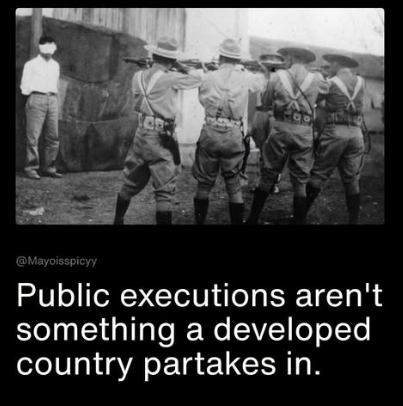 The United States seems set on propelling itself backwards.
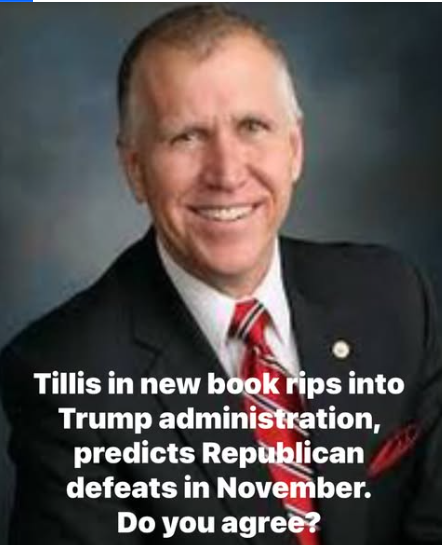 Maybe, as they say, “Hell has a special place reserved in it” for people like Thom Tillis, Republican Senator from North Carolina, who enabled Trump to rape and destroy the United States.
That was until it became clear to Tillis that he could jump ship, write a scathing book about the president, get all over mainstream news promoting it, and go on to enjoy another chapter of political success.
That we Americans are so stupid that we accept this blatant hypocrisy and criminality is sad proof that we’re not the people we were 20 years ago. Maybe what many people are saying are correct: we deserved what we got.
Here’s a short video from Elle Cordova that reminds us that science is something of a rarity in human history.
The great tyrants of history have done their best to cause the people they ruled to reject science, simply to ensure the masses are ignorant, terrified, superstitious, and thus easily controlled.
The current political administration is particularly engrossed in the rejection of science. I wonder why.